Hello,
This is Director Park Jeong-gi of Seoul Remember Dental Clinic near Bongcheon Station.
As natural teeth age,
with movement caused by chewing force,
and as the jawbone or dental arch changes,
the alignment of the teeth gradually changes.
As that happens, gaps can form
between prosthetics that were done in the past.
When food starts getting trapped a lot
in the space that has opened up,
the gums swell and bleed,
causing pain,
and this does not end with simple discomfort.
It causes gum recession
and alveolar bone resorption,
so the space gradually widens.
Then, over time,
inflammation can develop in the periodontal tissues,
which can lead to bigger problems.
So if you have ever had even one prosthetic restoration
done inside your mouth,
from that point on you need to manage it
through regular checkups.
Today at Bongcheon Station Dental Clinic,
I will look at a case related to this
and explain a few medical points.
- What problems appeared in the mouth?
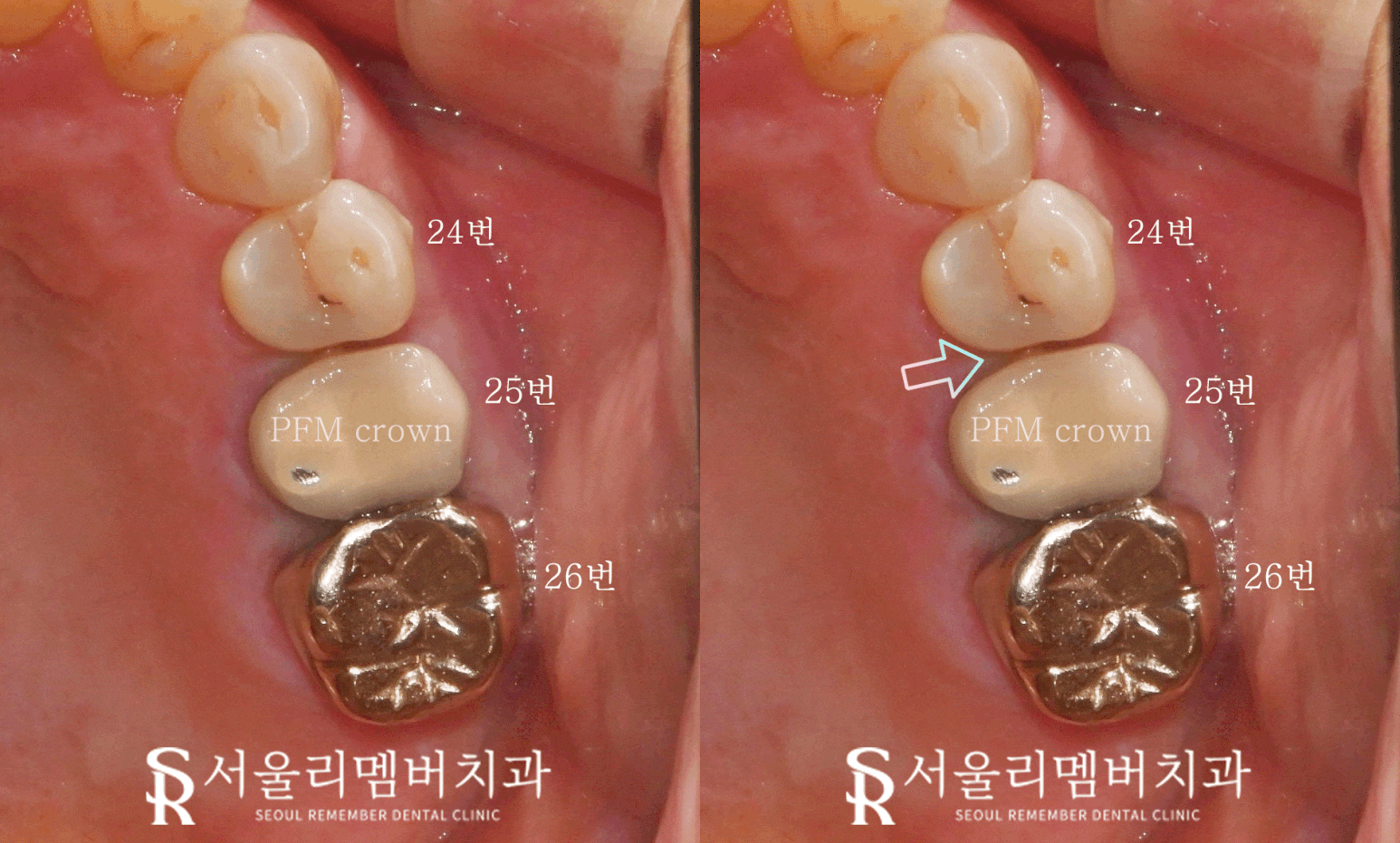
Looking at the intraoral photo,
you can see that tooth #25 in the upper left posterior area
has been restored with PFM.
PFM is a type of prosthetic restoration
with a metal interior
and porcelain on the outside.
Over time,
the porcelain material surrounding the outside
wears down,
which exposes the metal inside—a drawback of this material.
This can create not only problems on the occlusal surface
but also,
when viewed from the side, a dark shadow near the cervical area.
So patients with PFM crowns
may also want to replace them
after a certain period of time because of this issue.
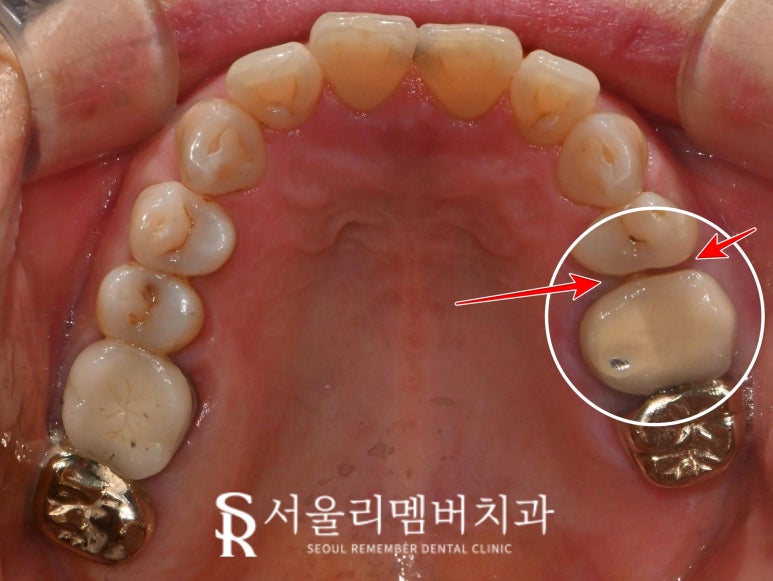
The case shown today at Bongcheon Station Dental Clinic
was not only due to the old PFM being worn out,
but also because gaps formed between the adjacent teeth,
which led to frequent food trapping inside them
as the main source of discomfort.
Even at a glance,
the spacing between the teeth is clearly noticeable.
- Additional examination and diagnosis through X-rays
When a gap forms between old prosthetic restorations like this,
an X-ray must be taken
to check the tooth in question and the adjacent teeth.
If there are no special abnormal findings,
often only the prosthetic restoration needs to be replaced.
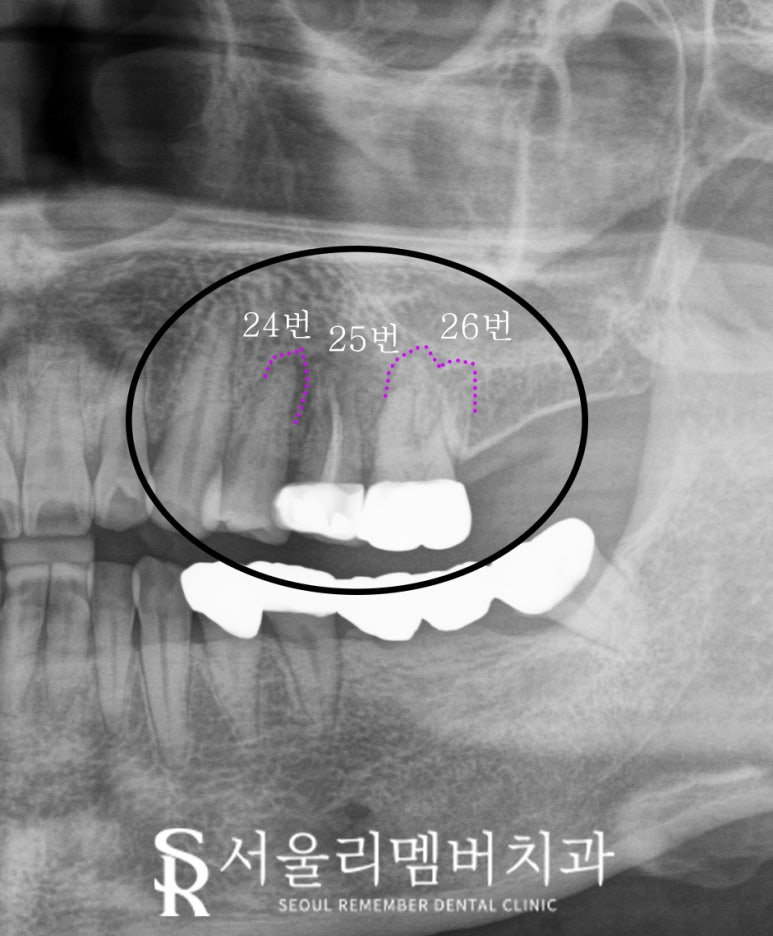
However, in this case,
if you look closely,
there are signs of inflammation at the root tips of teeth #24 and #26.
Since the lower right molars were missing,
the patient likely used the left side mainly when eating,
and as a result,
problems developed in the teeth that received a lot of chewing force.
Tooth #25, which seemed like it might only need a crown replacement,
had actually sustained a vertical root fracture
after enduring strong force over a long period of time.
If a vertical crack runs through the root like this,
extraction becomes unavoidable.
- Treatment plan
At Bongcheon Station Dental Clinic,
for teeth #24 and #26 with apical abscesses,
we decided to perform root canal treatment and place crowns
to try using them a little longer.
For tooth #25, which showed signs of vertical root fracture,
we decided to extract it and place an implant.
Then, when making the upper crown later,
we planned to make the spacing tight
to solve the problem of food frequently getting trapped.
And to prevent this issue from recurring,
we also began treatment on the right side.
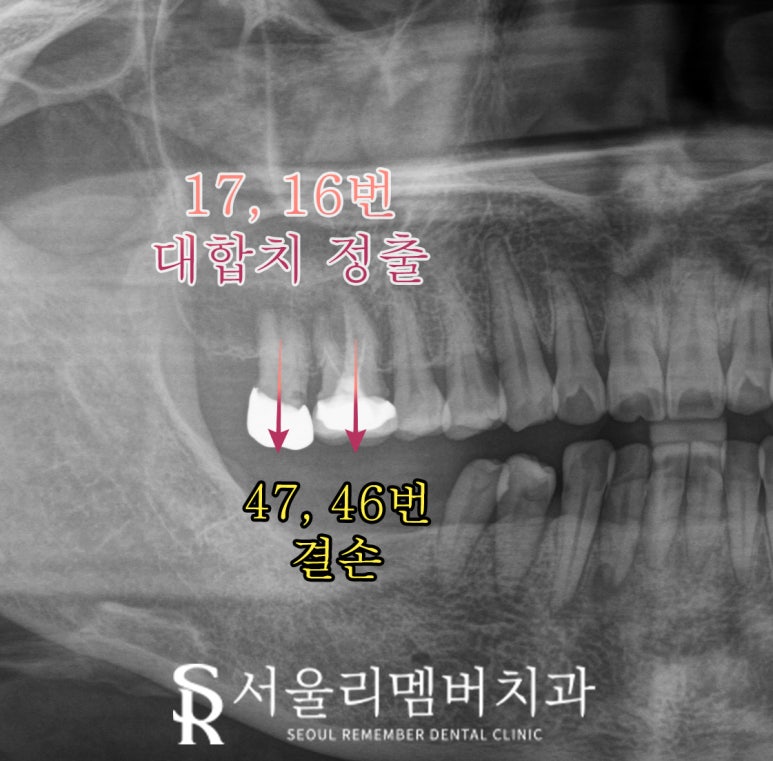
We placed implants in the missing sites of teeth #46 and #47
so they could replace the function of natural teeth,
and because there were no opposing teeth there,
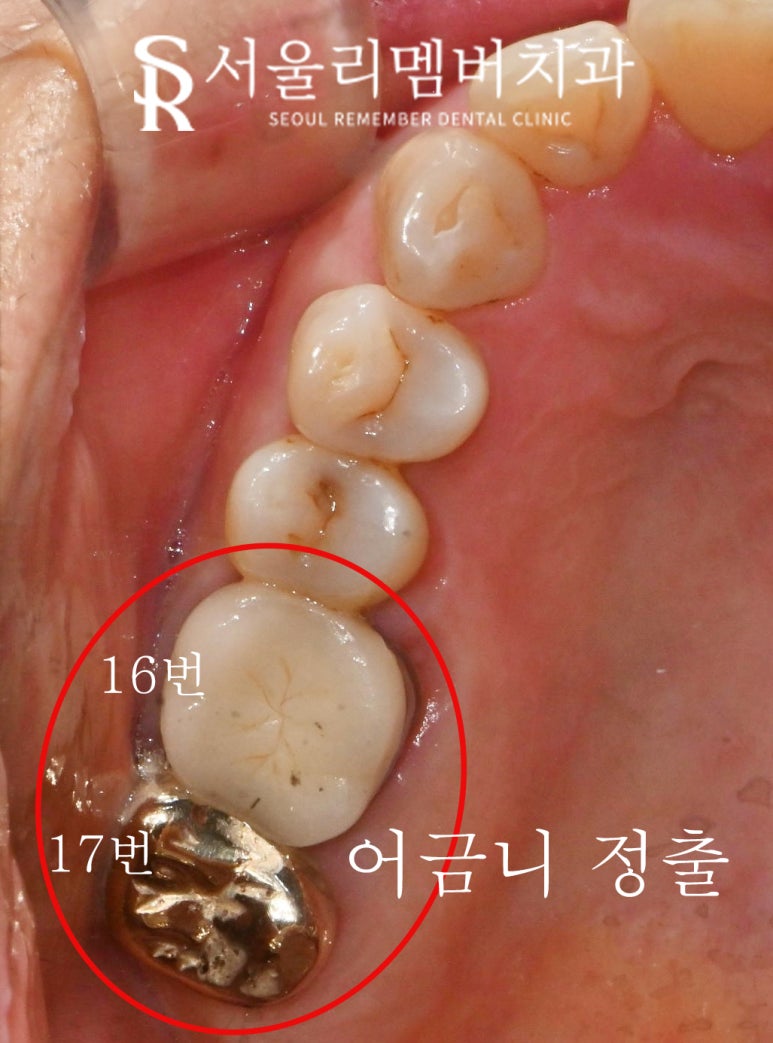
the severely over-erupted upper teeth #16 and #17 were
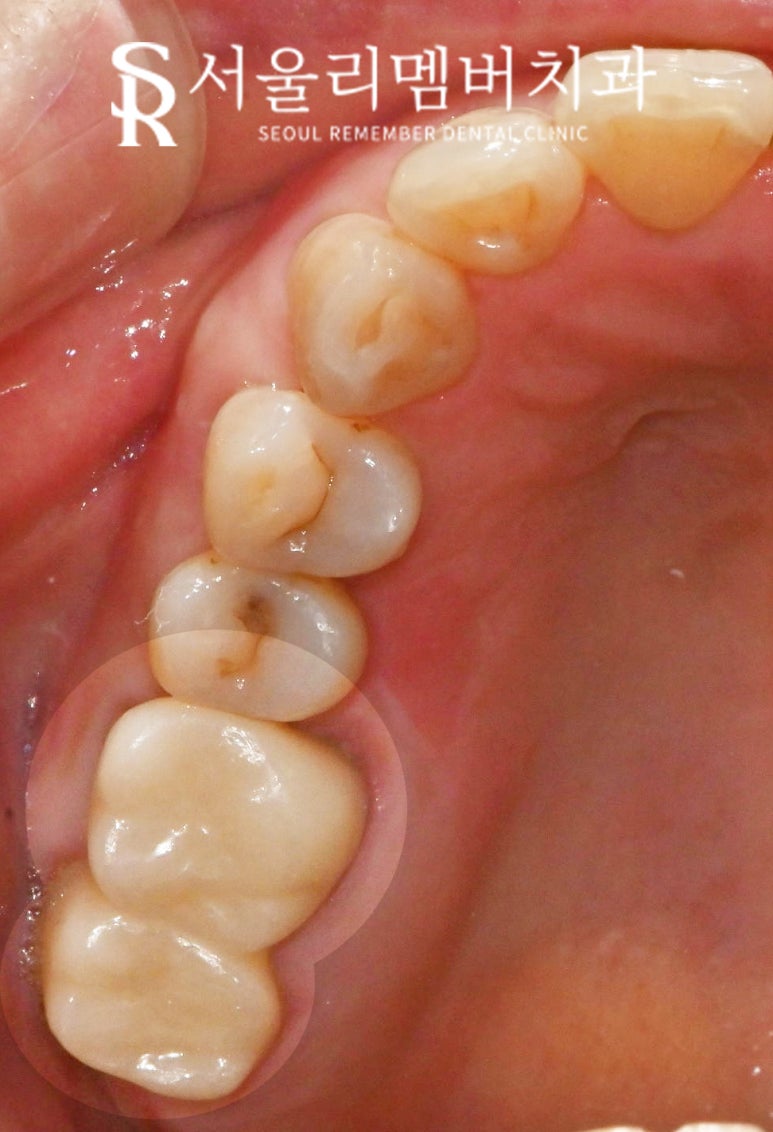
restored with a bridge after root canal treatment
to recover the occlusal relationship.
That way, both sides can perform chewing function smoothly.
Also, unfortunately, lower right tooth #45
had been substituting for the molar function for a long time,
so it had worn down significantly and showed severe attrition.
For that tooth as well,
we decided to perform root canal treatment
and protect it with a crown.
- The importance of balanced chewing function on both sides
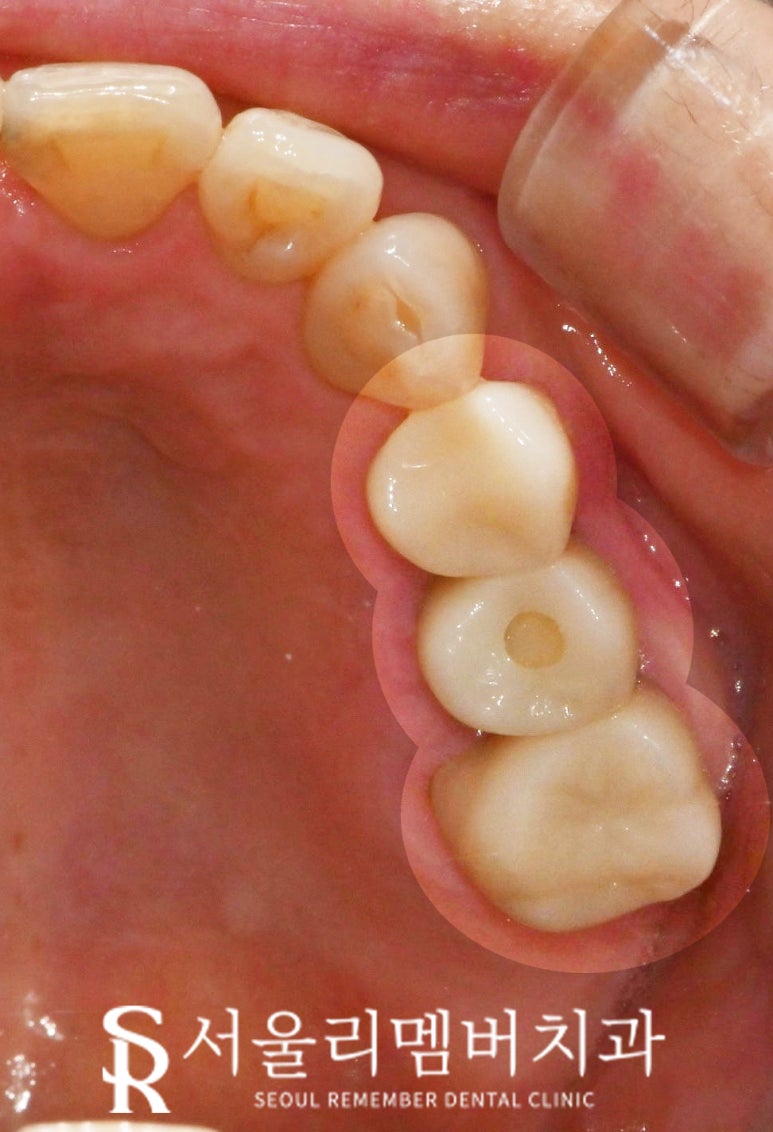
If you look at the finished upper jaw at Bongcheon Station Dental Clinic,
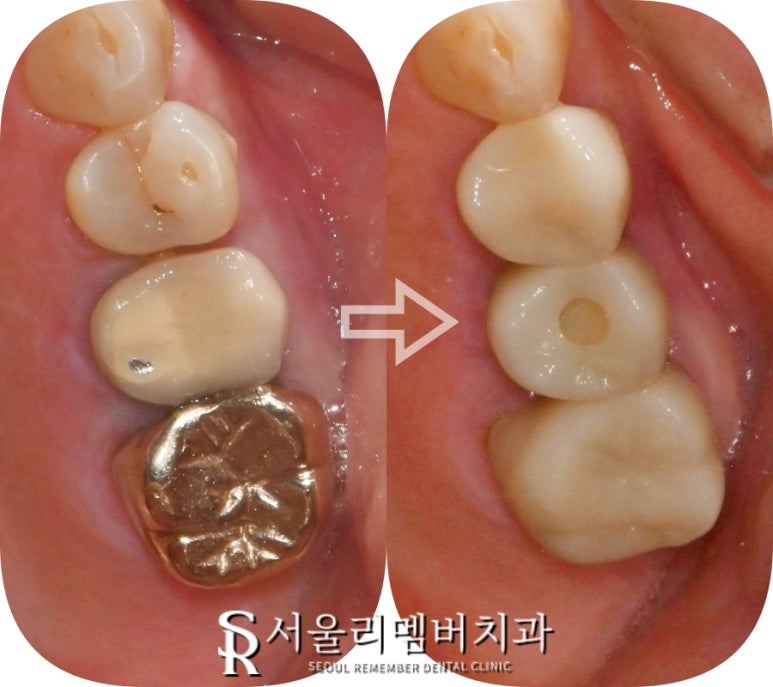
the gaps between the upper left teeth,
which were the biggest concern at first,
have all been closed,
and food should no longer get trapped there.
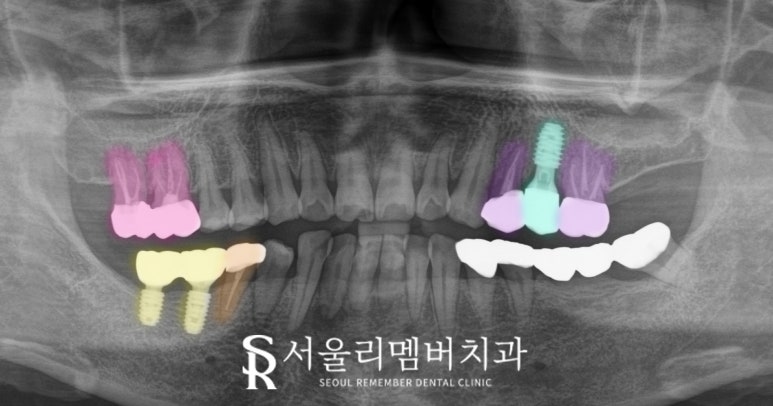
Also, the two upper right molars that had over-erupted downward
and exposed their roots were treated with root canal therapy
and covered with a bridge.
As a result, the patient can now eat on both sides,
so the problem of one or two teeth having to bear
all the chewing force is gone,
and balanced force distribution can also help prevent
periodontal disease and temporomandibular joint disorders.
What would I like to emphasize today at Bongcheon Station Dental Clinic?
Regular checkups and timely treatment
If regular checkups had been done consistently
and treatment had been received at the right time,
it is possible that one or two teeth would not have needed treatment.
However, because the timing was missed,
a root fracture occurred
and the opposing teeth over-erupted.
So if you are reading this and cannot remember
going to the dentist this year,
please get a checkup soon,
and receive treatment according to the methods explained by your dentist.
Thank you for reading.
This was Director Park Jeong-gi of Seoul Remember Dental Clinic near Bongcheon Station.
Treatment period: 2024.08.25 ~ 2025.03.20