Hello, this is Apgujeong Seoul Plastic Surgery.
Recently, more and more people are becoming dissatisfied with the results after nose surgery,
or are considering revision surgery because of functional issues.
This is not a procedure that simply reshapes the nose again;
it is a high-difficulty procedure that requires an accurate analysis
of the cause of the previous surgery
and a delicate plan tailored to it.
In this post, we would like to summarize the key points you should know,
including when revision rhinoplasty is needed,
when to have it, and what to be careful about.
Causes and reasons for revision rhinoplasty
✔ Different from the desired shape
✔ The tip of the nose sags or the line collapses
✔ The nasal implant becomes visible or shifts
✔ Side effects such as asymmetry, contracture, or scar tissue
✔ Breathing discomfort and functional problems
In addition to simply not liking the shape,
there are various other reasons, such as deformity or functional abnormalities
that develop over time.

The essential items to check before revision rhinoplasty are
as follows.
[1] Confirm how the previous surgery was performed
[2] Accurately identify what the current problem with the nose is
[3] Check whether the nasal problem needs to be corrected
[4] Consult on whether the problem can actually be corrected
[5] Determine whether there is anything to lose if revision rhinoplasty is performed
In addition, we recommend proceeding after 충분히 consulting with a specialist
and checking various requirements.
Revision rhinoplasty: When is the right time to have it?
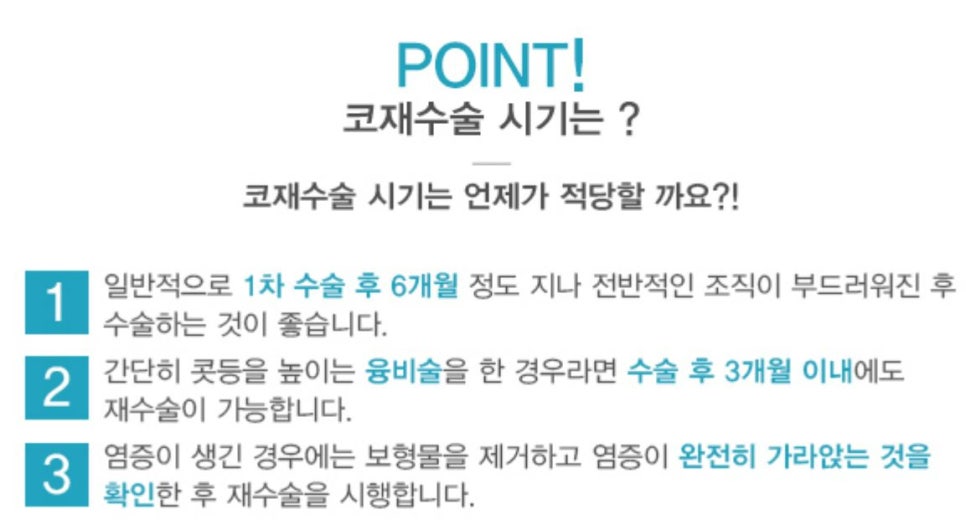
In general, revision nose surgery is usually performed
at least 6 months after the initial procedure.
This is because the tissue must stabilize after surgery
and the scar tissue must soften to a certain extent
for a more precise operation to be possible.
However, in exceptional cases:
-
If inflammation or infection has occurred
-
If there is a risk of implant extrusion
-
If severe contracture makes daily life difficult
The timing of revision surgery varies depending on the individual condition,
so you must receive an accurate diagnosis after 충분히 consulting with a specialist.
When revision surgery is absolutely necessary
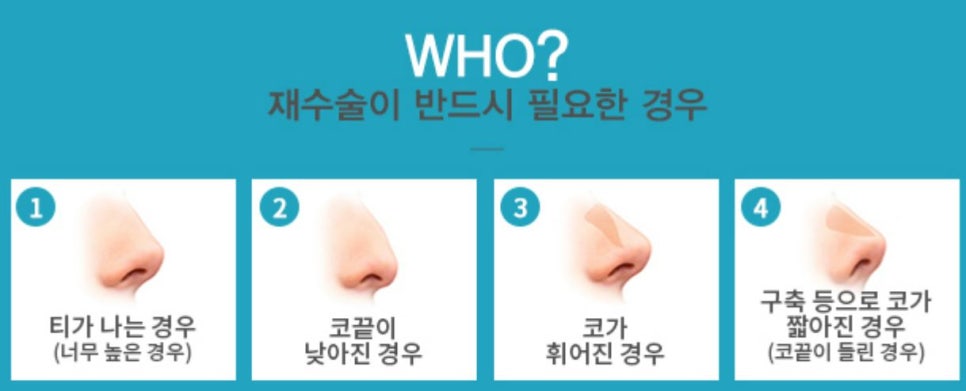
Revision nose surgery is not a procedure performed simply because of aesthetic dissatisfaction.
- When the bridge is too high
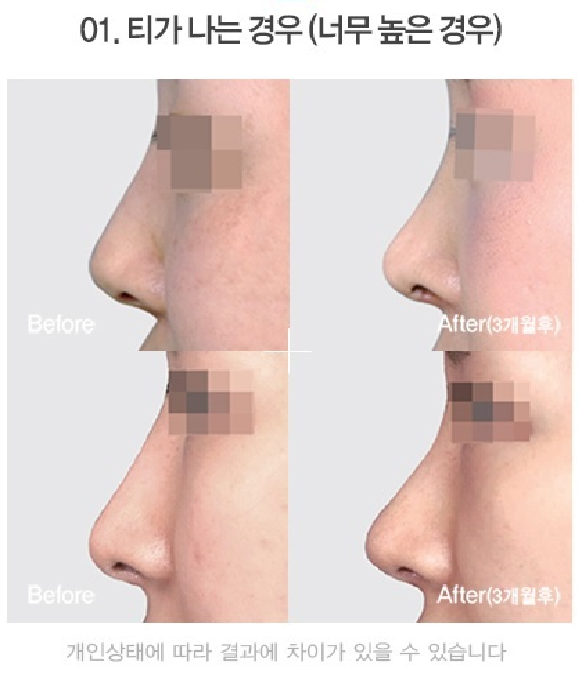
If the bridge is raised without narrowing the nasal bones,
or if silicone is inserted to cover a hump without removing it,
the nasal bridge can become too high.
In such cases, the silicone is removed, and in the case of a hump,
the hump is removed and the bridge is lowered with a smaller implant.
- When the tip of the nose has dropped
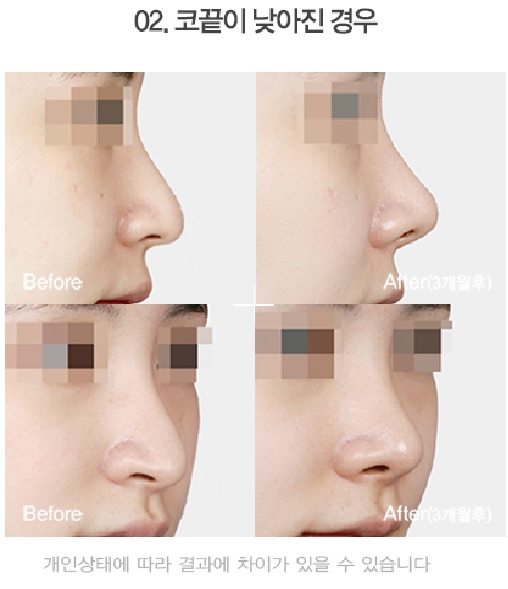
Unlike the bridge of the nose, the tip is made of soft cartilage,
so if cartilage or an implant is simply placed on top of it to raise it,
after 1 to 2 years the tip can droop,
making the bridge appear higher.
When the tip has dropped, the appropriate tip height is created,
subcutaneous fat is removed,
or narrow cartilage is grafted to make it sharper
and more natural.
- When the nose is crooked
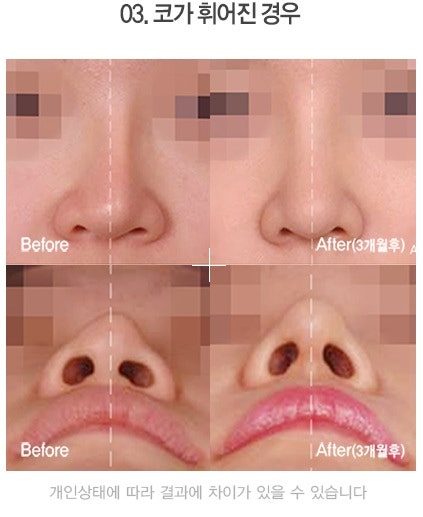
This is one of the most common revision cases. If the space intended
for the implant was made偏向 to one side,
or if the implant was not shaped to match the contour of the nasal bridge,
the implant can shift to one side,
making the bridge appear crooked.
In such cases, the implant is moved to the correct position,
or if there is a deviation in the nasal bone,
a crooked nose correction procedure is performed.
- When the nose becomes shorter due to contracture
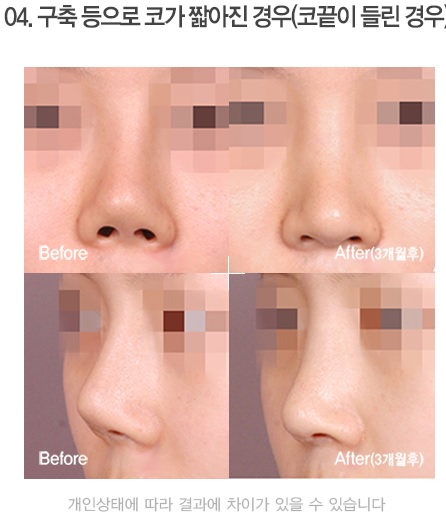
After nose surgery, if inflammation or a hematoma develops in the nose,
the surrounding tissue heals and hardens,
pulling the silicone upward and causing contracture,
a phenomenon in which the tip of the nose becomes shorter.
If contracture occurs, the cartilage in the tip of the nose must be corrected
back to its original length and position,
or the material must be replaced with septal cartilage,
ear cartilage, or costal cartilage.
Revision nose surgery is not simply doing it again.
Since surgery has already been performed, the tissue may be damaged
or cartilage may be insufficient,
and because removal of the existing implant must be approached carefully,
revision surgery should never be rushed and must be done only after
an adequate recovery period and a specialist's diagnosis.
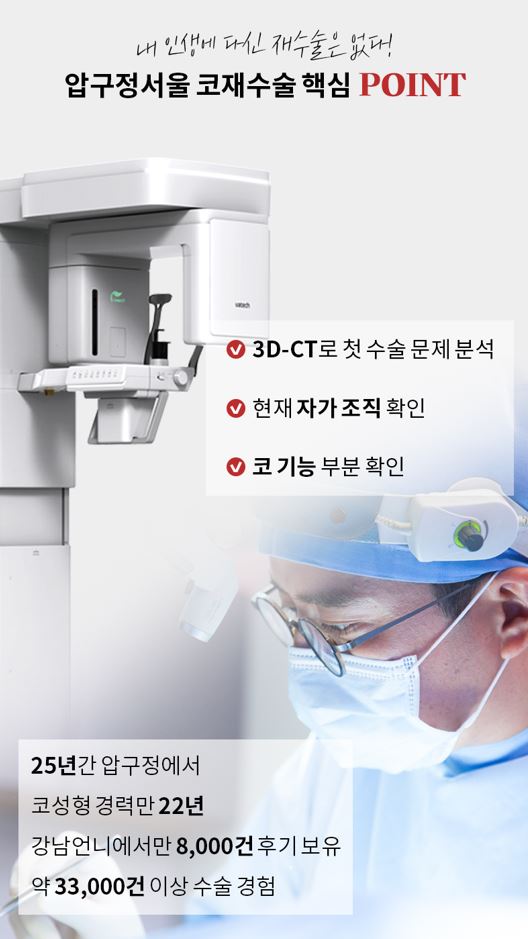
Because revision surgery can be successful only when the exact cause is analyzed
before surgery and the direction of treatment is well established,
revision rhinoplasty is a procedure that requires a high level of experience
and delicate technique.
At Apgujeong Seoul Plastic Surgery,
we have been providing care in Apgujeong alone for 25 years,
and among that time, we have over 22 years of experience specifically in nose surgery.
Based on more than 8,000 real reviews through the Gangnam Unni platform
and a cumulative experience of more than 33,000 nose surgery cases,
our goal is to go beyond simply creating a “pretty nose”
and create a harmonious and functionally safe nasal line.