Non-implant nose surgery
Let’s start with the point that is most often misunderstood.
Hello.
I’m Choi Joong-hyuk, a board-certified plastic surgeon at Apgujeong Seoul Plastic Surgery.
Among people considering rhinoplasty,
many worry about implants and ask,
"If possible, can I keep it natural and do it without implants?"
In particular, if the bridge of the nose is already somewhat present but the tip makes the face look congested,
there are quite a few people who become interested in non-implant nose surgery.
However, it is most important to understand the exact criteria and limitations of non-implant rhinoplasty.

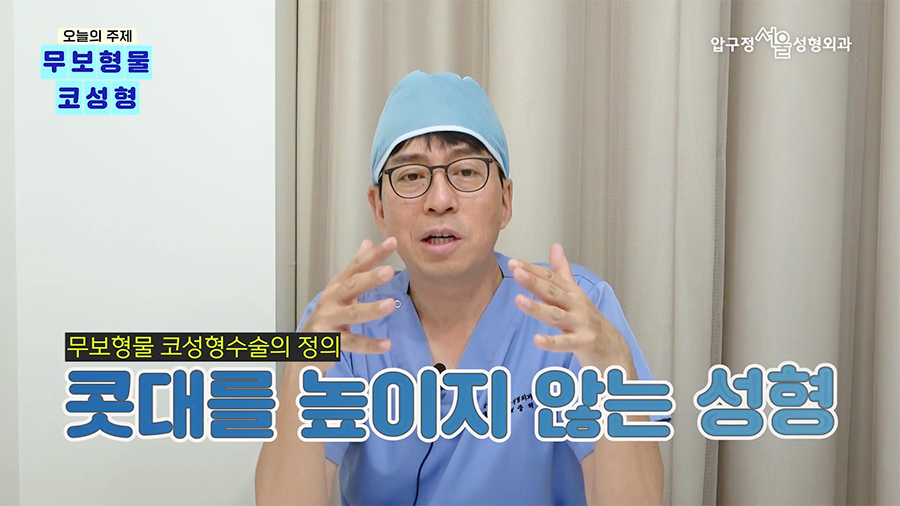
Because of the term "non-implant,"
many people think, "Instead of using an implant, the bridge is raised with another material," but
medically, that is different from the definition of non-implant nose surgery.
※ Non-implant rhinoplasty means
surgery that leaves the nasal bridge as it is and improves the shape mainly around the nasal tip.
In other words, it is a surgery that does not insert anything, not a surgery that substitutes with something else.
Rhinoplasty should be viewed separately
for the bridge and the tip.
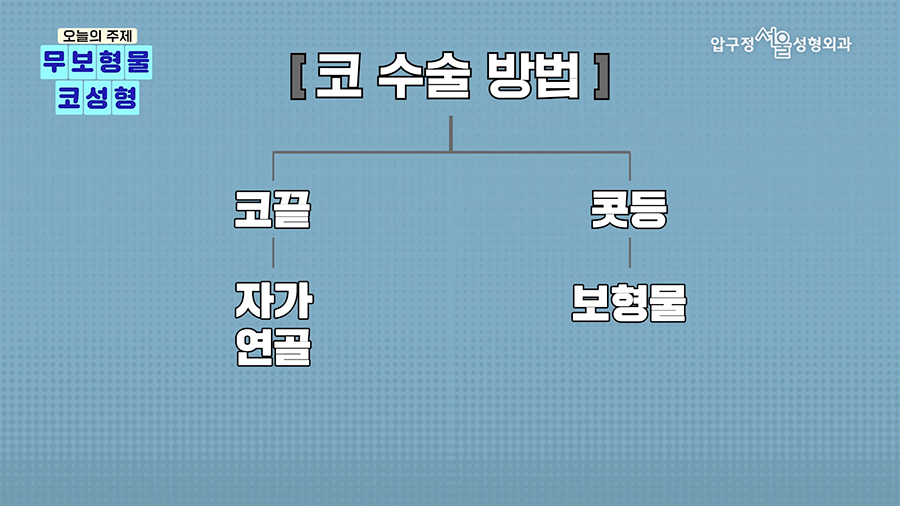
When explaining rhinoplasty, it is always divided into two parts:
the bridge and the tip.
When raising the bridge, an implant (such as silicone) is used,
while the tip is shaped using cartilage (septal cartilage, ear cartilage, etc.).
The important point here is that
implants are not originally used in tip surgery.
So, non-implant nose surgery should be understood as surgery that does not touch the bridge and corrects the length, direction, volume, and drooping of the tip.
The exact candidates for non-implant nose surgery
are the following.
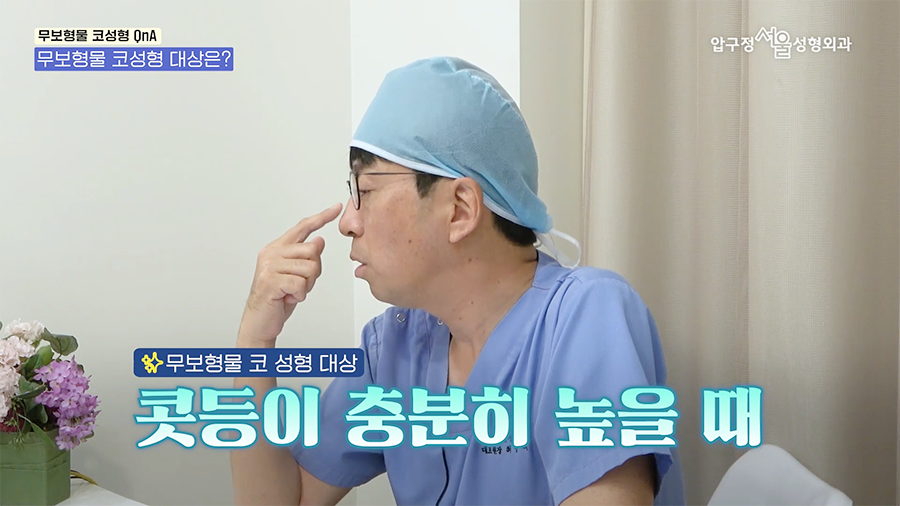
The cases where non-implant surgery is a good fit are clear.
- When the bridge height is sufficient but the overall impression is still unsatisfying
- When you are concerned about a upturned nose, a hooked nose, or a drooping nose tip
- When you value natural results more than an artificial change
- When you have strong psychological discomfort about implants
Especially in an era where many people want to look different without looking operated on,
this can be a very good option.
However, if the bridge is low and you still insist on being implant-free,
there can be a gap between expectations and results.
At this point, consultation with a board-certified plastic surgeon must come first.
Is raising the bridge with dermis or rib cartilage considered non-implant?
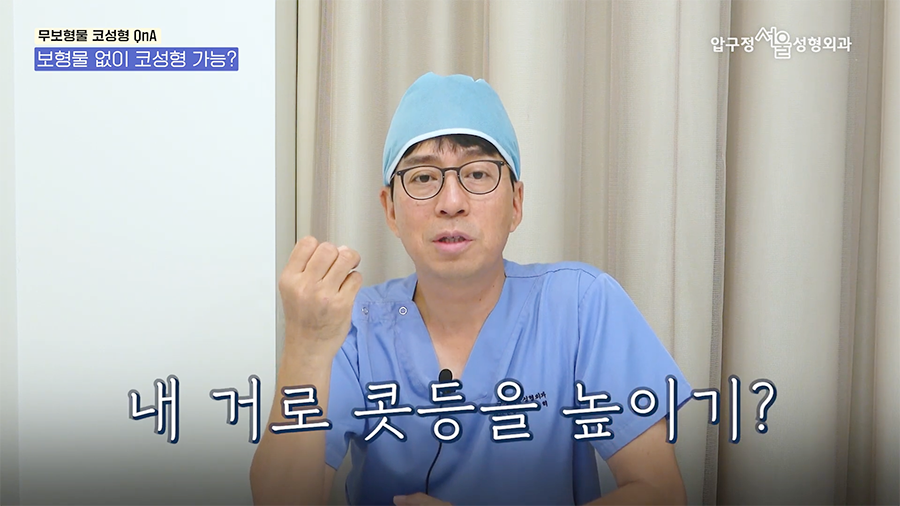
Sometimes people ask, if it’s not silicone but dermis or rib cartilage, isn’t that non-implant?
Medically, this does not fall under non-implant procedures for cosmetic purposes.
- Dermis: Because it may be absorbed or deformed, it is more suitable for cases where the skin has become thin due to repeated surgeries rather than for cosmetic purposes
- Rib cartilage: It has the drawback that the nose can become excessively stiff, but it is suitable for reconstructive surgery when the nasal structure has collapsed due to trauma or an accident
In other words, the use of human tissue to raise the bridge for cosmetic purposes is very limited.
The limits and benefits of
rhinoplasty without implants
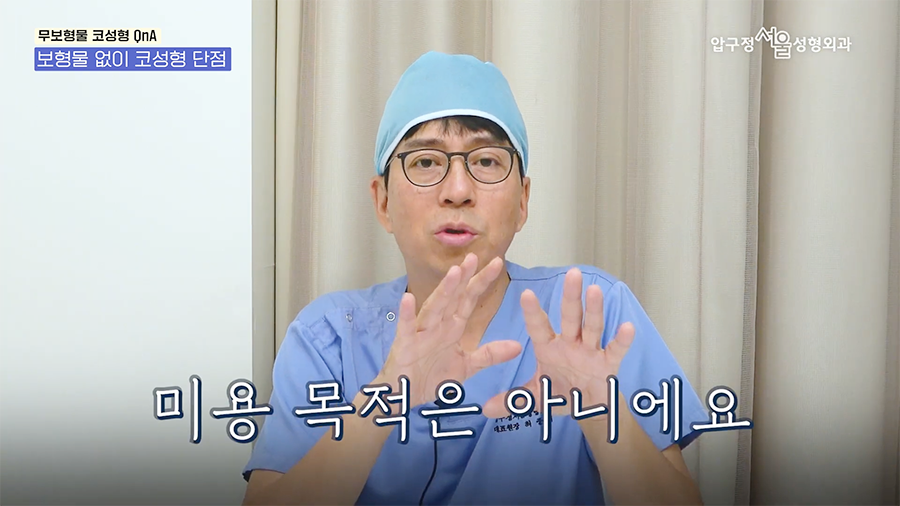
The biggest advantages of non-implant rhinoplasty are
- there is no foreign-body sensation
- the change is not excessive
- it blends well with the overall impression of the face
But the disadvantages are also clear.
- There is almost no change to the bridge
- It is difficult to expect a dramatic change in image
What I would like to say to you as a specialist
Non-implant rhinoplasty is
not a surgery that suits everyone
just because it is safe or just because it is natural.
- Bridge conditions
- Overall facial proportions
- The degree of change you want
Only when these three factors align
can satisfying results be achieved.
More important than the surgical method is
meeting a medical team that can accurately explain the option that is right for you.
In actual consultations, many people are confused about
whether their nose needs an implant
or whether tip correction alone is enough.
Even when the bridge appears to be the problem on the surface,
in many cases the impression looks congested because of the tip’s length, drooping, or direction.
That is why non-implant rhinoplasty should be understood
not as a procedure whose goal is simply to avoid implants,
but as a surgery that naturally restores balance according to your nasal structure and facial proportions.
If it is difficult to figure out on your own
which method is right for you,
we will check your nasal condition in person
and guide you toward the safest and most appropriate direction.
If you have any further questions about rhinoplasty,
please make a consultation reservation through the link below.
This has been Choi Joong-hyuk,
board-certified plastic surgeon at Apgujeong Seoul Plastic Surgery.
Thank you.