Correction for a Saddle Nose
Many people misunderstand this.
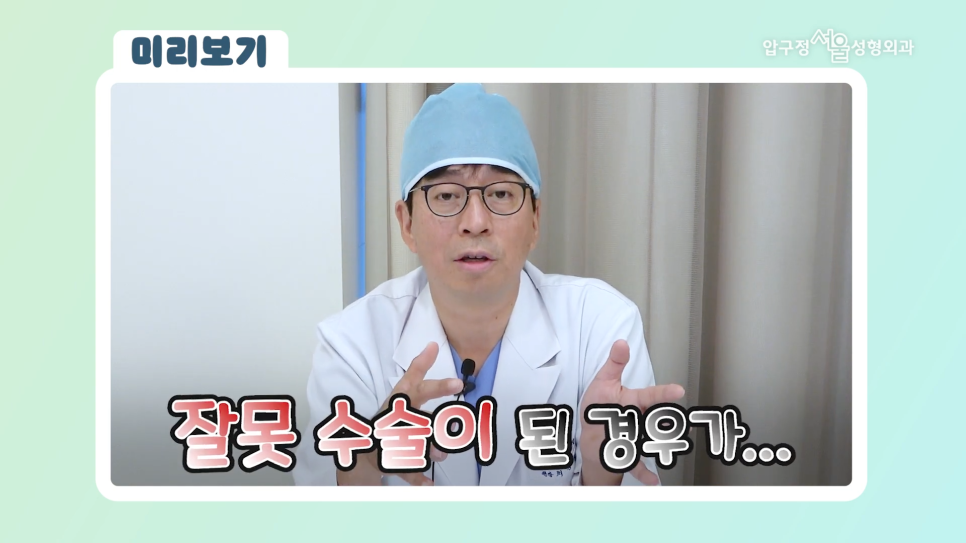
Hello.
I am Choi Joong-hyeok, a board-certified plastic surgeon at Apgujeong Seoul Plastic Surgery.
In the consultation room, I often hear, “Doctor, my nose is getting more and more upturned.
Isn’t it a contracted nose?” But in reality, true contracted noses are less common than people think.
A large number of people who seek correction for an upturned nose are dealing not with contraction, but with the result of an improperly performed tip surgery.
An upturned nose refers, quite literally, to a nose whose tip is lifted upward, making the nostrils excessively visible.
Conversely, when the tip droops downward, it is commonly called an aquiline nose or contracted nose.
The problem is that both of these should not be approached simply as issues of nose shape.
A contracted nose and an upturned nose are
completely different.
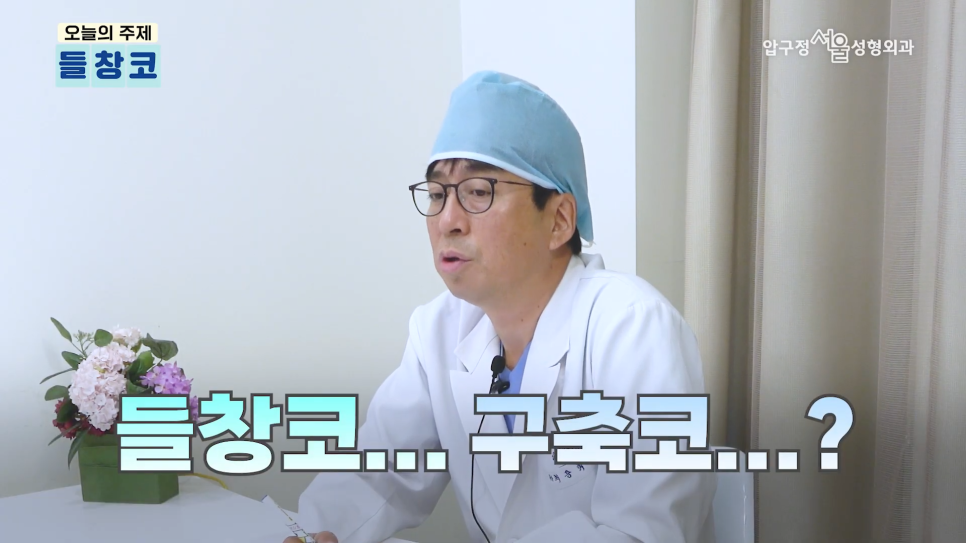
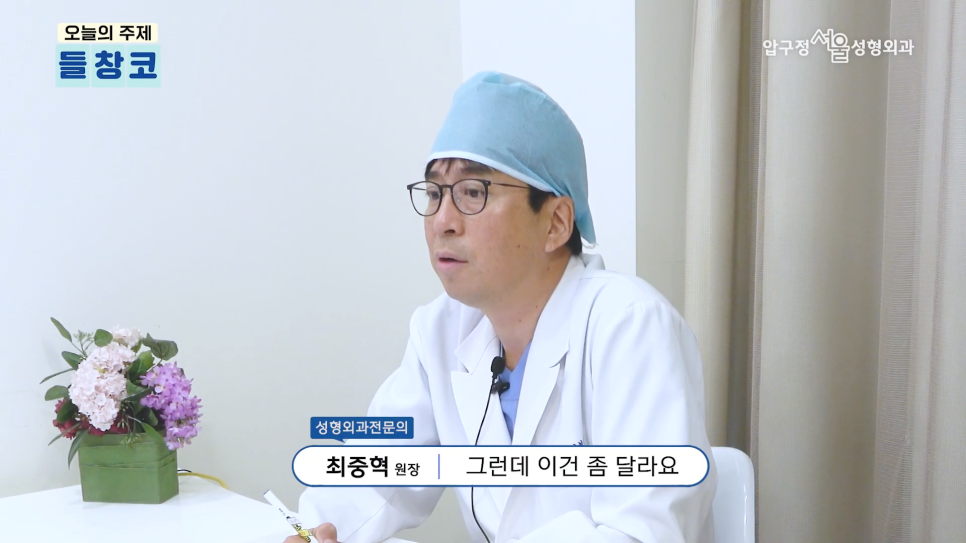
A contracted nose is a pathological condition in which the skin and soft tissue are damaged and gradually shrink due to inflammation, infection, or repeated surgeries.
By contrast, most upturned noses are structural problems caused by an incorrect position of the nasal tip cartilage and its support framework.
In actual practice, there are far more cases where
- a person comes in thinking it is contraction, but examination shows it is simply an upturned nose
- the nose has been upturned since immediately after surgery
A true contracted nose shows progressive changes,
and the tissue condition is different from the start.
If this distinction is not made, correction for an upturned nose will
be headed in the wrong direction from the outset.
The key to correcting an upturned nose is
the nasal tip cartilage.
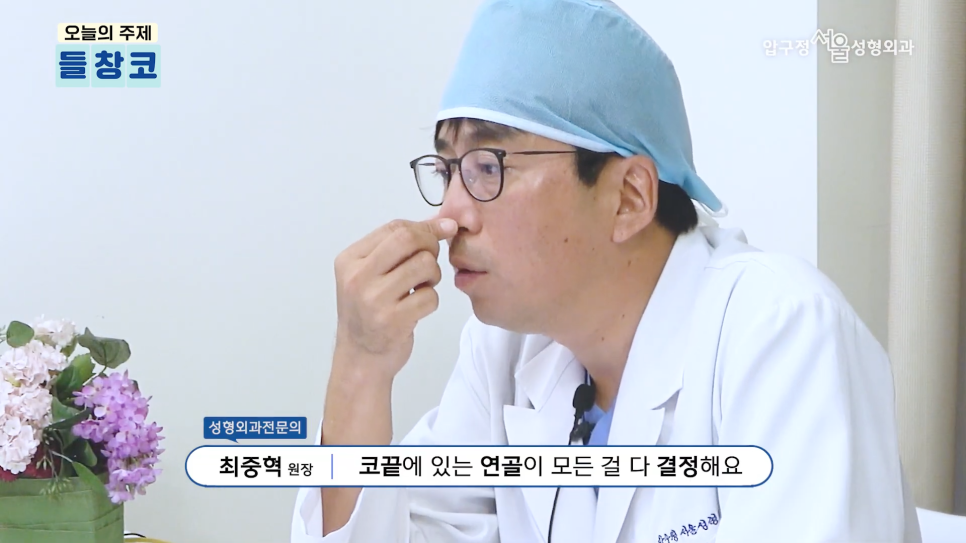
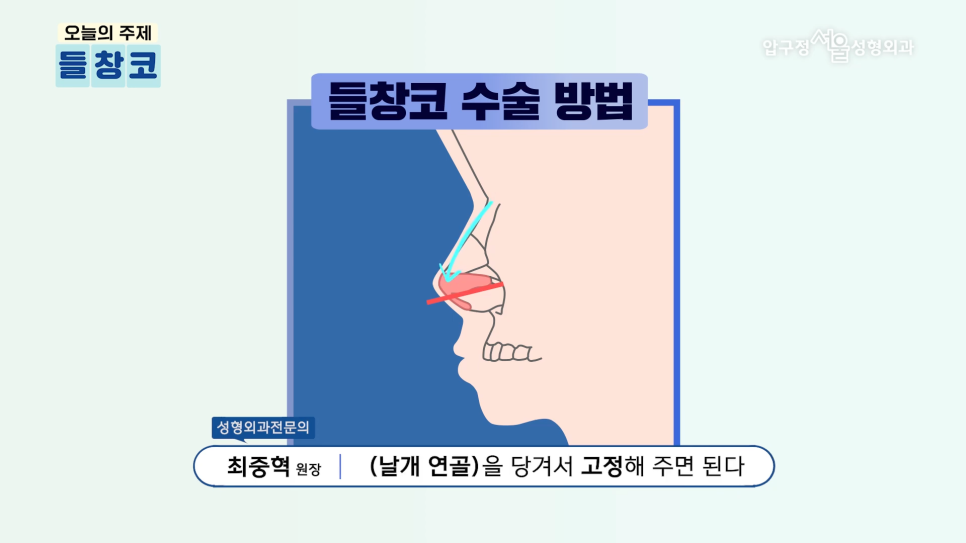
The nose is broadly made up of three layers: bone, cartilage, and cartilage.
The nasal bridge bone is shorter than people think, and the shape of the nasal tip is determined entirely by cartilage.
At the tip of the nose, there is a pair of movable cartilages. When the cartilage is large and positioned well downward, the nose appears higher and more stable; when the cartilage is small or positioned higher, the nose appears lower or more upturned.
Surgery for an upturned nose is a procedure that lowers the position of this cartilage.
The basic principle is to create a sturdy support underneath and fix the nasal tip cartilage to that support.
Why surgery for an upturned nose can feel difficult
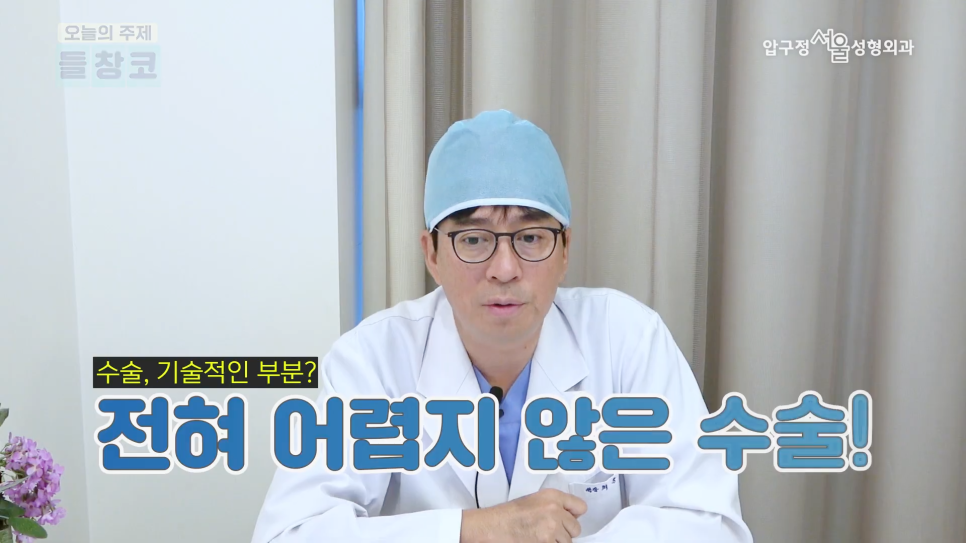
People often hear that surgery for an upturned nose is difficult.
But that is not so much because the surgical technique itself is complex as it is because sufficient support must be created.
Lowering the nasal tip is more important than raising it.
- cartilage strength
- the elasticity of the skin and soft tissue
are much more important.
That is why the supporting material is very important.
- Ear cartilage: soft, but weak in support
- Septal cartilage: well balanced in strength and elasticity, and the most ideal
- Rib cartilage: very sturdy, but it can become stiff
For most first-time surgeries and younger patients, correction for an upturned nose can be done sufficiently with septal cartilage alone.
If there is not enough, ear cartilage is used as an auxiliary support.
Cases that look like an upturned nose
but require a different surgical method
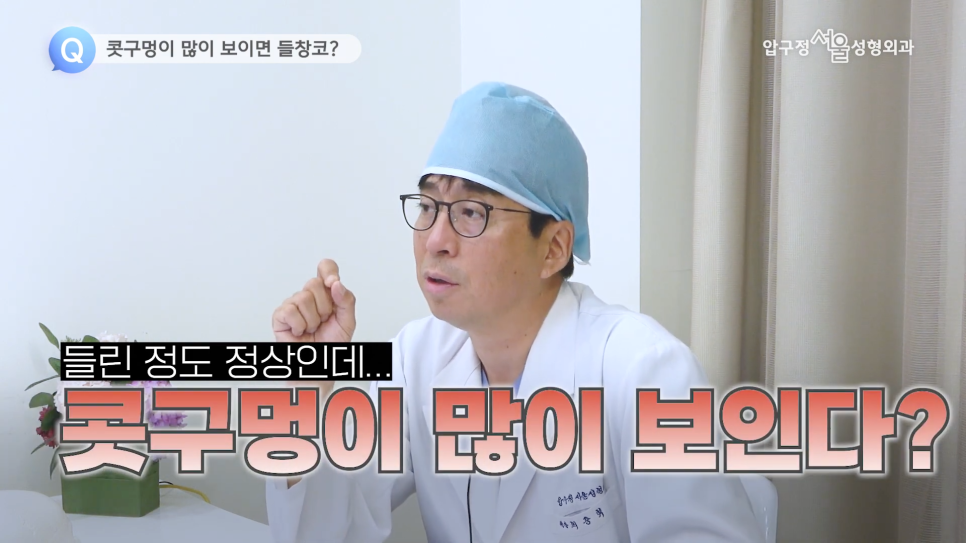
There are people whose nose is of normal length, yet whose nostrils are very visible. In such cases, the issue may not be the nasal tip, but rather a lack of skin.
In that case, it is not a simple surgery for an upturned nose;
- nasolabial angle adjustment
- lowering the nostrils
may be necessary.
Also, when someone feels that their nose is short,
It is essential to distinguish whether the nose is upturned, the nose is low, or both are present at the same time.
Closing remarks
The nose is the center of the face.
That is why even small changes can make people anxious, and even a single piece of information online can shake their confidence.
But surgery for an upturned nose is not about trends or photos; it is a surgery that understands structure.
“Why did this happen?”
“Is the current condition really contraction?”
“What correction method is appropriate for my nose?”
Answering these questions accurately comes first.
If the diagnosis is accurate,
I would like to say that the results of surgery for an upturned nose can be made sufficiently stable.
In actual consultations, there are many people who come in after worrying alone because they do not know exactly what category their nose condition falls into.
Even if it looks like an upturned nose, the necessary approach can vary greatly depending on the cause and condition, so there are limits to self-assessment.
Rather than worrying alone and only searching for information, the fastest method is to directly check the current condition of the nose and hear an accurate explanation.
If you have further questions about rhinoplasty,
please make a reservation through the link below.
This has been Choi Joong-hyeok, a board-certified plastic surgeon at Apgujeong Seoul Plastic Surgery.
Thank you.