Has your acne improved, but the marks still not gone away?
Have you ever had a case where the acne on your skin has calmed down, but red
or brown marks remain for a long time, or pitted traces
are left on the skin?
These traces can be more than simple “marks” and may be a
state in which the skin’s structure itself has been damaged.
In other words, they can be classified as “scars.”
Scars do not disappear in a short period of time, and the management
methods can vary depending on the condition, so let’s take a look at the types of scars and
daily care methods you can try.

Types of Acne Scars
When acne becomes a scar, they may all look the same,
but in detail they are divided into several types.
First, pigmentation scars appear as brown or red marks left on the skin
after inflammation.
These can become darker when exposed to ultraviolet rays or irritation, so
it is important not to touch them with your hands.

Next, atrophic scars, or pitted scars, have a sunken
surface. This is a type that can occur when
collagen is damaged and skin regeneration does not proceed properly.
In the case of hypertrophic scars or keloids, the skin
looks raised and feels firm.
They commonly appear on the back, chest, and other parts of the body.

Causes of Acne Scars
How acne progresses and how it is handled can affect whether acne scars develop.
When acne is squeezed by hand or extracted incompletely, the damage inside the skin can actually worsen and easily lead to scarring.
When inflammation spreads deeply, it can damage the dermis, making tissue reconstruction difficult during the recovery process.
Even if the skin is exposed to a lot of ultraviolet rays during the regeneration period,
melanin production can be stimulated and the marks may remain for a long time.

Scar Prevention & Care Tips You Can Practice in Daily Life
- Do not squeeze them with your hands
Lifestyle habits that help prevent acne scars from remaining on the skin
have a very important effect.
First, if acne appears, do not squeeze it with your hands.
Acne squeezed by hand can lead to infection and scarring, so
start with habits that do not irritate the skin.

- Be thorough with sun protection
The key to preventing pigmented marks is sun protection!
Even on cloudy days, we recommend thorough care by reapplying
sunscreen with SPF.
This is because if sun protection is not done properly and on time,
pigmentation can become darker.
Even a small acne scar on the skin can make the overall
image of the face look different, so careful and
consistent preventive care is important.

- Replenish moisture after washing your face
Skin regeneration begins with a healthy barrier.
Use a gentle moisturizer consistently so that the inside of the skin does not become dry or dehydrated.
After washing your face, we recommend restoring moisture right away!
- Get enough sleep and drink enough water
Skin is also affected by sleep and lifestyle habits.
Getting enough sleep and staying hydrated can also help
maintain the hormonal balance involved in sebum secretion and skin regeneration.
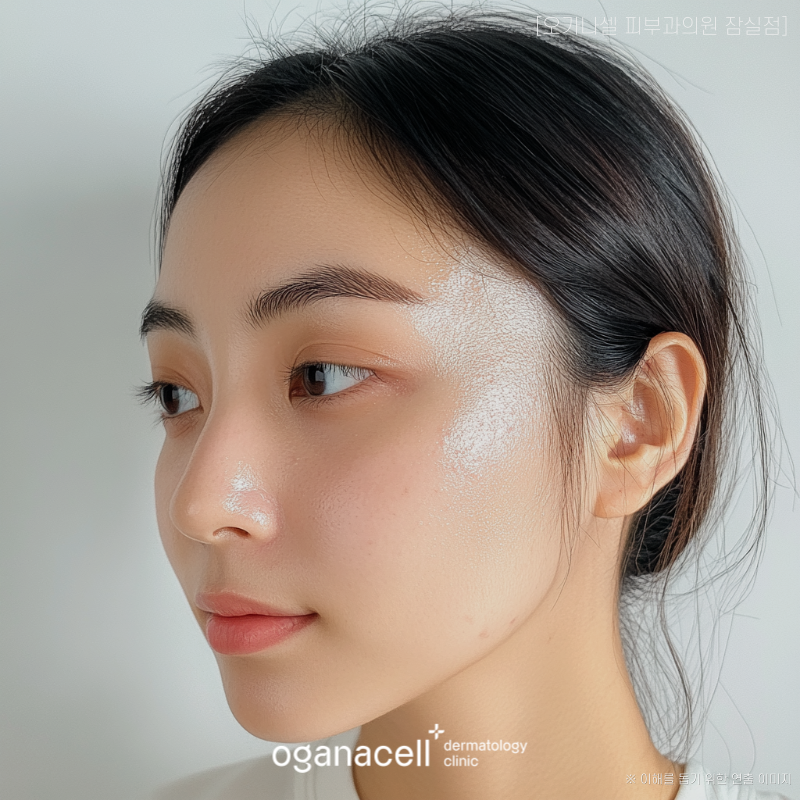
Care methods can also vary
depending on your skin condition!
Even if they look like the same acne scar, in reality the shape,
depth, and cause of occurrence can change how they are managed.
We hope this helps improve your skin through a management method
that matches your individual skin condition and the type of acne scar.
In particular, reducing habits in daily life that worsen scars
can be an important part.
The Jamsil branch of Ogana Cell Dermatology Clinic is located inside the Medical Center on the 11th floor of Lotte World Tower. Thank you.







 #AcneScars #CauseOfAcneScars #AcneScarCauses #AcneScarManagementMethods