Why Melasma Appears
How to Prevent It in Daily Life
Have you recently felt like your skin has become a little darker and duller,
and noticed new melasma appearing and becoming a concern one by one?
Our skin can develop melasma, blemishes, freckles, and pigmentation on the face and other areas for a variety of reasons.
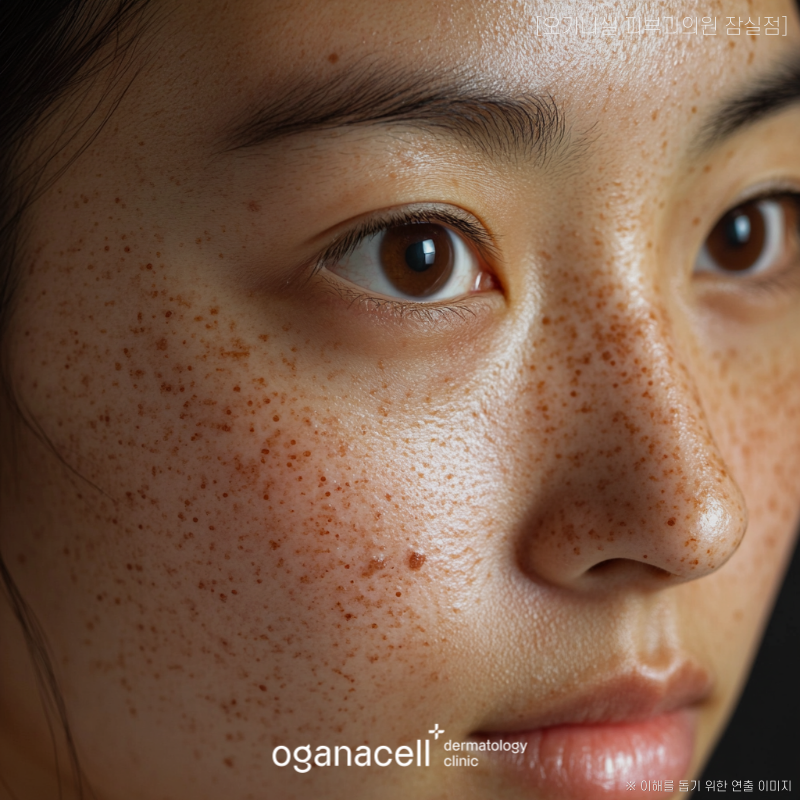
Melasma is a brown or grayish-brown pigmentation that appears on the skin. It usually forms around the cheekbones, forehead, and bridge of the nose, and is typically characterized by appearing symmetrically on both sides.
So, let’s take a look at why melasma appears and how it can be managed in daily life!

Causes of Melasma
The causes of melasma vary greatly from person to person.
While genetics can play a role, factors such as lifestyle habits, hormonal changes, and external irritation can also affect its size, depth, and degree of color.
Let’s look at the causes of melasma in more detail.
- Ultraviolet rays
One of the biggest causes of melasma is ultraviolet rays.
This is because ultraviolet rays stimulate melanocytes in the skin, causing them to produce too much melanin pigment.
As this pigment accumulates, it eventually leads to melasma.
- Hormonal changes
Melasma can appear or become darker when estrogen levels change due to pregnancy, taking oral contraceptives, or menopause.
That is why it is often called pregnancy melasma.
If a large amount of melasma suddenly appears on the face around pregnancy or childbirth, it can be suspected as being caused by hormonal changes.

- Genetic factors
If someone in the family has melasma, the likelihood of developing it is higher.
This is because skin type and melanin response tend to be inherited, so they naturally have an influence.
If you have a lot of melasma and it stands out regardless of age, compare your skin with that of your family members.
- External irritation
Excessive skin friction, heat刺激, and incorrect skincare can also trigger or worsen melasma.
In particular, repeated use of scrub products or beauty devices that generate a lot of heat can also have an effect.
For items such as puffs that you use often on your face, please check whether they suit your skin well, and it is recommended that you use them hygienically and manage them properly.

How to Prevent Melasma in Daily Life
If we consistently pay attention to the basics in daily life and manage them carefully, it can relatively help with prevention.
The use of sunscreen, which we always emphasize, and gentler skin care are important.
Even small patches of melasma can grow larger or become darker over time, so if you are concerned, I strongly recommend preventive care in daily life.

- Sun protection, every day and carefully
In daily life, it is important to use sunscreen with SPF 30 / PA++ or higher 365 days a year.
Even on cloudy days or during indoor activities, UVA passes through glass, so regardless of whether you are indoors or outdoors, it is recommended to use at least SPF 30.
If you are going outdoors, it is recommended to use sunscreen with SPF 50 / PA+++ or higher.
Applying it 30 minutes before going out and reapplying every 2–3 hours helps block UV rays more thoroughly.

- Gentle skin care
If you irritate the skin, melasma actually gets worse.
It can worsen due to strong friction, scrubs, or exfoliation, so even when washing your face as usual, being gentle and following a low-irritation skincare routine can help.
- An antioxidant-rich diet and hydration
Antioxidants such as vitamin C, vitamin E, and polyphenols may help suppress melanin production.
An antioxidant-rich diet with tomatoes, broccoli, blueberries, and green tea can also be helpful.
Drinking enough water is also important for maintaining balanced skin tone.
- Stress management and sleep
Personal stress management and sleep also have an effect.
This is because stress can cause hormonal imbalance.
Regular sleep and light exercise can help improve skin condition, so I recommend checking on these habits.

Once melasma appears, it is difficult to manage, so prevention is one of the most important pigment conditions.
Simply paying attention to daily sun protection and reducing irritation can help with melasma prevention and management.
Good products or dermatology treatments can also be considered, but above all, a preventive routine in daily life is important.
Oganacell Dermatology Clinic is located inside the Medical Center on the 11th floor of Lotte World Tower. Thank you.







 #ReasonsMelasmaAppears #MelasmaCauses #MelasmaPreventionCare