
I am Dr. Junhee Jeon, who runs a small dental clinic in Sinchon.
I am a specialist in conservative dentistry and a PhD in dentistry.
Conservative dentistry is the field that diagnoses and treats pathological conditions of natural teeth.
It is no exaggeration to say that all pathological changes that appear in natural teeth — cavities, fractures, cracks, wear, pain, mobility, and so on — fall within the scope of conservative dentistry.
20250304
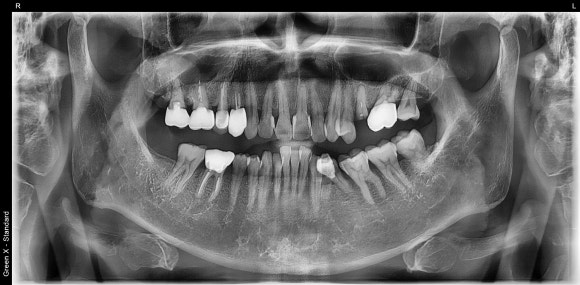
Today’s case is about a male patient in his 60s.
His oral health is in very good condition compared to other patients of the same age group.
He has never even had the common implant treatment.
20250304
But what a pity.
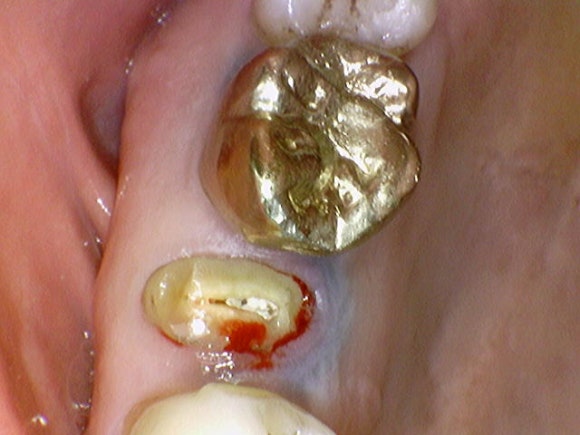
He came in with one tooth broken in half.
Fortunately, it does not seem to be due to decay.
Among people who have lived with healthy teeth for a long time like this,
there are often cases where the tooth can no longer withstand decades of biting force
and fractures on its own.
In some cases, it has to be extracted,
and in others, we are lucky enough to save it and use it.
20250304
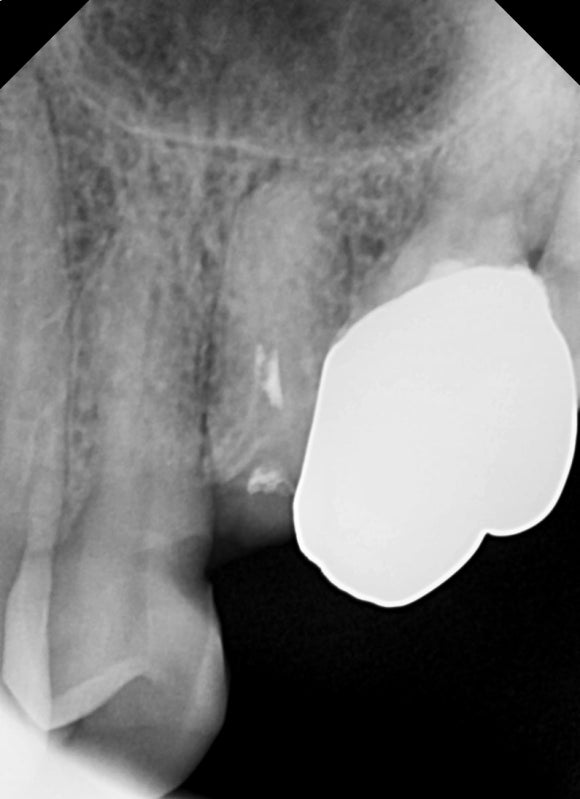
This patient is on the lucky side.
The reasons are as follows.
- There is no decay extending down along the root
- The root length is not particularly short
- There is no inflammation or bone loss around the root (there is no mobility)
- It is not a tooth that receives a very large chewing force (it is not a molar)
If the opposite were true, extraction would be more likely.
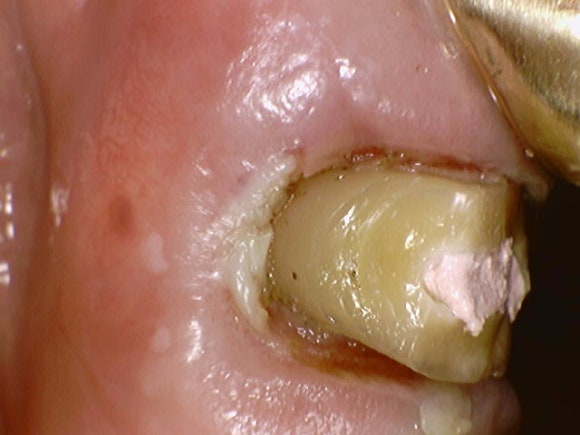
20250311
It is important to secure enough tooth structure where the crown will be bonded.
So I slightly reshaped the gums
to secure enough tooth height to support the crown.
This procedure is also called gingivectomy,
and because it is performed under local anesthesia,
it is not painful,
and even after the anesthesia wears off, there is not much discomfort.
Sometimes, patients say that the area throbs or feels sore for a few days.
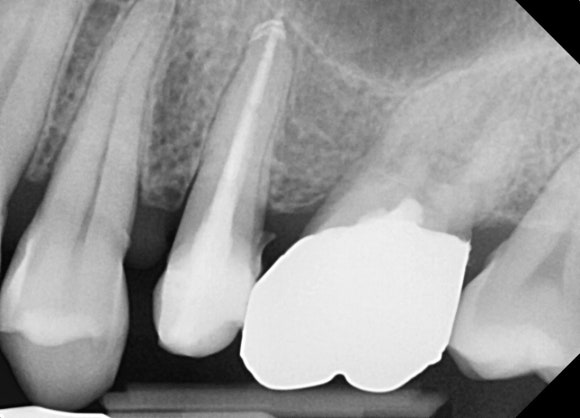
20250318
I performed root canal treatment on the tooth.
And then I placed a resin fiber post into the root,
which supports it from the root up to the crown.
You can think of it as the steel framework of a high-rise building.
It reduces the chance that the crown placed on top will come off.
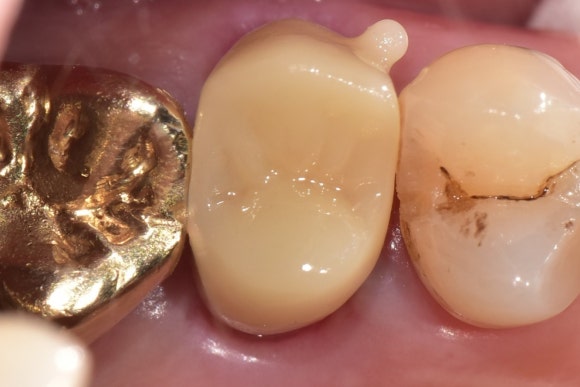
20250325
The treatment is complete once the newly built-up tooth is covered with a crown.
It is not a very complicated or difficult treatment.
The number of visits also does not differ greatly from a typical root canal treatment case.
Conclusion
- Even if the crown of a tooth has broken off and only the root remains, it may be possible to save and use it depending on the case.
- Rather than rushing to extraction and implants, look for a doctor with extensive treatment experience in this area. There is surely one near you.
- Teeth treated this way may have a shorter lifespan than other teeth. They need to be carefully managed so cavities do not develop. It is also a good idea to reduce hard and chewy foods.