Hello :)
If there is one eternal adversary in dermatology, it would be melasma.
Let’s take a look at this melasma that causes stress and pain for so many people!
Let’s begin this melasma series, where we cover everything about melasma!

Melasma appears quite commonly, more than you might think.
There are many people who are worried about it, and since there is so much discussion about melasma and blemishes,
we receive inquiries both online and offline.

Since melasma has many types and requires a lot of explanation,
let’s go through it one by one slowly!
What is melasma?
Melasma is a skin condition in which melanin pigment is excessively produced and deposited deep within the skin.
It is a pigmentary disorder that mainly appears on the face as brown patches with irregular shapes and various sizes.
It often develops on areas exposed to the sun (UV rays), and it commonly appears symmetrically on both sides of the face, especially on the cheeks, forehead, upper lip, nose, and chin.
In some cases, it can also appear on the arms, but that is very rare.
Why does melasma develop?
The exact cause of melasma has not yet been clearly identified,
but it is known to result from the combined effect of several factors.
It is especially common in women.
It often occurs in women in their 20s to 40s, and an increase in estrogen can stimulate melanocytes,
which may trigger or worsen melasma.
Ultraviolet rays also stimulate melanocytes and cause excessive pigment production.
Genetic factors and chronic skin irritation/friction can also worsen melasma.
Stress may also increase adrenal cortical hormones, which can stimulate melanin pigment
and sometimes worsen melasma.
Depending on how deeply the pigment is deposited, melasma can be broadly divided into epidermal melasma, dermal melasma,
and mixed melasma, which is a combination of the two.
Previous image
Next image
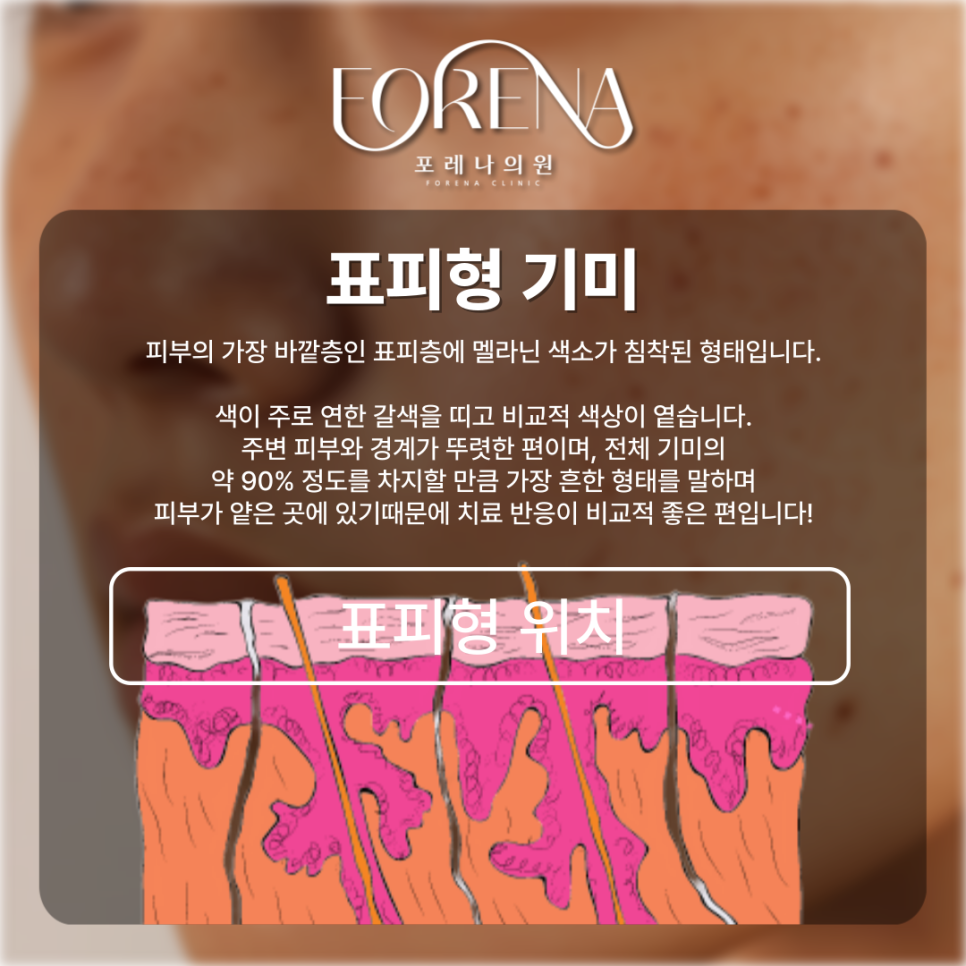
- Epidermal melasma
This is a form in which melanin pigment is deposited in the epidermis, the outermost layer of the skin.
It is usually light brown and relatively pale in color.
It has fairly clear borders with the surrounding skin, and it is the most common type, accounting for about 90% of all melasma.
Because it is located in a more superficial part of the skin, it tends to respond relatively well to treatment!
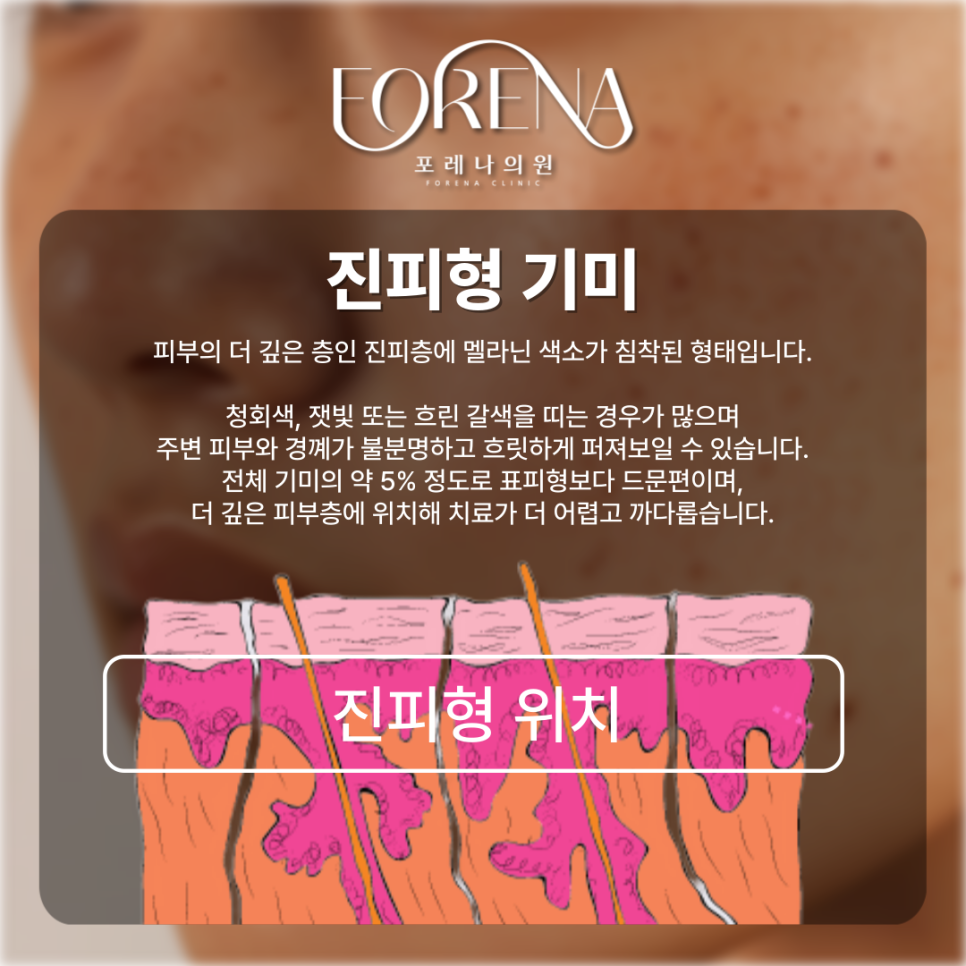
- Dermal melasma
This is a form in which melanin pigment is deposited in the dermis, the deeper layer of the skin.
It often appears bluish-gray, ashy, or dull brown,
and its borders with the surrounding skin are unclear and may look diffusely spread.
It accounts for about 5% of all melasma, making it rarer than the epidermal type,
and because it is located in a deeper skin layer, treatment is more difficult and complicated.
- Mixed melasma
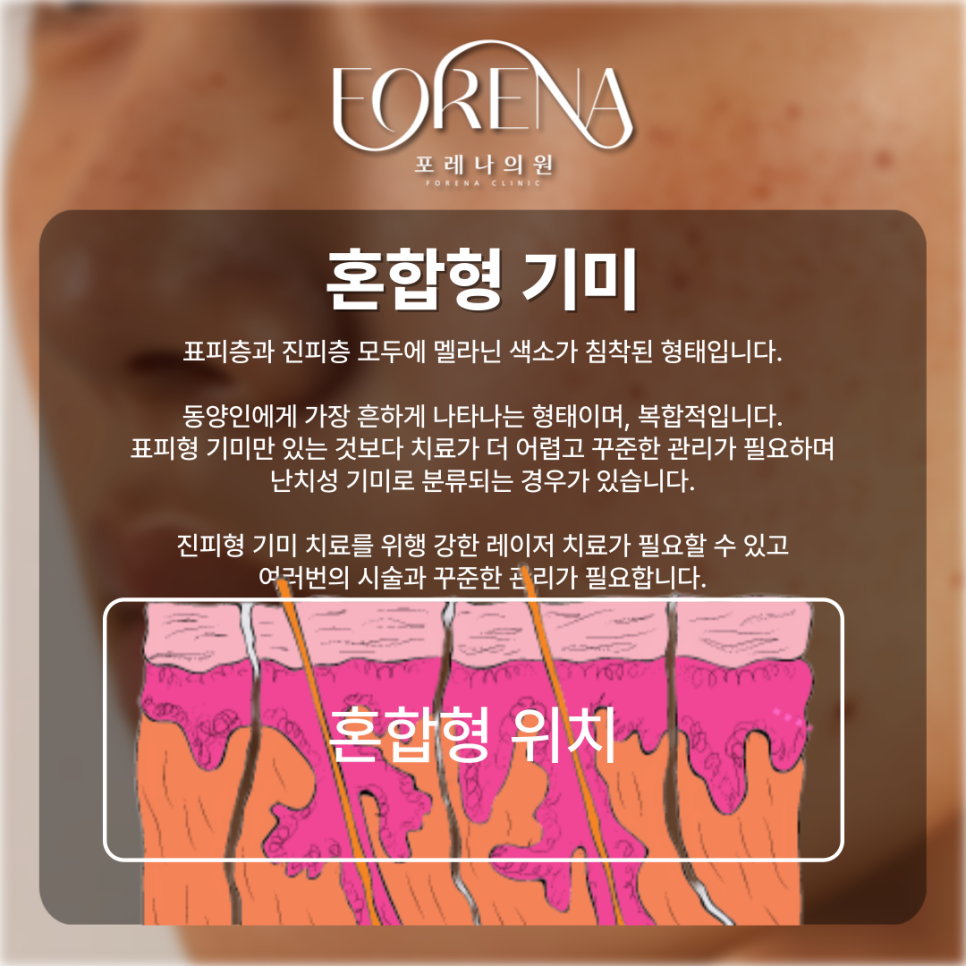
This is a form in which melanin pigment is deposited in both the epidermis and the dermis.
It is the most common type in Asians and is complex.
It is more difficult to treat than melasma that exists only in the epidermis, and it requires consistent management.
It may be classified as refractory melasma.
Treating dermal melasma may require strong laser treatment,
and multiple sessions and ongoing care are necessary.

How can melasma be prevented?
Sun protection: This is the most important. Even on cloudy days, UV rays are present,
so throughout all four seasons, apply sunscreen with SPF 30 or higher carefully 30 minutes before going outside,
and reapply every 3–4 hours.
Sun protection is also important indoors.
Use umbrellas, hats, sunglasses, and similar items to minimize sun exposure.
Skin heat management: When skin temperature rises, blood vessel growth may be promoted,
which can worsen melasma.
So it is best to avoid exposure to hot environments and manage skin temperature with cold compresses, etc.
Stress management: Adequate sleep and rest,
and stress management help prevent hormonal imbalance and can help prevent melasma from worsening.
★★★★Sun protection is the number one priority!★★★★
Foods that may help with melasma?
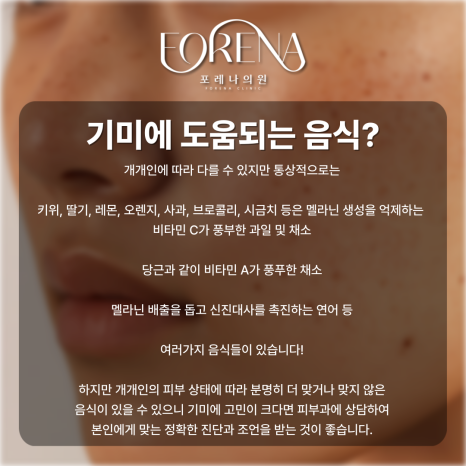
It may vary from person to person, but generally:
Fruits and vegetables rich in vitamin C, which helps suppress melanin production, such as kiwi, strawberries, lemons, oranges, apples, broccoli, and spinach
Vegetables rich in vitamin A, such as carrots
Foods such as salmon, which help with melanin elimination and promote metabolism
There are various foods like these!
However, depending on each person’s skin condition, there may certainly be foods that suit them better or do not suit them well, so if you are greatly concerned about melasma,
it is best to consult a dermatologist and receive an accurate diagnosis and advice tailored to you.
Refractory melasma?
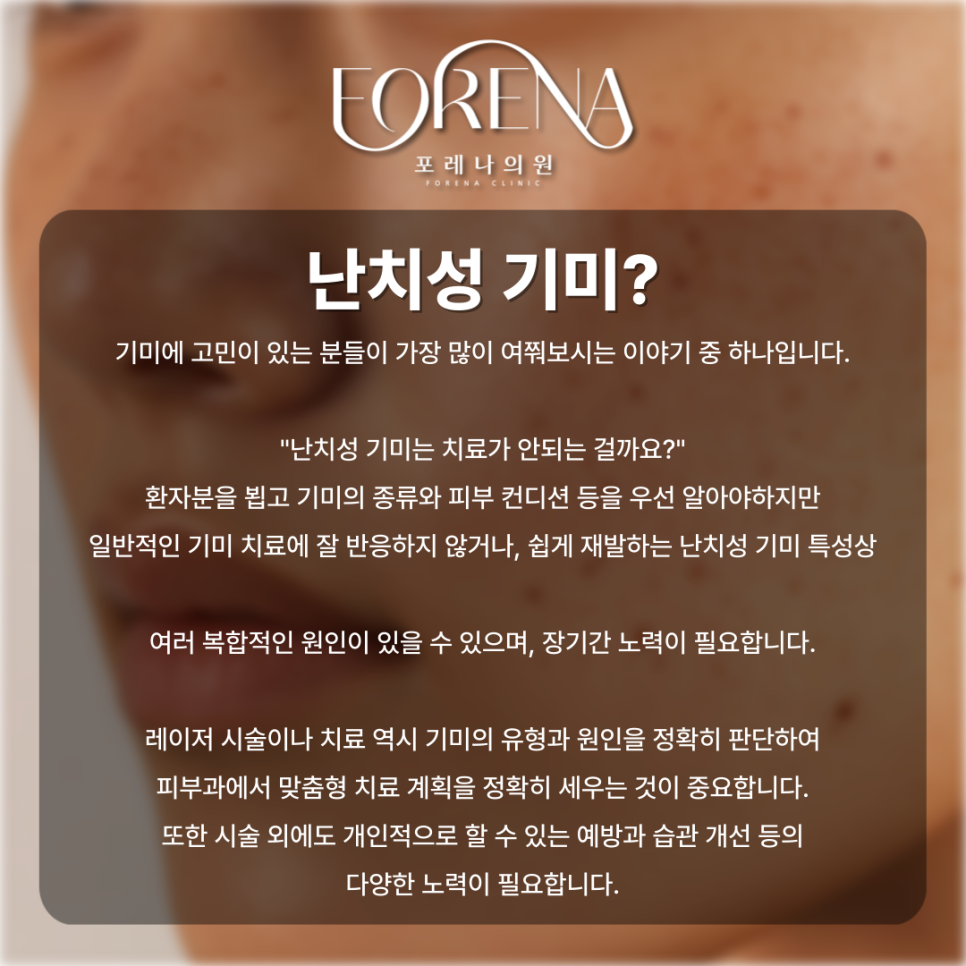
This is one of the questions most often asked by people who are worried about melasma.
Is refractory melasma untreatable?
We need to first examine the patient and understand the type of melasma and the skin condition,
but due to the nature of refractory melasma, which does not respond well to general melasma treatment or easily recurs,
there may be multiple combined causes, and long-term effort is needed.
For laser procedures and treatment as well, it is important to accurately determine the type and cause of melasma
and establish a customized treatment plan at a dermatology clinic.
In addition, beyond procedures, various efforts such as personal prevention and habit improvement are necessary.
Today, we took a fairly long look at melasma!
Prevention, habit improvement, and ongoing treatments require more effort from the people who are worried about melasma
than from the experts who provide the treatment.
At Forena Clinic, we are always working to help many people resolve their melasma concerns,
and we continuously monitor new melasma-related laser procedures as well as existing toning treatments
and other developments that may help treat melasma.
I hope your concerns about melasma will lessen a little, and that concludes today’s story!
If today’s post was helpful,
please give it a quick like once~! See you in the next post!
👇Posts that are good to read together if you are worried about melasma👇
👇Direct link to Naver Place reservation👇
👇Directions on Naver Map👇
✅ This post was written directly by Forena Clinic for the purpose of providing medical information, in compliance with Article 56, Paragraph 1 of the Medical Services Act.
✅ Because the patient’s skin condition and the clinician’s clinical experience can vary greatly, please make your decision after sufficient consultation with a doctor.
✅ The treatment photos in this post were taken with the patients’ consent. The before/after photos were not altered, and were taken under the same conditions.
✅ Please view this post for reference only. For detailed information, we recommend visiting a medical institution directly for consultation.
✅ All procedures performed after visiting the clinic may cause minor or major side effects depending on the individual. Please consult with a professional medical staff member and fully understand the possible side effects and precautions before proceeding.