Adjusting the approach according to the type of nostril-lowering procedure
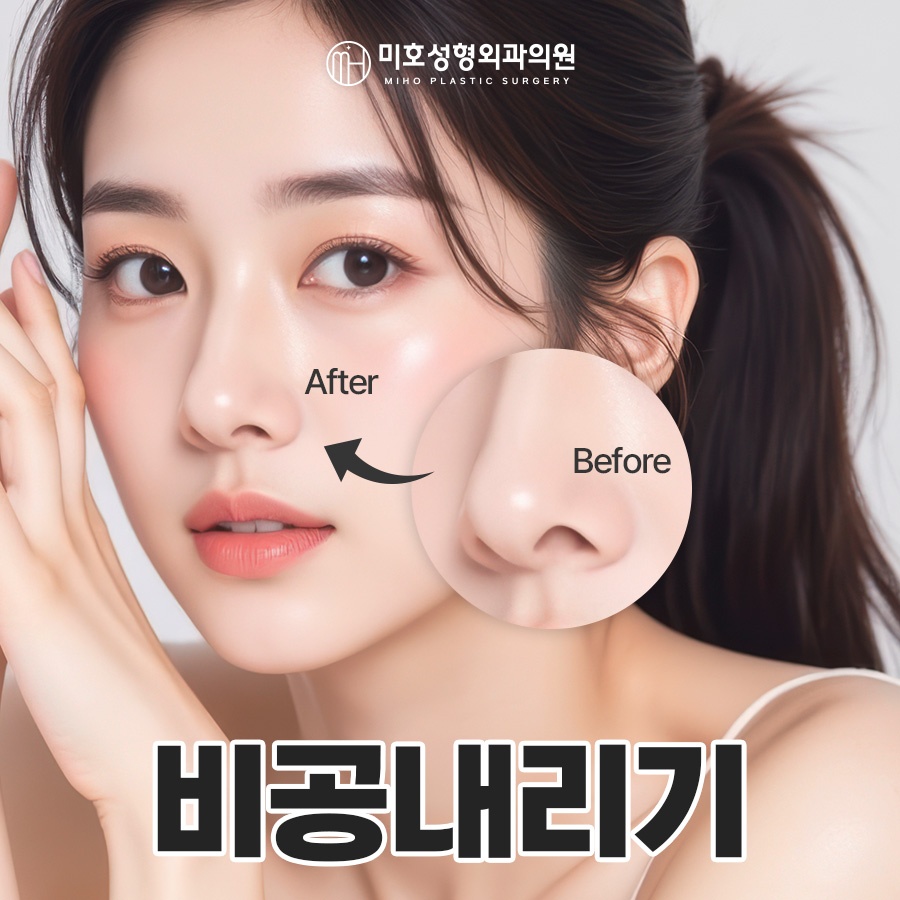
Everyone has slightly different features and
an overall different atmosphere, and their goals
also vary. As a result, the standards each person
considers important among their external features
will inevitably be different.
The face appears as a unique image created by
the combination of detailed elements, such as
the overall lines and the position and shape of
the facial features. When the shape of the nose,
which is located in the center of the face, is not
well balanced, a person may feel that improvement
is needed aesthetically.
Because the nose is essential for breathing,
it should not be treated as merely an aesthetic
concern. Its functional aspects must also be
considered, and the procedure should be approached
with care to prevent problems. When the nasal tip
is short and the nostrils are exposed,
the nose should be corrected according to its type
through a nostril-lowering procedure.

Since the problematic area and its shape
may differ slightly from person to person,
the first step is to determine what type
the individual currently has.
If the nasal bridge has descended appropriately
with a suitable line and height, but the alae
appear blunt and the nasal tip looks as though
it is turned upward, a nostril-lowering procedure
can be applied to create a more harmonious
external shape of the nose.
Although an upturned nose and a “dragon nose,”
which can look similar because the nasal tip
appears elevated, have different structural causes,
the methods used for them are not the same.
Therefore, even when they look similar, it is
especially important to identify the cause
thoroughly and proceed with an appropriate plan.

An upturned nose with significant exposure of
the nasal cavity refers to a condition in which
the nose is short, causing the nasal tip to rise.
The end of the nose is pulled upward as if
it were being lifted, resulting in exposure
of even the nasal cavity.
In this case, rather than a nostril-lowering
procedure, the nose must be lengthened
to achieve the proper result.
Autologous tissue, such as rib cartilage or
septal cartilage, is mainly used. Since the issue
is caused by the nose being too short, lengthening
the nasal tip and lowering it allows the nostrils
to be exposed naturally and corrects the
upturned nose.
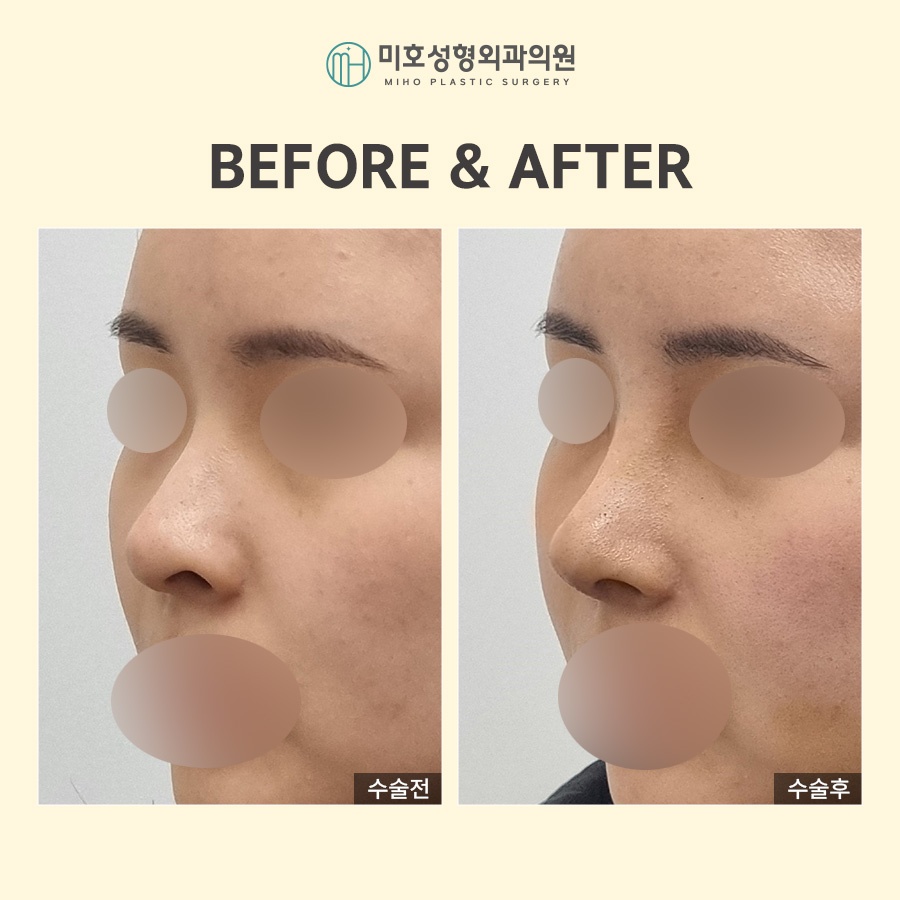
A “dragon nose” refers to a condition in which
the nostrils appear severely exposed from both
the front and the side. The issue concerns the
shape of the nasal alae themselves, rather than
the length of the nose.
In this case, cartilage is inserted to lower
the nostrils and compensate for a shape that
was somewhat incomplete.
As the causes and the methods that can help
are different, even if the appearance of a short
nose seems similar, it is necessary to examine
the details carefully and find a plan and design
suited to the individual.
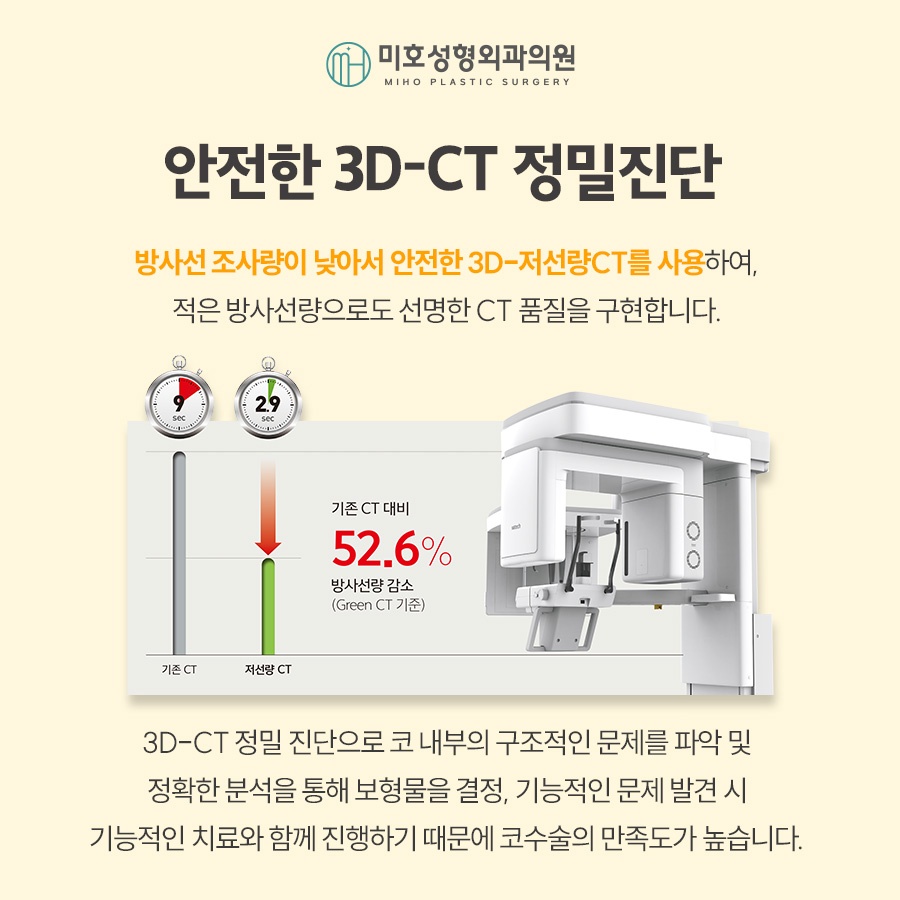
To adjust and correct the nose according to
the type through a nostril-lowering procedure,
the first step is to determine whether the nose
falls within the relevant range of concerns.
If the nose is shorter than the normal nasal
length, making even the face appear flatter,
or if the point where the nose begins is located
lower than usual, it is considered a short nose.
In that case, correction suited to the symptoms
is needed to reduce nostril exposure, improve
the length, and restore harmony within the face.
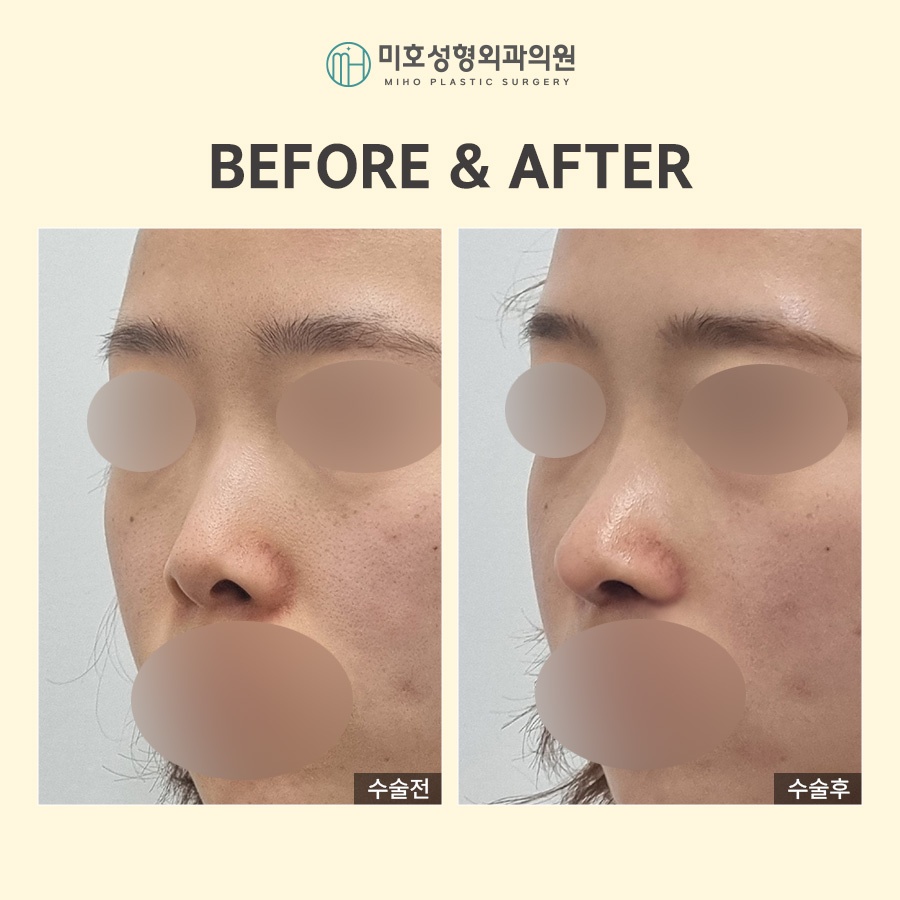
If the nose is only slightly short, the nasal tip
can be lowered naturally by finely adding and
grafting the necessary amount of autologous
cartilage between the alar cartilage and the
septal cartilage.
At the same time, the shape of asymmetrical
nostrils can also be corrected along with
the shape of the nose. Although function is
of primary importance in this area, external
factors also have a significant effect, so they
must be considered from multiple perspectives
to ensure that aesthetic improvements are
made as well.
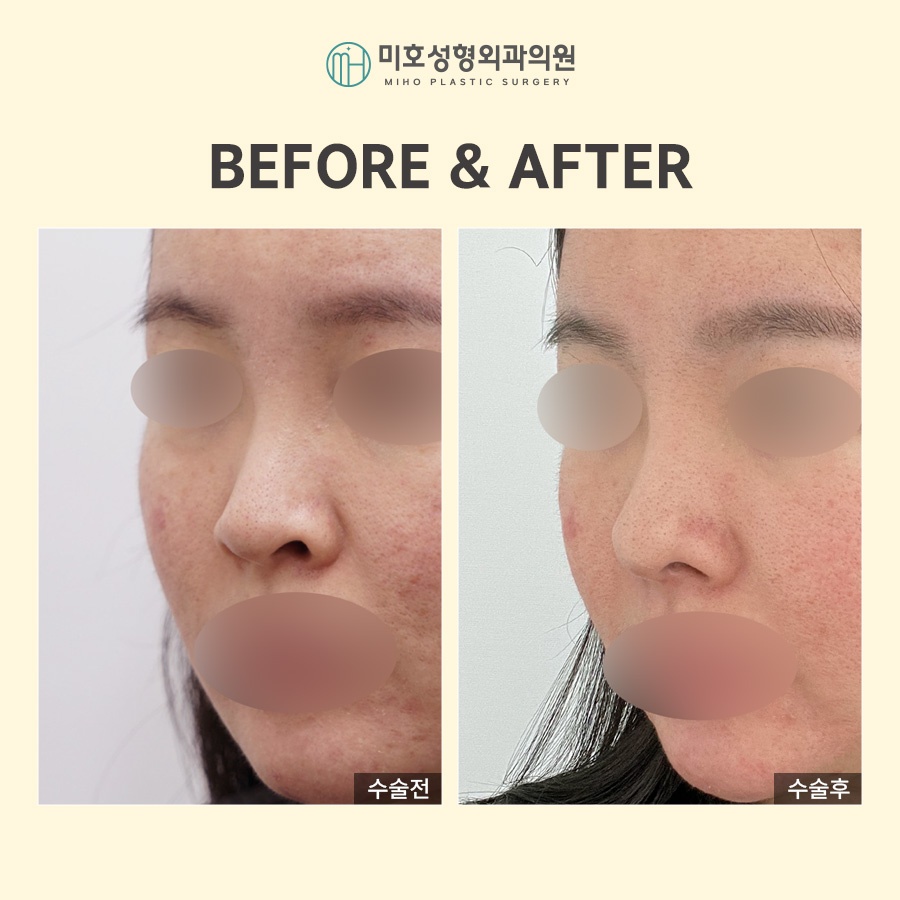
If the alae are raised, causing the nasal tip
to rise and making the entire nose appear
shorter, a nostril-lowering procedure that
reshapes the problematic cartilage is appropriate.
After cutting the upper portion of the alar
cartilage, lowering it, and securing it in place,
the nasal tip is lowered as well. This makes
the nose appear longer and allows the previously
exposed nostrils to show only to a natural extent.
If the height still seems somewhat insufficient
even after both methods have been performed,
cartilage grafting can be combined with nasal
augmentation, placing an implant on the bridge
of the nose as well.
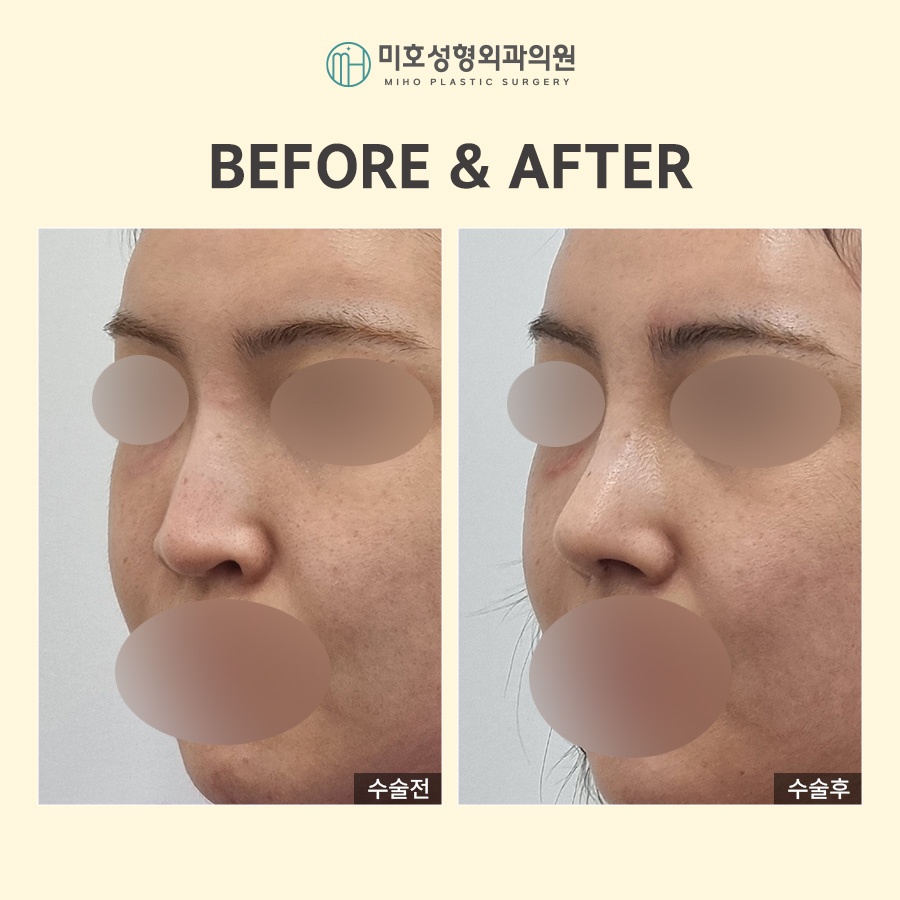
To determine the appropriate nasal length
and height, the overall nasal line must be
considered in relation to the person’s natural
face shape, cheekbone volume, and harmony
with the other facial features.
The goal is not simply to make a shortened
nose slightly longer, but to improve and correct
it naturally. Therefore, care must be taken based
on each person’s natural beauty, individuality,
and image so that functional damage or
inflammation does not occur.
The reason autologous tissue is grafted instead
of using artificial implants is that it can improve
the rate of integration and help reduce potential
future problems.
Although this is an area where aesthetic features
stand out, the nose is above all an important
organ responsible for breathing. It must therefore
be approached with particular care to prevent
symptoms such as damage to the internal tissue
or inflammation.
For this reason, it is important to carefully
examine the cause, shape, and internal structure,
and to consider the procedure cautiously at a
facility where you can consult directly with
the operating surgeon.

Everyone lives with some degree of concern
about the appearance they were born with.
In some cases, a person may overcome these
concerns to some extent through their own efforts,
but more often, this is not possible.
Cultivating inner beauty should come first,
but for those who frequently meet with many
people, appearance can become one of the major
factors influencing self-esteem.
When the appearance is improved in a positive
direction, it can help restore confidence and
contribute positively to a more active life.
Therefore, consider correcting the features
that have been a source of insecurity through
a nostril-lowering procedure and refining them
into the image you desire.


Previous image
Next image