
Vision is an essential sense for recognizing
and exploring information around us.
When an abnormality develops in the eyes responsible for this function,
it not only restricts daily life
but also lowers overall quality of life.
Because the eyes are sensitive to external stimuli,
even the slightest foreign-body sensation can easily cause discomfort.
Discomfort caused by fatigue or temporary irritation
disappears within a short time, but
if it occurs frequently or persists for a long time,
there is a higher likelihood of an eye disease.
In particular, if a stinging sensation as though dust has entered the eye
or persistent tearing in severe cases continues,
entropion may be suspected.
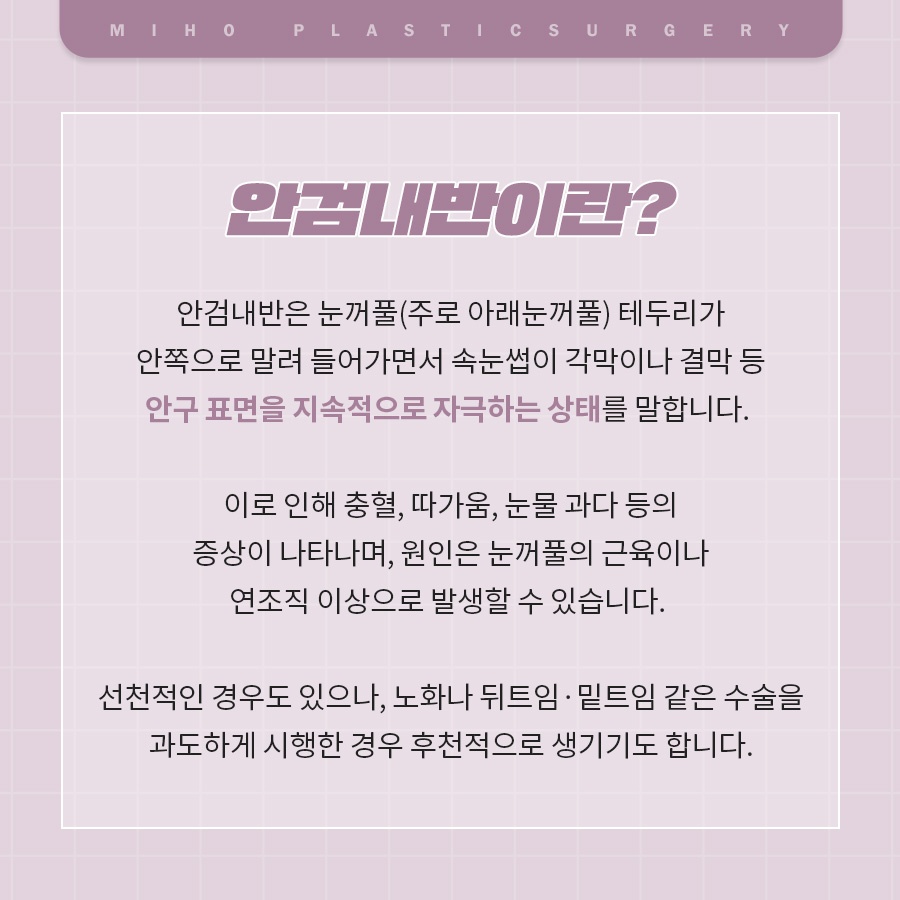
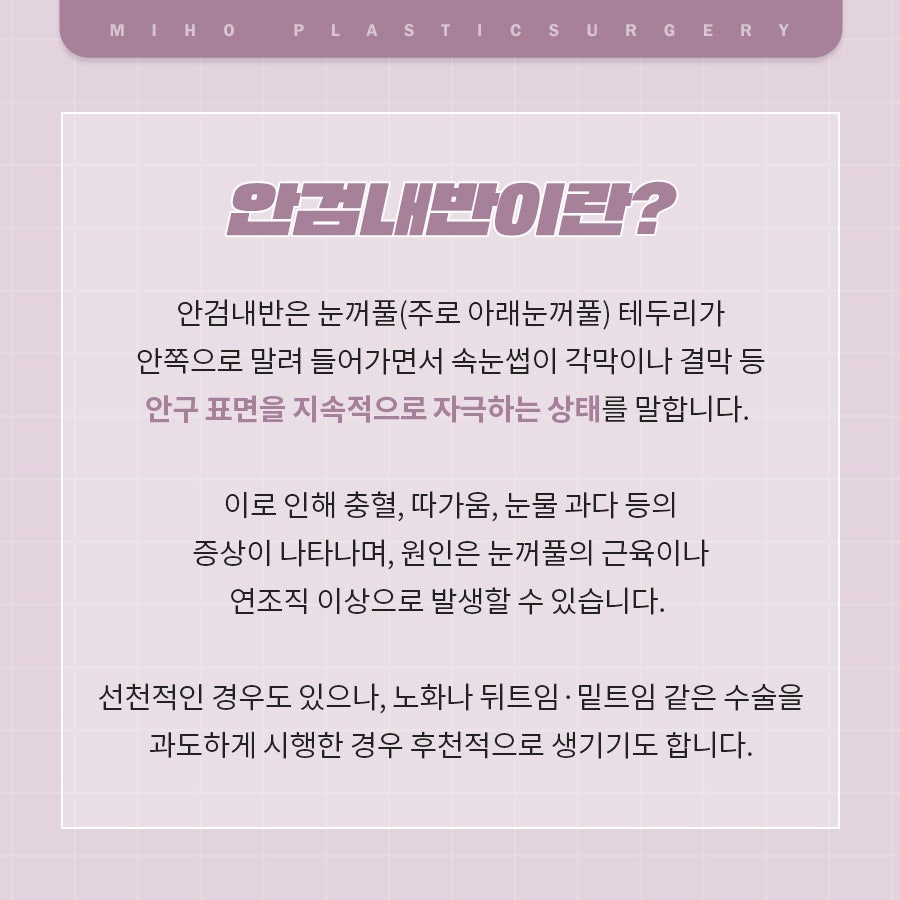
The discomfort caused by entropion
comes from the edge of the eyelid turning inward,
causing the eyelashes or skin to touch the cornea
and continuing to irritate it.
There are various causes of this structural abnormality,
and because physical damage accumulates,
there is a risk that it may lead to complications.
Conditions that may develop subsequently include
keratitis, corneal ulcers, impaired vision, and scarring,
which in some cases may remain as permanent damage
that is difficult to recover from.
Therefore, the first step toward resolving the problem
is to clearly identify the cause
and respond according to the situation.

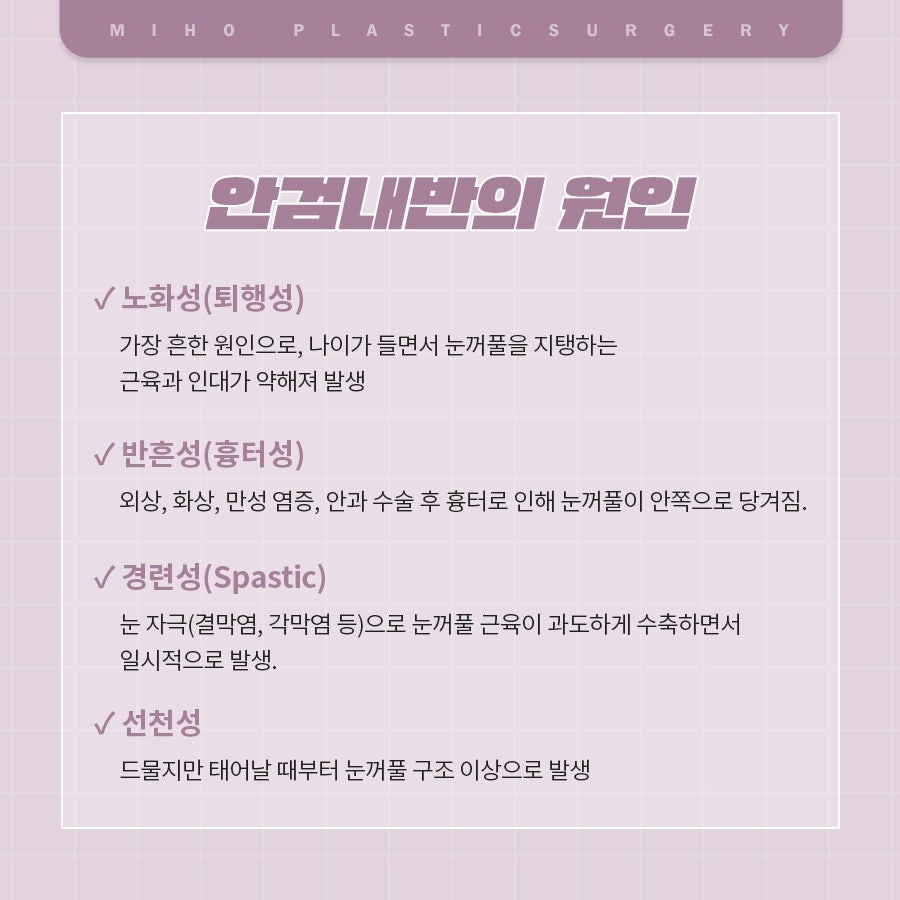
Both congenital and acquired factors
can cause entropion.
It may result from an abnormal structure present at birth,
or develop as the tissues around the eyelids
weaken and sag with age.
It is observed mainly in the lower eyelids
and is understood in relation to the stages of life.
The same phenomenon may also occur
when the conjunctiva is damaged by external wounds,
inflammation, or infection,
or when eyelid spasms continue
after ophthalmic treatment or irritation around the eyes.
Environmental factors such as dust and wind,
as well as autoimmune diseases,
may also be causes.

If the condition is mild, it may be temporarily relieved
by using artificial tears,
but to resolve the underlying problem,
surgically correcting the position of the eyelid
is recommended.
If aesthetic changes are also desired,
simultaneous improvement of function and appearance may be considered.
The greatest advantage is that it can be easily combined
with additional cosmetic procedures,
such as improving the appearance of the eyes,
minimizing scars, adjusting the shape and size of the eyes,
or performing medial canthoplasty.
In older adults, where eyelid tissue problems
often act in combination,
ptosis correction is also frequently performed at the same time.
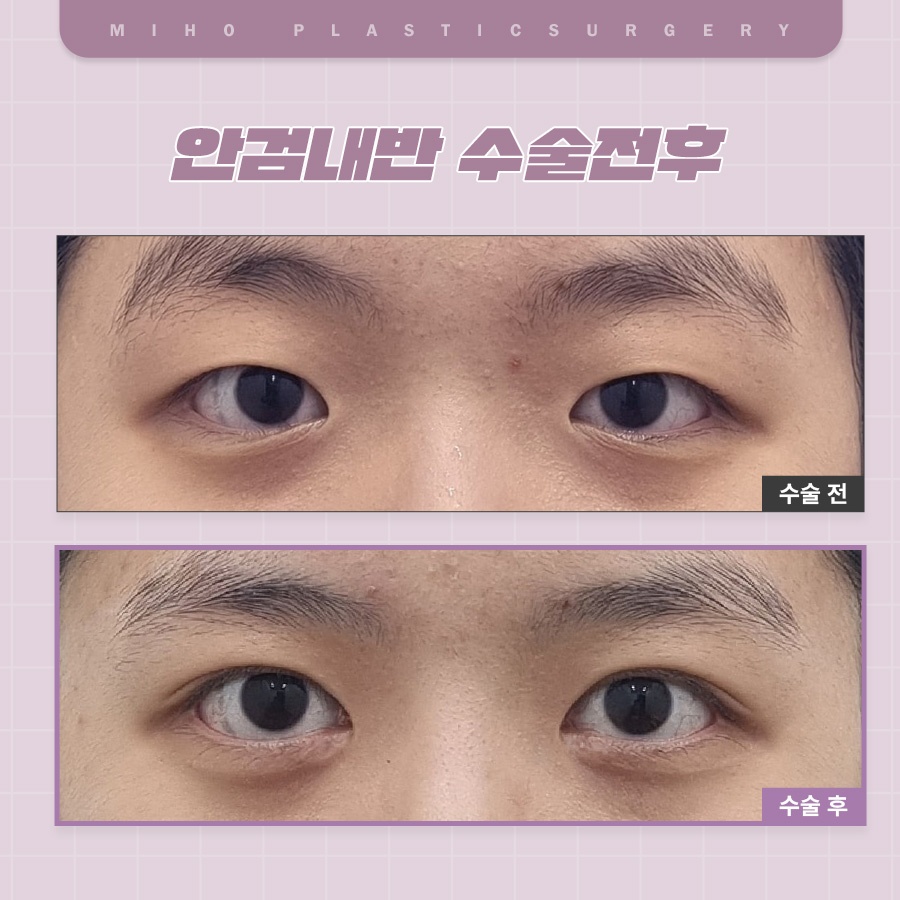
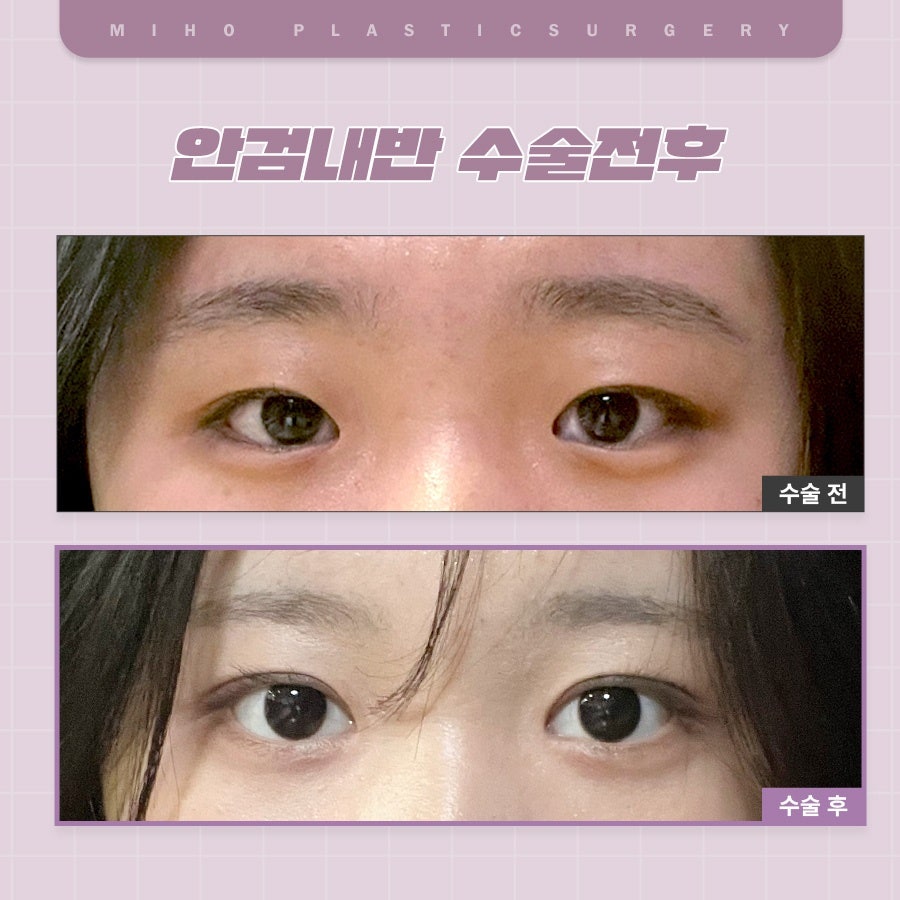
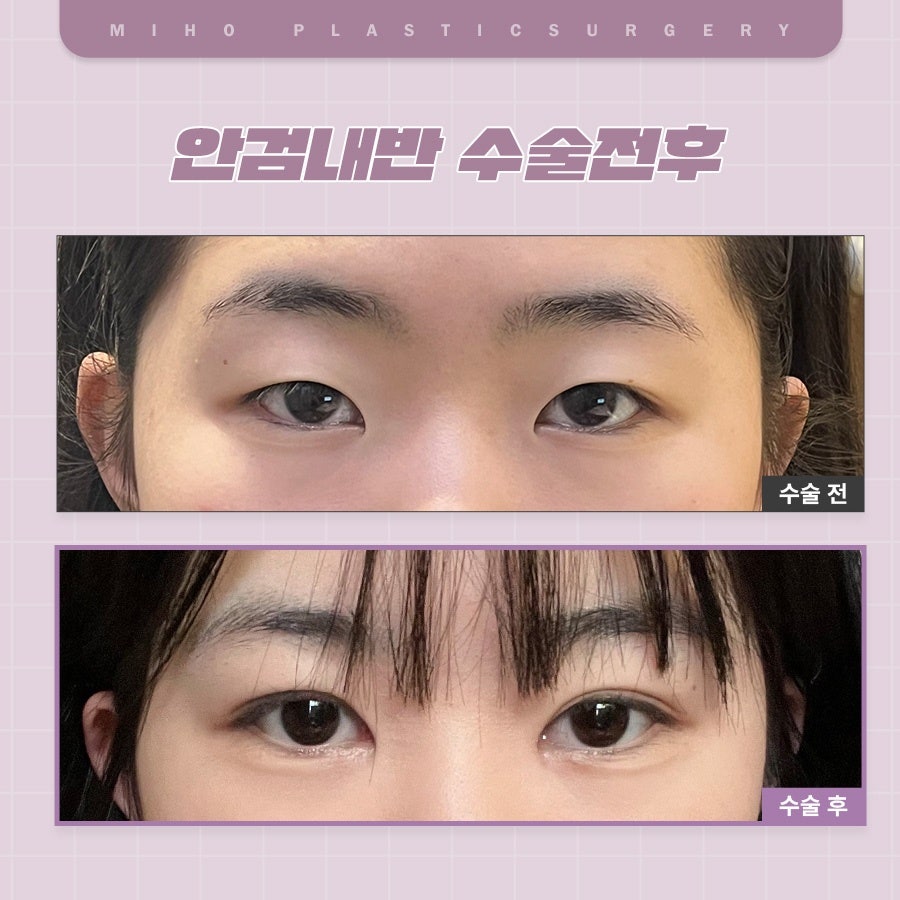
Due to the shape of East Asian eyes,
the epicanthal fold may also appear,
in which the skin and soft tissue of the upper eyelid
cover the inner part of the eye and create a constricted appearance.
In addition to problems with the eye shape,
the eyelashes at the inner corner of the eye
may poke the cornea,
making a comprehensive approach and correction necessary.
This condition can also be confused with trichiasis,
but the difference lies in whether the eyelid itself is abnormal.
Trichiasis is a deformity of the eyelashes,
while the eyelid structure is normal.
By contrast, ectropion, in which the eyelid turns outward,
is accompanied by dry eye.
Another form, double eyelid, also exists.
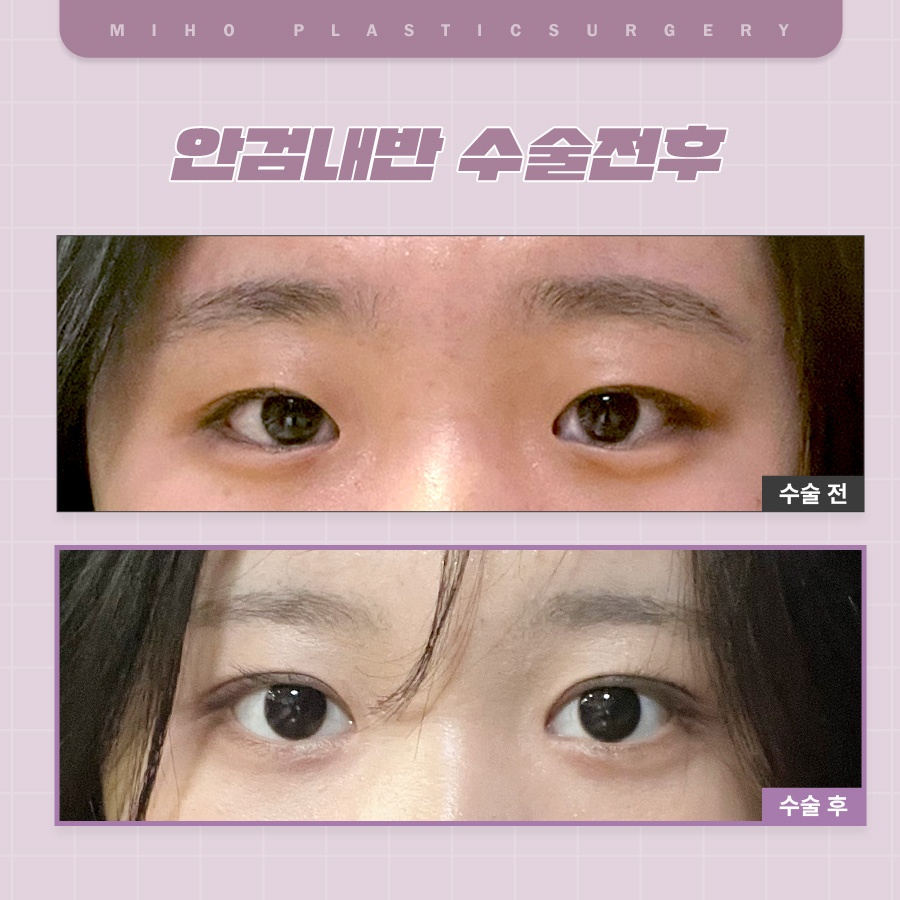
When a patient visits a clinic with suspected entropion,
a medical professional visually examines the symptoms.
The condition of the eyeball is then assessed with a slit-lamp examination,
along with the elasticity of the eyelid.
After that, additional abnormalities are differentiated,
and the final approach to correction is determined
by considering the patient's clinical presentation and needs.
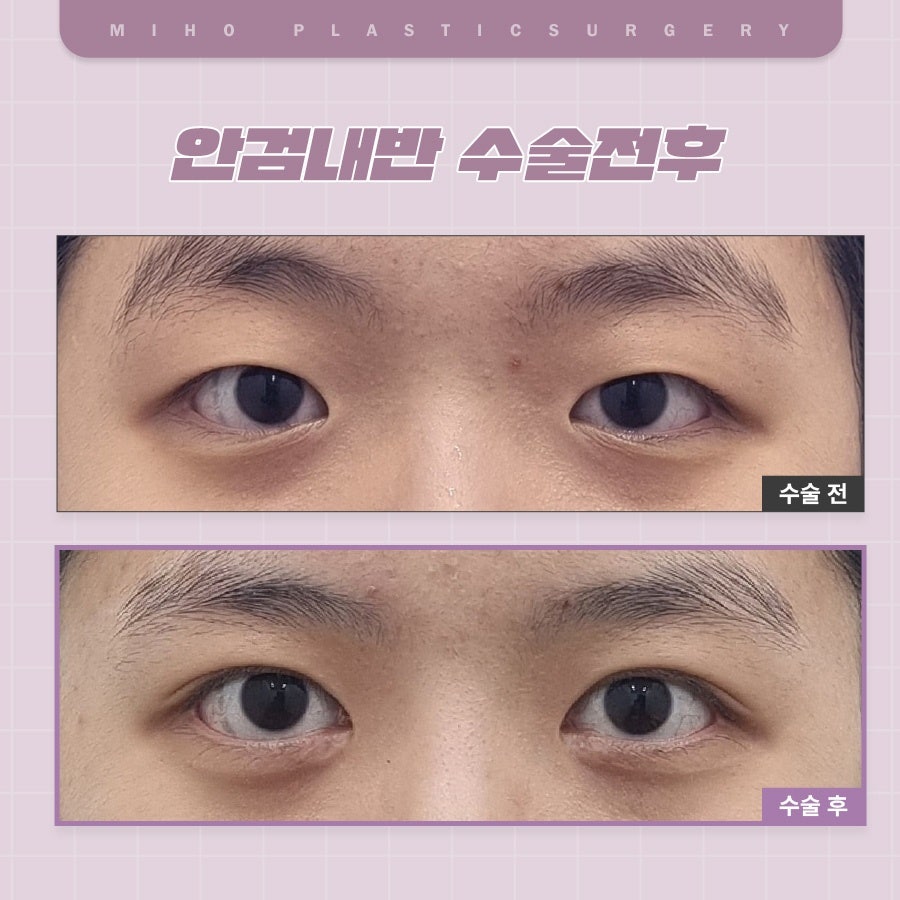
The procedure generally performed is an incision-based surgery.
Because an incision line is created in the treated area,
it can create the desired double-eyelid crease.
Alternatively, the tarsal plate and skin may be connected
using special sutures without an incision.
The orbicularis oculi muscle may also be strengthened or repositioned
to increase its supporting force.
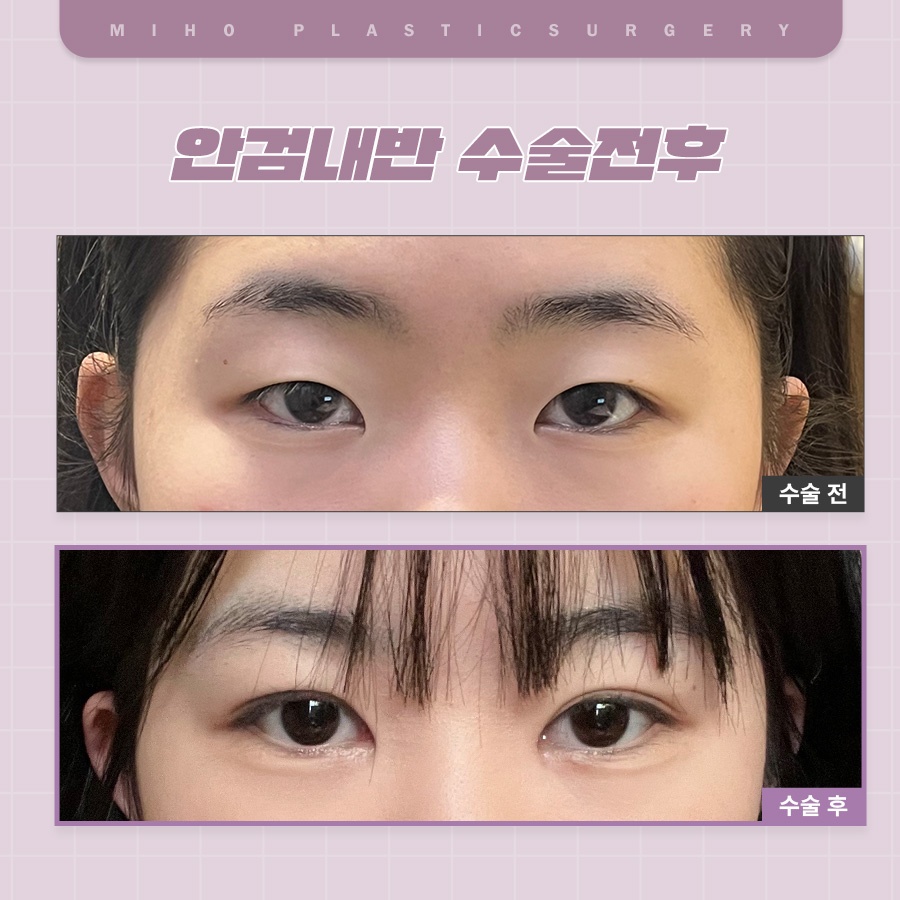
If the epicanthal fold is pronounced,
medial canthoplasty may be considered to open the tear duct area
and create a more open-looking appearance.
As this all-in-one approach,
which improves several aspects at once,
has become increasingly common,
multifaceted shaping of the eyes is performed
through correction of the medial canthus and the upper and lower eyelids.
The procedure is relatively simple,
taking approximately 30 minutes to 1 hour,
and is performed under local or twilight anesthesia.
Part of the lower eyelid is excised
to turn the angle of the eyelashes outward,
and the stitches are generally removed after about one week.
Hospitalization is not required separately.
Side effects are relatively uncommon,
but they are not entirely absent, so caution is necessary.
Recurrence is the most commonly mentioned issue.
Other reported problems include corneal damage
caused by incorrect positioning of the eyelid
or incomplete correction,
uneven-looking eyes caused by asymmetry,
and reduced cosmetic satisfaction due to deep scars.
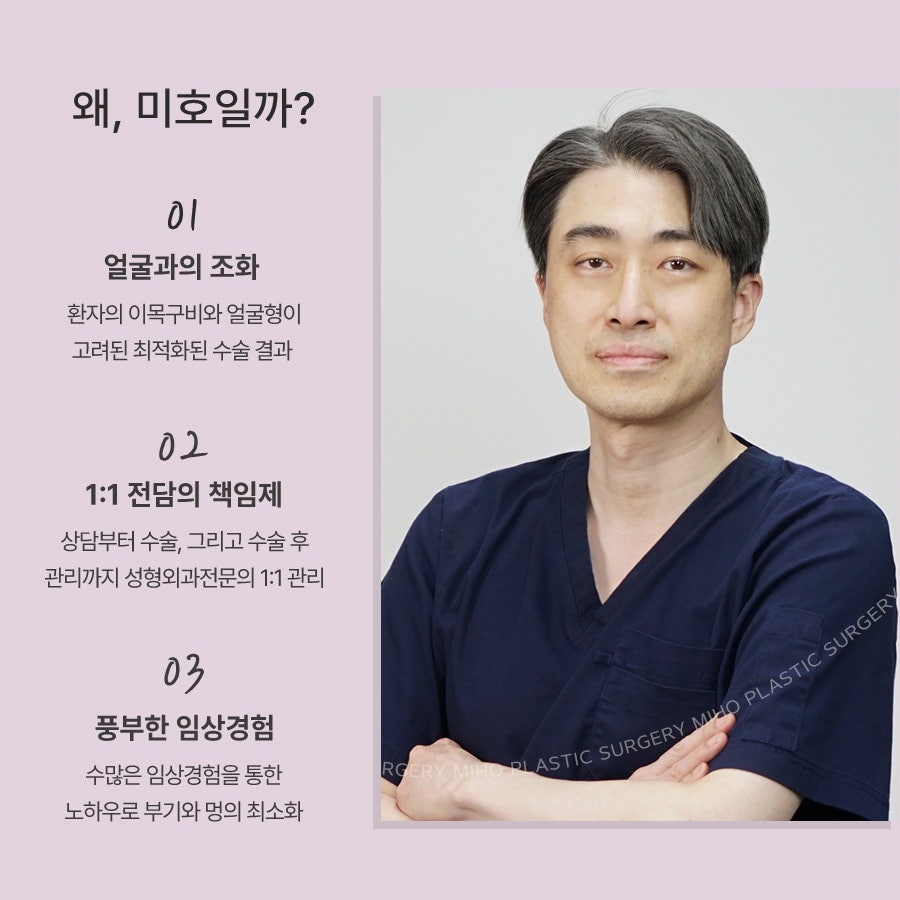
Therefore, it is necessary to receive
a clear diagnosis and treatment from an experienced medical professional,
and thorough care to prevent complications after entropion correction
is also essential.
Prescribed eye drops should be used consistently,
along with maintaining cleanliness and protecting the eyes from ultraviolet rays.
Strong eye irritation must be avoided,
and the progress should be monitored regularly.

However, in children younger than 5 years,
there is a high chance of natural improvement as they grow,
so observation or conservative measures
are more commonly considered.
Methods such as removing the eyelashes
or reducing irritation with anti-inflammatory eye drops
are attempted first.
Corrective surgery is considered when symptoms are severe.
Even when performing the procedure,
only the minimum amount is carefully excised
to account for tissue that will continue to grow,
and repeat correction may be considered if necessary.
Because cooperation can be difficult at this age,
the procedure is performed under local or general anesthesia.
Careful infection control, wound care,
and regular follow-up are also important.

Recently,
trends related to entropion
can be summarized as population aging,
developments in corrective procedures,
and strengthened collaborative care.
Above all, as cases arising from aging or chronic diseases
are increasing,
the prevailing view is that appropriate prevention and management
in everyday life are important.
Although complete prevention is difficult,
it is recommended to avoid frequently touching the eyes with the hands,
wear sunglasses or protective eyewear,
and undergo regular examinations
if there is concern about a family history or aging.
If signs appear, it is advisable to visit a medical facility promptly
and receive appropriate care.


Previous image
Next image