
Many people pay attention to changes in the face that come with age,
but when it comes to aging in the neck area,
they often only start to worry once it has progressed significantly.
The skin here is thin and sebum secretion is low,
so elasticity decreases quickly.
Because it is a area that people look at for a long time when estimating age,
inquiries related to this issue have been increasing recently.
When multiple deep horizontal lines or
vertical muscle bands become noticeable,
it can easily lead to an impression that looks older than the person actually is.
For those considering a neck lift as a lifting method to address sagging,
let’s take a look at the principle and the procedure.

The reason wrinkles form in this area
is due to multiple factors acting together.
As we age, the production of collagen and elastin
decreases, making the loss of elasticity more pronounced.
The broad, thin muscle known as the platysma also
relaxes and spreads due to gravity, causing
the larger vertical bands to stand out more
than they did when younger.
Exposure to ultraviolet rays, rapid weight changes,
and keeping the head bent forward for long periods
are also factors that speed up aging.
Since several causes overlap,
before considering a neck lift,
it is important to carefully identify your condition
and the main cause.
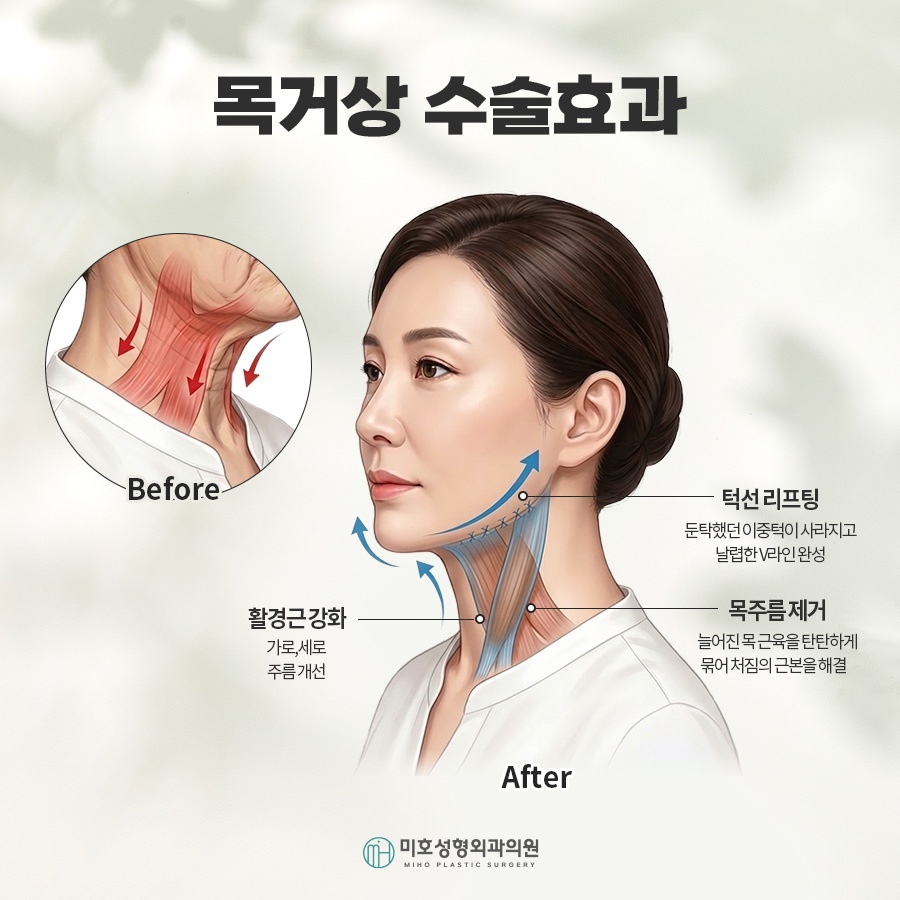
A neck lift involves making an incision in the sagging platysma and skin,
lifting them, and then securing them in place.
Unlike simply pulling the surface,
it tightens the muscle layer that causes wrinkles,
so the results are maintained for a long time.
The superficial musculoaponeurotic system, or SMAS,
is connected to the facial expression muscles and extends downward into the platysma,
so this layer also needs to be addressed
for a stable contour.
Because the skin, fat, and fascia are lifted and fixed at the same time,
the results tend to last longer than when only a single layer is corrected.
Since non-incisional methods such as Botox or fillers
make it difficult to correct deep wrinkles or severe sagging
and maintain that state for long,
more people are choosing lifting surgery.

Those with deep horizontal lines already set in place,
or those with prominent vertical muscle bands,
are candidates for consideration.
It can also be applied when fat has accumulated under the chin,
creating the appearance of a lumpy double chin,
or when the jawline contour has collapsed and the boundary with the face has become unclear.
Many people also choose this as the next step after not achieving satisfactory changes with methods using radiofrequency or ultrasound.
However, the approach differs depending on the degree of sagging, the amount of fat,
and the condition of the muscles,
so a thorough consultation should come first.
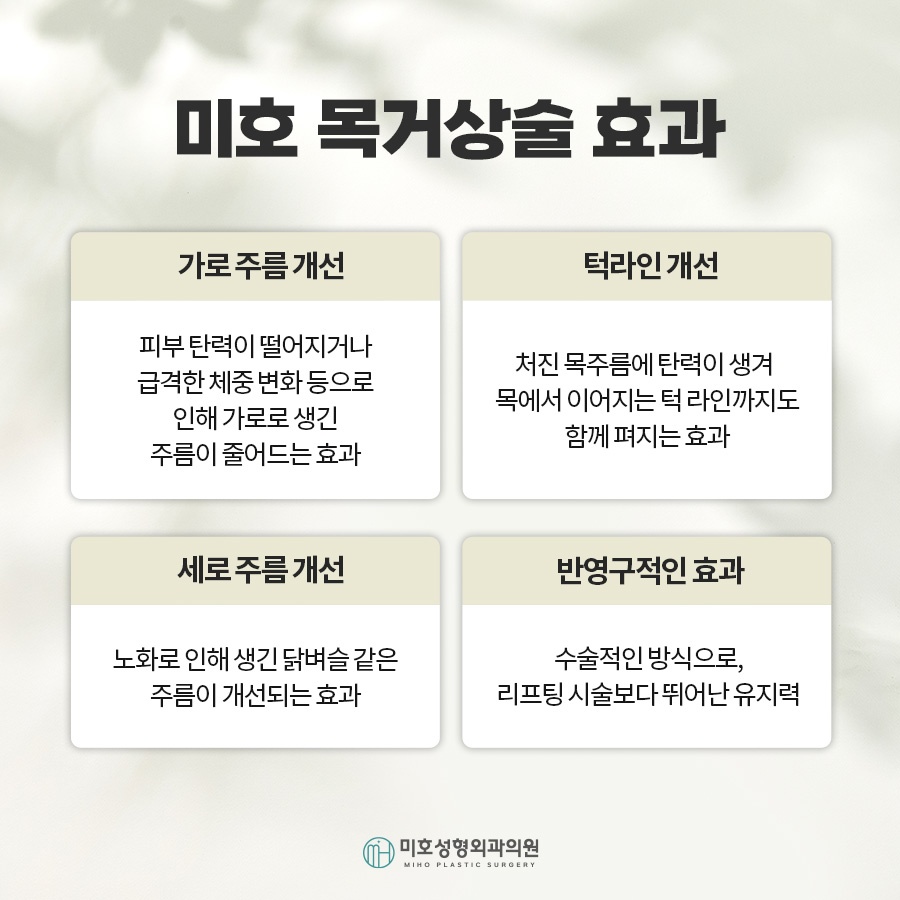
Neck lift surgery is divided into mini and full types,
depending on the incision range and the extent of dissection.
First, the mini method uses only a short incision behind the ear
and is a relatively simple procedure suitable for mild sagging
or the early stages of aging.
Its advantage is a relatively short recovery period,
allowing a quicker return to daily life,
but the range of correction is limited.
In contrast, the full method involves a wider incision from the front of the ear to the back,
dissecting down to the deeper layers of the muscle to correct severe sagging.
For people in their 50s or older with noticeable laxity,
the full method, which offers a wider correction range, is preferred,
while in the early stages of aging in the 40s,
the mini method alone may be enough to achieve
meaningful improvement.
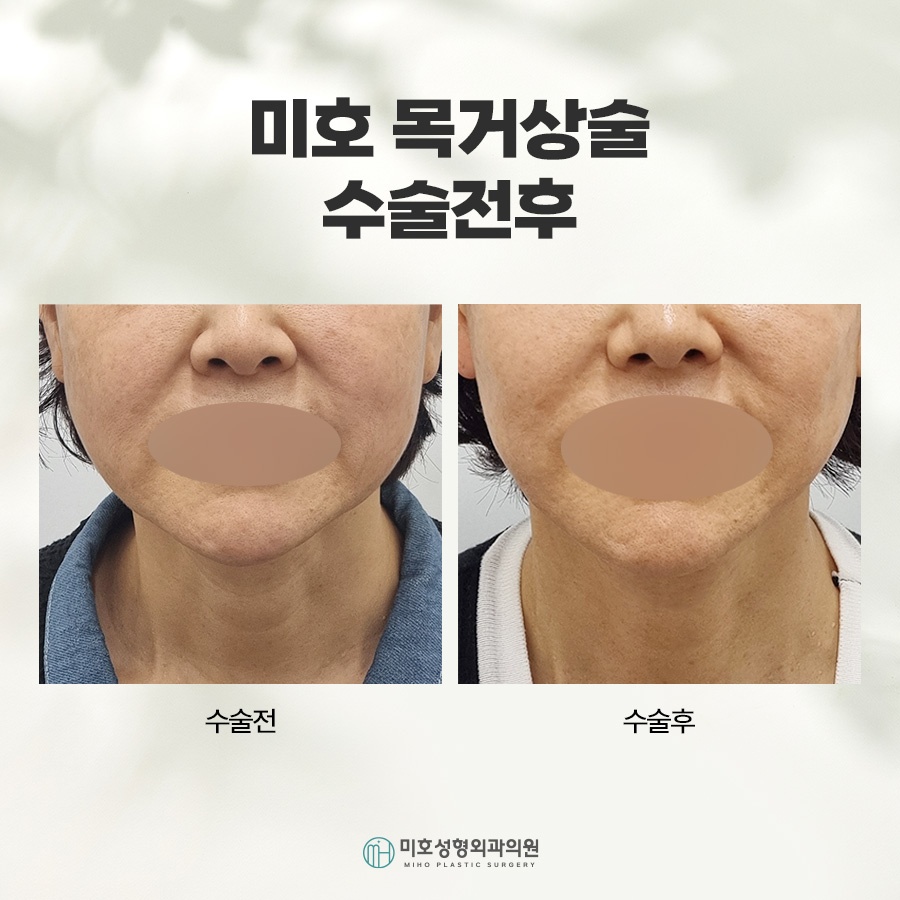
Looking at the procedure in sequence,
an incision is first made along the hairline behind the ear,
and the platysma and the fat layer beneath it are separated.
The loosened platysma is then pulled upward and backward
and firmly secured.
When the separated muscles are gathered toward the center and tied together,
the line under the chin becomes more smoothly refined.
If the fat under the chin is thick,
during the dissection process unnecessary fat is removed by suction as well
for a more defined contour.
Finally, the sagging tissue is excised and carefully sutured to finish,
and because the incision line is located within the hair and inside the ear,
it remains only as a thin line.
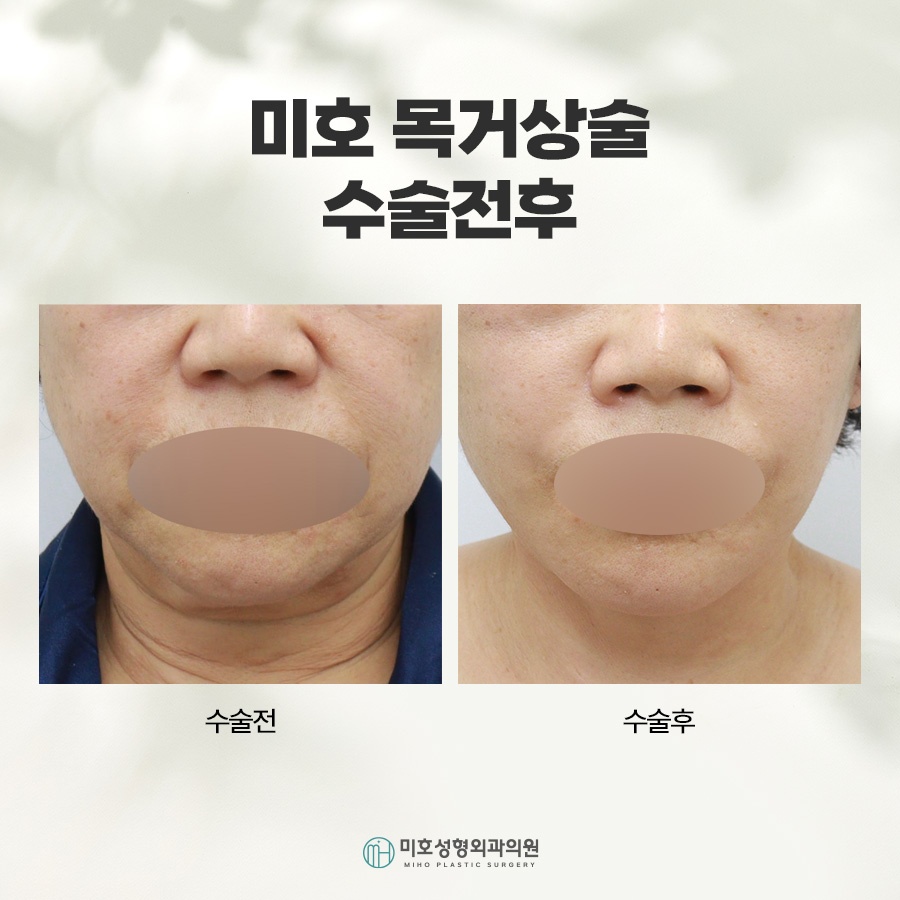
People with sagging in this area often also have
facial aging such as drooping cheeks or nasolabial folds.
Because the musculoaponeurotic system surrounding the facial muscles and the platysma
are connected in a continuous structure,
if only one of them is addressed,
the boundary becomes unnatural.
In such cases, combining a facelift
with a neck lift
allows a substantial overlap in the dissection area,
so a broader area can be corrected at once.
If they are done separately, existing scar tissue can make later re-entry difficult,
making it harder to achieve the desired result.
Considering both the recovery period and the outcome,
performing both procedures at the same time
is the more advantageous choice.
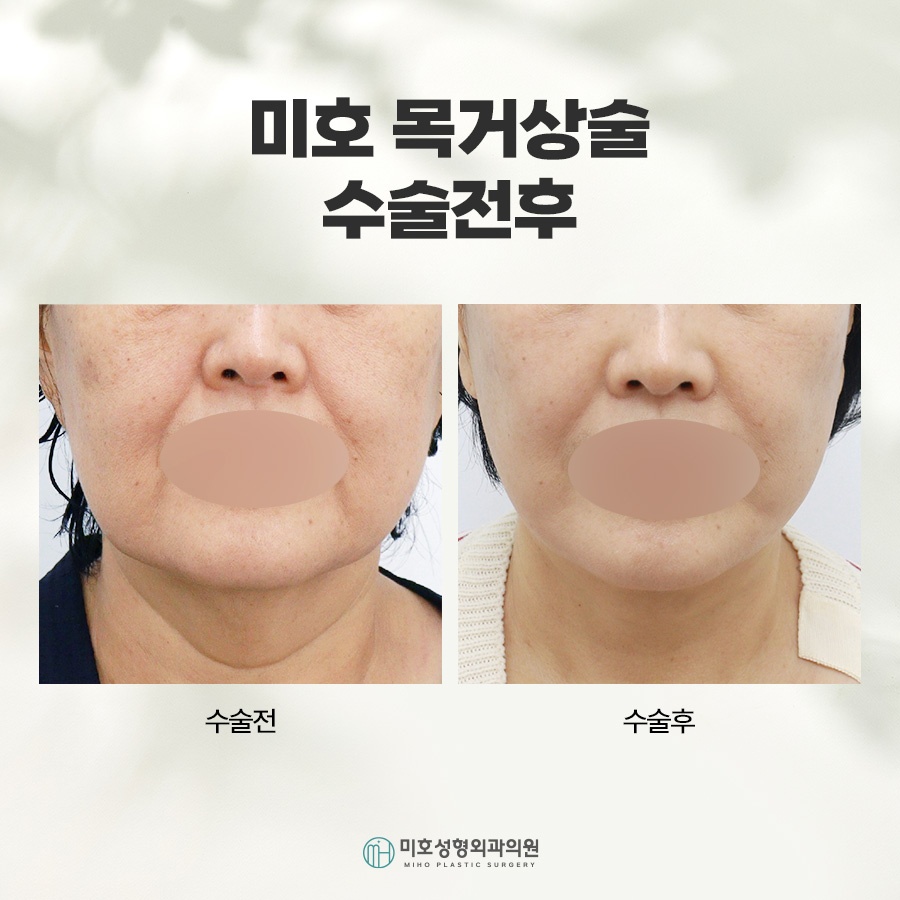
The entire procedure is performed under sleep anesthesia
and takes about two hours,
and in most cases, going home the same day is possible.
For the first 2 to 3 days,
a compression bandage should be worn to suppress swelling and internal bleeding,
and while sleeping, it is advisable to keep the head higher than the heart.
In most cases, acute swelling subsides in about a week,
allowing a return to daily life.
The stitches at the incision site can usually be removed in about 7 to 10 days,
and the remaining swelling gradually goes down over 2 to 4 weeks.
Pain can be managed with pain relievers,
so patients can get by without major pain or discomfort,
and the results are generally known to last about 7 to 10 years.
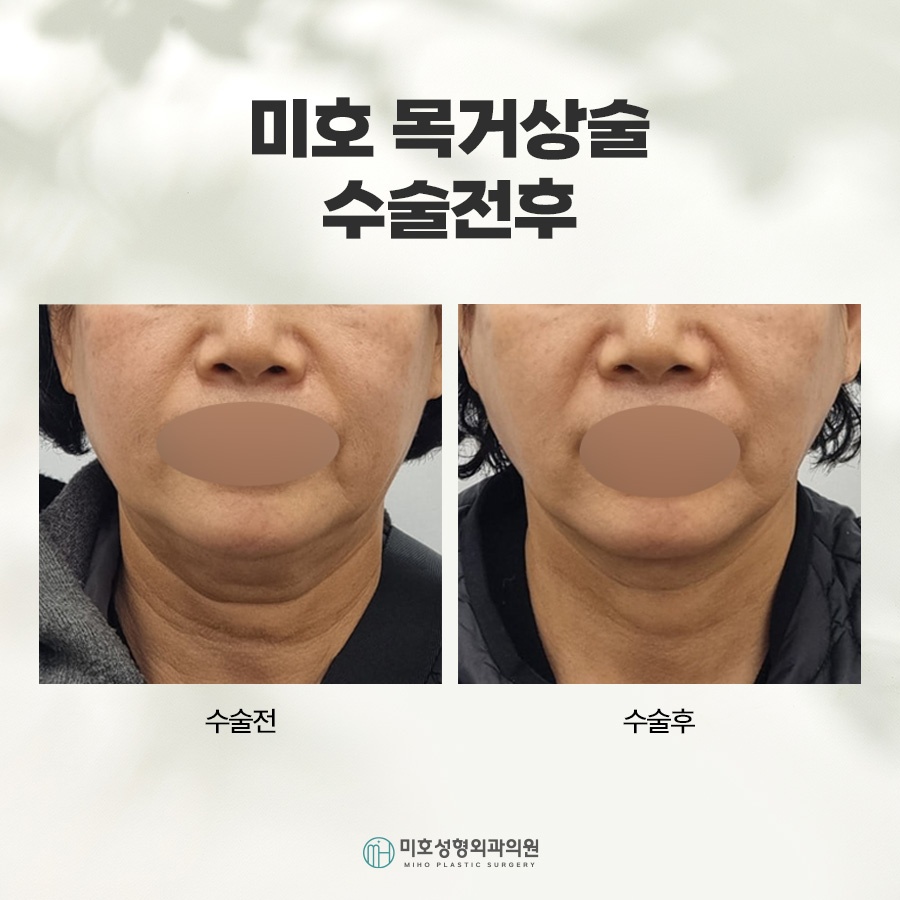
During recovery, alcohol and smoking slow wound healing,
so they are advised to be avoided for about 4 weeks.
Ultraviolet rays can cause pigmentation,
so sunscreen should be applied when going বাইরে.
Strenuous exercise or movements that involve a lot of neck motion
should also be avoided for 2 to 3 weeks.
Washing the face can usually be done lightly after about 5 days,
and when washing the hair, it is safer to keep the head tilted back.
Postoperative care affects how long the results last,
so it is essential to follow the instructions faithfully.
No matter how much attention is given to the face,
if the neck line is collapsed,
the overall impression will inevitably look older.
A neck lift can improve these concerns
and help restore a youthful, smooth contour.
However, because aging and tissue condition differ from person to person,
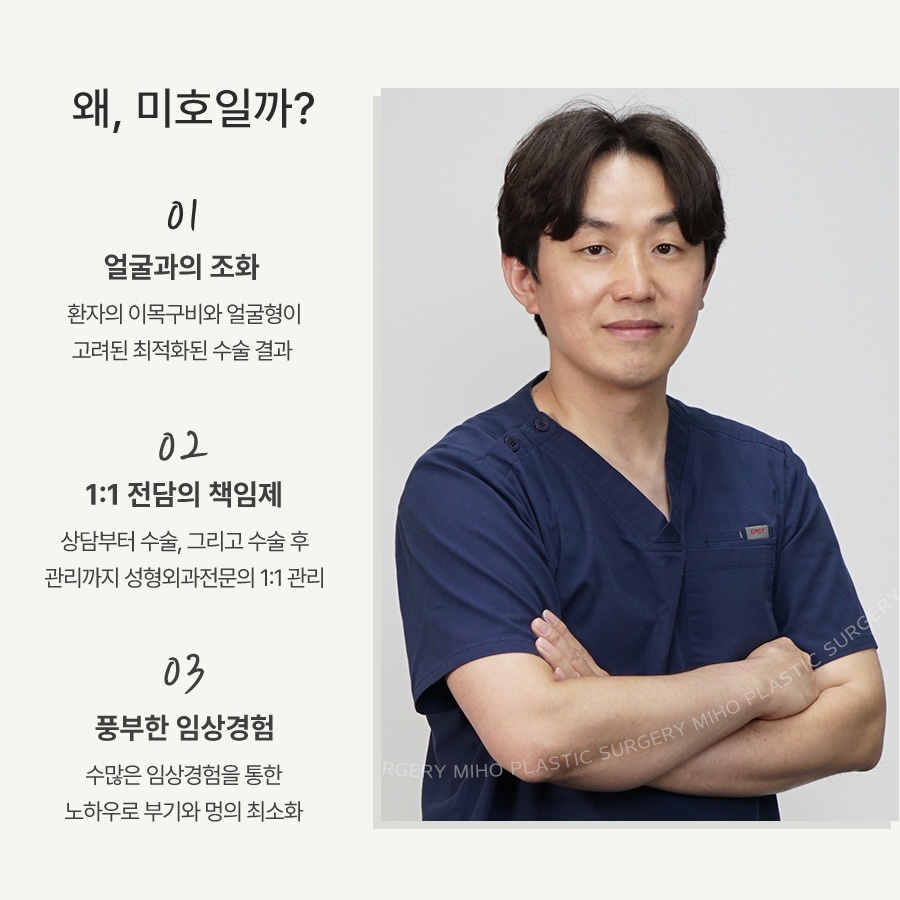
the most important step is to have a thorough consultation with an experienced medical team
and create a plan that suits you.
Afterward, consistent sun protection
and lifestyle management should also be maintained
so that a satisfactory condition can be preserved for a long time.



Previous image
Next image