
After enlarging the inner corners of the eyes,
many people consider revision because the result looks more unnatural than expected or because the excessive exposure of the mucous membrane feels uncomfortable.
Whenever they look in the mirror, the overly exposed red area continues to bother them. Some even feel that the space between their eyes looks too narrow, which can lower their self-esteem.
Eventually, they decide to undergo medial canthoplasty restoration, such as rejoining the inner corners as they were before or reducing the opened area.
The appearance of the eyes may change again depending on the approach, and traces may remain depending on the individual's skin and tissue characteristics, so the procedure should be considered and selected carefully.
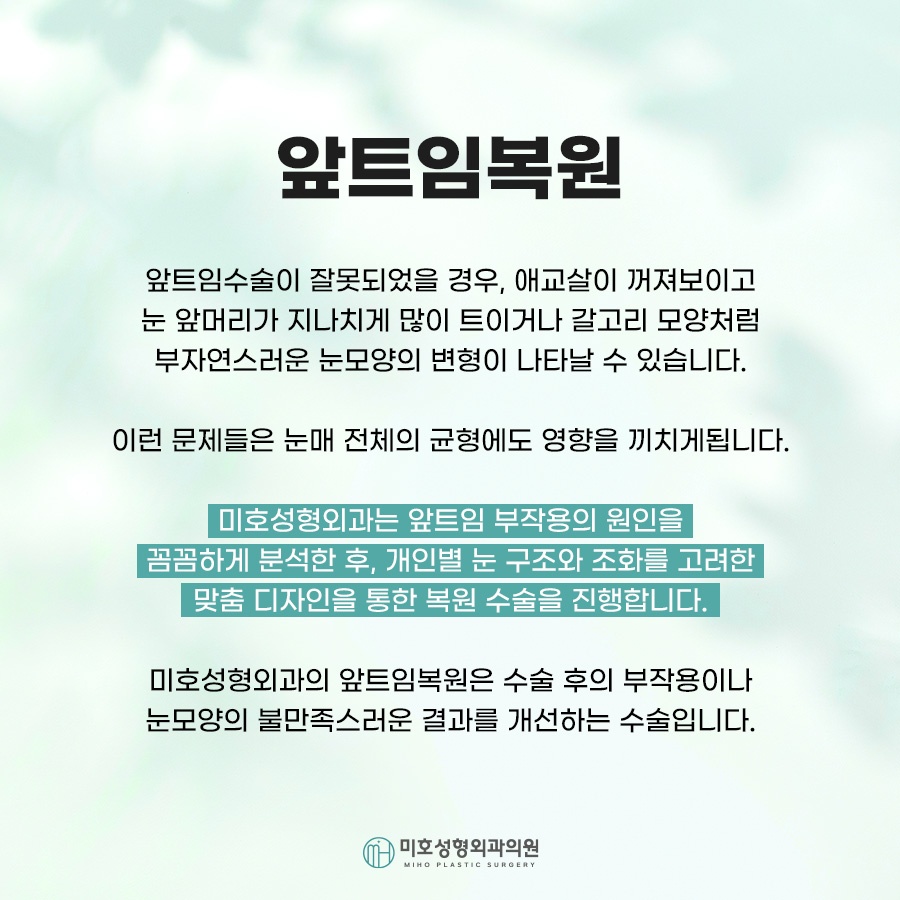
It is common to think that medial canthoplasty restoration means returning to exactly the same condition as before.
However, rather than simply restoring the previous state, it involves naturally reorganizing the structure changed by surgical incisions.
The procedure is planned to achieve a satisfactory result by considering the current horizontal and vertical dimensions of the eyes, as well as the width between the eyes.
During the restoration process, the correction plan is determined by comprehensively considering the degree of exposure at the inner corner, the existing incision site, and the amount of excess skin.
Because the appearance of the eyes can vary depending on how the area is sutured and where the incision line is placed, it is important to consider each individual's facial image and proportions.
Why Medial Canthoplasty Is Performed
Before looking into medial canthoplasty restoration, let us first look at the purpose of medial canthoplasty.
Most East Asian people have skin covering the inner corners of their eyes, known as the Mongolian fold. This can make the space between the eyes appear wider or the eyes appear smaller.
Even after forming a double-eyelid line, the eyes may still look constricted because the Mongolian fold has not been addressed.
By opening it slightly, it is possible to create eyes that look more open and clear in every direction.
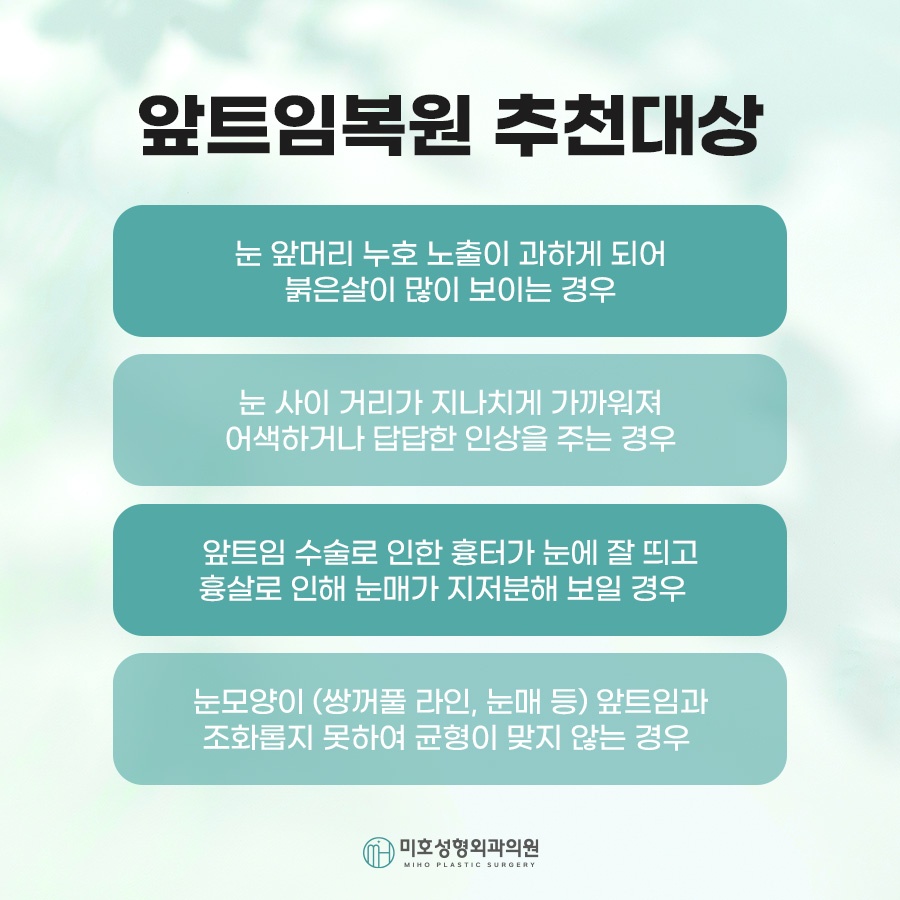
At this point, the inner corners should be expanded while taking the width between the eyes into account. If the extent is excessive, the eyes may appear too close together, and the overall appearance may feel somewhat overwhelming.
As more of the mucous membrane becomes exposed, the eyes may always appear bloodshot, and some people report dry eyes.
If the design direction is inappropriate or excessive tension is applied during suturing, the inner corner may bend downward into a sharp point. This can make the expression look fierce and create an artificial impression when making facial expressions.
In some cases, a scar may remain large enough that it cannot be concealed even with makeup.
If cosmetic or functional discomfort continues, considering revision may also be appropriate.
When Is the Appropriate Time for Restoration?
Because the eyes play a major role in determining a person's impression, you may want to restore them immediately if you are dissatisfied with the result.
However, medial canthoplasty restoration should be performed in accordance with the tissue's recovery rate to avoid repeating the same problems as before.
It usually takes at least six months to one year for the incision site to recover, so it is generally advisable to attempt restoration after this period has passed.
This is because making another incision too forcefully before the damaged tissue has healed may lead to complications such as tissue adhesion or the sutured area reopening.
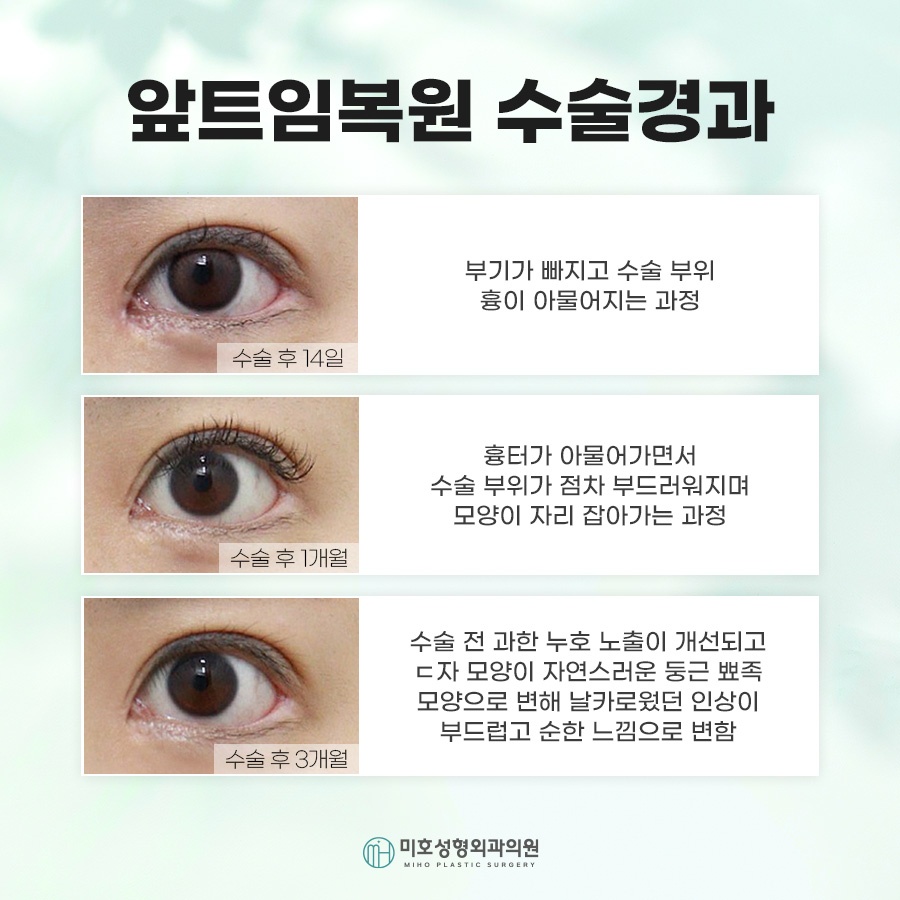
The appropriate time to attempt restoration is when the redness at the incision site has subsided and the area has become as soft as normal skin.
Performing restoration at this stage allows the inner corners to be corrected naturally without prominent scarring.
However, if excessive exposure of the lacrimal lake causes severe functional discomfort or tissue adhesion is suspected, restoration may sometimes be attempted sooner.
It is important to consult with an experienced physician, assess the current condition, and then determine the timing of restoration.
How the Restoration Procedure Is Performed
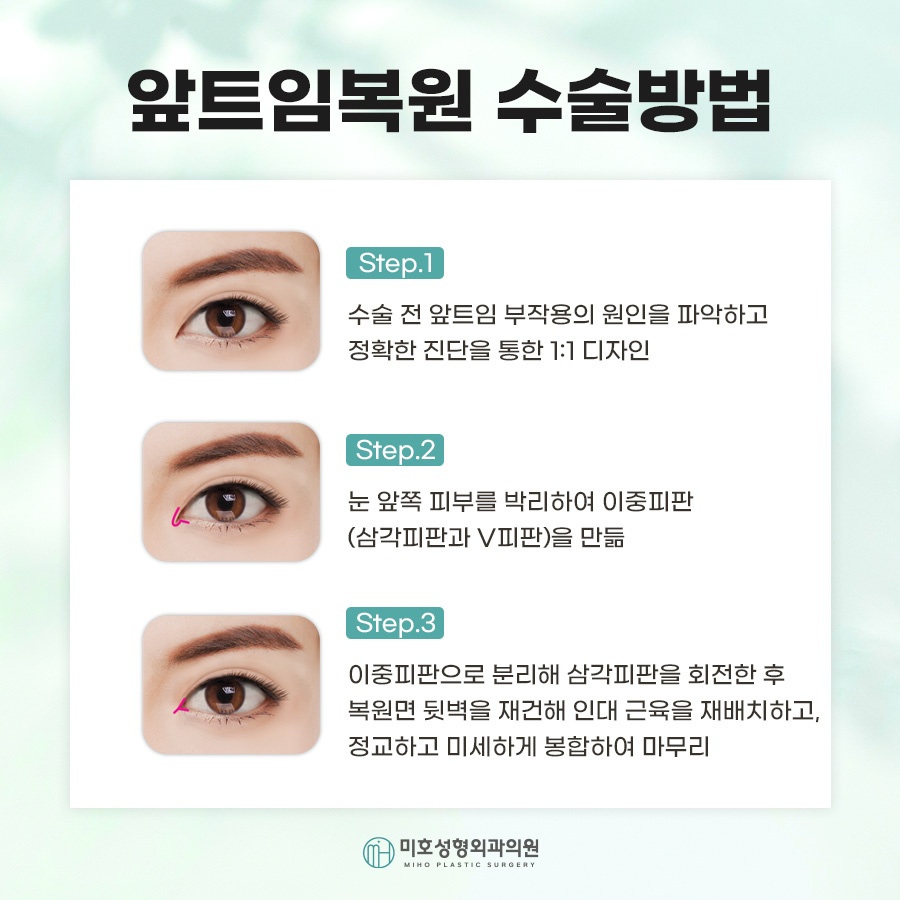
Medial canthoplasty restoration does not simply involve suturing the separated area back together.
It involves precisely repositioning the incised muscles and tissues to naturally correct the shape and extent.
If there is not enough skin but it is pulled excessively to cover the lacrimal lake, the surface may instead become uneven or the area may reopen due to tension.
To create an eye shape that remains stable over time, the muscles and ligaments supporting the inner corner need to be returned to positions close to their original locations.
At our clinic, we determine whether to perform comprehensive restoration or subtle correction according to the individual's needs.
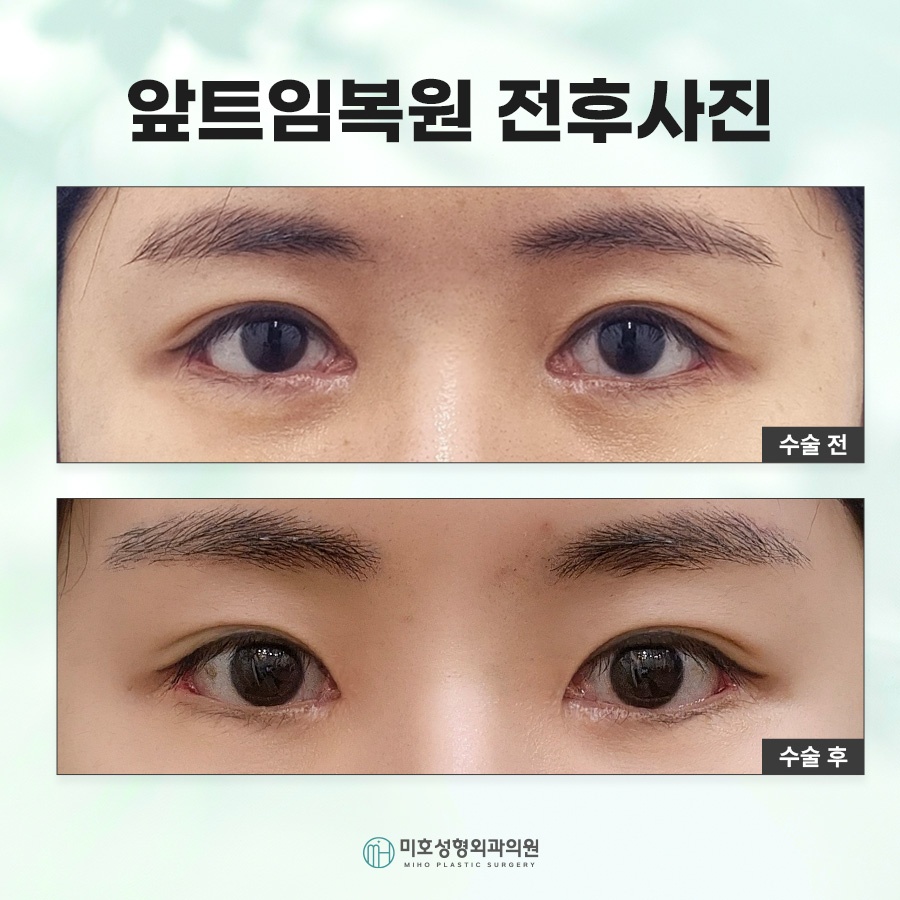
If you want to return completely to your previous appearance, comprehensive restoration is performed.
If you want to maintain an open-looking eye shape while concealing the scar, correcting a pointed shape, or reducing the degree of lacrimal lake exposure, a plan for subtle restoration is developed.
The criteria for determining the extent of restoration include the shape and size of the eyes, the width between the eyes, harmony with the other facial features, and the overall image.
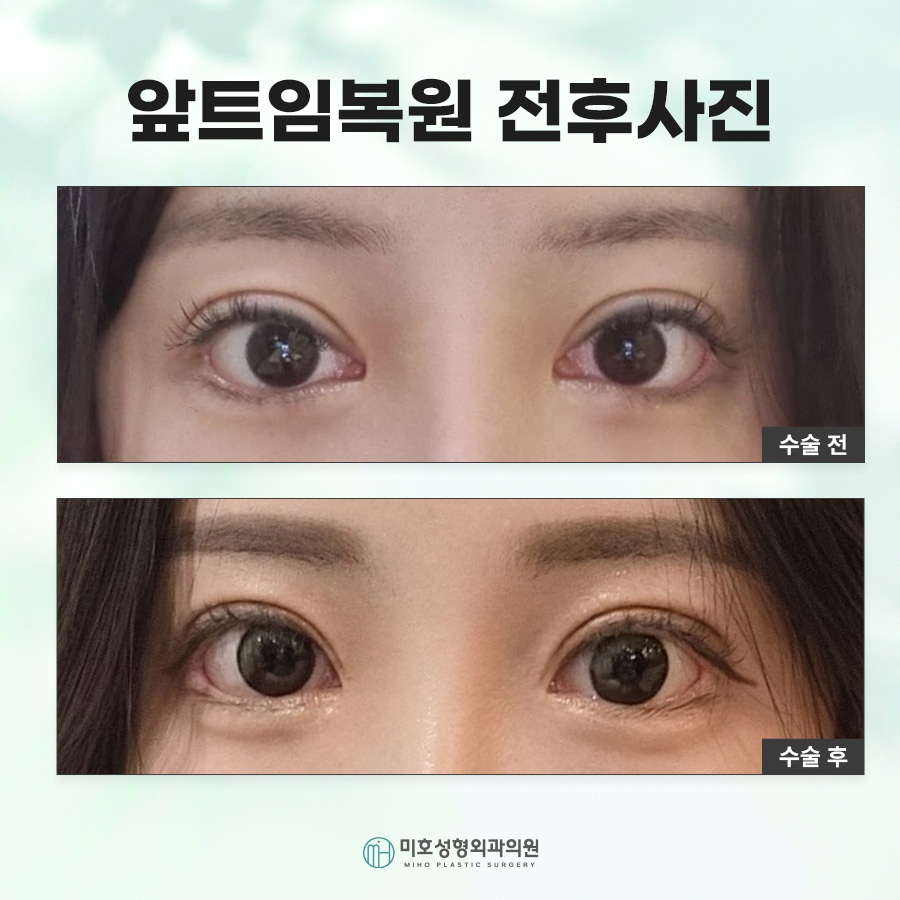
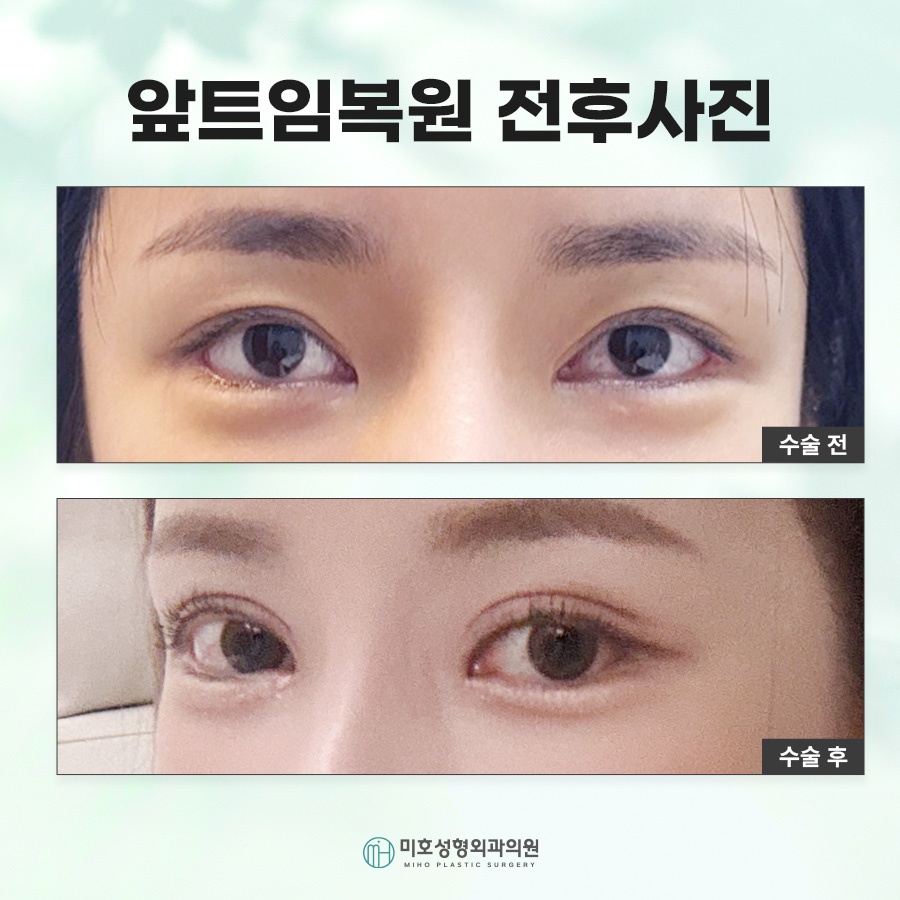
Even with comprehensive restoration, it is difficult to return to exactly the same appearance as before, but some unnatural or awkward aspects can be improved.
Guide to Choosing a Medical Institution
For any approach, revision is more difficult than the initial procedure.
The tissue is no longer in its usual condition because it has already been incised once, and it can be difficult to meet the expectations of someone who has already been disappointed once.
To achieve a satisfactory revision result, rather than simply looking for a place that is expensive or well-known, you should entrust the procedure to medical professionals with extensive experience and expertise in this area.
It is also advisable to carefully assess whether the physician clearly understands the structure of your eyes and designs the procedure accordingly, as well as whether they can provide both functional recovery and aesthetic satisfaction.
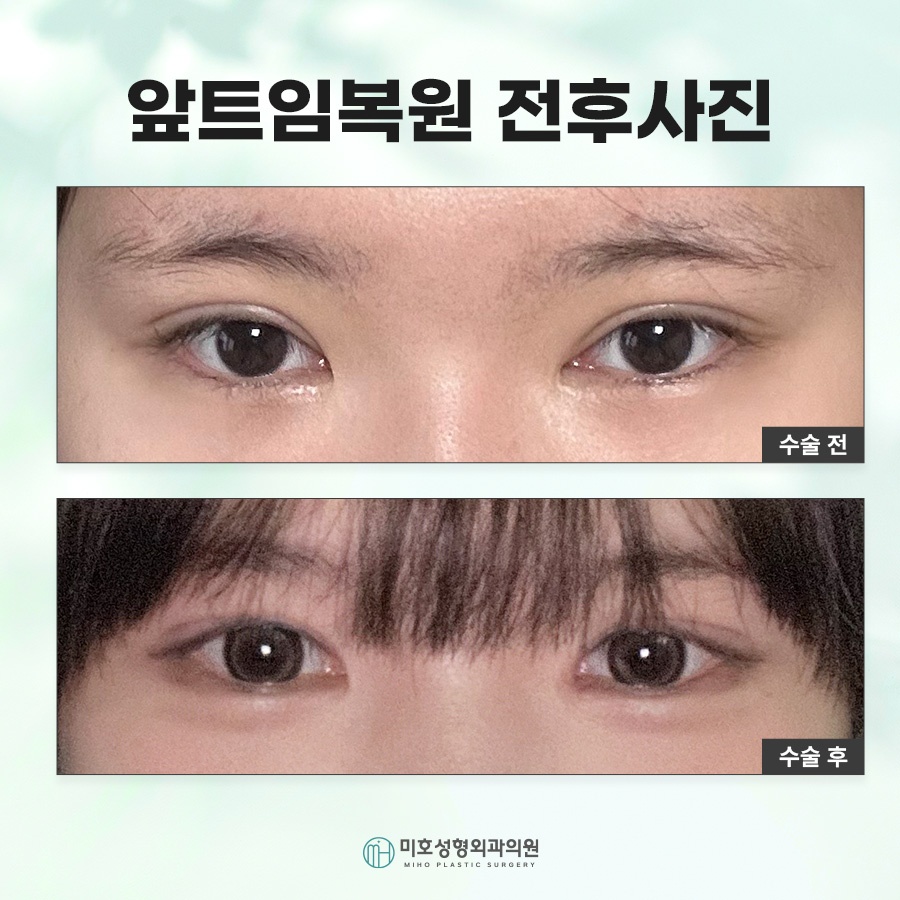
Careful, timely management is needed for a smooth recovery after medial canthoplasty restoration.
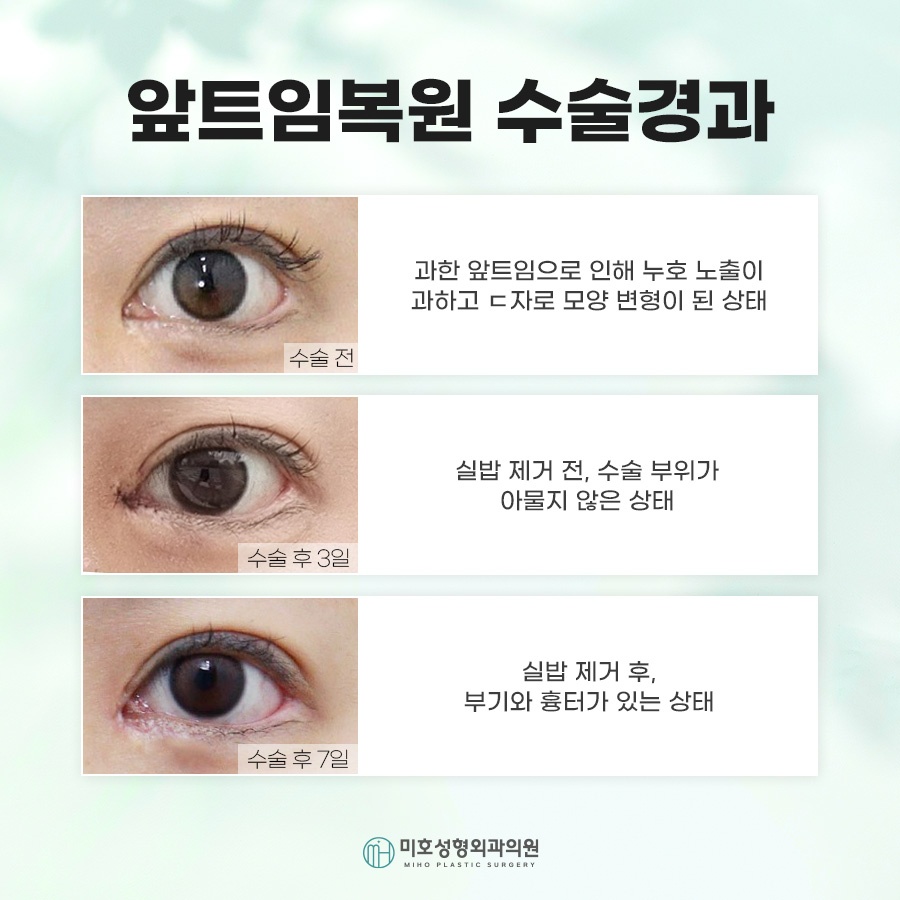
For the first two to three days immediately after the procedure, cold compresses can be used to help reduce swelling and bruising. After that, it is advisable to switch to warm compresses to promote blood circulation.
Once the stitches are removed after approximately seven days, light washing of the face with water is possible. The incision site may appear red, but it gradually returns to a skin-colored appearance over time.
Exposure to ultraviolet rays at this stage may cause discoloration, so sunglasses or a hat should be worn.
We recommend visiting the medical institution regularly and receiving its aftercare program to support a speedy recovery.



Previous image
Next image