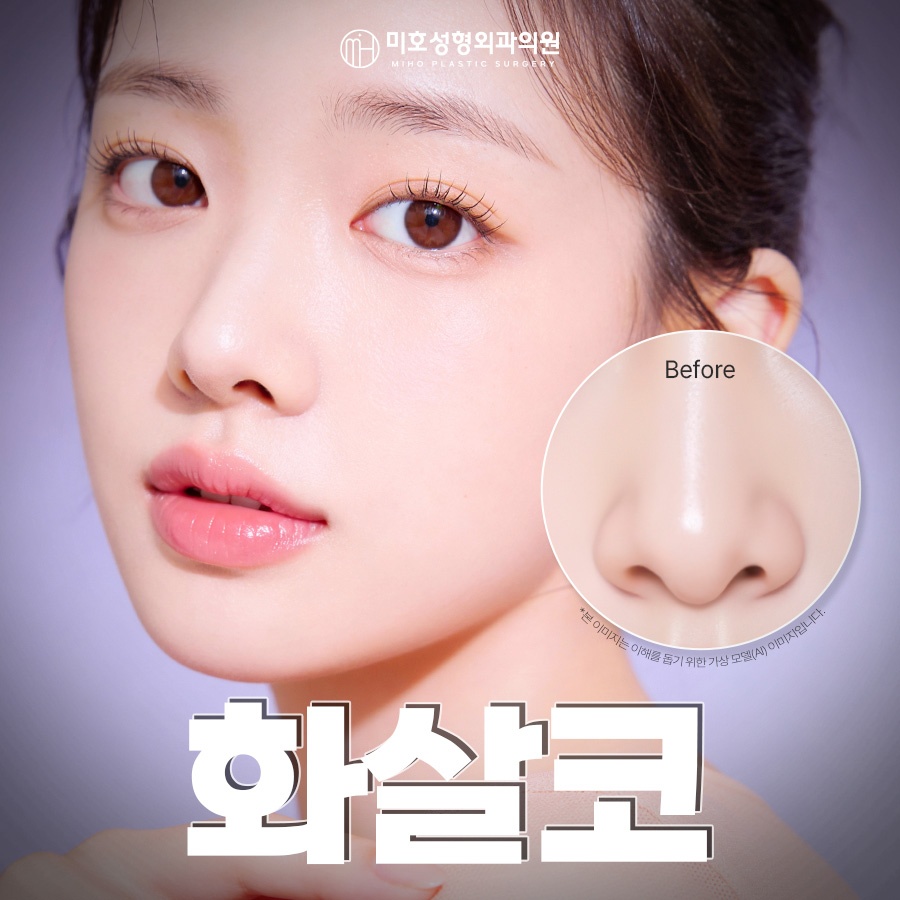
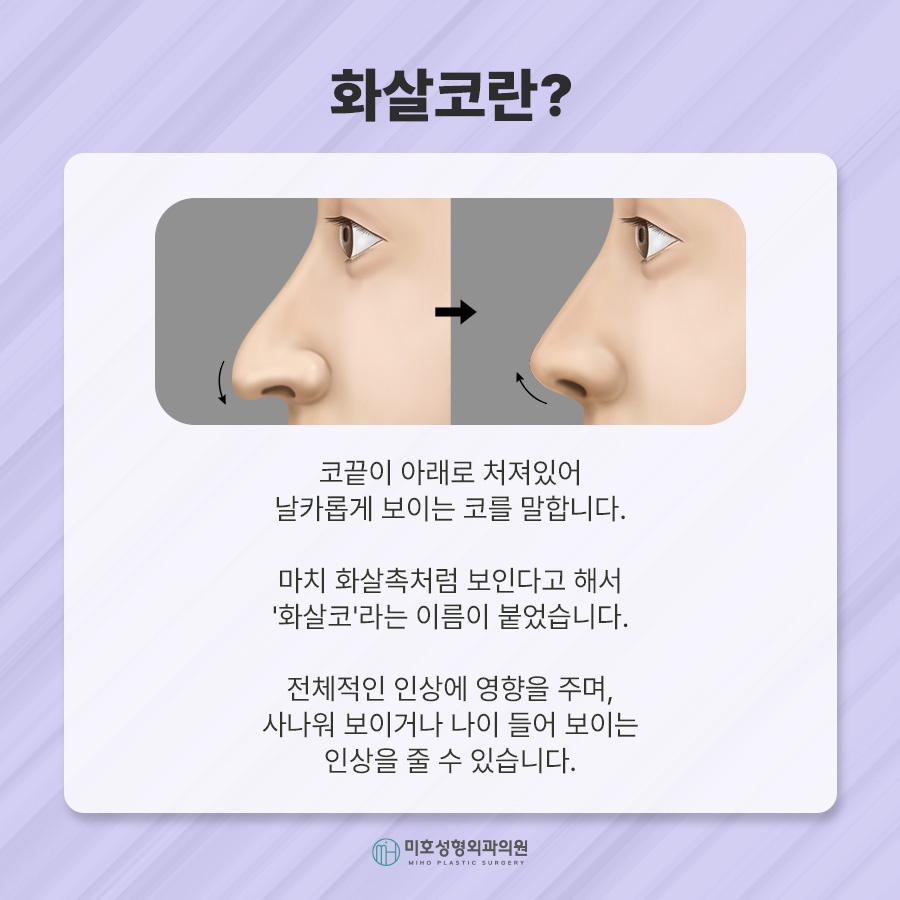
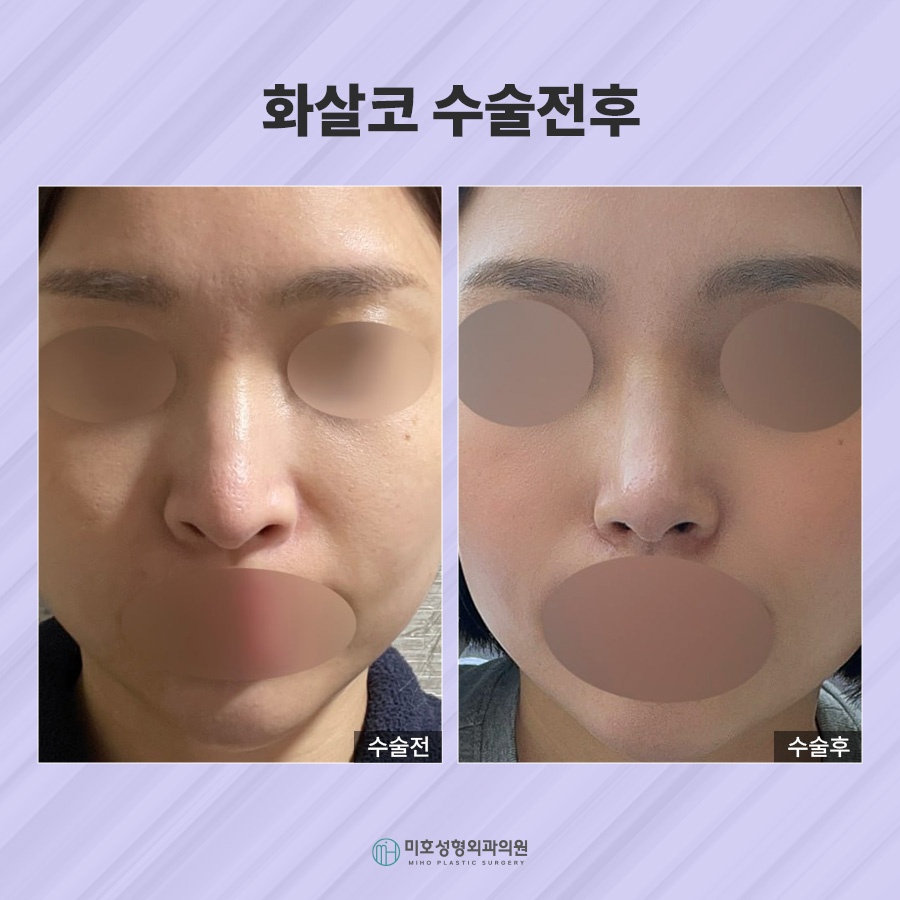
A nose whose tip is notably elongated and droops downward, resembling an arrow, is called an arrow-shaped nose.
Having this shape does not necessarily make someone appear fierce or have a negative effect on their impression.
At times, it can create a sophisticated, urban, or sharp image, allowing a person to convey the image they seek to the public.
However, if the drooping is pronounced, the face may appear excessively stern or older than its actual age.
Even if there is no functional discomfort, if the appearance is inconsistent with your occupation, the impression you want to give, or the image you pursue, it may be advisable to consider correction surgery.
Correcting an arrow-shaped nose is not simply about changing the shape of the nose; it is an important process that can change your overall impression.
Because your image can change with just one procedure, it is necessary to seek help from a doctor with extensive experience and strong skills and undergo correction under their care.
A drooping nasal tip becomes more noticeable when the facial muscles move than when the face is expressionless.
When laughing, speaking, or making various facial expressions, the nasal tip may descend further, making the midface appear longer.
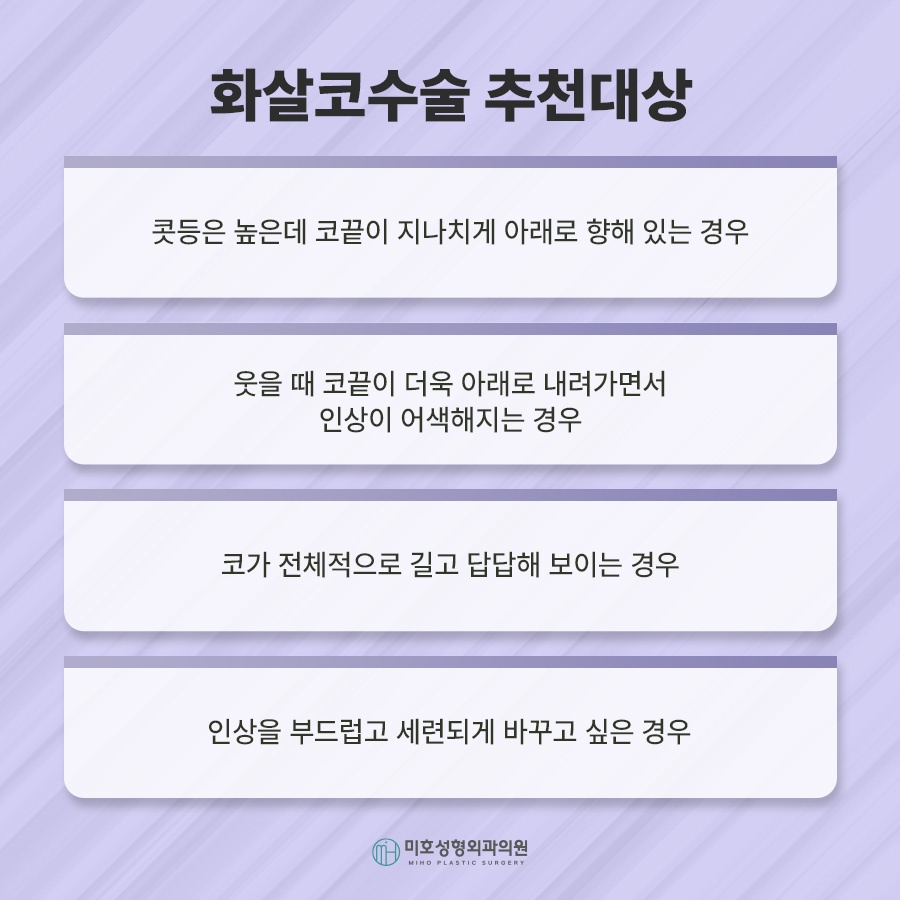
When the face is expressionless, the midface may not seem particularly long, but when smiling, the face can appear unusually long, like a cucumber, creating an older-looking impression.
It may even give the impression of being sensitive or irritable, even if that does not reflect your actual personality.
If people around you often say that you look upset or seem angry, or if this makes social life difficult, we recommend seriously considering correction for an arrow-shaped nose.
This type of nose shape is generally caused by genetic factors.
Although the bridge of the nose may collapse or the nasal tip may droop after an external impact, in most cases, this shape has been present since birth.
The nasal tip cartilage itself may be drooping, or the muscles connected to it may be exerting strong downward force.
These are referred to as the depressor muscles of the nose. If these muscles are overly developed, they pull the cartilage downward, creating an arrow shape.
Because these are muscles, the arrow shape becomes more pronounced when making facial expressions, such as laughing or speaking.
In most cases, the depressor muscles of the nose are naturally strong, but this area may also become particularly developed due to improper use of the facial muscles.
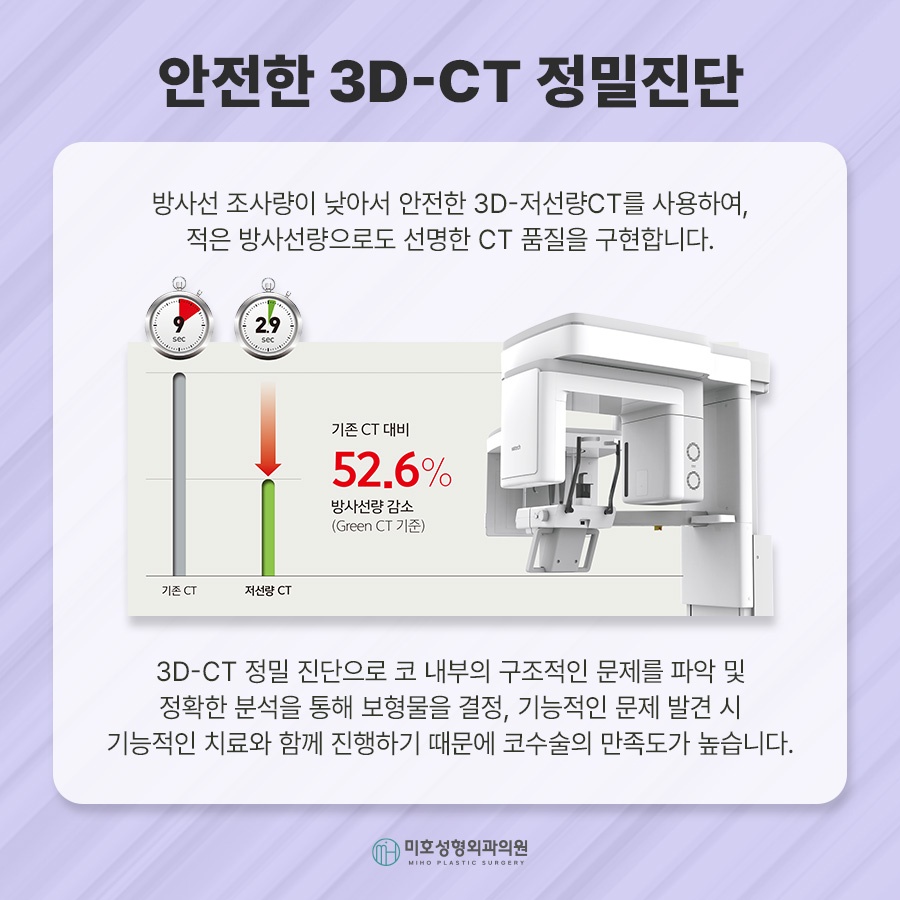
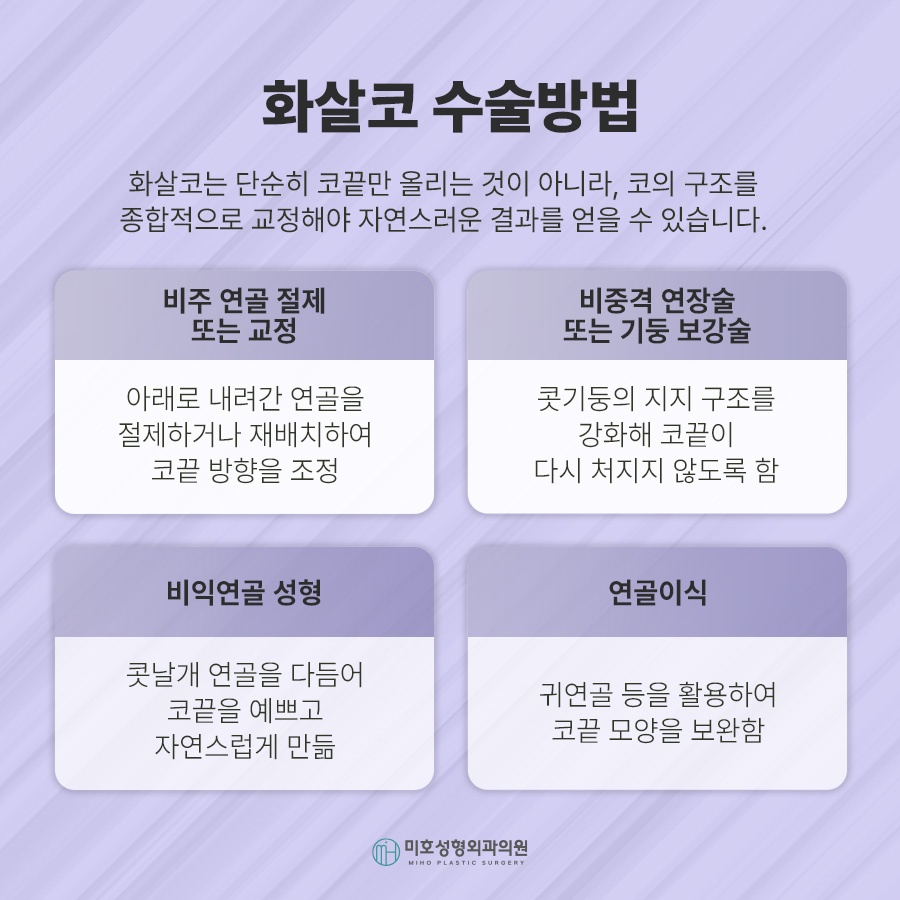
Correction surgery for an arrow-shaped nose is applied differently depending on the cause of the problem.
As mentioned above, if the depressor muscles of the nose exert excessive force, part of the muscles may be removed to weaken their force, or they may be removed entirely so that the cartilage is no longer pulled downward.
If strong muscle activity is the primary cause, considerable improvement may be achieved with this method alone.
However, if this does not produce a satisfactory result, the cartilage itself must be lifted.
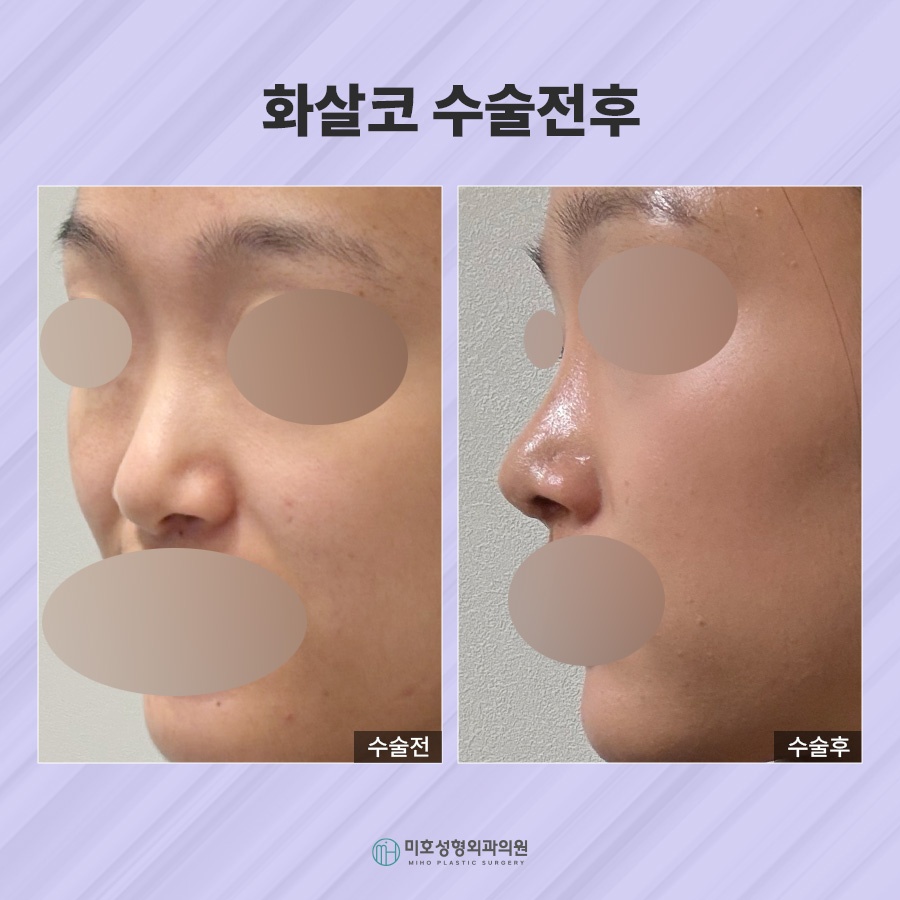
By repositioning the downward-facing nasal tip cartilage upward, the arrow shape can be improved and the appearance of a long midface can be addressed, creating a younger-looking impression.
At this time, the patient’s own tissue is usually harvested and used to create a supporting column inside the nose, fixing the angle of the nasal tip.
Because the tip may droop downward again over time under the influence of gravity, it is important to create a strong support structure.
Commonly used autologous materials include septal cartilage removed during correction of a deviated septum, ear cartilage, and rib cartilage.
For more flexible fixation, septal or ear cartilage may be inserted, while rib cartilage is used when the patient requires a stronger support structure.
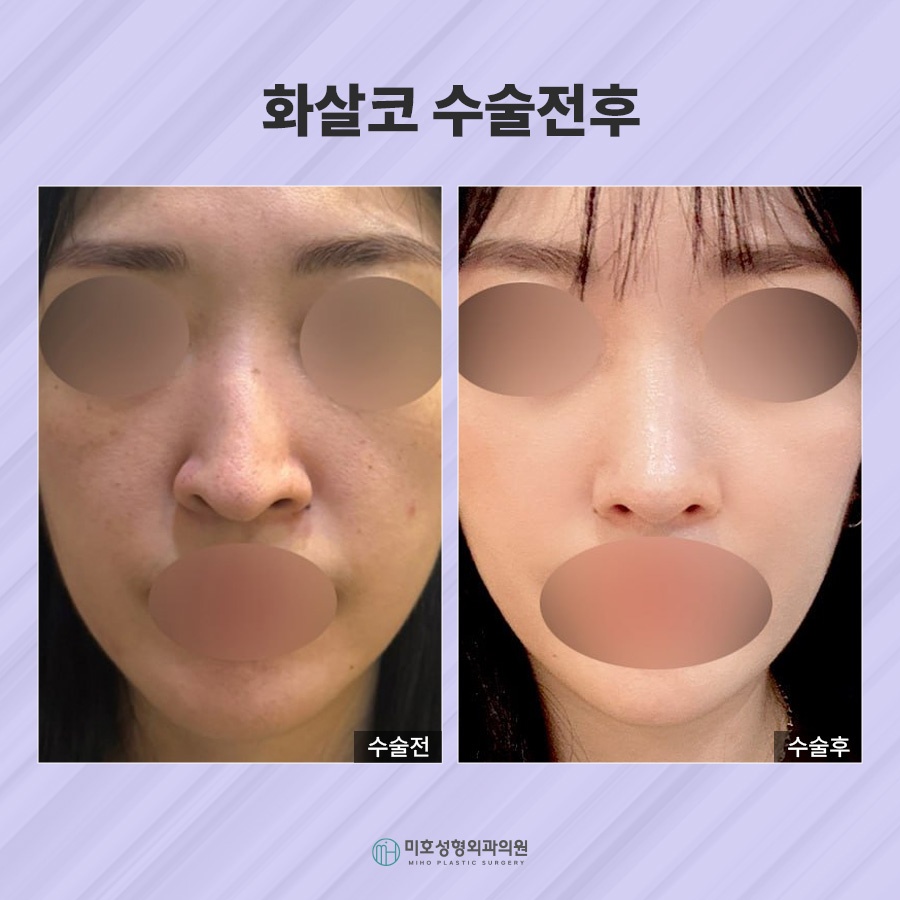
When correcting an arrow-shaped nose, if the bridge of the nose has collapsed significantly or the nasal bridge is low, these areas may also be improved at the same time.
Because the nasal bridge is an area that requires strong support, rib cartilage is commonly shaped and inserted.
Since the patient’s own tissue is used, the result can look natural, with less concern about immune or inflammatory reactions. In addition, rib cartilage provides strong support by nature, so its shape does not change easily.
If harvesting the patient’s own tissue is difficult or the patient does not want it, an artificial implant or donated tissue may be inserted.
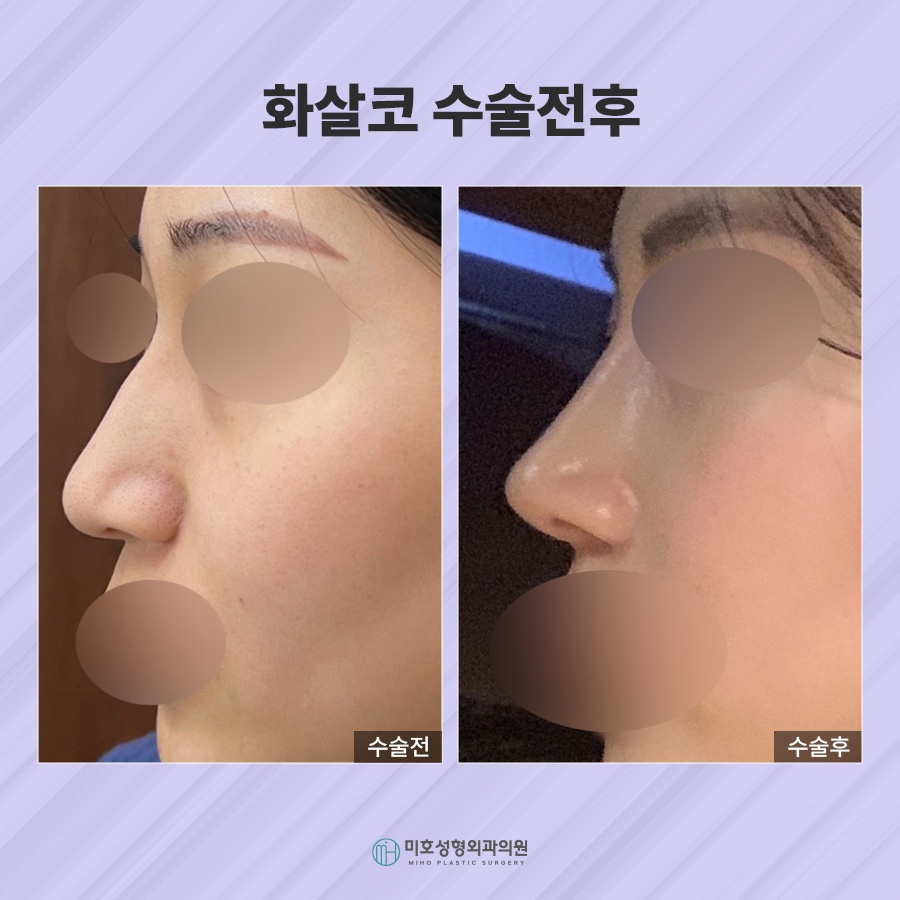
As with other correction procedures, at-home aftercare is essential for this treatment as well.
Basically, you should follow the instructions provided by your medical institution.
Noticeable swelling and bruising generally subside within about 1–2 weeks, and the shape naturally settles into place after approximately one month.
Until the internal tissues stabilize, you should be careful to avoid applying severe impact or pressure. If the bridge or dorsum of the nose has also been raised, wearing glasses is prohibited as well.
To reduce swelling, cold compresses are recommended initially. Once the sensation of heat has subsided, switch to warm compresses. Keeping your head lowered for a long time can cause blood to pool and increase swelling, so this should also be avoided.
Because of the risk of altering the shape, it is preferable to sleep on your back rather than face down or on your side whenever possible.
For at least two weeks, avoid rubbing your face vigorously when washing it, and refrain from visiting saunas, Korean-style bathhouses, and swimming pools.
Alcohol and smoking can interfere with recovery and contribute to inflammation, so they should be avoided for 2–4 weeks.
Keep the incision area clean to prevent bacterial infection and inflammation, and it is very important to take antibiotics exactly as directed.
For those who are actively engaged in their social and professional lives, a quick recovery is likely to be important.
Moderate-intensity walks and warm compresses can promote blood circulation and recovery, helping you return to your daily routine sooner, so walking and warm compresses are recommended.
High-intensity exercise is possible starting at least one month after the procedure.
Although it is never desirable to judge someone solely by their appearance, if you have experienced disadvantages because of an arrow-shaped nose or if it repeatedly diminishes your self-esteem, we hope you will seek help in addressing it.


Previous image
Next image