
The upper part of the face, including the forehead and eyebrows,
is an important area
that determines the overall impression.
As we age, the skin loses elasticity,
causing the forehead to sag
and the eyebrows to descend.
As a result, the appearance of the eyes changes,
creating a tired-looking impression.
To improve this,
many people look up
forehead lift reviews
and decide to undergo the procedure.
Even when referring to similar cases,
because the degree and pattern of aging differ from person to person,
it is very important
to visit clinics in person and receive consultations.
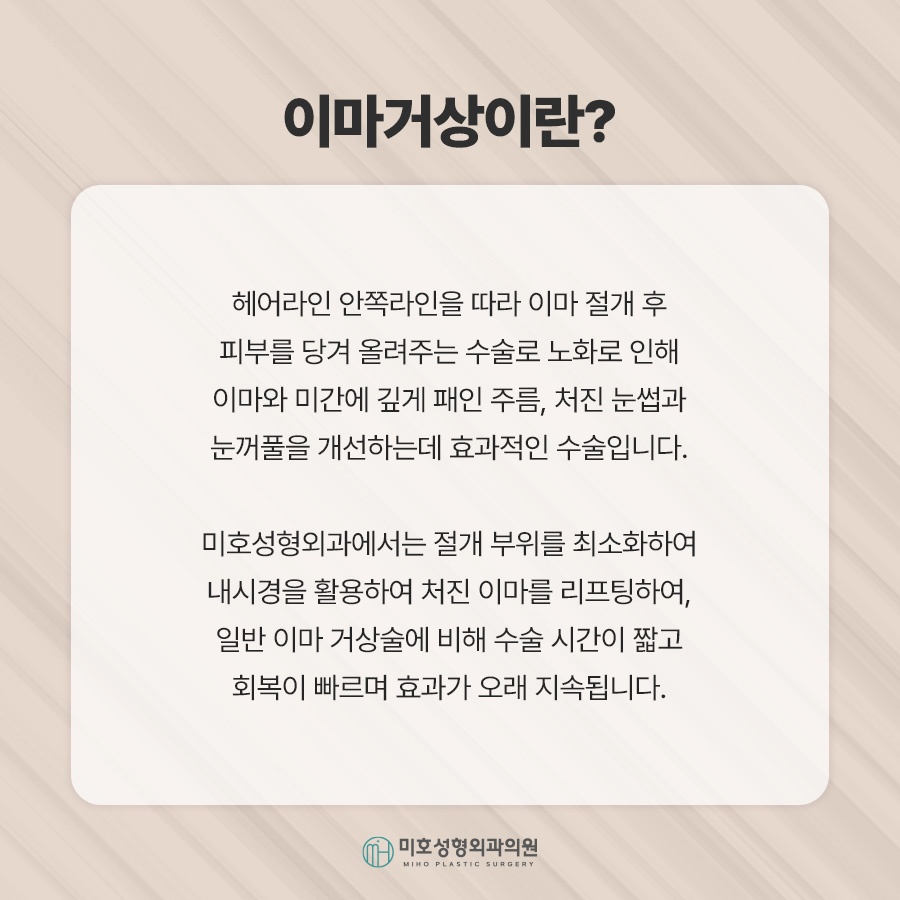
When looking through forehead lift reviews,
people sometimes confuse
simple lifting procedures with excisional surgery.
Both procedures share the same goal
of lifting sagging areas upward,
but their processes and results differ.
First, a lift is a process
that includes surgical excision,
while lifting procedures use
threads or ultrasound to improve elasticity.
In a lift, the tissue from the forehead
to the area around the eyebrows
is dissected,
lifted upward, and secured.
At this time, not only the skin layer
but also the underlying soft tissue
and fascial layer are all dissected
and repositioned.
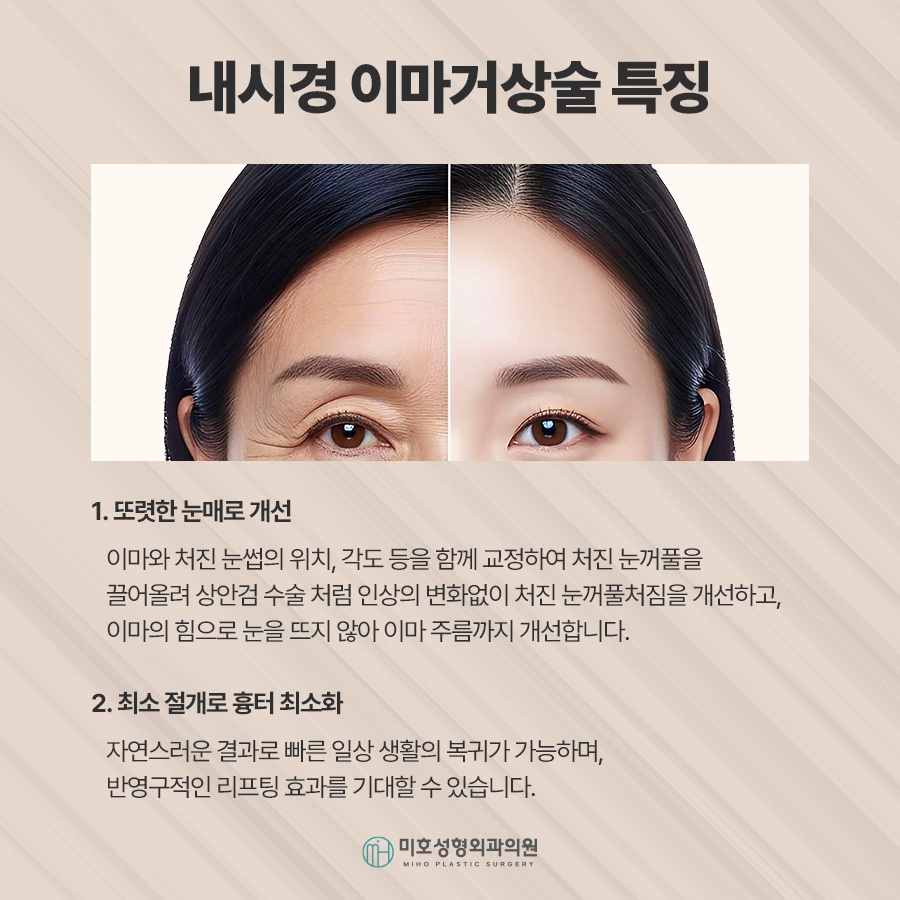
In contrast, lifting procedures involve
inserting barbed threads beneath the skin
and pulling upward,
or applying ultrasound
to improve elasticity in the skin layer.
If the degree of sagging is mild,
l,ifting alone may provide satisfactory results,
but when aging has progressed significantly,
the difference before and after the procedure
may be barely noticeable,
or the results may quickly return to their original state.
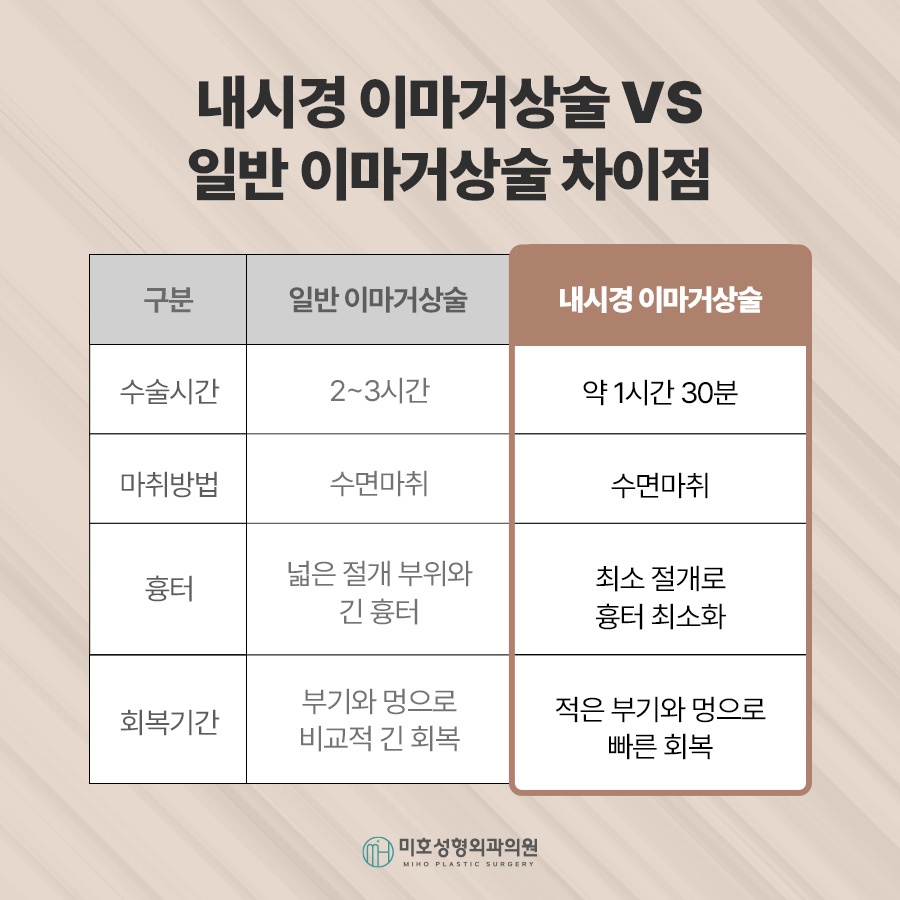
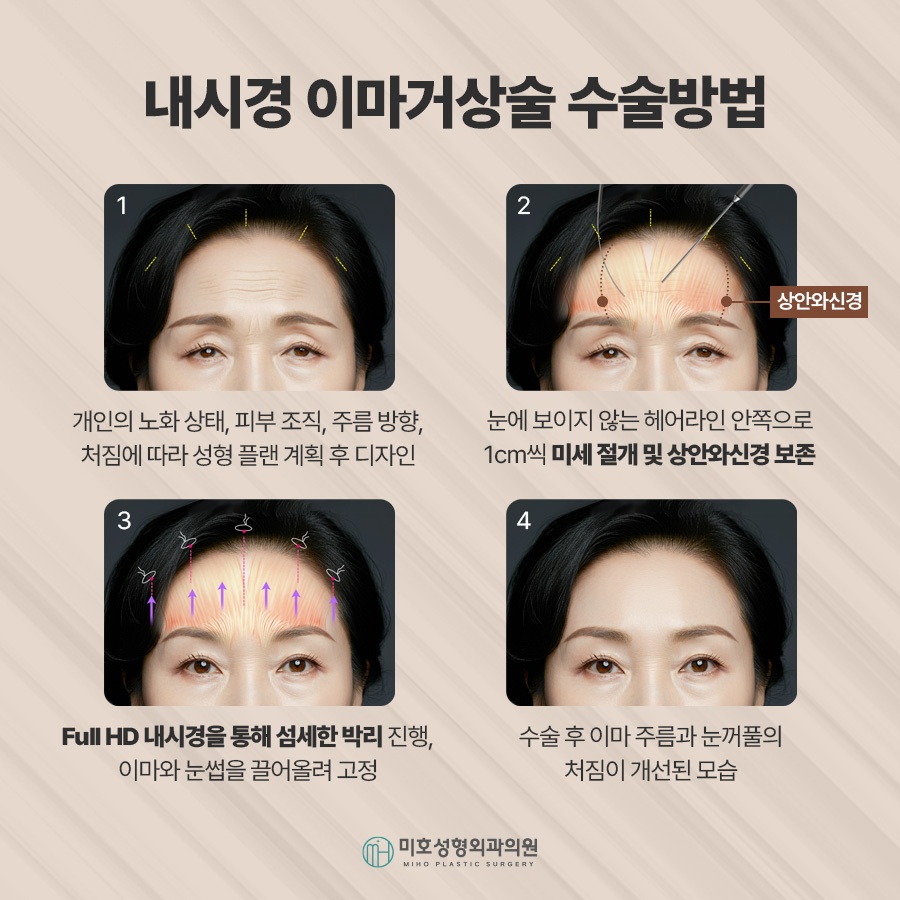
These days, most forehead lift reviews
refer to procedures performed using endoscopy.
Because the internal tissue is directly observed
through a camera lens during dissection,
injury to nerves and blood vessels can be avoided,
and another advantage is that smaller incisions
can help reduce scarring.
In addition, because the fascia,
which is the underlying cause of sagging,
is dissected and lifted before being firmly secured,
the difference before and after the procedure
is more apparent,
and the results may last longer.
As this method addresses
the noticeable scars and long recovery time
that were disadvantages of conventional lifting surgery,
it is becoming more popular over time.
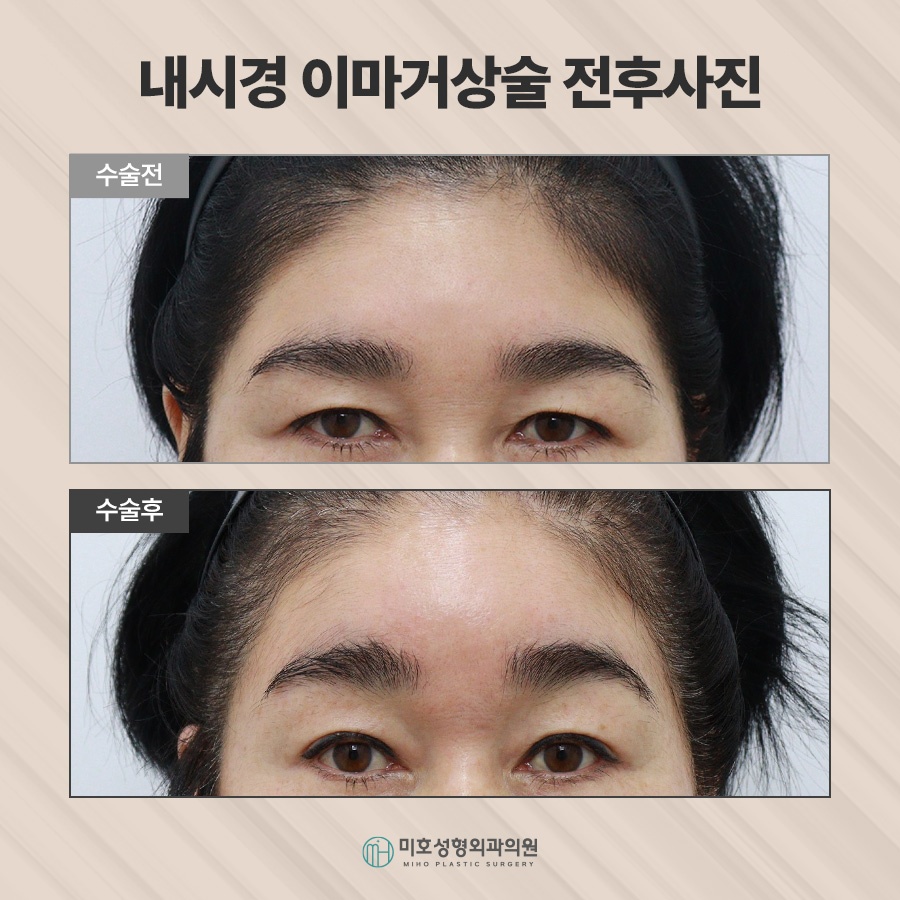
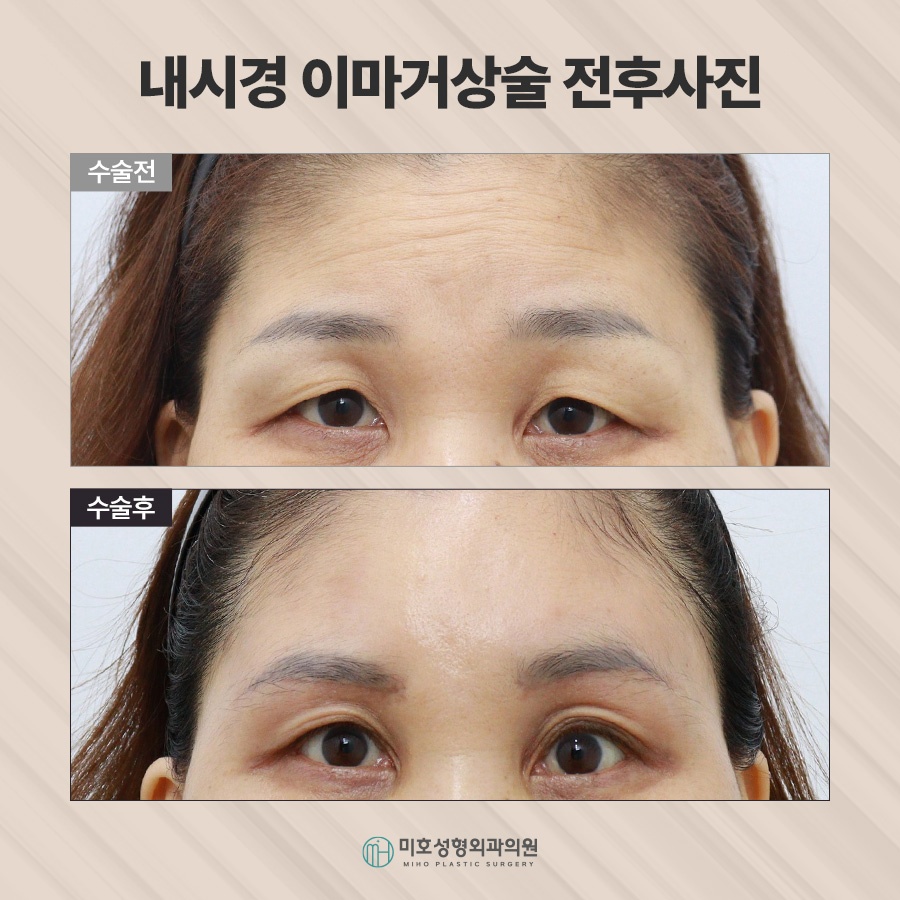
It may provide positive results such as
improvement of a sagging forehead and deep wrinkles,
correction of eyebrow position,
and reduction of drooping eyelids.
When reading forehead lift reviews,
you will also often see people
who underwent this solution
for problems with the upper eyelids
rather than sagging or wrinkles in the upper face.
Sagging skin tends to occur
without exception in every area,
and the upper eyelids
are among the areas most affected.
The area around the eyes has very few developed sebaceous glands,
contains relatively little accumulated fat,
and has a naturally thin skin layer,
so signs of aging are often experienced immediately.
When the upper eyelids descend,
the eyes appear smaller
and the overall impression changes.
It can also cause the eyelashes to poke the eyes,
irritation around the eyes,
and even obstructed vision.
When the upper eyelids descend,
people commonly think that the area must be excised.
These days, however, rather than directly excising the eyelids,
part of the area below the eyebrows may be incised
and pulled upward and secured,
or the tissue may be lifted from the forehead.
The reason is that excising and suturing
the sagging eyelids increases the likelihood
of an outcome commonly called “sausage eyes,”
and in people who did not originally have double eyelids,
it can significantly change their appearance.
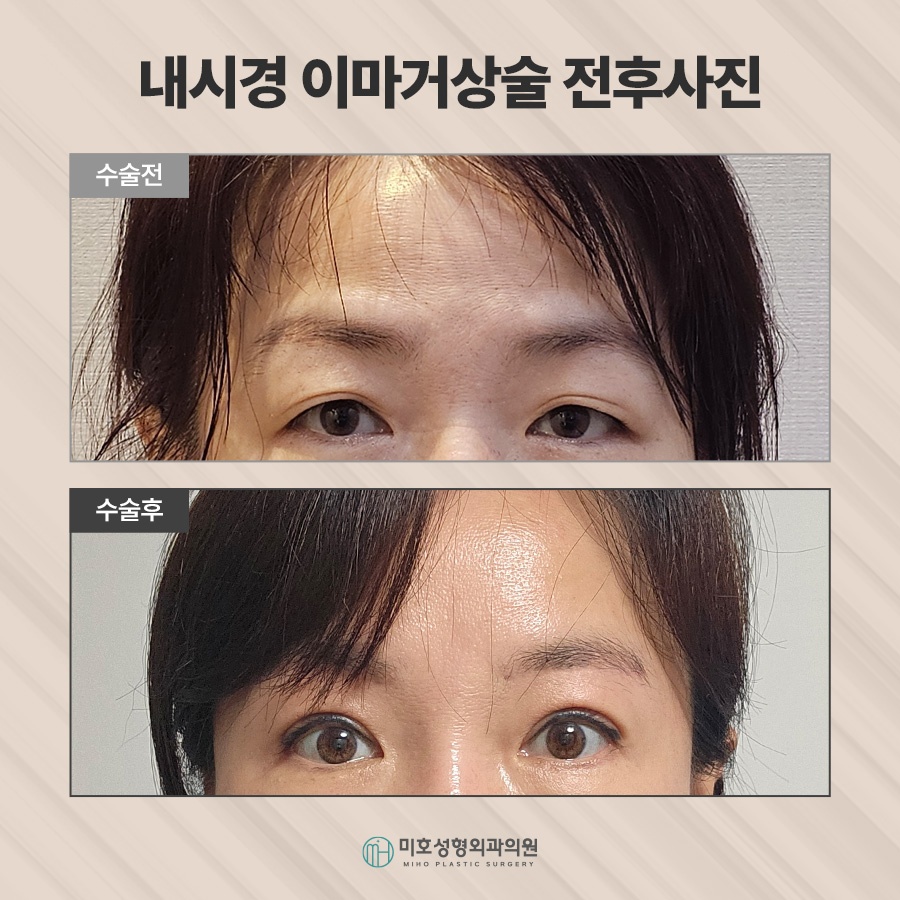
In contrast, lifting the skin from the forehead
can restore a lively appearance to the eyes
without significantly changing the person’s original image.
Among forehead lift reviews,
you may occasionally come across cases
in which forehead reduction
was performed at the same time.
When the vertical length of the upper face is long
and the middle and lower parts of the face are short,
the face may appear youthful,
but if the difference is excessive,
it may instead make the person appear to have hair loss.
In this case, performing a lift and reduction together
can resolve sagging
while also reducing the area of the upper face.
At our clinic, an oblique incision method
is used to reduce damage to the hair follicles.
When the incision is made at an angle,
the hair follicles are positioned below the scar,
which can help preserve the hairline.
The use of an electrocautery device
is also reduced when passing near the hair follicles.
If the fixation is weak,
various problems may occur,
such as separation of the incision line.
Therefore, after lifting the sagging tissue,
it must be firmly secured.
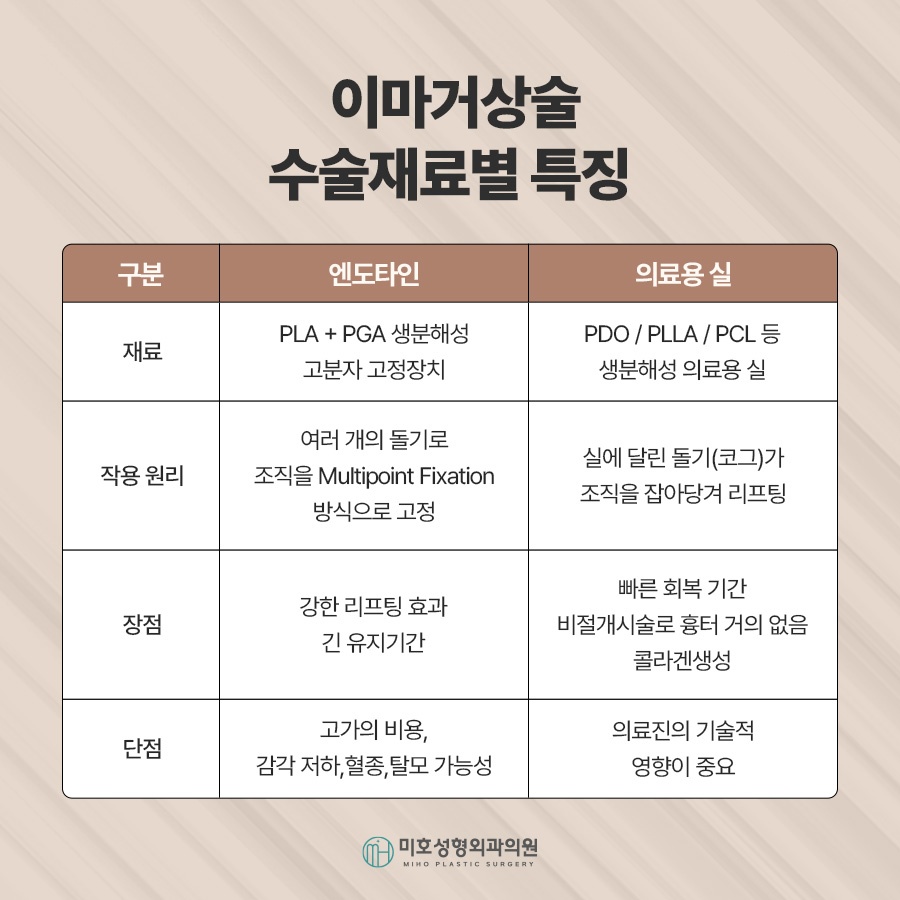
There are two main fixation methods.
The first uses a triangular plastic device
called Endotine,
which dissolves inside the body over time.
A hole is drilled in the bone,
and Endotine is secured using an anchor.
The other method is bone tunneling.
A narrow tunnel is created in the bone,
and sutures are passed through the channel
to secure the tissue.
The Endotine procedure is simple,
but people with thin skin or those who are older
may experience a foreign-body sensation and pain.
In contrast, bone-tunneling fixation
tends to cause less pain and a weaker foreign-body sensation,
but the results are greatly influenced
by the practitioner’s skill and experience.
Because this area is closely associated
with an important organ, the brain,
it is advisable to seek treatment
from medical professionals with extensive knowledge
and experience in this technique.
For people who previously had fixation with Endotine
and decided to try the procedure again,
bone tunneling can be attempted again
because the structure will have dissolved and disappeared.
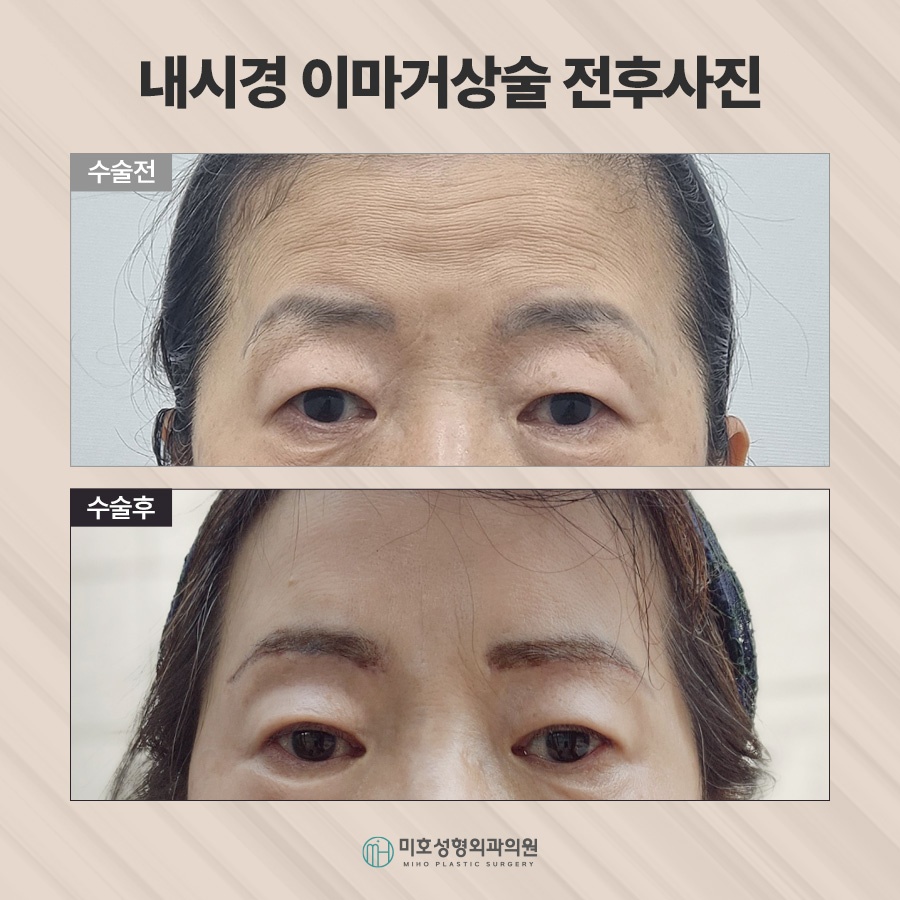
While reviewing forehead lift cases,
another point to check at the same time
is what determines the position of the eyebrows
and the cause of the forehead wrinkles.
It is necessary to carefully check
whether there is asymmetry between the two sides,
whether there is a habit of using the forehead muscles
when opening the eyes,
and how wide the upper part of the face is.
Immediately after the procedure,
swelling, pain, and bruising may occur
and gradually improve over one to two weeks.
At first, the skin may feel tight,
and reduced sensation may also occur,
but these symptoms usually disappear
as the tissue gradually stabilizes.
If you carefully follow the instructions
provided by the medical institution
and follow the recommended aftercare,
the recovery period may be shortened.



Previous image
Next image