
Some people experience two or more visible creases after undergoing double eyelid surgery, or even when they naturally have double eyelids.
This is commonly referred to as a double eyelid crease, and many people wonder why their creases become double or triple.
Today, I will explain in detail what overlapping creases are, why they occur, and in which cases correction may be necessary.
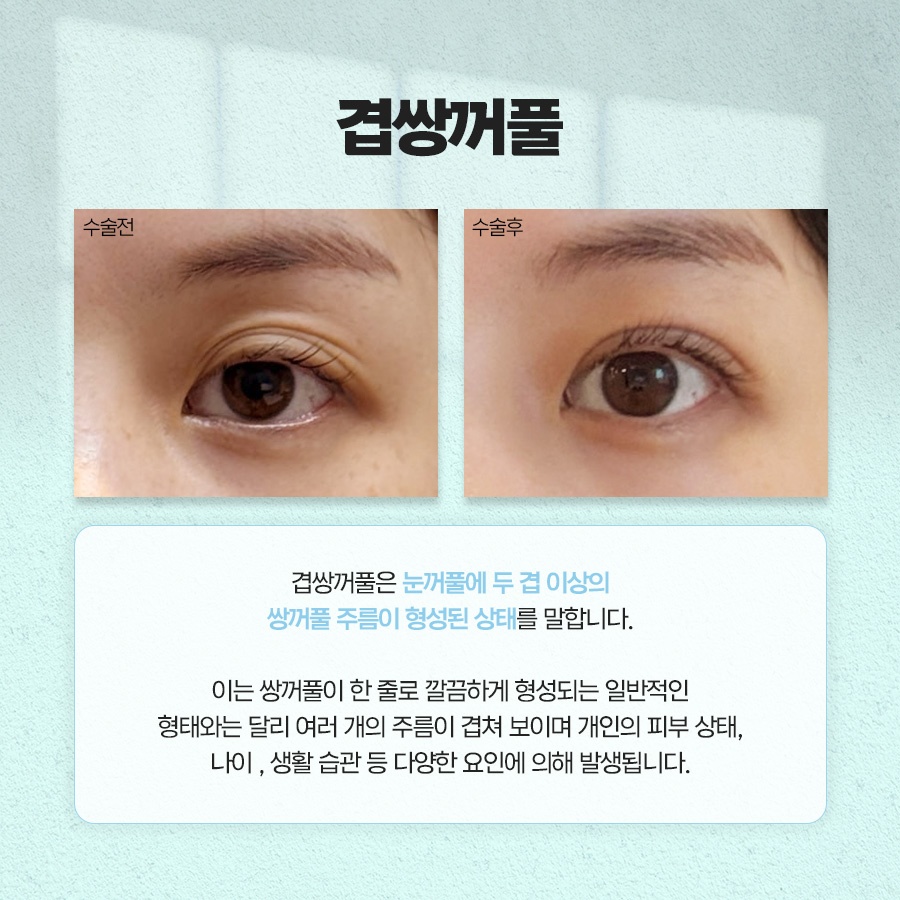
As the name suggests, an overlapping crease refers to a condition in which two or more double eyelid creases appear layered rather than as a single crease.
When the eyes are open, a faint or distinct secondary line appears above or below the originally designed double eyelid line.
It may occur naturally due to the combined effects of the eyelid skin, fat, and muscle structures, or it may appear artificially after double eyelid surgery when adhesion does not form completely.
In other words, an overlapping double eyelid crease is not a single disease, but rather a term describing an eyelid condition that can arise from various causes.
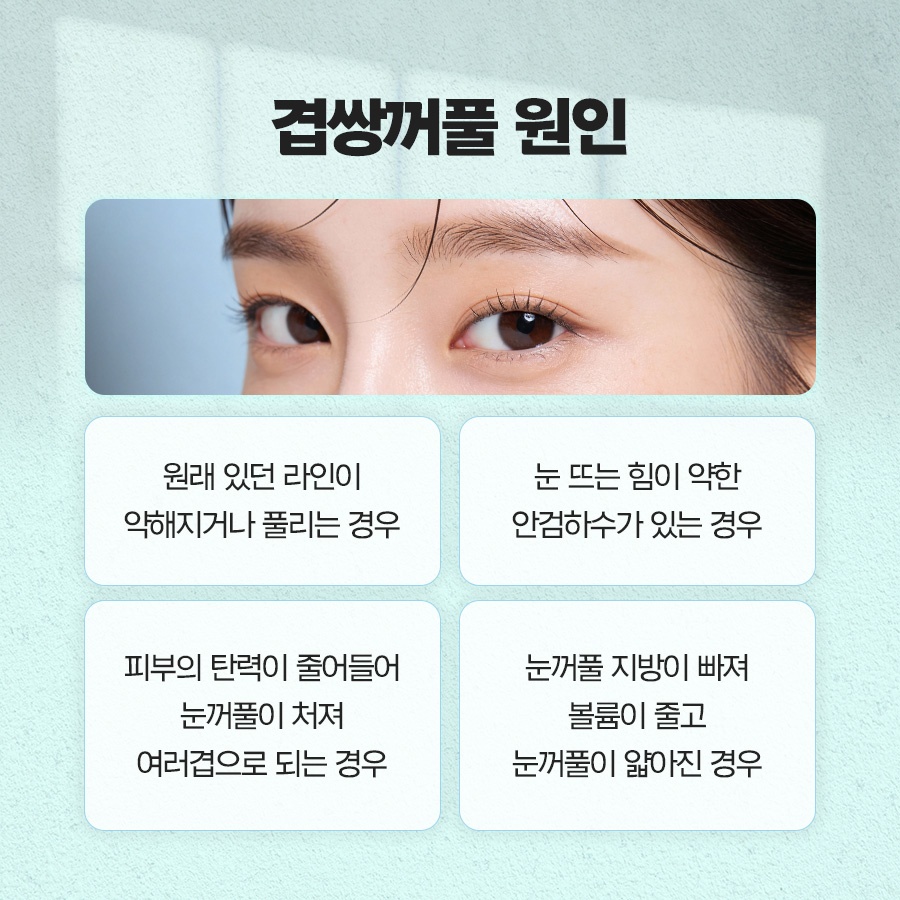
It can occur even in people who have never had any procedure performed on their eyes.
This is generally due to a constitutional characteristic in which thin, elastic eyelid skin naturally forms multiple creases as the eyes move.
It is observed relatively often, especially in people who have a habit of opening their eyes wide or who have an eye shape with an epicanthoplasty-like appearance.
An overlapping crease may also appear when there is little eyelid fat and multiple layers of adhesion have formed between the levator muscle and surrounding tissues.
Most of these congenital overlapping creases do not cause functional problems. If they do not cause cosmetic discomfort, additional touch-up treatment is often unnecessary.
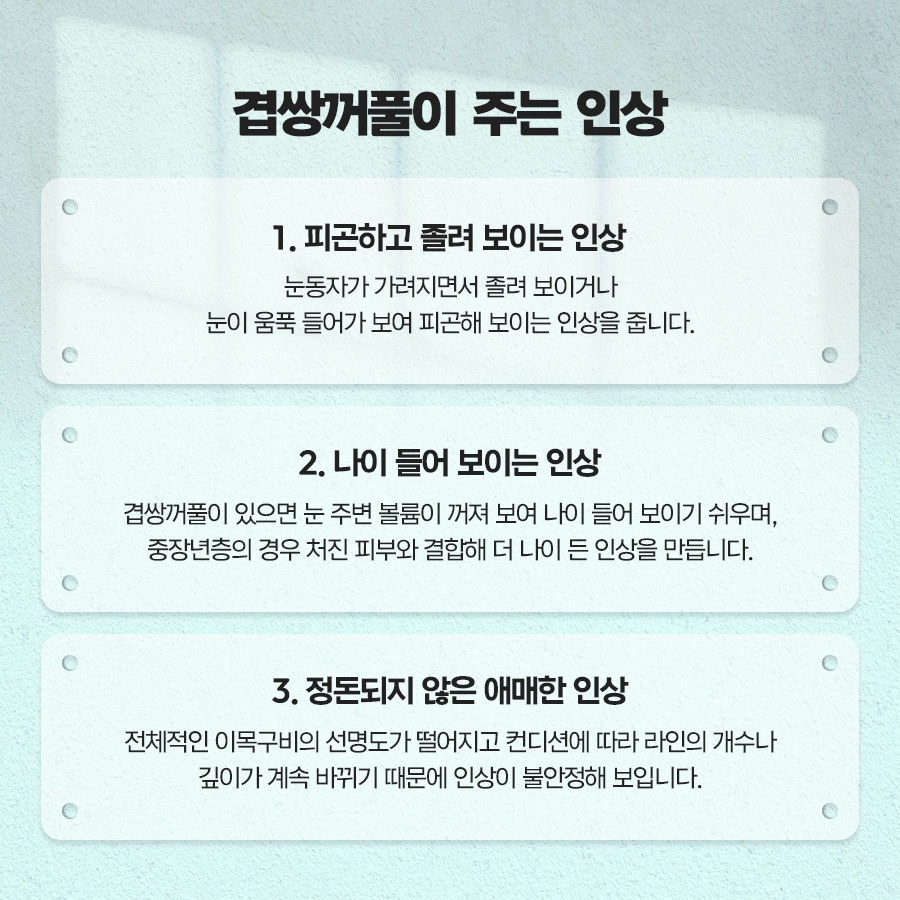
Cases in which a double line appears after double eyelid surgery are among the most frequently discussed topics during consultations.
The most common cause is a mismatch between the line designed during incisional or non-incisional surgery and the actual area where the skin folds.
Immediately after correction, swelling may conceal the issue. As the swelling subsides, the natural line where the eyelid originally folded may reappear and become visible as two lines together with the newly created line.
In the non-incisional method, sutures are used to fix the skin and muscle. If adhesion at the fixation points is uneven, the intended line may be more prominent in some areas, while the natural line may be more prominent in others, making the creases appear layered.

If the skin is thick or there is a substantial amount of fat, it can take quite a long time for the swelling to completely subside.
During the process of returning to its normal state, two creases may temporarily appear. In many cases, they naturally settle into a single crease over time.
Therefore, rather than immediately considering revision surgery simply because an overlapping crease is visible, it is important to allow sufficient time for observation.
In many cases, the swelling subsides and the tissues stabilize over a period of approximately 3–6 months, allowing the creases to naturally settle into one line.
During this period, the priority is to monitor the progress regularly and observe how the crease changes.
Rather than making a hasty judgment, we recommend checking the condition step by step together with your doctor.

However, correction may be considered in the following cases.
First, when two distinct lines remain clearly visible without changing even after more than six months have passed.
Second, when the overlapping creases make makeup difficult or cause noticeable asymmetry between the eyes.
Third, when they are accompanied by functional discomfort, such as a foreign-body sensation or tightness when opening the eyes.
In these situations, a detailed examination is performed to determine whether the cause is uneven adhesion, sagging skin, or the need for fat repositioning. Revision treatment and its method are then decided accordingly.
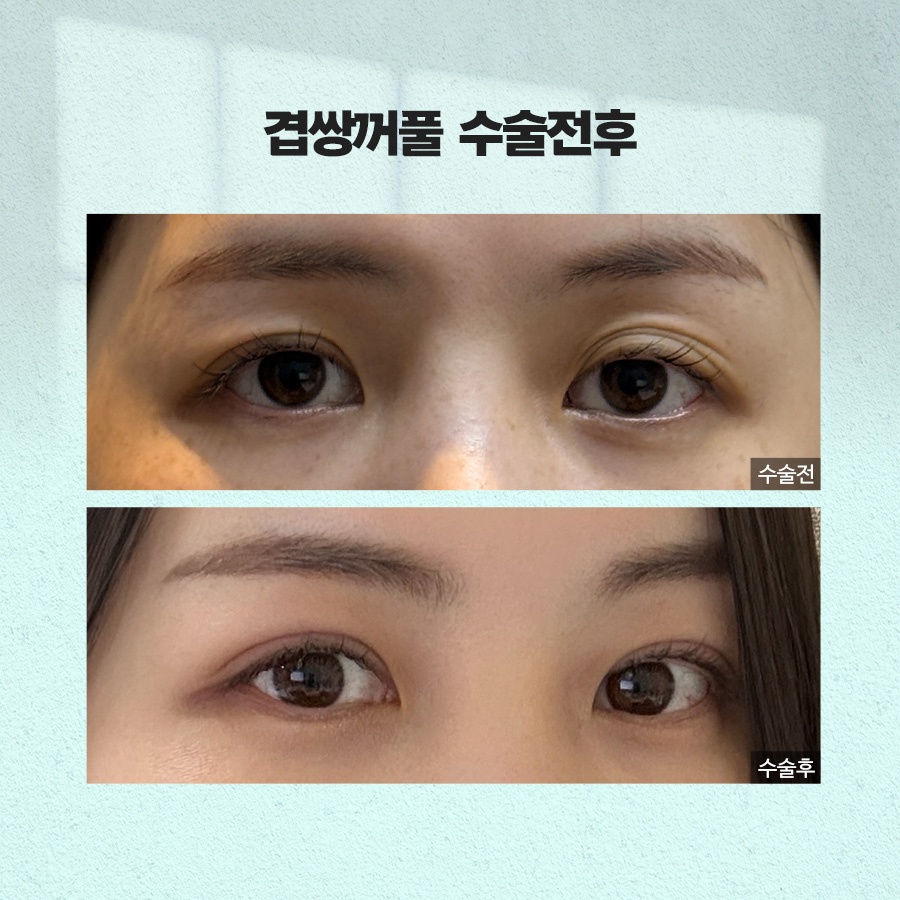
Correction of an overlapping double eyelid crease requires a more cautious approach than the initial procedure.
Because the tissues have already experienced injury and adhesion once, the location and thickness of scar tissue, tissue elasticity, and the existing condition of the fat must all be comprehensively evaluated.
In general, the incisional method is often used to整理 existing adhesion tissue and clearly redesign a new crease. When necessary, fat repositioning or removal may also be performed.
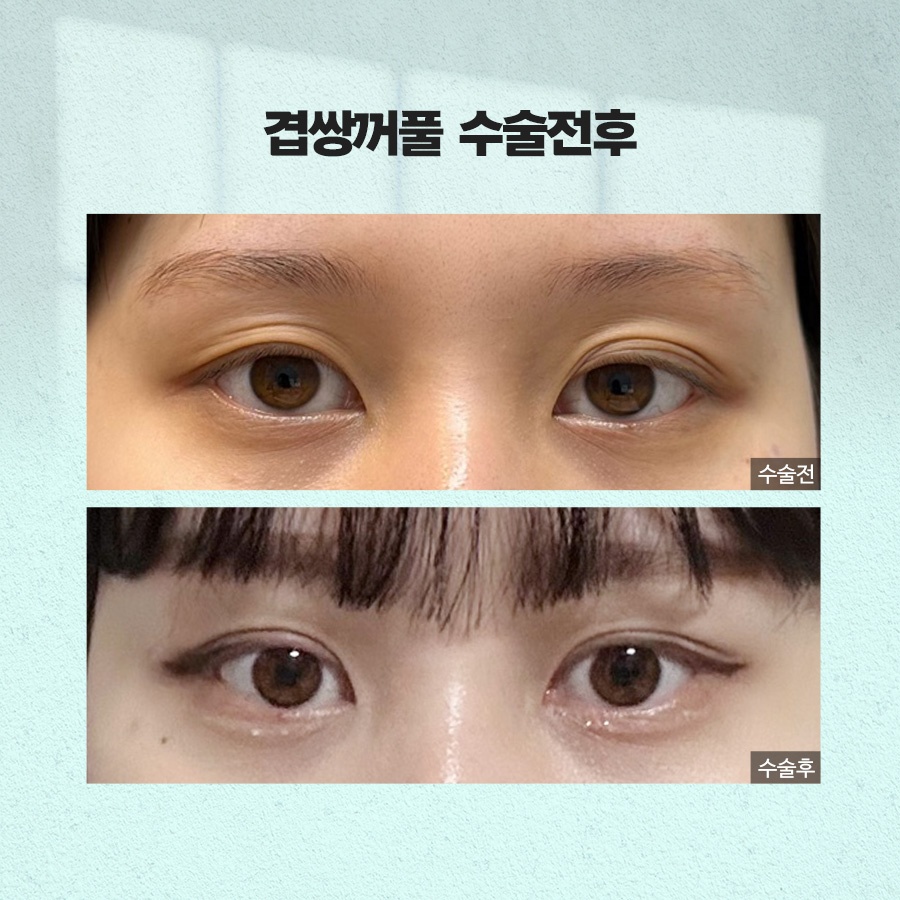
As a general principle, revision surgery should be performed only after a sufficient recovery period of at least six months.
If it is performed too aggressively before the tissues have fully stabilized, it may lead to unpredictable results.
During the consultation, it is important to review both the previous treatment records and the current condition in order to establish an individualized treatment plan.
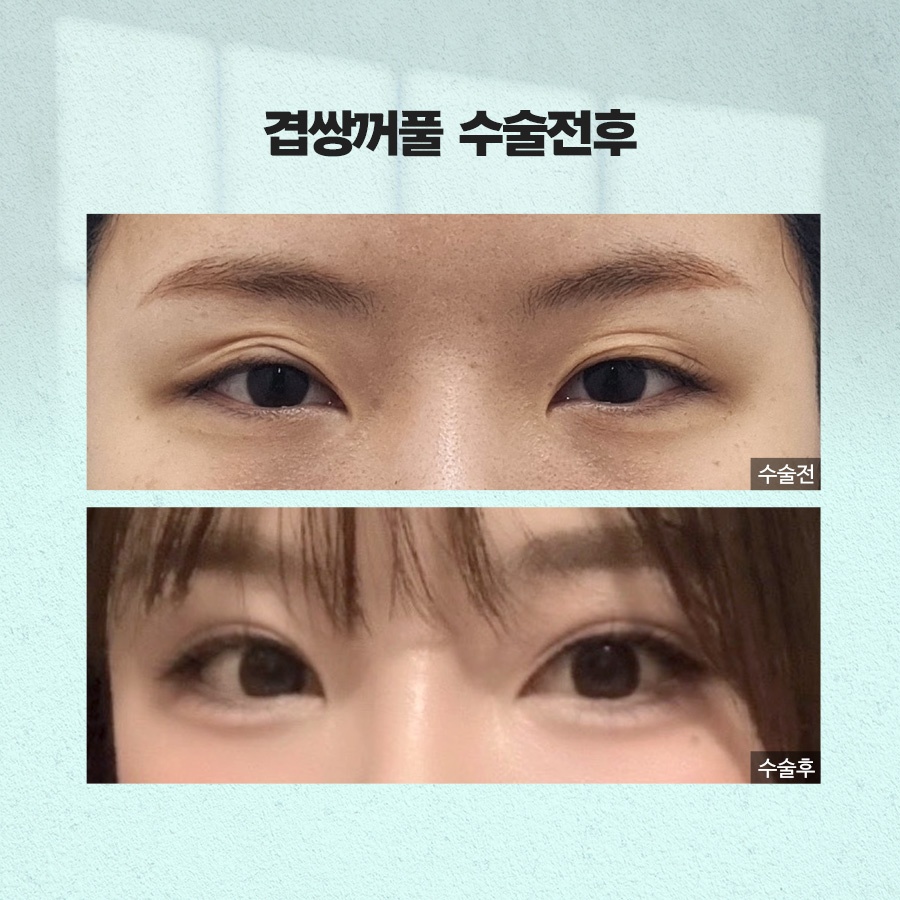
This can be prevented to a considerable extent through precise diagnosis and a careful design process.
The key is to comprehensively consider the amount of excess skin with the eyes closed and open, the thickness and distribution of fat, the strength of the levator muscle, and the overall proportions of the glabella and eye shape when designing the crease height and width suited to each person.
In particular, for people who naturally tend to develop overlapping creases, identifying this characteristic during the consultation before correction and reflecting it in the design can help minimize unexpected crease overlap later.
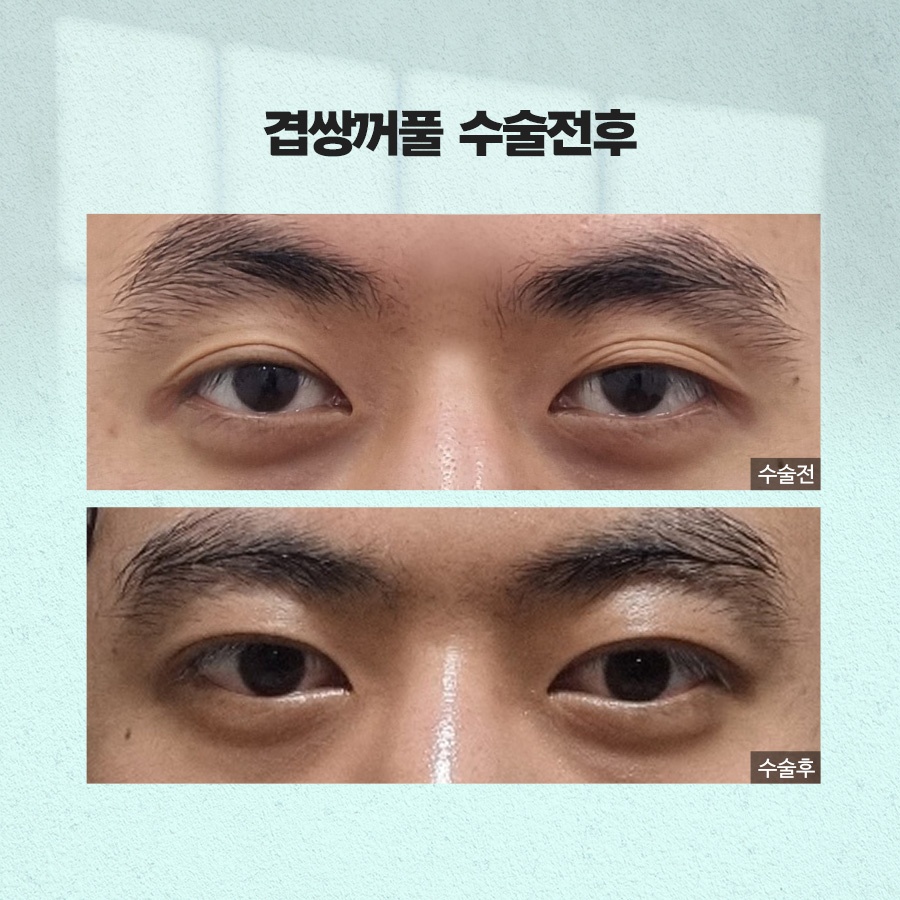
To summarize, this is a condition with various possible causes: it may be congenital, may appear temporarily while the eyelids are returning to their normal state after correction, or may persist because of uneven adhesion.
The most important thing is to accurately identify the cause.
Rather than hastily deciding on revision treatment simply because a double line is visible immediately after correction, the first step is to observe the progress patiently and find a clinic that can carefully determine the cause.
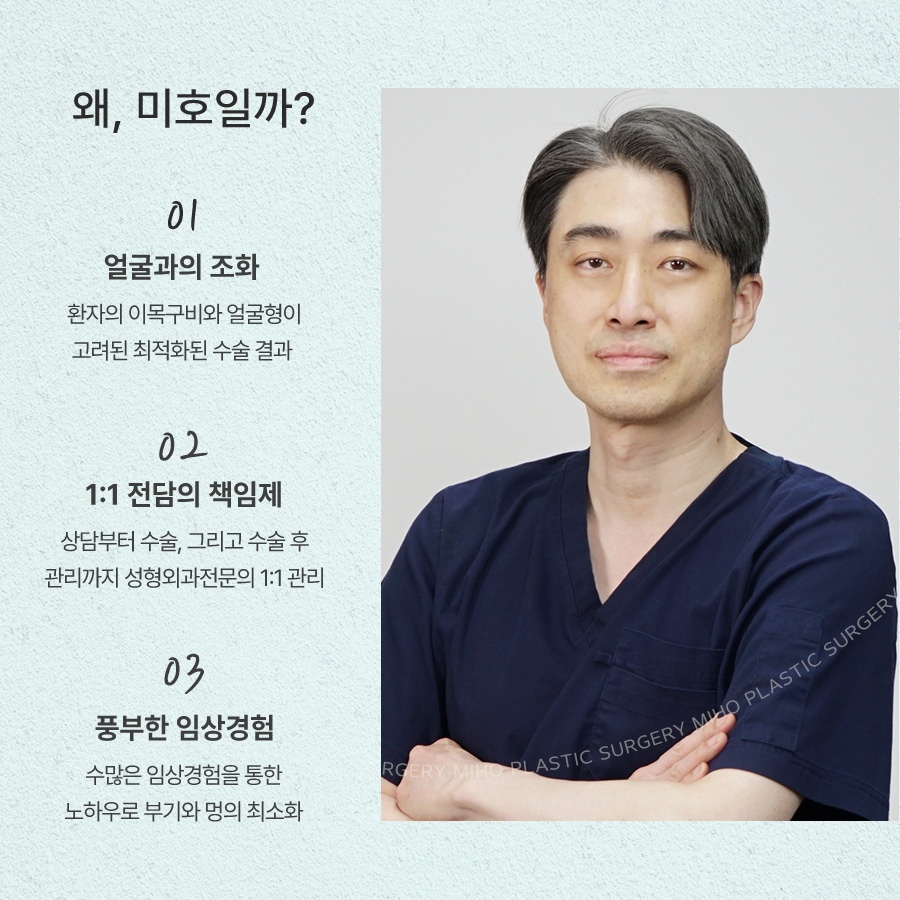
At Miho Plastic Surgery, the eyelids, muscles, and adhesion condition are individually and precisely evaluated before a correction plan is proposed.
If you have been concerned about an overlapping double eyelid crease for a long time, seeking a consultation at a clinic that provides this kind of careful diagnostic process may also be a good option.



Previous image
Next image