After some time has passed following nose surgery, most people are able to go about daily life without major discomfort. However, there are cases where seemingly minor stimuli, such as wearing glasses or external pressure, lead to symptoms like pain, swelling, or a low-grade fever, making people worry that something may be wrong.
In particular, when the surgical area is the nasal bridge, it is only natural to become sensitive to even small changes. In this article, I will calmly organize the possibilities to consider when pain and swelling occur six months after surgery.
Q.
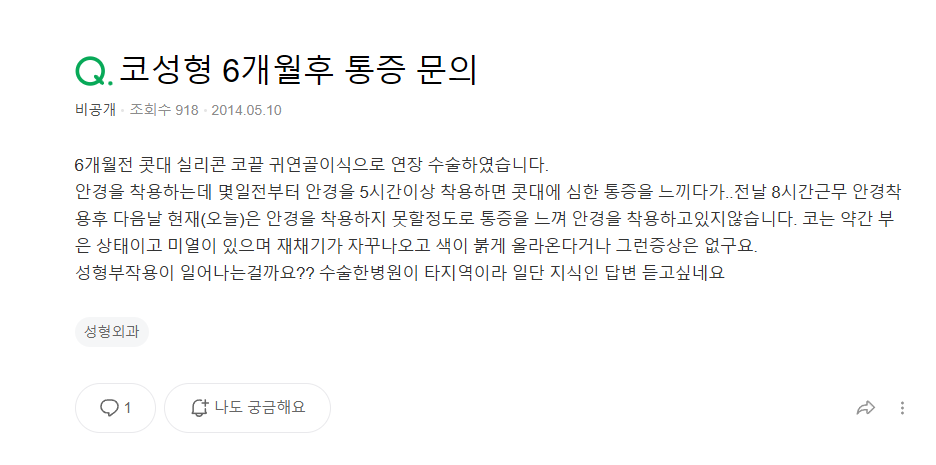
Six months ago, I had augmentation surgery with silicone in the nasal bridge and ear cartilage in the tip of my nose. I wear glasses, and for the past few days, if I wear them for more than five hours, I feel severe pain in the bridge area. Since the day after I worked wearing my glasses for more than eight hours, the pain has become worse, and now it is difficult to wear glasses.
My nose is slightly swollen, I have a low-grade fever, and I keep sneezing. However, there is no redness of the skin or anything like that. Could this be inflammation or some kind of problem? The hospital where I had the surgery is in another region, so I am asking here first.
A.
If your nose is swollen, pain is present, and you even have a low-grade fever as you do now, inflammation should be suspected first. If the symptoms worsened after prolonged pressure from glasses, it is also possible that an inflammatory reaction developed in the internal tissue due to the irritation. Even if the hospital where you had surgery is far away, it is safest to visit in person and receive an accurate examination before the symptoms progress. This is because internal inflammation can advance even if there is no obvious redness on the surface.
Until your visit, avoid irritating your nose, and if possible, after consulting a medical professional, it may help to check whether an antibiotic prescription is needed. You may be feeling very anxious, but in most cases, if it is checked early, recovery occurs without major problems. In particular, rather than worrying excessively after reading side-effect posts about nose surgery online, I recommend determining your condition through an accurate medical examination.
I hope you have a good outcome. Thank you.
#NoseSurgerySideEffects #NoseOnePlasticSurgery
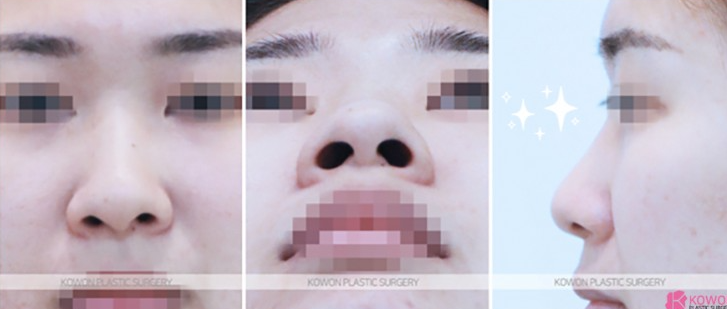
This image was used with the model’s consent.
The cartilage at the tip of the nose was spread out to the left and right, so in the photo taken from below, the nostrils appeared to tilt outward on both sides, and even from the front, the nose gave an overall wide and blunt impression. When the tip of the nose and the nostrils both appear spread out like this, it is a type that requires bulbous nose correction.
The patient wanted the most natural change possible, without it being obvious, so we planned to bring the cartilage at the tip of the nose together.
This image was used with the model’s consent.
If the nostrils are refined without incision and the cartilage at the tip of the nose is tied together, the tip rises naturally without being excessive, creating a subtle sense of height. From the front, the nasal bridge was low and not very prominent, but a slightly deviated septum was observed.
Such a deviated septum is generally corrected together during surgery, and when it is low it is not very noticeable, but once the nose becomes higher, it often stands out more.
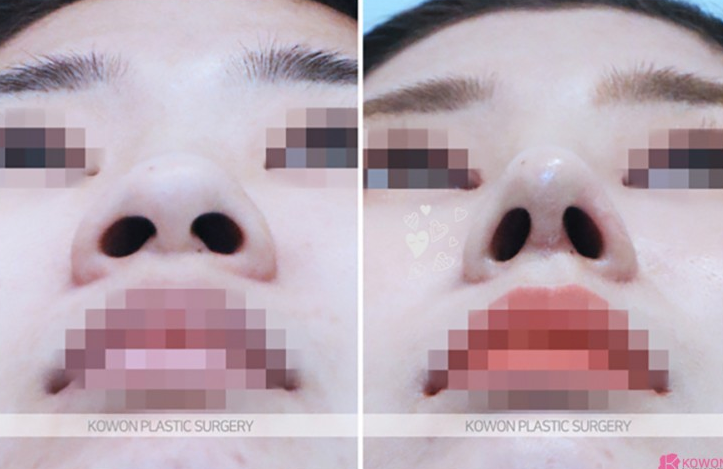
This image was used with the model’s consent.
When comparing the before-and-after results of bulbous nose correction, the change is even clearer. After surgery, the shape of the nostrils and nostril openings was refined, and the tip of the nose was also lifted, improving the overall appearance into a more defined and feminine impression.
Unlike the previous flat and dull look, the center of the nose was balanced, and the facial features became more distinct.
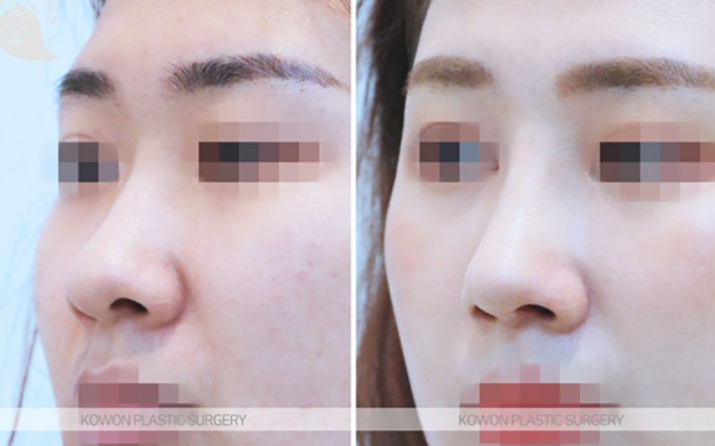
This image was used with the model’s consent.
For a natural result, silicone approximately 4 mm thick was used on the nasal bridge to add height without overdoing it. The nose itself was small, but because there was not enough septal cartilage, ear cartilage was added to complete the design.
Because the cartilage at the tip of the nose was spread out and the nostrils were also wide from side to side, nostril reduction surgery was performed at the same time to balance the overall shape.
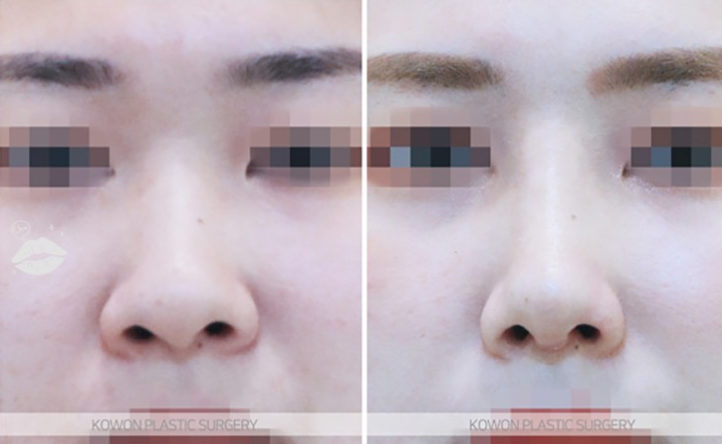
This image was used with the model’s consent.
If you look at the front-view photo after surgery, you can clearly see that the previously wide nose width has been reduced, giving a neater and more refined impression.
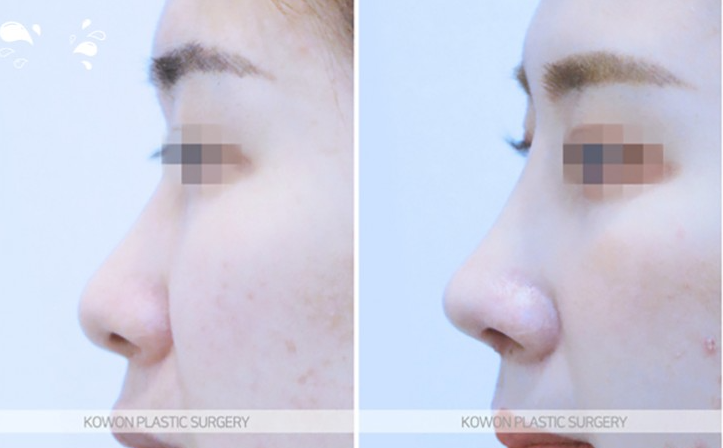
This image was used with the model’s consent.
Among those considering bulbous nose correction, many think the nostrils must definitely be reduced, but in reality there are many cases where improvement can be achieved sufficiently with cartilage tying at the tip of the nose alone.
Some people worry that nostril reduction will make smiling look unnatural or leave scars, but incision is not the only method. There are non-incisional nose surgery methods with relatively little concern about scarring, and even if an incision is performed, it does not necessarily lead to unnatural results, so there is no need to worry excessively.
This image was used with the model’s consent.
So far, we have looked at a case of bulbous nose surgery performed through non-incisional nostril adjustment and correction of cartilage at the tip of the nose. I hope this was helpful for those who are concerned about their nose shape, and it is important to carefully decide on the surgical direction that best suits your nose condition through 충분한 상담.