All posts are written personally by Dr. Oh Jeong-min, director of Dr. Oh Clinic.
Summer Health Management Tips from a Family Medicine Specialist
In recent years, summer heat waves have been becoming increasingly severe. It is easy to think of them as simply “hot weather,” but high-temperature environments can place strain on the body’s temperature-regulation functions and cause various heat-related illnesses.
Older adults, children, and people with chronic illnesses are particularly vulnerable. However, even healthy adults may require emergency-room treatment after prolonged outdoor activities or exercise, so caution is necessary.
What Are Heat-Related Illnesses?
Heat-related illnesses refer to conditions that occur when exposure to a high-temperature environment prevents the body’s temperature-regulation functions from working properly.
Our bodies release heat by sweating and dilating the blood vessels in the skin. However, if the surrounding temperature is excessively high or the humidity is high enough to prevent sweat from evaporating, body temperature continues to rise.
As body temperature rises, the body becomes deficient in fluids and electrolytes. In severe cases, damage may occur to major organs such as the brain, heart, and kidneys.
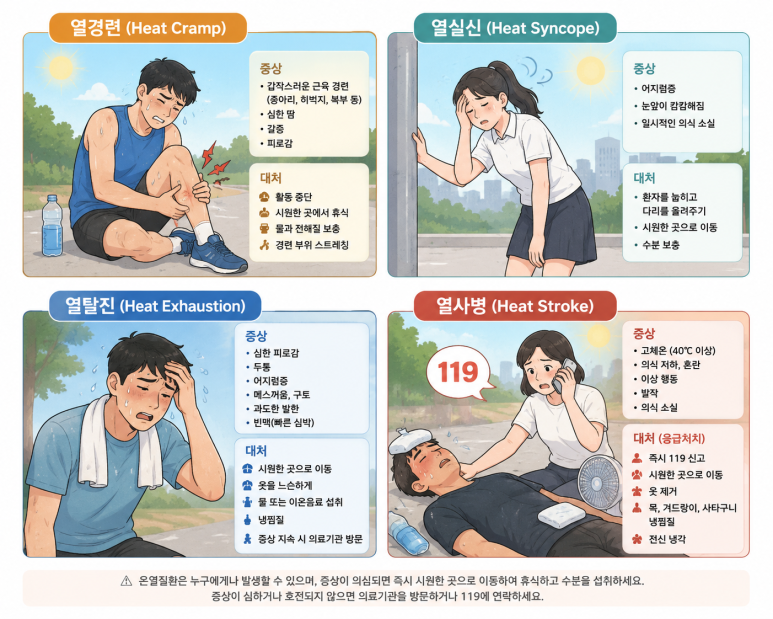
Common Heat-Related Illnesses
- Heat Cramps
Muscle cramps that occur after heavy sweating in a hot environment.
They mainly affect the calf, thigh, and abdominal muscles and are common among athletes and outdoor workers.
Symptoms
-
Sudden muscle cramps
-
Heavy sweating
-
Thirst
-
Fatigue
What to Do
- Heat Syncope
Temporary fainting that occurs when blood pressure drops after standing for a long time in a hot environment or standing up suddenly.
Symptoms
What to Do
Most people recover, but medical attention is needed if it happens repeatedly or consciousness does not return promptly.
- Heat Exhaustion
A relatively common heat-related illness that can progress to heat stroke if not treated appropriately.
Body temperature is generally below 40°C, but fluid and electrolyte depletion has already progressed considerably.
Symptoms
-
Severe fatigue
-
Headache
-
Dizziness
-
Nausea
-
Vomiting
-
Excessive sweating
-
Rapid heart rate
What to Do
Medical attention is needed if symptoms persist or oral fluid intake is difficult.
The Most Dangerous Heat-Related Illness: Heat Stroke
- Heat Stroke
Heat stroke is a medical emergency.
It occurs when the body’s temperature-regulation function completely fails, causing the core body temperature to rise above 40°C along with central nervous system abnormalities.
Delayed treatment can result in death, and even survivors may be left with neurological aftereffects.
Key Symptoms
In the past, heat stroke was known for being characterized by “a lack of sweating,”
but in reality, sweating may be observed in many patients with heat stroke.
Therefore,
high-temperature exposure + changes in consciousness
should immediately raise suspicion of heat stroke.
First Aid
-
Call 119 immediately
-
Move the person to a cool place
-
Remove their clothing
-
Apply cold compresses to the neck, armpits, and groin
-
Cool the entire body if possible
Do not force fluids on a patient with reduced consciousness because of the risk of aspiration.
Who Is Especially at Risk?
The risk of heat-related illness increases in the following situations.
High-Risk Groups
-
Adults aged 65 and older
-
Infants and young children
-
Pregnant people
-
People with obesity
-
People with heart disease
-
People with diabetes
-
People with chronic kidney disease
Medications Requiring Caution
These medications may affect sweating or the body’s ability to regulate temperature.
The Best Ways to Prevent Heat-Related Illnesses
- Drink Water Before You Feel Thirsty
Thirst is a sign that mild dehydration may have already begun.
Older adults, in particular, should consciously consume fluids because their ability to feel thirst may decrease.
- Reduce Activities During the Hottest Hours
It is best to avoid prolonged outdoor activities whenever possible between 11 a.m. and 5 p.m.
Exercise is recommended in the early morning or evening.
- Wear Well-Ventilated Clothing
can be helpful.
- Take Extra Precautions During Heat-Wave Advisories
If the Korea Meteorological Administration issues a heat-wave advisory,
it means the environment may pose a health risk, rather than being merely “a little hot.”
Older adults and other vulnerable people need sufficient cooling even indoors.
Worrying About Air-Conditioning-Related Illness
Avoiding air conditioning may be more dangerous
One statement I often hear in the consultation room is:
“I don’t turn on the air conditioner often because the cold air is bad for my body.”
However, during a heat wave, the risk of heat-related illness caused by insufficient cooling may be much greater than the discomfort caused by air conditioning.
It is important to maintain an appropriate indoor temperature and consume sufficient fluids.
Conclusion
Heat-related illness is not simply a matter of feeling overheated.
Heat stroke, in particular, is a medical emergency that can be life-threatening if treatment is delayed.
If you experience a headache, dizziness, or severe fatigue in summer, do not dismiss it as merely feeling under the weather.
Consider the possibility of heat-related illness first.
Avoiding heat waves, consuming sufficient fluids,
and promptly resting and cooling the body when unusual symptoms appear—
these are the most basic yet most important principles for preventing heat-related illnesses.
This was Dr. Oh Jeong-min, a family medicine specialist at Dr. Oh Clinic, caring not only for your beauty but also for your health.
#YeongdeungpoDermatology #YeongdeungpoDrOh #YeongdeungpoRejuran #YeongdeungpoRitwo #YeongdeungpoUltherapy
Dr. Oh Clinic, 4th floor of the Olive Young building at the Starbucks intersection, a 5-minute walk from Exit 3 of Mullae Station
02.2632.5553