Facial Contouring Pin Removal Review: A Case of
Contouring Pin Removal After More Than 10 Years
Hello.
This is Director Lee Won of 21 Plastic Surgery.
Many people who have undergone contouring surgery
are often curious about fixation pins used before surgery
i.e., titanium or bioresorbable pins.
In particular,
“Do I really have to remove these?”
“What happens if I don’t remove them?”
“Will there be any airport immigration issues if I have pins?”
These are some of the questions people often ask.
So today, using an actual patient case,
I’ll explain whether facial contouring pin removal is really necessary
and share the before-and-after review.
First, to give you the conclusion:
pin removal does not always have to be done.
!!!!!!
Here, the pins use plates and screws,
and their main purpose is to
hold fractured bone pieces
together in one place.
The fixation pins used in facial contouring surgery
do not usually cause any special problems even if you keep them for life,
but if you get a CT scan or X-ray,
the fixed pins will naturally be visible...
In fact, it is rare to have a facial CT,
but many patients seem to want pin removal because of panoramic dental X-rays.
So when is the best time to proceed with pin removal?
This seems like the question many of you are most curious about.
Usually, the best time for pin removal is
between 1 and 2 years after surgery!!
If it is delayed, bone will cover the plate...
and complete removal may not be 100% possible...
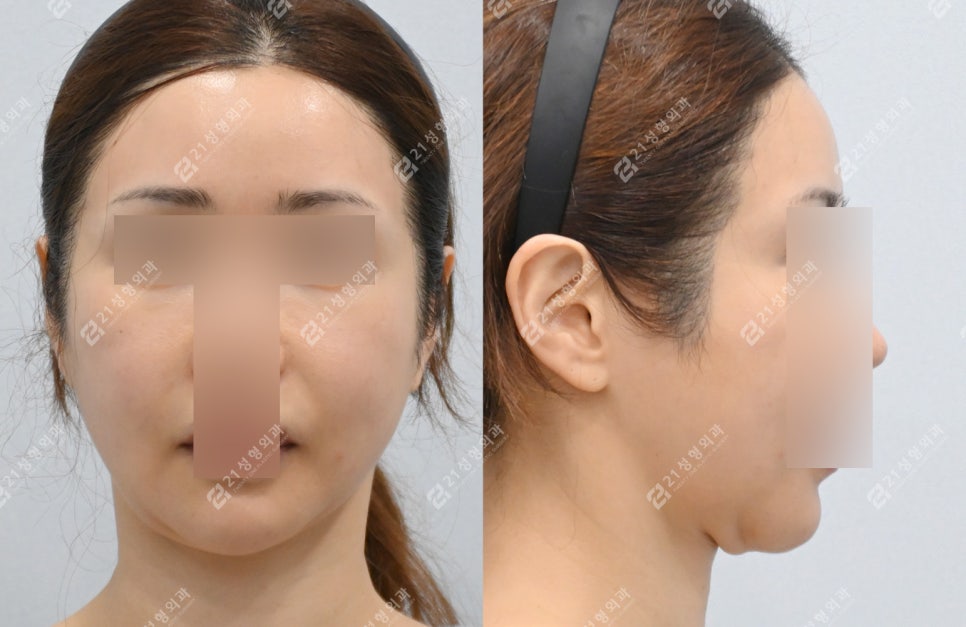
Front/side view before surgery
Looking at the preoperative photos, the patient had
fat and muscle around the cheeks and under the chin
that had become loose.
The patient also considered that area a major source of stress,
so after plate removal,
he wanted liposuction to be performed at the same time.
Surgical plan
Zygoma, chin pin removal
Chin T-osteotomy advancement
Double chin, bulldog cheek fat liposuction revision+
Double chin muscle binding + salivary gland binding + skin excision
Cheek hollow fat grafting
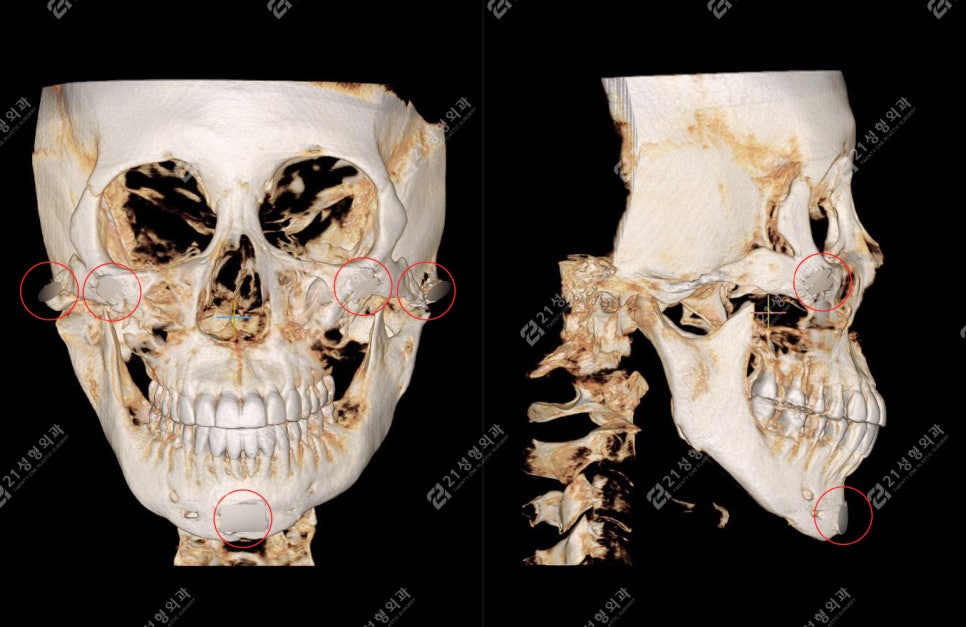
Preoperative CT
If you look at the patient’s CT images,
the fixation pins include two in the zygomatic body,
two in the arch, and one in the chin,
for a total of five plate screws.
The zygoma is an area where screw removal is difficult,
but removal of the plates fixed to the arch is especially the most difficult.
A 1 cm incision makes it hard to secure the field of view,
and because the screws are also small and thin,
when the bone is ground down and removal is attempted,
they often break and complete removal is not possible.
In addition,
forcing removal may actually damage the thin zygomatic arch bone.
So for patients like the one today who have had them for more than 10 years,
they enter the operating room carrying a lot of worry. ^^;
Also, when it has been more than 10 years,
for patients who had surgery at another hospital,
there may be cases where the screwdriver that fits the screws is not available.
At our clinic,
almost all types of screwdrivers are prepared
for situations like that.
However, if a screw is hidden behind a nerve or is too close to a tooth root,
there is a risk of nerve damage or tooth damage,
so it may not be removed.
Also,
if removal could cause a fracture of the fixed bone,
we will not remove it.
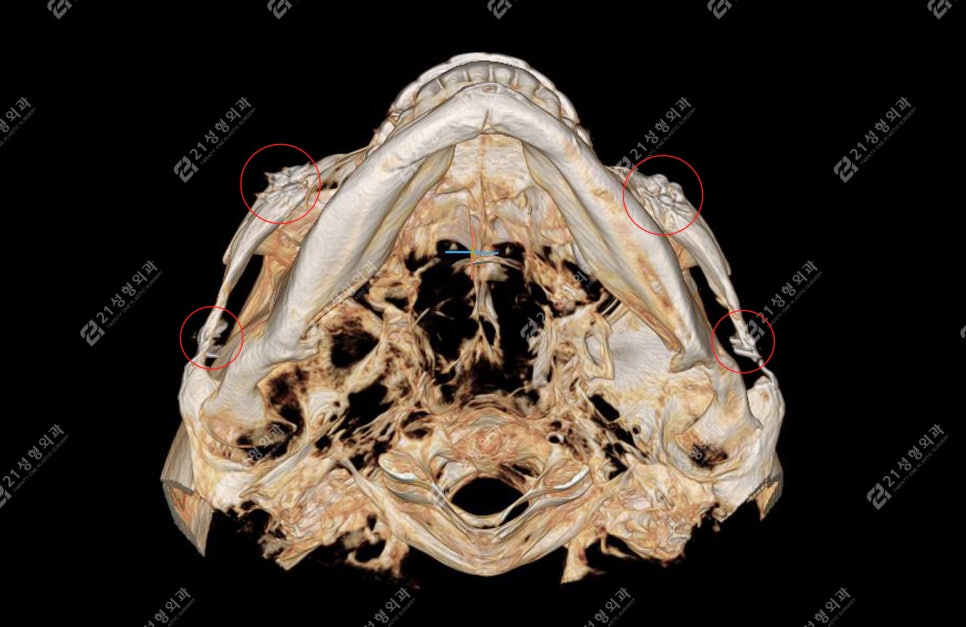
These are the plate screws in the arch,
seen from below the patient.
In the zygomatic area especially,
the osteotomy method changes depending on
which area protrudes more.
The zygoma is divided into the front zygoma, 45-degree zygoma, and side zygoma,
and in some cases, screws were inserted into the nerve
without considering the infraorbital nerve.
In such cases, we need to be careful about
the possibility of sensory damage.
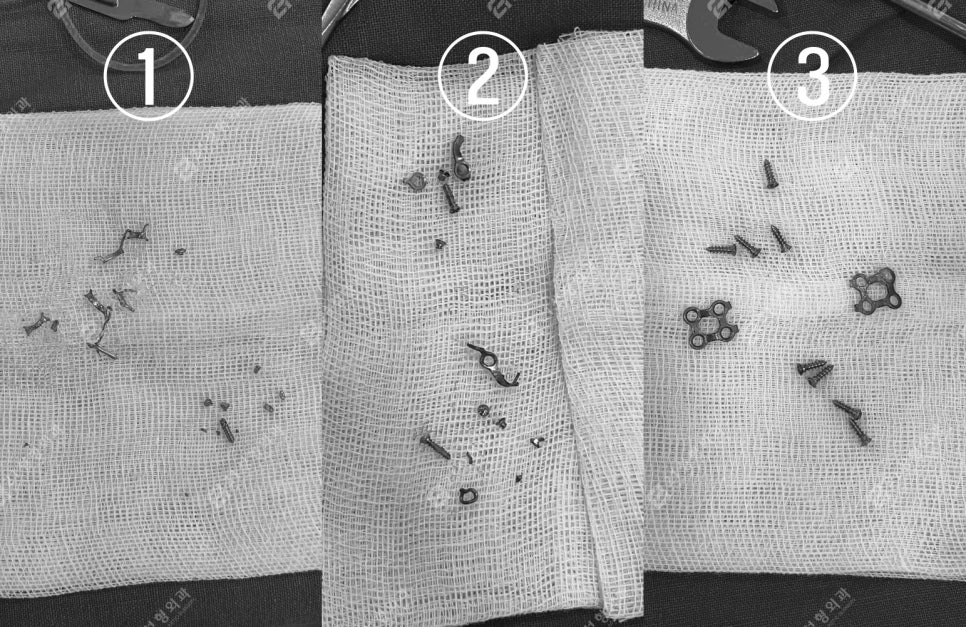
The photo above shows the removed plates.
No. 1: two zygomatic arch plates
No. 2: two zygomatic body plates
No. 3: two chin plates
In total, six plates were removed.
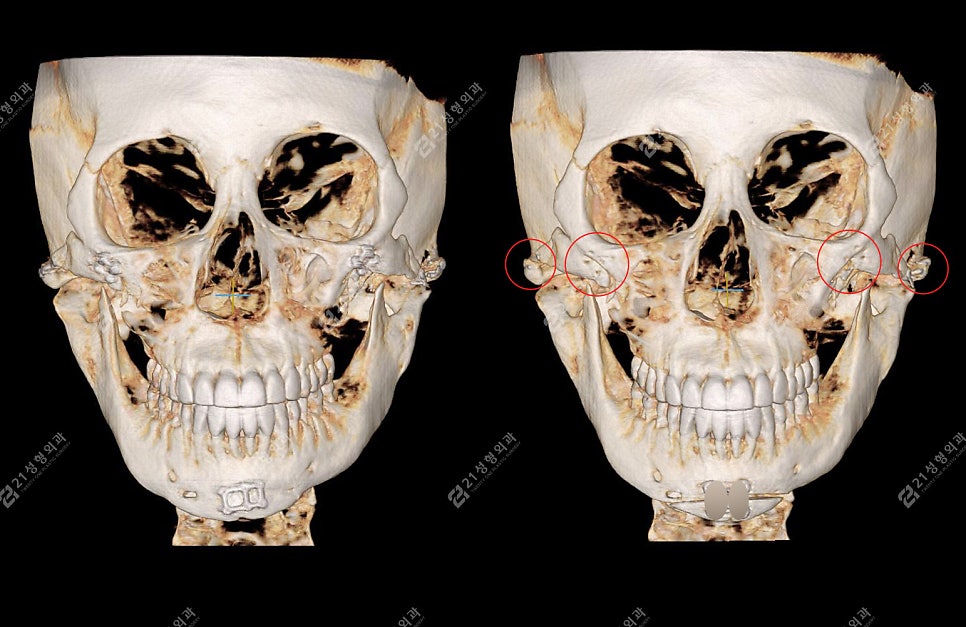
Before surgery / after surgery CT
Comparing the before-and-after CT images,
you can see that the plates in the zygomatic body and arch
have been cleanly removed.
For the chin, T-osteotomy + advancement was performed
so that the chin would appear natural and slim.
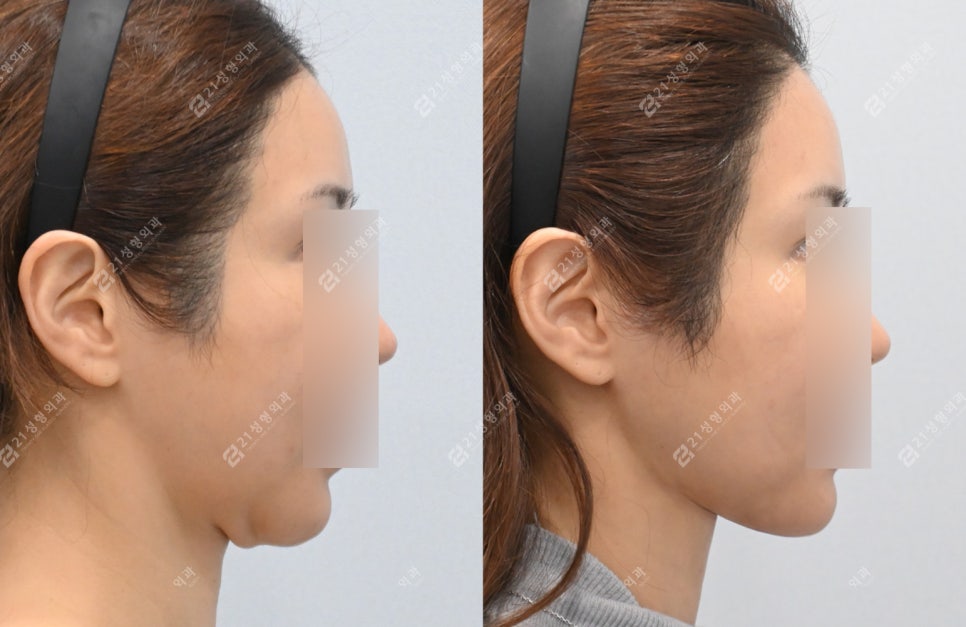
Side view before surgery / side view after surgery
These are the patient’s progress photos one month later.
If you look at the before-and-after photos,
there is still some swelling due to pin removal,
but the bruising has almost completely gone,
and the sagging under-chin tissue that looked pinched has gone in,
creating a natural jawline.
The swelling will probably go down quickly
and recovery seems likely to be fast^^
Today, we took a look at facial contouring pin removal
through an actual patient case.
Once more than a year has passed, fixation pin removal is difficult,
but it still needs to be removed.
For patients with sinusitis, the first principle of treatment is fixation pin removal.
In particular, sinusitis itself can be caused by surgery,
but it can also occur regardless of surgery,
so for any reason,
please be sure to remove the fixation pins for treatment!!!
Thank you.


#21 #21PlasticSurgery #DirectorLeeWon #DirectorParkJonghyun #contouring #facialcontouring #facialcontouringpinremoval #contouringpinremoval #pinremoval #pinremovalsurgery #contouringpinremovalsurgery #facialcontouringpinremovalsurgery #contouringsurgery #facialcontouring3types #contouring3types #contouringrevision #facialcontouringrevision #zygoma pin removal #chin pin removal #sinusitis #sinusitistreatment #lift #facelift #necklift #faceandnecklift #Vlinetotallift #LeeWon #ParkJonghyun #event #review #beforeandafterphotos #realmodel