Hello,
I’m Dr. Lee Juri, the chief director of Seoul Bardi Dental Clinic.
Today, I’d like to talk about dry socket symptoms that can commonly appear after wisdom tooth extraction.
After extraction, is it normal for the smell to keep coming back
and for the pain to keep getting worse?
After wisdom tooth removal, everyone expects some degree of pain and swelling.
But what if the pain gradually gets worse,
and there is even a bad smell in the mouth?
It may not be a simple part of the recovery process, but a complication.
The problem is that since it hurts after wisdom tooth extraction anyway..
while you endure it thinking,
‘It’ll get better with time...’
the pain can worsen and inflammation can spread.
Today, I’ll explain the symptoms of dry socket that can occur after wisdom tooth extraction,
and why a dental visit is absolutely necessary.
What is dry socket?
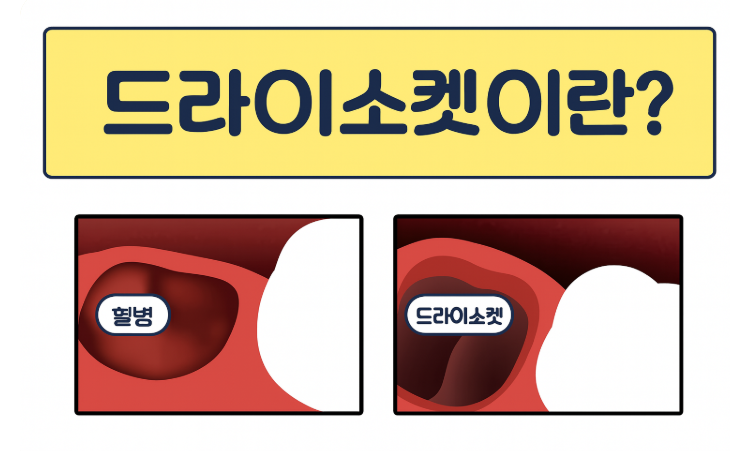
After a normal extraction, blood pools and a blood clot forms,
and this clot protects the wound site while natural healing takes place.
However, if this clot falls out
or does not form properly,
the bone becomes exposed to the outside.
In this case, it is accompanied by three symptoms:
severe pain, inflammation, and odor.
Inflammation can also develop and cause a fever.
You can think of it as a representative complication after wisdom tooth extraction.
If these three symptoms appear around 3–5 days after extraction,
you should suspect dry socket.
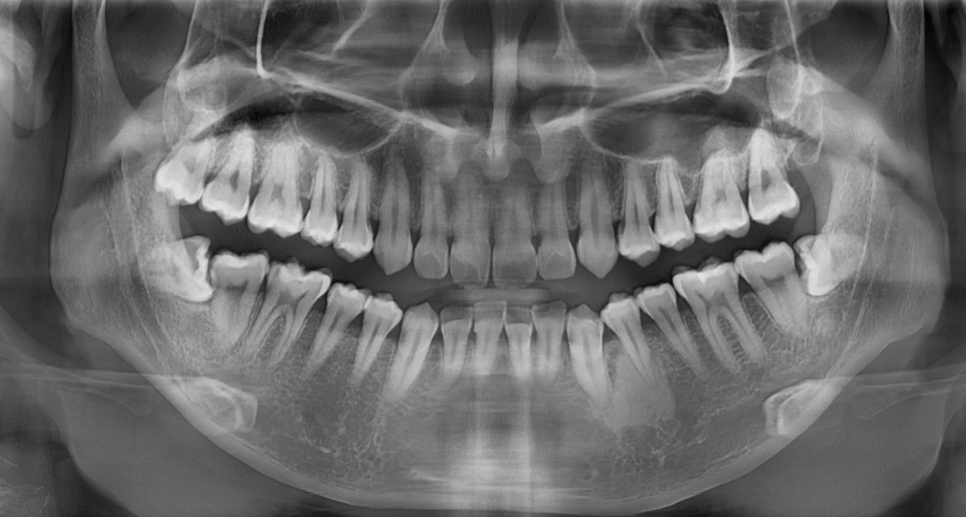 230725 Impacted wisdom teeth lying horizontally on both sides
These symptoms may be a sign of dry socket!
- The extraction site gradually becomes more painful over several days
- The pain is sharp and painkillers do not work well
- There is a bad smell after wisdom tooth extraction
- Looking at the extraction site, the socket appears empty or the bone is exposed
At this point, the pain is not just ordinary pain,
it is incredibly
extremely painful.
Even if you take medication, it may keep hurting.
If you have these symptoms, do not wait!
Dry socket definitely requires dental treatment.
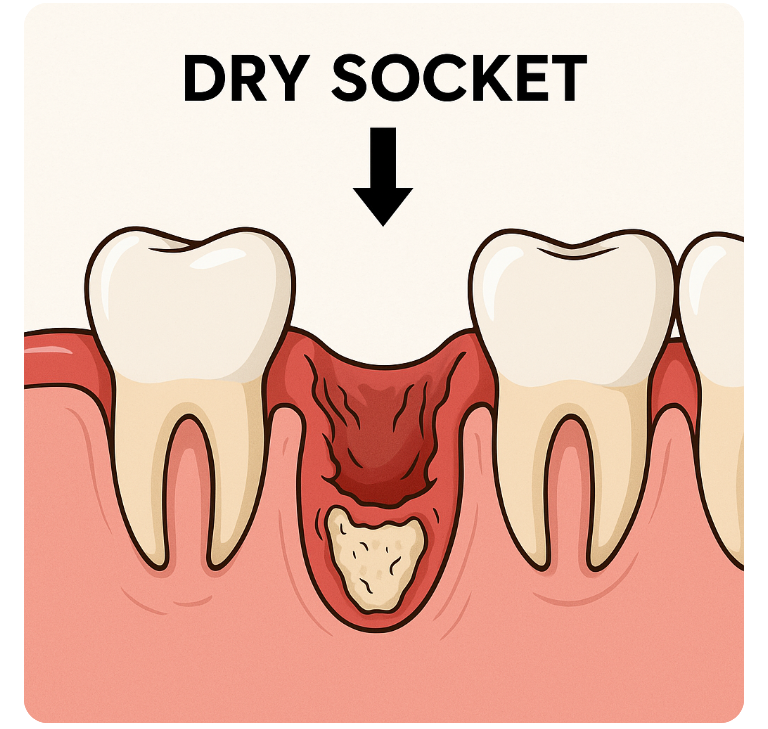 It can occur at any extraction site.
Why does dry socket occur?
It often happens in the following cases.
It occurs when you do something that dislodges the blood clot.
Brushing too aggressively,
using a straw,
smoking, drinking alcohol, and other actions that interfere with healing, etc.
Because it can occur even if you are being careful,
if unusual symptoms appear, a prompt visit is more important than anything else.
Dry socket becomes more painful the longer it is left untreated, and treatment also becomes more difficult.
In general, the extraction site is disinfected,
medication may be placed in the socket,
and the extraction site may be curetted to remove inflammation.
Antibiotics and painkillers are then prescribed.
The goal is to encourage new tissue to form in the extraction site.
In most cases, the pain subsides within a week and healing returns to normal.
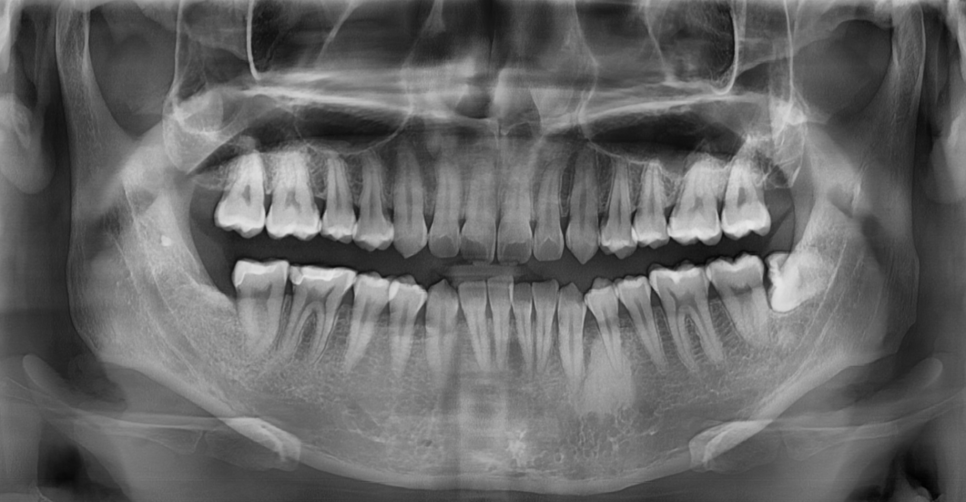 240827 Over time, the extraction site filled in well with bone.
Many patients often do not know what to make of the extraction site when they look at it.
The wisdom tooth area is at the very back, so it can be hard to see.
If there is a rotten smell coming from the mouth
along with severe pain, please be sure to visit the clinic where the extraction was done!
“The pain will get better with time”
does not apply to dry socket.
“Should I just wait a few more days?”
“Maybe I’m just healing...”
It is too painful to pass off with thoughts like that.
If there is even a slight odor or the pain worsens,
don’t hesitate—visit the dentist now.
Recovery does not happen by waiting;
it happens because there is a clinic that helps support healing.
Thank you.
#BadBreathAfterWisdomToothExtraction #DrySocket #ImpactedWisdomToothDrySocket