Hello,
I’m Lee Ju-ri, the chief director of Seoul Bardi Dental Clinic.
It wasn’t like this before...
I hear this very often.
As time goes by, things become more crooked and more separated,
and the appearance of one’s teeth becomes different from before.
Have you experienced any of the following?
The front teeth protrude
They shift inward more
The teeth look longer
You feel a slight movement
If you have noticed these symptoms,
there is a high possibility that periodontitis is progressing!
In particular, the lower front teeth have thin jawbone and small tooth roots,
so once inflammation begins, the strength holding the teeth in place quickly collapses.
At the end of that process, the teeth may appear to pop up,
only to eventually end in extraction.
Today, let’s look at gum inflammation in the lower front teeth,
which can lead to tooth loss.
Why teeth appear to get longer and longer
 240517
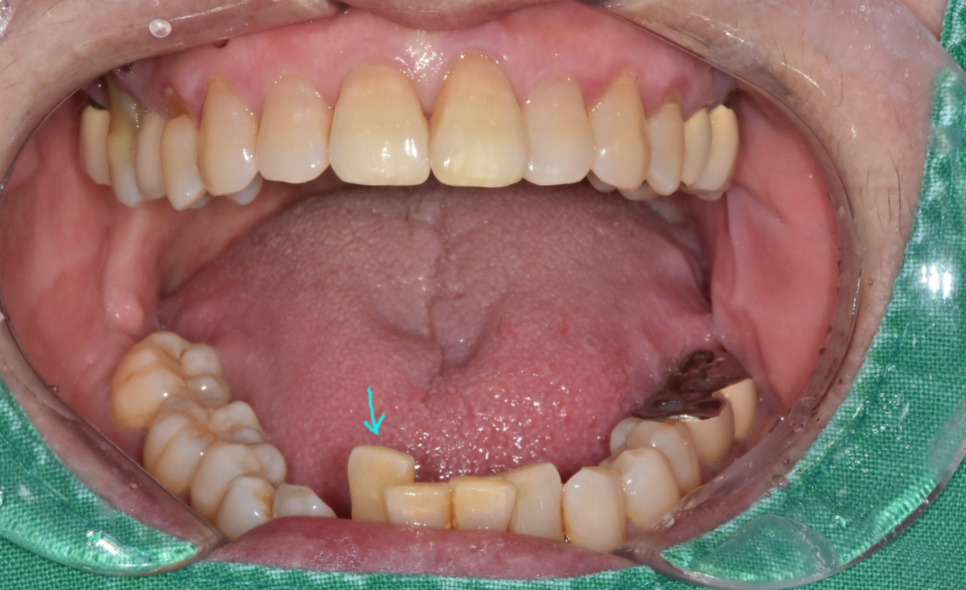
As you can see in the photo, one lower front tooth has risen upward, right?
It looks noticeably taller than the other teeth.
My tooth has popped up and feels uncomfortable.
Please shave it down.
“Recently, it keeps hitting my upper teeth and it’s uncomfortable,”
“Please shave the tooth a little.” People often come in saying this.
But this is not the tooth growing.
It’s not that the tooth has become longer;
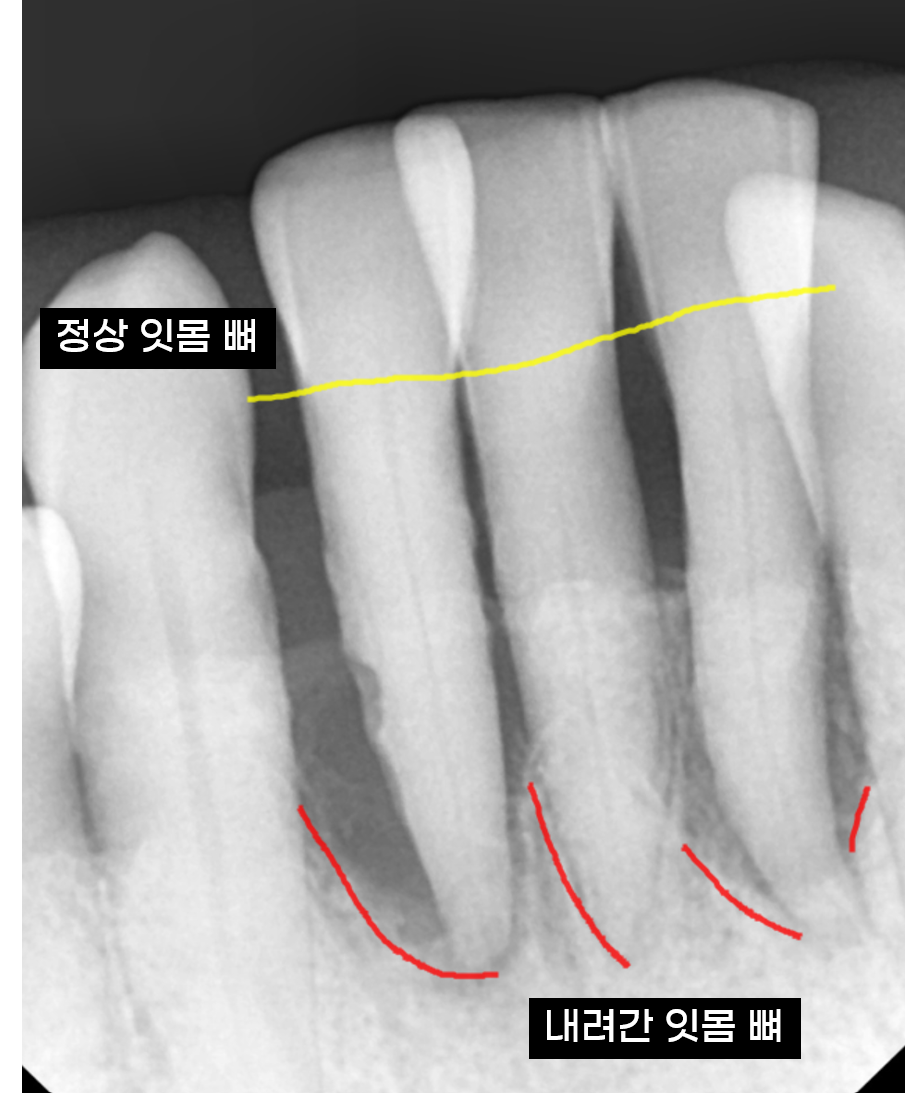
it’s that the jawbone has melted away.
What looks like a longer tooth is actually...
As the gums recede, the root area becomes exposed, making the tooth appear longer.
The actual length of the tooth has not increased.
 240525
As we age,
and as periodontitis progresses, the jawbone is gradually resorbed.
The inflammation has dissolved the bone.
Our teeth are firmly fixed in the jawbone,
but if the bone can no longer hold the tooth root,
part of the root becomes exposed and the tooth looks longer,
and eventually it shifts out of place and pops upward.
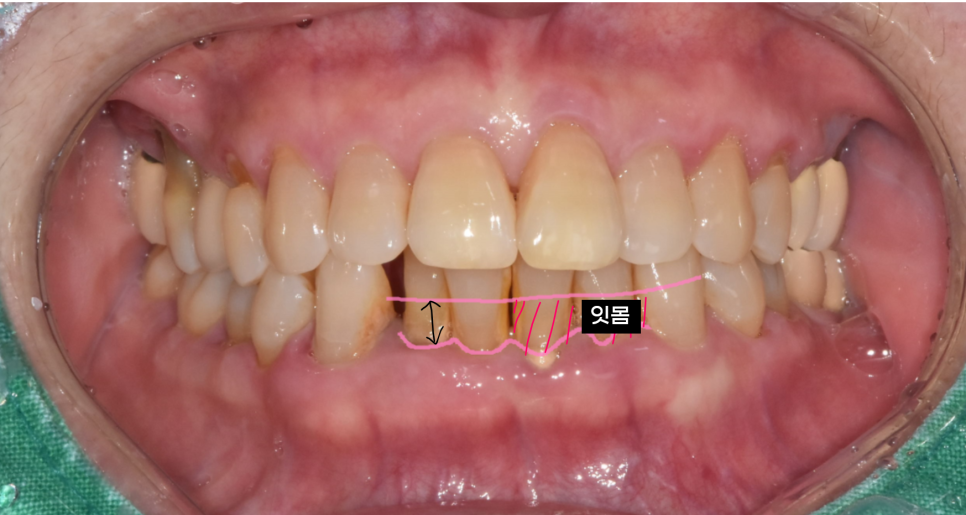 240517 The part that should be covered by the gums goes down, creating the appearance that the tooth is getting longer
In that state, the bite becomes misaligned,
and discomfort appears when chewing.
The teeth that should not be touching keep making contact,
causing irritation
and getting damaged even faster.
Will shaving it down solve the problem?
To relieve the discomfort,
patients often ask us to grind down the tooth that is touching it.
But because the bone has already collapsed,
shaving it down may temporarily improve the discomfort,
but in the end the tooth becomes weaker, looser, and reaches the point where extraction is needed even sooner.
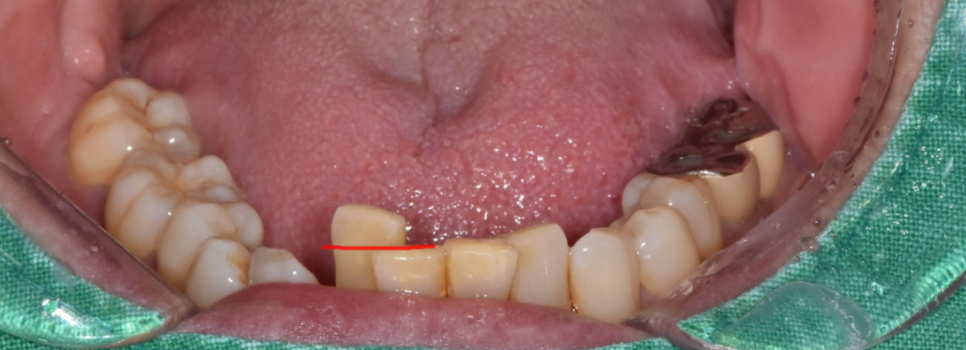 240517 Excessive grinding can also cause tooth sensitivity.
Treatment is decided according to the severity,
but if the looseness of the lower front teeth is severe
(usually when they move strongly even if pushed by hand),
extraction is required.
At that point, the bone no longer has the strength to hold the tooth,
and if gum inflammation and pus worsen,
they only dissolve the surrounding bone and make the condition worse rather than better.
This patient was also ultimately recommended extraction followed by implants.
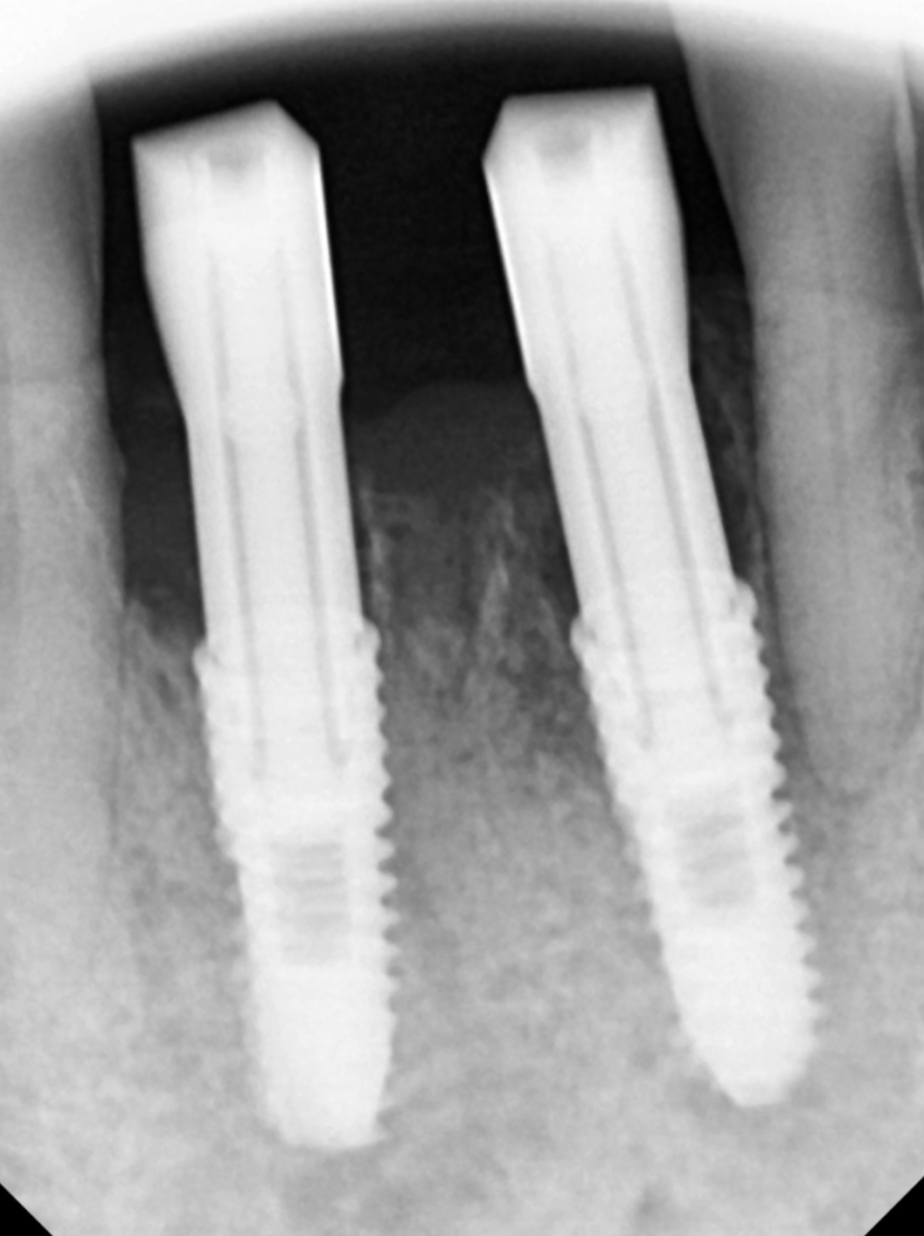 240622
The lower front teeth are more dangerous because the jawbone is weak...
Periodontitis begins with inflammation of the gums,
and eventually dissolves even the jawbone (alveolar bone).
The mandibular anterior region
that is, the lower front teeth, have thin jawbone,
so even small inflammation can quickly lead to bone loss.
Because of this anatomical feature, implants there also require a high level of difficulty.
In addition, salivary glands are located on the inside of the lower front teeth,
which is an area where plaque and tartar easily build up.
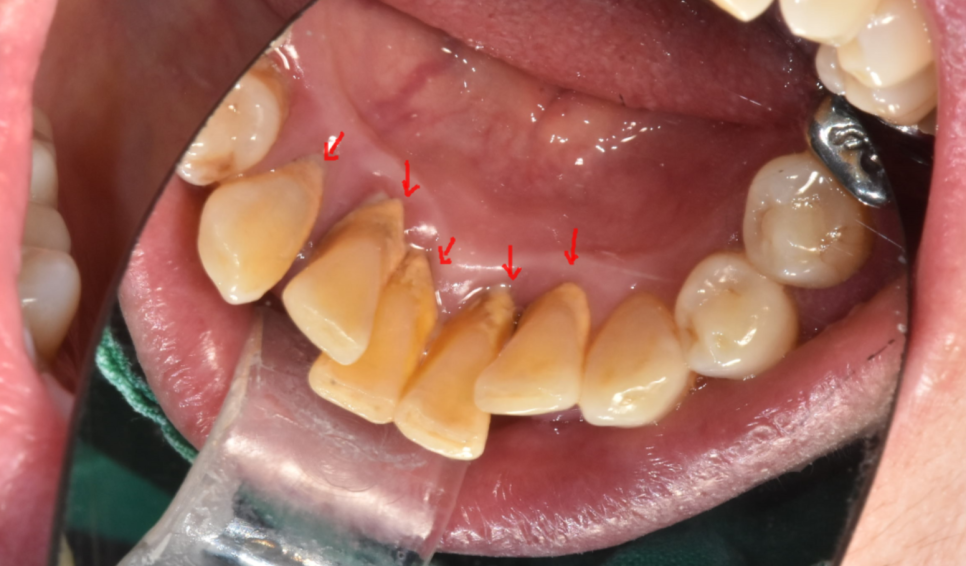 240517 Tartars stuck together
If caught early, periodontitis can be managed.
With regular scaling, it can be controlled.
The problem is that once a pus pocket (periodontal abscess) forms and bone loss becomes severe,
there is no longer any way to hold the teeth in place.
If gum inflammation and pus develop, no matter how much scaling or gum treatment is done,
there is no way to restore the bone.
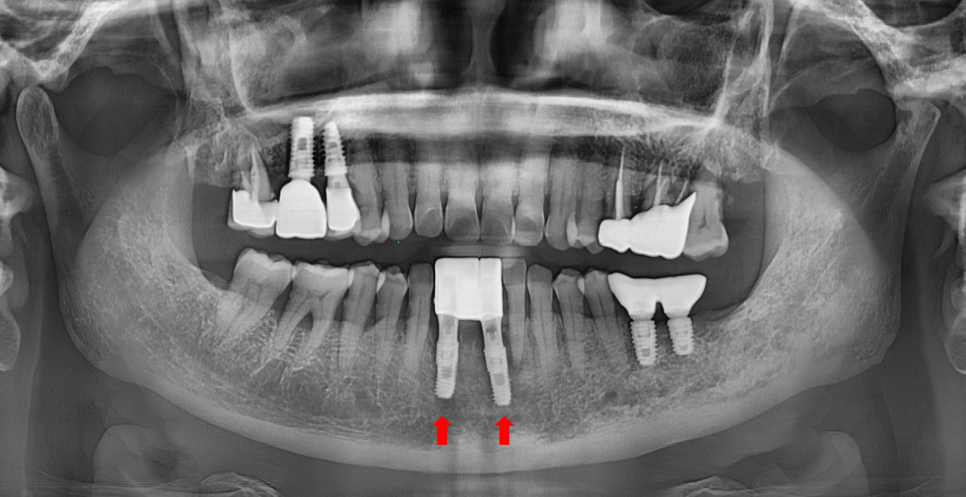 240711
The symptoms patients feel are as follows:
There is bad breath
There is bleeding when brushing
A taste of pus (salty inflammation)
Tooth looseness
These are typical symptoms of periodontitis,
and quite advanced at that...
Once the bone collapses, no tooth can remain in place, no matter how healthy it looks.
If you want to avoid lower front dental implants as much as possible,
you need to protect the jawbone, not just the teeth.
Because teeth are masses held in place by bone...
It is not that the teeth themselves are weak.
If you have noticed tooth movement,
now is the time to visit the clinic right away.
Thank you.
When Lower Front Dental Implants Become Very Loose Due to Gum Inflammation and Pus
#LowerFrontDentalImplants #LowerFrontToothLooseness #GumInflammationAndPus