Hello,
I’m Lee Juri, the chief director of Seoul Vardi Dental Clinic.
There’s nothing uncomfortable.
I’ll do it later when I have time.
I heard that again today.
There’s no discomfort when eating....
I’ll do it when it starts to feel uncomfortable later.
Many people actually think this way.
Even when a tooth is missing, it is very common to delay treatment and leave it untreated.
From a medical perspective, this is the most frustrating part.
Today, I’ll explain why you should not leave a missing tooth untreated.
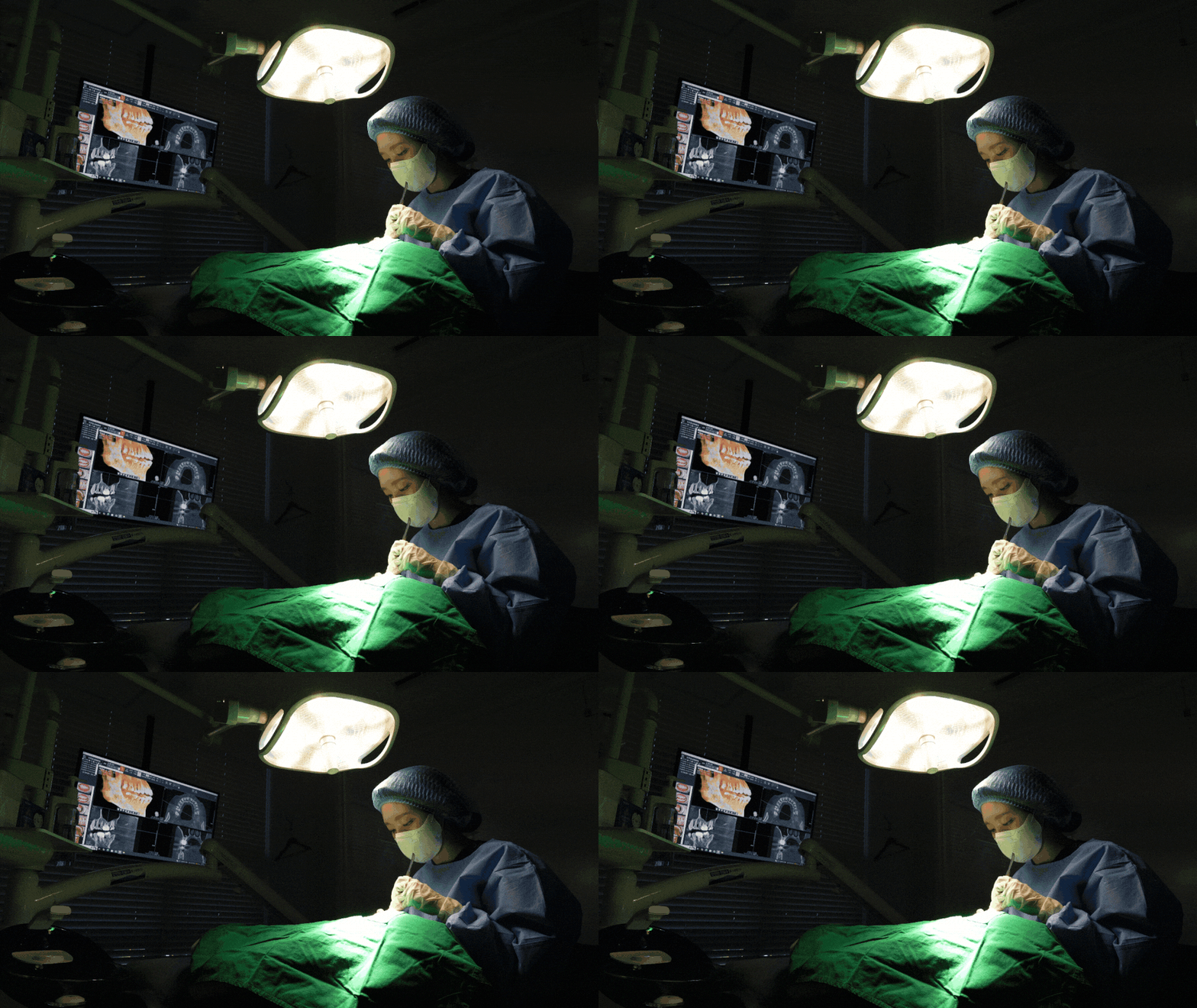
<Contents>
| Chain reactions that occur when a tooth is lost |
|---|
| 2. Two treatment options for missing teeth (dental bridge, implant) |
Chain reactions that occur when a tooth is lost
When you have no teeth, you eat with your gums.
That’s an old saying.
Now it’s an era where you reclaim your right to chew, whether with a bridge or an implant.
There is an old saying: if you have no teeth, you eat with your gums.
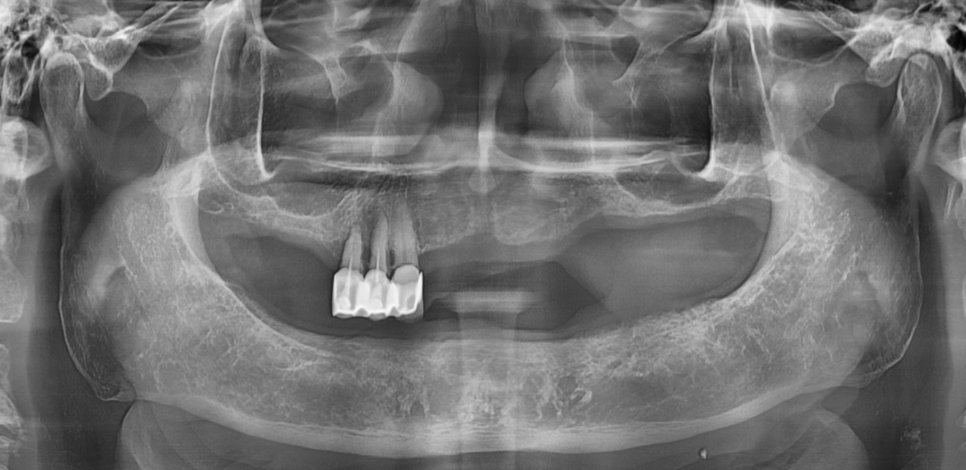 250710 Even if you only have teeth on one side, people somehow manage to eat.
It means that even when you truly have no teeth,
you’ll still chew with your gums to eat.
In other words, it means living on without giving up,
even in uncomfortable and insufficient situations.
Perhaps because of this saying,
many people do not get treated even when they lose one or two teeth.
Even if a tooth is missing, you can still eat by chewing with the neighboring teeth
and moving food to the other side.
They think that if it’s not uncomfortable, then there’s no problem.
But teeth
have no role in filling the empty space left behind,
so both the neighboring and opposing teeth collapse.
Because the teeth that used to contact each other on the upper and lower sides are lost,
-
neighboring teeth tilt
-
opposing teeth drop down
-
the overall bite becomes misaligned
-
the temporomandibular joint is strained,
-
and eventually more teeth are damaged.
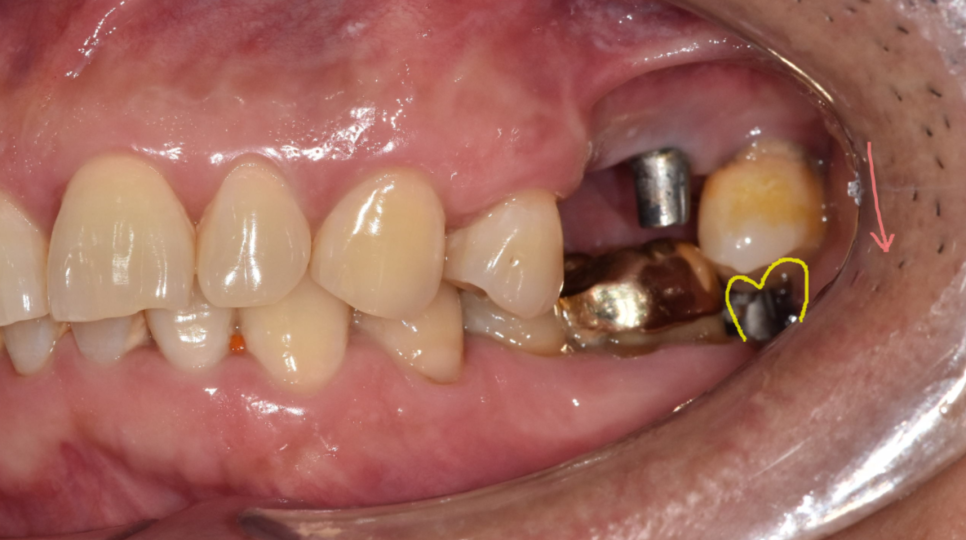 250630 A tooth that erupted because a missing tooth was left untreated
Even a tooth that was originally not in good condition
because another tooth was lost,
ends up having to do unnecessary work all the time
and may collapse even faster.
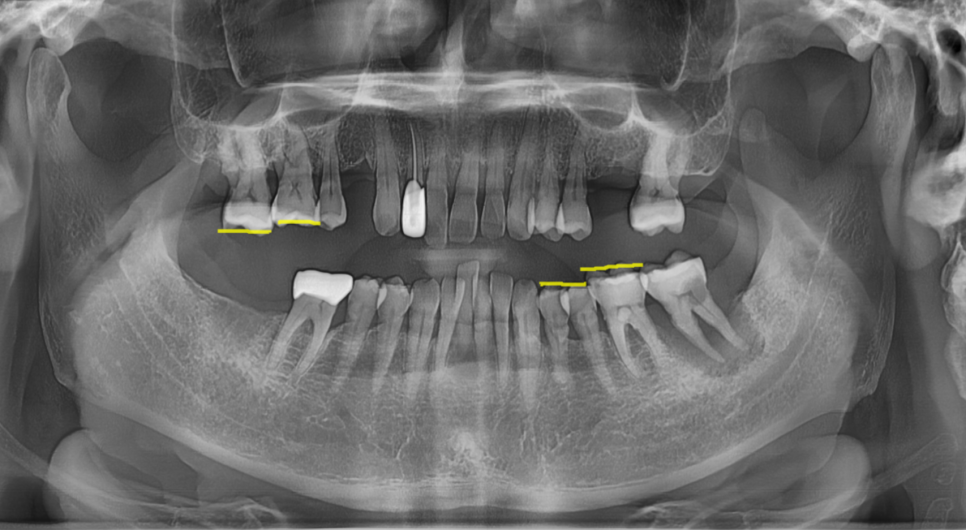 250702 Check the difference in tooth height
And then people say this:
“Originally it was just one... why did it get this bad?”
“It started as a simple problem..."
“but in the end it led to treatment costing millions of won...”
Cases like this are so common.
Really.
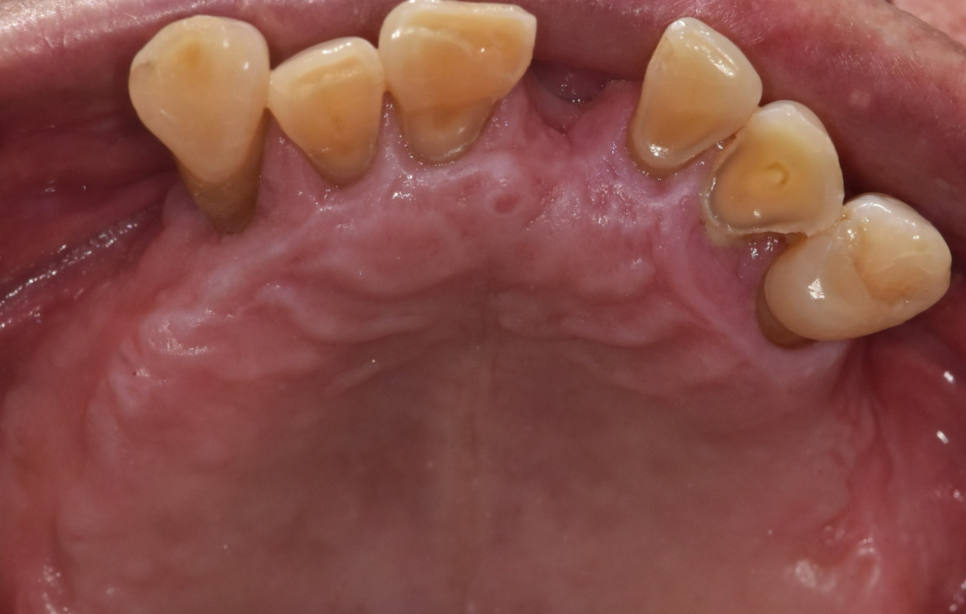 250313 A patient whose 1-2 missing teeth led to the extraction of several teeth
Two ways to treat tooth loss
There are broadly two ways to treat tooth loss.
| Category | Bridge | Implant |
|---|
| Method | Trim the teeth on both sides and connect them like a bridge | Place an artificial root into the bone and restore it as an individual tooth |
| Advantages | Less burden from surgery, faster treatment possible | No damage to surrounding teeth, a chewing feel like a natural tooth |
| Disadvantages | Requires removal of healthy teeth, difficult to clean in the middle | Surgery required, relatively higher cost and longer treatment time |
Before implants existed, bridge treatment
was used to replace missing teeth.
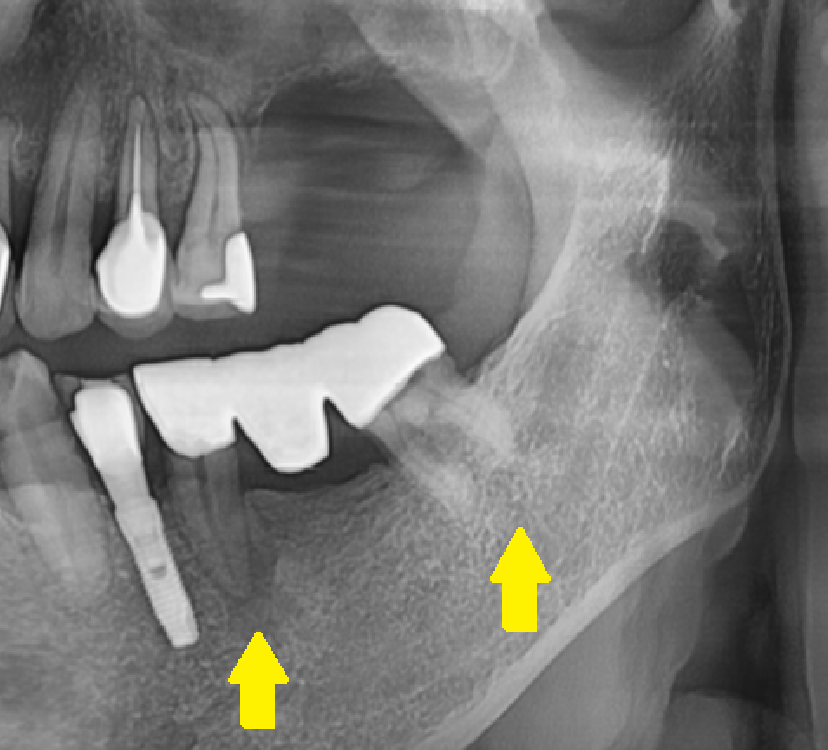 250703 Molar bridge case
Even now, it is still widely performed when implant surgery feels burdensome
or is difficult due to systemic disease.
A bridge can be a good alternative when surgery feels overwhelming,
but
the healthier the neighboring teeth are, the more it may actually be a loss.
Because there is a clear disadvantage: healthy teeth on both sides must be removed.
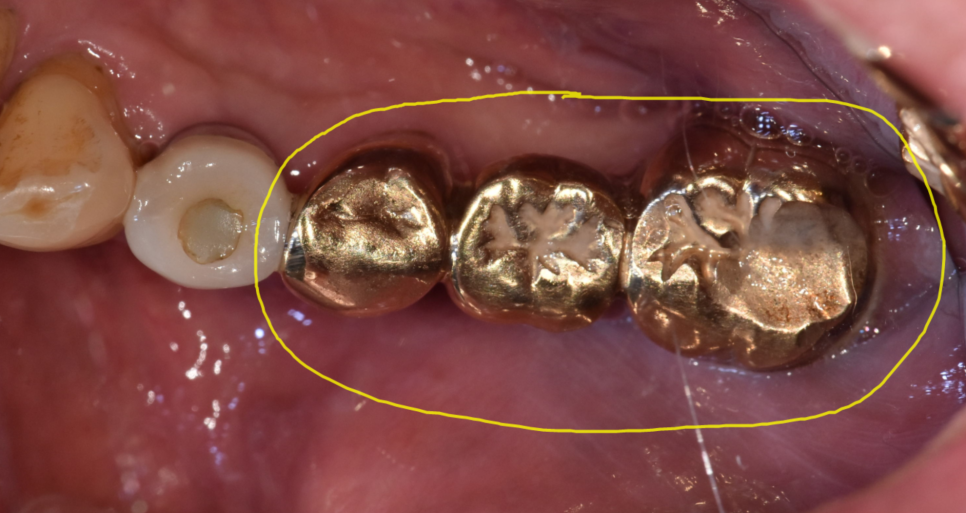 250703 Since they are connected, all three must be removed before treatment.
Also, even if a problem occurs with just one tooth,
another disadvantage is that the entire bridge must be removed.
An implant involves the burden of surgery,
but in the long term it may be the healthier choice.
It replaces only the missing tooth
and does not harm the other teeth.
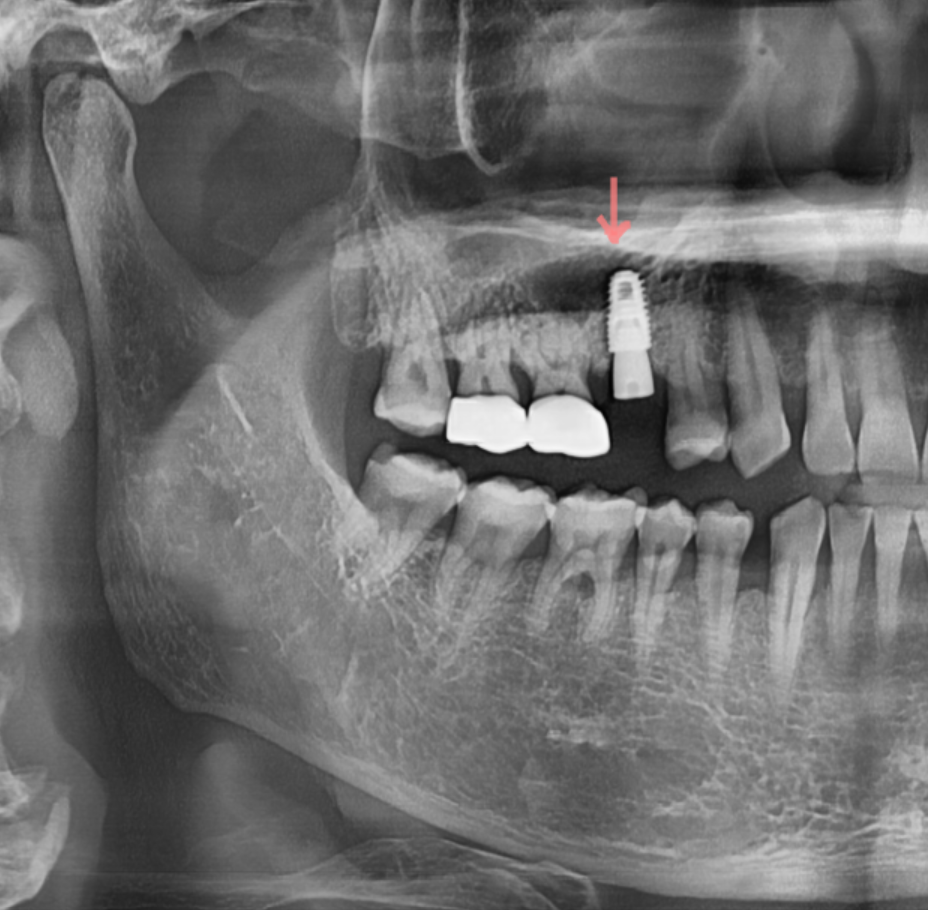 250325
There is no perfect method.
But the worst choice is to do nothing.
Treatment should begin with the best option available now.
If a tooth is missing, try anything
The key point of treating tooth loss is this.
“Try anything. Never leave it as it is.”
If you leave a small hole untreated,
just as eventually the entire wall collapses,
missing one tooth can later affect the entire dentition
and even the temporomandibular joint.
I respect a patient’s choice to want treatment when it becomes uncomfortable.
But treatment is definitely necessary.
Because it is meaningful in that it can preserve other teeth.
Choosing to act, whatever the treatment may be,
is the first step in protecting your oral health.
Thank you.
Treating Tooth Loss: Dental Bridge? Implant? Try Anything.
#ToothLossTreatment #DentalBridge #Implant