Hello,
This is Chief Director Lee Ju-ri of Seoul Bardi Dental Clinic.
With the school break,
many people have been coming to visit us.
Also, a recent trend in orthodontics is to complete first-stage treatment during the mixed dentition period
and then proceed with second-stage braces treatment.
Today, I’ll talk about arch expansion, which may be somewhat unfamiliar.
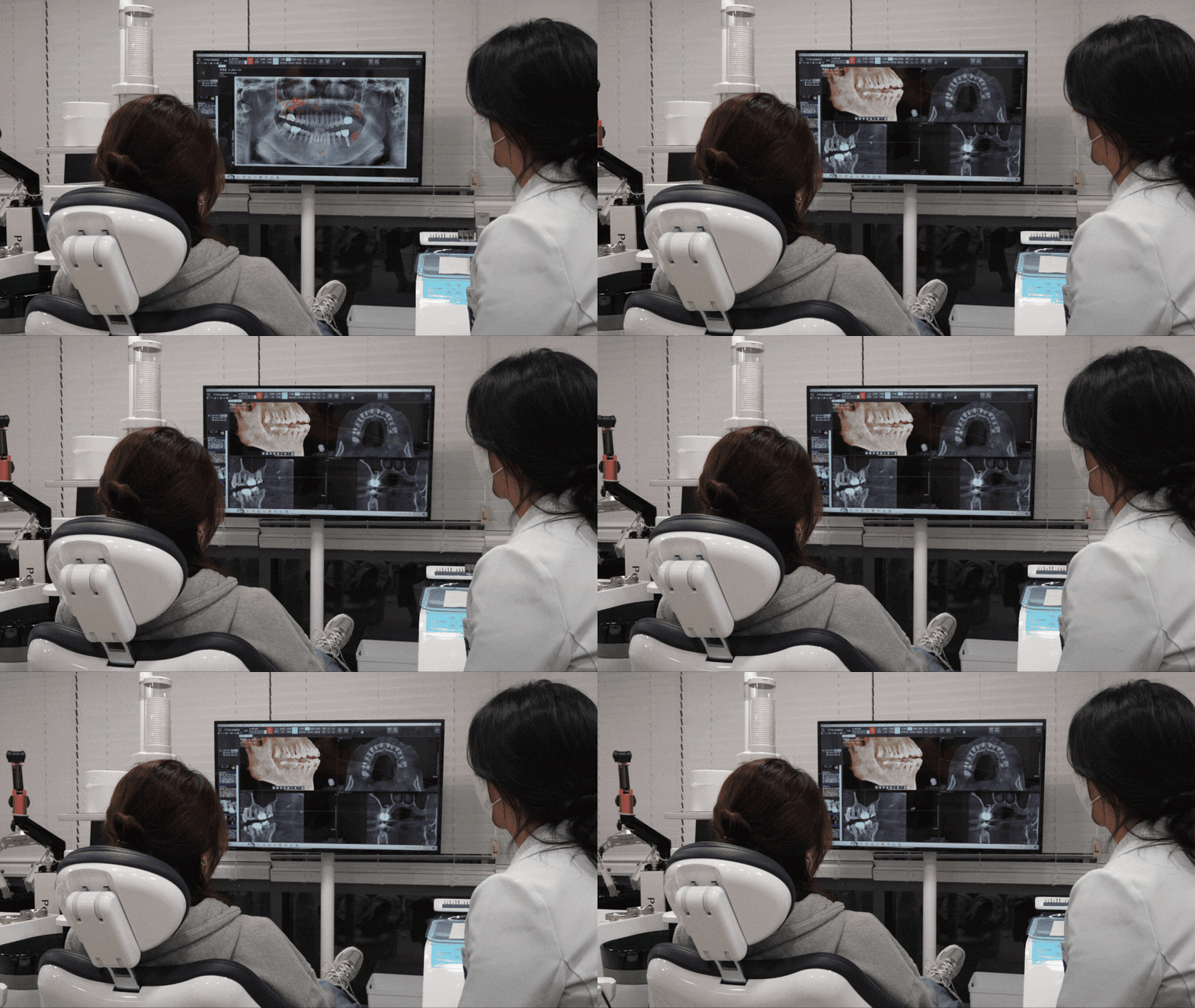
<Contents>
| What Is an Arch Expander (RPE)? |
|---|
| 2. First-Stage and Second-Stage Orthodontic Treatment Plan |
I want to fix my child’s underbite
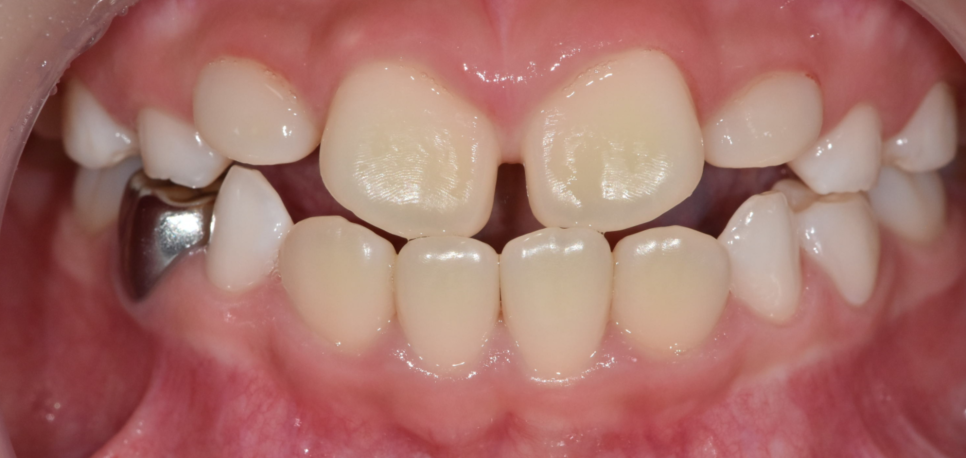
250721 pediatric crossbite case
They visited us with a crossbite, where the upper and lower teeth bite in the opposite way.
To correct a crossbite,
there is a commonly used device called Pre-Ortho.
| A related post worth reading |
|---|
| Go learn about the Pre-Ortho device |
And there is also an arch-expansion device
that treats the condition by widening the palate.
What Is an Arch Expander (RPE)?
When the inside of the mouth is too narrow and there is not enough space for the teeth to move,
an appliance that widens the palate is called an arch expander.
The arch refers to the arched shape of the jawbone where the teeth are positioned.
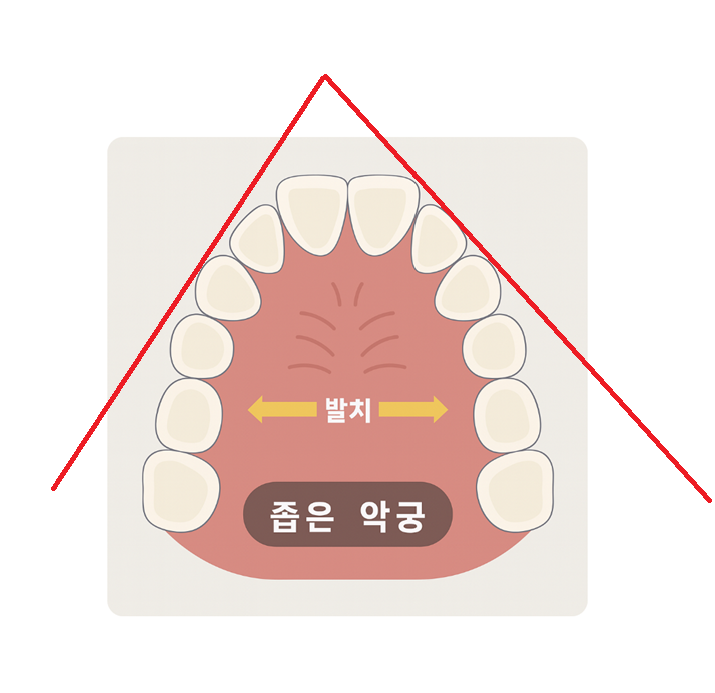
Narrow arch
A U-shape is typical,
but if it is too narrow (V-shape),
there is not enough space for the teeth, making them more likely to overlap or protrude.
At times like this, the arch expander (RPE) plays a major role.
Rapid Palatal Expander
Literally translated, this is called a rapid palatal expander.
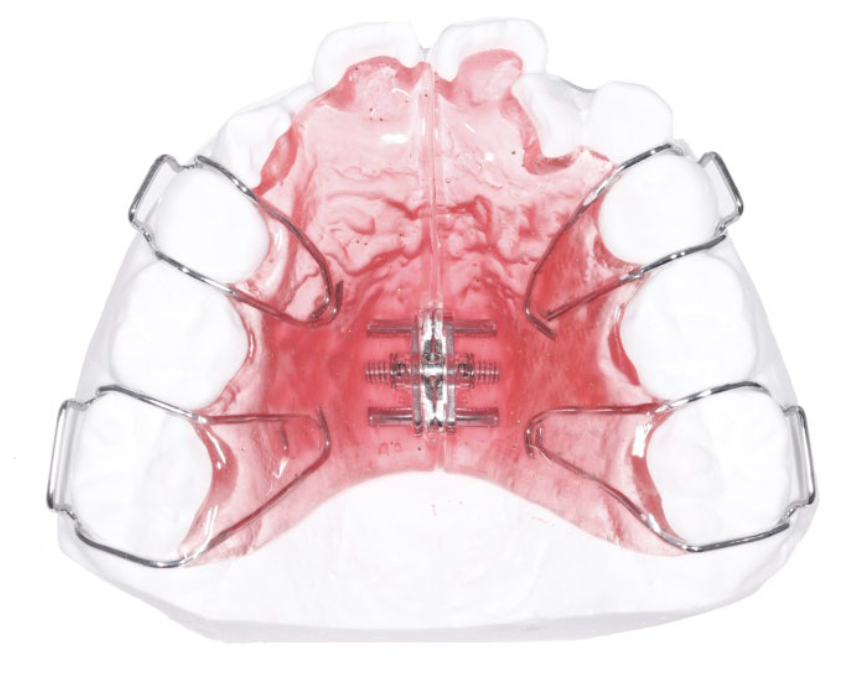
RPE device
There is no need to distinguish between the upper and lower jaw when expanding the arch,
but in cases of crossbite, RPE is effective.
It is an auxiliary device that widens the narrow arch of the upper jaw,
secures space for the teeth, and helps orthodontic treatment proceed smoothly.
Interestingly, in growing children, the upper jaw exists in a divided left-and-right form,
so if force is applied before the growth plates close,
it is relatively easy to expand the arch.
Of course, arch expansion is possible for adults up to their early 20s as well...
but it is more difficult than in children.
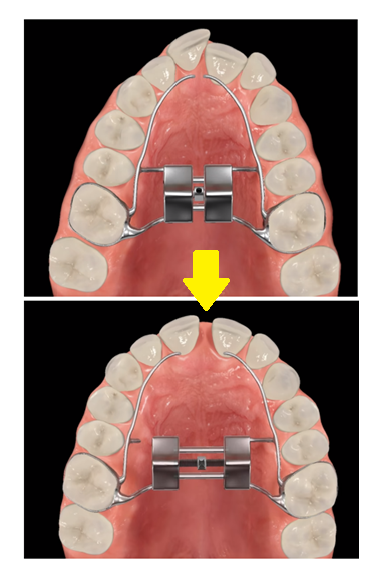
Principle of the arch expander
It works by widening the jawbone itself,
not by moving the teeth.
Do you see the metal device in the middle?
It has a structure that allows a screw to be turned in that section,
and the arch is widened gradually by turning it a half turn to one turn per day.
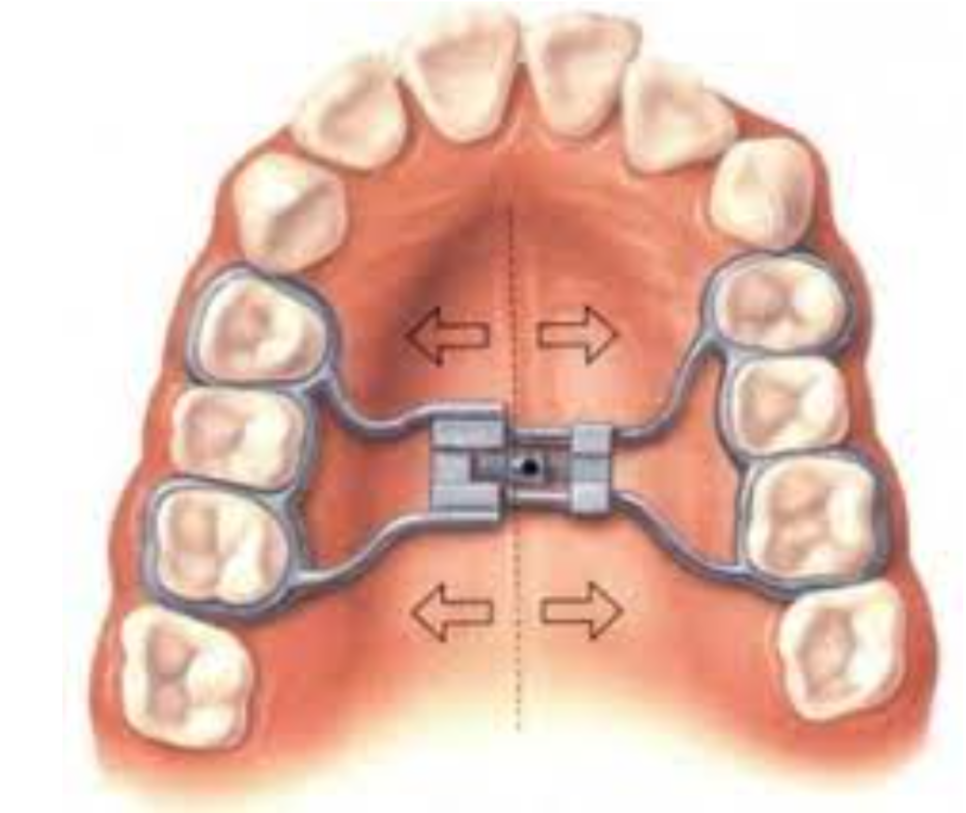
<Used in these cases!>
- When the upper jaw is narrow and the teeth overlap
- Crossbite (when the front teeth bite in the wrong direction)
- When nasal breathing is difficult and mouth breathing occurs
Because it widens the jawbone itself,
it creates space so that permanent teeth can align evenly.
It also improves breathing
(because when the arch is narrow, the nasal cavity is often narrow as well.)
Mouth breathing
breathing through the mouth
and snoring can also improve.
Tooth alignment also becomes much easier.
In the past, a separate auxiliary device was attached inside the mouth,
but now clear aligners have also been developed to allow arch expansion.
First-Stage and Second-Stage Orthodontic Treatment Plan
Here, first-stage orthodontic treatment uses jaw growth,
while second-stage orthodontic treatment adjusts tooth alignment.
Using an RPE arch expander means widening the bone itself, not the teeth,
so after first expanding the arch,
the teeth are briefly aligned,
and once all permanent teeth have erupted
or growth has ended, second-stage orthodontic treatment begins.
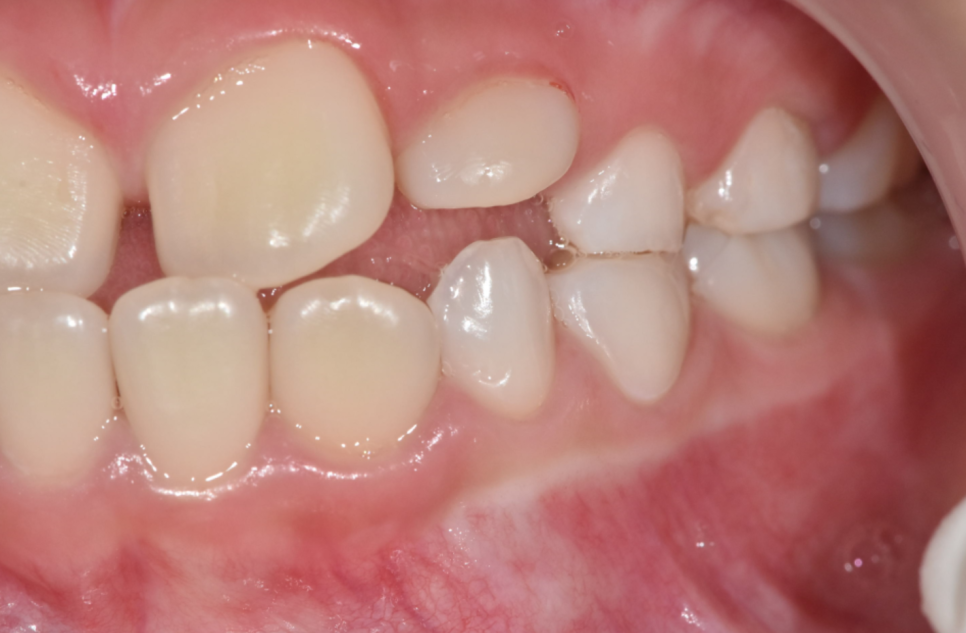
250721 crossbite
In particular, crossbite, where the upper and lower teeth bite in the opposite way,
is often accompanied by a protruding lower jaw.
If the timing for this first-stage treatment is missed,
orthognathic surgery such as bimaxillary surgery may be needed later.
A narrow upper jaw width causes crossbite.
In this case, simply moving the teeth is not enough
because there is not enough space for the bite to fit normally.
The important thing is intervention during the growth period.
The earlier the intervention in childhood, the more the possibility of surgery can be reduced.
First-stage treatment is aimed not only at tooth alignment
but also at correcting the direction of jaw growth.
Second-stage treatment is for stabilizing the bite
and aligning the teeth.
Although the timing and purpose of each stage are different,
it is clearly treatment intended to protect oral health in the long term.
If growth-stage orthodontic treatment stabilizes a child’s facial shape and bite,
it can greatly reduce the possibility of more complex orthodontic treatment or surgery later on.
If your child shows anterior crossbite or
symptoms of a protruding lower jaw,
now is the time to receive an orthodontic consultation.
This has been Chief Director Lee Ju-ri.
Thank you!
What Is a Pediatric RPE Arch Expander? When First-Stage Orthodontic Treatment Is Needed During Growth
#PediatricArchExpansion #ArchExpander #RPEDevice