Two Types of Retainers Are Needed After Orthodontic Treatment: Bonded and Removable.
Hello,
I’m Lee Ju-ri, the chief director of Seoul Vardy Dental Clinic.
It’s not over until it’s over.
This saying fits orthodontic treatment perfectly.
After a long period of aligning your teeth,
the day finally comes when the brackets or clear aligners are removed!
You may want to think, “Now it’s all done~” but...
the truly important retention phase starts now.
If retention is not managed properly,
the money and time you spent so far can go to waste.
Because teeth have a strong tendency to return to their original position,
wearing a retainer after orthodontic treatment is essential.
So then, the bonded retainer and the removable retainer...
what on earth is different about them?
From here on, I’ll easily explain the differences,
advantages, and disadvantages of the two types of retainers.
<Table of contents>
| Bonded retainer after orthodontic treatment |
|---|
| 2. Removable retainer |
“What’s the difference between the fixed wire and the removable appliance?”
This is a question we get a lot.
First, the bonded retainer (fixed retainer)
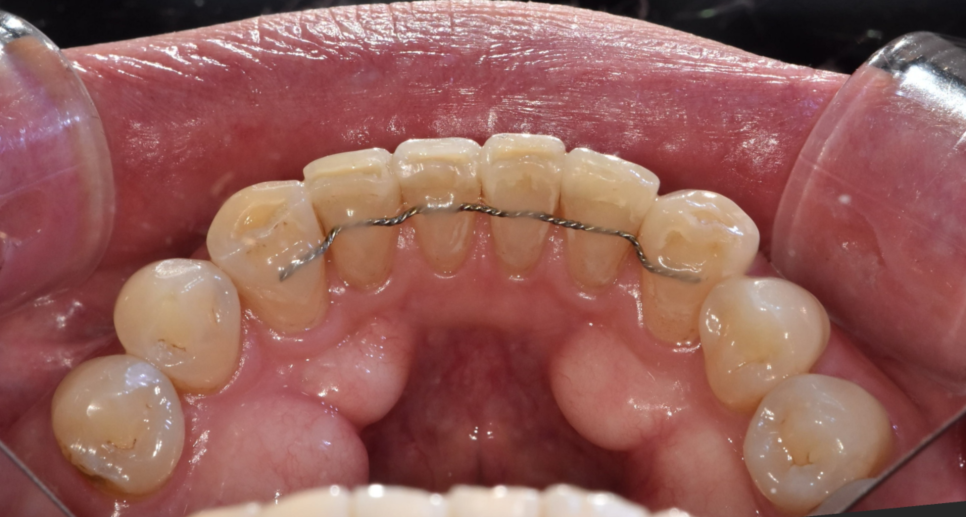
250721
A thin wire is attached to the inside of the front teeth like this,
and the teeth are held in place so they cannot move.
It is mainly used on the upper and lower front teeth.
The advantage is that it stays firmly attached to the teeth 24 hours a day,
so there’s no chance of forgetting to wear it.
Since it is on the inner side of the teeth,
it is not very noticeable and is aesthetically pleasing.
It also strongly helps prevent habits such as pushing the teeth with the tongue.
The downside is...
Floss may not go in easily.
Because there is a wire between the teeth,
it can feel obstructive.
If you touch it with your tongue,
the texture may also feel rough.
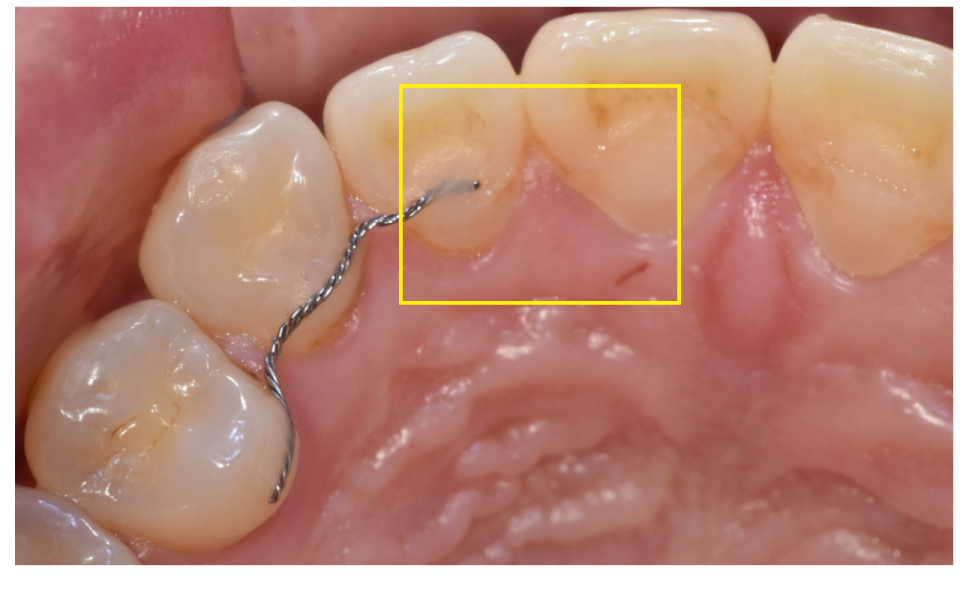
250722 Broken bonded retainer wire
Also, if you often eat hard foods,
or if the upper and lower bite is very tight,
the risk of detachment is higher.
Because of this, we often get asked
whether the wire can be removed.
But for this question, we’re sorry to say
that we recommend keeping it attached for life.
Teeth have a tendency to keep trying to return to their previous position.
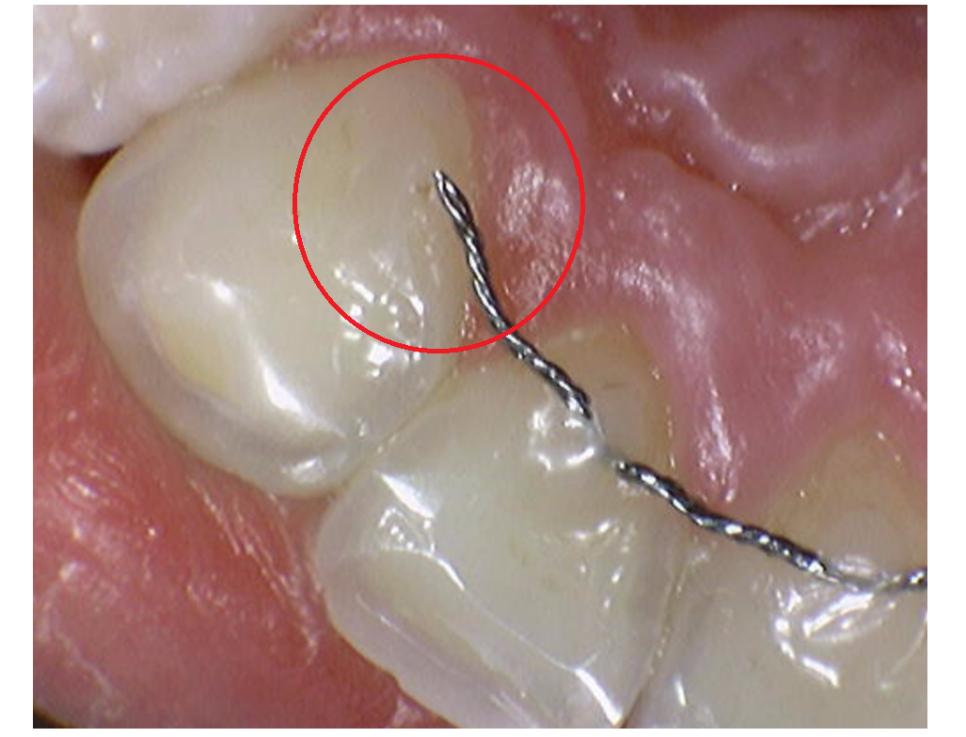
241210 Detached retainer
We also know how uncomfortable it is to keep our backs perfectly straight.
From the teeth’s perspective,
they will probably feel a lot of artificial pressure too.
In particular, the front teeth are a region that easily protrudes or shifts,
so they need fixed retention for a long time.
Even if it’s uncomfortable,
a retainer is the ‘seat belt’ that protects your teeth.
Because the wire is attached only in certain areas,
there are limits to maintaining the entire alignment,
so it is often used together with a supplemental appliance.
The auxiliary appliance that appears here
is the removable type of retainer.
- Removable retainer
This is an appliance that the patient can put in and take out themselves.
Because of that,
tooth alignment maintenance depends on the patient’s commitment.
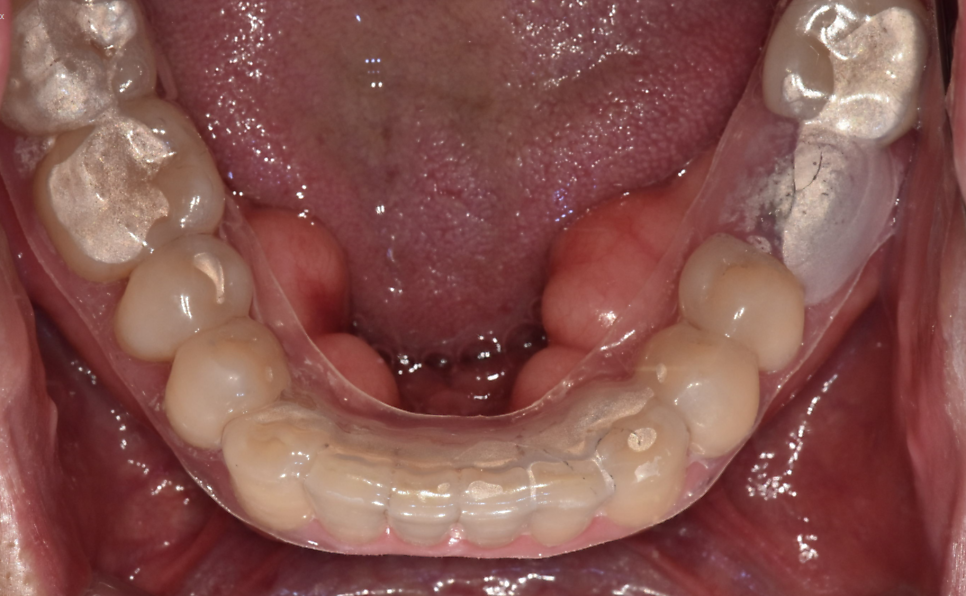
250728 Type that wraps around all the teeth
The advantage is that because it covers the entire dentition,
it is effective for maintaining overall alignment.
Since it can be removed and cleaned,
hygiene management is easy.
Compared with the bonded wire,
it is also relatively comfortable to wear.
Because it is usually worn only while sleeping at night,
it does not interfere with daily life.
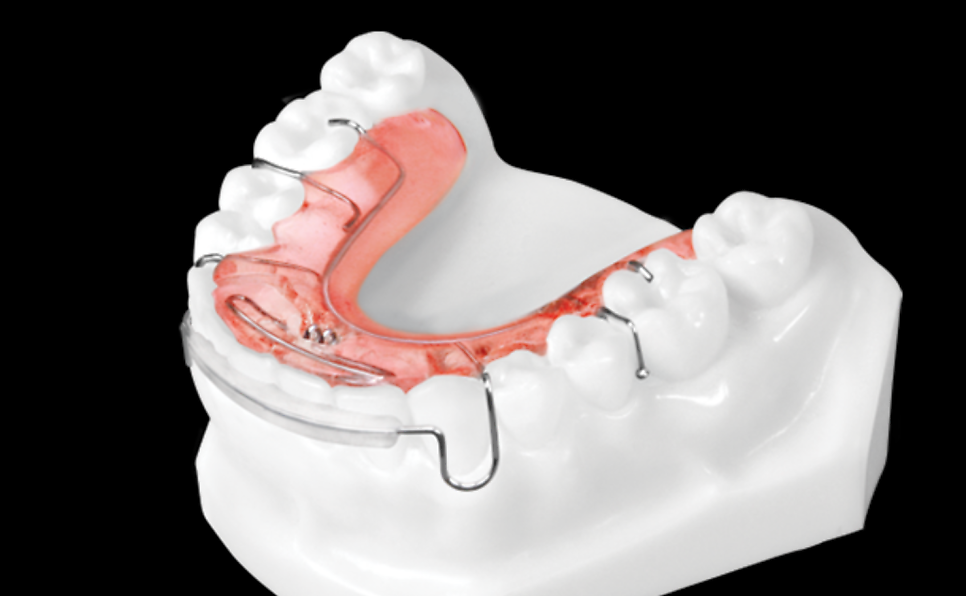
There are also removable retainers of this type!
The downside is...
It only works well if you wear it properly on your own.
Human willpower is really something...
Right after orthodontic treatment ends,
everyone diligently wears it without fail.
But after a few months,
and then a few years,
if you start skipping it once or twice,
not wearing it becomes a habit.
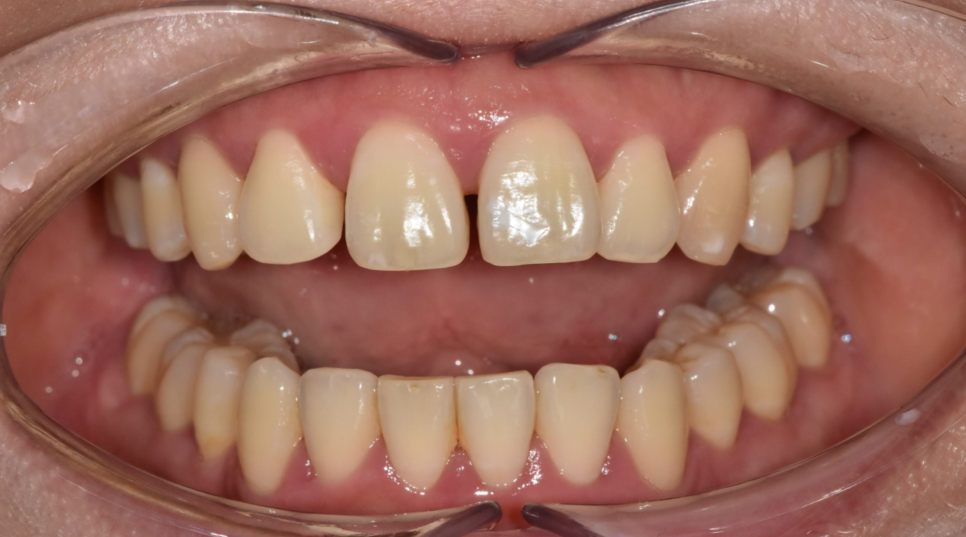
250801 Teeth that shifted again after orthodontic treatment
Then the teeth move again,
and the alignment becomes crooked.
If it is not worn for a long time,
the retainer may no longer fit.
If you try to wear it again after not using it for just a few days,
it may fit very tightly,
and your teeth may hurt.
Changes in tooth alignment may not be noticeable all at once,
but at some point you will see that the teeth have shifted.
There is also the possibility of losing it.
At a travel destination,
or after eating at a restaurant and leaving it behind,
I’ve seen that quite a lot, haha.
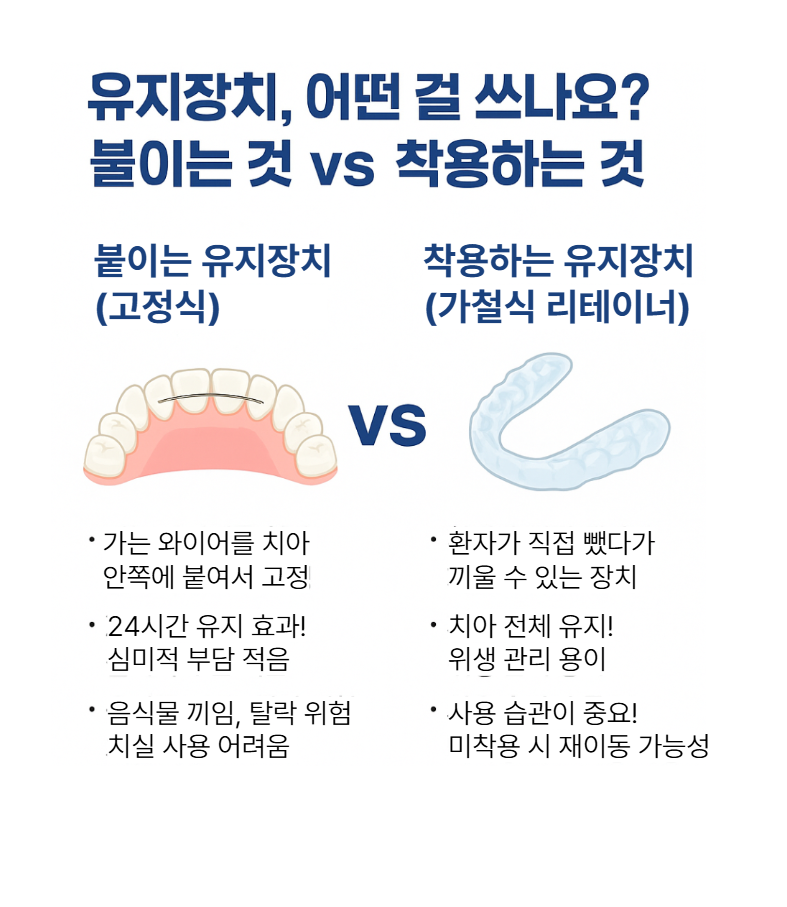
Which of the two appliances is better?
The answer to this question is...
Using both together is the most stable option.
The front teeth are continuously held in place with a fixed retainer,
and the entire dentition is managed with a removable retainer!
Depending on the patient’s alignment, orthodontic range, and daily habits,
an appropriate combination of retainers is determined.
Orthodontic treatment is over, but retention must be maintained for the result to be real!!
Wearing retainers is just as important as orthodontic treatment itself!
Even dieting is sad when the weight comes back...
After investing time and effort
into arranging a patient’s teeth,
when I see them shifted again at a regular checkup,
I feel disappointed too.
No matter which appliance you use,
please remember that consistent wear and care are the most important things!!
This has been Chief Director Lee Ju-ri.
Thank you!
Two Types of Retainers Are Needed After Orthodontic Treatment: Bonded and Removable.
#retainerafterorthodonticreatment