Hello.
I am the director of Seoul Bardi Dental Clinic.
Dental treatment costs are honestly a burden, right?
So many people have gotten implant dental insurance in advance,
thinking, “Maybe this will help?”
However, when treatment is actually needed,
“If it’s still in the reduced coverage period,
it won’t be covered at 100%.”
hearing that can’t help but be frustrating.
“After two years, it’s covered at 100%...
Can’t I just wait until then and get treatment?ㅠㅠ”
That is something many patients in the reduced coverage period say.
I understand how they feel, but...
for people with severe tooth looseness,
this ‘waiting’ can actually lead to a loss,
and that is something you should not overlook.
If you wait based only on the insurance,
and the condition gets worse,
it can become a case of
“losing the cow and then fixing the barn.”
So today, I’ll introduce a patient case
who was still in the reduced coverage period (around 50% coverage),
but needed treatment first because of the condition of the teeth,
and how we reduced the financial burden by using the existing implant. ^^
Why waiting until implant dental insurance reaches 100% can be a loss
Front tooth looseness: If you try to wait out the deductible reduction period for implant dental insurance, you may end up losing more.
Implant dental insurance usually has a reduced coverage period right after enrollment,
and coverage often improves as time passes.
(Many plans provide 100% coverage after two years.)
Because of that, it’s natural to think,
“Let’s just hold out for two years,”
but for people with severe looseness, it is often because of gum disease
and the bone that supports the teeth has already weakened.
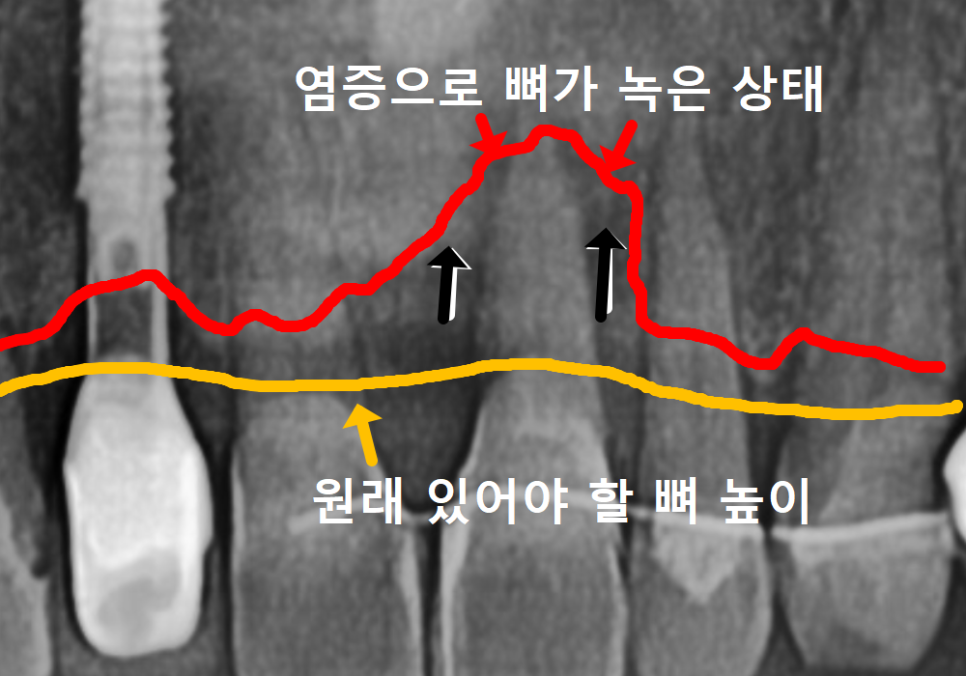 250106
If treatment is delayed because of the coverage period,
the gum inflammation continues to spread,
and as a result, the bone keeps being resorbed.
If bone loss becomes extensive,
when placing implants,
there is no choice but to need a larger amount of bone grafting.
(Of course, the cost goes up accordingly.)
In addition, because the gums recede by as much as the bone has been lost,
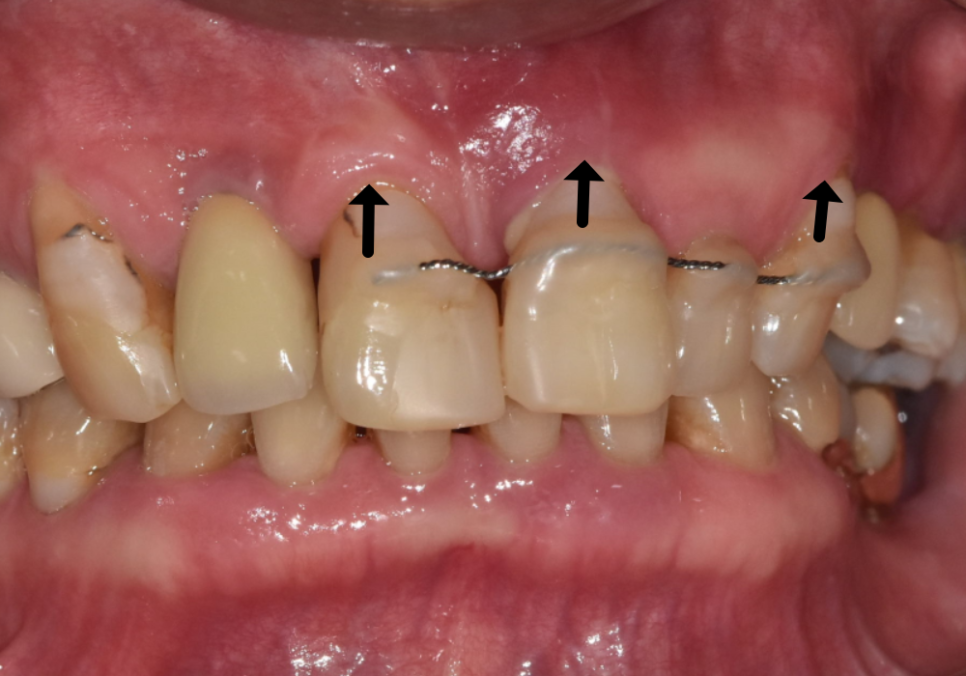 250106
the prosthetic has to be made relatively longer,
which makes it less aesthetically pleasing.
As a result,
gum grafting is also likely to be performed
in order to restore the receded gums.
(This is also an additional cost.)
In the end,
insurance coverage may apply,
but because the treatment becomes larger,
there is a risk that the overall cost increases.
A case of a patient in their 60s who was holding out with a wire splint for front tooth looseness
Front tooth looseness: If you try to wait out the deductible reduction period for implant dental insurance, you may end up losing more.
This patient had significant looseness in the front teeth.
They said their gums repeatedly swelled up and then went down.
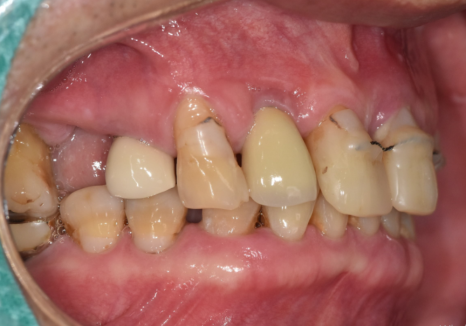
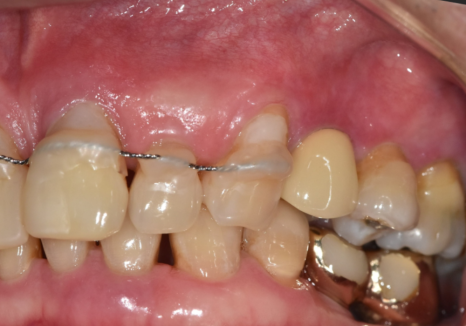 250106
Because the front teeth were so loose,
the three loose front teeth were
connected with wire to the left canine (splint),
and the patient had been living like that.
In simple terms, a splint is
a way of bundling loose teeth together with strong neighboring teeth
so they can share the force.
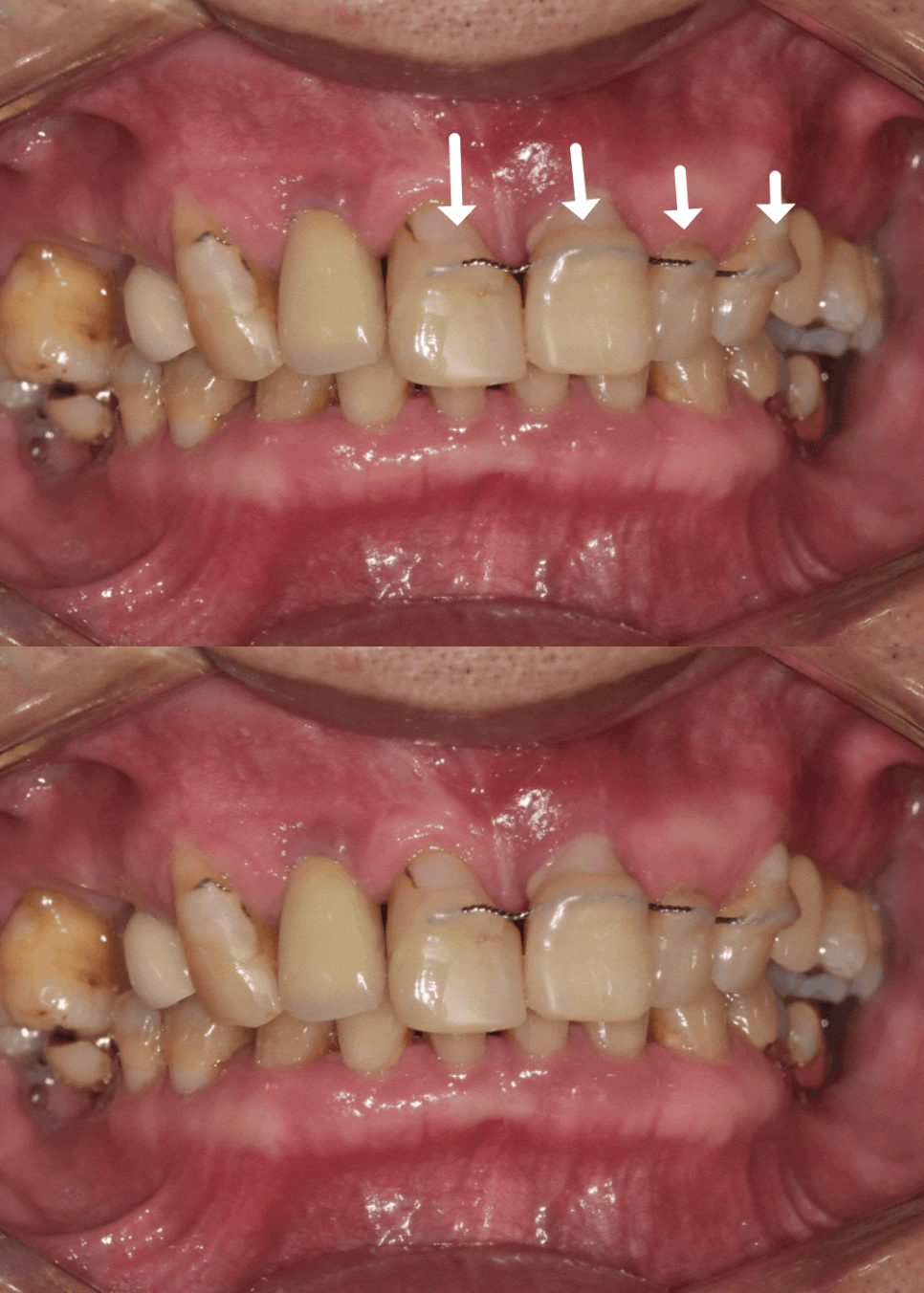 250106 Teeth bound with a splint
It can help you get by for a while,
but it doesn’t solve the underlying problem.
In other words, this patient was not at the level of “a little loose,”
but at a level where it could no longer be delayed.
The examination showed that it was not a condition they could wait one more year with.
Front tooth looseness: If you try to wait out the deductible reduction period for implant dental insurance, you may end up losing more.
The patient had been about one year after enrolling in implant dental insurance,
and because it was the reduced coverage period with only 50% coverage,
they wanted to delay treatment as much as possible due to the cost burden.
However, after reviewing the X-rays and the oral cavity,
-
Right premolar (#15): Tooth loss due to extraction, with a large amount of bone resorbed
-
Three front teeth (#11, 21, 22): Bone loss due to combined periodontitis, poor gum condition, and severe looseness
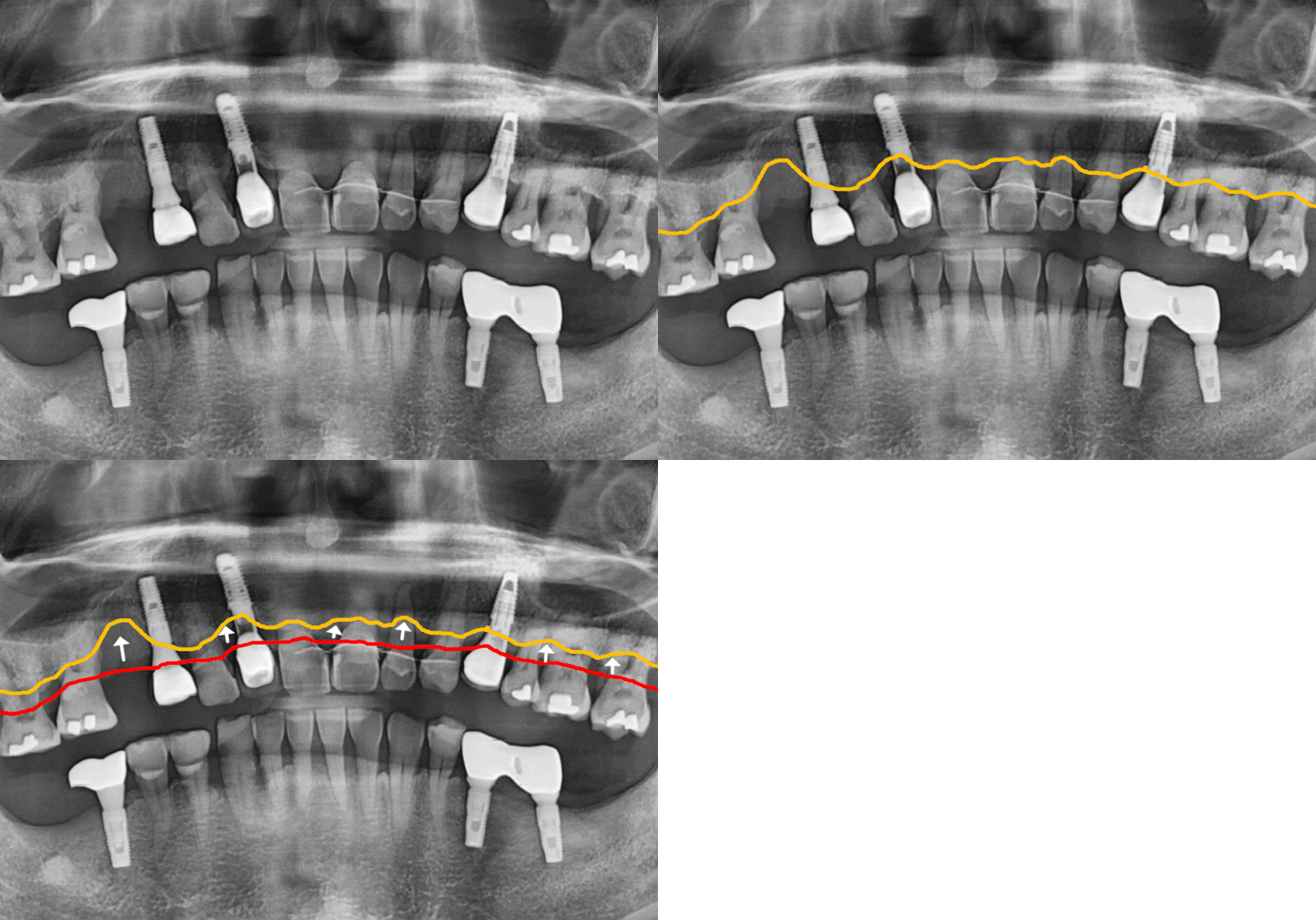 250106 Bone that has resorbed compared with existing bone
If they were to wait one more year for coverage,
there was a high likelihood that the front teeth would become even looser
and the gums would recede further.
If bone grafting and gum grafting were also needed later,
the patient’s out-of-pocket cost could become larger than the covered amount.
So treatment could not be delayed any longer.
Treatment should start with the urgent areas, and the cost should be kept as low as possible
Front tooth looseness: If you try to wait out the deductible reduction period for implant dental insurance, you may end up losing more.
We took into account the patient’s insurance situation
and the financial burden realistically,
and made a plan centered on “the treatment that was truly needed now.”
Right premolar (#15)
: Implant placement with bone grafting
Loose front teeth (#11, 21, 22):
Extraction first
One left front tooth (#22)
: Implant placement with bone grafting
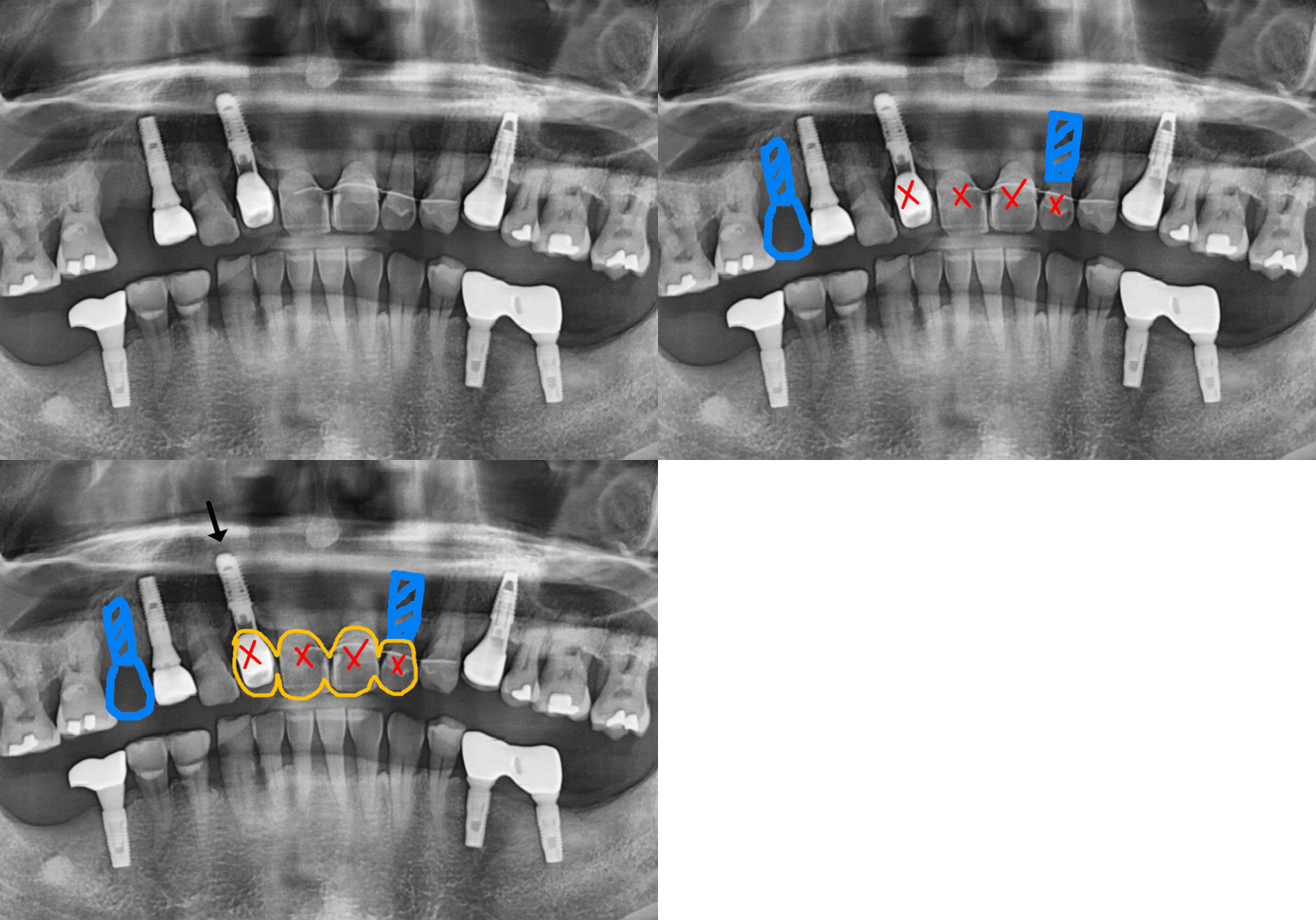 250106
There was one more key point that helped reduce the burden.
The patient already had an implant in the right front tooth (#12) area.
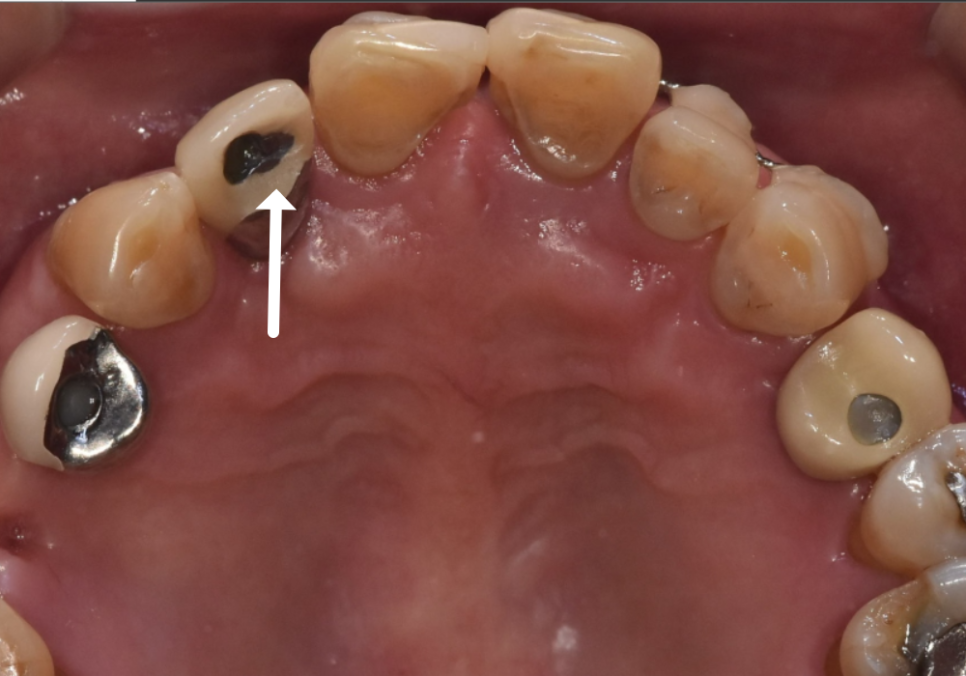 250106 Implant prosthesis broken
The porcelain-type implant crown was visibly broken.
So instead of placing one more new implant in the adjacent space (#11),
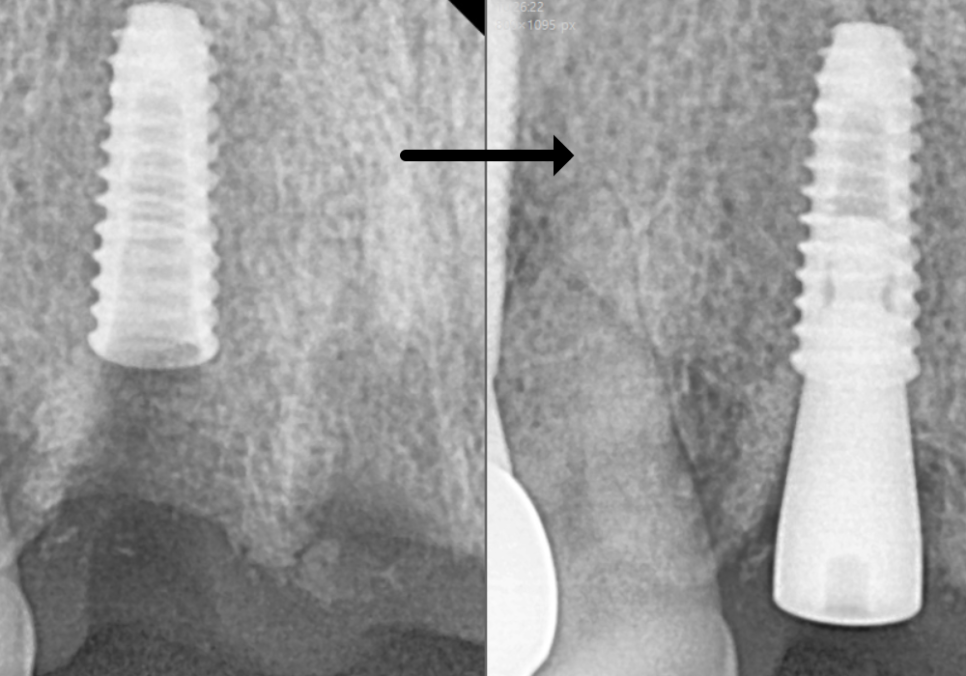 250531 After removing the existing implant crown, it was changed to a healing cap (button)
we adjusted the design to place implants in the existing implant at the right front tooth (#12)
and the left front tooth (#22),
and connect them with a bridge.
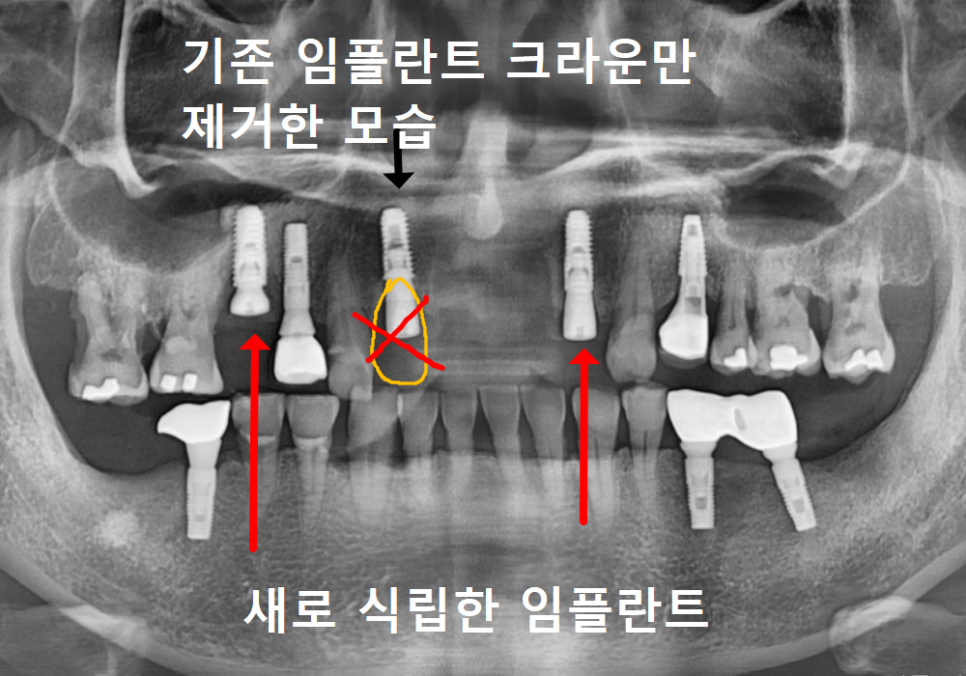 250509
Completed implant
Front tooth looseness: If you try to wait out the deductible reduction period for implant dental insurance, you may end up losing more.
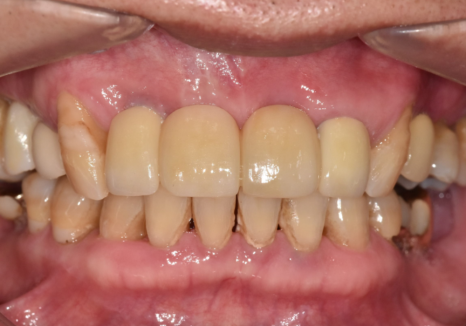
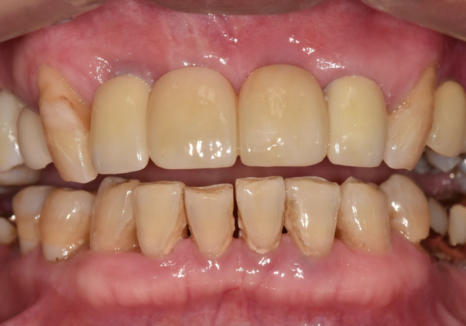 250626
Although it was still the reduced coverage period, we were able to help proceed with the implants within the 50% coverage range,
and because the bone grafting was also covered,
we prepared the necessary documents so that the bone grafting portion was also covered.
Most importantly, this helped reduce the burden of placing one additional implant.
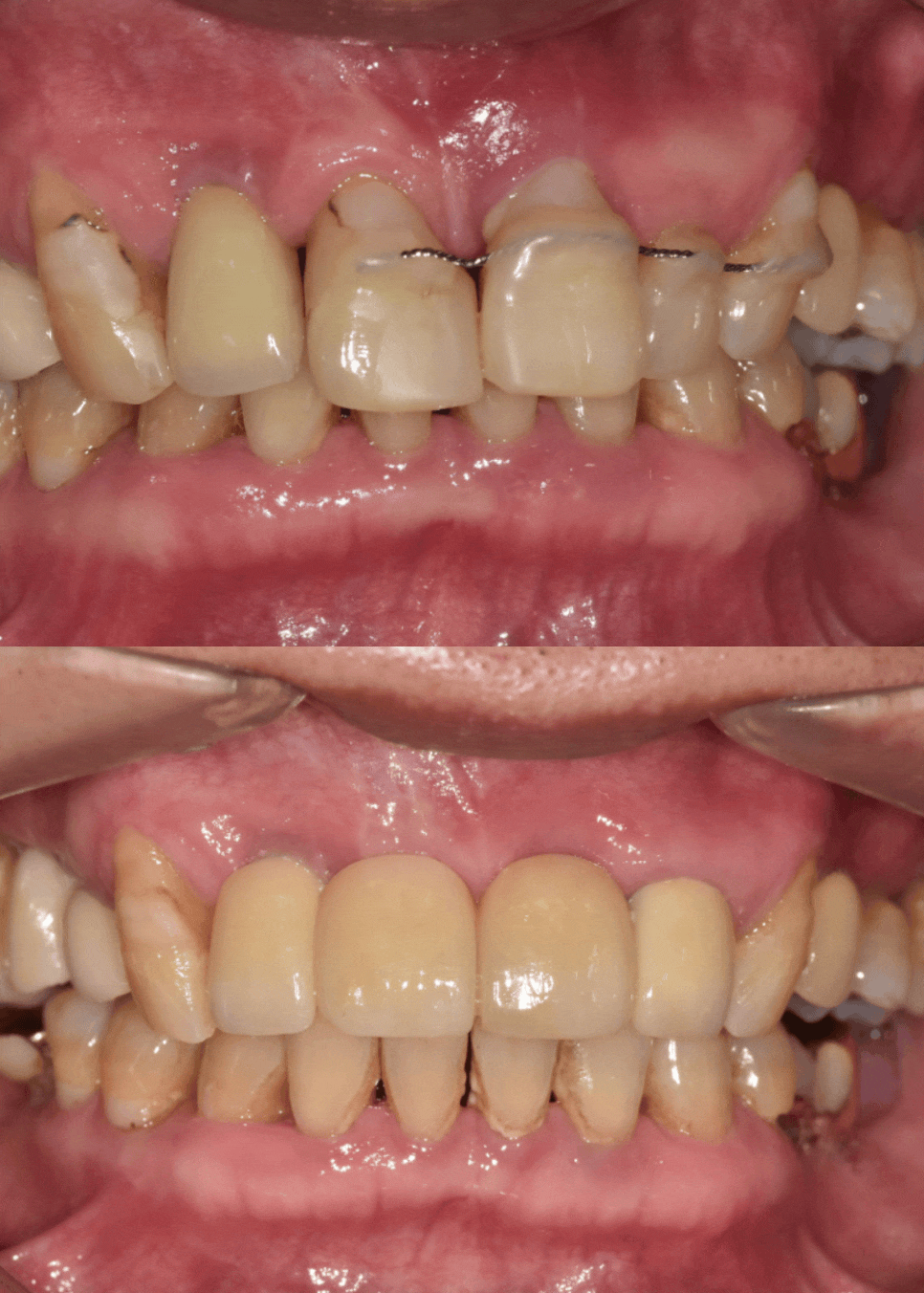 250106 (Before) 250626 (After)
Just because it is the reduced coverage period
does not mean that waiting is always the right answer.
Rather than trying to endure based only on dental insurance,
starting treatment with the urgent areas first may be the way to reduce costs in the long run.
If you are wondering whether you should keep holding out because of insurance,
please first find out whether your teeth are in a condition that can wait,
or whether treatment is needed now.
Thank you for reading such a long post today.^^
▼Check the dental clinic location▼
Front tooth looseness: If you try to wait out the deductible reduction period for implant dental insurance, you may end up losing more.
| Go to make a reservation call |
|---|
| 02-481-4278 |
| This post was written directly by Seoul Bardi Dental Clinic for the purpose of providing medical information in compliance with Article 56, Paragraph 1 of the Medical Services Act. The information provided is for reference only, and we recommend visiting a medical institution and receiving guidance from medical professionals for symptom assessment and the correct management method. All procedures/surgeries performed at the dental clinic may involve risks depending on the individual (inflammation, bleeding, swelling, etc.). Please decide after sufficient consultation with the medical staff in advance. The treatment cases in this post were photographed with the consent of patients who completed treatment at our clinic, and the before-and-after photos were taken under the same conditions. |