Hello.
I’m the director of Seoul Bardi Dental Clinic.
Among the patients we see in the treatment room,
there are many truly unfortunate “wandering patients” who have gone from one dental clinic to another.
This is especially true for older patients
who have lost all their upper teeth
and have worn dentures for a long time.
That is probably because, no matter how many clinics they visit,
the answer they hear is always similar.
“Your bone is as thin as paper,
so there is no place to place an implant.”
“Upper jaw surgery is too difficult
because of the maxillary sinus space.”
After hearing this kind of thing repeatedly,
in the end, they think, “So implants really can’t be done in my mouth,”
and, with a feeling of giving up,
they put their uncomfortable dentures back in.
But the 70-something patient I’m introducing today
left that hopeless situation behind,
and is now comfortably eating with just 6 implants.
The kind of “edentulous implant treatment”
that everyone says is difficult and challenging
I’ll explain how we overcame that obstacle
through the treatment process.^^
When teeth are lost, bone disappears too
Don’t have enough bone? A full-arch implant case for a diabetic edentulous patient in their 70s
This patient
had been using full dentures for a long time,
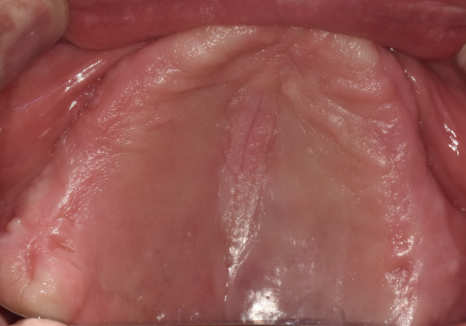
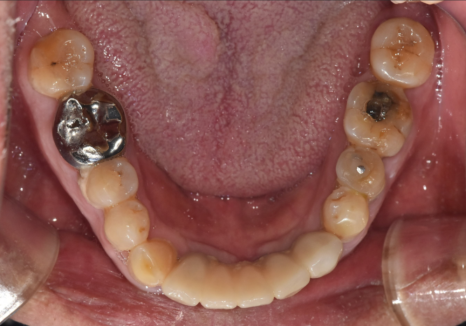 250308
and their gums had become very weak
because diabetic complications were also present.
Looking at the X-ray,
the jawbone was generally very thin.
 250310
Our bones are similar to muscles.
Just as they can quickly waste away if you don’t exercise them (through chewing stimulation),
when teeth disappear, the bone thinks its job is done
and gradually shrinks.
It is usually said to shrink only a little each year,
but jawbone that has endured only the pressure of dentures for a long time
inevitably shrinks much faster.
The upper jaw is even more challenging: it’s because of the “maxillary sinus”
Don’t have enough bone? A full-arch implant case for a diabetic edentulous patient in their 70s
There are two reasons why upper-jaw implants are difficult.
- Difference in bone density
If the lower jaw is like hard wood,
the upper jaw is relatively softer and less dense.
That makes it harder to firmly secure the implant.
- The space called the maxillary sinus
At the back of the upper jaw,
there is an air-filled space connected to the nose
called the “maxillary sinus.”
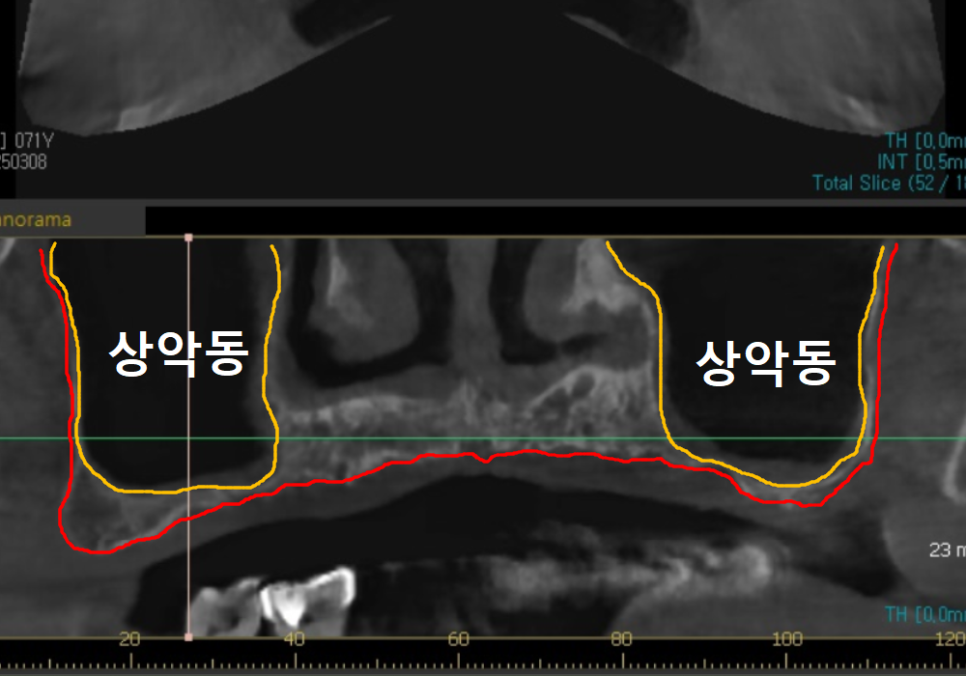 250310
For people who have gone a long time without teeth,
the bone gradually becomes thinner,
and there are many cases where less than 2–3 mm of bone
remains for placing an implant.
At times like this, what is needed
is a “sinus lift.”
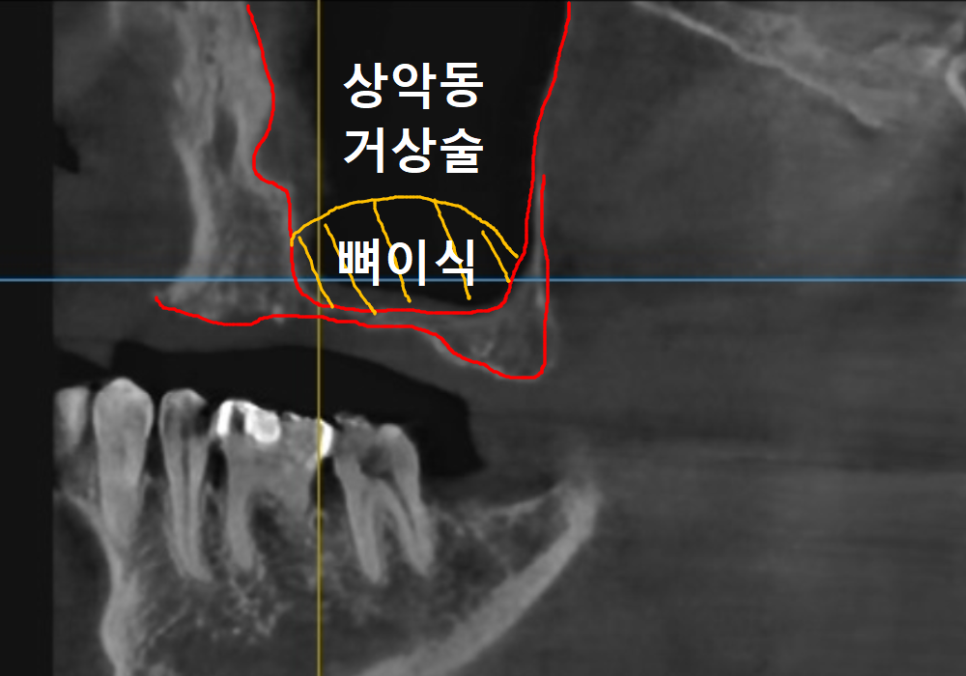 250310
What is a sinus lift?
Don’t have enough bone? A full-arch implant case for a diabetic edentulous patient in their 70s
A sinus lift is a procedure that raises the sinus membrane upward
to secure space for the implant.
This membrane is extremely delicate,
so thin that it is like tissue paper.
It must be carefully lifted without tearing it,
and then bone must be placed into the space.
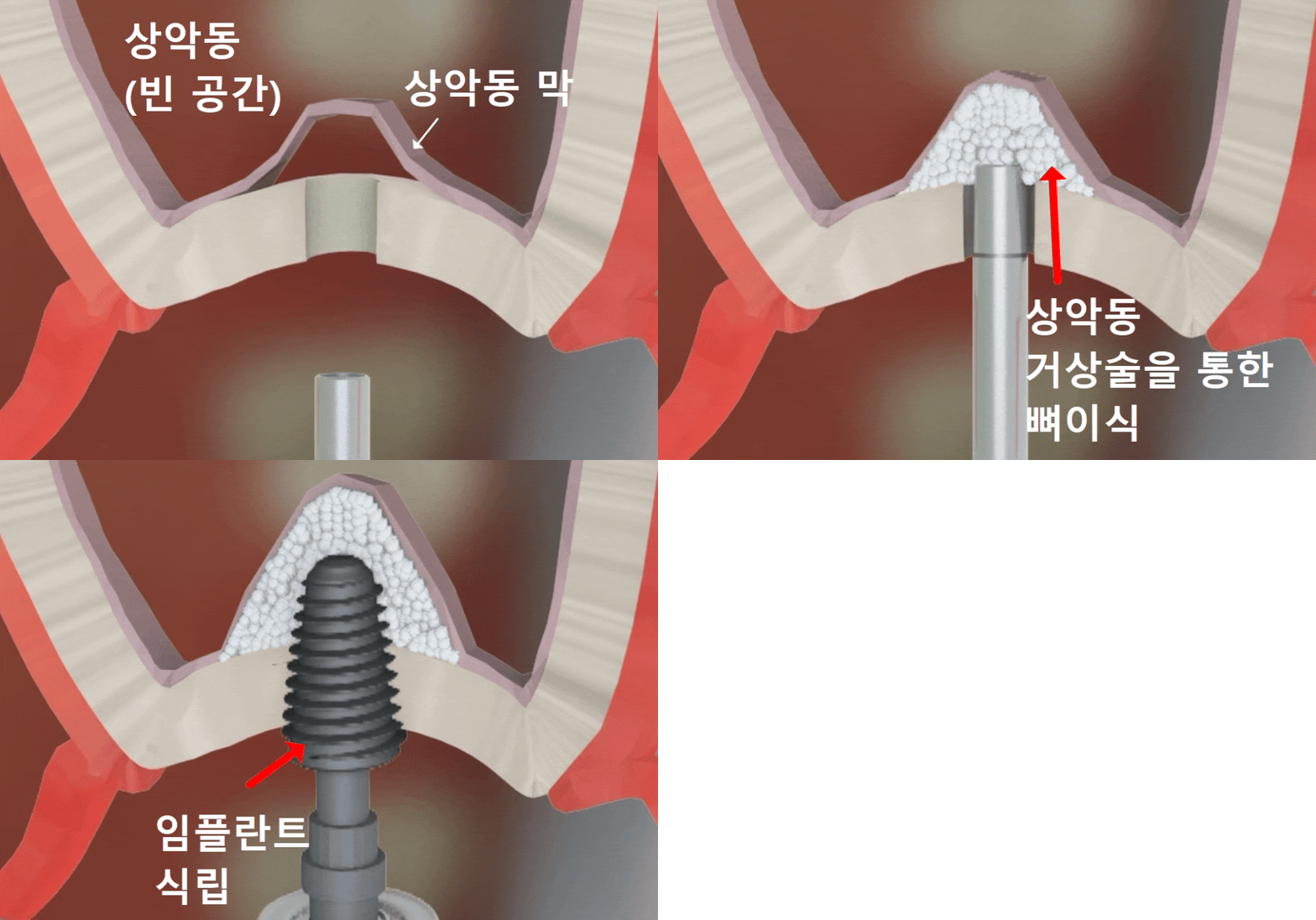
The surgeon’s delicate hands
are the key factor that determines the success or failure of the procedure.
This patient also needed sinus lifts
in both molar areas.
Finding the optimal position through CT
Don’t have enough bone? A full-arch implant case for a diabetic edentulous patient in their 70s
Because the bone was thin overall,
we strategically selected the areas
with relatively better bone conditions
through detailed CT analysis.
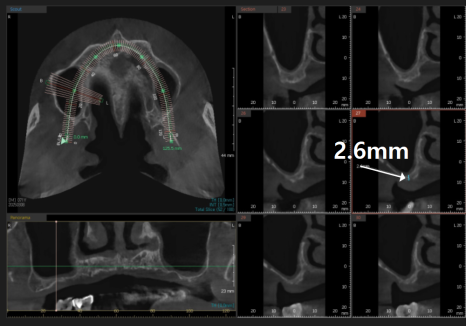
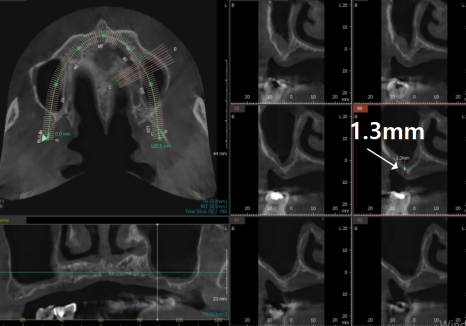 250310
We planned to place a total of 6 implants
and connect them with prosthetics to create 12 teeth.
Also, considering the patient’s diabetes levels and age,
we divided the treatment into three sessions:
right side, left side, and front teeth.
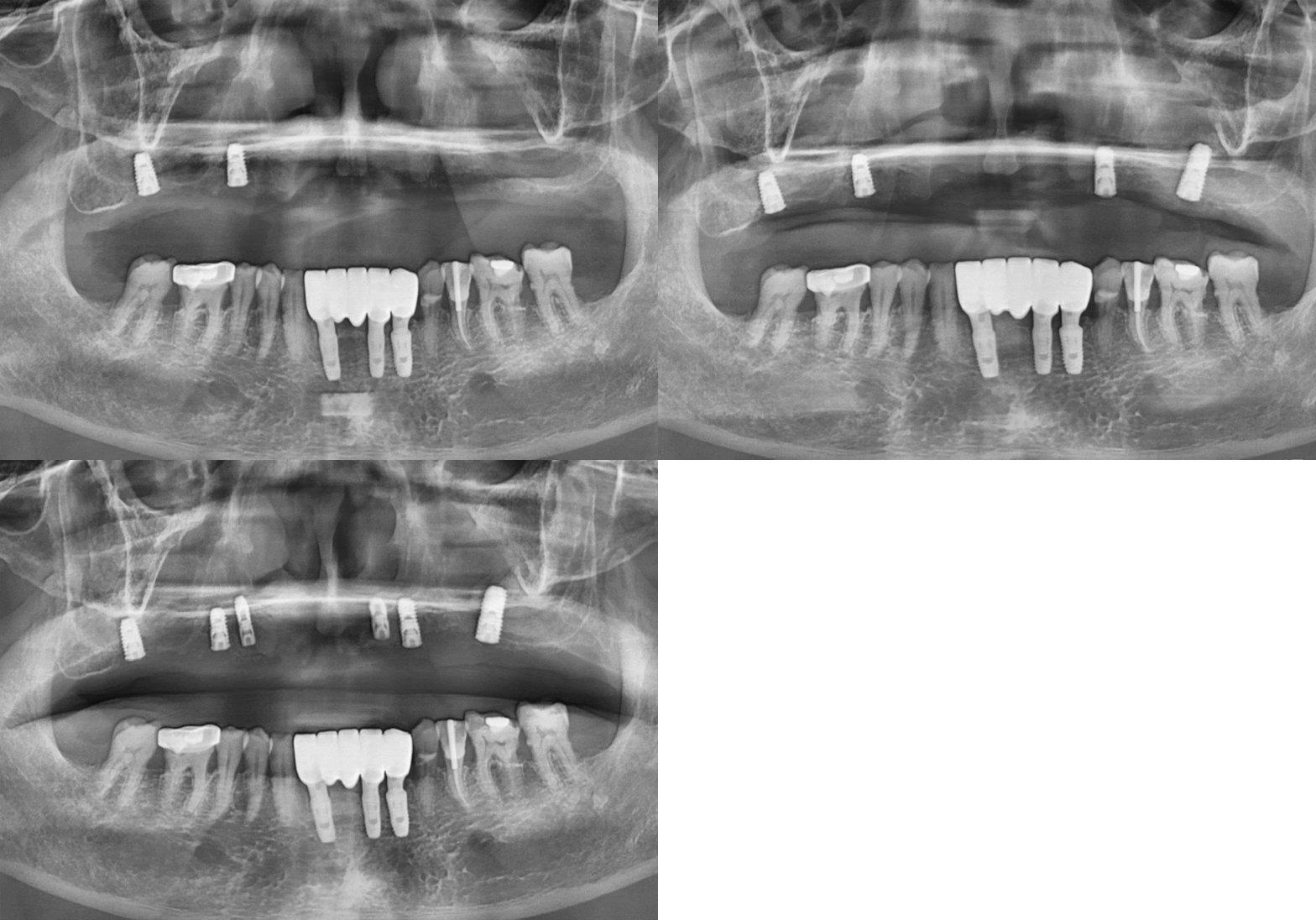 250310, 250402, 250416
Because it was most important
to avoid overburdening the patient’s condition,
we carefully controlled the pace.
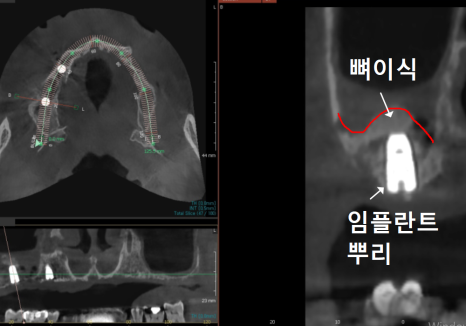
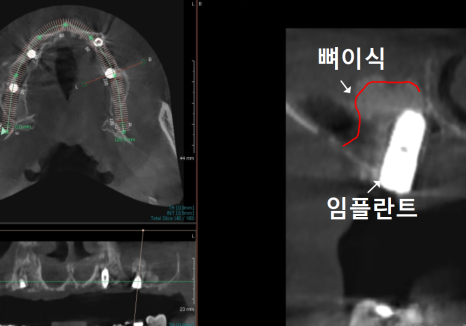 250402
A 7-month wait,
and use of the existing dentures
Don’t have enough bone? A full-arch implant case for a diabetic edentulous patient in their 70s
Just because implants have been placed
does not mean teeth can be attached right away.
Especially for this patient,
who needed a large amount of bone grafting,
about 7 months of healing time was necessary.
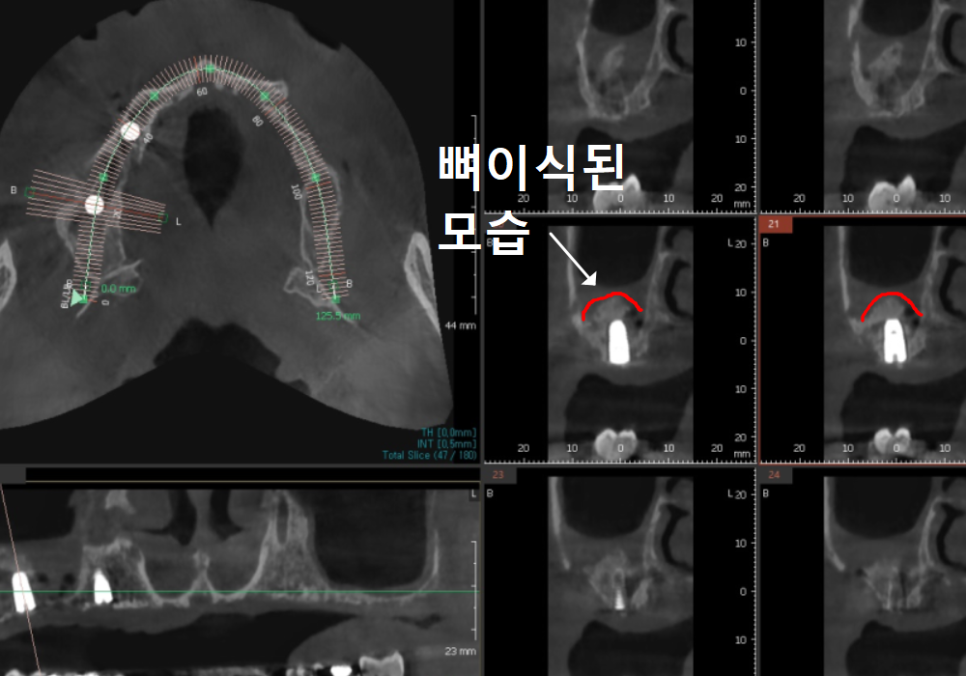 250402
Many people ask, “How do they eat during that time?”
They can continue using their existing dentures
with some adjustments.
As the gum wounds healed and the shape changed,
we supported the denture by placing soft material inside,
allowing a period of adaptation.
The moment digital data shines
Don’t have enough bone? A full-arch implant case for a diabetic edentulous patient in their 70s
We use an intraoral scanner
to digitize and store the patient’s mouth as digital data.
In fact, this patient once lost the temporary teeth during use.
In the past, we would have had to take impressions again,
but thanks to the stored data,
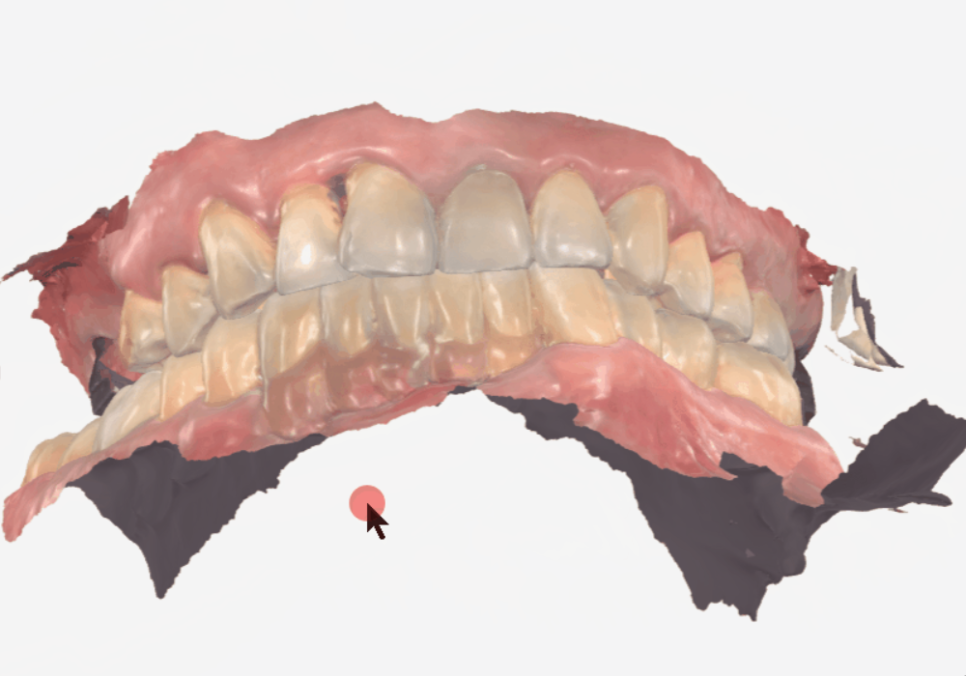
we were able to make a new set of teeth in advance
at the in-house dental lab
before the patient even arrived.
That allowed us to fit them immediately on the same day.
That is a clear strength of the digital system.
If it is sent to an outside dental lab,
you have to wait several days,
but with the combination of
“in-house dental lab + intraoral scanner,”
we can quickly handle even emergencies like this.
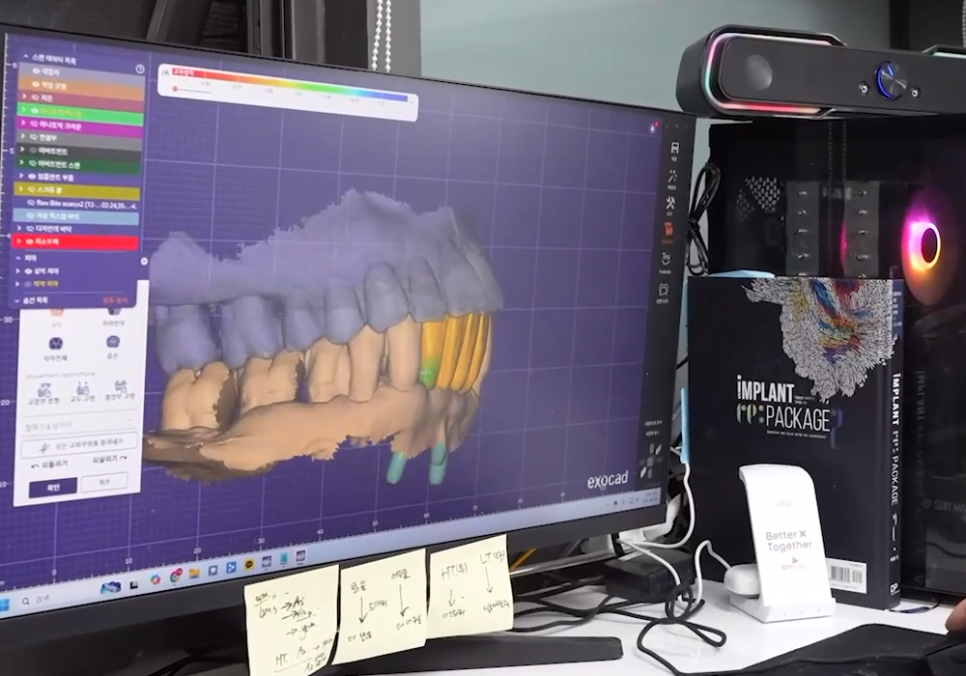
The prosthesis connecting 6 implants can cause problems
even if it is off by just 0.1 mm,
and digital data minimizes such errors,
which is the greatest advantage in achieving a highly finished prosthesis.
Prosthetics for edentulous patients are actually more difficult.
Don’t have enough bone? A full-arch implant case for a diabetic edentulous patient in their 70s
“Isn’t it easier to make a prosthesis
when there are no teeth at all?”
In fact, it’s the opposite.
If teeth are present, there is a reference point for height,
but in edentulous cases, there is no reference point,
so we have to find the proper facial height (vertical dimension) again.
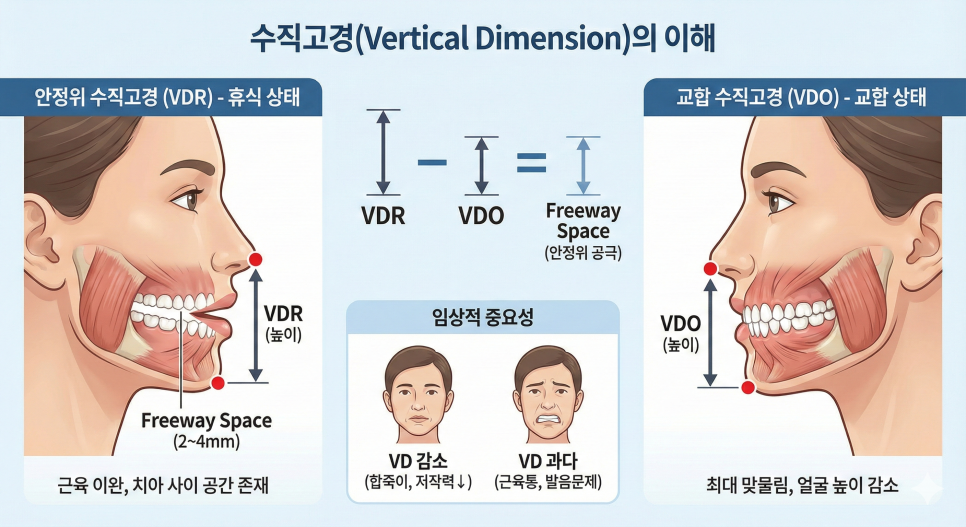
If it is too high, the jaw will hurt;
if it is too low, chewing force weakens.
So in this patient’s case,
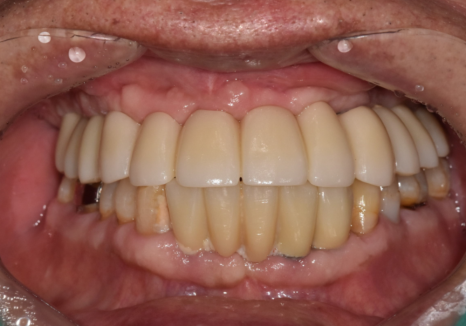
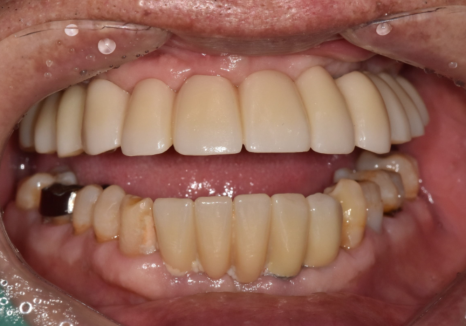
we let them use the temporary teeth long enough
so we could match the appropriate reference point.
 251020
We checked whether there was any discomfort
while using the temporary teeth,
and only after confirming changes in facial appearance
did we complete the final prosthesis.
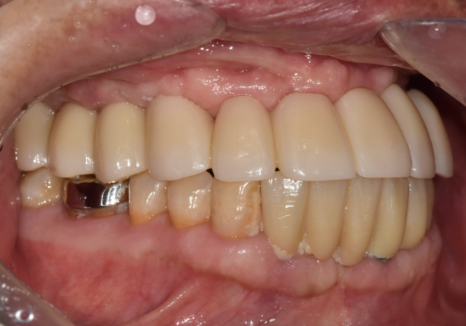
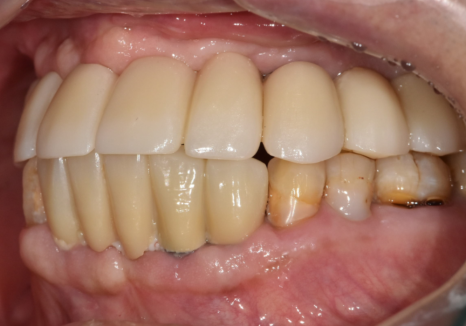 251020
An 8-month journey, and a return to everyday life
Don’t have enough bone? A full-arch implant case for a diabetic edentulous patient in their 70s
The treatment for this diabetic patient in their 70s
for upper-jaw edentulism took a total of 8 months.
Slowly,
but surely,
thanks to the treatment progressing steadily,
this patient is now comfortably eating
with 6 implants.
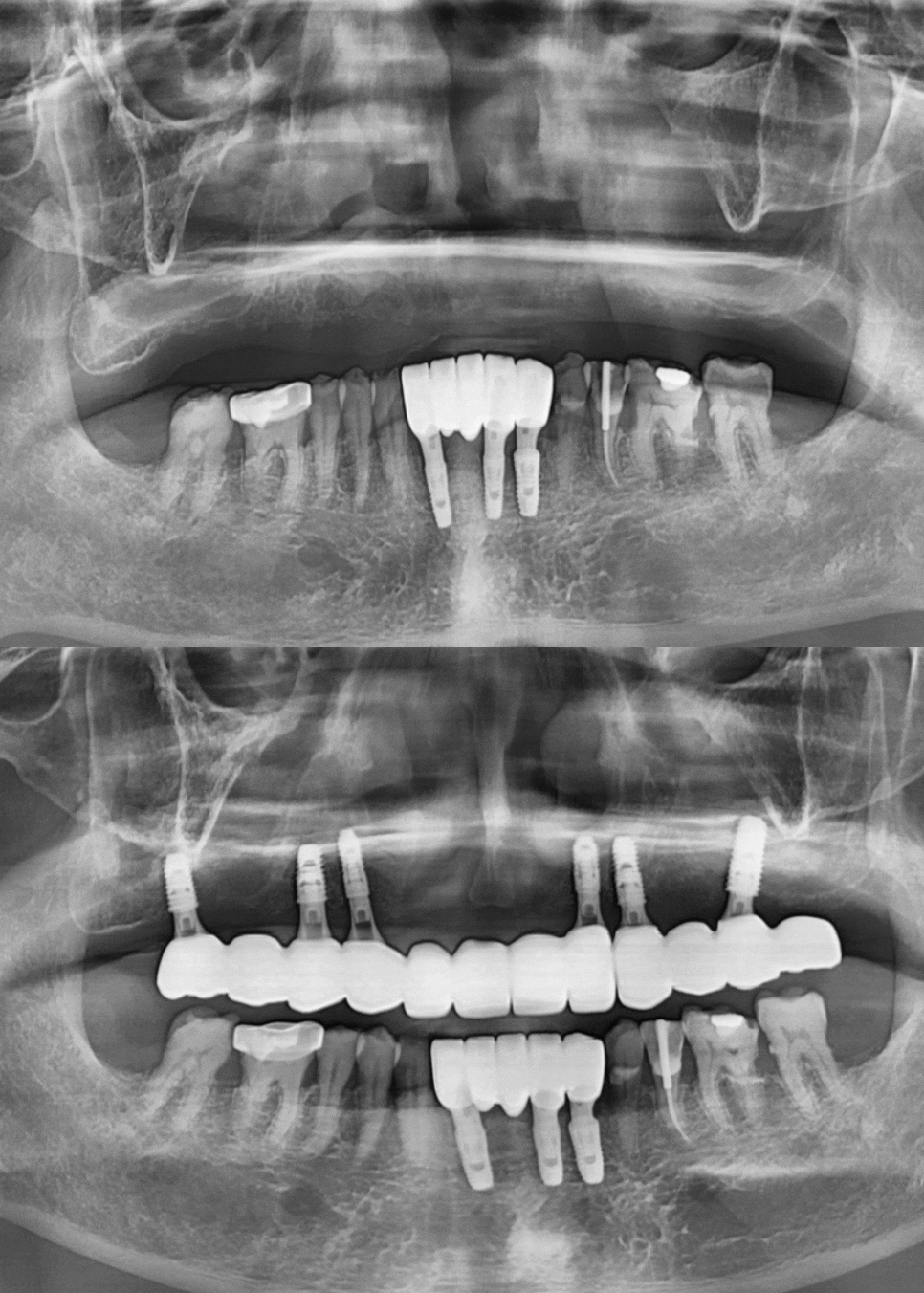 250308 (before) 251020 (after)
Don’t give up in advance because someone says,
“there isn’t enough bone.”
If there is precise planning and skilled technique,
there is enough room to find a solution.
If you are wondering,
“Can I get implants too?”
please don’t hesitate any longer
and start with an accurate diagnosis.
We will take a careful look.
Thank you for reading this long post today. ^^
▼Check the dental clinic location▼
Don’t have enough bone? A full-arch implant case for a diabetic edentulous patient in their 70s
| Go to call for an appointment |
|---|
| 02-481-4278 |
| This post was written directly by Seoul Bardi Dental Clinic for the purpose of providing medical information, in compliance with Article 56, Paragraph 1 of the Medical Advertising Act. The information provided is for reference only, and we recommend that symptoms and precise management methods be discussed with medical professionals after visiting a medical institution. All procedures / surgeries performed at the dental clinic may involve risks depending on the individual (inflammation, bleeding, swelling, etc.). Please make decisions after sufficient consultation with the medical staff in advance. The treatment cases in this post were photographed with the consent of patients who completed treatment at our clinic, and the before-and-after photos were taken under the same conditions. |