Hello.
I am the director of Seoul Bardi Dental Clinic.
On the day the implant treatment was finally finished,
patients wearing relieved expressions
most often ask this question:
what do you think it is~?
"Implants are something you can
use until you die, right?"
Every time,
I smile and say,
"Even a car breaks down if you don't maintain it;
let alone teeth that you use every day~"
No matter how firmly an implant is placed,
trouble is bound to happen if care is neglected.
Today, I’ll show you how we treated a case in which
retreatment was unavoidable due to peri-implantitis,
and how we reduced the patient’s burden
as much as possible.
Patient case of retreatment due to peri-implantitis
A patient who had implants placed long ago at another clinic in two upper right molars (#16, #17)
came to see us.
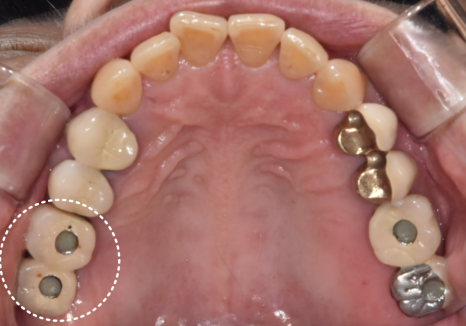
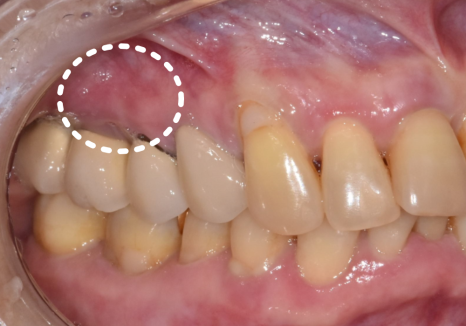
230216
"The front side of the very back molar (#16) throbs,
and something comes out when I press it."
Looking inside the mouth of the patient who was complaining of discomfort,
the situation was not as good as we had thought..
The gums were red and swollen,
and even with a light press, yellow pus was seeping out...
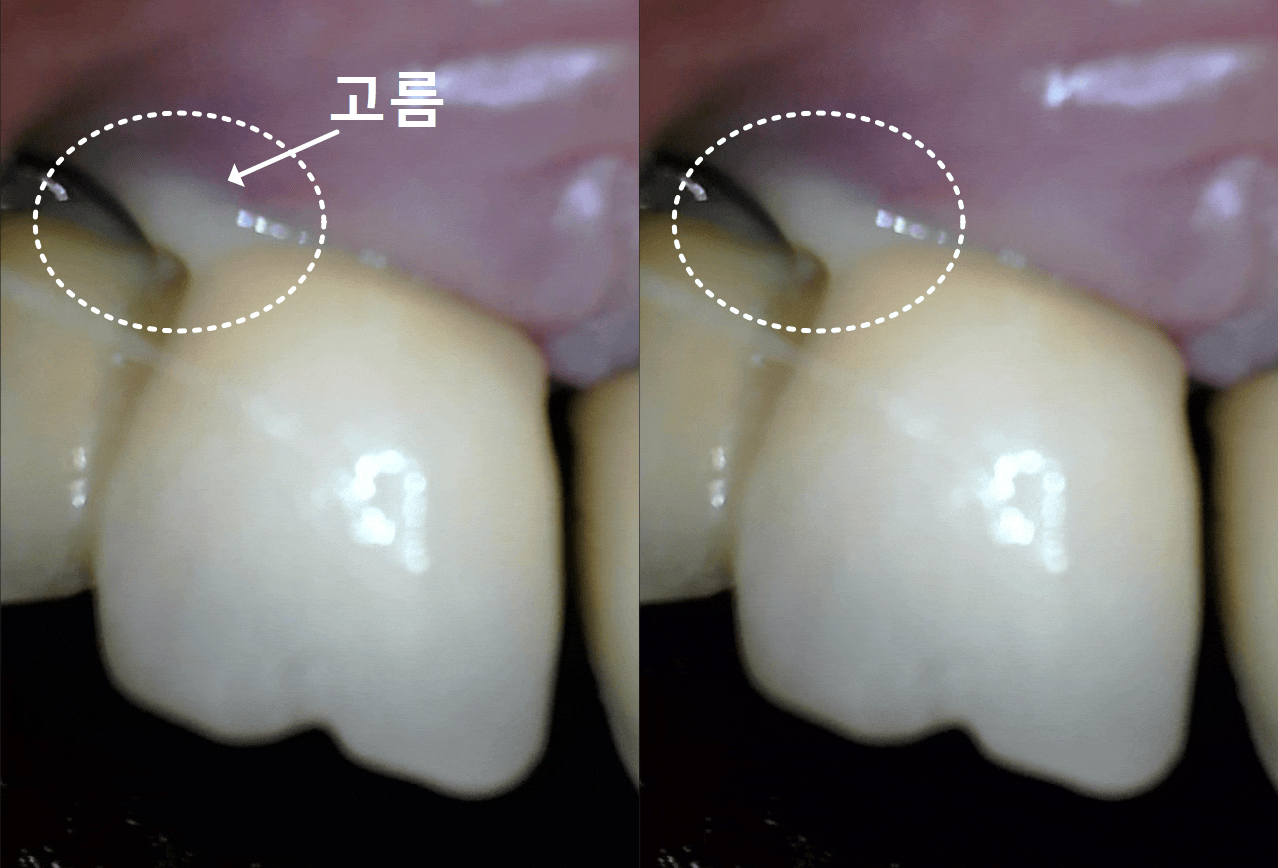
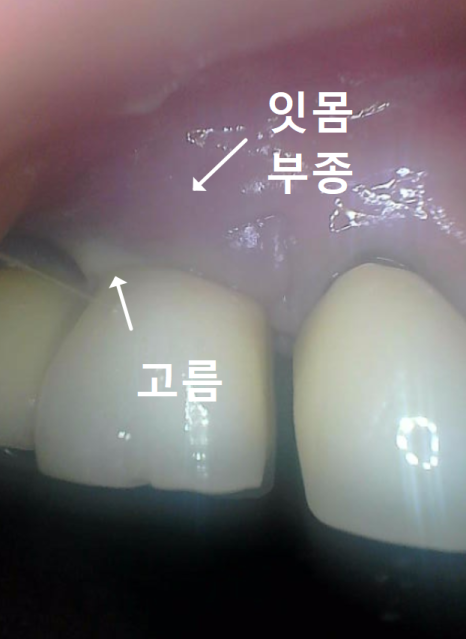
230216
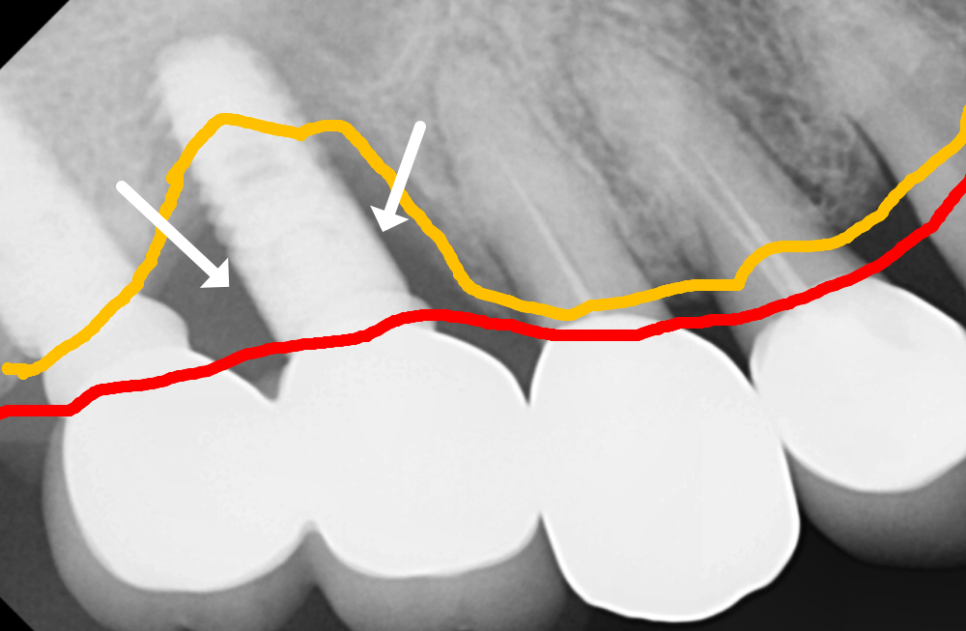
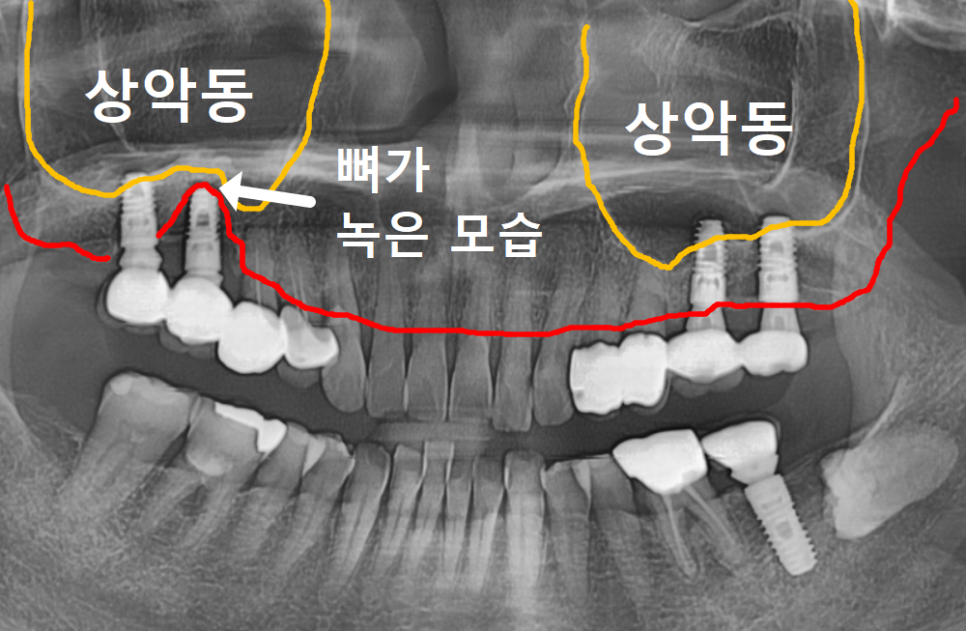
After taking an X-ray,
we saw that the gum bone, which should firmly hold the implant screw,
had been blackened and dissolved by inflammation.
231103
It was a case of what is commonly called
"peri-implantitis" having progressed severely.
What is peri-implantitis?
Simply put, you can think of it as "gum disease around an implant."
Inflammation develops in the gums around the implant,
and if it gets worse,
it is a frightening disease that can even dissolve the gum bone
supporting the implant.
You may wonder why inflammation occurs
when an implant made of metal cannot rot.
The secret lies in the presence or absence of the
"periodontal ligament."
Our natural teeth have a thin membrane called the
"periodontal ligament" that surrounds the root.
This serves not only as a "tiny cushion" that disperses biting force,
but also as a reliable "protective barrier" that blocks bacteria from invading.
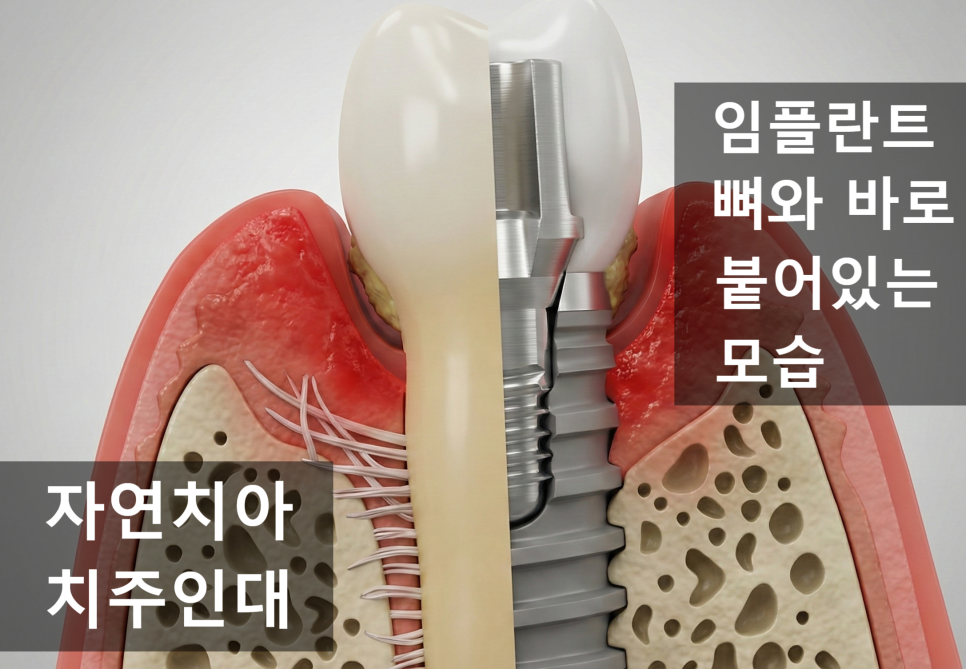
But... implants do not have
this cushion (periodontal ligament).
The gum bone and the screw are directly attached with a "click!"
Because there is no protective barrier to block bacteria,
they are inevitably much more vulnerable to bacterial attack.
So once inflammation starts,
the speed at which bone dissolves is much faster and more severe
than with natural teeth.
How to address a crown connected as one unit
Gum pus, peri-implantitis retreatment
Because the gum bone had already dissolved severely,
we judged that it could no longer be maintained.
In the end, we decided to remove the problematic implant
and retreat it.
But there was one obstacle.
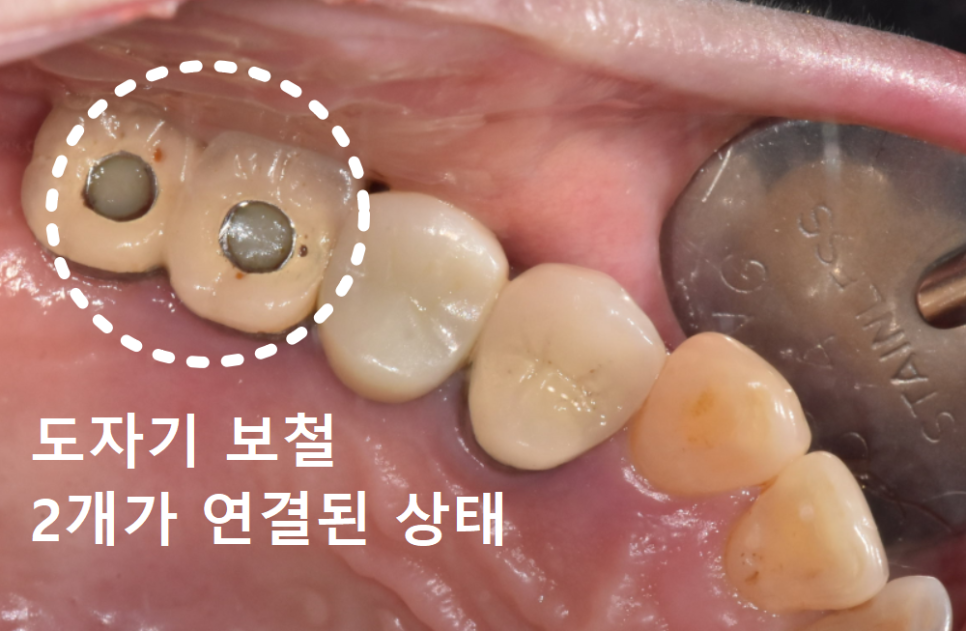
That was because the inflamed tooth (#16) and
the healthy tooth at the back (#17)
were firmly connected as one.
231103
If we removed even the intact prosthesis,
the patient's financial burden would increase...
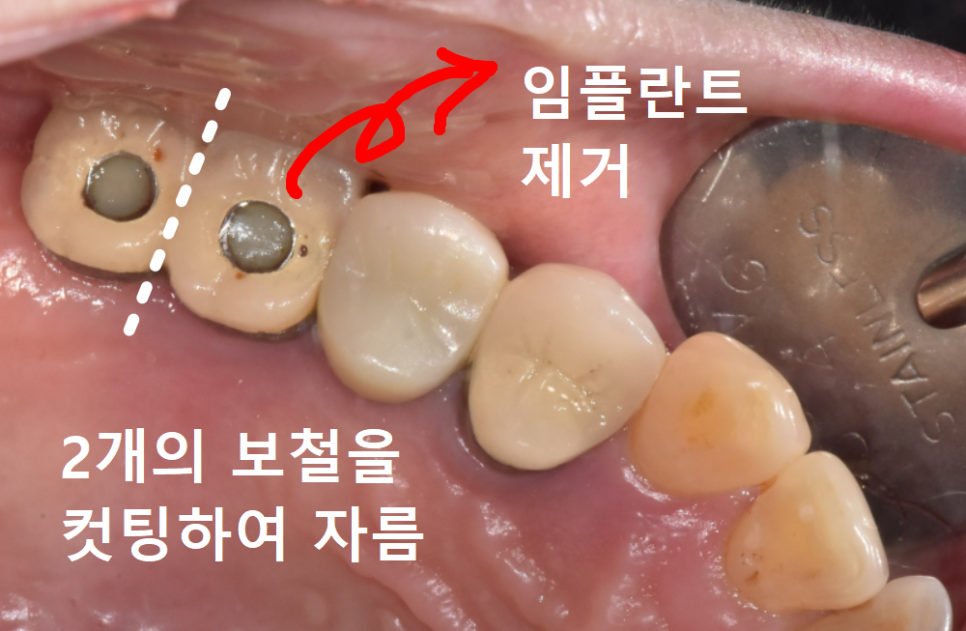
To preserve as much as possible that we could still use,
I decided to attempt a "prosthesis cut."
231103
Because of the metal inside, it was hard to cut,
and there was also a risk that the porcelain could break,
making it a very difficult procedure.
After explaining the possibility of fracture in advance,
we carefully cut it while holding our breath.
The result? Thankfully, it was neatly separated without fracture!
We safely removed only the problematic implant.
How did we place it in a thinned bone?
Gum pus, peri-implantitis retreatment
After removing the mass of inflammation and the implant,
the remaining bone condition was not good.
Chronic inflammation had dissolved the upper jaw bone,
leaving the bone thickness needed to place an implant
as thin as paper.
231103
So we decided to fill the 부족한 bone by performing
an accompanying sinus lift procedure.
(For detailed information about sinus lift, please refer to my previous post!)
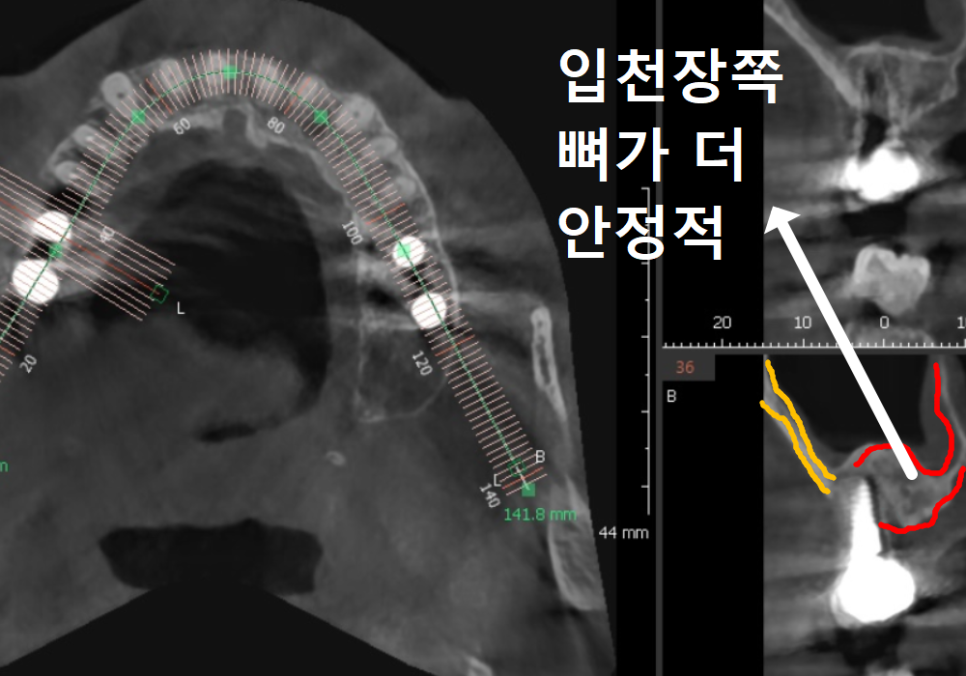
After analyzing the bone by rotating the CT from various angles,
the outer (cheek-side) bone had dissolved significantly,
but the inner (palate-side) bone remained relatively thick and strong.
231103
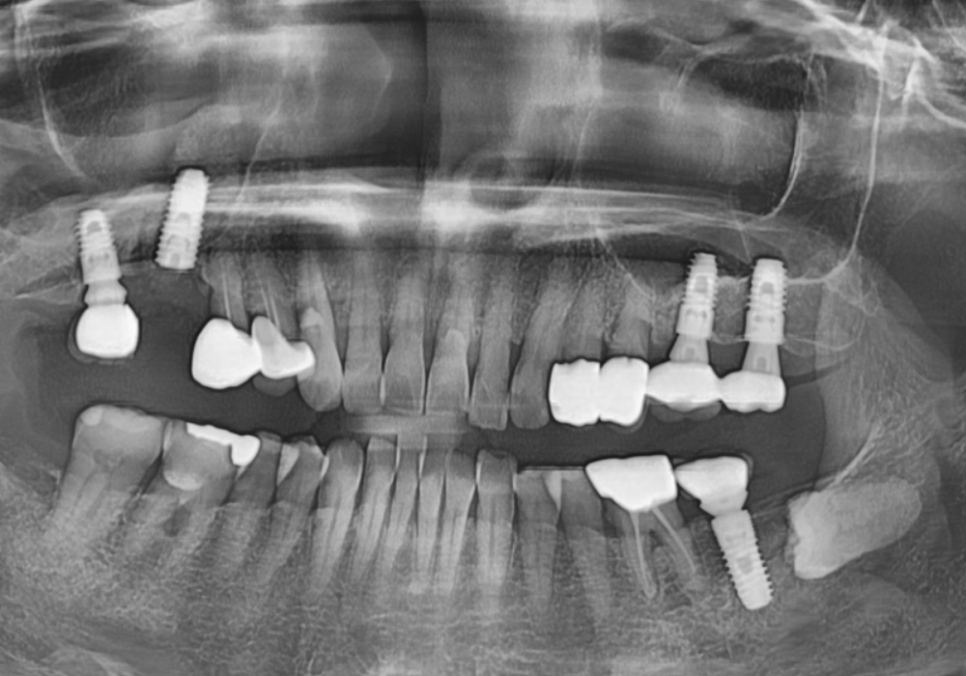
So, with a slight tilt toward the stronger palate-side bone,
we strategically placed the implant.
231124
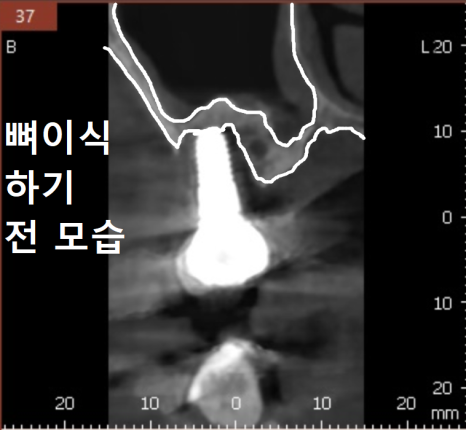
After surgery, we checked the CT and confirmed that it had been placed
accurately in the desired position.
5 months later, the prosthetic completion stage
Gum pus, peri-implantitis retreatment
After the graft material changed into my own bone,
and became firmly fused with the implant
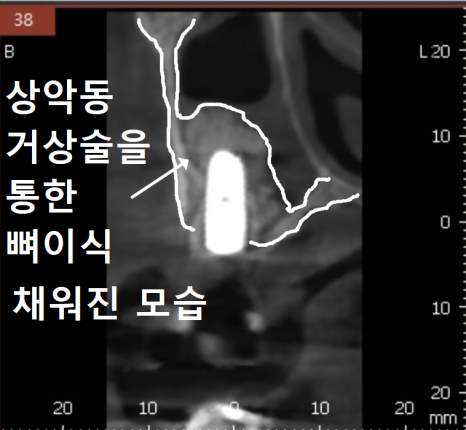
231103(before) 231124(after)
We went through about five months
of waiting after surgery.
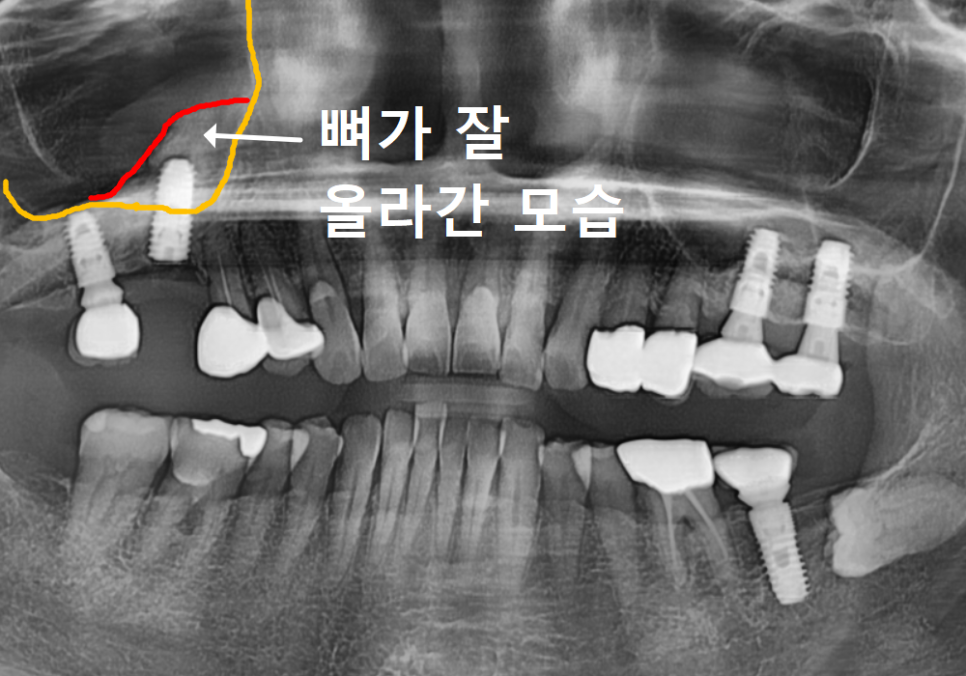
240126
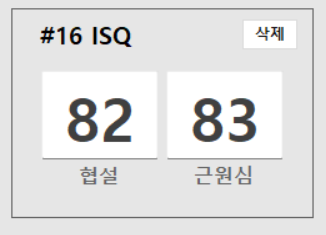
Five months later, when we measured the numbers with a machine,
it was over 82 points!
It had become one with the bone very successfully.
(Generally, 70 points or higher is considered stable.)
Gum pus, peri-implantitis retreatment
Now for the final stage,
it is time to take impressions.
Sometimes, there are patients who get scared right away,
saying, "Taking impressions is worse than the treatment itself."
That is probably because of the difficult memories of having to bite down on rubber
filled in the mouth and endure the gag reflex.
At Seoul Bardi Dental Clinic,
don't worry.
We use a comfortable "oral scanner."
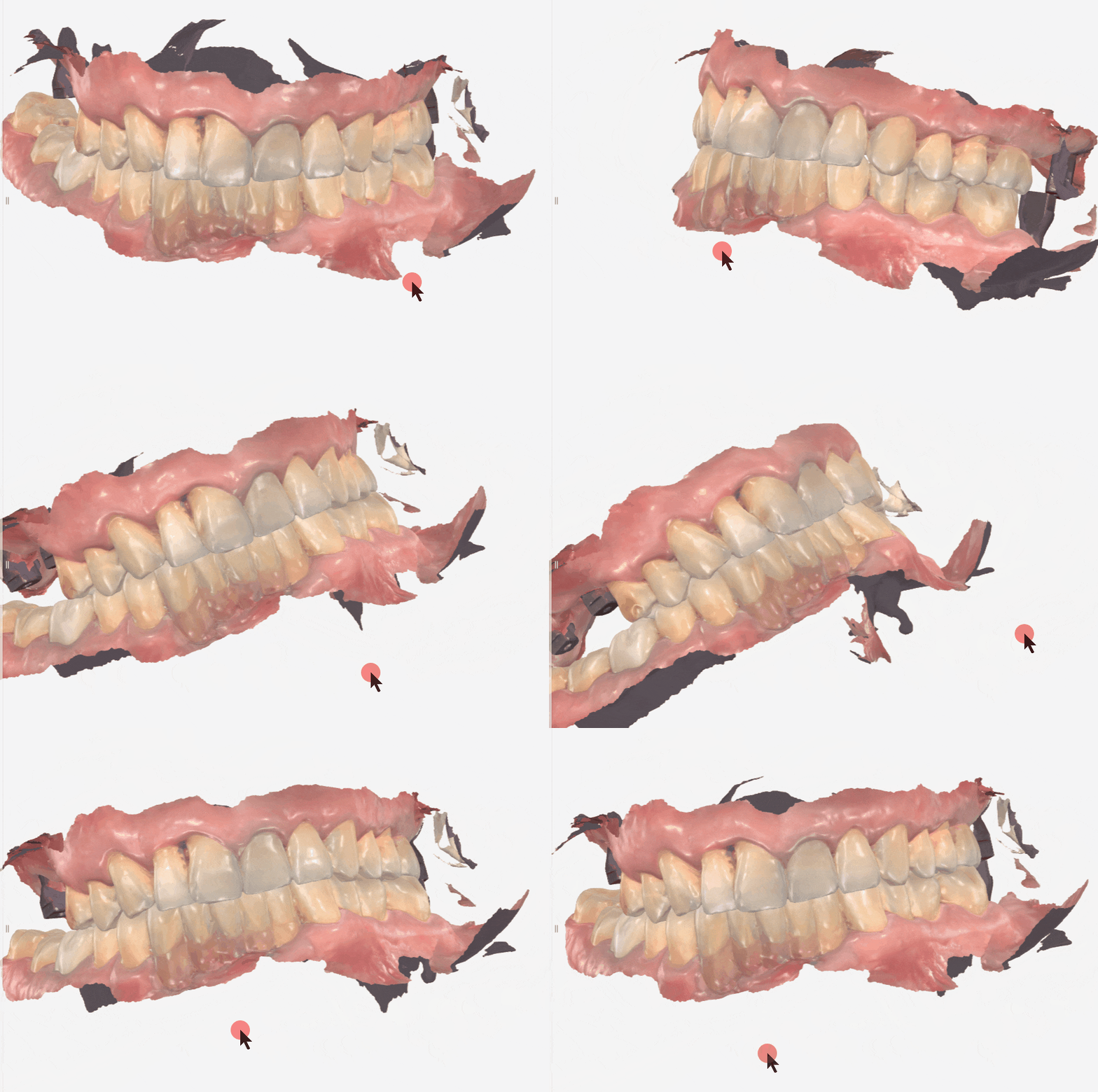
With a small camera pen,
we accurately capture the inside of the mouth in 3D.
Because even the smallest contours are captured as 3D data,
we can make a prosthesis that fits just like your own teeth,
without error.
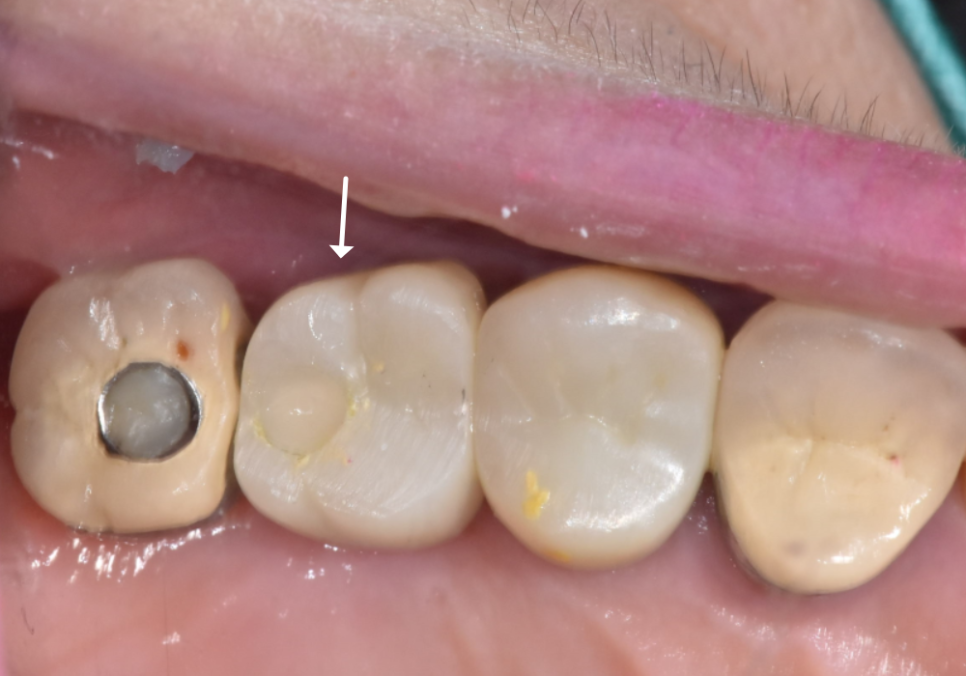
240429
In the end, we placed a highly durable
"zirconia" prosthesis and completed all treatment.
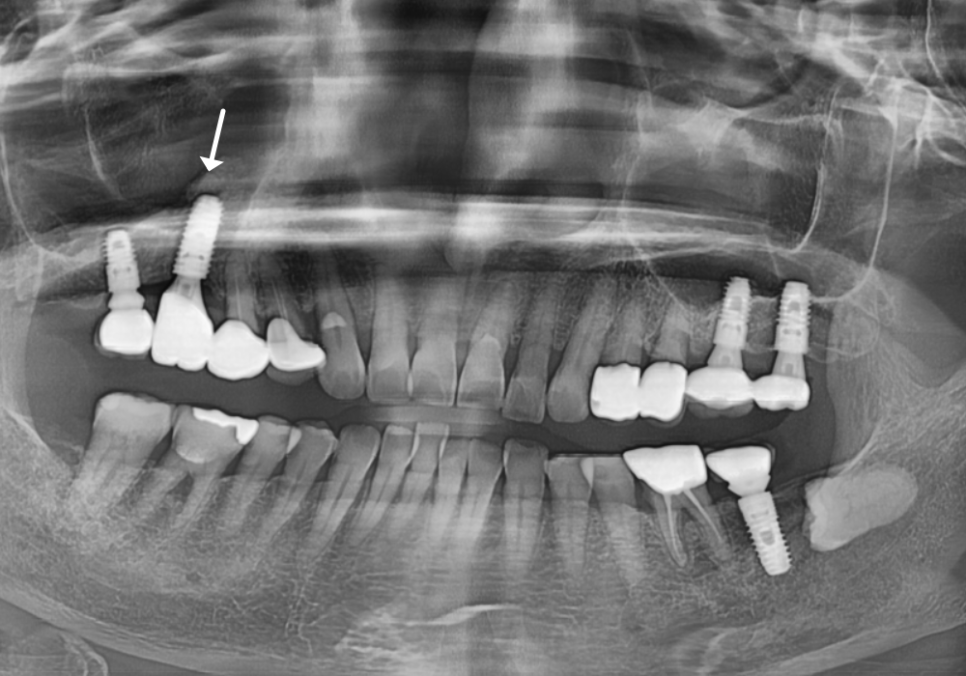
Removing an implant that was once placed
and having surgery again...
From the patient's perspective, it must have been a truly upsetting
and difficult decision.
However,
if the surrounding bone is already being dissolved by inflammation,
resolving it decisively is the way to protect the remaining teeth and gums.
We will carefully preserve what can be saved,
and identify only the treatments that are truly necessary.
Please visit us with peace of mind.
Thank you.^^
▼Check the dental clinic location▼
When I pressed the gum pus, it sank in... A case of retreatment after neglecting peri-implantitis
| Go to make a reservation call |
|---|
| 02-481-4278 |
| This post was written directly by Seoul Bardi Dental Clinic for the purpose of providing medical information in compliance with Article 56, Paragraph 1 of the Medical Advertising Act. The information provided is for reference only, and we recommend receiving guidance from medical professionals after visiting a medical institution for symptom assessment and accurate management methods. All procedures/surgeries performed at the dental clinic may carry individual risks (inflammation, bleeding, swelling, etc.). Please make decisions after sufficient consultation with medical staff in advance. The treatment cases in this post were photographed with the consent of patients who actually completed treatment at our clinic, and the before-and-after photos were taken under the same conditions. |