Hello,
I’m the director of Seoul Bardi Dental Clinic.
"Just one front tooth is crooked,
and it’s bothering me,
but thinking about having braces
on for a long time...
I just can’t bring myself to do it."
This is a concern many patients have when they visit the dental clinic.
If there is no major problem
with the way the teeth fit together overall,
there’s no need to insist on the hassle of full orthodontic treatment.
Because there is a very reasonable alternative called partial orthodontics,
which brings only the problematic tooth back into place.
Today, I’ll introduce a case in which a front tooth hidden inward was brought back into place in just 8 months.^^
- "I’m worried about one front tooth hidden inward"
Myeongil Station front teeth partial orthodontics
In this case, the patient’s biggest concern was that one lower central incisor (#41)
was tucked inward on its own,
making the alignment look off.
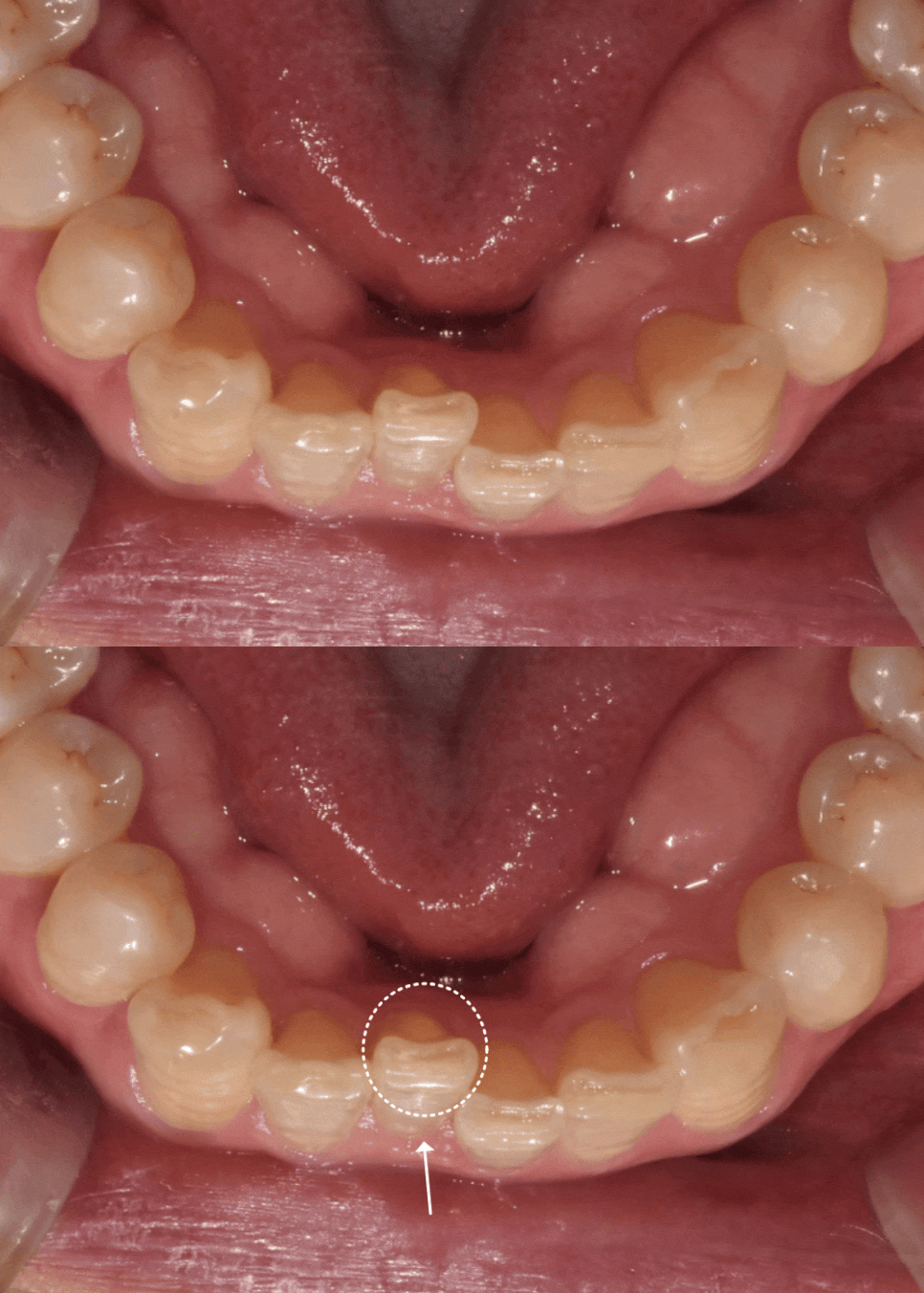 230613
Looking down at the tooth line from above,
what should have been a smooth U-shaped arch
had become bent into a 'ㄷ' shape because of the front tooth.
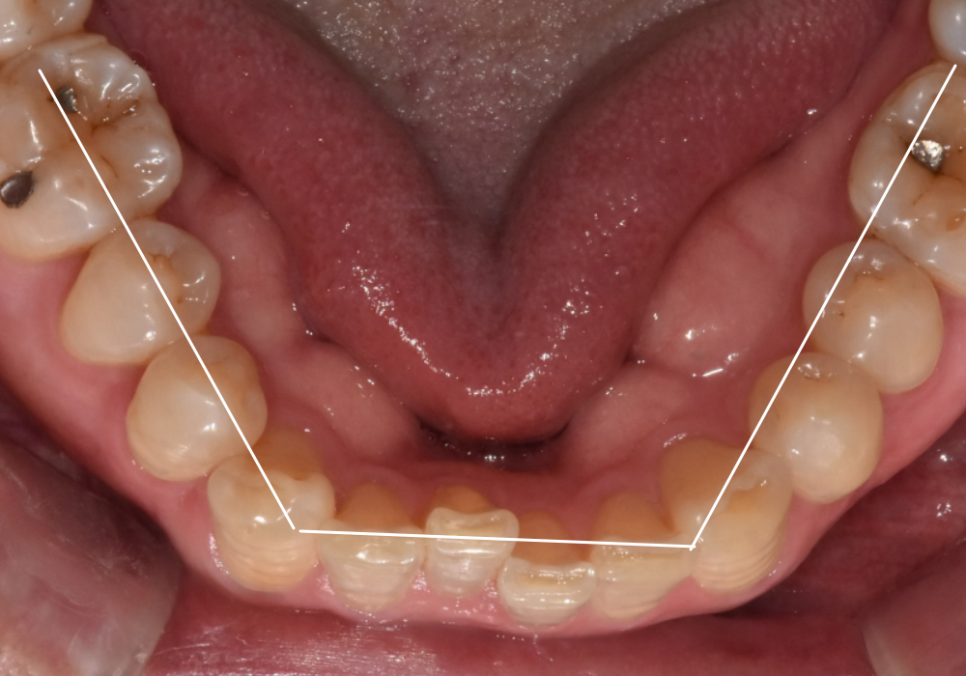 230613
In cases like this, there’s no need to launch a major full orthodontic procedure.
If you simply bring the inward tooth slightly outward,
the tooth alignment can become neat almost like magic.
After explaining this thoroughly to the patient,
we began efficient partial orthodontic treatment,
focused only on the necessary area.
- Confident in social life,
smart self-ligating "Clippy-C"
Myeongil Station front teeth partial orthodontics
For young adults who are active in social life,
when considering orthodontics, aesthetics and efficiency are often the most important factors.
This patient also said that metal brackets, often called "railroad tracks," felt like too much of a burden,
so we chose a self-ligating bracket called "Clippy-C."
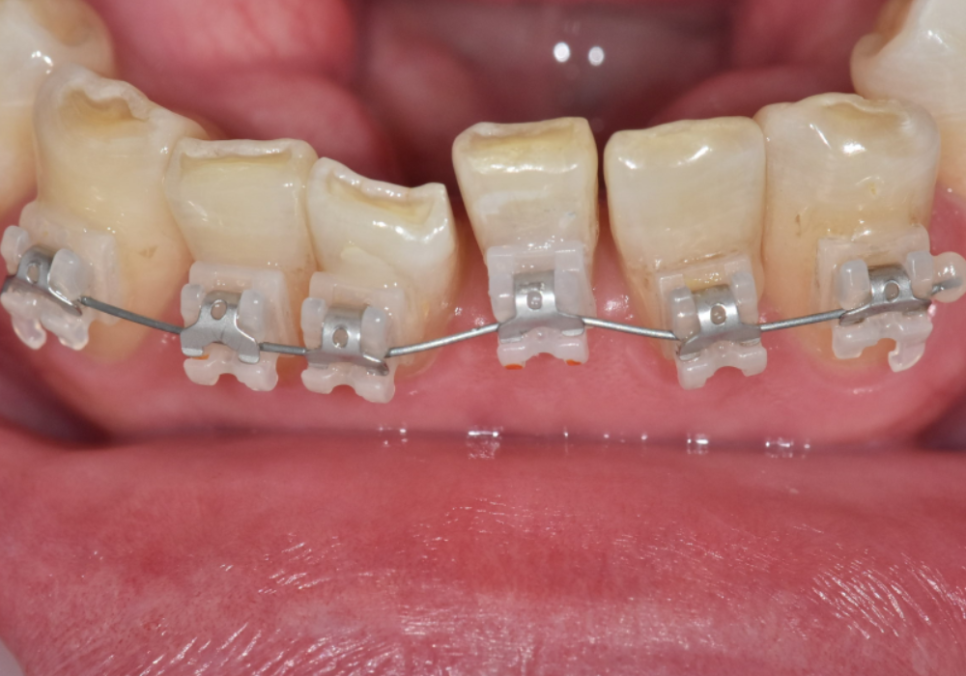 250328
The term "self-ligating" may sound a bit difficult,
but the principle is simpler than you might think.
In the traditional orthodontic method,
the wire had to be tied one by one with elastic bands or thin wire to hold it in place.
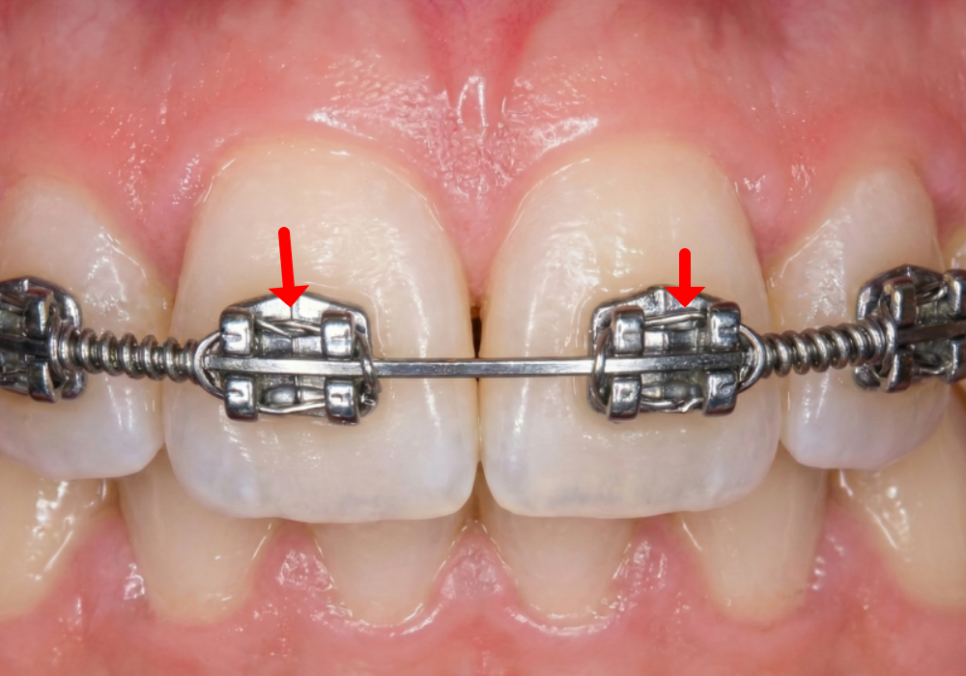 The brackets tied with thin wire (it took a long time because each tooth had to be tied individually)
But Clippy-C has a sliding cap (lid) built into the appliance itself.
To compare it, think of the difference between shoes that must be laced up one by one
and running shoes fixed by turning a dial.
With ordinary shoes, when the laces are tied tightly,
the top of the foot can feel compressed, or the laces may come loose over time,
but dial-adjusted shoes
just need a click and a turn to hold the entire foot gently and evenly, right?
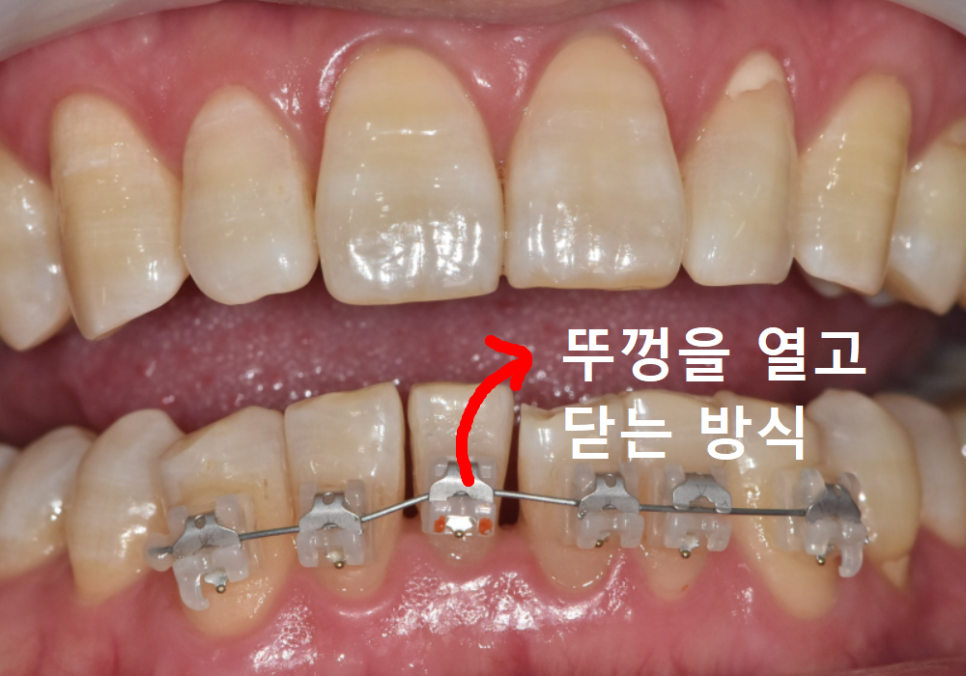 Clippy-C method (simplified by opening and closing the cap)
With Clippy-C, the wire is inserted and the cap is simply closed to secure it,
so the process is much simpler.
As a result, appointment time is shorter,
and there is less friction and less pain.
In addition, because it is a ceramic material similar to tooth color,
it looks much more natural than metal appliances,
which is a major advantage because it is less noticeable.
- How do we bring an inwardly hidden front tooth outward?
Myeongil Station front teeth partial orthodontics
To move a front tooth that has tucked inward forward,
there is an initial task that must be solved first.
We need to create an "empty space" for the tooth to move into in advance.
If the teeth are packed tightly together with no gaps,
there is nowhere for the tooth to come out, no matter how much it is pulled.
The appliance needed at this stage is the "open coil spring."
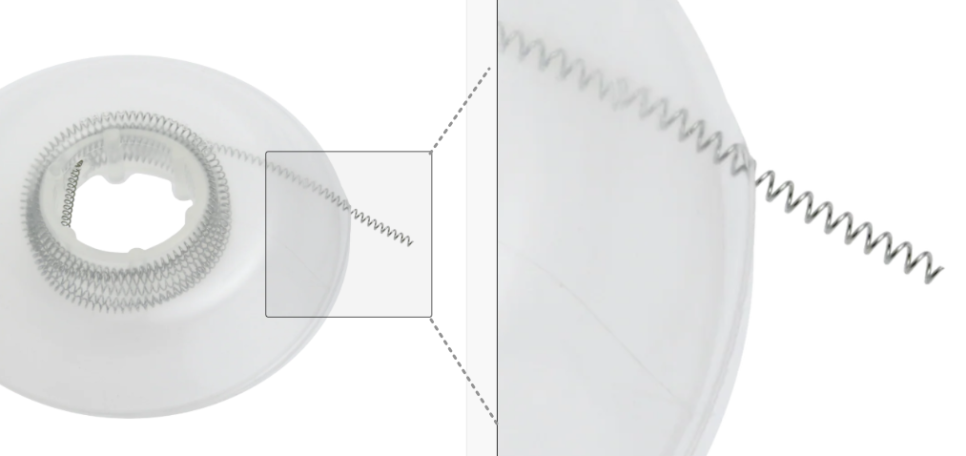 Open coil spring
As the name suggests, it is an appliance that plays the role of opening the space between teeth.
The principle is surprisingly simple.
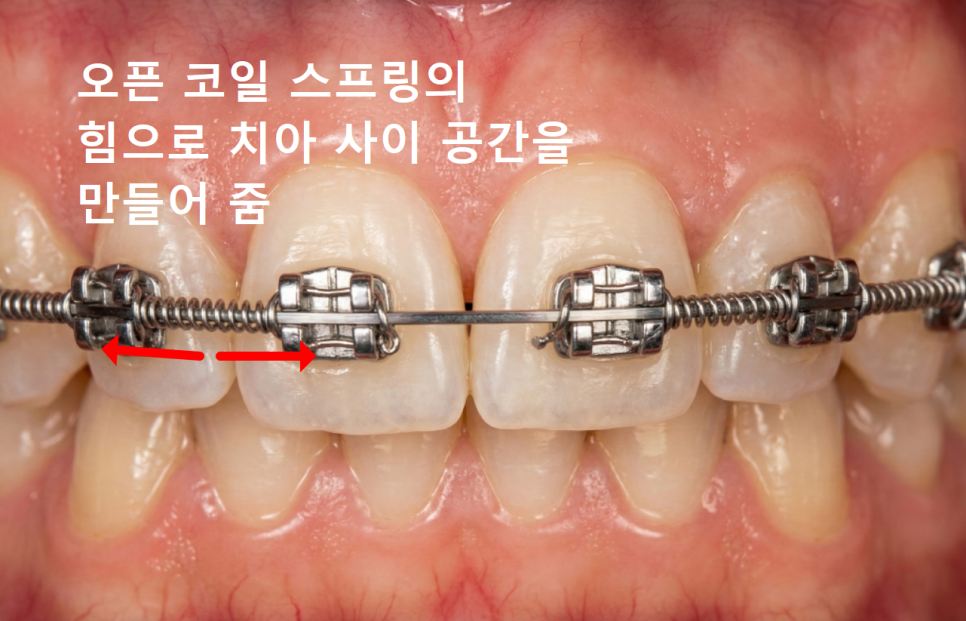 Myeongil Station front teeth partial orthodontics
When a compressed spring is placed between teeth,
just like a spring door that snaps back when pushed,
the spring generates a force that tries to expand back to its original length.
This force gently pushes the surrounding teeth aside,
creating space.
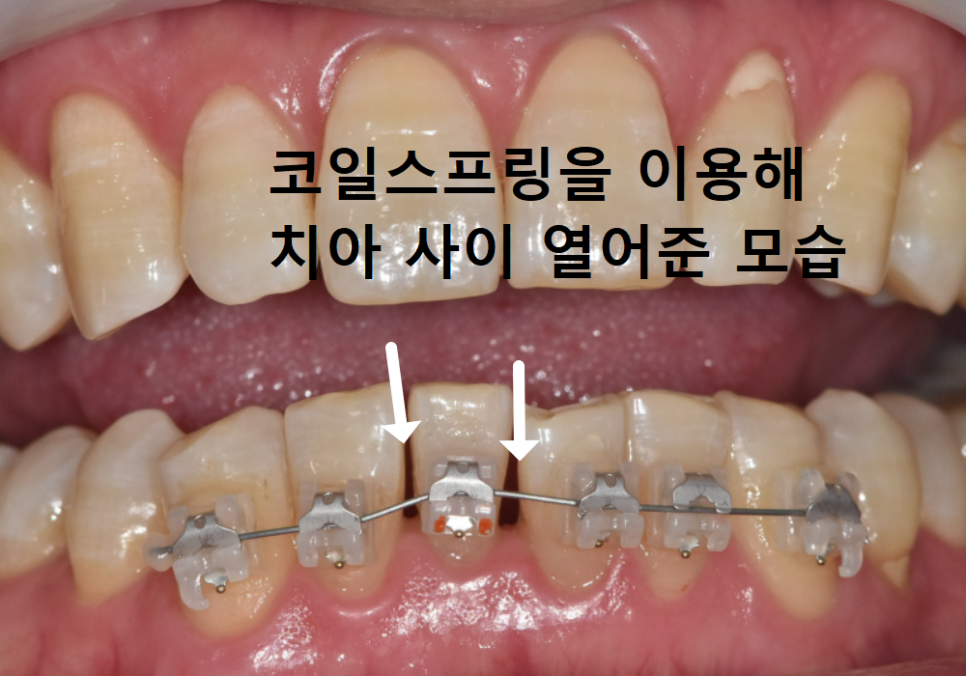 250328
For this patient, the spring was used for about one month.
Depending on the amount of space needed,
it can take as little as 2 weeks or as long as 2 months.
- The completion of orthodontics lies in "retention"
Myeongil Station front teeth partial orthodontics
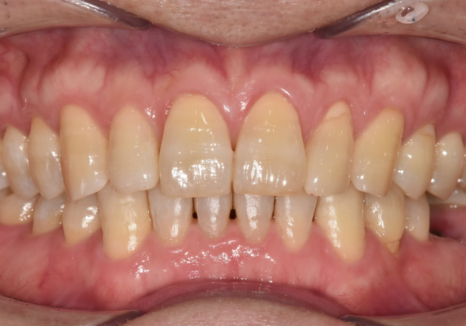
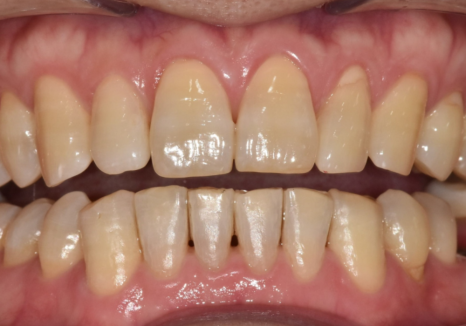
After 8 months,
we finally removed all the brackets.
It was a very rewarding moment for both the patient and me
as we confirmed the smooth tooth surfaces.
 250721
At this point, there is one more very important step that must not be forgotten.
That is the retainer.
Our teeth have a stubborn tendency to try to return to where they originally lived.
Especially right after orthodontic treatment,
the tissues around the teeth have not yet fully settled,
so if care is neglected,
the beautifully aligned teeth you worked so hard for can shift again.
 250721
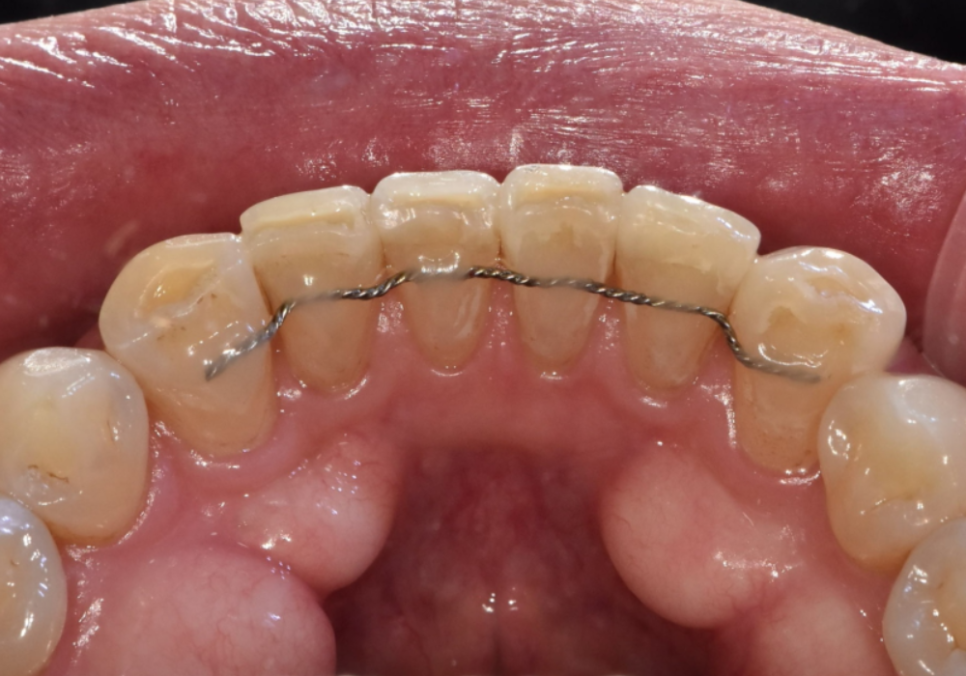
So for this patient as well, we made a fixed retainer
by attaching a very thin wire to the back of the front teeth.
It is completely invisible from the outside,
and because you quickly get used to the feeling of it touching the tongue,
it can firmly maintain the tooth alignment
without discomfort in daily life or while eating.
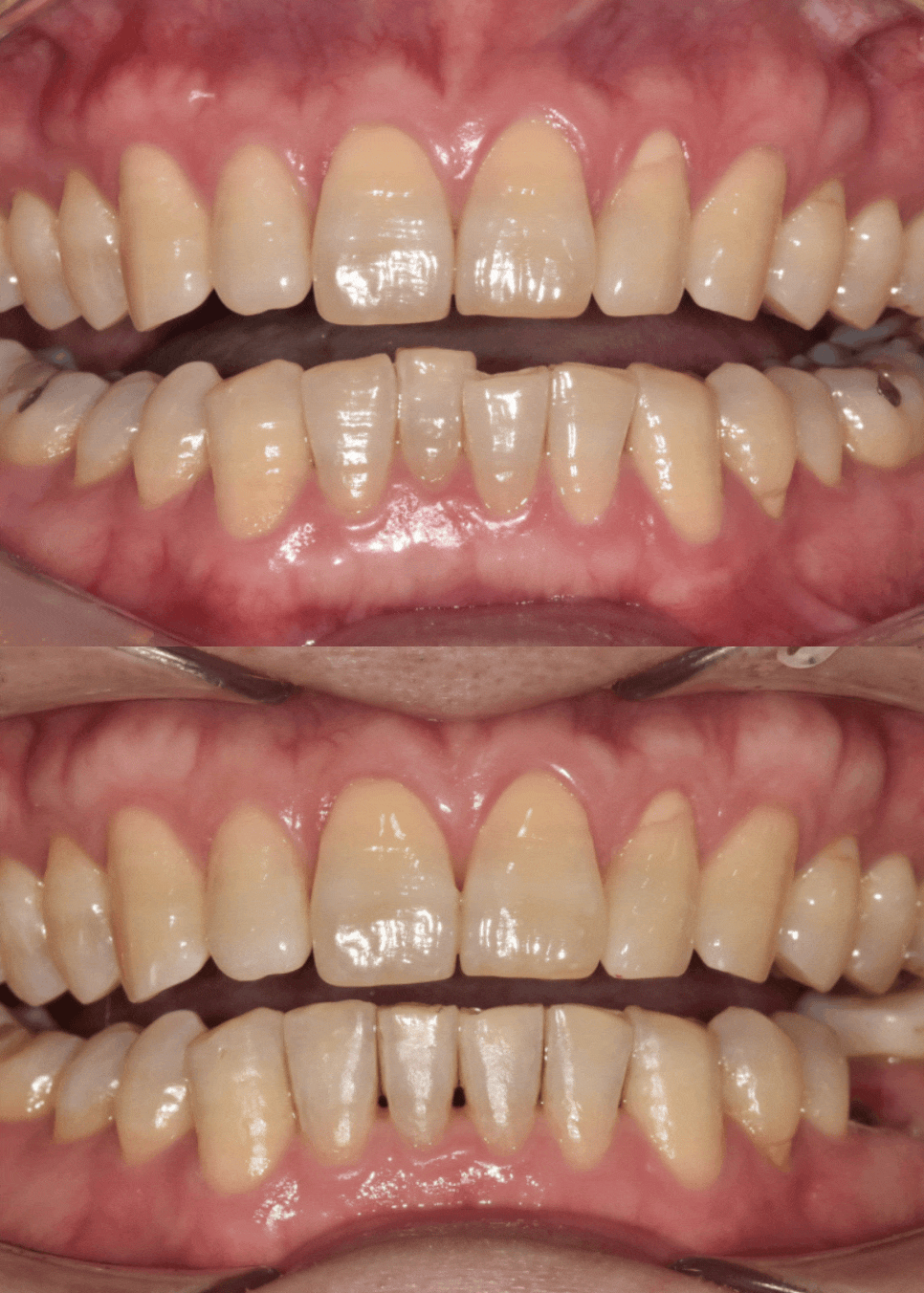 230613 (Before) 250721 (After)
This shows the front tooth that had tucked inward,
making the overall alignment look crooked,
now back in its proper place.
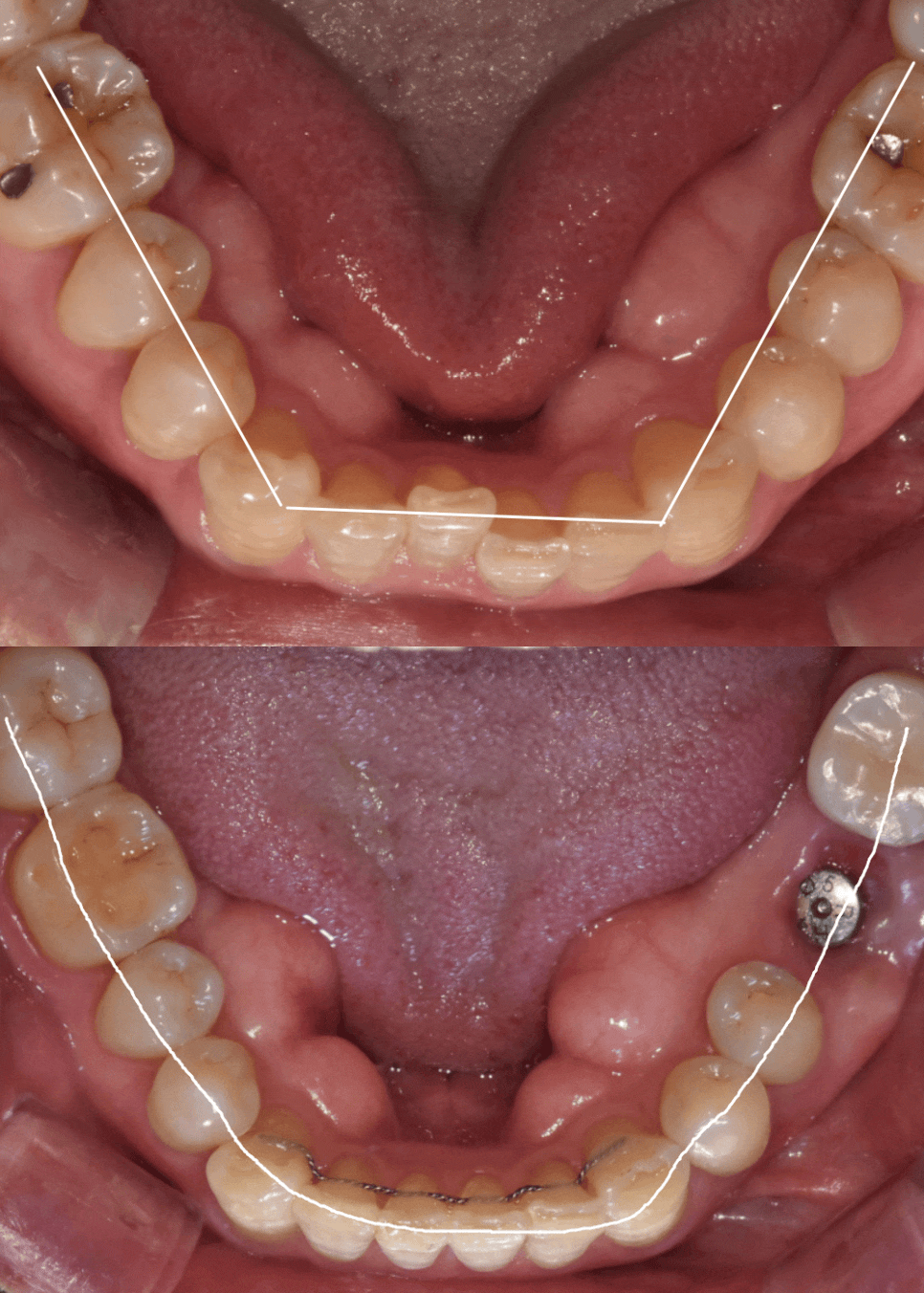 230613 (Before) 250721 (After)
Whether full orthodontic treatment is needed
or partial orthodontics is enough
requires an accurate diagnosis.
But if only one or two front teeth are crooked
and the molar bite is fine,
partial orthodontics alone can be enough
to create neatly aligned teeth.
Especially self-ligating brackets offer shorter appointment times and less pain,
making them suitable for busy office workers and students.
Thank you for reading this long post today. ^^
▼Check the clinic location▼
Myeongil Station front teeth partial orthodontics: If just one tooth looks crooked, there’s no need to get full orthodontic treatment.
| Go to make a reservation call |
|---|
| 02-481-4278 |