Hello,
I’m the director of Seoul Bardi Dental Clinic.
"It was filled with amalgam before,
so if it doesn’t hurt, can I just keep using it?"
This is one of the most common
questions we hear during checkups.
The silver-colored "amalgam," which looks different from tooth color,
is such a long-used material that many people
leave it alone if there seems to be no major issue.
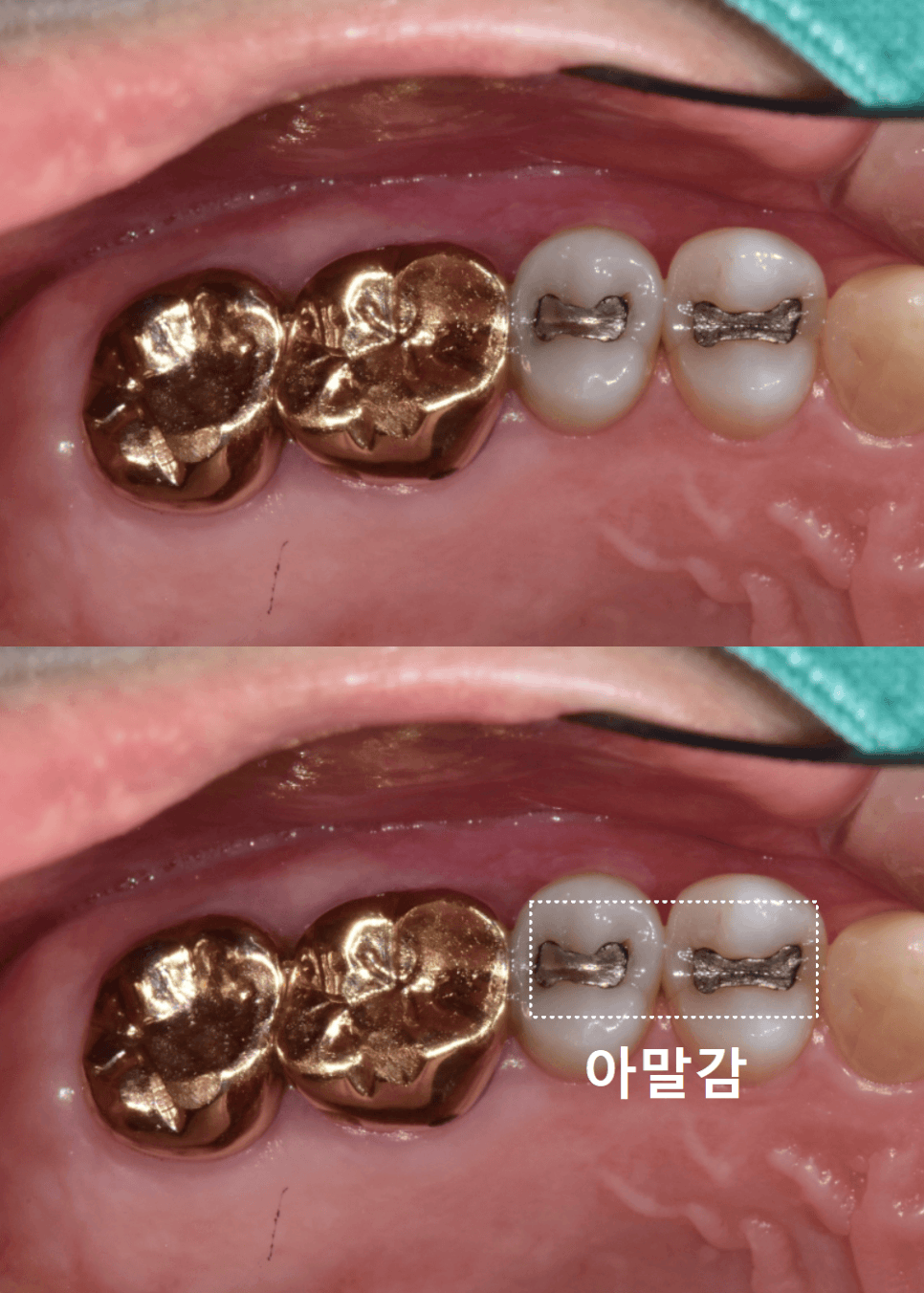
I also often tell patients,
"If there’s no problem, there’s no need to replace it in advance."
But if secondary decay is quietly spreading inside
an amalgam that looks fine on the surface,
the story changes.
Today, through a painful case in which a natural tooth
that we wanted to save ultimately could not be preserved,
I’d like to once again emphasize
the importance of regular checkups.
- Is amalgam automatically a bad material?
Amalgam Fracture: It Broke a Little, but a Secondary Cavity Caused Half the Tooth to Break
Amalgam is a material made by mixing metal powders
such as silver and copper with mercury,
and it has been used in dentistry for more than 100 years.
It is covered by health insurance, so it is inexpensive,
and it has the clear advantage of being durable.
However, because it is not bonded directly to the tooth
but packed into the cavity,
small gaps can easily form between the tooth
and the material over time.
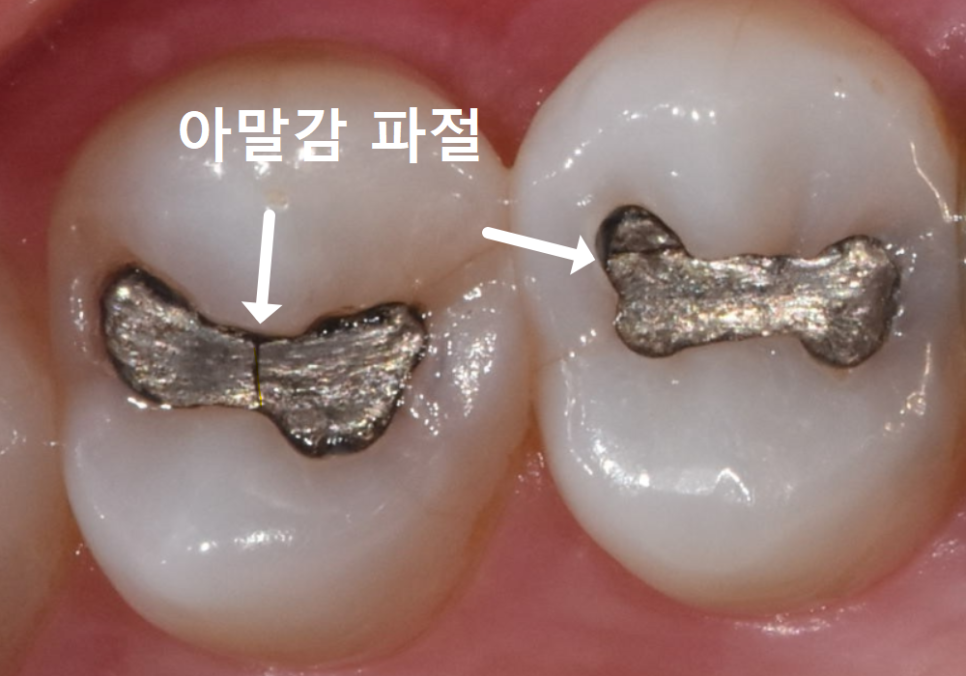
Since it is metal, corrosion can also cause the tooth
to become darkly discolored.
In fact, if it is well maintained, it can last comfortably
for more than 10 years,
but it is important not to miss the signs
that it is nearing the end of its lifespan.
- When is it best to replace amalgam?
Amalgam Fracture: It Broke a Little, but a Secondary Cavity Caused Half the Tooth to Break
If there is no problem,
there is no need to replace it in advance.
But in the following cases,
you should look more carefully.
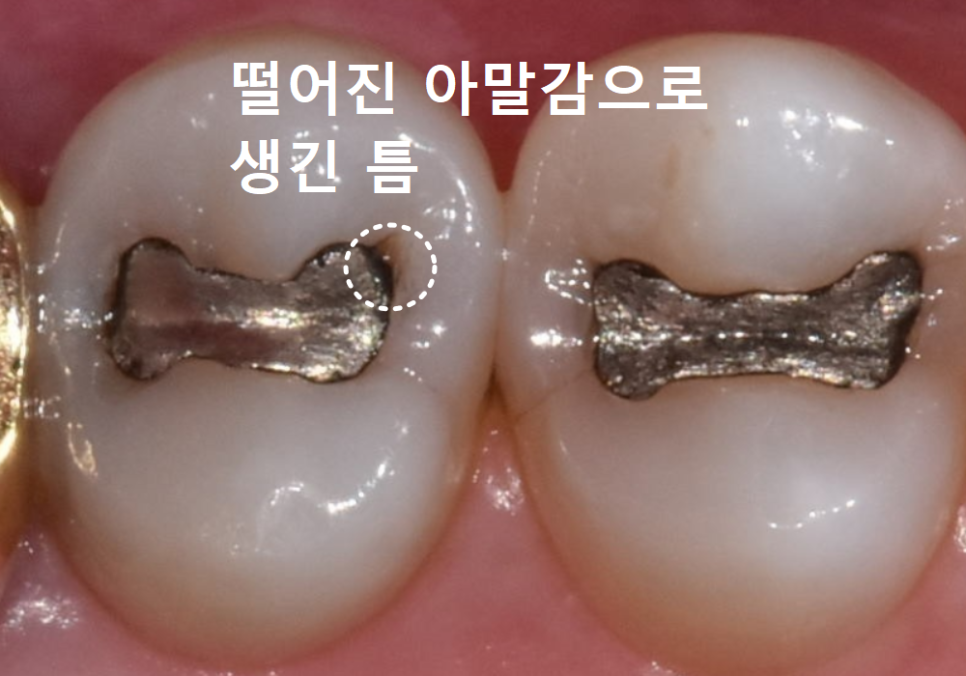
-
If a black line is visible around the amalgam
or a gap has opened up
-
If part of the amalgam has broken off or fallen out
-
If you feel sensitivity to cold water
or discomfort when chewing
This is because once a gap forms,
bacteria can enter through it and cause secondary decay
that eats away at the inside of the tooth.
Even if it looks fine on the outside,
the inside may already be damaged.
- The danger of painless secondary decay,
and why the patient came in with a broken tooth
Amalgam Fracture: It Broke a Little, but a Secondary Cavity Caused Half the Tooth to Break
Recently, a patient who came to our clinic
had a broken lower left premolar.
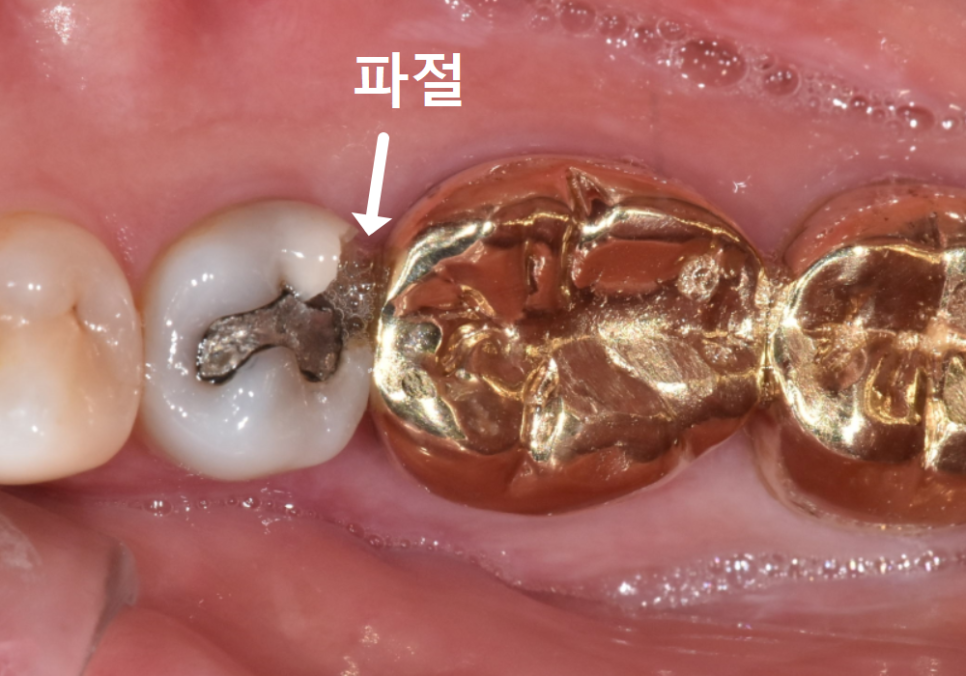 231004
The amalgam that had been treated long ago
had gradually come apart,
but because there was no pain,
the patient kept using it as is.
However, when we performed a detailed examination,
the situation was more serious than expected.
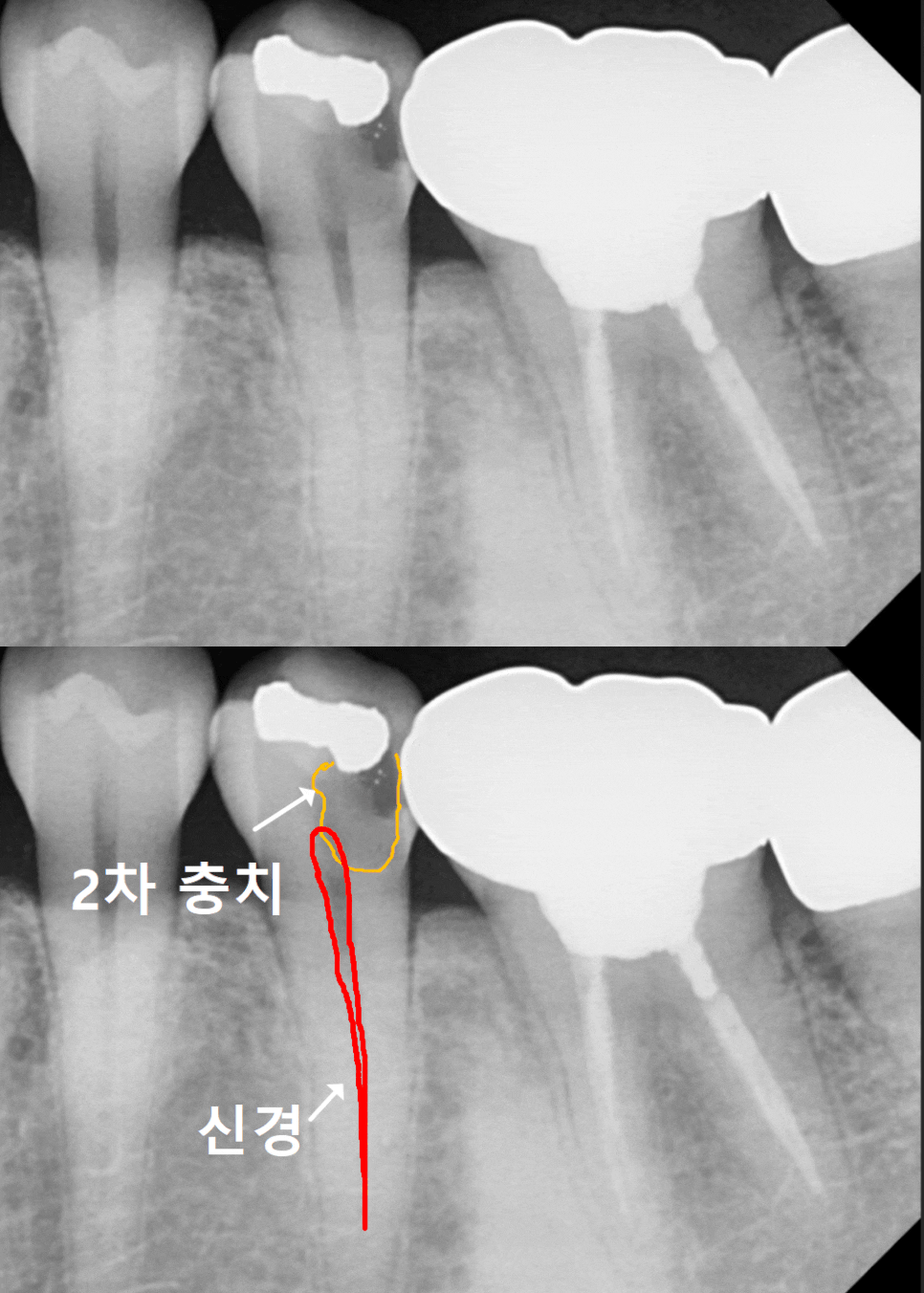
Secondary decay had progressed very deeply
under the amalgam.
 231004
It was similar to a worm leaving the outside of an apple
and eating only the inside.
As the soft tissue inside the tooth
had become hollow from decay,
it eventually could not withstand chewing force,
and half the tooth broke off..ㅜㅜ
- We tried to preserve the tooth, but why extraction was decided
Amalgam Fracture: It Broke a Little, but a Secondary Cavity Caused Half the Tooth to Break
As someone who values natural teeth
above all else,
I desperately wanted to save the patient’s tooth
if at all possible.
Fortunately, there was no sign of inflammation
around the root,
so we discussed the possibility of root canal treatment
and placing a crown
so the tooth could be used strongly again.
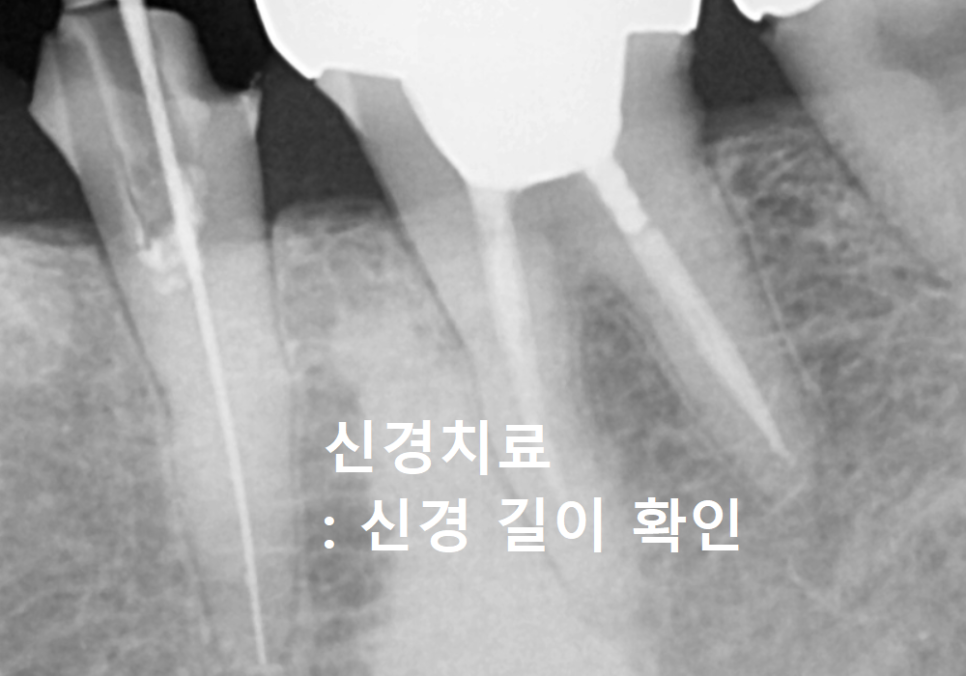
However, because of the impact when the tooth broke,
there was also a possibility of an invisible
"fine crack" in the root area,
so I explained that carefully.
I also cautiously explained in advance that if pain remained
even after the treatment was completed with great care,
extraction might be unavoidable at that point.
Since the patient also wanted to keep the tooth
rather than remove it right away,
I continued the treatment with great care
and a sincere desire to save it.
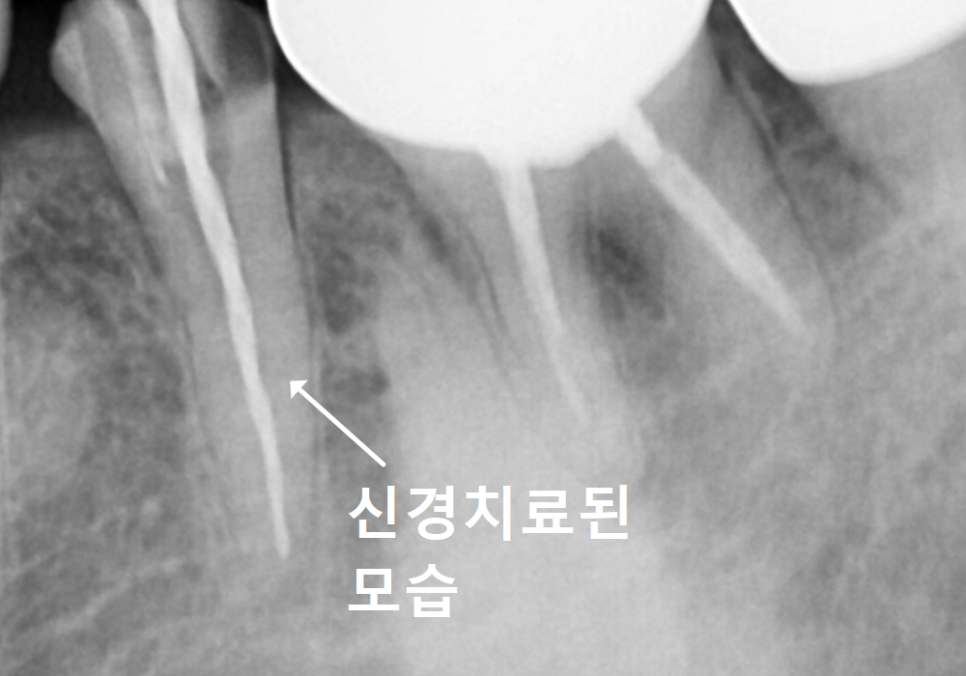
But unfortunately, even after treatment,
the throbbing pain every time the patient ate
would not go away.ㅜㅜ
In the end, we judged that the suspected crack
in the root area was the cause,
and after discussion, we decided on extraction
so the patient would not have to suffer more.
- Implant treatment process and completion of the final prosthesis
Amalgam Fracture: It Broke a Little, but a Secondary Cavity Caused Half the Tooth to Break
Fortunately, there was no inflammation spreading
around the root,
so we performed immediate implant placement
on the same day as the extraction.
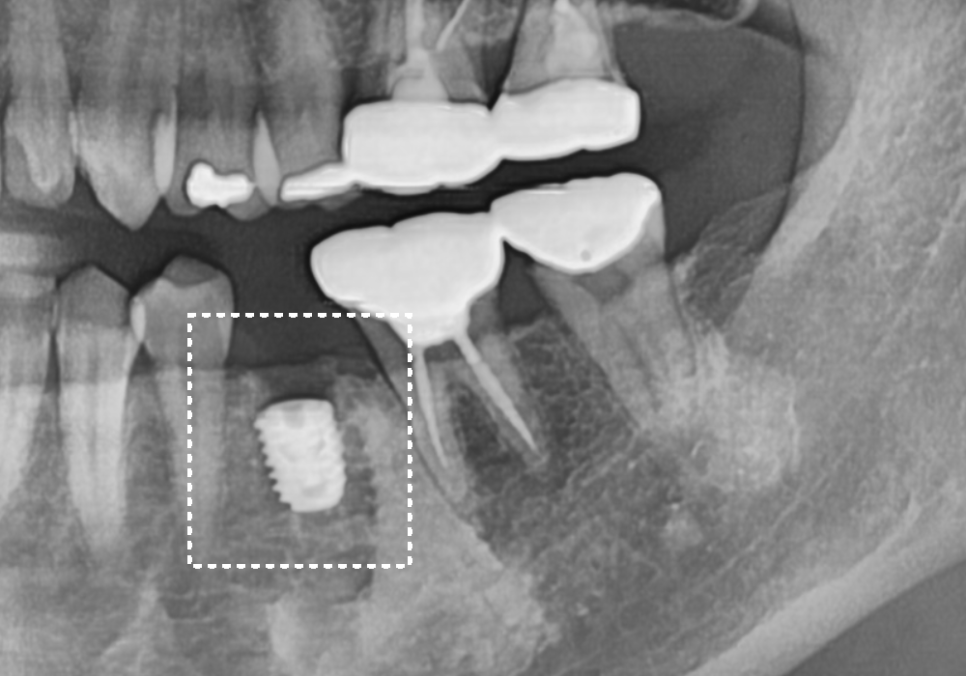 241108
We confirmed that it was placed in the most ideal position
while maintaining sufficient distance from the nerve canal.
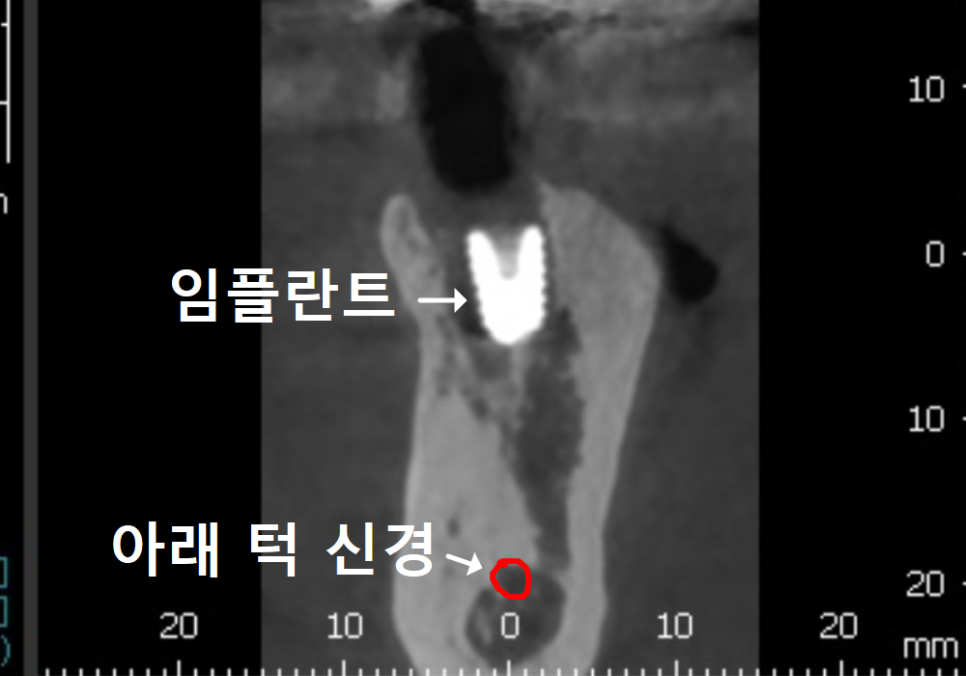 241108
Five months later, after confirming that the implant
had firmly integrated with the bone,
we moved on to the final prosthetic stage.
For implants, minimizing the margin of error
and making an accurate prosthesis is the most important thing.
We use an intraoral scanner to precisely capture
the oral structure as digital data,
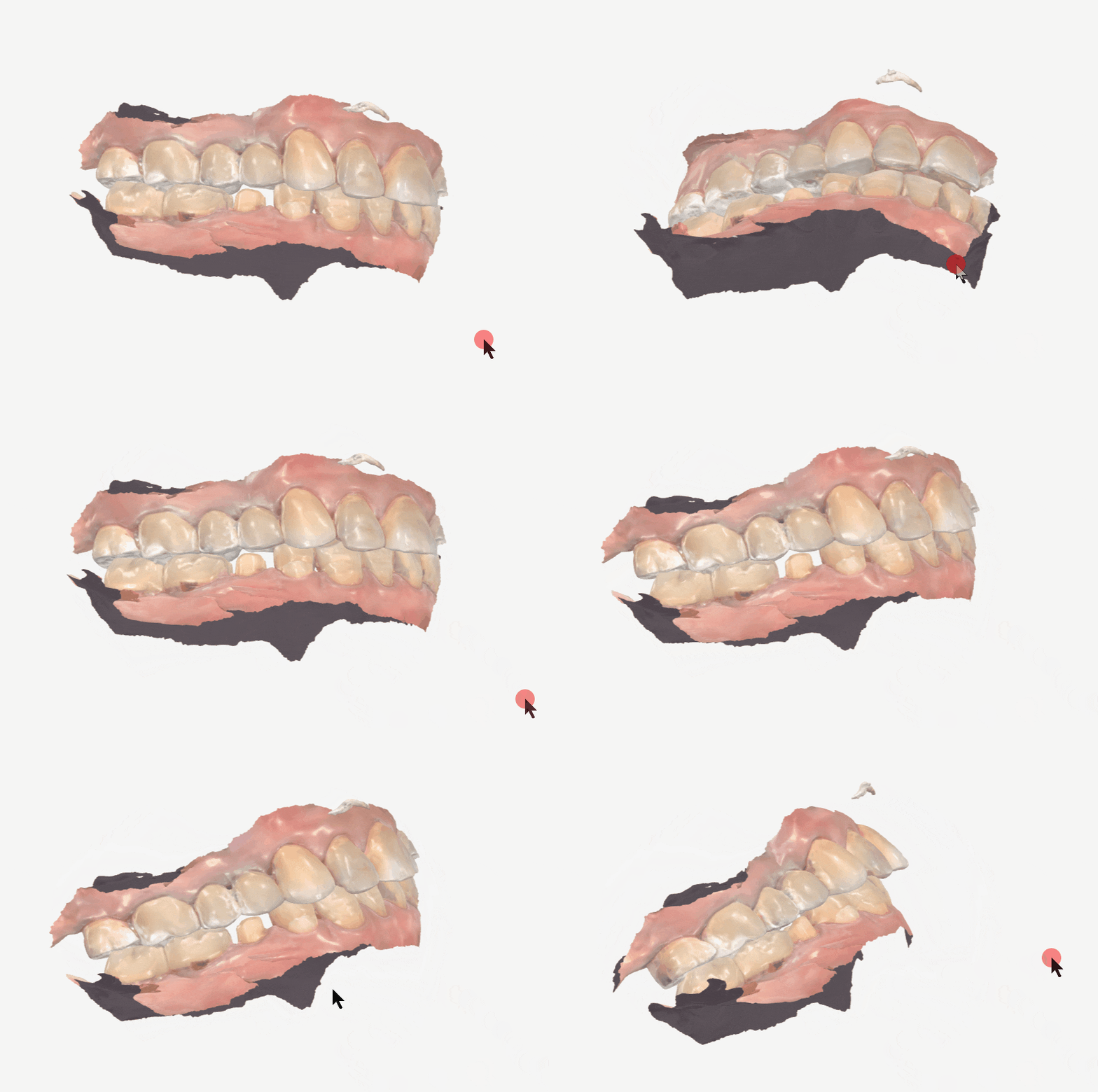
which helps minimize the minor distortions
that can occur when taking impressions with rubber material.
Based on this detailed data,
we fabricated a custom prosthesis
for this patient in our in-house lab.
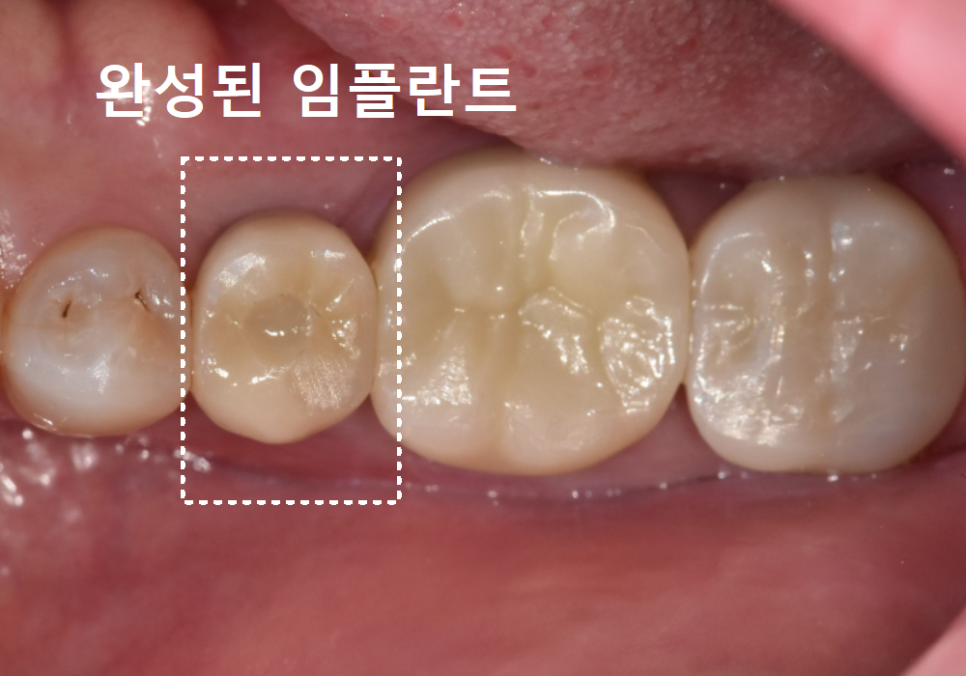 251121
I personally checked and finely adjusted it
so that it would fit well with the surrounding teeth,
and now the patient is eating comfortably again,
just like before. ^^
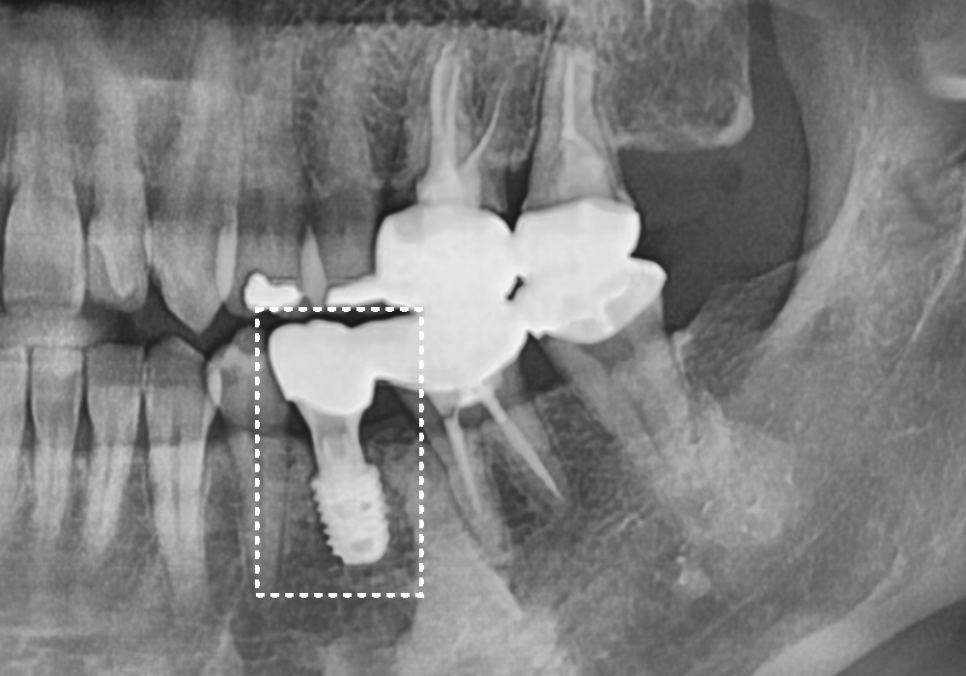 251121
As a doctor, the most difficult moments are when I have to let go of a tooth
that I believed could be saved.
But rather than forcing treatment to continue
without knowing the cause,
I believe making the right decision at the right time
is the way to protect the patient’s health.
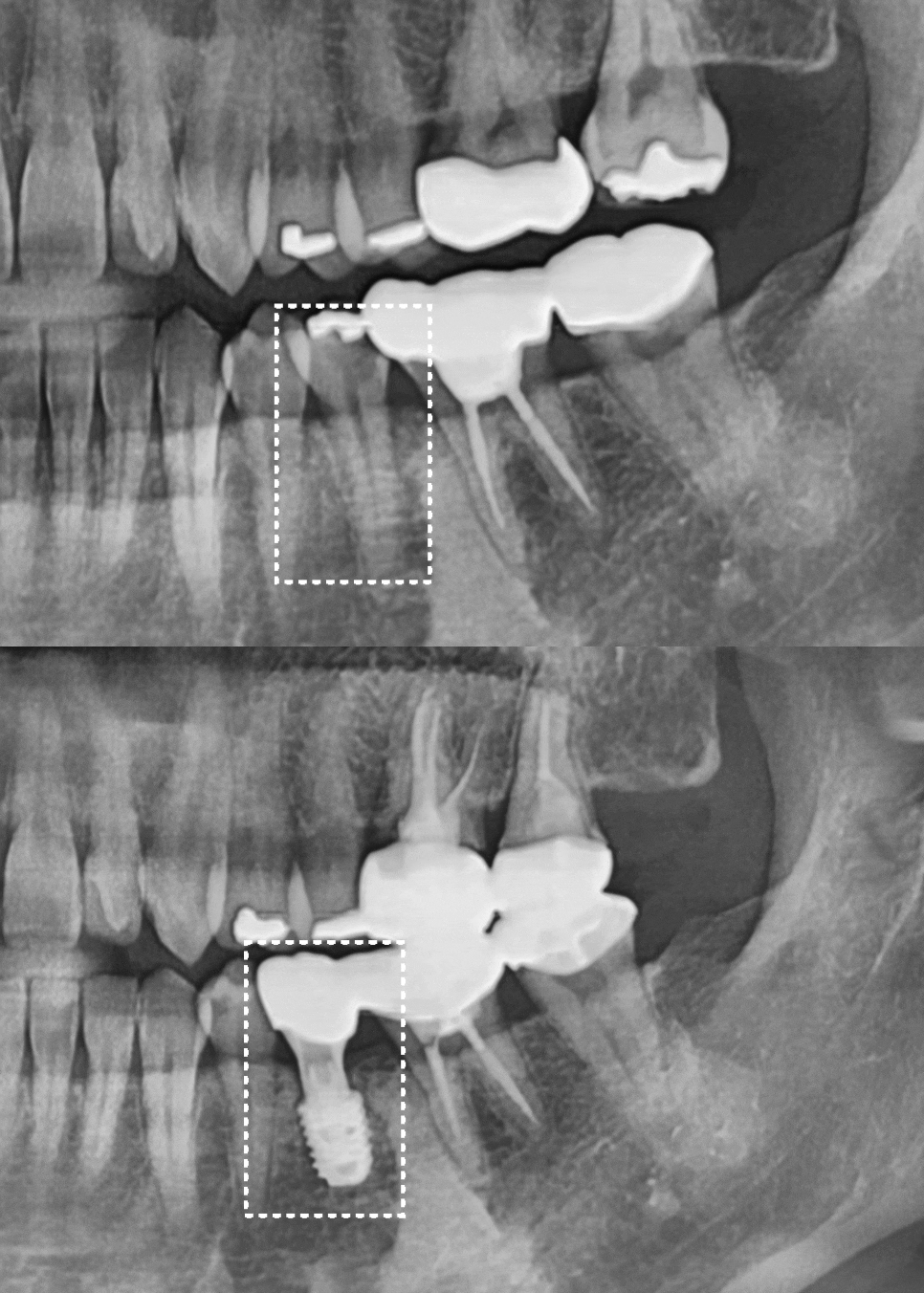 Before (231004) After (251121)
If anything seems even slightly off around an amalgam,
or if it has been more than 10 years since treatment,
please be sure to get a regular checkup.
Just because there is no pain
does not mean everything inside the tooth is fine.
I will always think with you
so we can protect the lifespan of your precious teeth.
Thank you. ^^
▼Check the dental clinic location▼
Amalgam Fracture: It Broke a Little, but a Secondary Cavity Caused Half the Tooth to Break
| Go to make a reservation call |
|---|
| 02-481-4278 |
| This post was written directly by Seoul Bardi Dental Clinic for the purpose of providing medical information, in compliance with Article 56, Paragraph 1 of the Medical Advertising Act. We recommend that the information provided be used for reference only, and that symptoms and accurate management methods be obtained through a visit to a medical institution and consultation with medical staff. All procedures / surgeries performed at the dental clinic may involve possible side effects depending on the individual (inflammation, bleeding, swelling, etc.). Please decide after sufficient consultation with medical staff in advance. The treatment cases in this post were photographed with the consent of patients who completed treatment at our clinic, and the before-and-after photos were taken under the same conditions. |