Hello.
I am the director of Seoul Bardi Dental Clinic.
"If an implant is placed once,
doesn't it just work forever without any problems?"
This is one of the questions I hear from patients very often.
Of course, if they are well maintained, they can remain strong for 10 or 20 years,
and even longer,
but even implants, once they become part of our body,
need care as time passes.
Shall we first look at the warning signs that old implants may show? ^^
Problems that can occur as implants get older
Old implants, looseness, and pain
- Peri-implantitis
Bacteria grow around the implant
and cause the jawbone to dissolve.
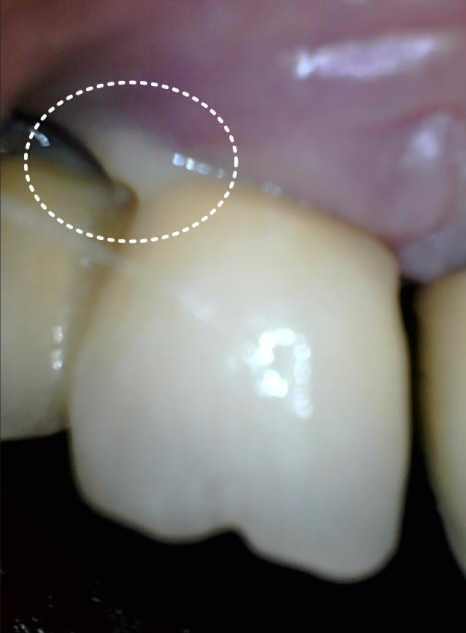
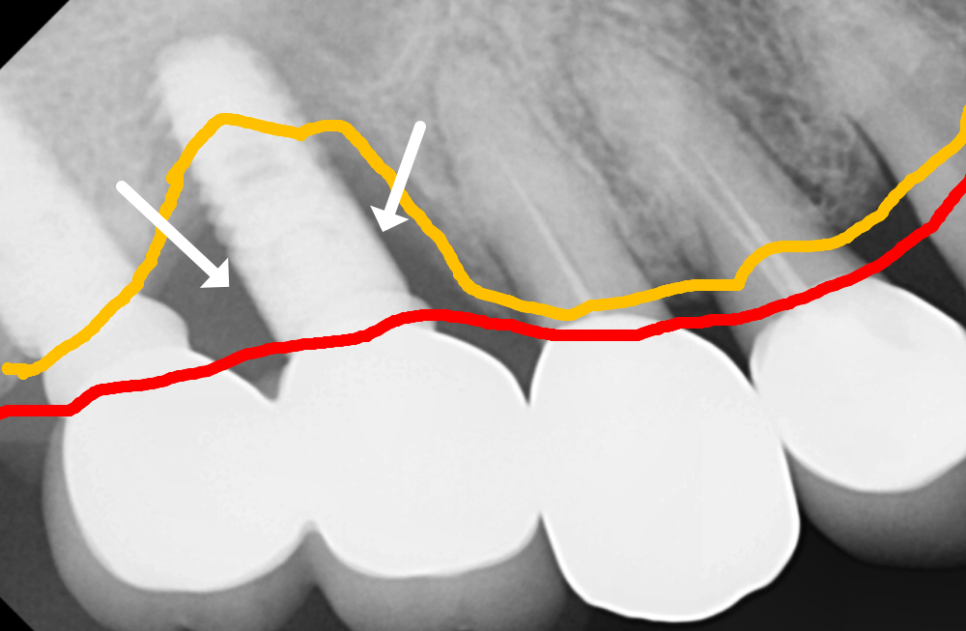
It is similar to periodontitis in natural teeth,
but because there is no nerve, pain is felt later,
so it is even more dangerous.
- Screw loosening
As the implant withstands chewing force,
the screw that connects the root and the crown
may loosen slightly.
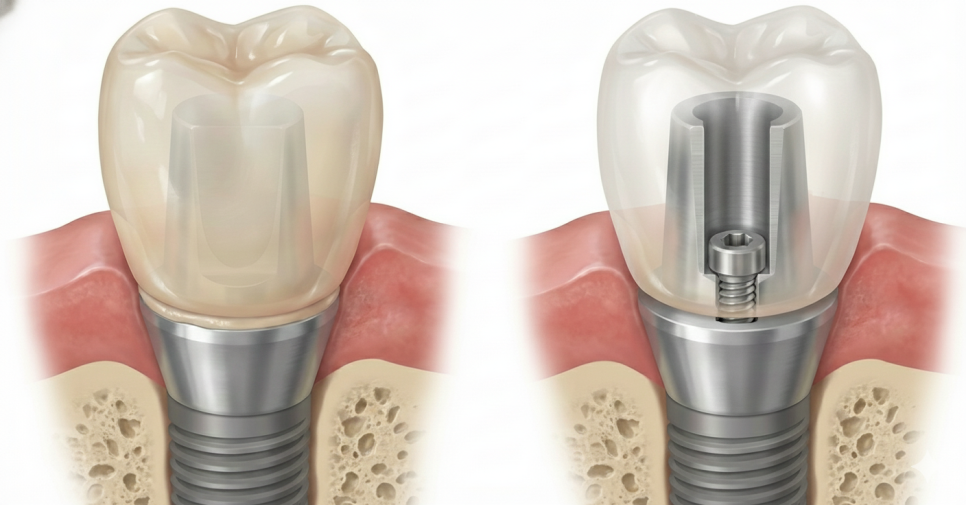
If it is not tightened right away at this point,
there is a risk that the screw may break.
- Prosthesis fracture
This is a phenomenon in which the crown portion of the implant
is broken or worn down by strong force.
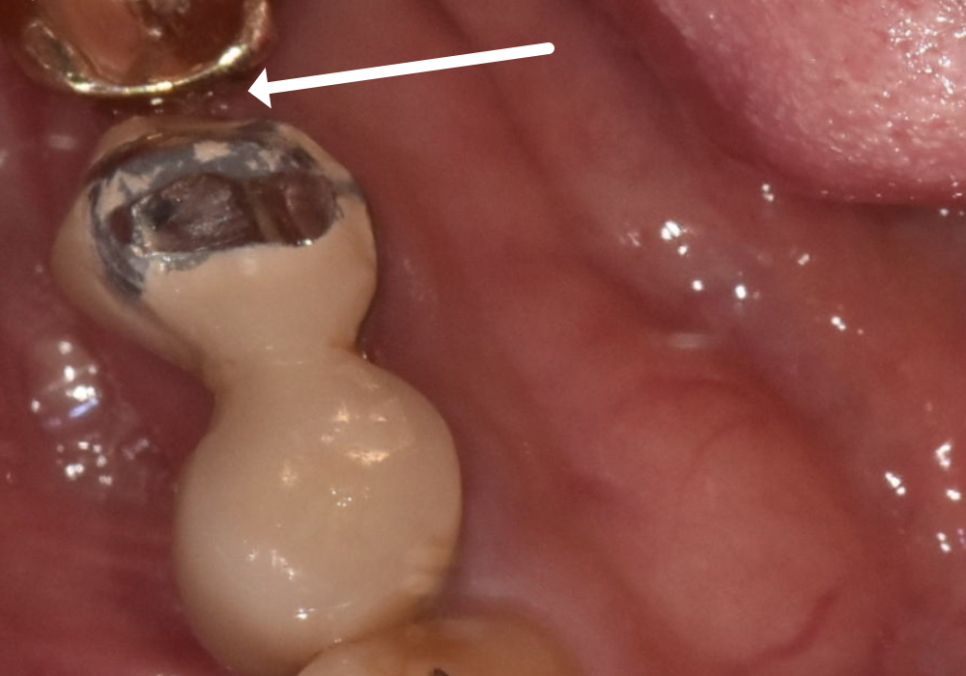
In particular, with porcelain materials, food can get packed
into the cracks where it has chipped,
which can even damage the surrounding teeth.
A patient who came in with a loose implant and pain
Old implants, looseness, and pain
Not long ago, a patient came to see us because an implant placed long ago
on the lower right side was loose and painful,
and they could hardly eat.
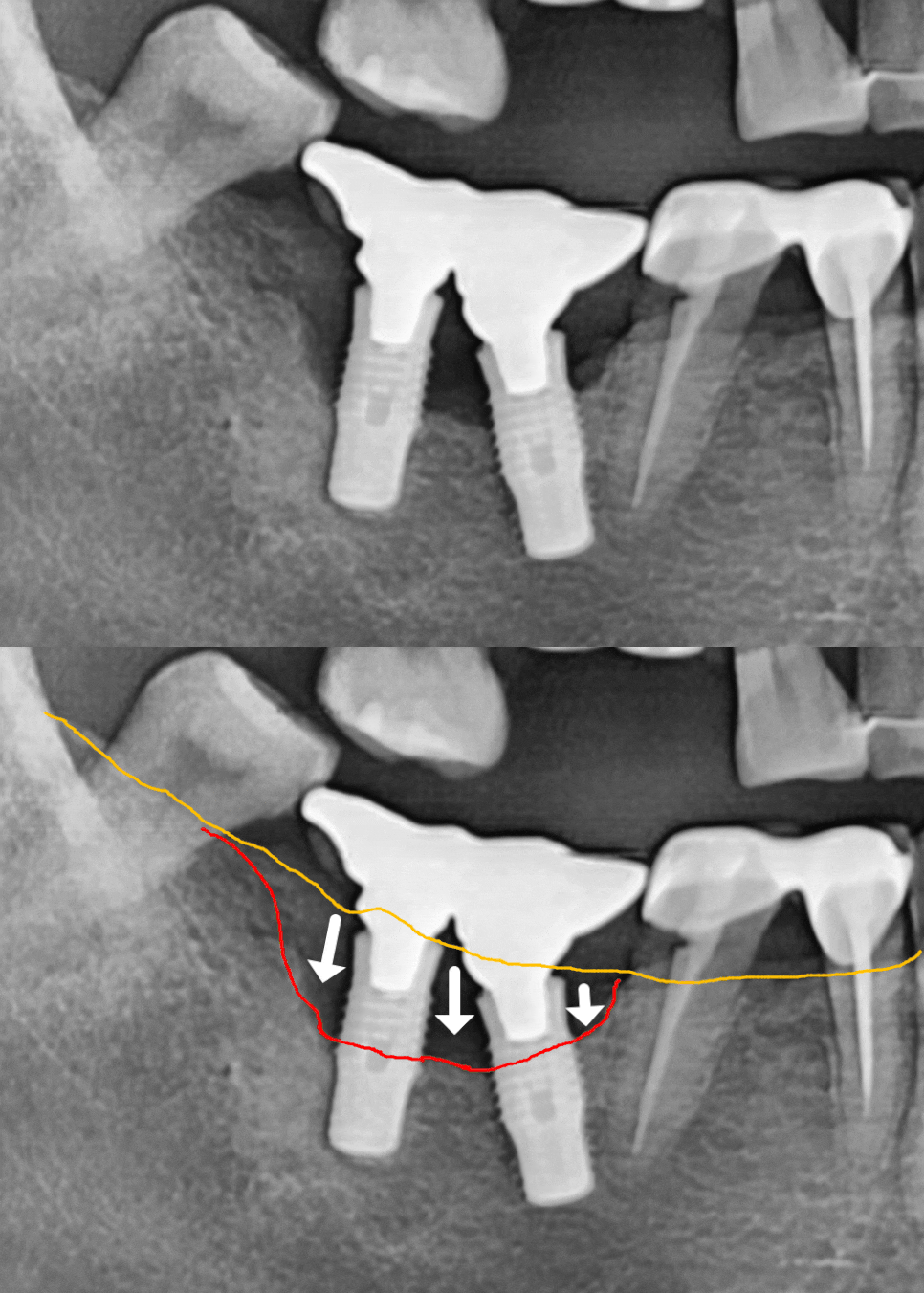
Looking at the detailed images,
the jawbone around the molar implant (#46, 47)
 251118
had been severely resorbed because of inflammation (peri-implantitis).
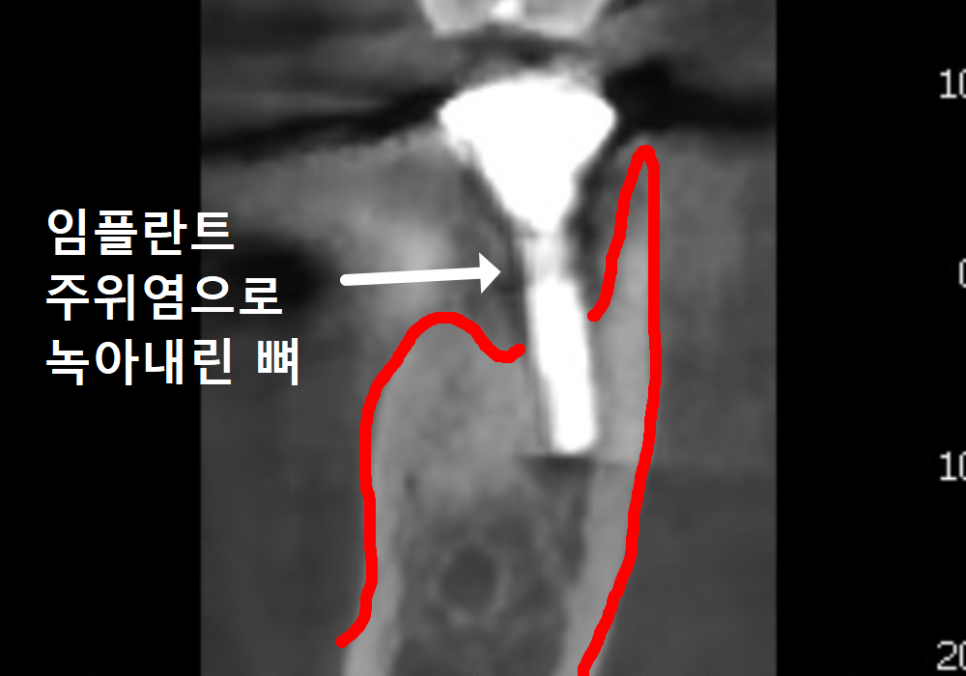
In particular, when we analyzed it with CT,
among the bones that should firmly support the implant from both sides,
one side had been completely lost due to inflammation.
 251118
In addition, the wisdom tooth at the back
was also worsening the inflammation.
What was even more unfortunate was the condition of the surrounding teeth.
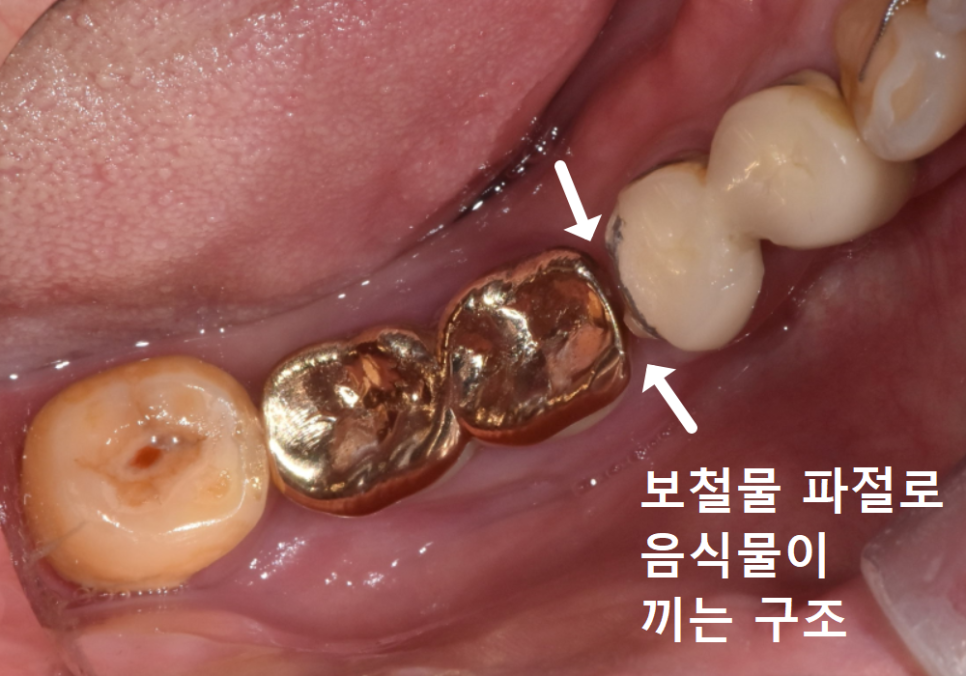
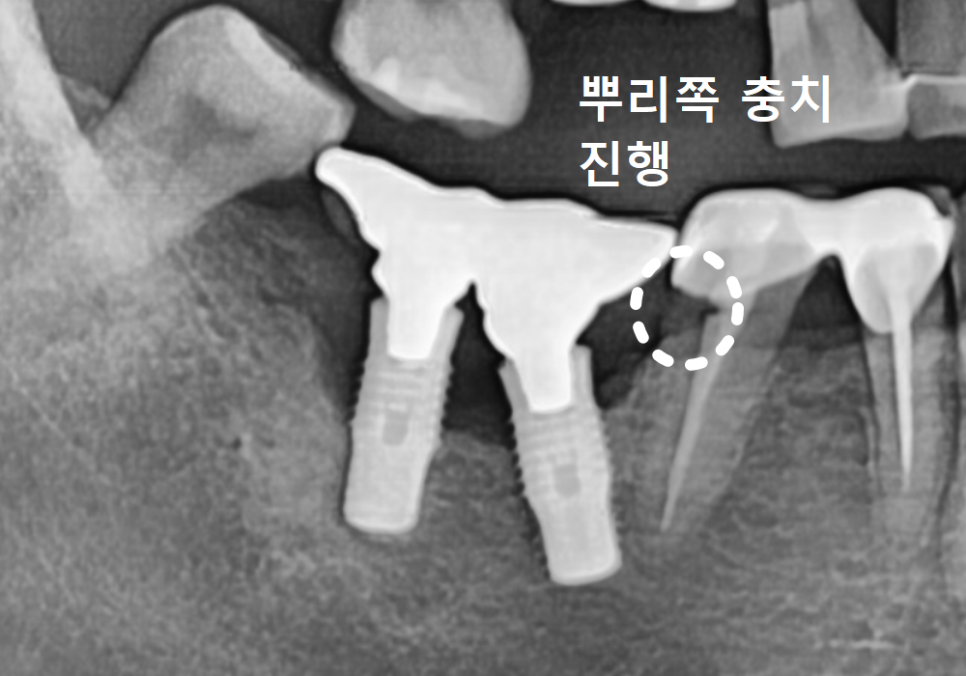
The tooth (#45) next to the implant had a porcelain crown,
but the prosthesis was broken,
 251118
and food continued to get trapped in the gap,
causing decay deep into the tooth root.
Treatment plan
Old implants, looseness, and pain
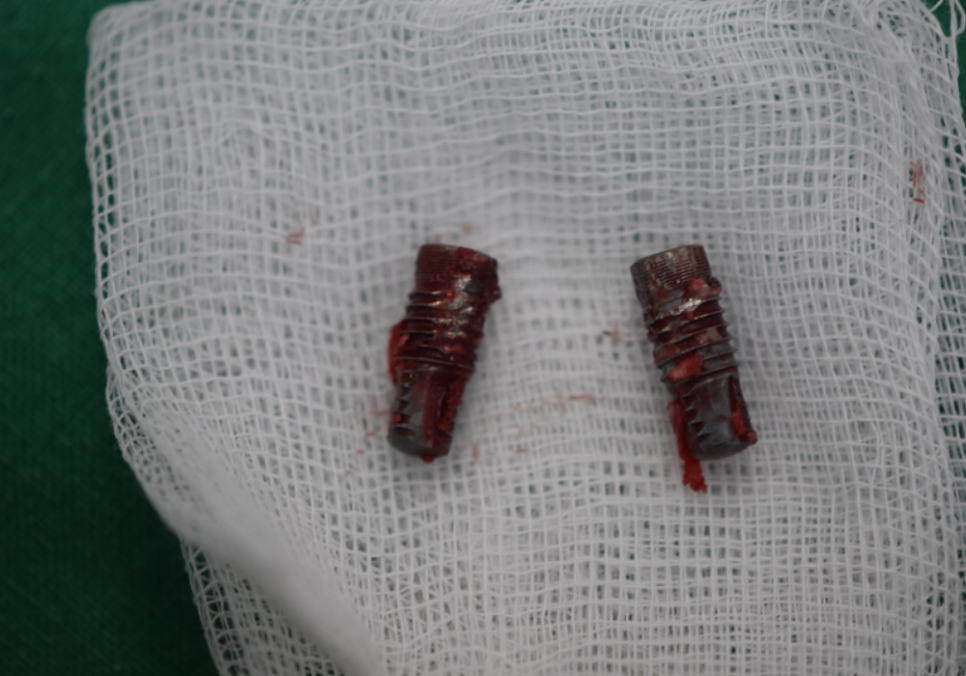
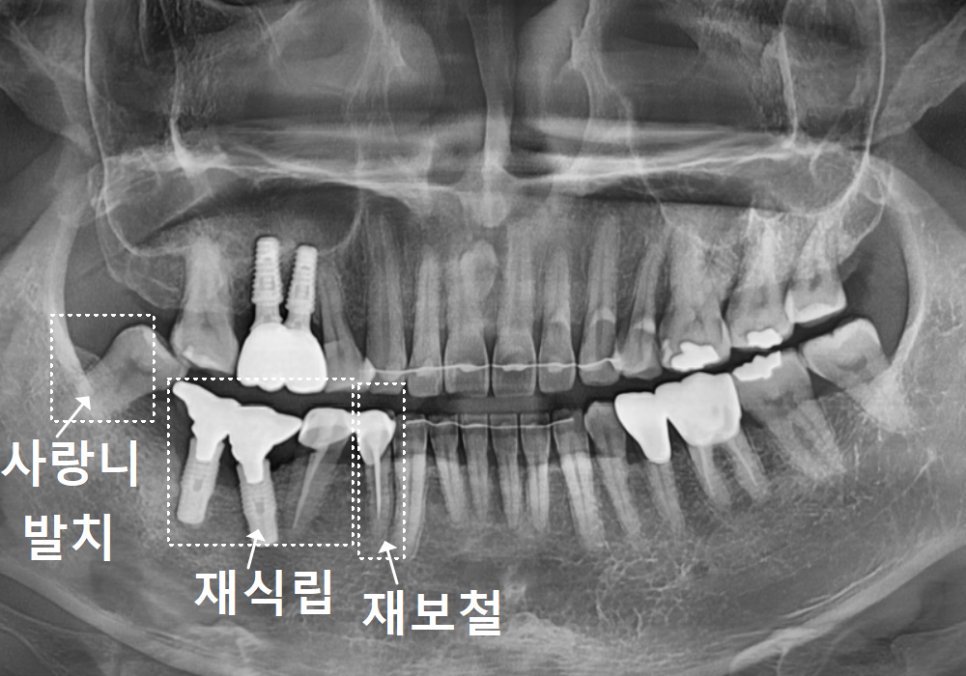
First, the wisdom tooth that was the source of the inflammation
and the implants where the bone had already dissolved
had to be extracted.
 251118
The problem was the adjacent tooth (#45).
 251118
When we removed the prosthesis, the decay was deep,
and because there was only a small amount of tooth structure left,
unfortunately we had to extract it as well.
Fortunately, the #44 tooth next to it had a strong root,
so we decided to restore it beautifully again. ^^
Here, to reduce the patient's financial burden,
I suggested a method of placing only two sturdy implant posts at both ends
and connecting the space between them with a prosthesis.
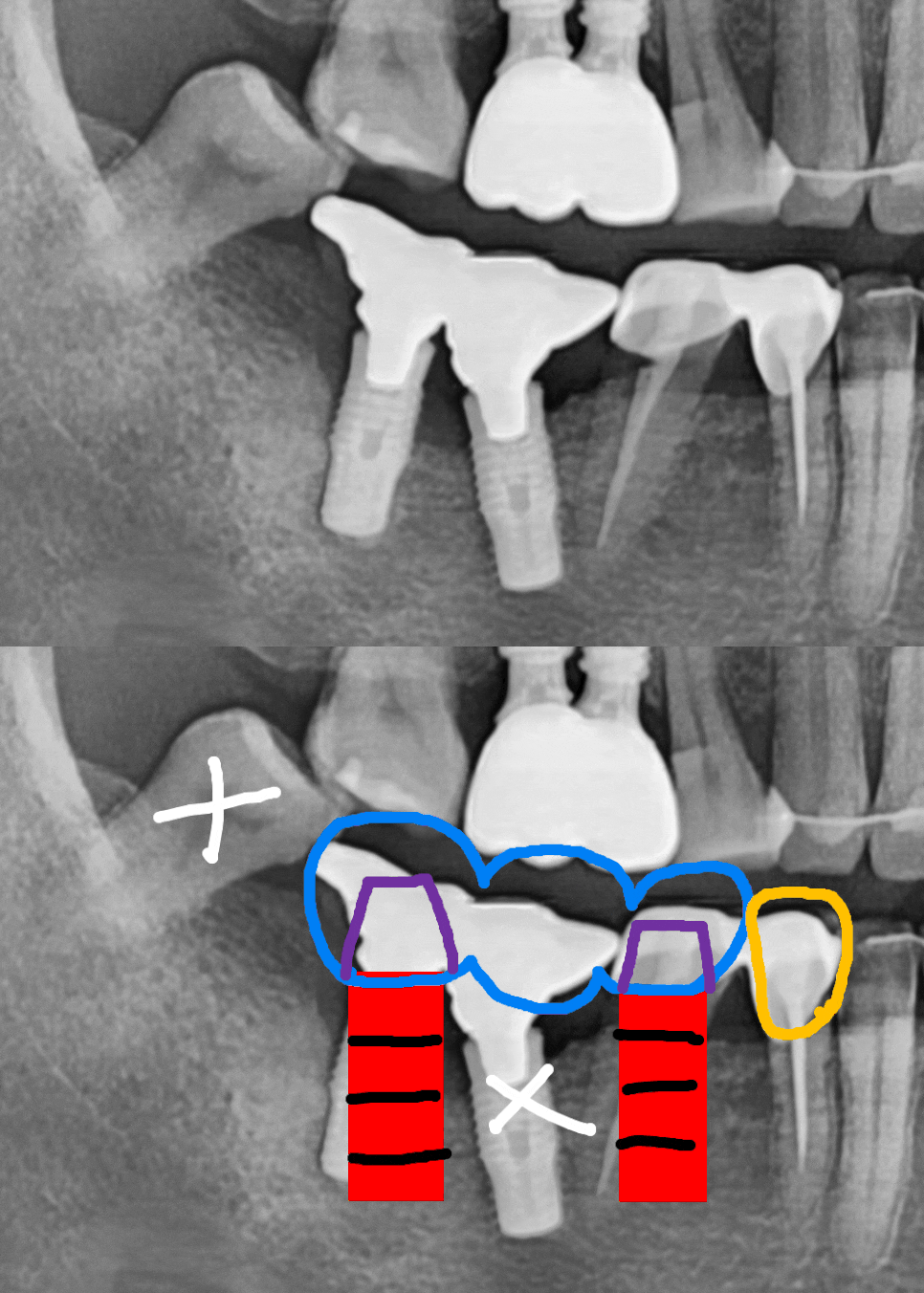
Just because three teeth were extracted
does not mean that three implants must necessarily be placed.
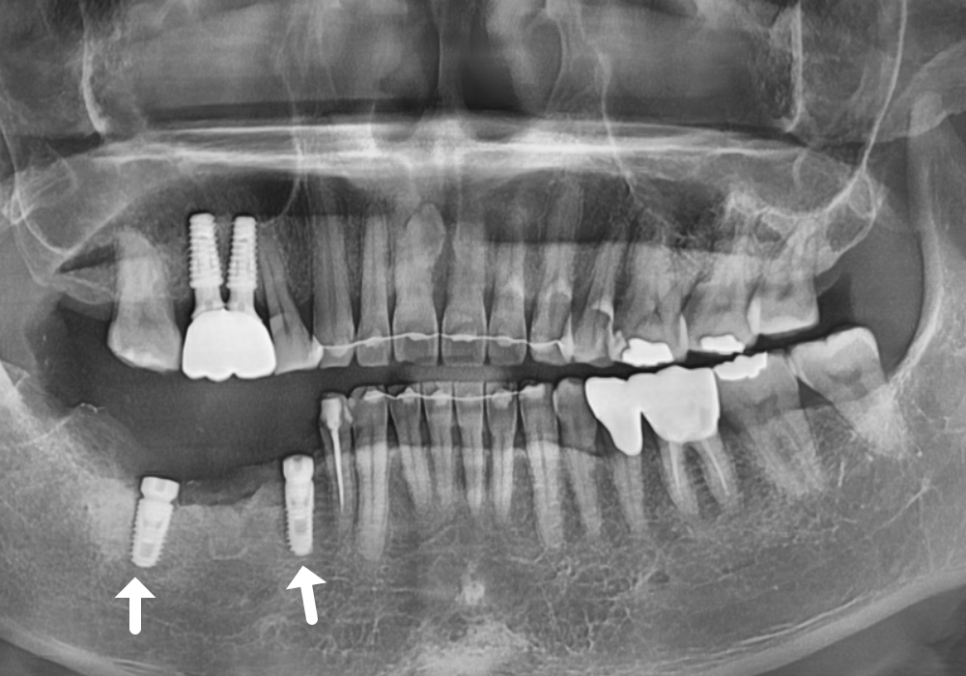
To also prevent unnecessary bone grafting,
I carefully analyzed the CT,
and safely completed the placement with bone grafting only in the area that truly needed it (#47).
 260105
3 months later, the completed implant and zirconia
Old implants, looseness, and pain
About 3 months passed after that.
After carefully checking with ISQ (stability value)
how firmly the implant root had integrated with the jawbone,
we finally placed the final prosthesis.
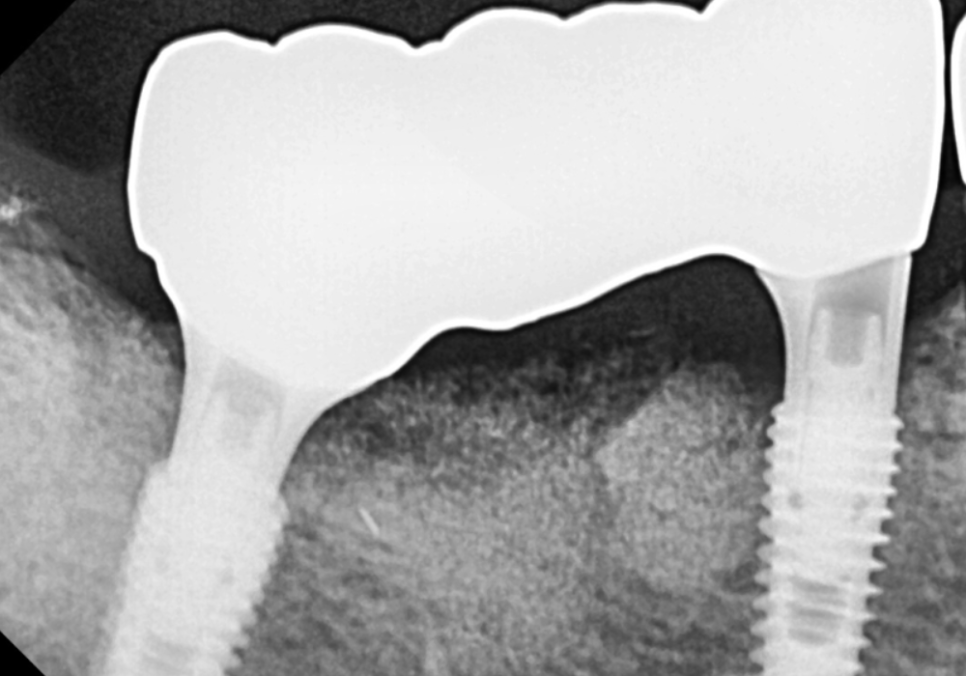 260203
Unlike the older implant method fixed only with adhesive
(cement type),
we made the prosthesis in an 'SCRP type'
so that the implant could be maintained for a longer time.
This method may be a little unfamiliar to patients,
so why is it important?
'SCRP method'?
Old implants, looseness, and pain
In simple terms, it is a smart prosthesis type that combines
the advantages of screw-retained fixation
and dental adhesive fixation.
The defining feature is a small hole (screw hole)
in the center of the prosthesis.
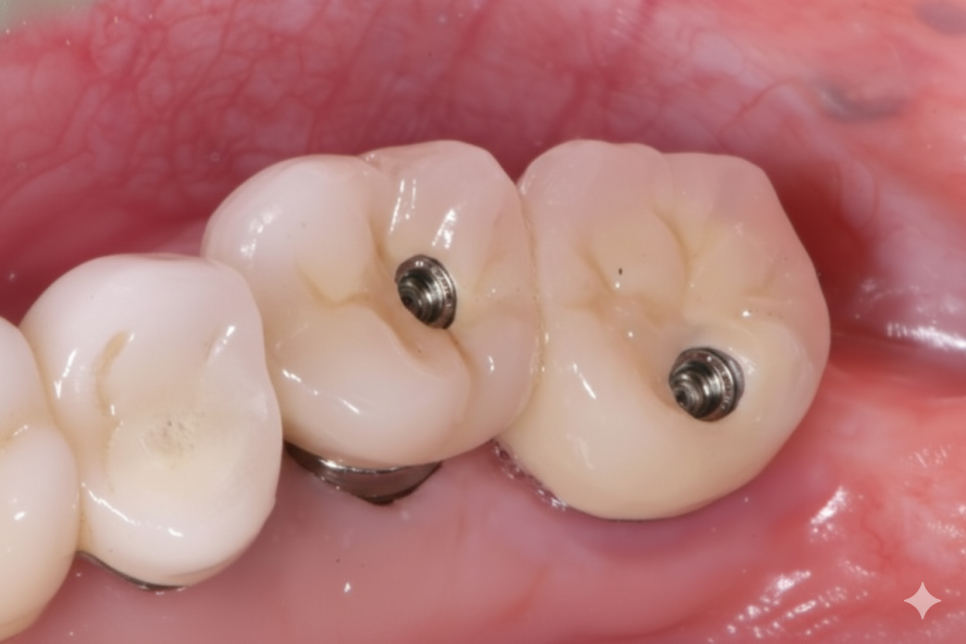
As implants are used,
the screws may loosen slightly,
or inflammation may occur around them.
At such times, the SCRP method allows the prosthesis to be easily removed through the screw hole at any time without damaging it,
so the screw can be retightened or cleaned,
which makes it easy to manage.
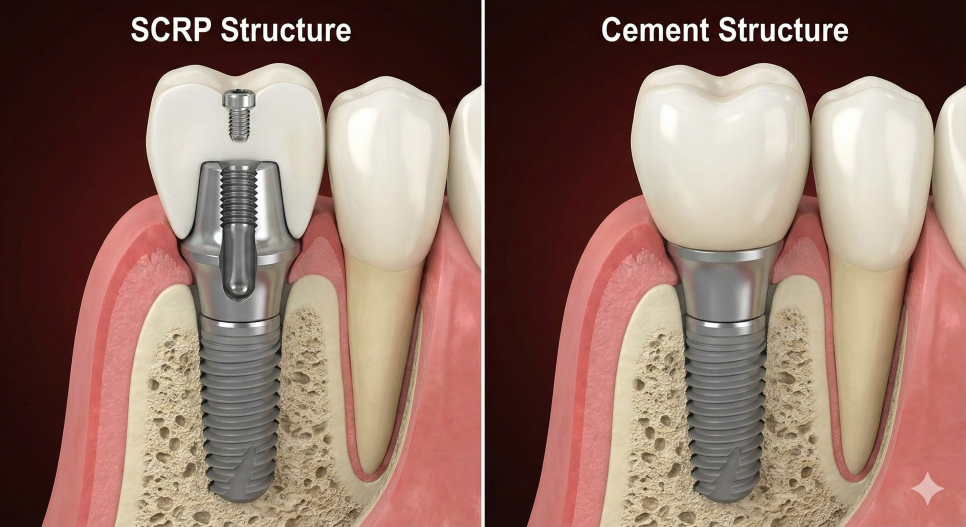
Rather than ending with simply "putting in a tooth,"
we prepared in advance for problems that could arise later,
so the patient could use it with much greater peace of mind.
From now on, I hope the patient can enjoy delicious food
with both molars,
and I look forward to seeing them in healthy condition
at the checkup 6 months later. ^^
Implants are important to place well,
but aftercare determines their lifespan.
-
Please make it a habit to use interdental brushes or dental floss.
-
Even if there is no pain, please have a regular checkup once every 6 months.
You should make sure to check whether the screws have loosened
or whether the prosthesis has broken.
Do you notice any odor around the implant,
or a slight feeling of looseness?
Please have your precious implant checked before it is too late.
We will care for it honestly and carefully.
Thank you. ^^
▼Check the dental clinic location▼
Old implants, looseness, and pain: How can they be used more healthily?
| Go to call for an appointment |
|---|
| 02-481-4278 |
| This post was written directly by Seoul Bardi Dental Clinic for the purpose of providing medical information in compliance with Article 56, Paragraph 1 of the Medical Advertising Act. The information provided is for reference only, and we recommend that symptoms and accurate management methods be explained by medical professionals after visiting a medical institution. All procedures/surgeries performed at the dental clinic may involve risks depending on the individual (inflammation, bleeding, swelling, etc.). Please make decisions after sufficient consultation with medical staff in advance. The treatment cases in this post were photographed with the consent of patients who completed treatment at our clinic, and the before-and-after photos were taken under the same conditions. |