Hello.
I am the director of Seoul Bardi Dental Clinic.
During a dental checkup, when I tell a patient,
"You still have a baby tooth here?"
some people are quite surprised.
This is because of a "retained deciduous tooth" that has not fallen out and has stayed in place even into adulthood.
Is it okay to keep using a baby tooth even after becoming an adult?
Today, I will explain retained deciduous teeth through a real case.
Why do baby teeth still remain in adults?
The Story of a Loose Retained Deciduous Tooth in Adulthood and Why a Canine Implant Was Needed After 50 Years
Normally, as the permanent tooth comes up from below,
it dissolves the root of the baby tooth, causing it to fall out naturally.
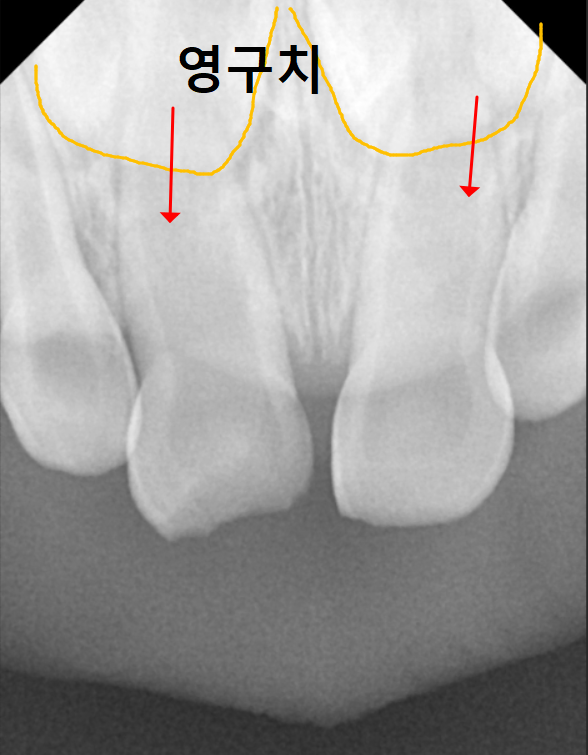
However, for people who were congenitally missing permanent teeth,
there is no permanent tooth to push the baby tooth out,
so the baby tooth remains in place even into adulthood.
This is called a "retained deciduous tooth."
Do retained baby teeth have to be removed no matter what?
The Story of a Loose Retained Deciduous Tooth in Adulthood and Why a Canine Implant Was Needed After 50 Years
The short answer is: not necessarily.
If there is no looseness, no cavities, and no gum problems,
and it can withstand chewing force sufficiently,
it is best to keep it and use it for as long as possible.
But baby teeth, as the name suggests,
are teeth made for "children,"
so there are clear structural limits when used by adults.
Why baby teeth struggle to withstand adult force
The Story of a Loose Retained Deciduous Tooth in Adulthood and Why a Canine Implant Was Needed After 50 Years
Compared with permanent teeth, which must be used for a lifetime,
baby teeth are inherently weaker.
First, the biggest difference is the length of the root.
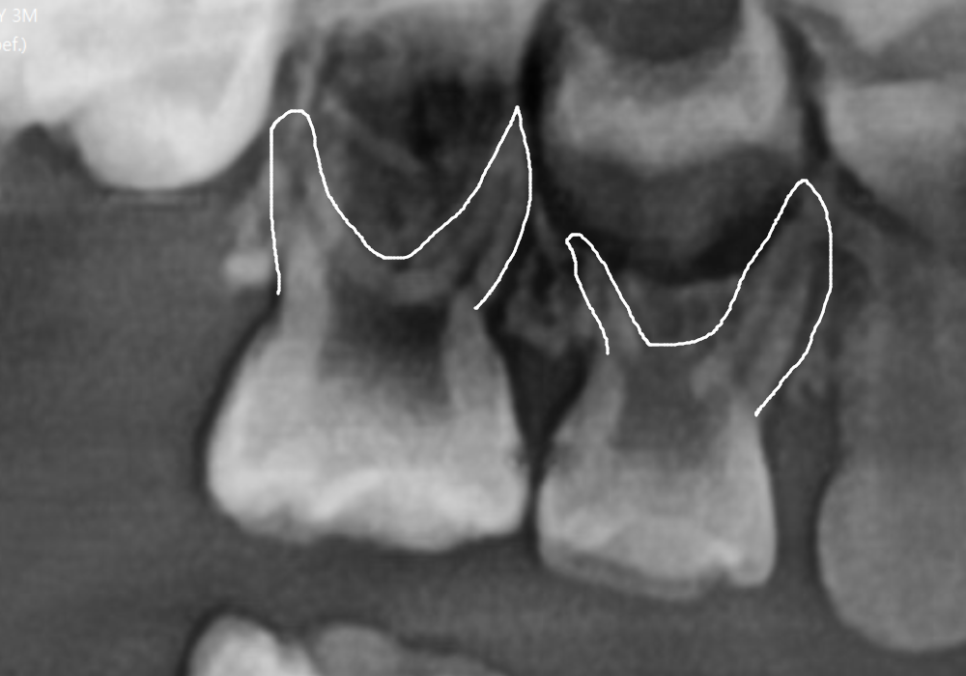
Because the roots of baby teeth are much shorter than those of permanent teeth,
it is inevitably difficult for them to fully endure the strong chewing force of adults for decades.
Also, the outermost protective layer of the tooth,
the enamel layer, is thinner than that of permanent teeth,
so not only are cavities more likely to develop,
but the rate of wear is also much faster.
In addition, as time passes, the root gradually
gets resorbed little by little on its own,
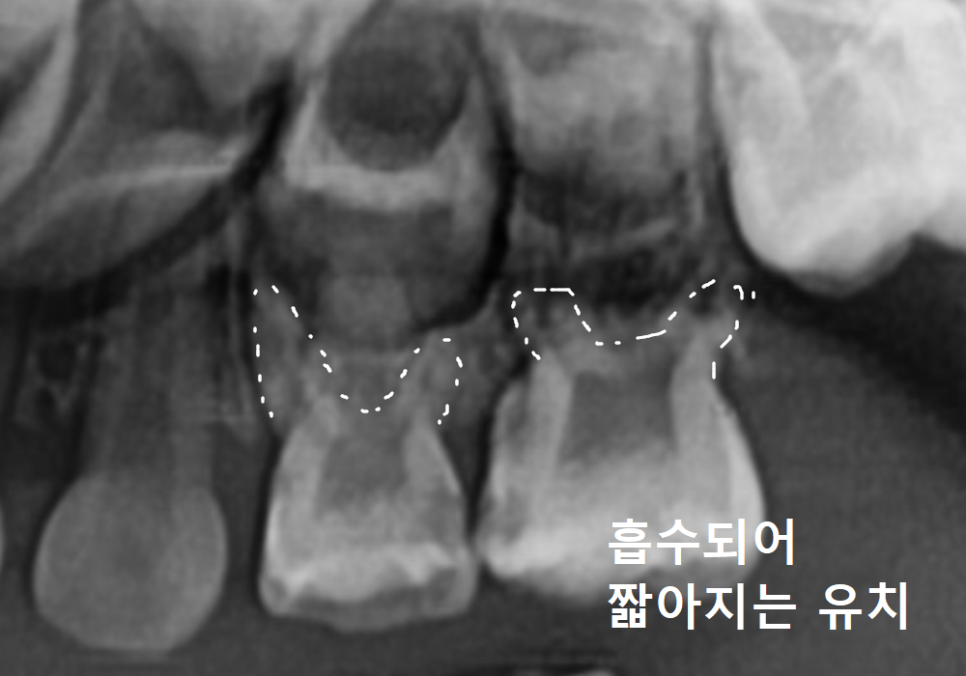
becoming shorter and shorter.
Eventually, when the force supporting the tooth reaches its limit,
it becomes loose and leads to a dull aching pain.
A case of a canine baby tooth used for 50 years, then replaced with an implant
The Story of a Loose Retained Deciduous Tooth in Adulthood and Why a Canine Implant Was Needed After 50 Years
Recently, a patient who had kept a baby tooth (#53)
in the upper right canine position for 50 years came to the clinic.
This is the baby tooth area,
and it definitely feels smaller than the other teeth, doesn't it?
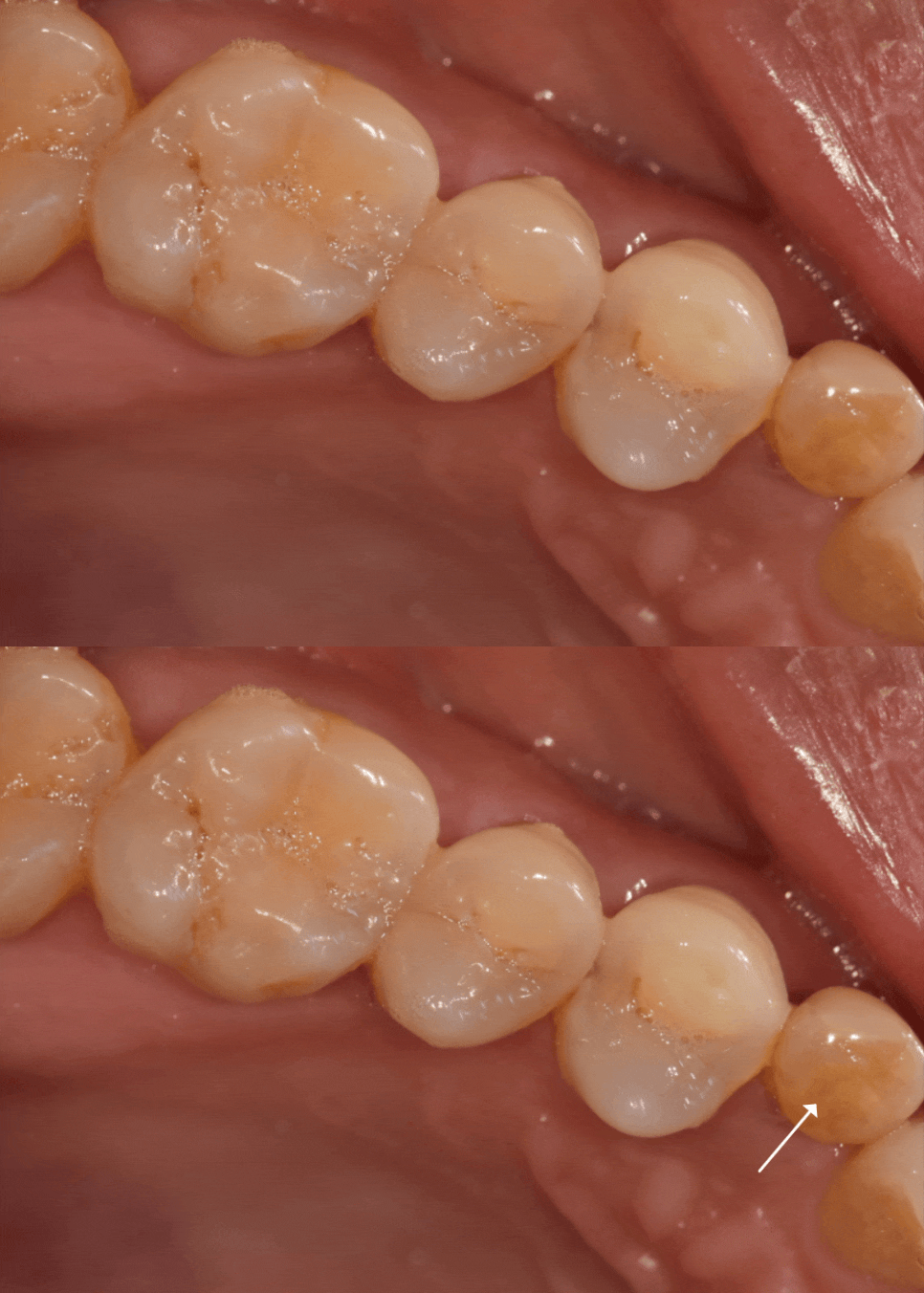 251126
The well-used baby tooth had recently started to loosen a little,
and the patient visited because pain was felt every time they chewed.
In fact, for a baby tooth to last into the 50s is extremely rare,
so it was clear that the patient had taken excellent care of it all along.
Diagnosis and condition
When we took an X-ray,
a very short and thin baby tooth root was visible.
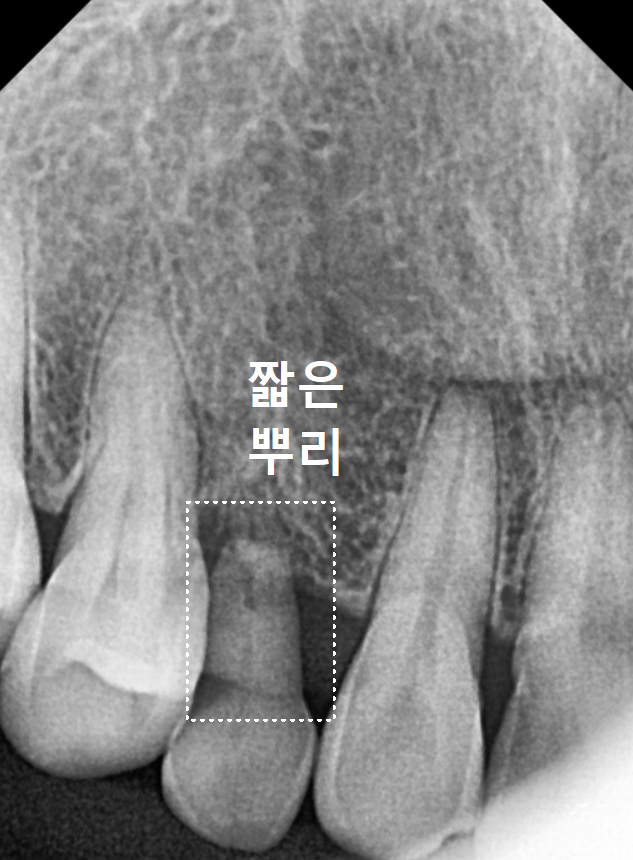 251126
In general, canine teeth tend to have longer roots than other teeth,
but baby teeth have relatively shorter roots than permanent teeth,
so the period in which they can be used is inevitably shorter.
The bigger problem was that on the 3D CT,
inflammation was found at the root tip.
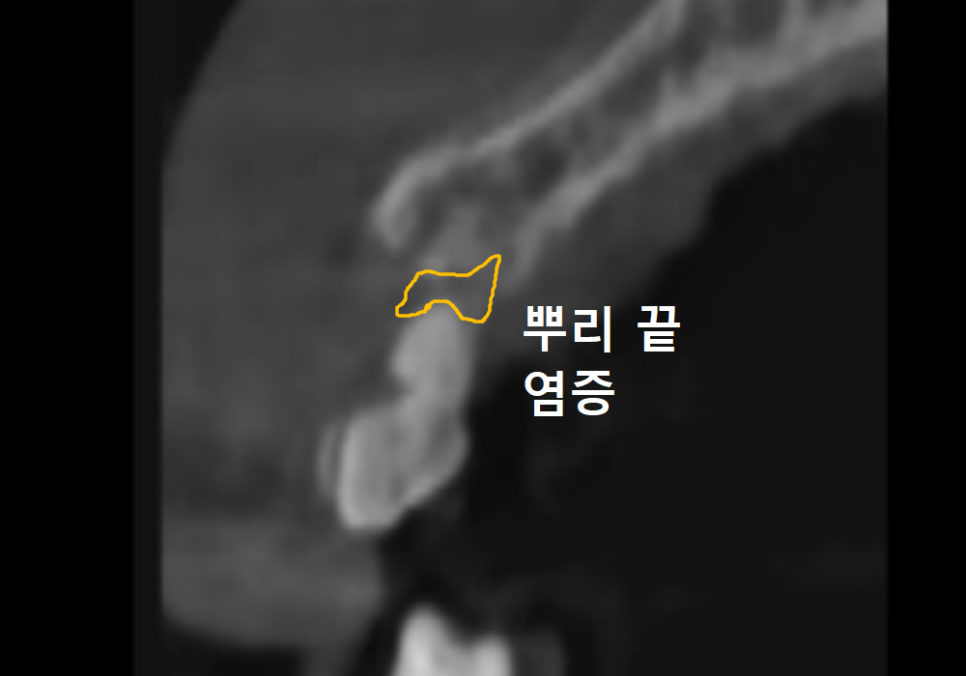 251126
There was already inflammation at the root tip,
and because of that inflammation, the surrounding jawbone had melted away,
leaving only the very end of the root barely supported by the bone.
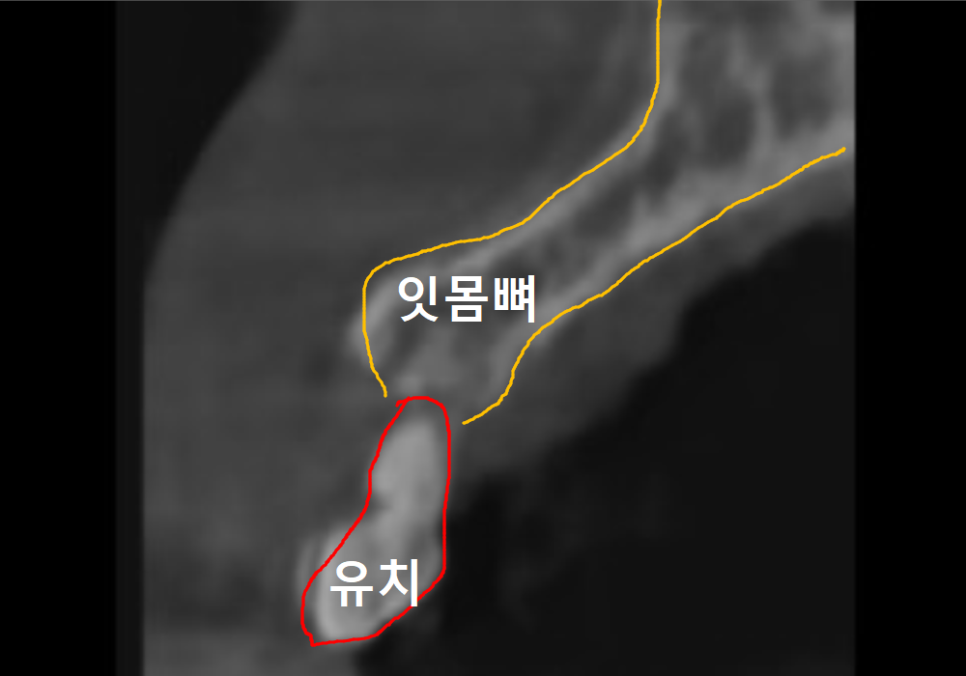 251126
If left like this, the inflammation could spread and also dissolve the bone around the healthy permanent teeth next to it,
so, unfortunately, we decided to let go of the baby tooth that had been with the patient for 50 years.
Treatment process: same-day placement and prosthetic completion
The Story of a Loose Retained Deciduous Tooth in Adulthood and Why a Canine Implant Was Needed After 50 Years
Fortunately, the bone around the baby tooth was still strong enough to firmly support an implant,
so on the same day the baby tooth was extracted,
we placed the implant without additional bone grafting.
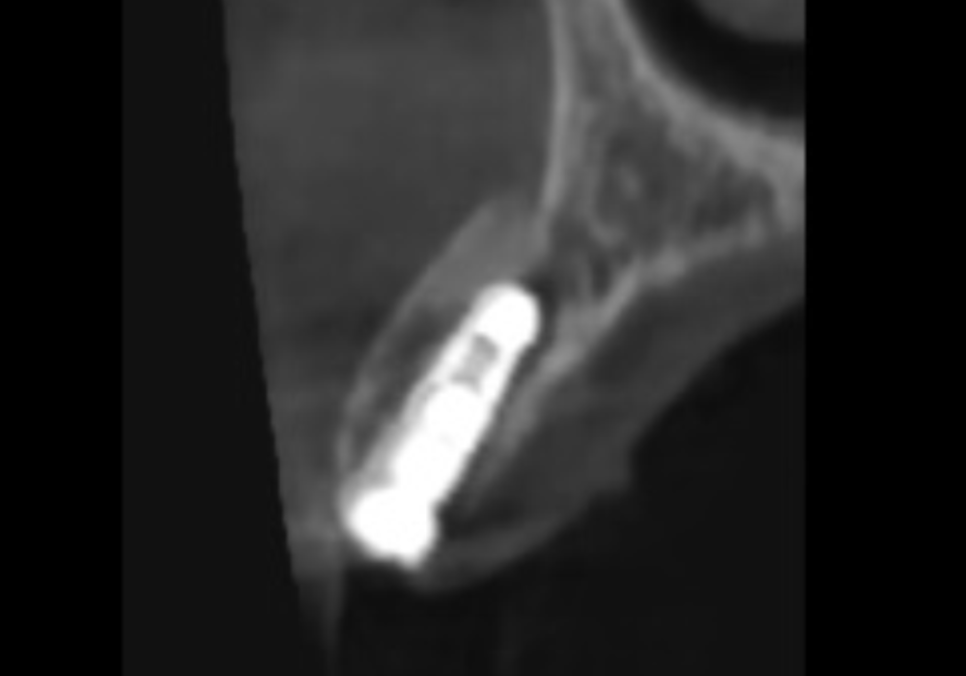 251220
Three months after surgery,
we confirmed that the implant had fully integrated with the bone
and then began fabricating the final prosthesis (the crown).
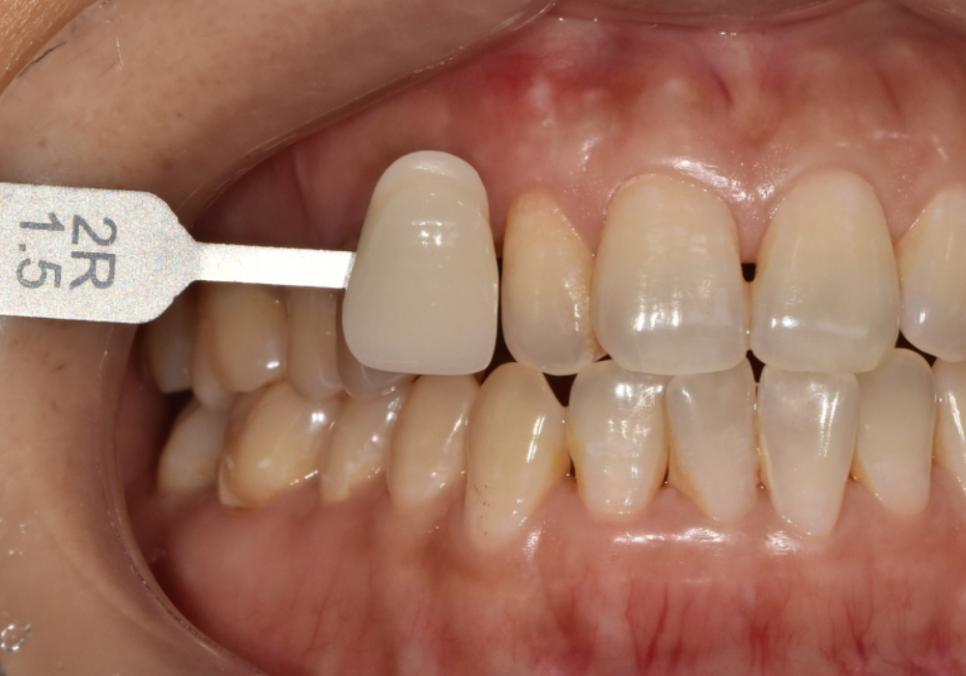 260224
But... there was one problem here.
Because this was originally the space where a baby tooth had been,
there was quite a narrow space for a permanent canine tooth.
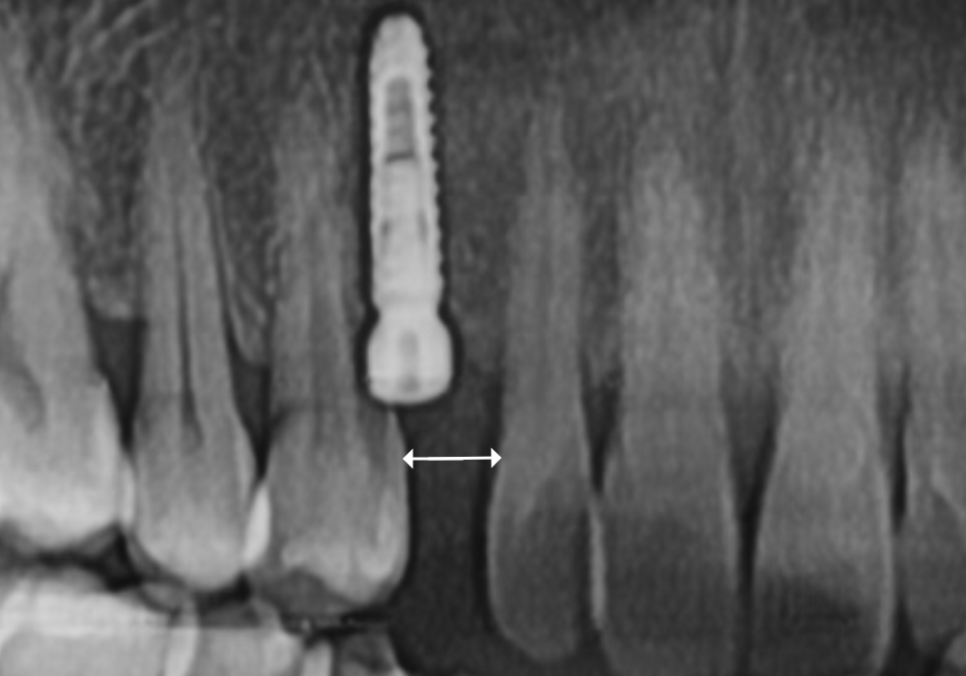
There was a risk that the tooth could end up looking too small and narrow on its own...
So we made great effort in the design,
carefully adjusting the curve of the tooth and the gum line
so that it would look as natural as possible from the front.
What made such detailed work possible
was our in-house dental lab.
Instead of sending it to an outside lab,
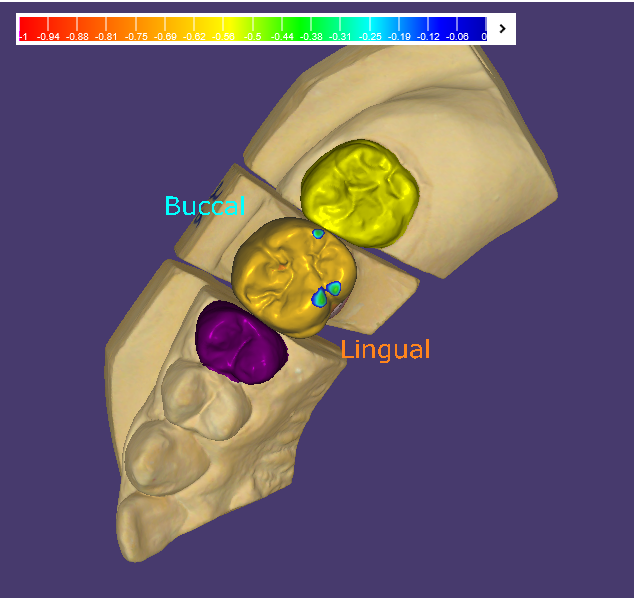
because the lab director and I communicated in real time while making it,
we were able to fit a prosthesis that matched the patient perfectly.
As a result, the actual width is narrow, but
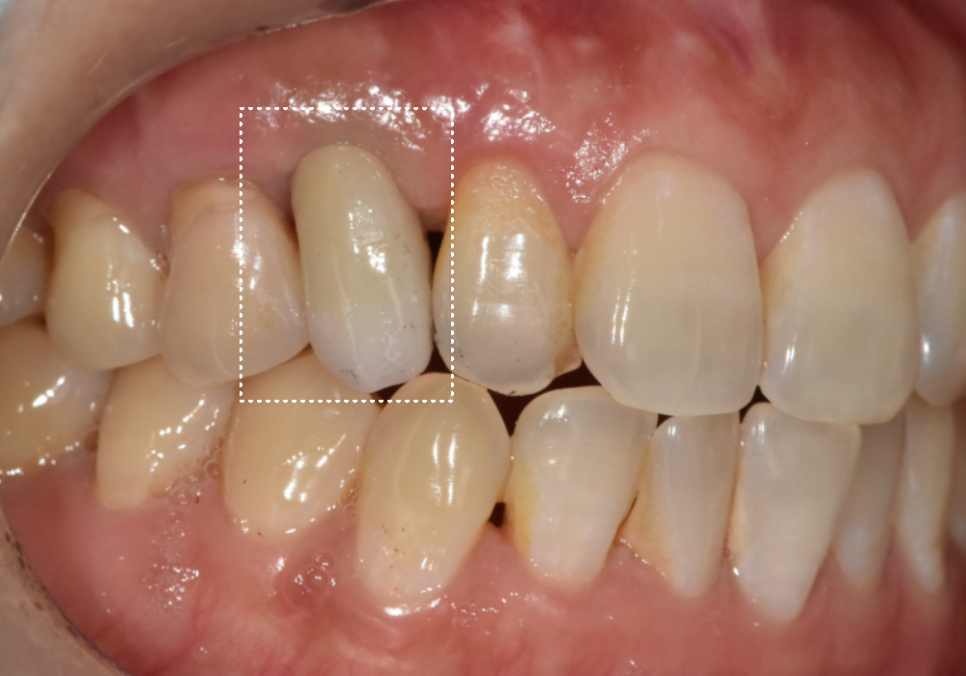 260304
what do you think when viewed from the front?
It doesn't look that small, does it?
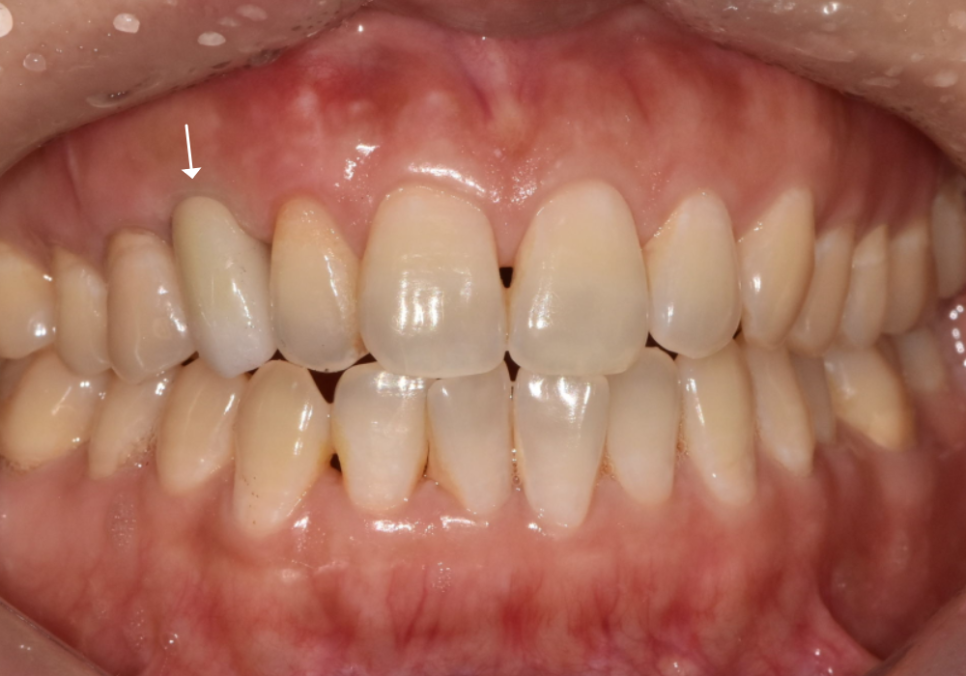 260304
It blends naturally with the surrounding teeth,
and we helped make it so it would not look awkward. ^^
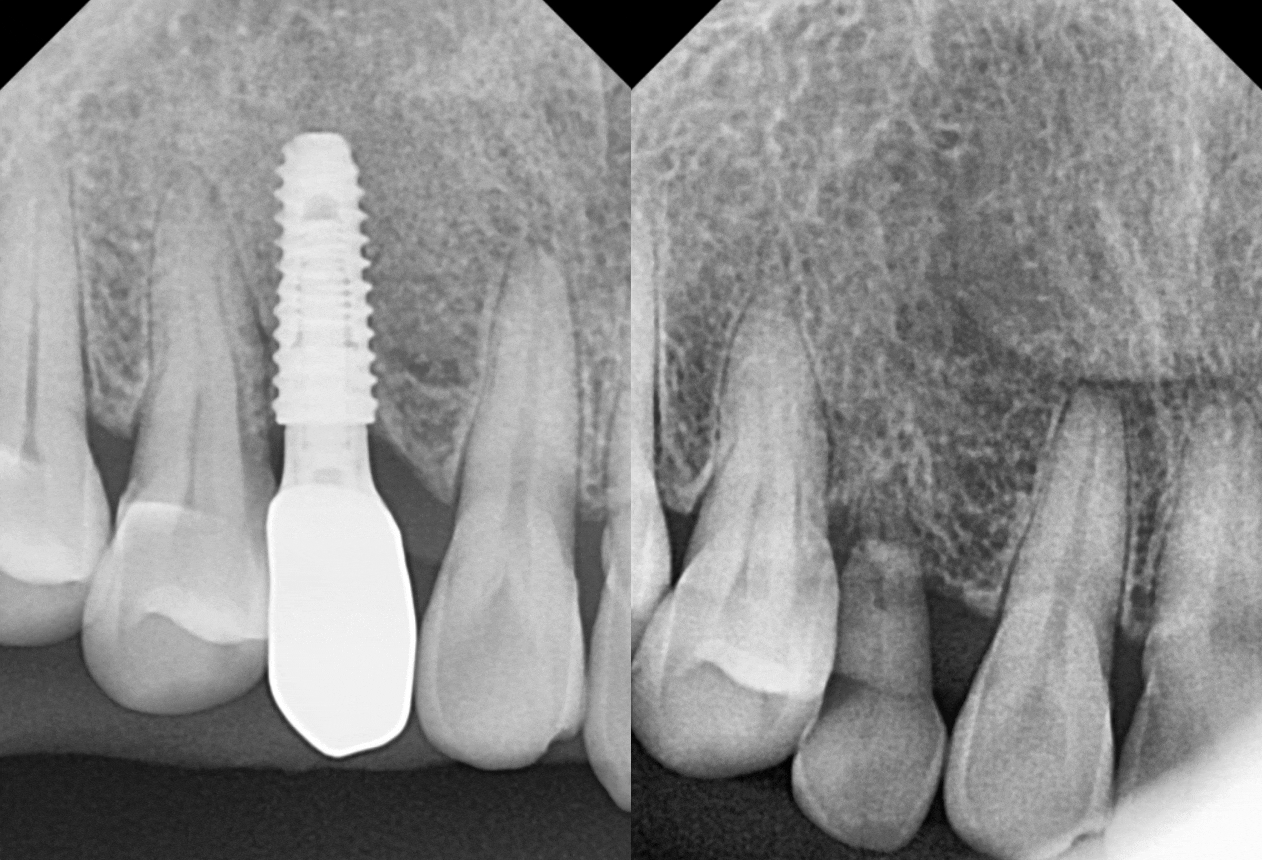 251126 (before) 260304 (after)
Because baby teeth have shorter roots than permanent teeth,
if a problem occurs, the jawbone can dissolve much more quickly.
Even if it does not hurt right now,
why not check regularly to see whether inflammation may be slowly progressing?
Thank you for reading this long post today.^^
▼Check the dental clinic location▼
The Story of a Loose Retained Deciduous Tooth in Adulthood and Why a Canine Implant Was Needed After 50 Years
| Go to make a reservation call |
|---|
| 02-481-4278 |
| This post was written directly by Seoul Bardi Dental Clinic for the purpose of providing medical information in compliance with Article 56, Paragraph 1 of the Medical Advertising Act. The information provided is for reference only, and we recommend that you visit a medical institution and receive guidance from medical staff for symptom assessment and accurate management methods. All procedures / surgeries performed at the dental clinic may involve individual risks (inflammation, bleeding, swelling, etc.). Please make your decision after sufficient consultation with medical staff in advance. The treatment cases in this post were photographed with the consent of patients who completed treatment at our clinic, and the before-and-after photos were taken under the same conditions. |