Cracks in a molar: the key standard for saving the tooth is right here.
“Is it better to do root canal treatment and save a cracked molar?
Or should I just pull it and get an implant?”
In fact, this is not a matter of what is better or worse,
but rather a choice that depends on the location and condition of the tooth fracture.
Sometimes, trying to save the tooth is not the answer,
and on the other hand, if it can still be saved but you give up, that would be such a shame~
Today, we’ll look at real cases of cracked molars and clearly organize
how treatment methods are chosen based on each standard. ^^
- Why do strong molars crack and break?
Cracks in a molar: the key standard for saving the tooth is right here.
Molars are the teeth that
a bear the greatest chewing force in our mouths.
However, enjoying hard or chewy foods,
or casually chewing on ice,
can build up tremendous “fatigue” in the teeth.
Just like tiny cracks slowly forming in a glass cup,
those fissures can gradually progress~
At this point, the key factor in deciding the treatment method
is the exact “location of the crack.”
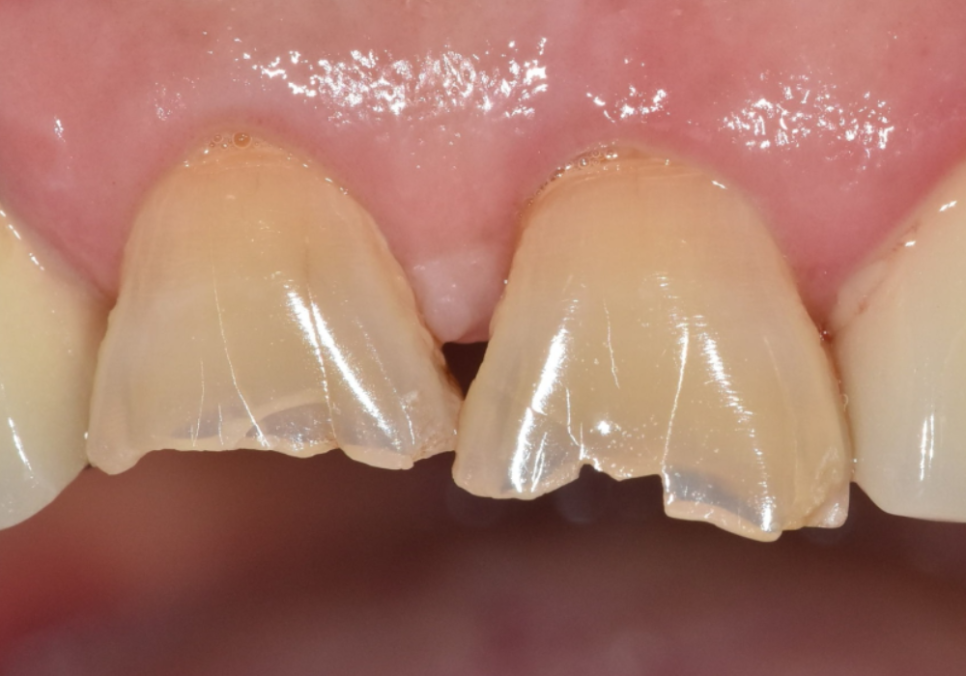
- Crown fracture (top part)
: This is when the crack is limited to the crown of the tooth.
After root canal treatment and a crown,
there is a good chance the tooth can be restored and used again.
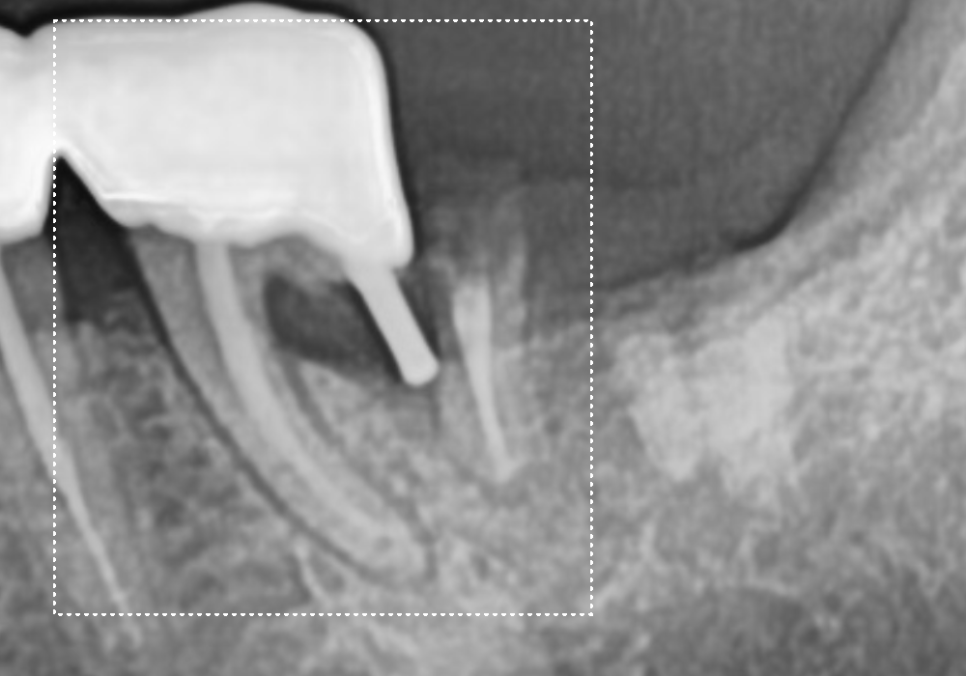
- Root fracture (root part)
: Unfortunately, this is when the crack runs vertically
down into the root (vertical root fracture).
No matter how much treatment is done, the crack opens wider every time you chew,
so it is very difficult to control the pain.
- A case where a cracked molar was treated with an implant
Cracks in a molar: the key standard for saving the tooth is right here.
This is a case of a patient who visited our dental clinic recently.
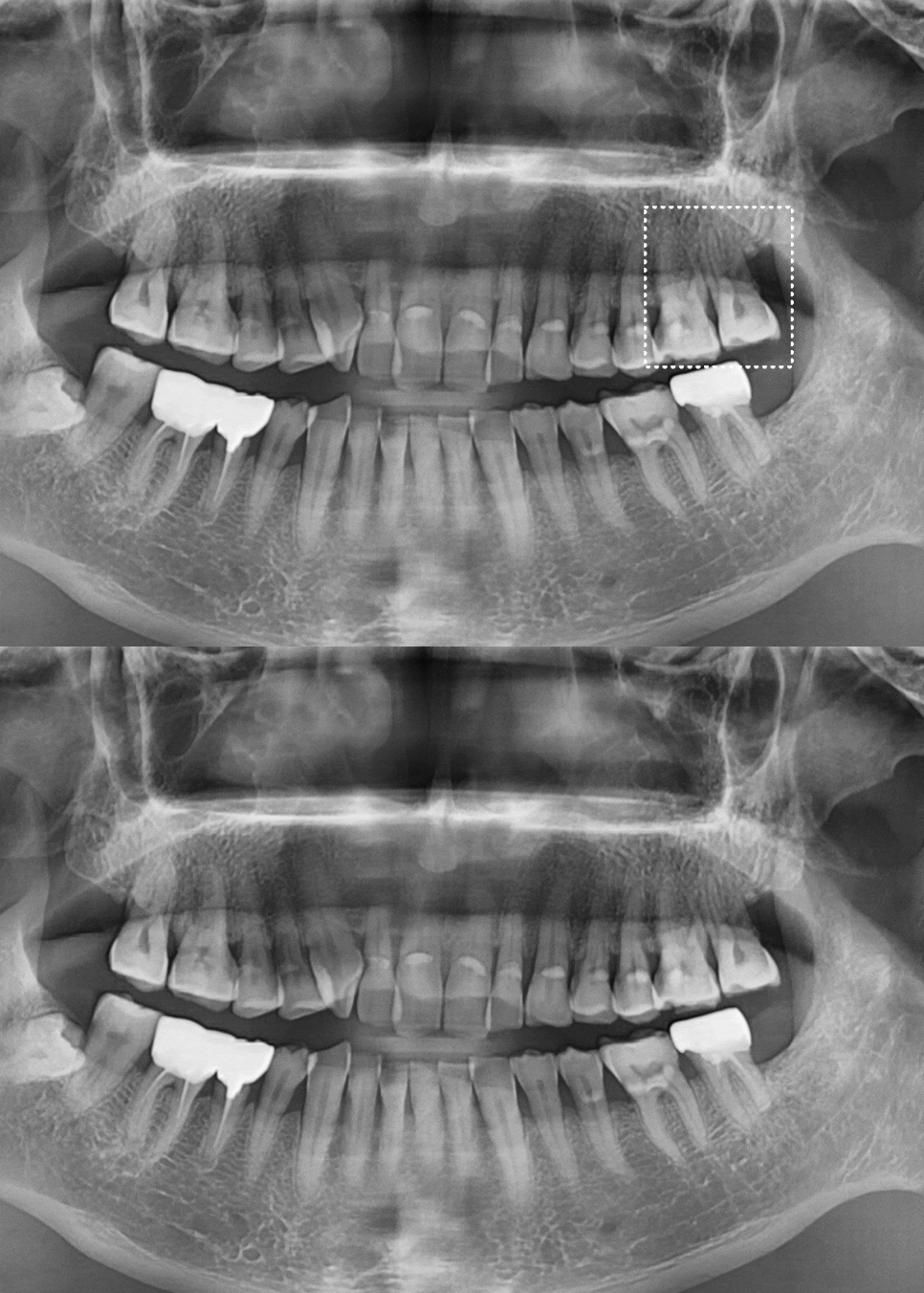
The patient came in because the two upper left molars (#26, #27) were both feeling sensitive.
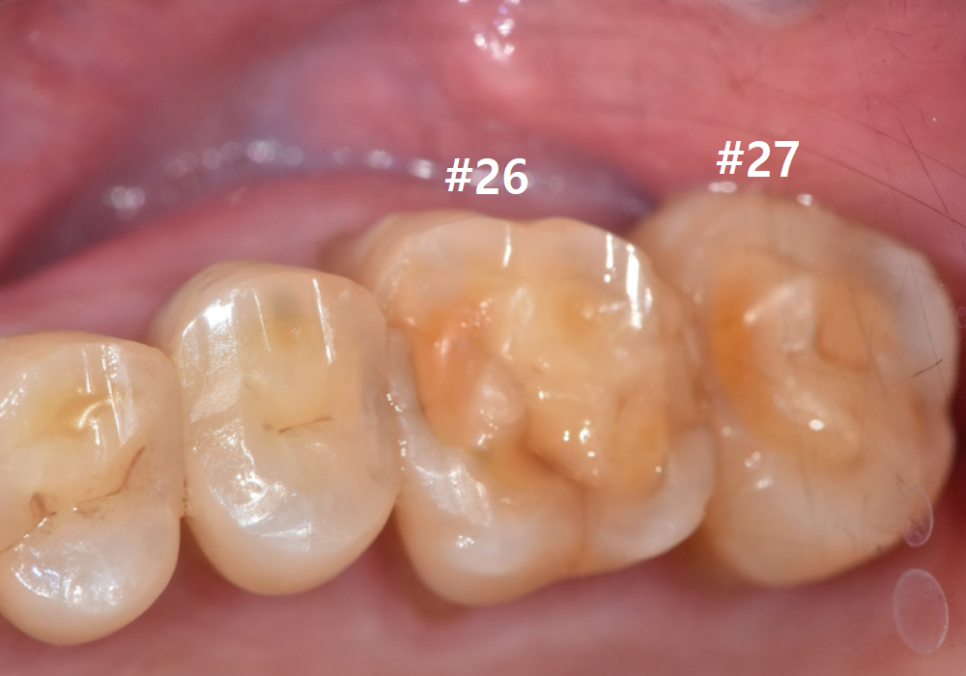 250402
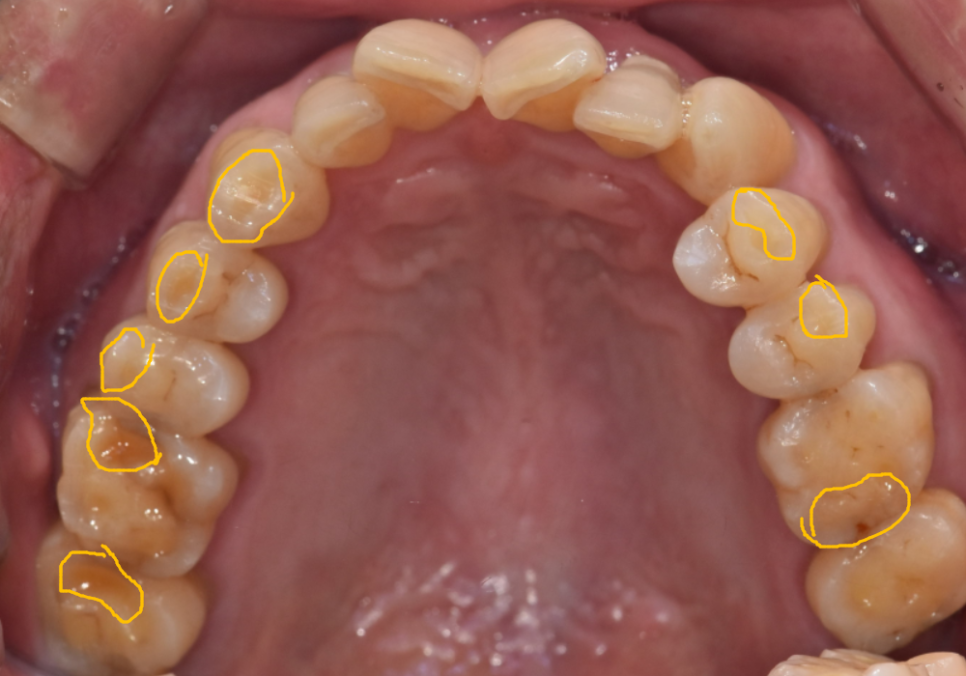
After examining the mouth, we found that the teeth were generally quite worn down,
and the patient had a habit of using the teeth quite aggressively, even often cracking ice with them.
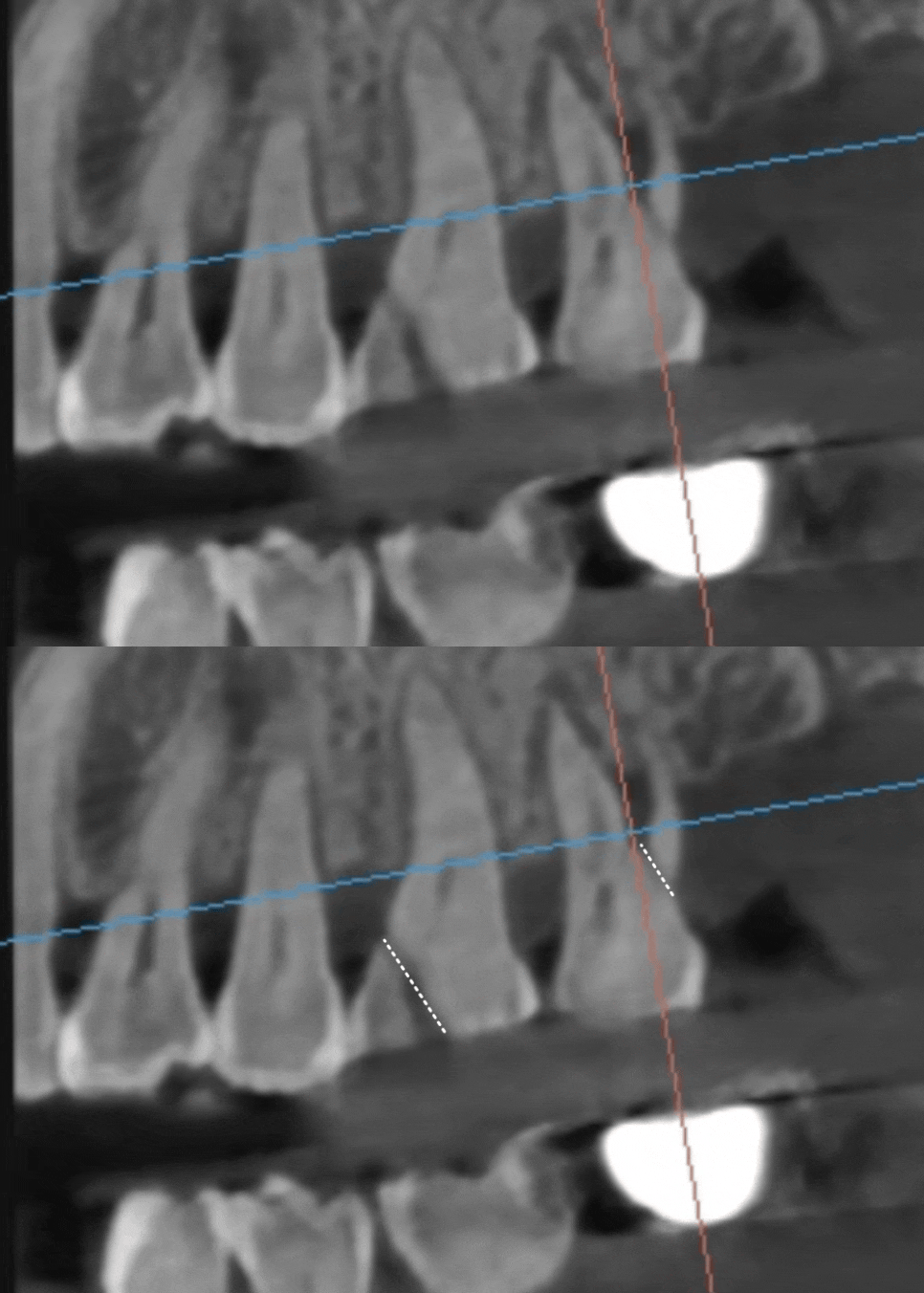
After detailed CT analysis,
we could see that the tooth was cracked.
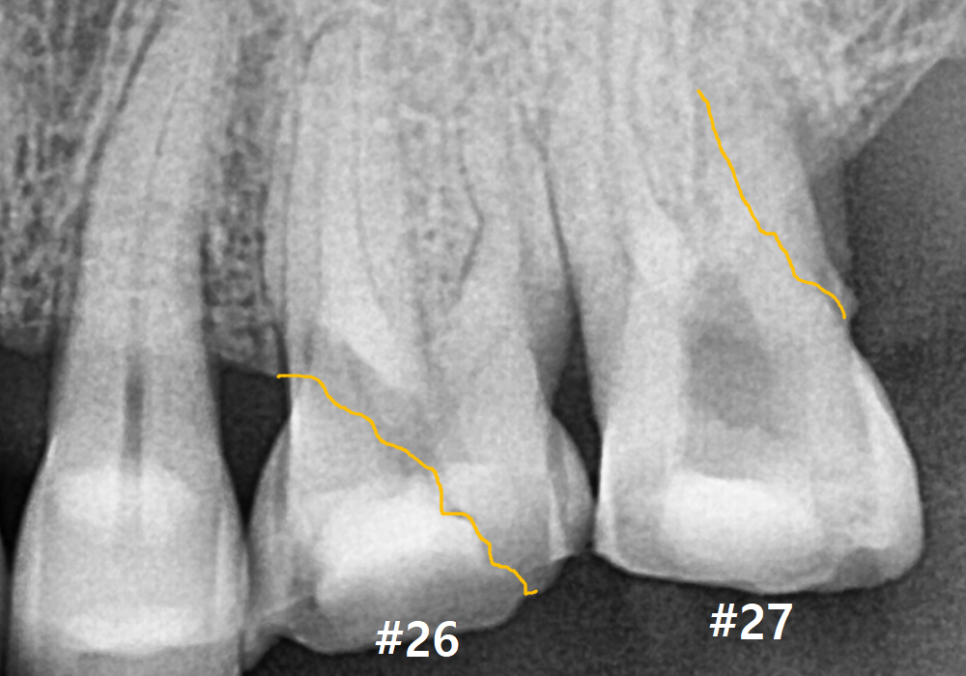 250409
The front molar (#26)
: The crack was limited to the crown,
so it looked like a “crown fracture” with a good prognosis,
The backmost molar (#27)
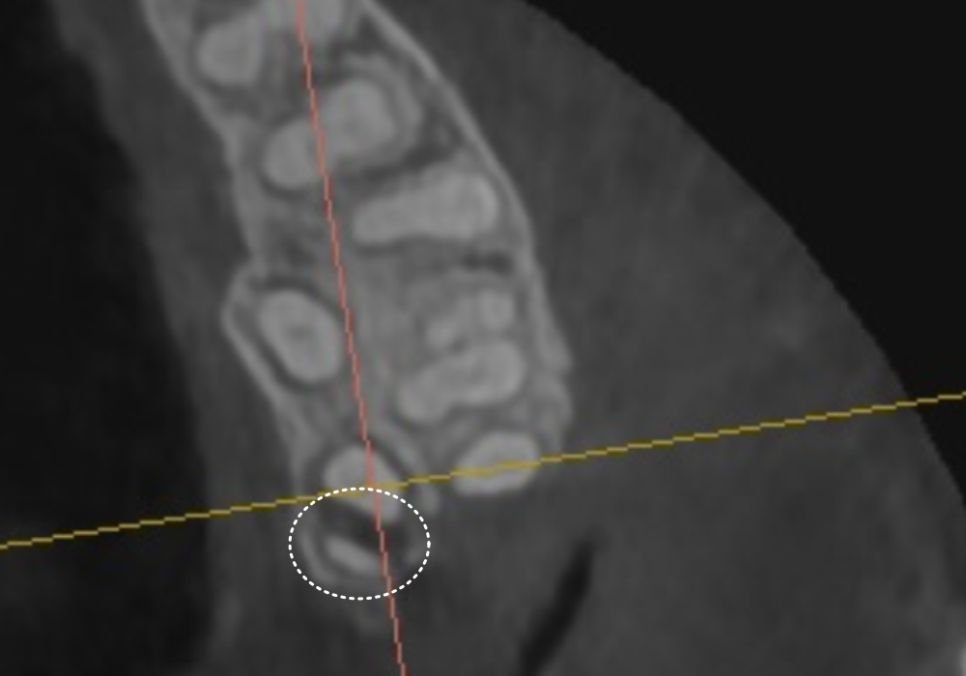
: The crack had gone deep into the root,
which was a “vertical root fracture.”
"Since the root is still there,
can’t we save it and use it again?"
Cracks in a molar: the key standard for saving the tooth is right here.
I completely understand the patient’s wish to preserve and use their natural tooth.
But just as a building won’t collapse only if its pillars are strong,
a backmost tooth (#27) with the root itself split apart
had too high a risk of not lasting long even if we forced our way to save it ㅜㅜ
For the patient’s long-term health,
we recommended extracting #27,
but at the patient’s strong request,
we first completed root canal treatment and then finished with a crown.
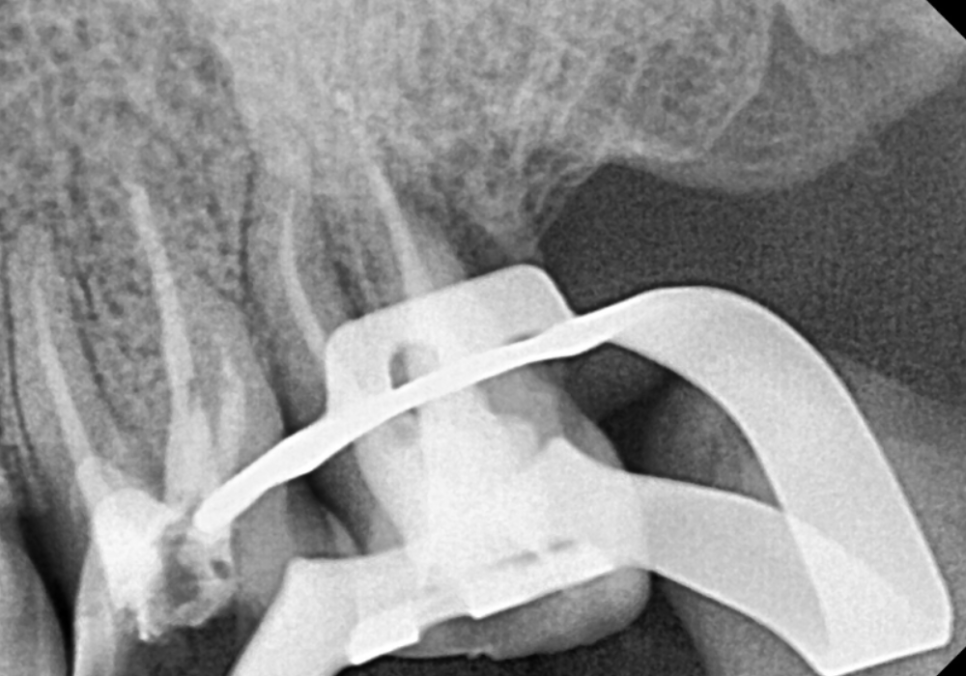
Treatment result
Cracks in a molar: the key standard for saving the tooth is right here.
About 5 months later,
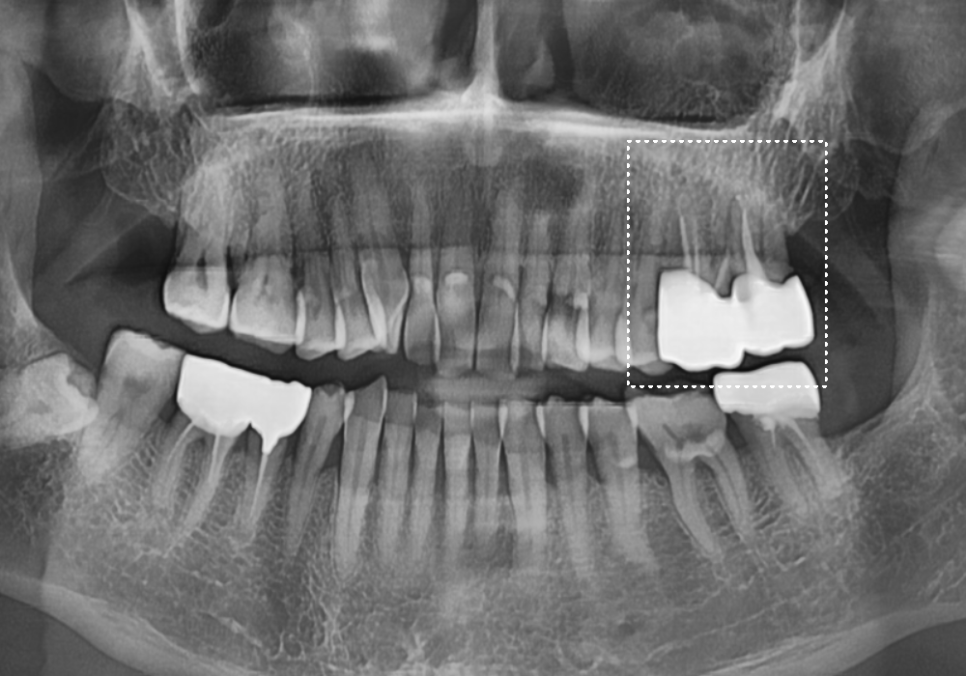 251105
Unfortunately, pain returned in the backmost tooth (#27),
so after much consideration, we proceeded with extraction.
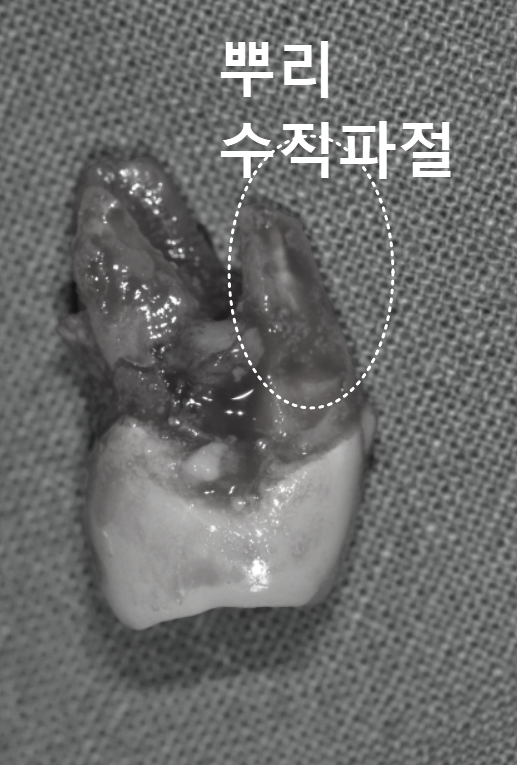
After removing the tooth and examining it directly,
we could clearly see, as in the photo, a vertical fracture line running all the way to the root tip.
What had not been visible on the outside
was already completely split deep inside.
Although the outcome was extraction,,
for 5 months the patient was able to use it as their own tooth,
and thanks to the patient comforting me instead,
my own heart felt much more at ease. ^^
Now all that remained was to help relieve the pain!
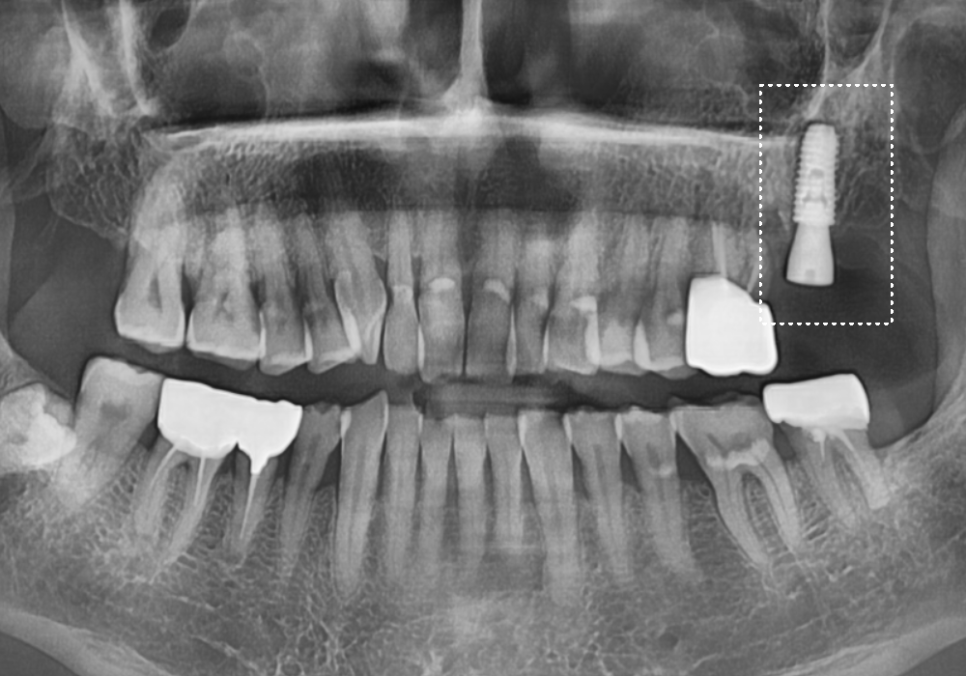 251105
Fortunately, the patient was over 65,
so they were eligible for the National Health Insurance implant benefit~
By significantly reducing the financial burden,
they proceeded with implant surgery,
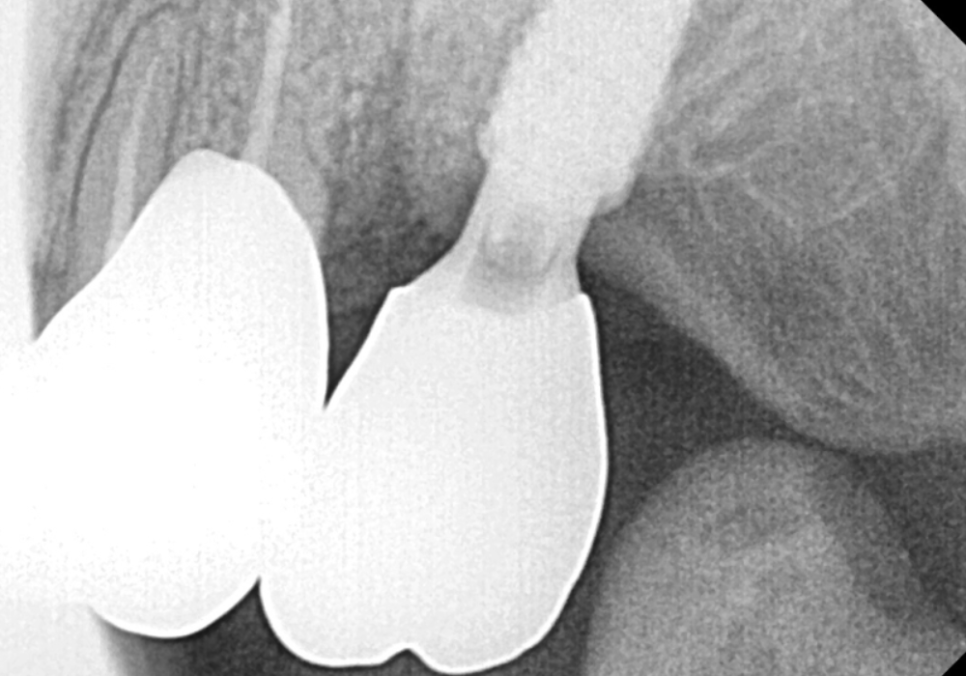 260429
After 3 months, we confirmed that the implant fixture and bone had firmly integrated,
and finished the case very solidly with a final zirconia prosthesis. ^^
Are you 고민ing about a sharp, jabbing molar pain?
When a crack reaches the root of the tooth,
it does not heal back together on its own like a broken bone in the body.
If you try to hold out too long,
the surrounding gum bone can also dissolve,
which can make implant surgery itself much more difficult later on.
Please make sure to have your condition checked to see whether your tooth can still be saved,
or whether you need a stronger and more reliable alternative.
From the patient’s perspective,
we will help find the most honest and accurate diagnosis
and the solution that can keep you healthy for the longest time.
Thank you for reading this long post today. ^^
▼Check the clinic location▼
Cracks in a molar: the key standard for saving the tooth is right here.
| Go to make a reservation call |
|---|
| 02-481-4278 |
| This post was written directly by Seoul Bardi Dental Clinic for the purpose of providing medical information in compliance with Article 56, Paragraph 1 of the Medical Service Act. The information provided is for reference only, and we recommend that you visit a medical institution and receive guidance from medical professionals for symptom assessment and accurate management methods. All procedures / surgeries performed at the dental clinic may involve possibilities such as inflammation, bleeding, and swelling depending on the individual. Please make decisions after sufficient consultation with medical staff in advance. The treatment cases in this post were photographed with the consent of patients who completed treatment at our clinic, and the before-and-after photos were taken under the same conditions. |