Hello.
I am the director of Seoul Bardi Dental Clinic.
“Will one missing tooth really cause that much trouble?”
“Can’t I just chew on the other side?”
People often say, “If you don’t have teeth, you can just live with your gums~”
So it is not uncommon to see patients leave an extraction site alone
because it does not seem to cause any major inconvenience right away.
But the moment a tooth is lost,
the overall balance inside the mouth begins to collapse,
and a “domino effect” occurs.
Did you know that there are cases where, even if you really want to place an implant later,
you can no longer do so?
Today, I’ll explain what changes happen when a tooth is extracted and left untreated for a long time,
along with a real case of how it was resolved.
Tooth movement that occurs when a tooth is left missing
The empty space after extraction: this is what happens if you leave it missing for too long.
Implants are firmly attached to the bone and root as one unit, but natural teeth are not.
Between the tooth and the bone,
there is a cushioning tissue called the periodontal ligament,
which gives the tooth some flexibility so it can move little by little.
Normally, teeth bite together and support one another,
keeping their positions,
but when an empty space appears, the teeth begin to move to fill that gap.
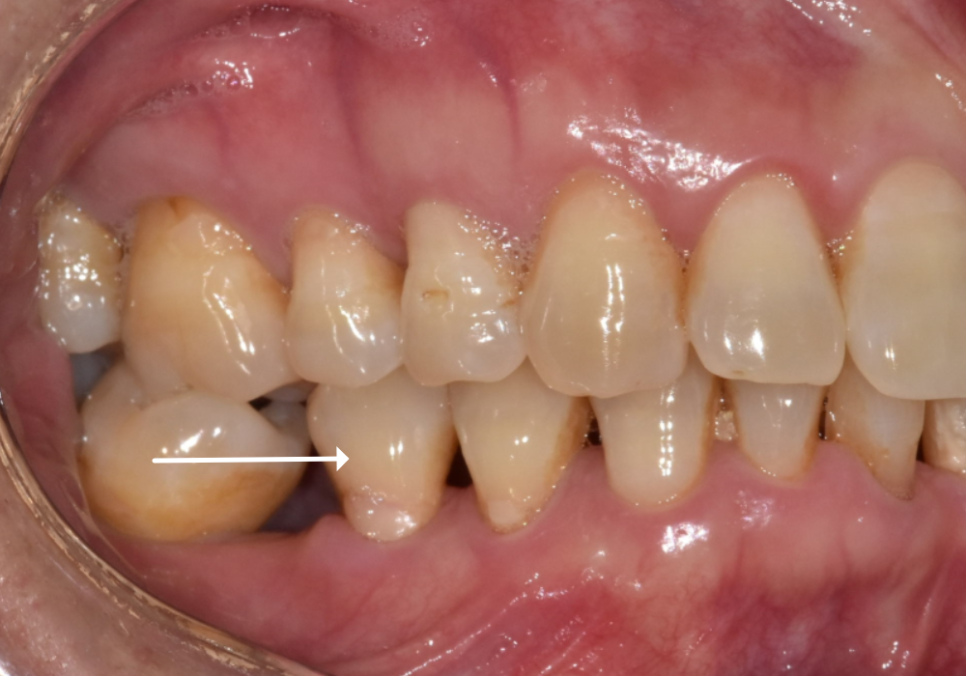
Tilting:
Teeth adjacent to the empty space tilt forward or backward toward the gap.
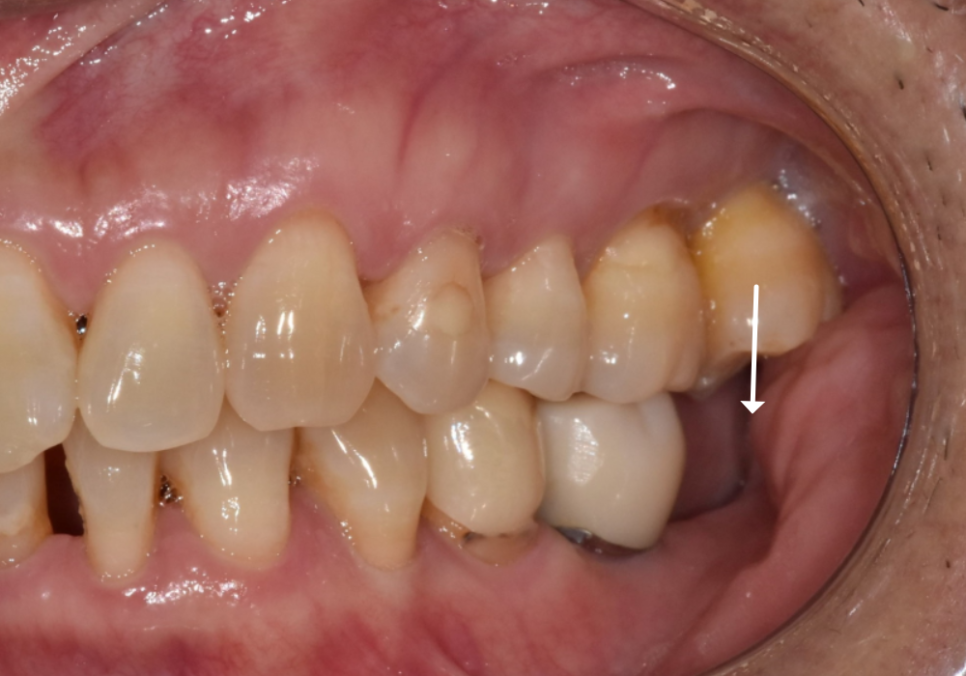
Extrusion:
If there is no opposing tooth to make contact,
the tooth continues to move downward or upward into the open space.
In the end, even if you later try to get an implant,
it becomes a difficult situation because there is not enough actual space to place it.
[Patient Case] Teeth that shifted and came down: how was it resolved?
The empty space after extraction: this is what happens if you leave it missing for too long.
This is a case of a patient who visited our clinic recently.
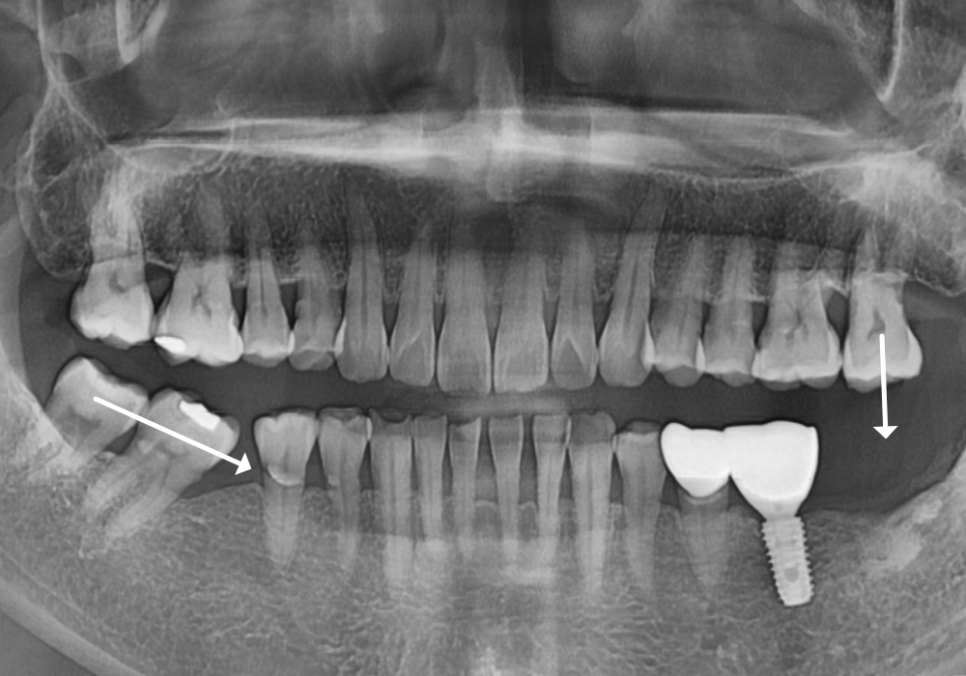
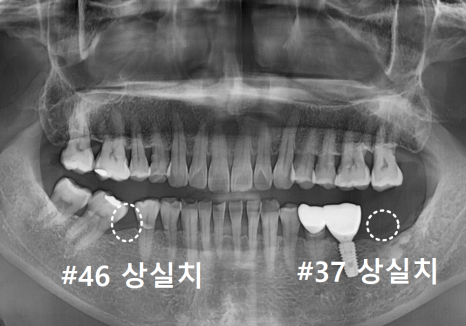
It had been quite a long time since the lower right (#46) and lower left back-most (#37)
teeth had been extracted.
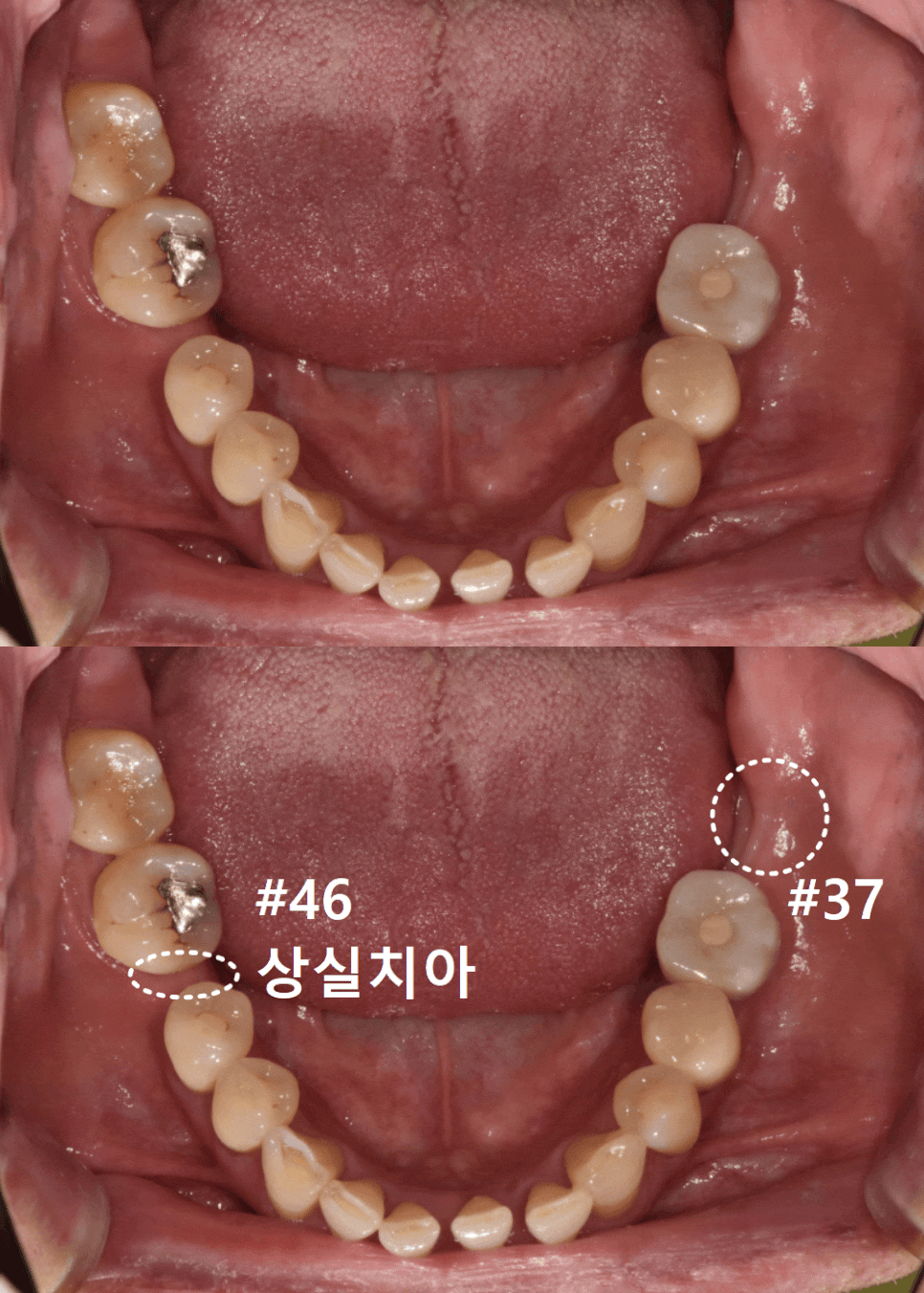
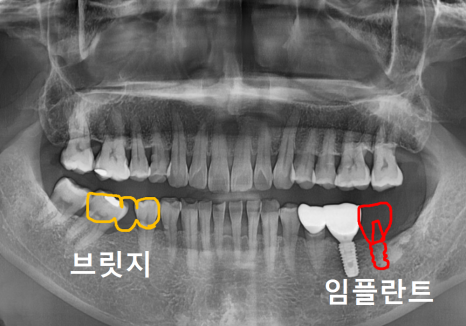
| 1) Lower right molars#47,48 had shifted greatly into the empty space, leaving insufficient room for an implant at the #46 missing site2) Lower left molarthe upper molar (#27) had no opposing tooth and had extruded downward |
Treatment process for the lower right molars
The empty space after extraction: this is what happens if you leave it missing for too long.
Usually, wisdom teeth are extracted in most cases,
but this patient’s situation was different.
As the molars shifted forward,
the wisdom tooth instead took on the role of the front molar
and was functioning for chewing~
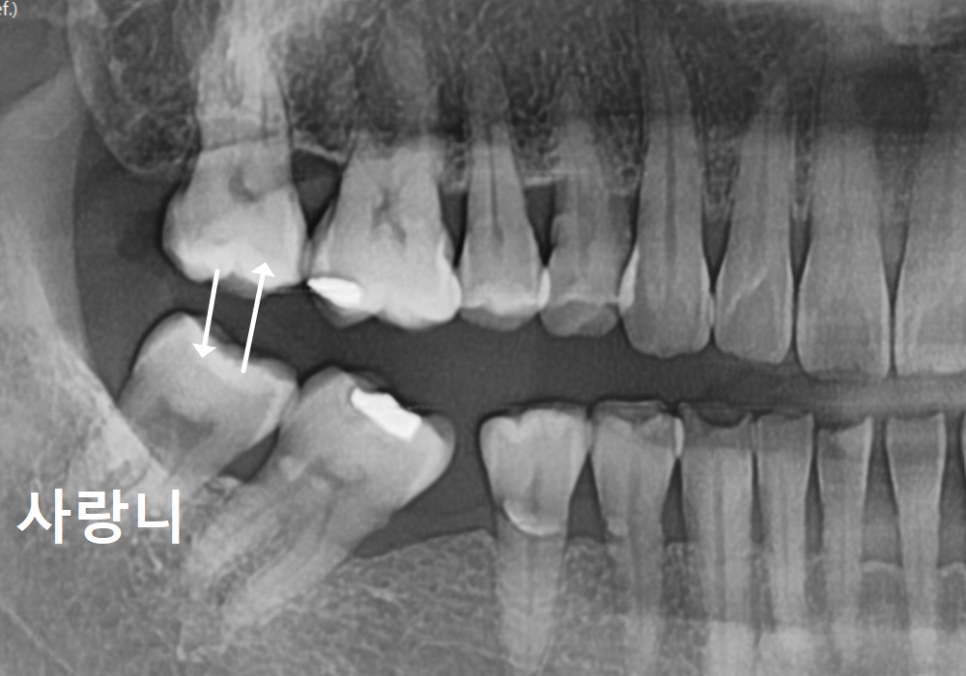
In cases like this, the wisdom tooth can sufficiently replace the molar
and perform chewing function,
so there was absolutely no reason to remove it~
We decided to keep the wisdom tooth...
but the real challenge was elsewhere.
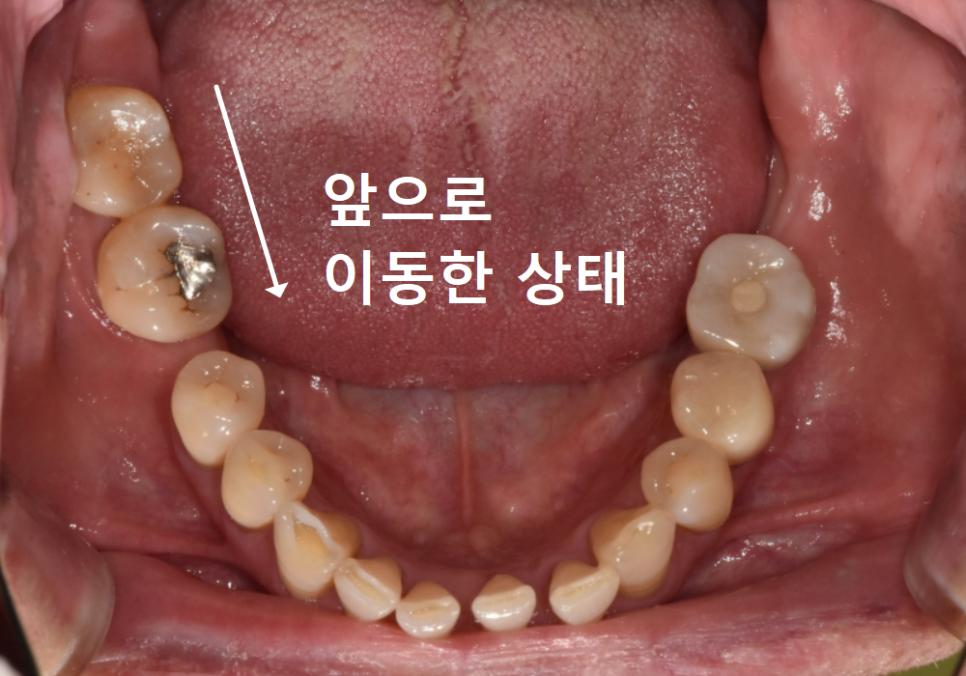
230420
Because the teeth had severely tilted toward the empty space,
it was impossible to create a proper place for the implant.
In the end, after much consideration, we decided on bridge treatment to fill the empty space without making major changes to the bite.
Since the teeth were already significantly tilted,
we expected that a lot of tooth reduction would be needed~
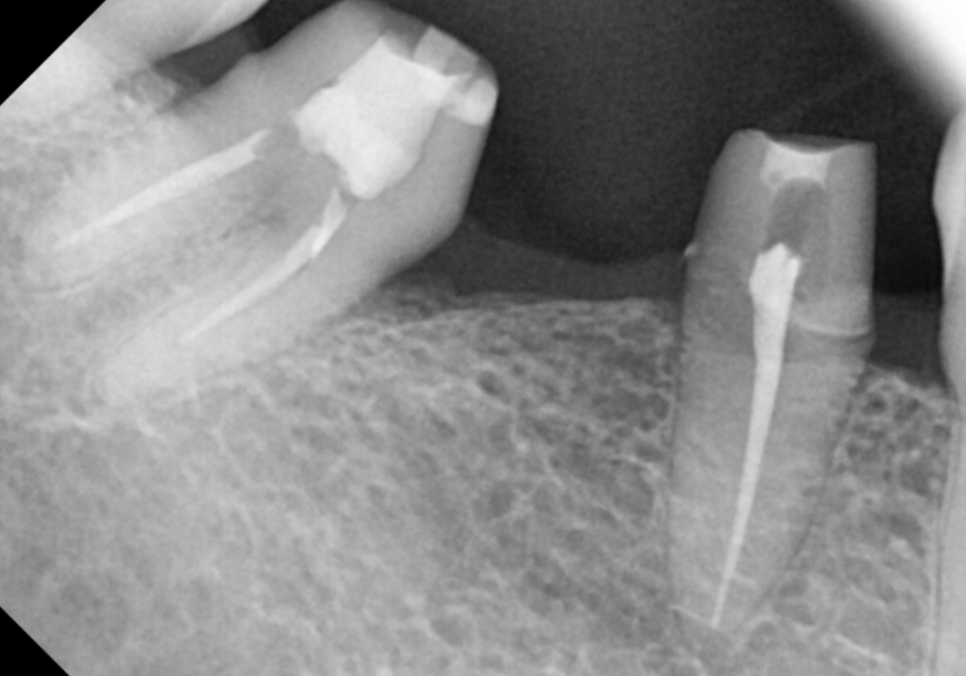
To prevent sensitivity,
we carefully performed root canal treatment first,
and then finished with a bridge~
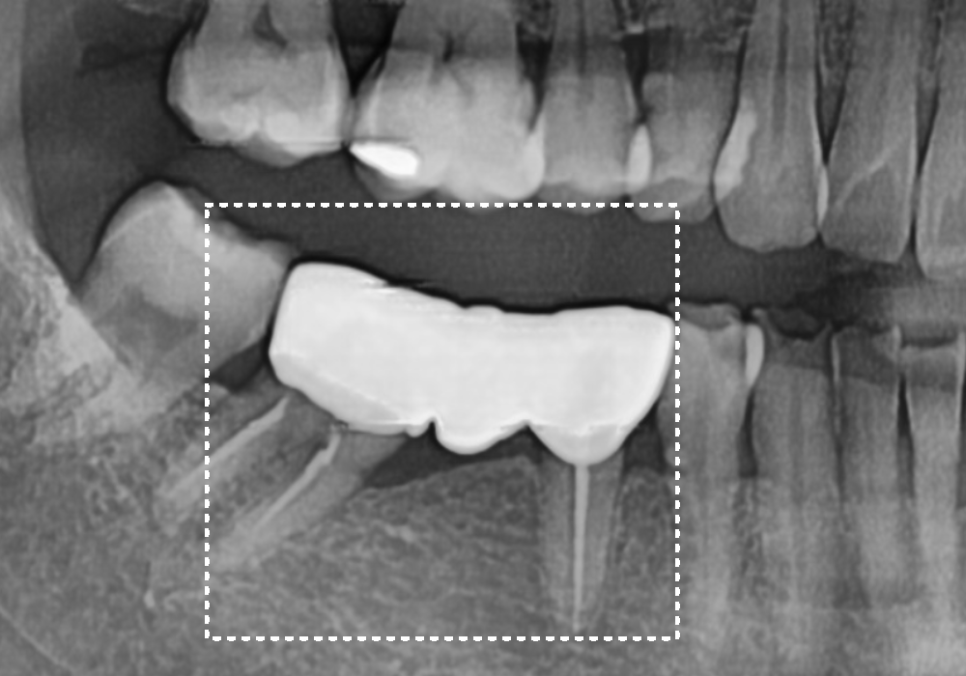
230704
Treatment process for the lower left molars
The empty space after extraction: this is what happens if you leave it missing for too long.
The lower left molar was in a state where the back-most tooth had been lost,
so we decided to proceed with an implant.
However, because the upper tooth had come downward,
the height available for the implant crown (prosthesis)
was too low~
If the crown is placed like this, there can be a side effect where the prosthesis keeps coming loose.
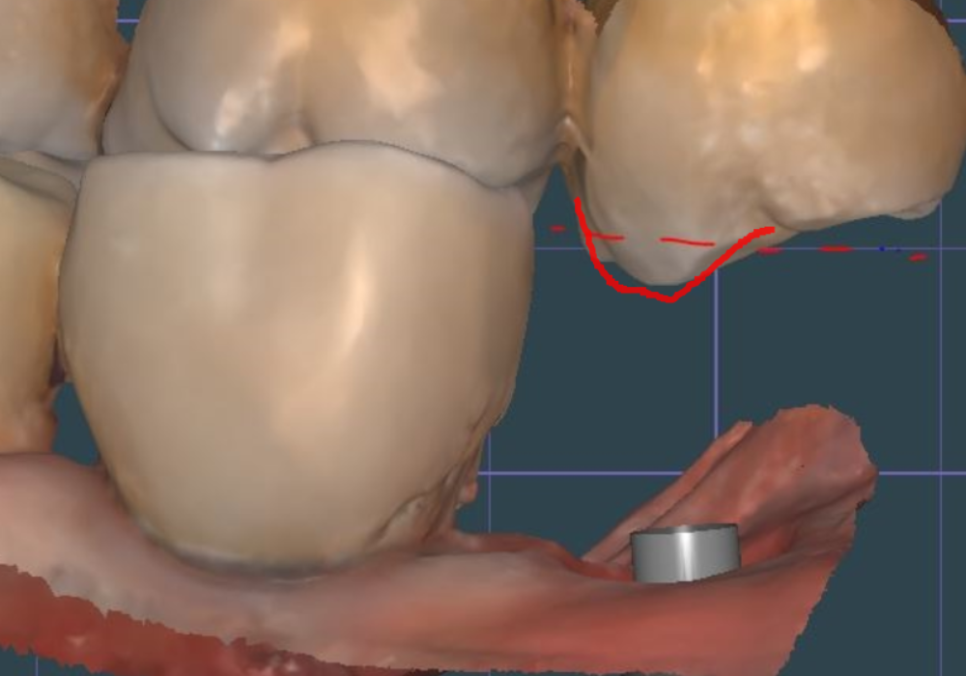
In such cases, the extruded upper tooth must be adjusted
to secure enough space for the #37 implant crown.
We do not simply shape teeth carelessly by eye.
After obtaining precise data with an intraoral scanner and performing a 3D analysis first,
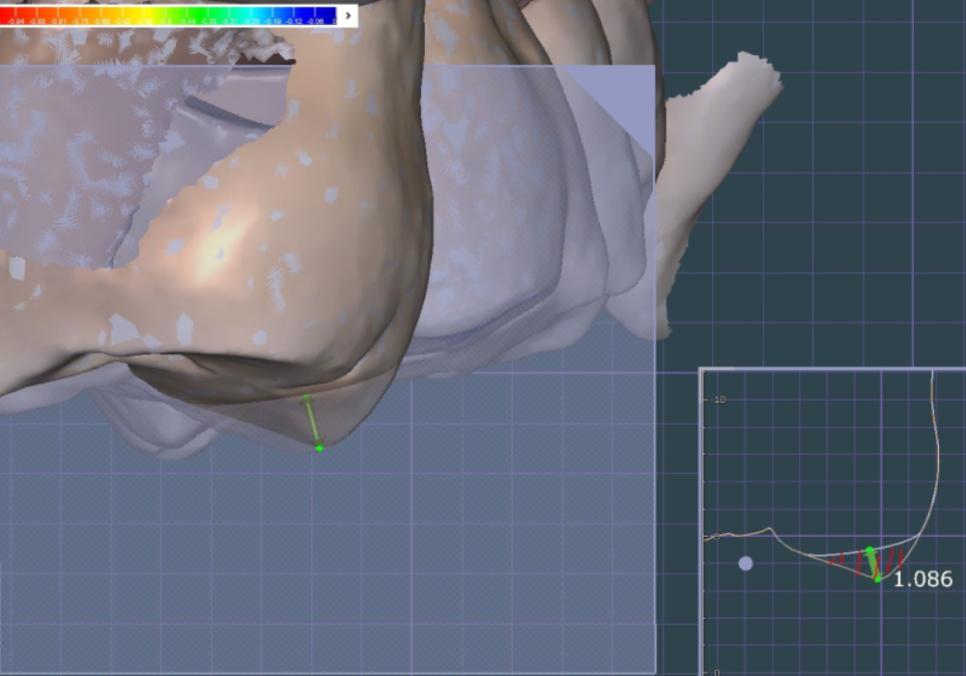
we simulate in advance which area should be adjusted and by how much
to create the optimal space.
That way, we can perform precise adjustment only within the minimum range
that does not cause major damage to the natural tooth~
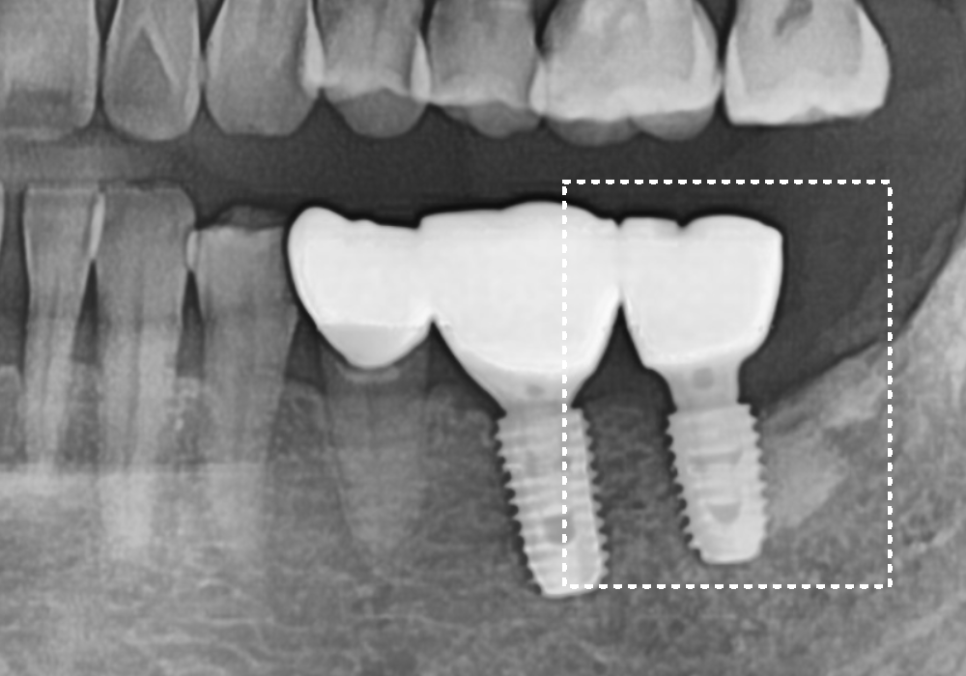
Thanks to this, we minimized damage to the teeth,
and the implant prosthesis could be placed at a very stable height. ^^
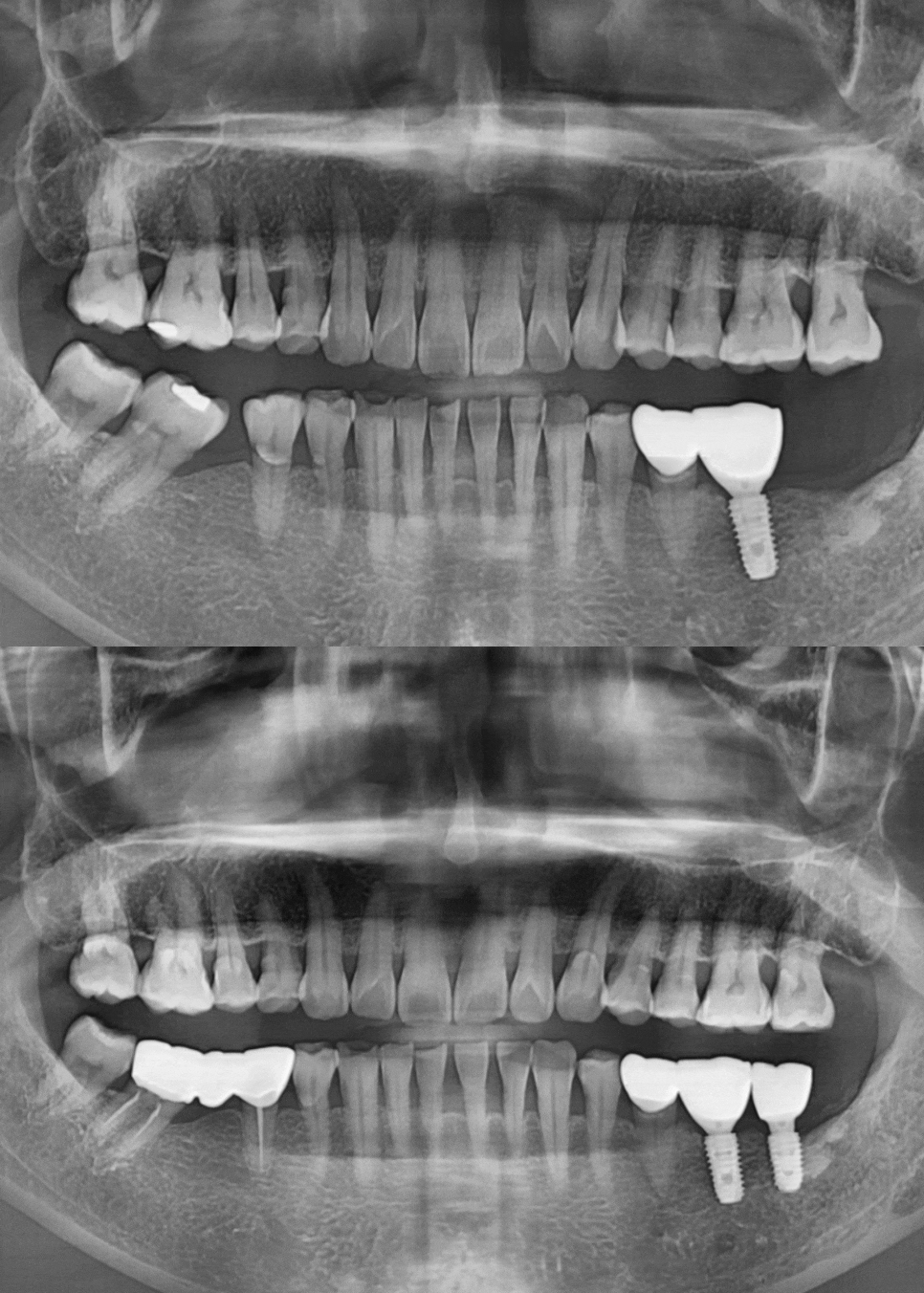
230420 /240808
After a tooth is extracted,
if you keep postponing it with thoughts like, “I’ll do it later when I have time,”
it may eventually require tooth reduction
or even orthodontic treatment,
which can make the treatment cost and time several times greater.
If there is an empty space in your mouth right now,
please get a detailed examination before it is too late.
Thank you for reading this long post today. ^^
▼Check the clinic location▼
The empty space after extraction: this is what happens if you leave it missing for too long.
| Go to make a reservation call |
|---|
| 02-481-4278 |
| This post was written directly by Seoul Bardi Dental Clinic for the purpose of providing medical information, in compliance with Article 56, Paragraph 1 of the Medical Advertising Act. The information provided is for reference only, and we recommend visiting a medical institution and receiving guidance from medical professionals for symptom assessment and accurate care methods. All procedures/surgeries performed at the dental clinic may involve possible risks depending on the individual (inflammation, bleeding, swelling, etc.). Please make decisions after sufficient consultation with medical staff in advance. The treatment cases in this post were photographed with the consent of patients who completed treatment at our clinic, and the before-and-after photos were taken under the same conditions. |