Hello.
This is the director of Seoul Vardi Dental Clinic.
"There’s a smell coming from the implant area."
"Food gets stuck there much more than before,
and sometimes it feels a little sore...
Do I need to redo it?"
An implant is something you invested a lot in,
and if a smell suddenly appears or discomfort develops,
you’ll probably feel alarmed right away.
You may wonder, "Was it placed incorrectly?"
or "Do I need to have it removed and put back in?"
Since implants themselves do not have nerves,
symptoms such as a smell or visible pus may indicate
that a significant problem has already progressed
inside the gums.
Today, I’ll introduce a regrettable case in which
an implant had to be replaced because of peri-implantitis.
Why does an implant smell?
You’ve worked hard to place an implant—do you need to replace it?
If there’s a smell, check this.
Although the implant itself is metal and does not decay,
the gums and bone surrounding it are a different matter.
The professional term for this is "peri-implantitis."
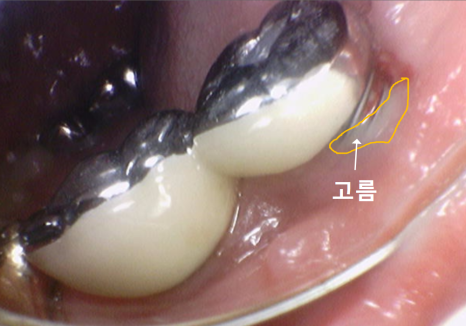
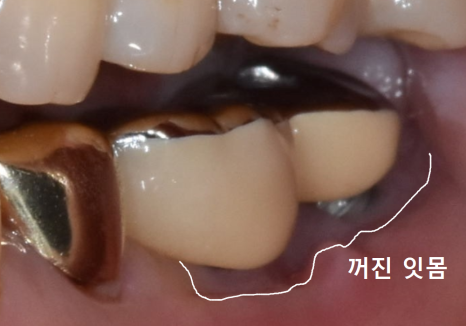
Just as natural teeth can develop gum disease,
this is a condition in which bacteria multiply around the implant
and cause inflammation.
What makes peri-implantitis especially frightening is that
it quietly dissolves the surrounding bone without pain.
That’s why many people visit our clinic only after
the situation has already become serious.
In the end, it can lead to the unfortunate situation of
having to give up and remove an implant that was placed with great effort.
A case in which the implant was eventually removed and re-implanted due to peri-implantitis
You’ve worked hard to place an implant—do you need to replace it?
If there’s a smell, check this.
Recently, a patient visited us because the tip of an implant
in the lower left area had chipped.
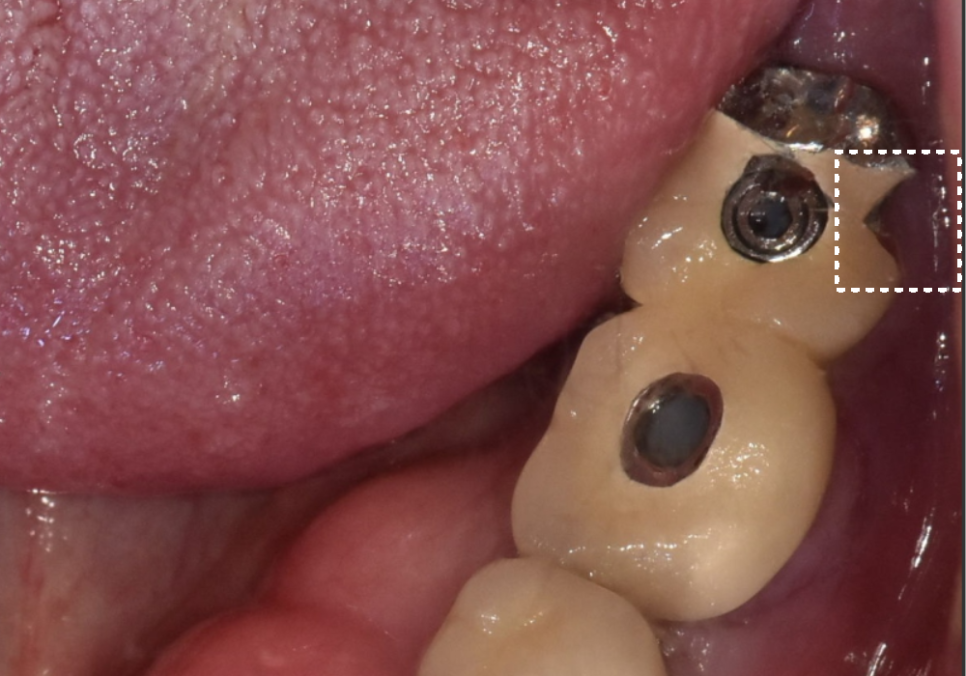
The breakage was a problem, but the patient also said
food had been getting stuck much more easily than before,
and that there seemed to be an unpleasant smell.
When we examined the mouth closely,
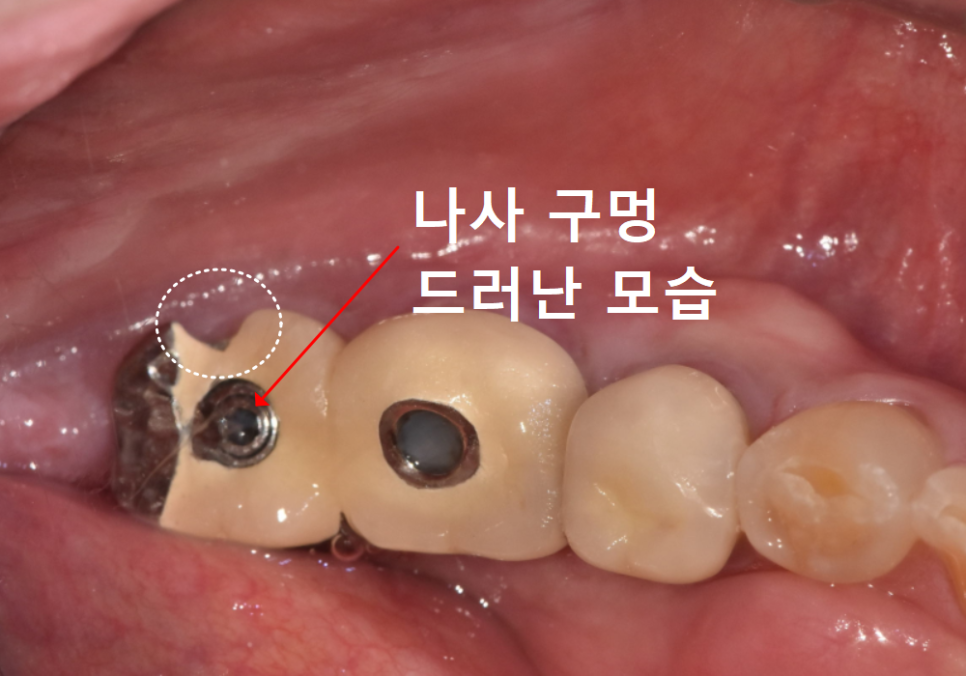
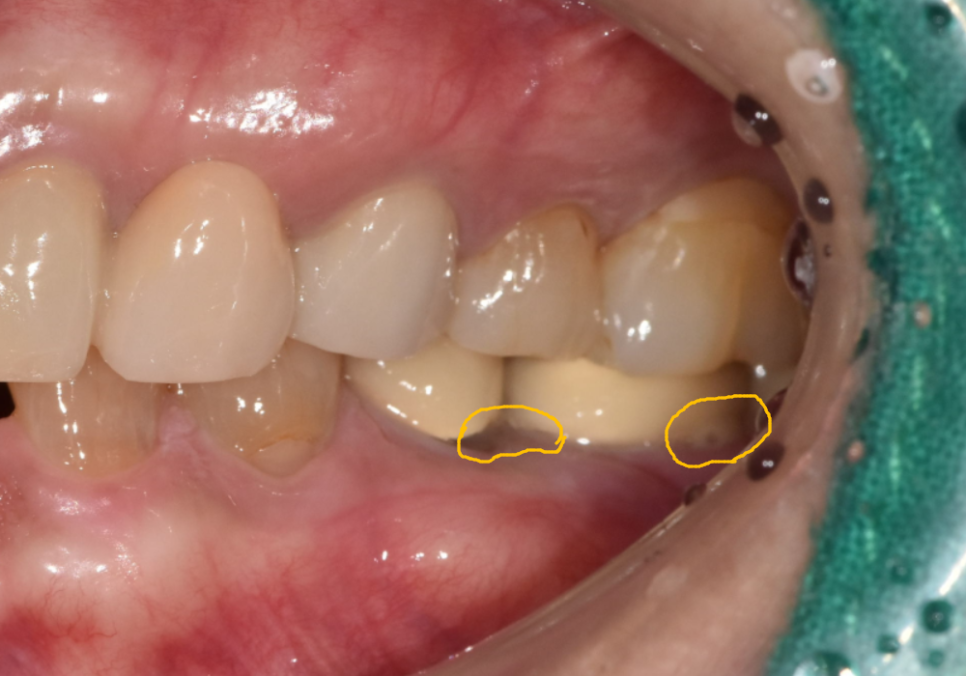
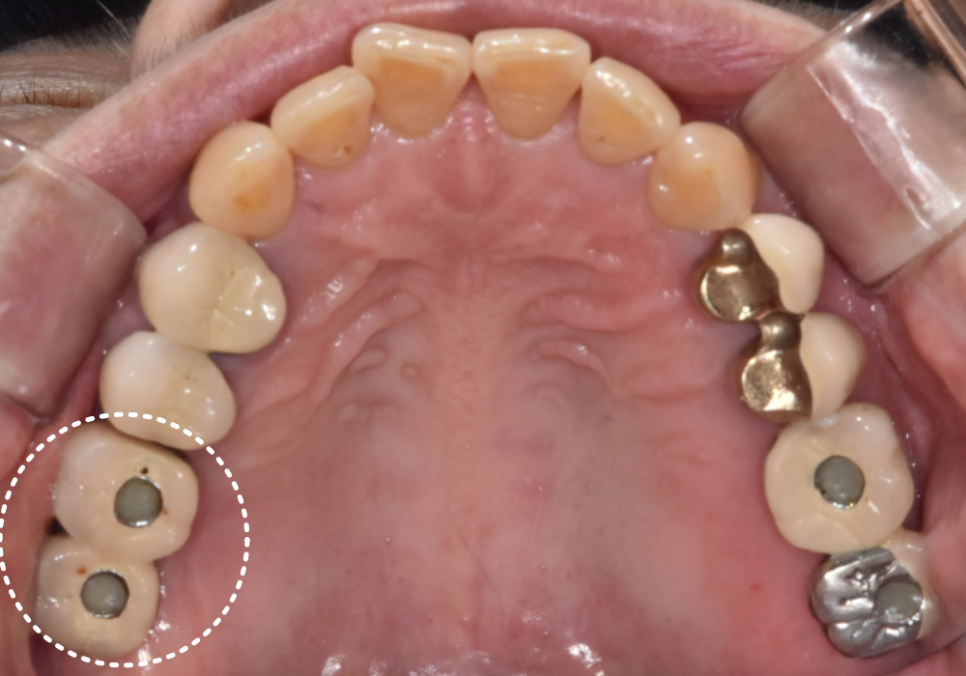
As the prosthesis had worn down significantly and become lower,
the implant screw access hole was exposed,
and the surrounding gums were red and swollen,
with pus seeping out even when touched lightly.
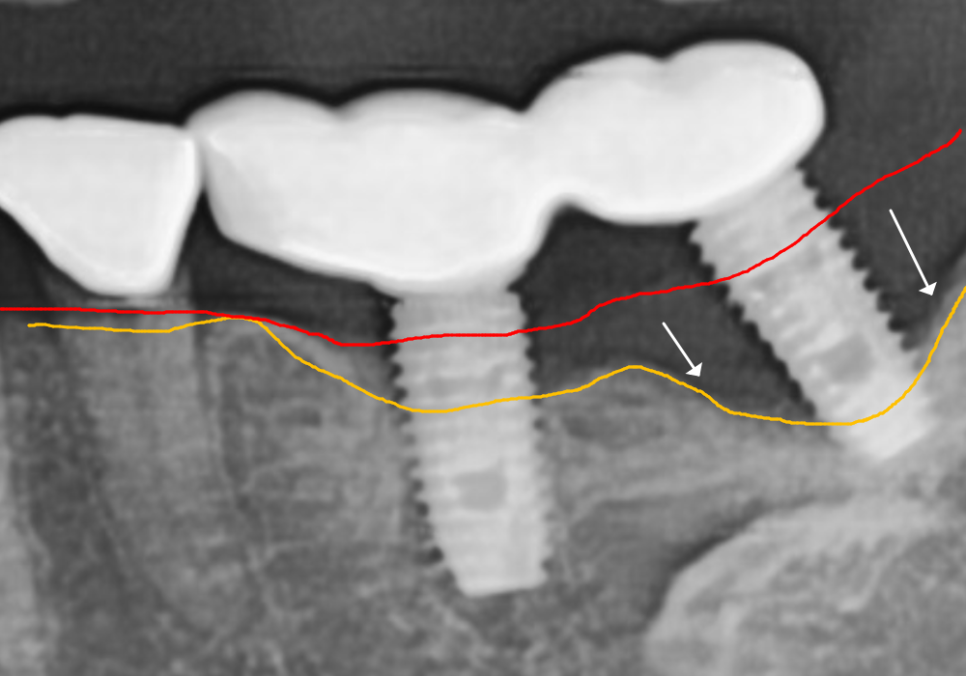
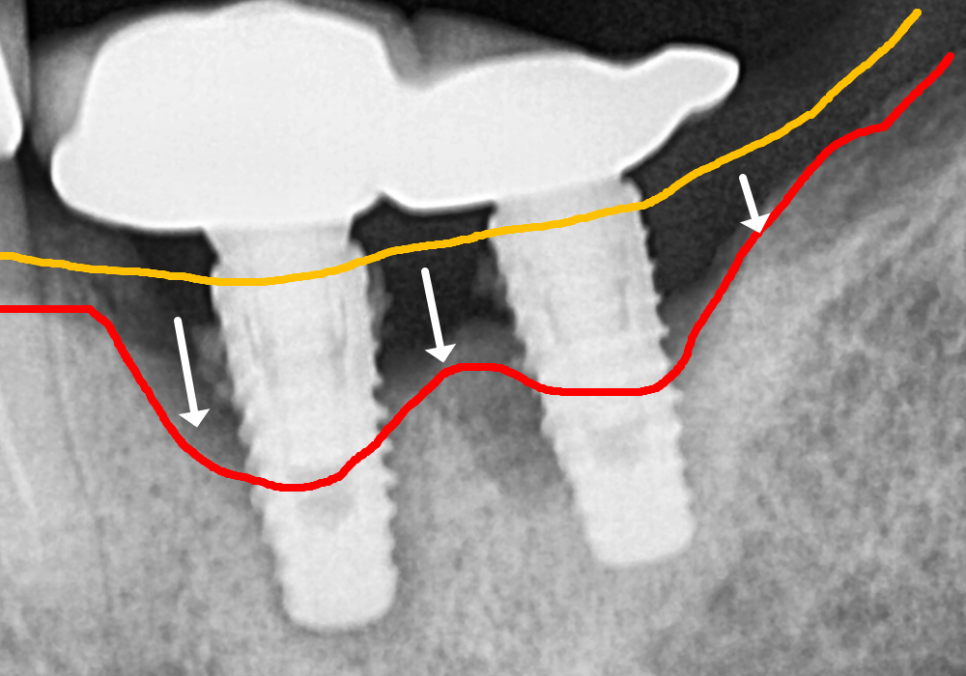
Looking at the X-ray,
there was already substantial bone loss around the implant....
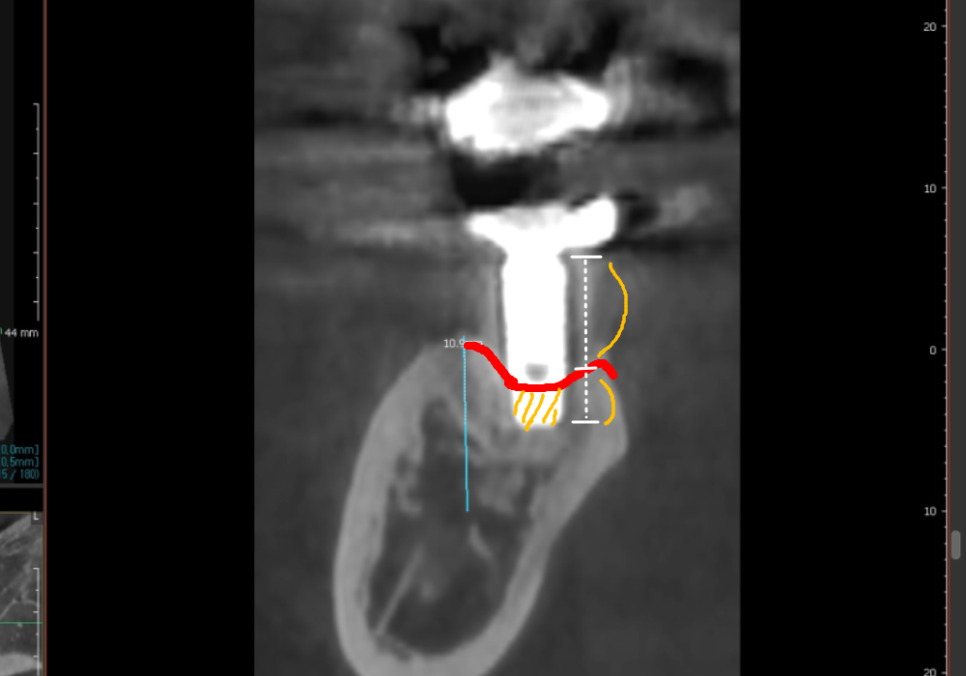
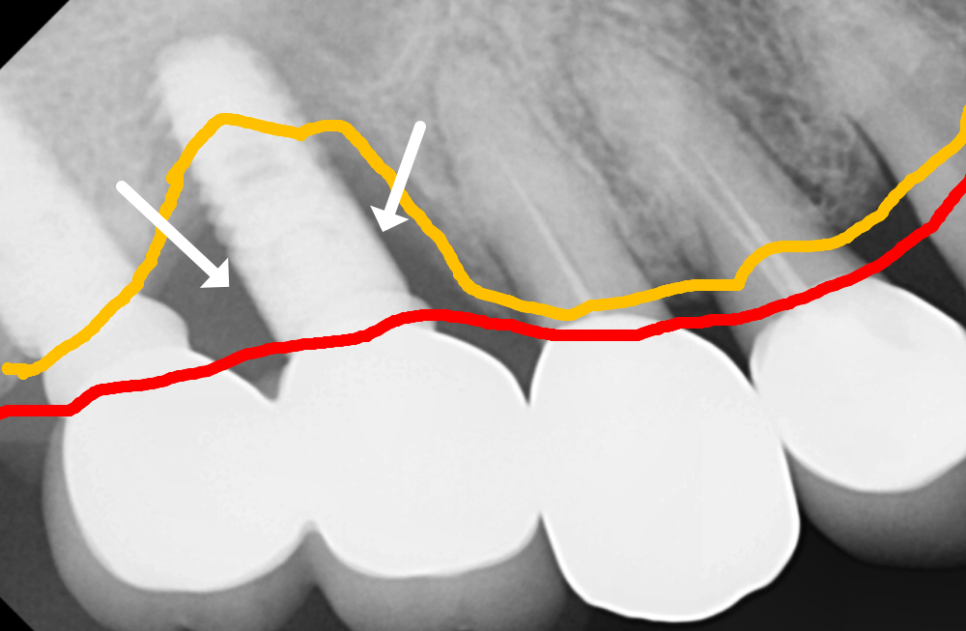
On the CT scan, about two-thirds of the bone
around the implant root had already dissolved,
and only the tip of the root was barely hanging on to the bone.
Why had so much bone dissolved
when it hadn’t even hurt?
If there had at least been pain,
you might have noticed sooner and come to the clinic...
That thought made the situation all the more regrettable.
As mentioned earlier,
peri-implantitis quietly dissolves bone
without any particular pain.
The lack of noticeable symptoms
is precisely what makes peri-implantitis
truly frightening.
Once peri-implantitis begins,
it falls into the following "vicious cycle."
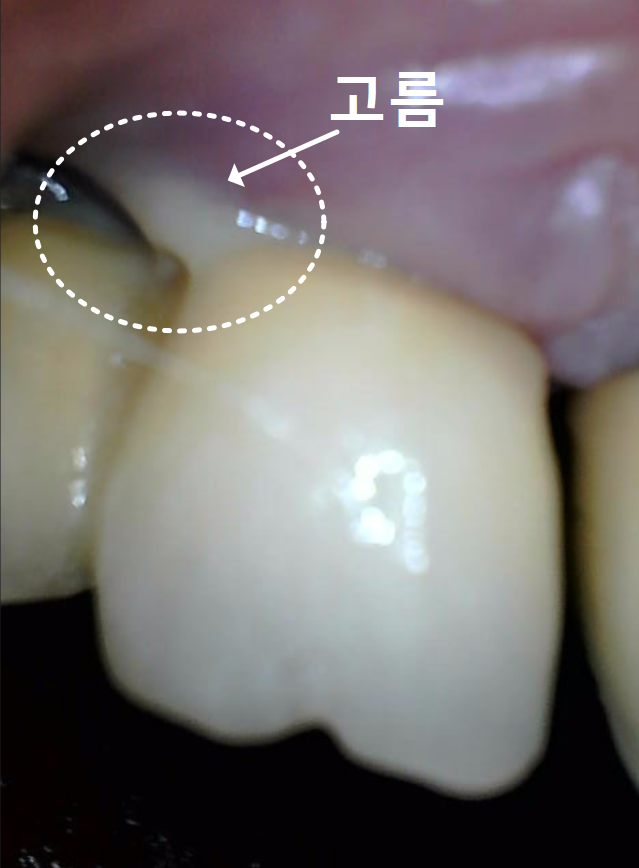
Inflammation begins: Care around the implant becomes insufficient, and peri-implantitis starts.
Bone loss in the gums: As inflammation worsens, it begins to dissolve the bone supporting the implant.
Empty space forms: As the bone dissolves, gaps appear, allowing food debris to penetrate more deeply.
Vicious cycle repeats: Care becomes increasingly difficult, and the bone dissolves even faster.
If this condition is left untreated, the implant may
fall out on its own,
and it can also have a harmful effect by dissolving the bone
around nearby healthy natural teeth as well.
So, to prevent further damage,
we quickly decided to replace the implant.
Treatment results
You’ve worked hard to place an implant—do you need to replace it?
If there’s a smell, check this.
We thoroughly removed the existing implant root,
which was the source of the inflammation,
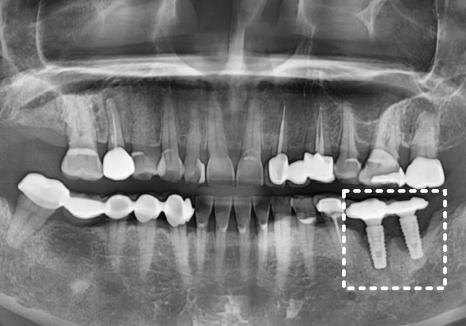
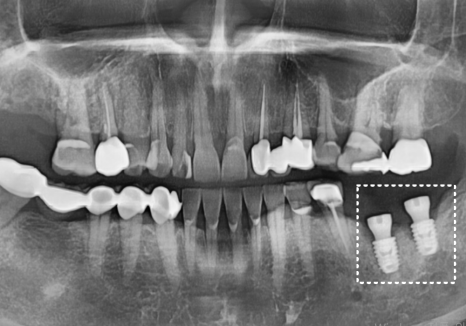
and fortunately, considering the condition of the remaining bone,
we helped place a new implant on the same day.
About three months later,
after confirming that the implant root and the jawbone
had firmly fused into one,
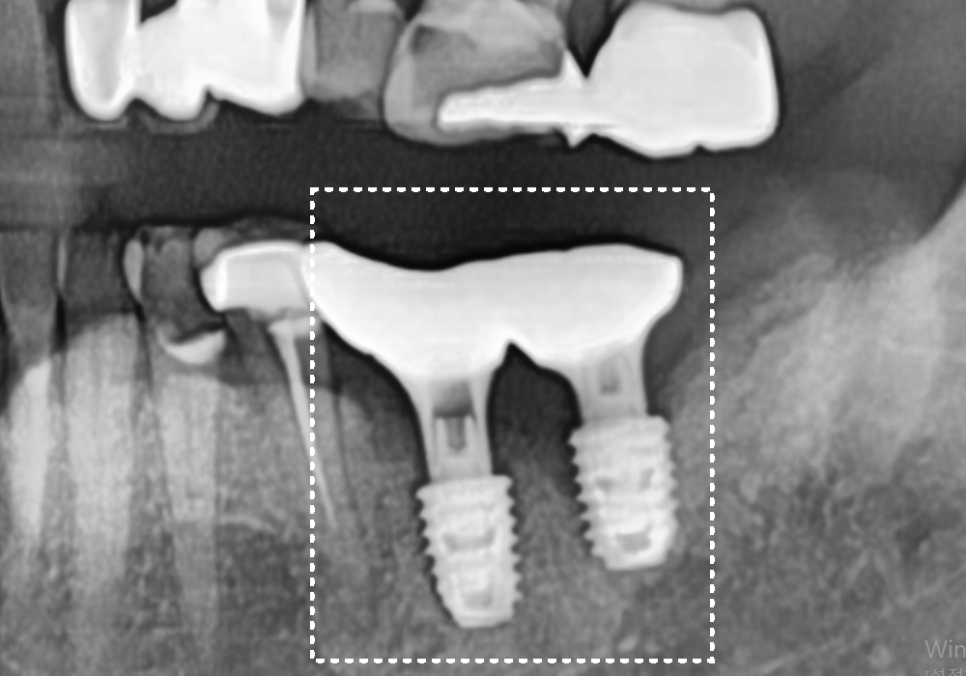
we completed the treatment by placing a zirconia prosthesis
with excellent strength and aesthetics. ^^
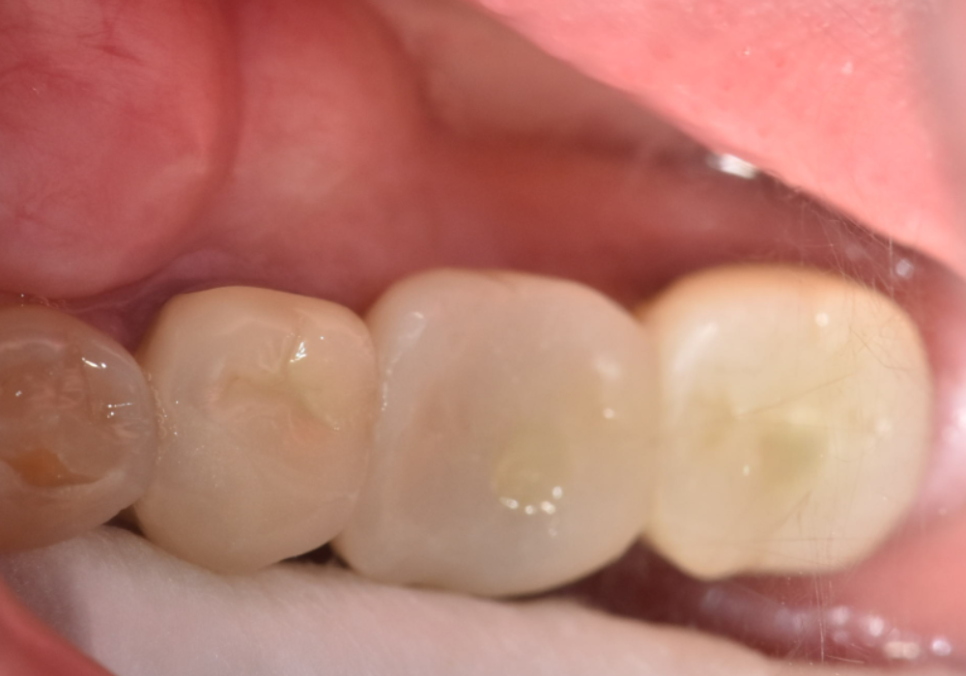
When you hear that an implant you worked hard to place
needs to be redone, anyone would lose sleep over it.
Of course, not every implant
needs to be replaced,
but forcing yourself to hold on to something that no longer works
can lead to damage to the surrounding teeth as well.
If there is a recurring smell around the implant
or your gums are swollen,
don’t just brush it off as "probably because I’m tired."
What matters more than the implant as an option
is an honest diagnosis that protects your current oral health.
We will make a careful assessment without overtreatment,
and determine whether it is truly a case that needs replacement,
or whether it can be saved by another method.
Thank you for reading this long post today.^^
▼Check the dental clinic location▼
You’ve worked hard to place an implant—do you need to replace it? If there’s a smell, check this.
| Go to make a reservation call |
|---|
| 02-481-4278 |
| This post was written directly by Seoul Vardi Dental Clinic for the purpose of providing medical information in compliance with Article 56, Paragraph 1 of the Medical Service Act advertising regulations. The information provided is for reference only, and we recommend that you visit a medical institution and receive guidance from medical professionals for symptom assessment and accurate management methods. All procedures/surgeries performed at the clinic may carry potential risks such as inflammation, bleeding, and swelling depending on the individual. Please make decisions after sufficient consultation with medical professionals in advance. The treatment cases in this post were photographed with the consent of patients who completed treatment at our clinic, and the before-and-after photos were taken under identical conditions. |