Hello!
I am the director of Seoul Bardy Dental Clinic.
▼ Check the dental clinic location ▼
7 out of 10
patients with chronic temporomandibular joint pain
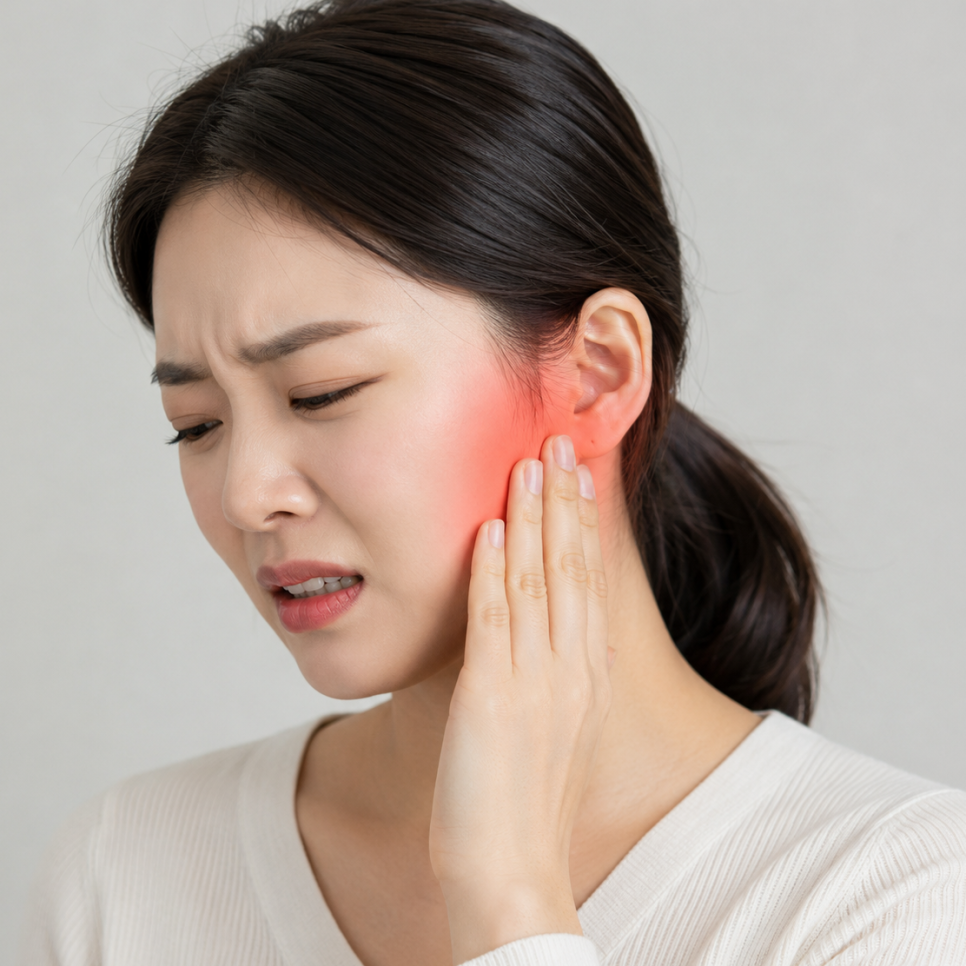
There is one thing
they have in common.
They all have the habit of
chewing only on one side.
(Maranhão et al., 2017, Scientific Data, Nature)
Have you ever paid attention to this?
When chewing food,
which side feels more comfortable?
If one side feels more comfortable and you naturally
use only that side,
it may not be a preference.
It could be a sign that the opposite side is weak or painful.
Today, I will explain why unilateral chewing develops,
how far its effects can extend,
and how it can be addressed.
Here is the order of the discussion.
CHAPTER 1. Why do people chew only on one side?
CHAPTER 2. One year is the turning point
CHAPTER 3. Four changes caused by unilateral chewing
CHAPTER 4. Can it be reversed?
Chapter 1. Why do people chew only on one side?

Unilateral chewing is often
a habit that becomes established
because people avoid the opposite side when it feels uncomfortable.
If a molar on the opposite side is missing,
or if there is a sensitive tooth, a broken restoration, or gum inflammation,
we naturally
move food toward
the side that does not hurt.
At first, the side is avoided because it is uncomfortable,
but when this pattern becomes established for six months or longer,
the habit itself becomes stronger than the pain.
This is why people may continue using the same side
even after the causative tooth has been treated.
Chapter 2. One year is the turning point
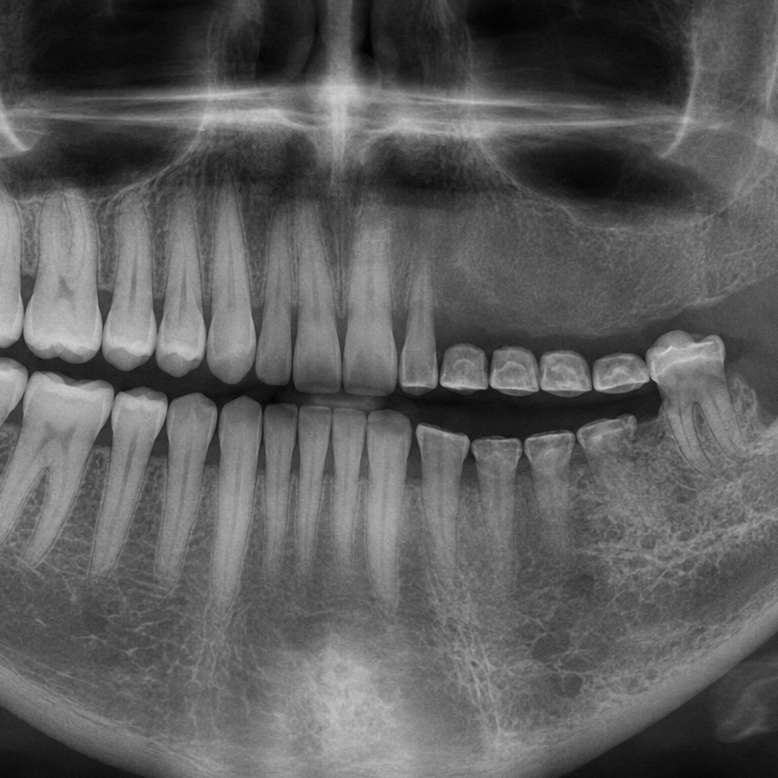
Example photo
A study compared temporomandibular joint symptoms in 67 patients with unilateral chewing habits,
dividing them into two groups:
those with habits lasting less than one year (31 patients)
and those with habits lasting one year or longer (36 patients).
The group whose habit had continued for one year or longer had significantly higher rates of pain in both temporomandibular joints
and disc displacement.
The same study also reported that temporomandibular joint symptoms significantly improved
after the normal chewing pattern was restored.
(Manjunath et al., 2025, J Indian Acad Oral Med Radiol)
In other words, one year is the clinical turning point.
[Reference paper] Manjunath et al. (2025) Unilateral chewing
TMD symptoms were significantly more severe when the habit continued for one year or longer, and improved after correction of the chewing pattern.
https://journals.lww.com/aomr/fulltext/2025/07000/impact_of_unilateral_chewing_habit_on.15.aspx
Chapter 3. Four changes caused by unilateral chewing
- Temporomandibular joint strain
The temporomandibular joint on the side used continuously is overloaded,
while the other side receives too little movement.
This can lead to clicking when opening the mouth, one-sided headaches, and shoulder pain.
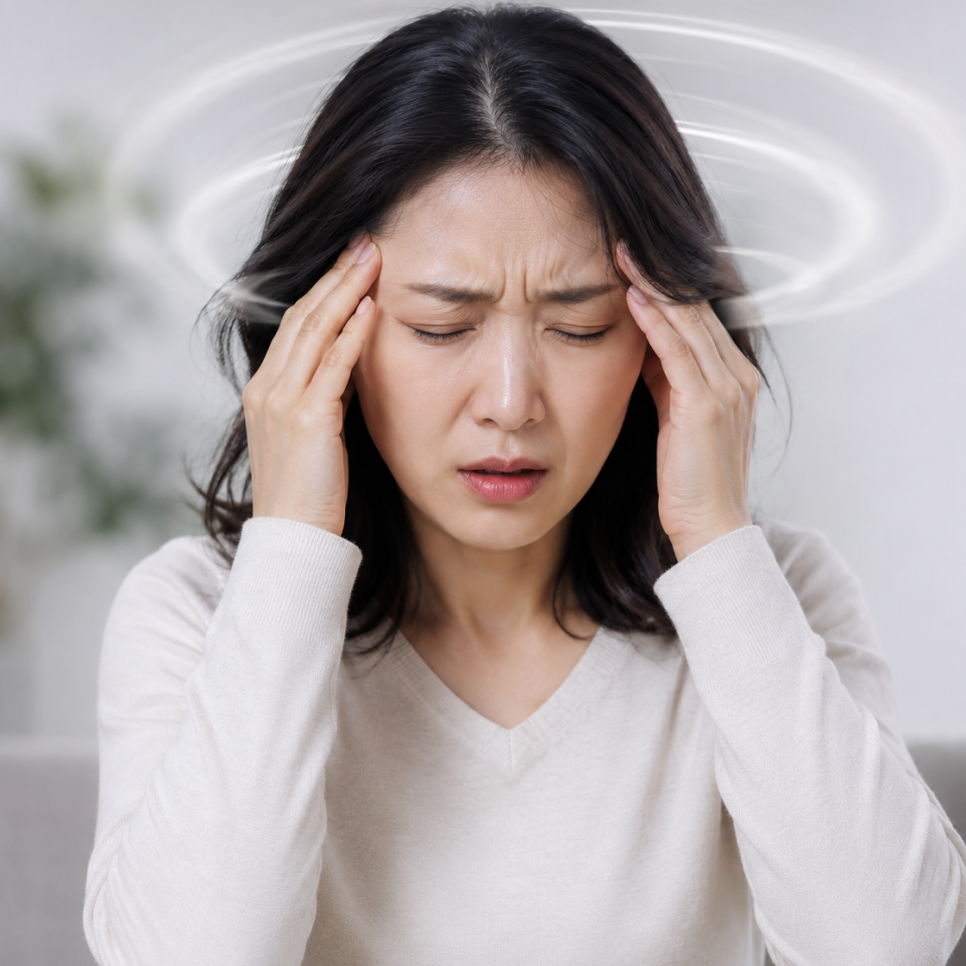
- Facial asymmetry
The primary muscle used for chewing
is the masseter (the chewing muscle that extends from the cheekbone to the jawbone).
When only one side is used, the masseter on that side may develop more,
which can lead to left-right asymmetry, such as a square-shaped jaw.
- Gum disease and cavities
On the chewing side, the self-cleaning effect of food rubbing against the tooth surfaces
helps clean the teeth.
On the other hand, plaque and tartar can build up more quickly on the side that is not used,
increasing the risk of gum disease and cavities.
- Tooth wear and cracks
One side bears all the force
that would normally be distributed between both sides.
As microscopic cracks accumulate and wear progresses more quickly,
the lifespan of restorations may also be shortened.
Chapter 4. Can it be reversed?
Two key issues must be addressed at the same time.
First, a detailed evaluation of the causative tooth
If a molar is missing, an implant
or bridge can restore balance between both sides during chewing.
If there is a sensitive tooth, a broken restoration, or gum inflammation,
those problems must be addressed first.
Second, retraining the chewing habit
Consciously practicing chewing food on both sides
for two to three months
can be helpful.
Let me summarize.
Chewing only on one side
is not necessarily because that side is preferred.
It is a habit that becomes established
as people avoid the opposite side because it hurts.
One year is the clinical turning point.
If both the causative tooth and the chewing habit
are addressed before then,
balance between both sides
may be restored.
For those suspected of having a unilateral chewing habit,
we first identify the precise cause
through a dental evaluation.
When implants or restorations are needed,
we develop a treatment plan focused on
restoring balanced chewing on both sides.
Thank you.
If the cause is not identified first,
it is difficult to find a solution.
[Summary of reference papers]
- Maranhão LC et al. (2017) — 71% of patients with chronic TMD habitually chewed on one side
https://www.ncbi.nlm.nih.gov/pmc/articles/PMC5674825/
- Manjunath et al. (2025) — TMD symptoms were more severe when unilateral chewing continued for one year or longer and improved after correction
https://journals.lww.com/aomr/fulltext/2025/07000/impact_of_unilateral_chewing_habit_on.15.aspx
- Fukami Y et al. (2025) — Of 141 patients with facial deformities, 58% chewed on one side; associated with mandibular asymmetry
https://www.ncbi.nlm.nih.gov/pmc/articles/PMC12693447/
| This post was written directly by Seoul Bardy Dental Clinic for the purpose of providing medical information, in compliance with Article 56, Paragraph 1 of the Medical Service Act concerning medical advertising. We recommend using the information provided for reference only. For symptom assessment and accurate management methods, please visit a medical institution and receive guidance from a medical professional. All procedures and surgeries performed at a dental clinic may involve risks depending on the individual, such as inflammation, bleeding, and swelling. Please make your decision after having a thorough consultation with a medical professional. AI-generated images used |
| Directions |