Hello!
I am the director of Seoul Vardi Dental Clinic.
When people hear “sinusitis,” they usually think of complications after a cold,
rhinitis, or allergies.
But if your sinusitis causes blockage on only one side of your nose, the situation may be different.
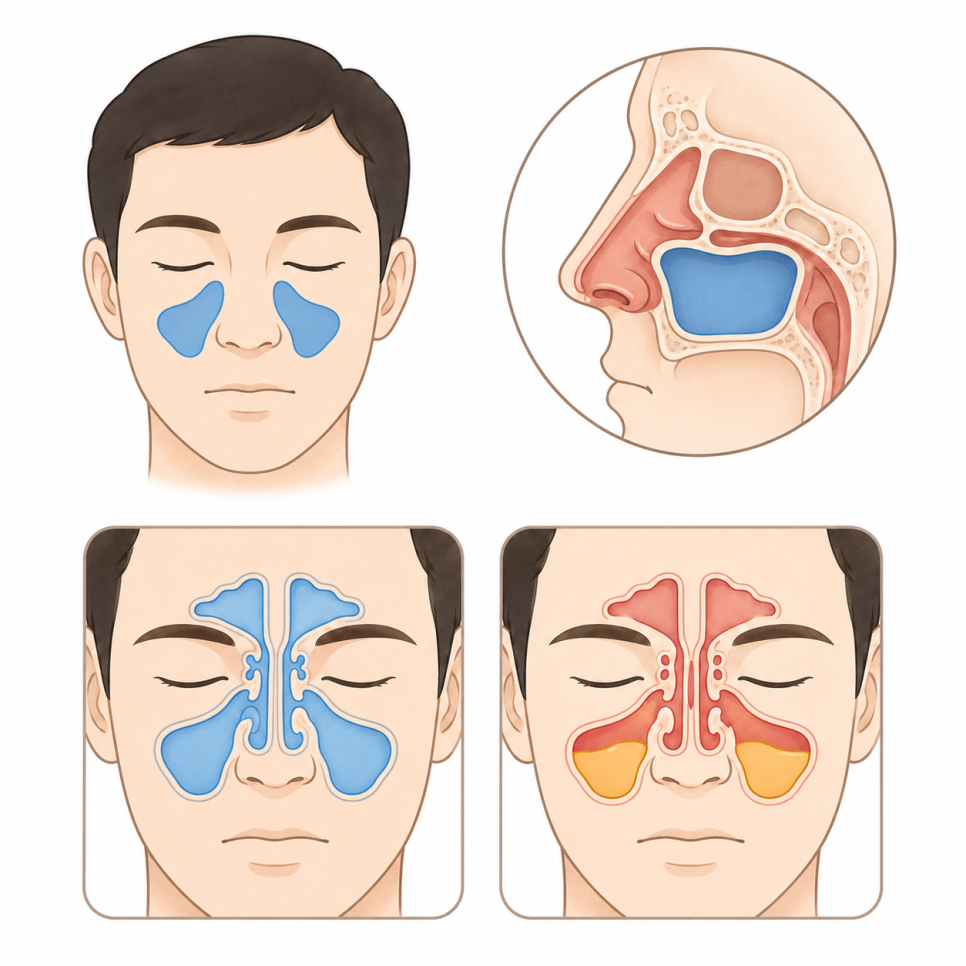
Studies have reported that
45–75% of cases of unilateral
maxillary sinusitis (sinusitis)
are caused by dental problems.
(Craig JR et al., 2022, International Forum of Allergy & Rhinology)
This is called
odontogenic maxillary sinusitis in medicine.
If your symptoms do not improve or keep recurring
despite repeated treatment by an otolaryngologist,
you should consider that the cause
may not be in your nose,
but possibly in an upper molar.
Today, I will explain why teeth can affect the nose,
how to distinguish this condition from ordinary sinusitis,
and how it should be treated.
Why Molars Can Cause Nasal Symptoms
The tips of the roots of the upper molars
and the floor of the maxillary sinus (the air-filled cavity inside the cheek)
are separated by only a thin layer of bone and are almost touching.
In some people, the tips of the roots
extend slightly into the maxillary sinus.
Therefore, when the following problems occur in an upper molar,
inflammation can spread through the thin bone into the maxillary sinus.
Tooth decay that has reached the nerve,
Periodontitis (inflammation deep in the gums)
Periapical abscess (an abscess at the tip of the root)
Vertical tooth fracture
Complications after an implant or tooth extraction
This is odontogenic maxillary sinusitis,
and it is one of the most common causes of
unilateral (one-sided) chronic maxillary sinusitis.
(Craig JR et al., 2021, ORL state-of-the-art review)
3 Signs That Differ from Ordinary Sinusitis
Although ordinary sinusitis
and odontogenic maxillary sinusitis may appear to have similar symptoms,
there are important differences.
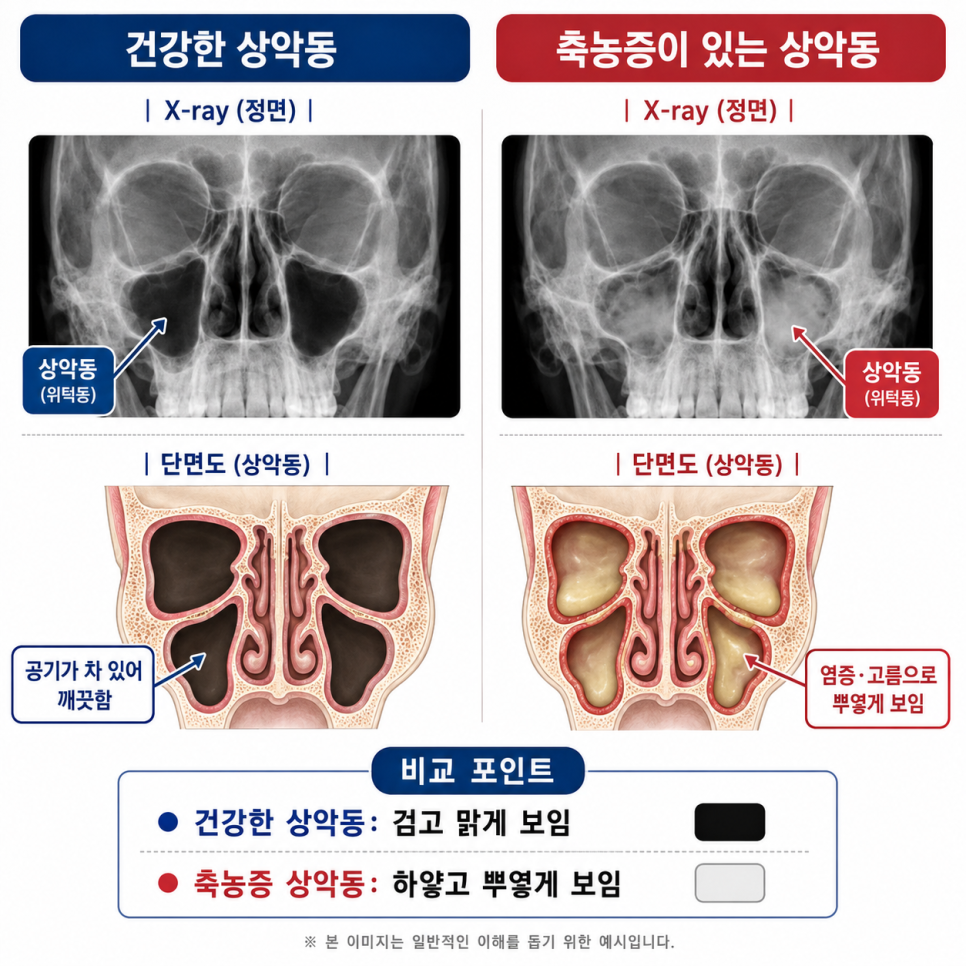
- It occurs only on one side of the nose
Yellow nasal discharge and nasal blockage occur only in the nostril on the side of the problematic tooth.
This is the biggest difference from ordinary sinusitis, which blocks both sides.
- There is a foul odor inside the nose
Because pus has collected around the tooth causing the problem,
the patient may notice an unpleasant smell,
such as a rotten or sewage-like odor.

- Toothache and cheekbone pain occur together
The upper molar may throb, while the area around the cheekbone on the same side feels heavy or uncomfortable.
The possibility is higher if pain occurs when chewing.
Even one of these three signs may warrant suspicion;
if you have two or more, it may be advisable to receive a dental evaluation first.
Diagnosis with CT, Treatment Starting with the Dentist
The key to diagnosis is imaging.
If a maxillary sinus CT (or dental CBCT) shows
that only one maxillary sinus is cloudy
and there are signs of inflammation
at the tip of an upper molar root on the same side,
the condition is diagnosed as odontogenic.
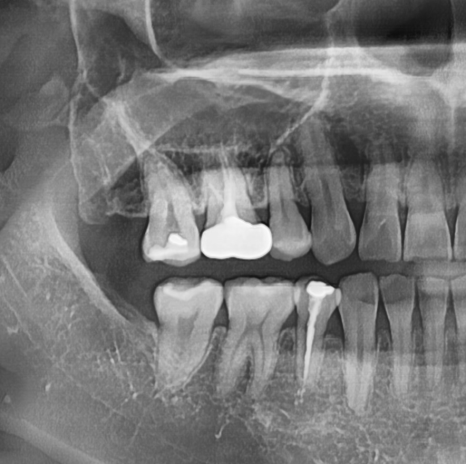
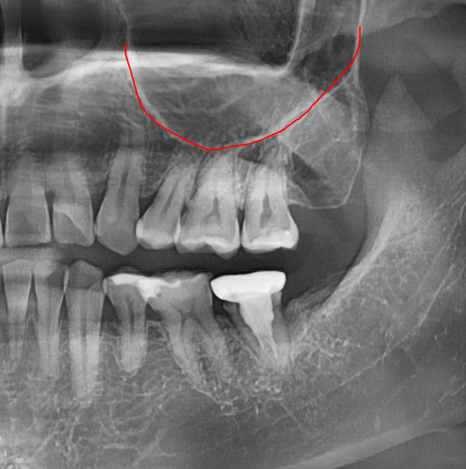
Example images
A normal maxillary sinus is filled with air and appears black on a CT scan,
while inflammation causes the affected area to appear white.
Comparing the two sides is the clearest clue.
Why the Order of Treatment Matters
This is the key point.
If the tooth causing the problem is not treated first,
any treatment may be followed by recurrence.
If antibiotics and sinus irrigation are simply repeated by an otolaryngologist,
the symptoms may temporarily subside
and then soon return.
Because bacteria continue to be supplied
from the tooth causing the problem.
The treatment sequence is as follows.
Treatment of the problematic tooth (root canal treatment or extraction)
→ Reduce the sinus inflammation with antibiotics and anti-inflammatory medication (in collaboration with an otolaryngologist)
→ Decide on an implant or bone graft after the inflammation has sufficiently settled
[Reference papers]
Craig JR et al. (2021) reported that 45–75% of unilateral chronic maxillary sinusitis cases are odontogenic.
If only otolaryngological treatment is provided without treating the problematic tooth, the recurrence rate is significantly higher. https://pmc.ncbi.nlm.nih.gov/articles/PMC9126162/
This is also why bone grafting or implant placement should not be rushed. If the procedure is performed while inflammation remains, the failure rate may be higher even when high-quality materials are used.
Let me summarize.
If only one side of your nose is blocked,
you notice a foul odor,
and your molar is throbbing,
seeing a dentist before an otolaryngologist
may be the right choice.
“If your symptoms do not improve no matter how much nasal medication you take,
the cause may not be in your nose.”
For those suspected of having odontogenic maxillary sinusitis,
we examine the upper molars and maxillary sinuses together using CBCT,
and provide step-by-step treatment,
with collaboration from an otolaryngologist when necessary.
Thank you.
[Summary of reference papers]
Craig JR et al. (2021) — State-of-the-art review of odontogenic maxillary sinusitis; 45–75% of unilateral chronic maxillary sinusitis cases are odontogenic, and a multidisciplinary approach is standard.
https://pmc.ncbi.nlm.nih.gov/articles/PMC9126162/
Vitali FC et al. (2023) — Meta-analysis of the worldwide prevalence of odontogenic maxillary sinusitis (31 studies); 51% based on maxillary sinuses and 50% based on patients.
https://www.nature.com/articles/s41368-024-00278-z
Matsumoto Y et al. (2015) — 72% of unilateral maxillary sinusitis cases are odontogenic. Auris Nasus Larynx 42:288-293
▼ Check the dental clinic location ▼
| This post was written directly by Seoul Vardi Dental Clinic for the purpose of providing medical information, in compliance with Article 56, Paragraph 1 of the Medical Advertising Act. We recommend using the information provided for reference only. For an assessment of your symptoms and accurate management guidance, please visit a medical institution and consult with a medical professional. All procedures and surgeries performed at the dental clinic may involve individual risks, such as inflammation, bleeding, and swelling. Please make your decision after sufficient consultation with a medical professional. The treatment cases shown in this post were photographed with the consent of patients who completed treatment at our clinic, and the before-and-after photos were taken under identical conditions. |
| Directions |