Hello!
I am the director of Seoul Bardi Dental Clinic.
▼ Check the Dental Clinic Location ▼
| This post was written directly by Seoul Bardi Dental Clinic for the purpose of providing medical information, in compliance with Article 56, Paragraph 1 of the Medical Advertising Act. The information provided is for reference only, and we recommend visiting a medical institution to receive guidance from a medical professional regarding symptom assessment and accurate care methods. All procedures and surgeries performed at a dental clinic may involve risks depending on the individual, such as inflammation, bleeding, and swelling. Please make your decision after having a thorough consultation with a medical professional in advance. All images are AI-generated. |
If you have ever looked into implants or dentures for your parents,
have you heard that the policy changed once again in February last year?
Insurance coverage for implants and dentures for those aged 65 and over
has continued to expand since it was introduced in 2014.
July 2014 — Coverage began for those aged 75 and over (50% out-of-pocket payment)
July 2015 — Expanded to those aged 70 and over
July 2016 — Expanded to those aged 65 and over
July 2018 — Out-of-pocket payment reduced from 50% to 30%
February 2025 — Zirconia added to the covered prosthetic materials
(Ministry of Health and Welfare / National Health Insurance Service)
If you put it off based on information you looked up two or three years ago,
the current benefits are better.
Today, I will explain the details accurately
based on the rules currently in effect in 2026.
Implants — Two for life, 30% out-of-pocket payment
Those aged 65 and over are eligible for a
30% out-of-pocket payment rate for implants.
The eligibility requirements are as follows.
- Aged 65 or over (from the date the birthday shown on the resident registration has passed)
- Partially edentulous — at least one natural tooth must remain
- Up to two implants per lifetime (the upper and lower jaws are not counted separately)
If no natural teeth remain at all
and the person is completely edentulous,
the person is eligible for complete denture coverage rather than implant coverage.
Dentures — Once every seven years, 30% out-of-pocket payment
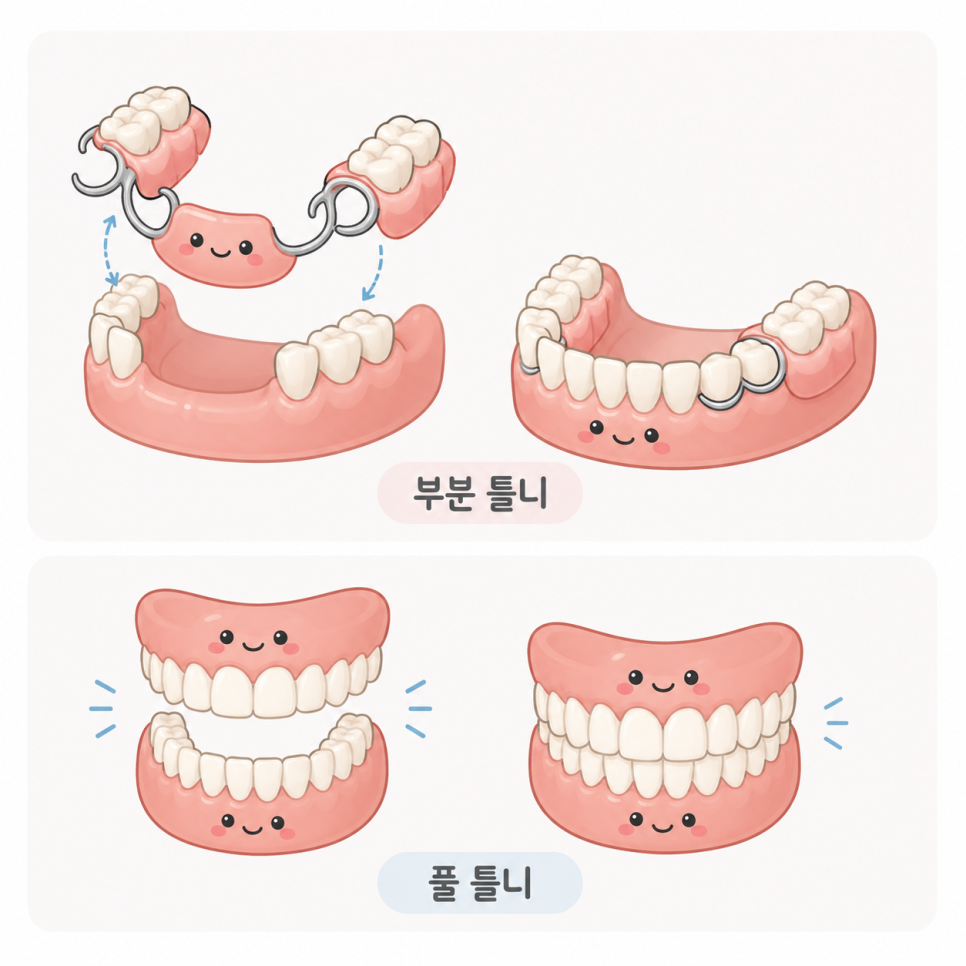
Dentures are also covered at a 30% out-of-pocket payment rate.
However, even if seven years have not passed,
if the oral condition has changed significantly
and the existing dentures can no longer be used,
new dentures may be made again based on a medical opinion.
The financial burden is lower for low-income beneficiaries
Those receiving Medical Aid or classified as near-poor beneficiaries have lower out-of-pocket payment rates.
Implants
Medical Aid Type 1: 10%
Medical Aid Type 2: 20%
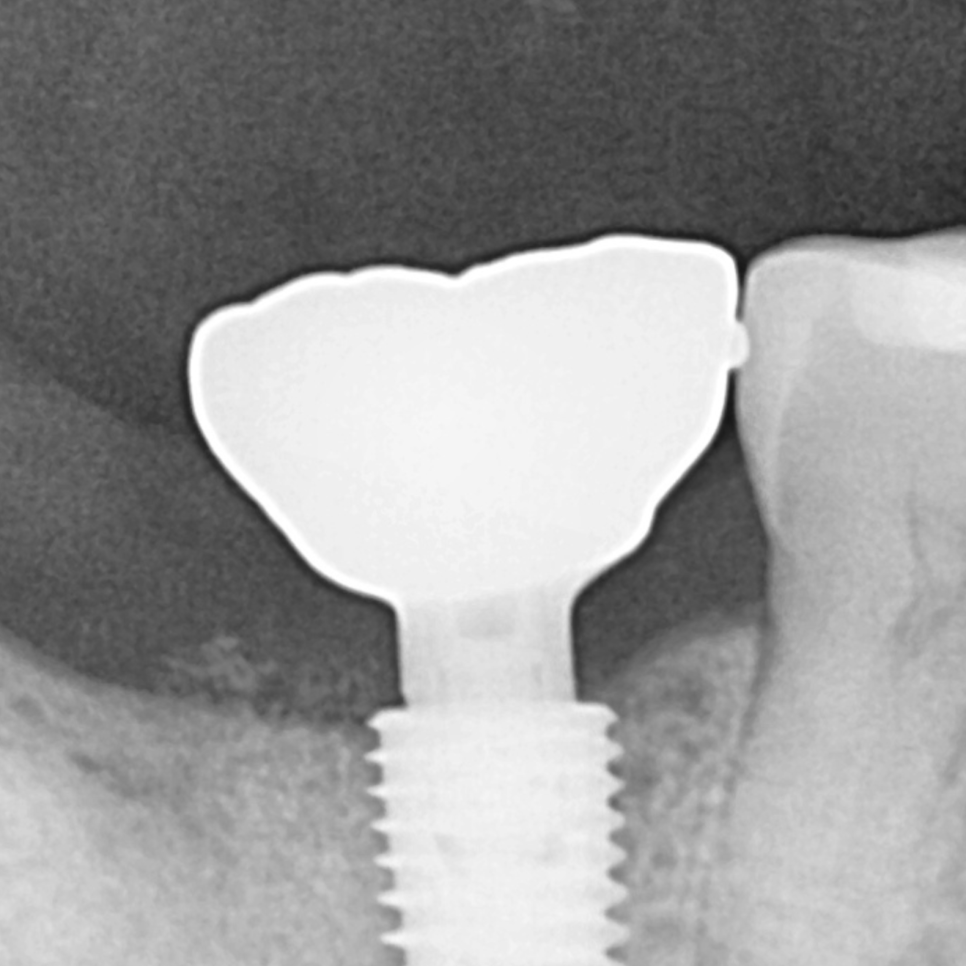
Example photo
Dentures
Medical Aid Type 1: 5%
Medical Aid Type 2: 15%
Near-poor beneficiaries with rare or intractable diseases (C): 5%
Near-poor beneficiaries with chronic diseases (E·F): 15%
(Ministry of Health and Welfare, Medical Aid Denture and Dental Implant Guide)
Insurance-covered implants use the same materials
We are often asked,
“Don’t insurance-covered implants use inexpensive materials?”
No.
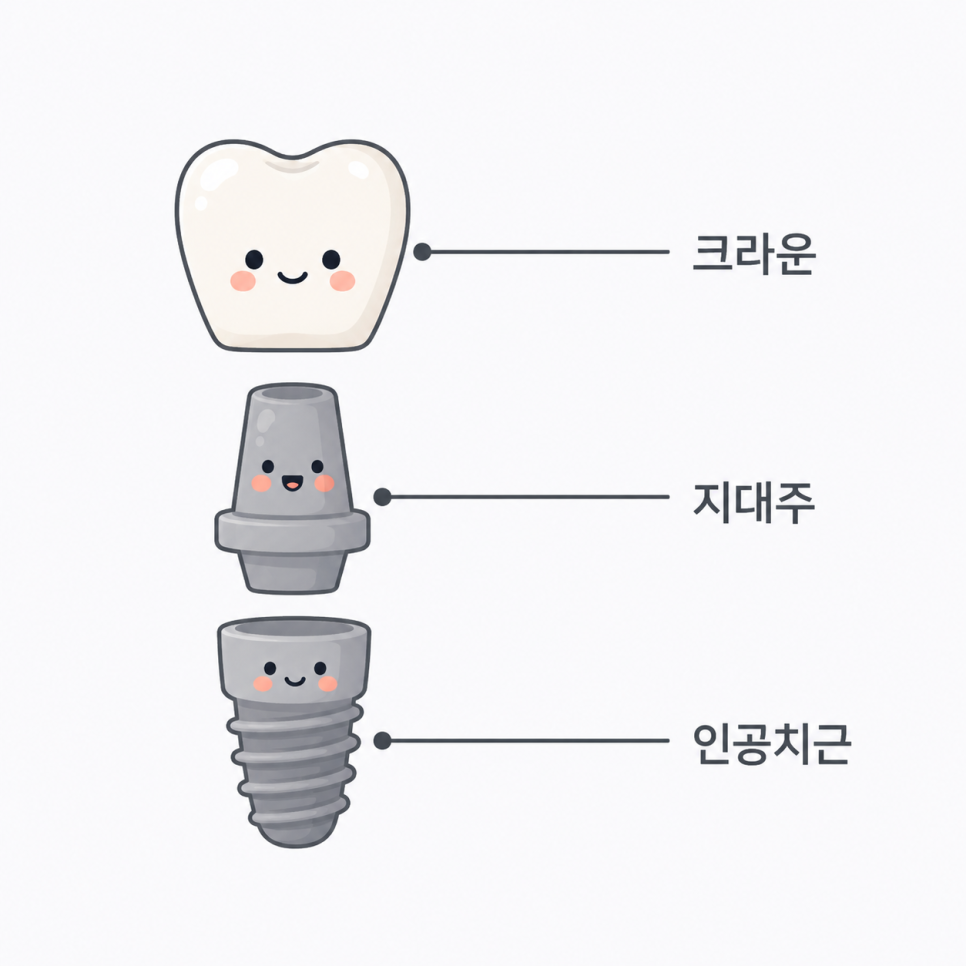
The implant fixture, or root portion, used for insurance-covered implants
uses the same material as non-covered implants.
The system provides partial government support for the cost;
it does not lower the grade of the materials.
For the prosthesis, or crown portion, insurance coverage was expanded in February 2025
to include zirconia in addition to PFM.
The out-of-pocket payment differs depending on the material selected,
but both options are available under insurance coverage.
(Ministry of Health and Welfare, Health Insurance Policy Deliberation Committee resolution in December 2024; implemented in February 2025)
| Three checkpoints for not missing out on your benefits |
- Be sure to register in advance before treatment
The dental clinic must register you with the National Health Insurance Service
in advance before treatment begins for insurance coverage to apply.
-
Retroactive coverage after treatment is not possible.
-
Check which items are excluded from coverage
Bone grafting, sinus lift procedures,
and one-piece implants are excluded from insurance coverage.
Before treatment, be sure to confirm how much additional cost
may arise depending on the condition of your gums and bone.
Implants are limited to just two per lifetime
There is a lifetime limit of two implants, regardless of whether they are placed in the upper or lower jaw.
If you have already received two implants through insurance,
all additional implants are non-covered services.
(National Assembly Budget Office Economic Information Center / Government24 Medical Aid Guide)
Treatment planning is about “where to place them,” not “how many to place”
It is not always the right answer to place implants
in every position where a tooth is missing.
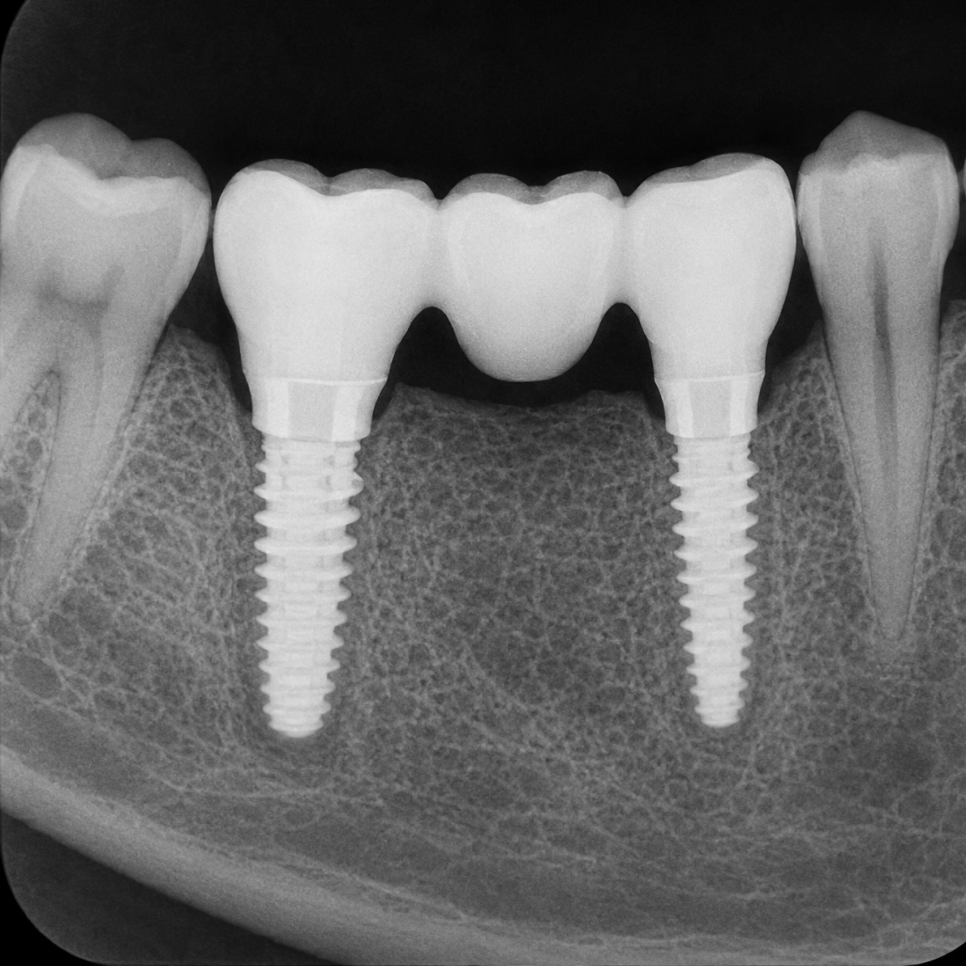
Example photo
For example, if six molars are missing,
it may be possible to place two implants at each end, for a total of four implants,
and connect the spaces between them with bridges.
If two of those implants are covered by insurance, the out-of-pocket payment can be significantly reduced.
Compared with placing all six implants as non-covered services,
the financial burden is reduced without changing the materials.
| Let’s summarize. |
If you are aged 65 or over,
implants are limited to two per lifetime with a 30% out-of-pocket payment,
and dentures are covered once every seven years with a 30% out-of-pocket payment.
It is not that the materials are different;
the government provides support for part of the cost.
You cannot receive benefits if you do not know about them.
“Treatment planning, not just treatment costs, determines your expenses in later life.”
For seniors aged 65 and over,
we explain separately which items may be covered by insurance and which are non-covered before treatment,
and design the treatment plan using the most efficient number and placement of implants.
Thank you.
[References]
Ministry of Health and Welfare / National Health Insurance Service — Guide to Coverage for Implants and Dentures for Seniors
https://www.nhis.or.kr/static/html/wbma/c/wbmac0217.html
Government24 — Guide to Medical Aid Support for Dentures and Dental Implants
https://www.gov.kr/portal/service/serviceInfo/135200000002
Ministry of Health and Welfare — Expansion of Insurance-Covered Implant Prostheses to Include Zirconia (resolved in December 2024, implemented in February 2025)
National Assembly Budget Office Economic Information Center — Policy Materials on Medical Aid Dentures and Dental Implants
https://eiec.kdi.re.kr/policy/customView.do?polc_seq=110