Hello!
I am the director of Seoul Bardi Dental Clinic.
▼ Check the Dental Clinic Location ▼
| This post was written directly by Seoul Bardi Dental Clinic for the purpose of providing medical information in compliance with Article 56, Paragraph 1 of the Medical Service Act. The information provided is for reference only. For an assessment of your symptoms and accurate guidance on treatment, please visit a medical institution and consult with a medical professional. All procedures and surgeries performed at a dental clinic may involve risks depending on the individual, including inflammation, bleeding, and swelling. Please make your decision after having a thorough consultation with a medical professional. The treatment cases presented in this post were photographed with the consent of patients who completed treatment at our clinic, and the before-and-after photos were taken under identical conditions. |
| Directions |
When people hear “Botox,”
they may first think of cosmetic procedures
for smoothing wrinkles,
but Botox is also used to treat temporomandibular disorders.
Although it became known first as a cosmetic procedure,
Botox was originally developed as
“a medication that relaxes muscles.”
It is precisely because of this property
that dentists use it to treat jaw pain.
Today, I will explain how Botox
reduces jaw pain,
as well as its effects and limitations,
along with the supporting evidence.
| Chapter 1. How Botox Reduces Jaw Pain |
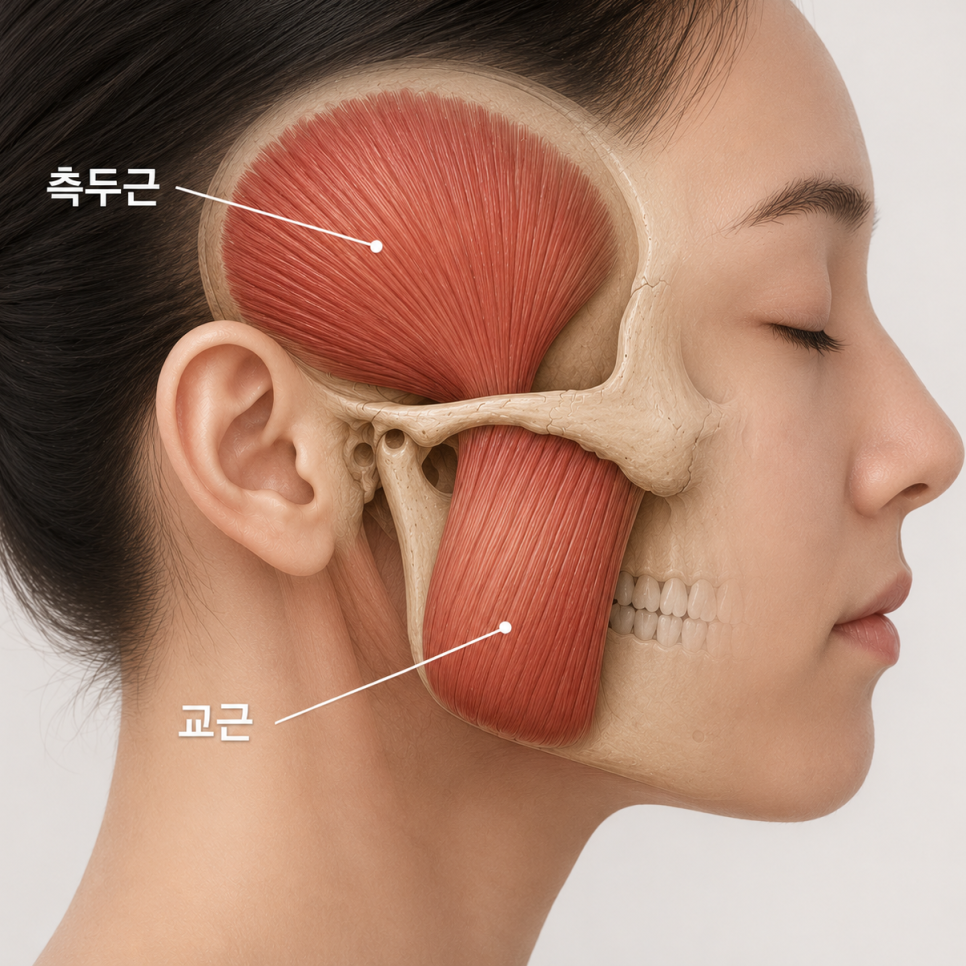
Among temporomandibular disorders,
the cause is often the “muscles”
rather than the joint itself.
If you have a habit of clenching or grinding your teeth,
the muscles used for chewing—
especially the masseter muscles (the cheeks below the ears)
and temporalis muscles (the temples)—become overly developed and tense.
This tension
continually places stress on the jaw joint.
Botox temporarily blocks the nerve signals
sent to the muscles,
causing them to use less force.
When the muscles relax, pain decreases
and the pressure placed on the joint also decreases.
A meta-analysis combining 15 randomized controlled trials found that
Botox (BTX-A) significantly reduced pain compared with placebo
at 1, 2, 3, and 6 months,
and that injections into the masseter and temporalis muscles
were associated with greater pain reduction.
(J Oral Rehabil, 2024)
If you are wondering whether your masseter muscles are well developed,
place your hands on both cheeks, below the ears,
and clench your molars firmly.
If you can feel muscles bulging outward,
you may have relatively strong chewing force.
| Chapter 2. Will Reducing Muscle Strength Cause Problems with Chewing? |
This is the concern people raise most often,
but that is not the case.
There is more than one muscle involved in chewing food.
Botox is generally injected into the masseter muscles,
and if the force is particularly strong, the temporalis muscles may also be treated.
Even if the strength of some muscles decreases,
the remaining muscles share the function.
Therefore, everyday eating is not affected.
In fact, this makes sense when you consider the order of priorities.
When your jaw hurts, you cannot chew properly,
so reducing the pain first
is the primary purpose of treatment.
| Chapter 3. The Cosmetic Effect Is an Added Benefit—and It Is Reversible |
Because Botox is injected into the jaw muscles,
the developed masseter muscles may shrink,
which can also make the facial line look slimmer.
It may make a square jaw appear less prominent.
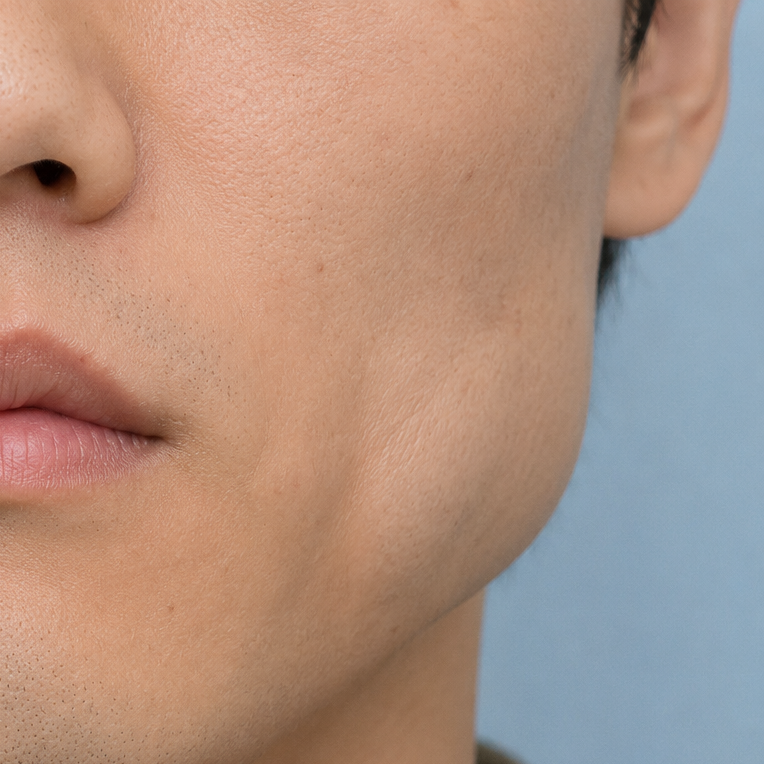
Example photo
However, one point should be made clear.
Botox cannot change bone that is naturally angular;
this effect applies only when the angular appearance is caused by developed muscles.
Also, this change is not permanent.
In one long-term follow-up study,
the thickness of the masseter muscles decreased beginning in the first month after injection,
but gradually returned to its original state over time.
(Toxins, 2022)
The effects,
as well as any side effects,
recover over time.
That is why the duration of maintenance
is a characteristic of Botox.
The average duration of its effects
has been reported to be approximately 4–6 months
(J Oral Med Oral Surg, among others),
When the medication wears off,
muscle strength returns,
so treatment is usually repeated once every six months,
depending on the symptoms.
| Chapter 4. Most Importantly, Botox Is a “Supportive Treatment” |
This is the point I most want to emphasize
in this post.
Botox can relax tension in the jaw muscles
and effectively relieve symptoms,
but it does not eliminate
the underlying cause of temporomandibular disorders.
While studies acknowledge the effects of Botox,
the certainty of the evidence is moderate to low,
and it is generally considered an option when existing treatments have not provided sufficient improvement.
(Systematic review, 2022)
Therefore, rather than using Botox alone,
the general principle is to combine it with other treatments that address the cause.
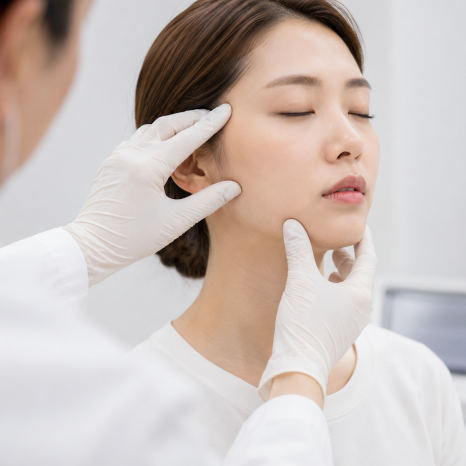
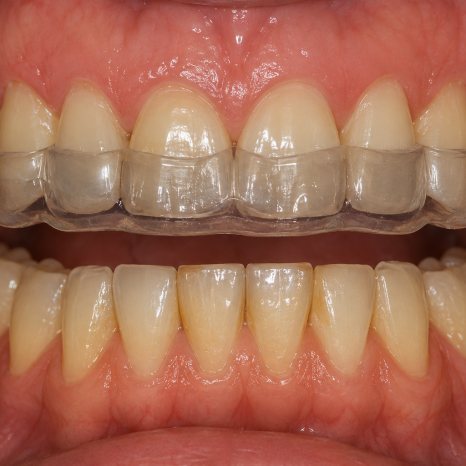
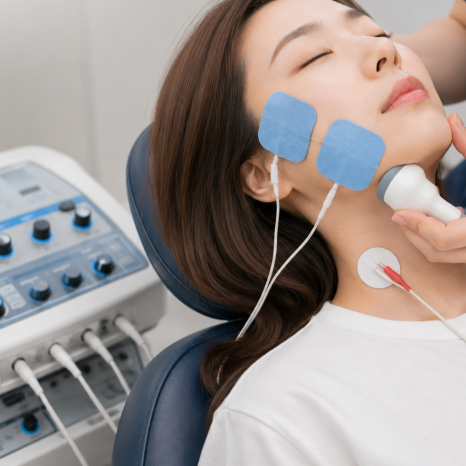
Example photo
A splint to reduce the habit of clenching your teeth
(occlusal stabilization appliance),
physical therapy to relax the muscles and joints,
and lifestyle improvements should be used together for longer-lasting results.
In Closing
To summarize:
Botox is an evidence-supported treatment that relaxes excessively tense jaw muscles,
thereby reducing pain and stress on the joint.
It does not interfere with chewing,
and when the cause is muscular, a slimmer facial line
may be an added benefit.
However, it is a supportive treatment only,
and serves its purpose when combined with splints and physical therapy.
If jaw pain is causing discomfort, first have the cause of the pain assessed
to determine whether it originates in the joint or the muscles.
Only then can you decide whether Botox is the right option.
Thank you for reading this long post today.
[References]
J Oral Rehabil (2024) — Effect of BTX-A on muscular TMD: meta-analysis of RCTs (pain reduction compared with placebo at 1, 2, 3, and 6 months; effects of injections into the masseter and temporalis muscles)
Systematic review (2022, PubMed 35775414) — Effects of low-dose Botox on refractory myofascial pain TMD; moderate-to-low certainty of evidence
Toxins (2022) — Long-Term Effects of single BoNT-A in MFP-TMD (reversibility of the reduction in masseter muscle thickness)
J Oral Med Oral Surg, among others — Average duration of effects of approximately four months