Hello!
I am the director of Seoul Bardi Dental Clinic.
▼ Check the dental clinic location ▼
| This post was written directly by Seoul Bardi Dental Clinic for the purpose of providing medical information, in compliance with Article 56, Paragraph 1 of the Medical Service Act concerning medical advertising. We recommend using the information provided for reference only. For an assessment of your symptoms and accurate treatment or care methods, please visit a medical institution and receive guidance from a medical professional. All procedures and surgeries performed at dental clinics may involve individual risks, such as inflammation, bleeding, and swelling. Please make your decision after thorough consultation with a medical professional in advance. To help with understanding, all images were created using AI. |
"Do I have to get anesthesia again today?
Please make sure it doesn't hurt."
These are words I hear very often in the treatment room.
To be honest, I do not like getting anesthetic injections either.
Many people are afraid of the dentist,
and when you look closely at the source of that fear,
it is often the anesthetic injection rather than the treatment itself.
Many patients hesitate for a long time before coming in because they remember receiving a painful injection as a child.
Today, I will explain why anesthesia is at the heart of dental pain,
what methods can actually reduce that pain,
and why those methods are supported by evidence.

| Chapter 1. The Real Reason People Fear the Dentist Is the 'Injection,' Not the 'Treatment' |
First, let me clear up one misconception.
If the anesthesia is administered properly, the treatment itself is usually not painful.
The problem is the injection used to administer the anesthesia.
There are reports that pain from anesthetic injections actually causes people to avoid dental treatment.
(ScienceDirect, research on anesthetic injection pain)
In other words, a vicious cycle develops: 'the injection hurts → the dentist is frightening → treatment is postponed.'
That is why reducing pain is not simply a courtesy;
it is essential to helping patients receive treatment on time.
Simply knowing that methods to reduce pain actually exist can also lessen fear.
| Chapter 2. Proven Methods for Reducing Injection Pain |
"We will administer it without causing pain"
is not something we say casually.
There is evidence supporting methods for reducing pain.
There are four representative methods.
The first is topical anesthesia.
The surface of the gums is anesthetized before the injection to reduce the initial pain when the needle penetrates the gums.
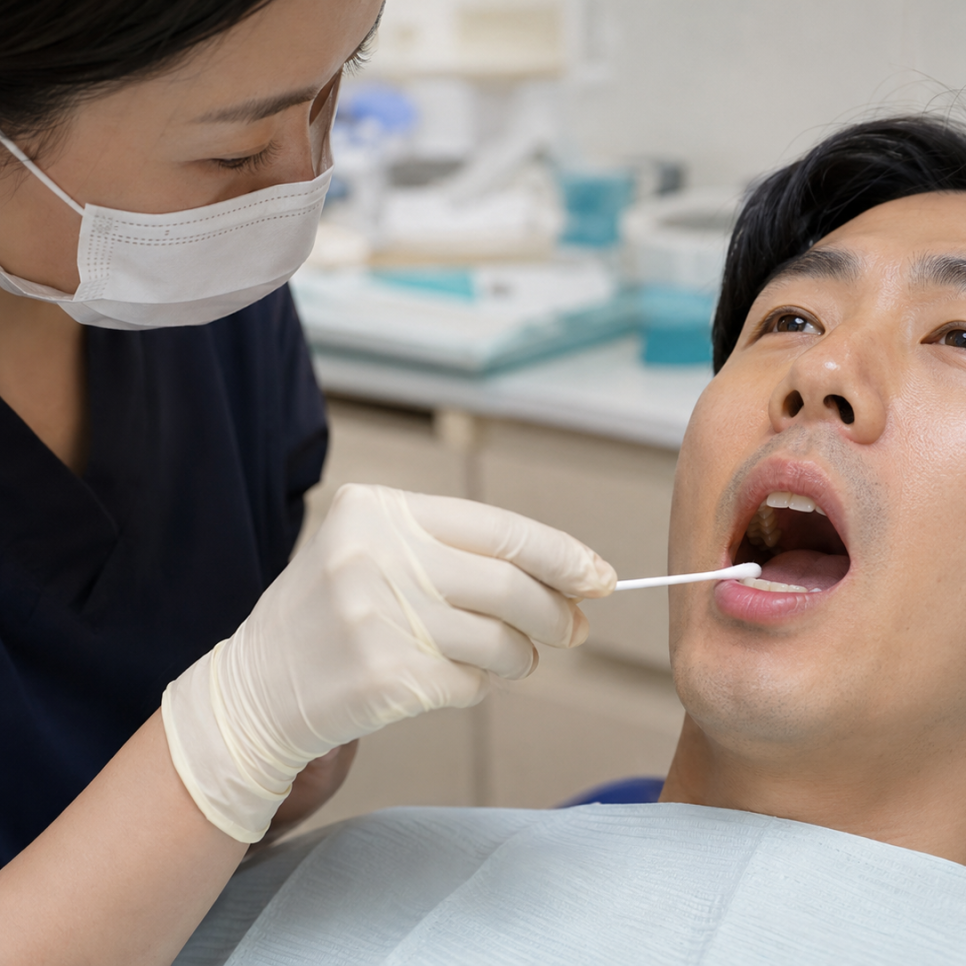
It is the most widely used method
(Ain-Shams J Anesthesiol, 2023).
However, some reports indicate that its effect is limited, so it is not used alone but together with other methods.
The second is slow injection.
When the anesthetic solution is injected rapidly,
pressure builds up quickly within the tissue, causing pain.
In contrast, injecting it slowly reduces pressure-related pain.
This is an established method for reducing the pain of infiltration anesthesia.
(ScienceDirect meta-analysis)
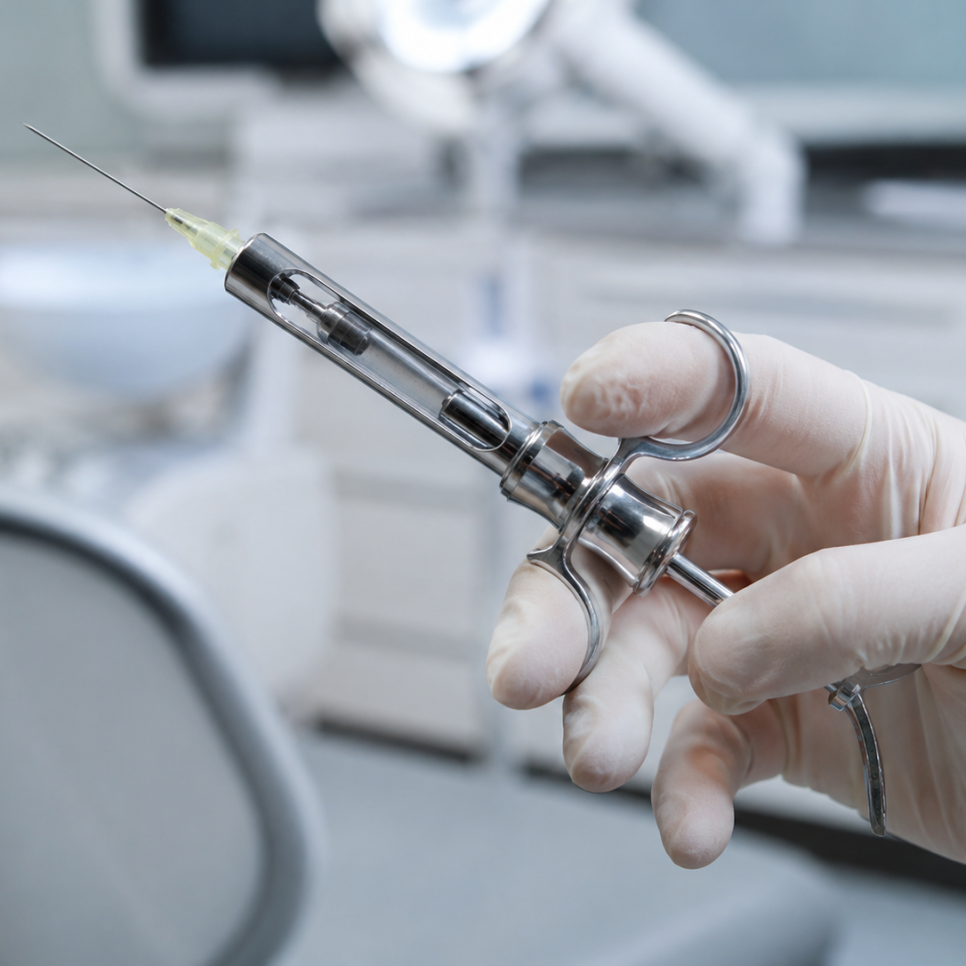
The third is a computer-controlled anesthetic delivery system
(a painless anesthesia device).
It is difficult for a person's hand to maintain a constant injection speed.
This device uses a computer to control the speed and injects small amounts steadily and slowly,
reducing tissue resistance and pain.
Several studies have found that it provides less painful injections.
(PMC, review of CCLAD literature)
The fourth is warming the anesthetic solution to body temperature.
Cold anesthetic solution can cause more stinging and pain when injected.
The conclusion of several studies is that warming it to a temperature similar to body temperature reduces pain.
(Systematic review, PMC 2020)
| Chapter 3. Why Does Anesthesia Take as Long as Two Minutes? Speed Is Consideration. |
This is something patients often wonder about.
"Why does the anesthesia process take so long
if it does not hurt?"
The answer is simple.
It does not hurt because it is done slowly.
As mentioned earlier, injecting rapidly causes pressure to build up quickly and creates pain,
while injecting as slowly as a tortoise makes that pain disappear.
Taking two minutes for a single anesthetic injection means that the pressure is being gradually distributed.
In addition, we use a painless anesthesia device to make up for the limitations of the human hand,
and warm the ampule by holding it in our hand until it reaches body temperature before injecting it.
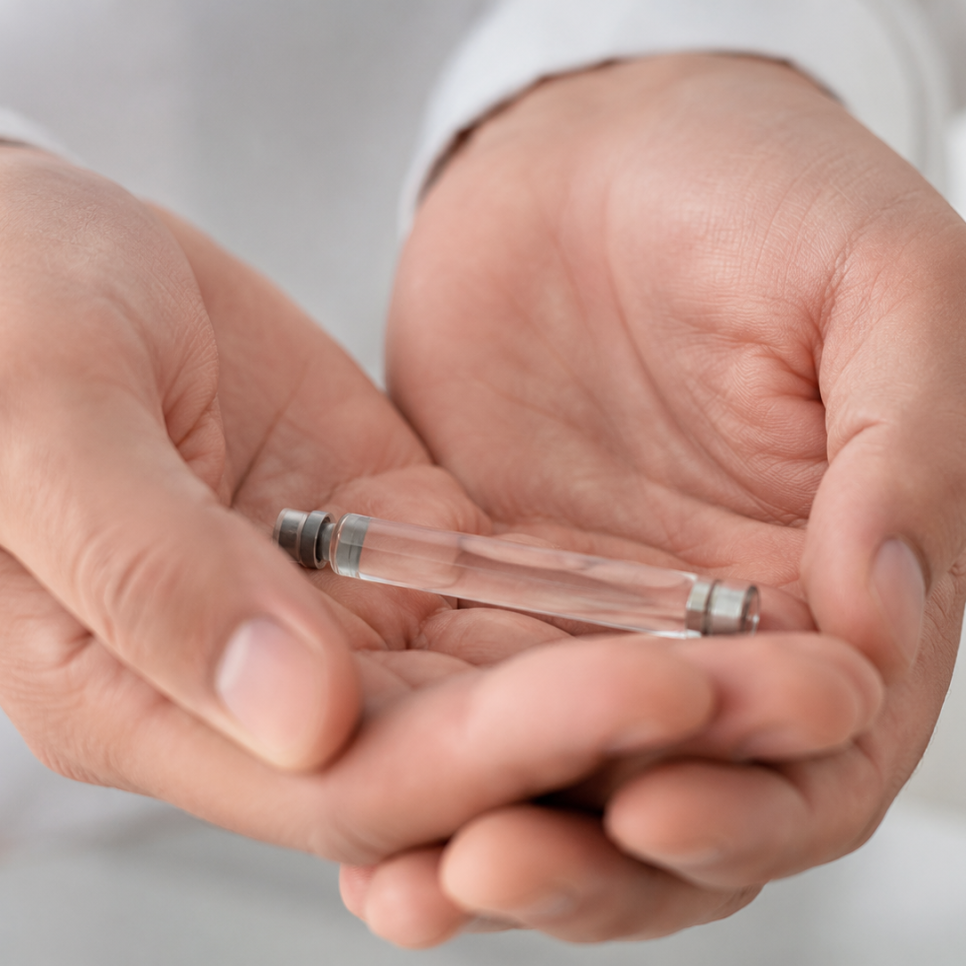
By combining evidence-based methods,
we follow the principles of 'slowly, warmly, and from the surface first.'
Ultimately, reducing pain is not about one secret technique;
it is the result of combining several steps like these.
Today, I discussed anesthesia,
which is at the heart of dental pain.


In summary, the real reason people fear the dentist is often
not the treatment but the anesthetic injection,
and that pain can actually be reduced through evidence-based methods:
topical anesthesia, slow injection,
a computer-controlled anesthetic delivery system, and warming the anesthetic solution.
Once you know these methods exist,
the barrier to starting postponed treatment
becomes much lower.
If you have been postponing dental visits because you are afraid of injections,
I hope you do not miss the right time for the treatment you actually need because of that fear.
There are definitely ways to reduce pain.
You are welcome to start by having a comfortable consultation.
If you want to receive treatment with as little pain as possible,
please feel free to contact us at any time.
We will help you slowly and with less discomfort.

[References]
Ain-Shams Journal of Anesthesiology (2023) — Topical anesthesia before injection is the most widely used method for reducing initial needle pain
PMC (CCLAD literature review, 5564086) — Computer-controlled anesthetic delivery systems reduce injection pain by controlling the injection speed
PMC (2020, 7470999) — Warming anesthetic solution reduced pain in most studies
ScienceDirect (meta-analysis) — Slow injection reduces the pain of infiltration anesthesia; injection pain can lead to dental avoidance