Hello!
I am the director of Seoul Bardi Dental Clinic.
▼ Check the dental clinic location ▼
| This post was written directly by Seoul Bardi Dental Clinic for the purpose of providing medical information, in compliance with Article 56, Paragraph 1 of the Medical Service Act concerning medical advertising. We recommend using the information provided for reference only. Please visit a medical institution and receive guidance from medical professionals for an assessment of your symptoms and accurate treatment methods. All procedures and surgeries performed at a dental clinic may involve individual risks, such as inflammation, bleeding, and swelling. Please make your decision after having a thorough consultation with a medical professional in advance. All images were created using AI to aid understanding. |
You have probably seen advertisements saying,
“Dental implants can be completed in one day.”
For those who find making multiple trips to the dentist burdensome,
it is certainly an appealing idea.
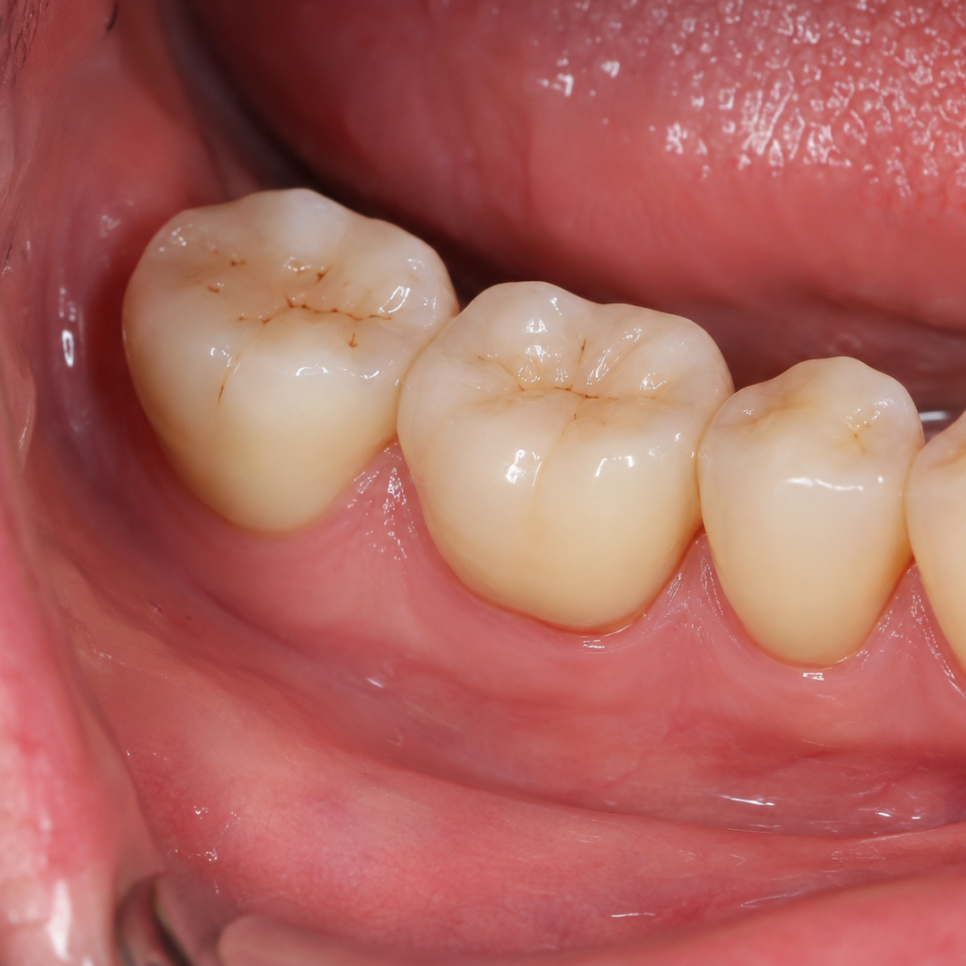
To give you the conclusion first,
one-day implants are actually possible.
However, they are not possible “for everyone, at any time.”
The conditions must be right,
and ignoring those conditions
can instead lead to even greater problems.
Today, I will explain exactly what one-day implants are,
who may or may not be a candidate,
and what the real point hidden behind the phrase
“in just one day” is,
along with the supporting evidence.
| Chapter 1. One-Day Implants Mean Extraction and Implant Placement on the Same Day |
Typically, after a tooth is extracted,
we wait 3–6 months for the jawbone and gums to heal
before placing the implant.
A one-day (immediate) implant
is a method in which the implant is placed
right in the extraction site
without this waiting period.
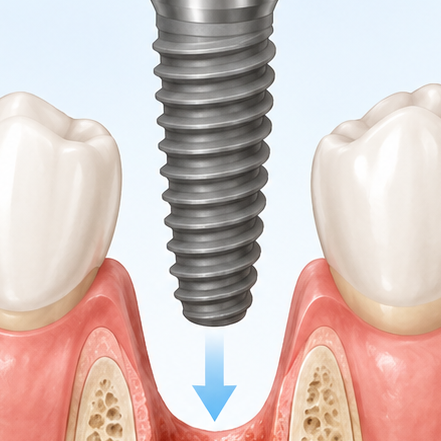
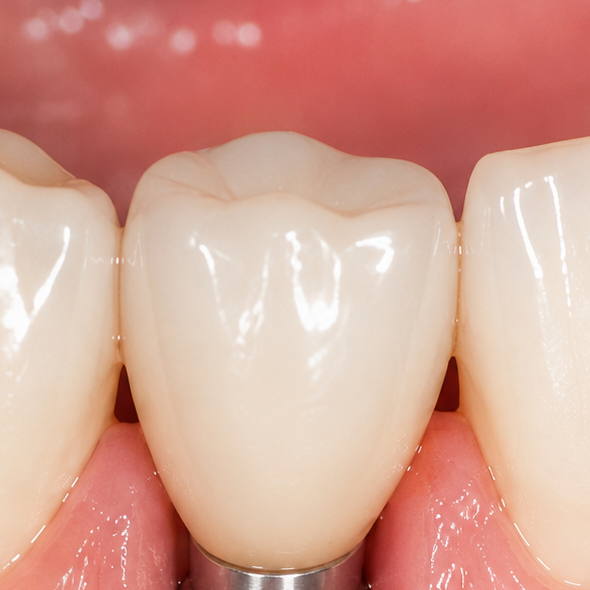
Depending on the situation, a temporary tooth may also be attached that day,
greatly reducing the time spent without a tooth.
Because the extraction and implant placement surgeries
are performed together,
the number of surgeries is also reduced.
The biggest advantage is that recovery begins immediately,
without a waiting period.
| Chapter 2. The Success Rate Is Similar to That of Conventional Implants |
It is completely understandable to worry,
“Isn’t it less reliable because it is done so quickly?”
However, the evidence suggests otherwise.
When properly performed in patients who meet the necessary conditions,
the survival rate of immediate implant placement
is reported to be similar to that of delayed placement
(approximately 95–98% over 5–10 years).
(My Specialty Dentist, 2026)
There are also studies showing that when initial stability exceeds the required standard,
there is no significant difference in survival rates
between attaching a tooth on the same day
(immediate loading)
and attaching one later.
In other words, it is not “unreliable because it is fast.”
It is a method of proceeding “quickly when the conditions are right.”
The issue is what those conditions are.
| Chapter 3. So, Is It Possible for Everyone? Three Conditions |
This is the key point of this post.
For a one-day implant to be possible,
the following conditions must be met.
First is initial stability.
The implant must become firmly anchored in the bone immediately after placement.
An appropriate measurement must generally be obtained.
If this is not achieved, a tooth should not be attached on the same day.
Second is the amount and quality of the bone.
There must be enough bone below the extraction socket
to engage the implant an additional 3–5 mm,
and the outer wall of the socket must be intact.
In particular, areas with softer bone,
such as the back of the upper jaw,
may have a lower success rate,
so they require more careful evaluation.
Third, there must be no active infection.
If there is an active infection involving swelling and pus at the root tip,
immediate placement is generally avoided,
and we wait until the infection has subsided.
However, there are cases in which placement may be possible
when thorough curettage and an antibiotic protocol are followed,
so this is determined according to the individual condition.
If these conditions are not met
but “in just one day” is nevertheless forced,
the implant may fail to integrate with the bone and fail.
| Chapter 4. The Real Meaning of “In Just One Day” |

There is one misunderstanding we need to clear up here.
“One-day” means that the implant is placed in one day;
it does not mean that the treatment is completed in one day.
Osseointegration, during which the implant becomes firmly united with the bone,
still takes several months.
And the success or failure of an implant
is determined during this osseointegration process.
In fact, most failures occur within the first 3–6 months,
when osseointegration does not occur because of
minor movement or infection.
Therefore, even if a temporary tooth is attached on the same day,
you should not put excessive pressure on hard foods during this period,
and you should have regular checkups
to confirm that osseointegration is progressing well.
The result is determined not by the excitement of the day the implant is placed,
but by how it is managed over the following several months.

Today, I explained the conditions and realities
of one-day implants.
To summarize,
a one-day implant is a method that performs extraction and implant placement
on the same day to reduce the waiting period,
and when the conditions are right,
its success rate is similar to that of conventional implants.
However, the conditions of initial stability,
sufficient bone, and no infection must be met.
“In just one day” refers only to the placement taking place in one day;
osseointegration still takes several months.
Therefore, rather than making a decision based only on the statement
“it can be done in one day,”
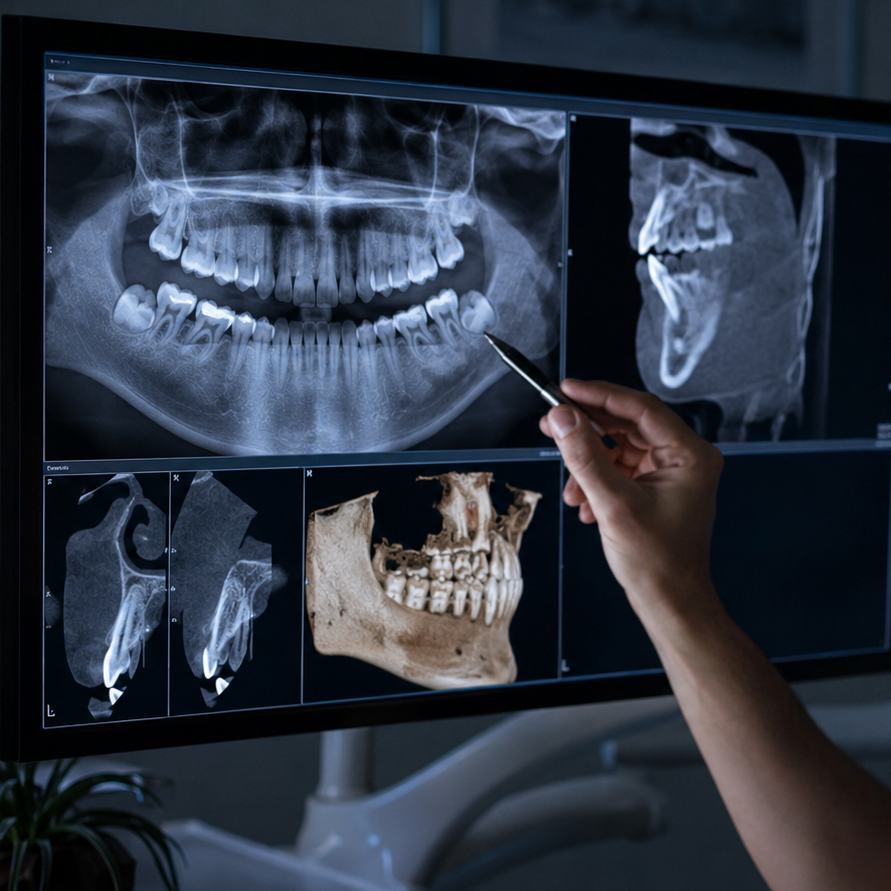
the first step is to use a CT scan to check whether your bone condition
and other circumstances are suitable for a one-day implant.
If possible, proceeding quickly may be appropriate;
if not, receiving guidance on a safe method
will ultimately be more beneficial.
If you have any questions,
please feel free to contact us at any time.
Without pushing you into an unsuitable treatment,
we will honestly explain what options are currently available.
[References]
My Specialty Dentist (2026) — Immediate implant placement survival rate of 95–98% over 5–10 years; conditions include initial stability, an intact socket wall, and no active infection.
29th Street Dental Care (2026) — No difference in survival rates between immediate and delayed loading when initial stability is 35 Ncm or higher; most failures occur during the first 3–6 months of osseointegration.
Dr Implant Expert (2026) — An insertion torque of 35 Ncm or higher is required for successful immediate implant placement; active infection, smoking, and uncontrolled diabetes are risk factors.
PMC (10548003 / 6107909) — Differences in success rates by location, with lower rates in the back of the upper jaw; placement may be possible in infected sockets with curettage and antibiotics.