Hello!
I am the director of Seoul Bardi Dental Clinic.
▼ Check the Clinic Location ▼
| This post was written directly by Seoul Bardi Dental Clinic for the purpose of providing medical information in compliance with Article 56, Paragraph 1 of the Medical Advertisement Act. We recommend using the information provided for reference only. Please visit a medical institution and consult with a medical professional for an assessment of your symptoms and accurate management methods. All procedures and surgeries performed at a dental clinic may involve risks depending on the individual, such as inflammation, bleeding, and swelling. Please make your decision after having a thorough consultation with a medical professional in advance. All images were created using AI to aid understanding. |
Some people undergo surgery to remove the tip of a tooth root once or twice, only to eventually hear, “Let’s extract it and place an implant.”
That can feel especially overwhelming when you are young.
But there is one thing you should know here.
Failure of root-end surgery does not necessarily mean that extraction is immediately the only answer.
There is one more option that can be considered in between.
Today, I will explain why root-end surgery may fail and what treatment can be attempted afterward.
| Chapter 1. What Is Root-End Surgery (Apicoectomy)? |
First, let me explain this treatment.
If inflammation remains at the tip of the root even after root canal treatment,
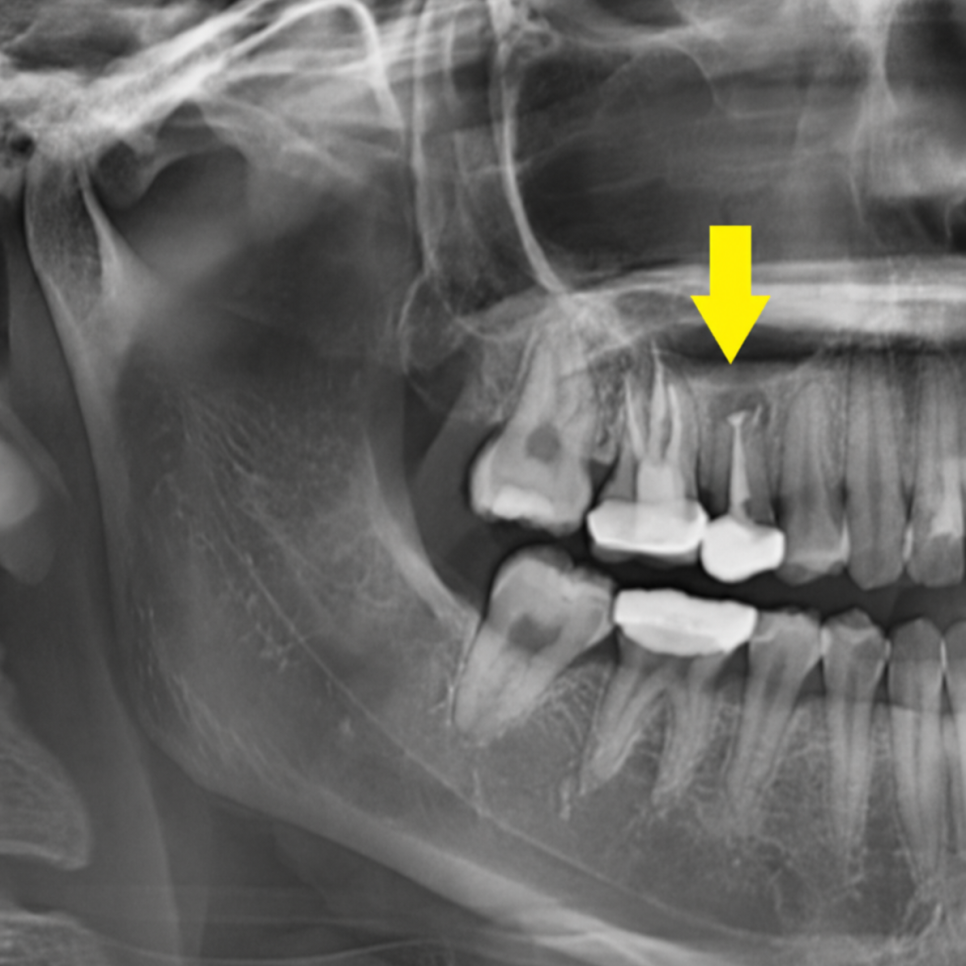
surgery is performed by opening the gum, removing the inflamed end of the root, and sealing the cut surface.
This is called an apicoectomy.
On a radiograph, a tooth that has undergone this surgery looks distinctly different from the adjacent teeth.
The root tip has become blunt and shorter.
That indicates how much of it was removed.
| Chapter 2. Why Does It Still Hurt After Two Procedures? The Cause Lies “Inside the Root Canal” |
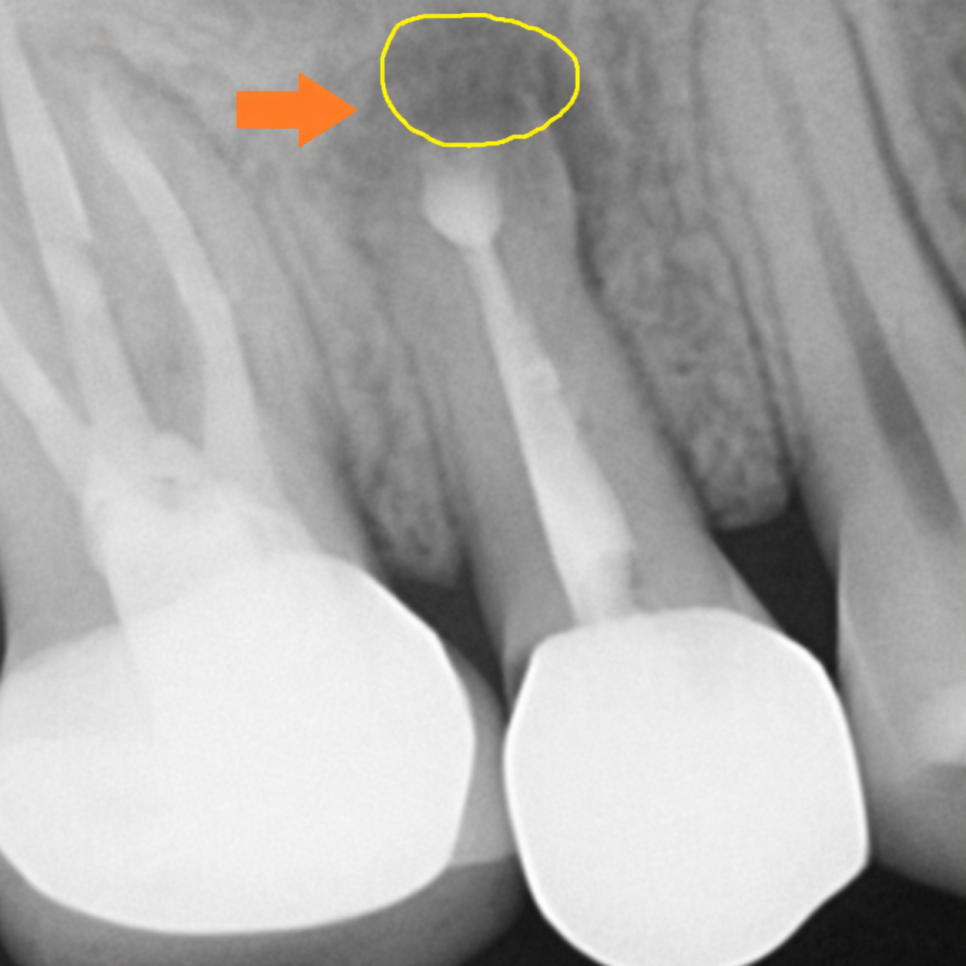
This is the key point.
There is a reason why the tooth does not heal even after repeated surgery.
The fundamental cause of inflammation at the root tip is a bacterial infection remaining inside the root canal, the nerve canal within the tooth.
It is widely recognized that microbial infection is a principal causative factor of apical periodontitis.
That makes the order of treatment important.
If the source of infection remains inside the root canal and only the root tip is removed, the bacteria can continue to act as a source of infection, causing the inflammation to recur.
Therefore, the two key elements of successful root canal treatment are removing microorganisms and sealing the apical area.
| Chapter 3. The Option Remaining Before Extraction |
A second apicoectomy, or reoperation, has a limited success rate. Therefore, nonsurgical retreatment should be discussed as an additional option before considering extraction.
This means that rather than undergoing another surgery, access through the root canal should be considered first.
This method is called endodontic retreatment, or root canal retreatment.
The existing filling material is removed, the inside of the root canal is disinfected again to eliminate the cause of the inflammation, and the canal is then sealed to prevent reinfection.
There are reports that nonsurgical retreatment performed after a failed apicoectomy can be an effective option.
In one case, an 8-year follow-up showed complete disappearance of the periapical lesion and recovery of the lamina dura.
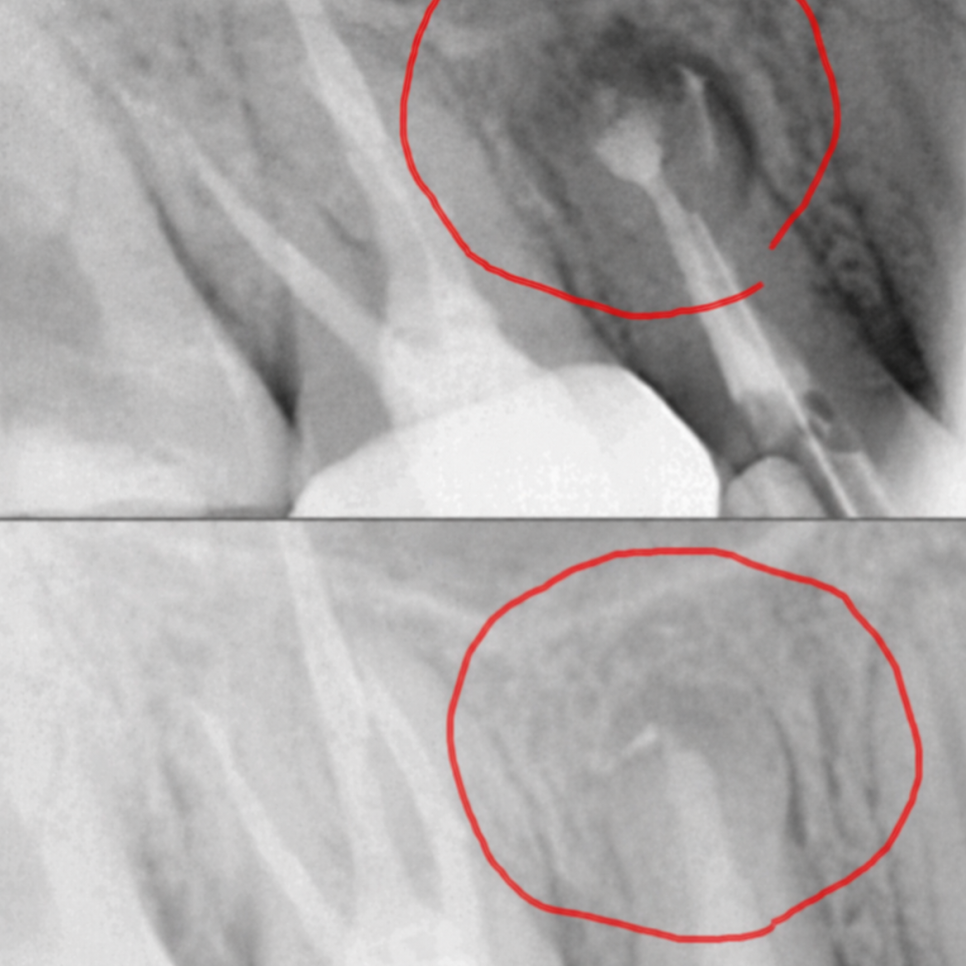
Of course, endodontic retreatment is not an easy procedure.
Removing the existing material can be challenging, and a 100% successful result cannot be guaranteed.
However, extraction is an irreversible choice, so it is worth considering this option once more beforehand.
| Chapter 4. What Is MTA, and Why Is This Material Used? |
MTA is a material frequently used in these cases.
MTA stands for Mineral Trioxide Aggregate and is a calcium silicate–based dental material.
When the root tip has been removed and the resulting area has become wider, this material is used from inside the root canal to create a wall that seals the opening.
MTA is chosen because of three characteristics: excellent biocompatibility, superior sealing ability, and osteoinductivity, or the ability to promote bone formation.
In particular, when the root tip has already been surgically removed and the opening has become wide, sealing it with conventional materials can be difficult. MTA can seal this expanded area.
When the seal is effective, the possibility of reinfection decreases, allowing the body to resolve the inflammation on its own and creating an opportunity for the bone to recover.
Although it is an expensive material, it can be a factor that determines the outcome in these difficult cases.
| Chapter 5. It Is Not a Universal Solution |
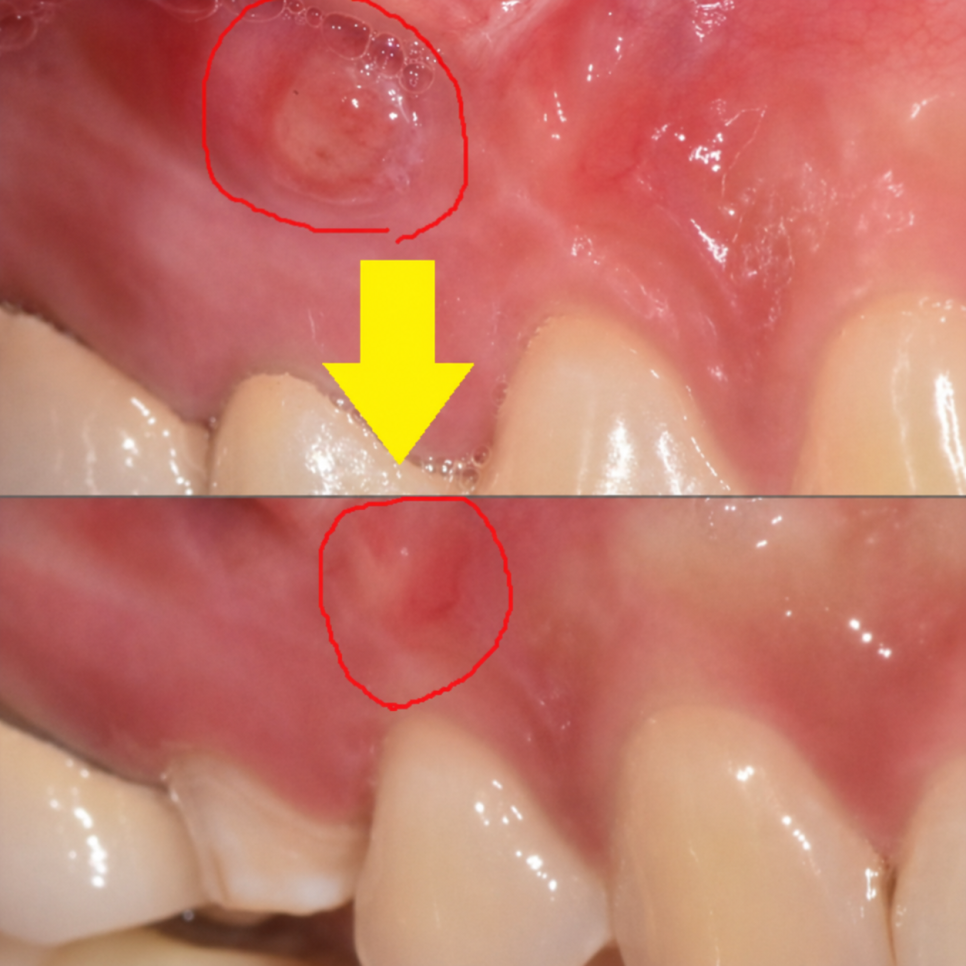
I would also like to be honest about its limitations.
Not every tooth can be saved in this way.
Cases worth attempting
— Cases in which the existing root canal filling is inadequate, making it possible that a source of infection remains inside the canal.
In such cases, simply treating that area again may change the situation.
Difficult cases
— Cases in which too little tooth structure remains, the root itself is fractured, or the supporting jawbone has been destroyed to the point that it can no longer support the tooth.
In these situations, trying to hold on to the tooth at all costs may actually be disadvantageous.
Accurate diagnosis is therefore important for making a precise decision.
It can be difficult to determine how far the inflammation has spread using radiographs alone, so three-dimensional evaluation with CT is often necessary.
In particular, for upper teeth, it is also necessary to check whether the inflammation has spread to the maxillary sinus.
Today, I discussed the options that may remain even after root-end surgery.
In summary,
The fundamental cause of inflammation at the root tip is a bacterial infection inside the root canal. If the canal is not treated and only the root tip is removed, the inflammation may recur.
Because a second surgery has a limited success rate, the literature recommends considering nonsurgical endodontic retreatment before deciding on extraction.
MTA is used in these situations to seal the widened root tip.
Of course, this is not suitable for every case.
The outcome depends on the condition of the remaining tooth and bone.
However, please remember this:
Implants can be placed later, but once a natural tooth is extracted, the decision cannot be reversed.
Even if you have been advised to undergo extraction, it is certainly worth checking once more whether there are any methods you have not yet tried.
If you have any questions, please feel free to contact us at any time.
Thank you.

| Directions to the Clinic |
[References]
Hülsmann M, Endodontic Topics (2016) — Because a second apicoectomy has a limited success rate, nonsurgical retreatment should be discussed as an option before considering extraction.
Basudan et al., Clin Case Rep (2025, 8-year follow-up) — Orthograde retreatment after a failed apicoectomy is an effective option; complete disappearance of the lesion and recovery of the lamina dura after placement of an MTA plug.
PubMed (22666776) — MTA is the material of choice in such cases because of its excellent biocompatibility, sealing ability, and osteoinductivity.
Endodontic literature — Microbial infection is a principal cause of apical periodontitis, and the two key elements of successful treatment are microbial elimination and apical sealing.