"I guess the implant will have to be removed and replaced."
This is the first thought that comes to mind
when a problem develops with an implant.
The same applies when
the prosthesis breaks
or the implant becomes loose.
Hello!
I am the director of Seoul Vardi Dental Clinic.
Today, I will go over the criteria for
when an implant needs to be replaced
and when replacing only the prosthesis is sufficient.
| Directions |
| Chapter 1. Implants Are Divided into Three Parts |
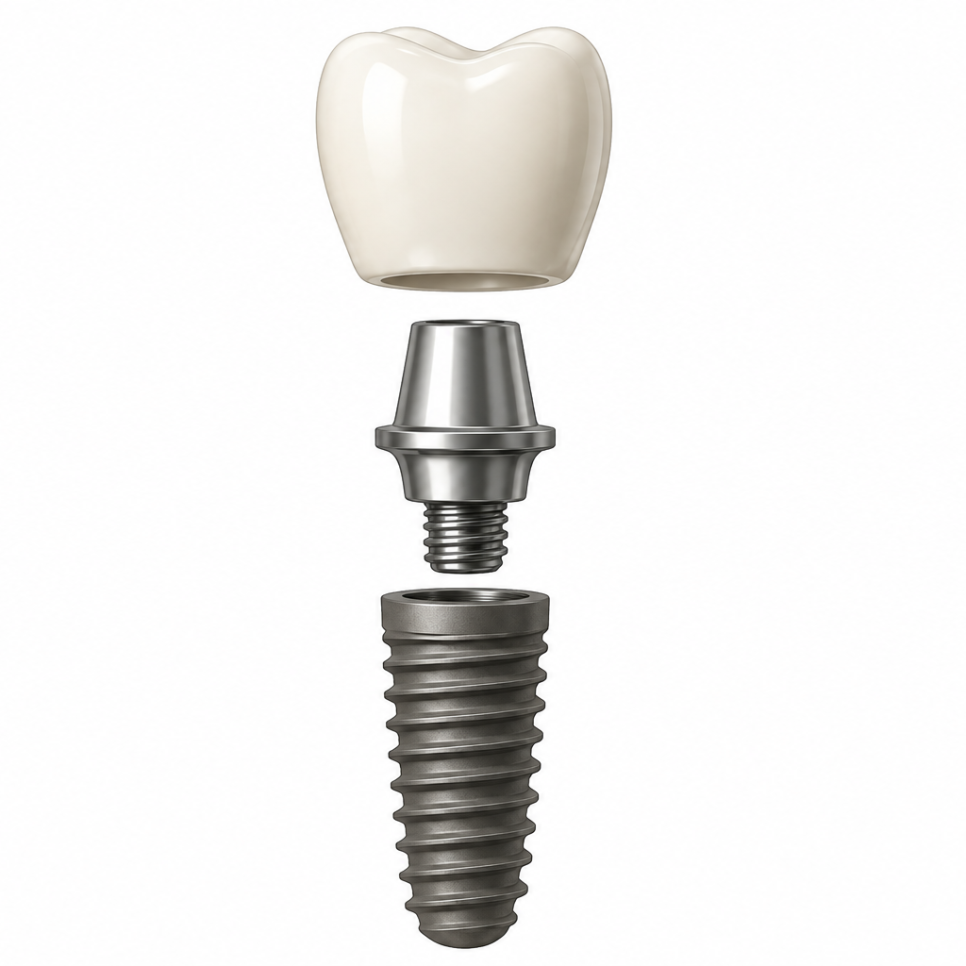
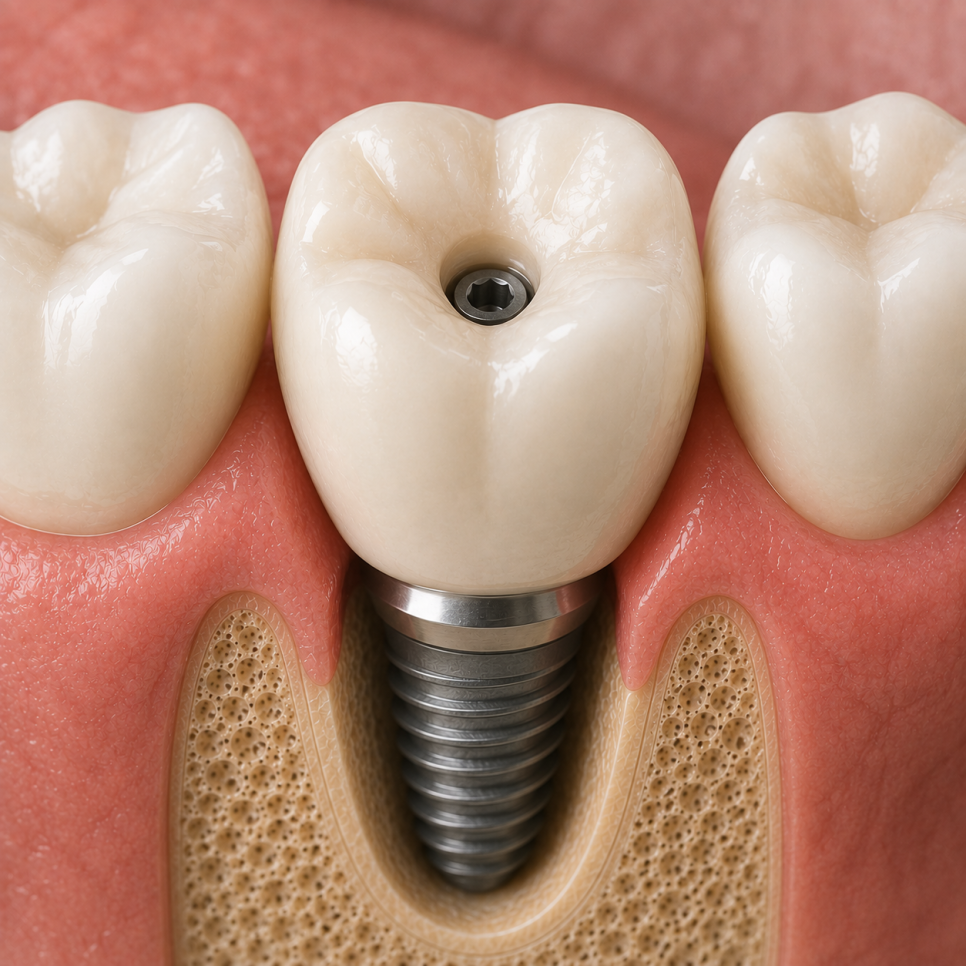
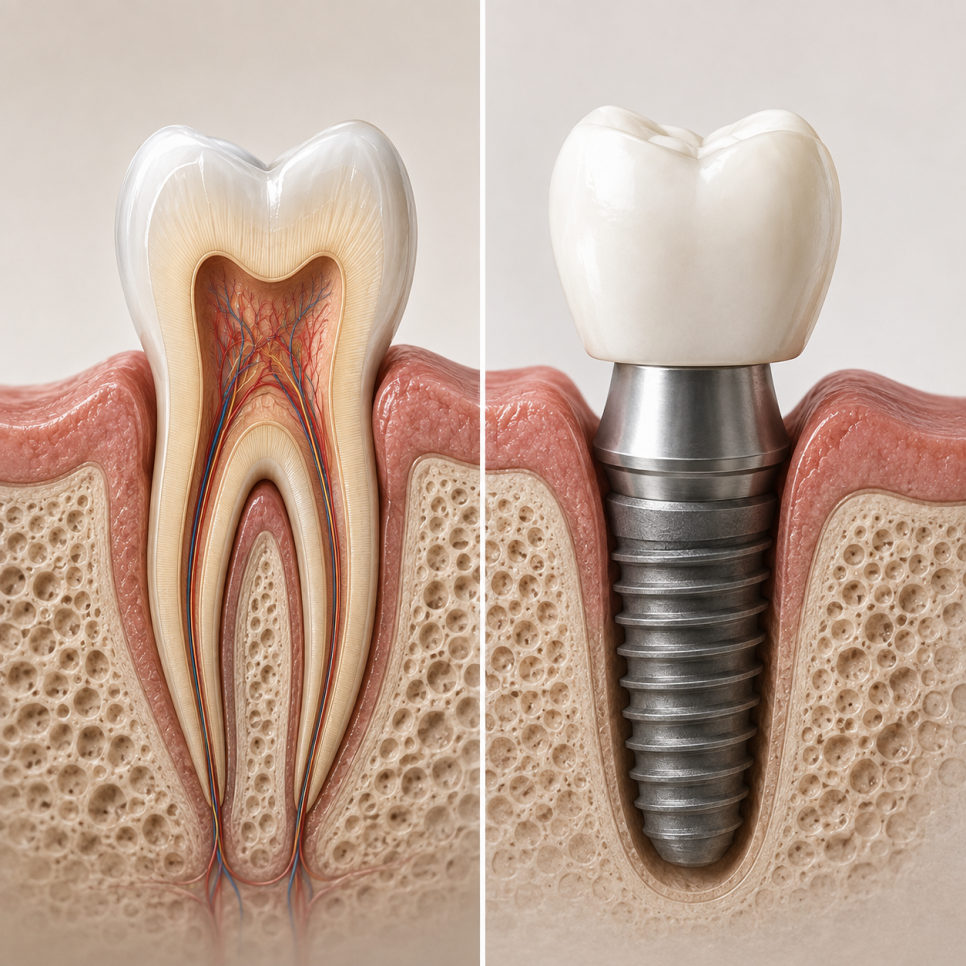
An implant consists of the fixture placed in the bone,
the abutment connected above it,
and the visible prosthesis.
You can think of it as a structure assembled
by separately making the root, the post,
and the crown of the tooth.
Because of this structure,
if the prosthesis breaks or its color does not match,
the tooth can be remade while leaving
the fixture (screw) inside the bone in place.
In particular, with a screw-retained design,
the screw can simply be loosened
to remove the tooth.
This makes both repairs
and replacements much easier.
The literature also identifies this
as a major advantage of screw retention.
Implant prostheses
commonly experience fractures of the ceramic,
with rates reported to be
as high as 50%.
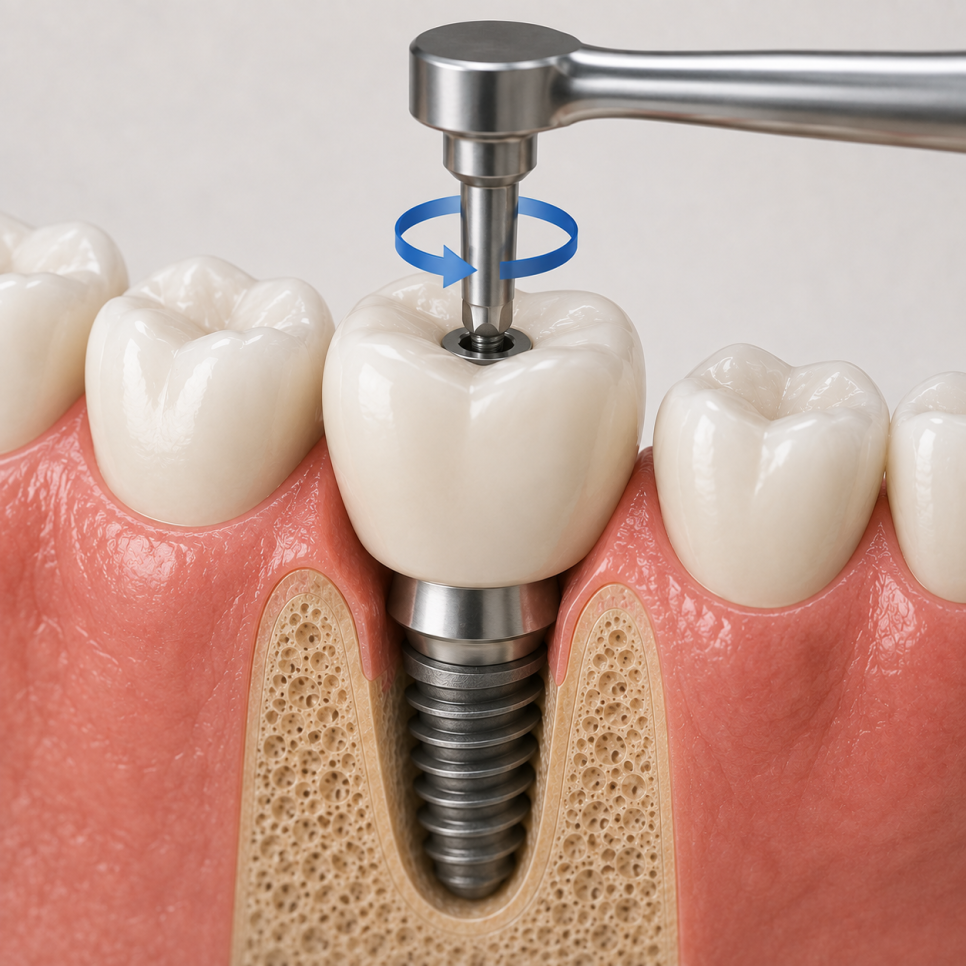
This means that whether it can be removed
is that important.
That is why I first look at
where the problem is,
rather than starting with the treatment plan.
The treatment approach changes completely
depending on which part of the implant structure
has the problem.
| Chapter 2. Most Problems Occur in the “Tooth” |
This can be confirmed by the numbers.
In a review that followed single implant crowns
over five years,
the survival rate of the implants themselves was 94.5%.
During the same period,
12.7% involved loosening of the screw or abutment,
and 4.5% involved fractures of the outer ceramic.
In contrast, fractures of the screw or abutment
accounted for only 0.35%,
while fractures of the implant itself
accounted for just 0.14%.
To summarize:
Among the problems that can occur while using an implant,
by far the most common are a loose screw
or a broken tooth,
and most of these can be resolved
without touching the screw inside the bone.
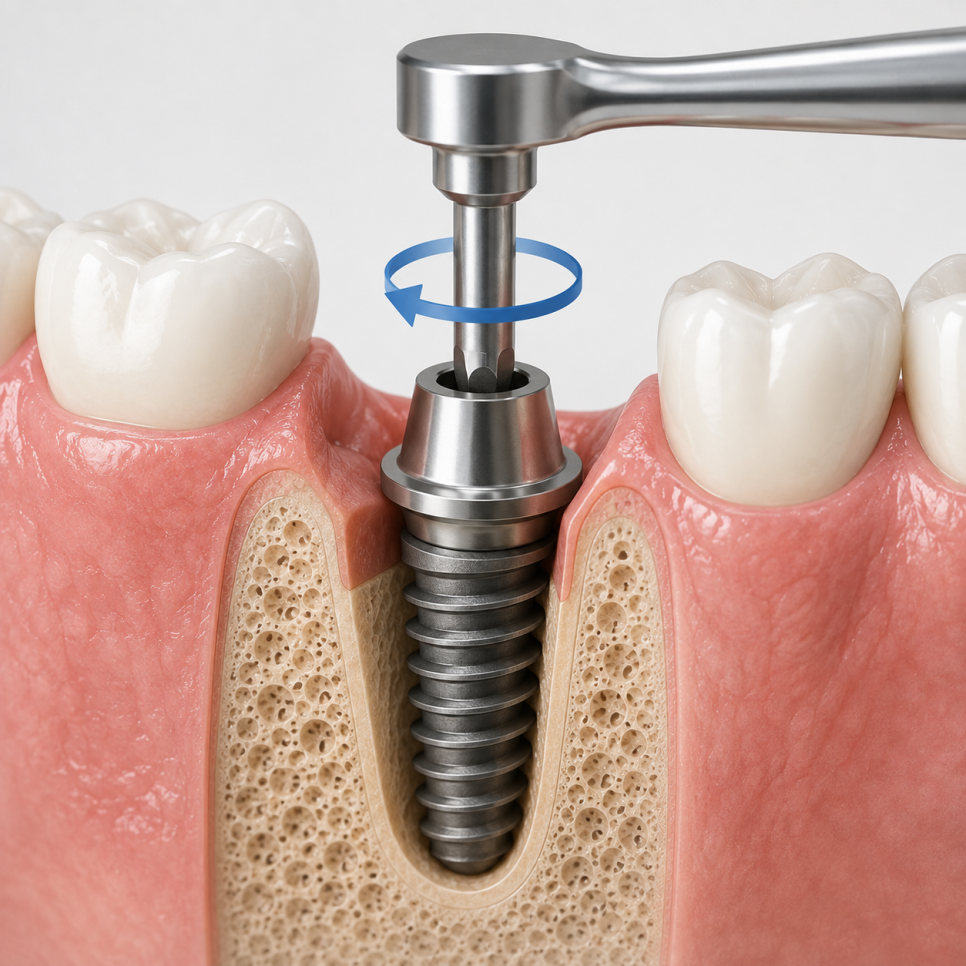
In some cases, the screw only needs to be retightened;
in others, only the prosthesis needs to be remade.
This is why “a problem has developed = the implant must be replaced”
does not necessarily apply.
| Chapter 3. So When Does an Implant Really Need to Be Replaced? |
Of course, there are cases in which
the fixture (screw) itself must be removed.
The criteria are relatively clear.
First,
when the implant is loose.
An implant should normally be directly integrated
with the bone,
so unlike a natural tooth,
it should not have even slight movement.
Looseness means that the connection with the bone
has been lost,
and in this case, the implant becomes a candidate for removal.
Second,
when bone loss exceeds half the length of the implant
and infection recurs
or pus continues to drain.
However, this is assessed together with
other findings, such as looseness
or recurrent infection.
Third,
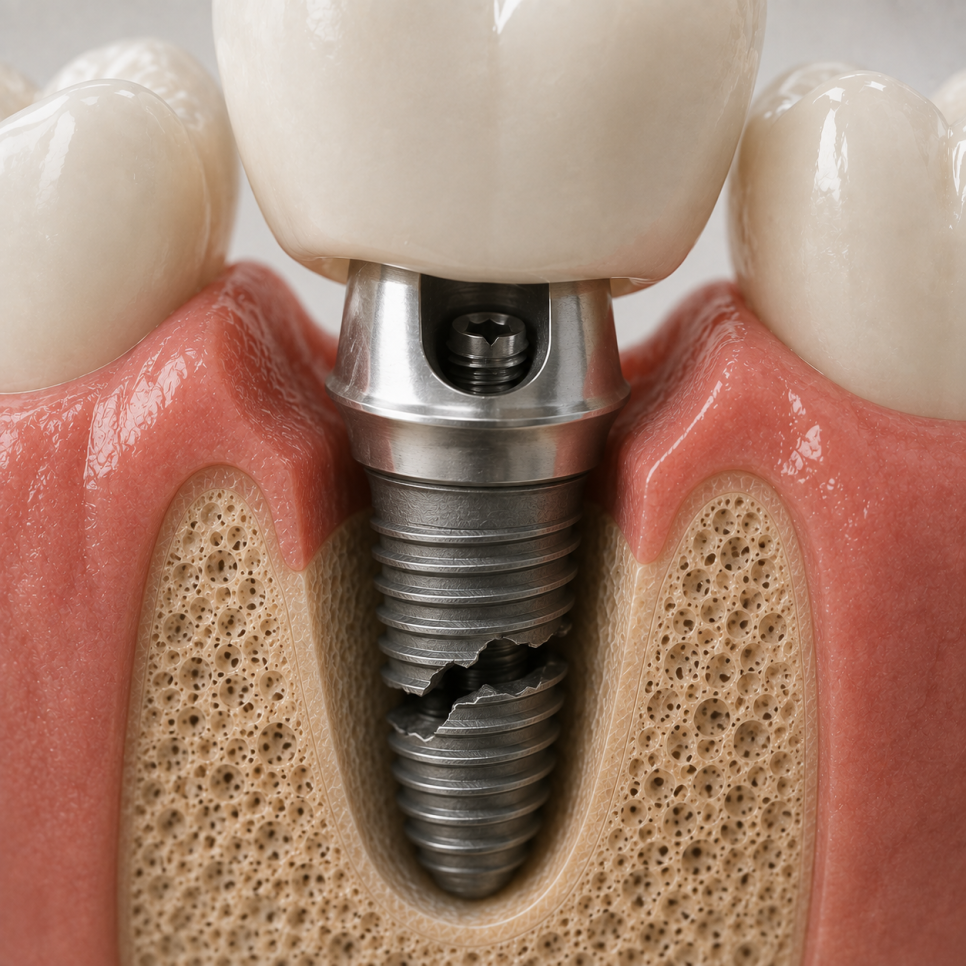
when the implant itself is fractured.
Although this is rare, as noted above,
repair is not possible if it occurs.
Fourth, when the position or angle is significantly misaligned,
making it impossible to create a proper prosthesis.
Conversely, if there is no looseness
and only a certain amount of bone loss,
the initial approach is usually to manage the condition
with treatment for peri-implantitis
rather than removing the implant.
This is assessed even more cautiously
if the implant occupies an important position
in the overall prosthesis.
Therefore, the answer to “Does it need to be replaced?”
cannot be determined before an examination.
It depends on whether the implant is loose,
how much bone remains,
and where the fracture has occurred.
| Chapter 4. What If It Needs to Be Replaced? |
After removal, when an implant is placed again,
the bone has usually already decreased.
This is because bone loss is often the cause
of the implant becoming loose.
In this case, the process is divided into stages
rather than completed all at once.
The implant is completely buried beneath the gums,
and after the bone has filled in,
it is exposed outside the gums.
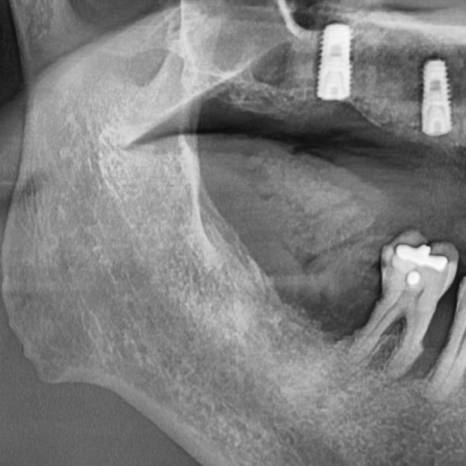
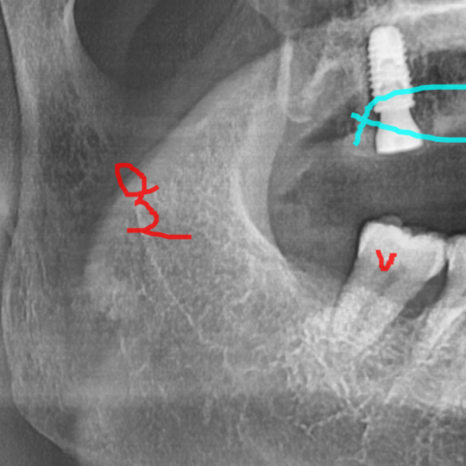
The purpose is to prevent force from being applied
to the implant while the bone settles.
If the tooth is in a position that cannot be left empty,
such as a front tooth,
a separate temporary prosthesis is made for use during that period.
The reason treatment for front teeth often takes particularly long
is usually this process;
it is not that treatment is progressing slowly,
but that a waiting period is included in the plan.
Conversely, if there is sufficient bone
and the conditions are favorable,
this stage may be skipped.
You can think of the bone condition
as determining the duration.
To summarize:
A problem with an implant does not mean
that it must be replaced immediately.
An implant is divided into a fixture, abutment, and prosthesis,
According to five-year statistics,
the common problems are screw loosening (12.7%)
and fracture of the outer ceramic (4.5%),
not fracture of the implant itself (0.14%).
Most problems can be resolved
without touching the area inside the bone.
There are specific cases in which replacement is necessary:
when the implant is loose,
when bone loss exceeds half the implant length and infection recurs,
when the implant is fractured,
or when its position is significantly misaligned.
Therefore, I recommend first confirming
where the discomfort you are experiencing
is coming from.
You may have been postponing a problem
that could be resolved by simply tightening one screw
for several years.
Conversely, if looseness is left untreated,
you may lose even more of the remaining bone,
making the next treatment much more difficult.
Thank you for reading
this lengthy post today.
▼ Check the Dental Clinic Location ▼

| This post was written directly by Seoul Vardi Dental Clinic for the purpose of providing medical information, in compliance with Article 56(1) of the Medical Service Act. We recommend using the information provided for reference only. Please visit a medical institution and consult a medical professional for an assessment of your symptoms and accurate guidance on appropriate care. All procedures and surgeries performed at a dental clinic may involve individual risks, such as inflammation, bleeding, and swelling. Please make your decision after having a sufficient consultation with a medical professional in advance. All images were created using AI to aid understanding. |