▼ Check the Dental Clinic Location ▼
Why take so many photos?
When you come in for an orthodontic consultation,
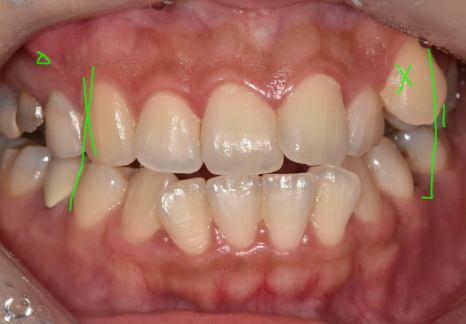
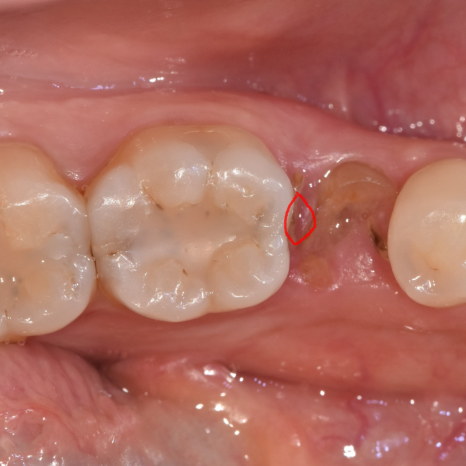
we generally take photos inside your mouth
and take X-rays.
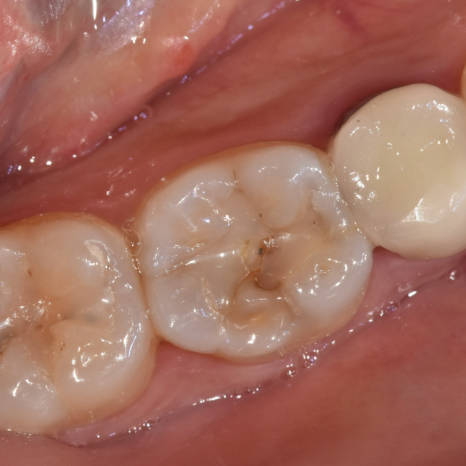
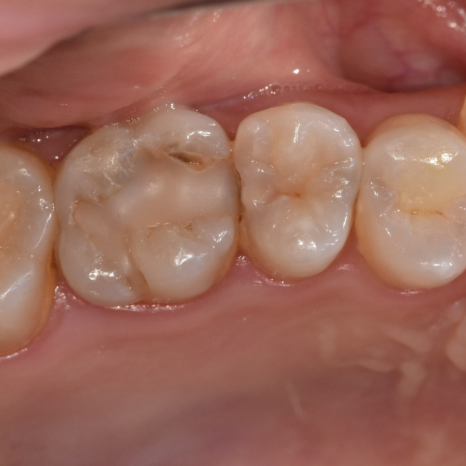
Sample images
If you decide to proceed
with orthodontic treatment,
you will also undergo a detailed examination.
This detailed examination
takes quite a bit of time.
Hello!
I am the director of Seoul Bardi Dental Clinic.
Honestly, the diagnostic process
also requires a great deal of work on our part.
Still, we cannot neglect any of these steps,
so today, I will explain
the diagnostic process before orthodontic treatment
in detail.
If you are planning to get orthodontic treatment,
please read to the end~!
One piece of information
is not enough to provide an answer.
Let us first look at just one number.
This involved adding orthodontic diagnostic records
one by one
to see at which stage
a treatment plan could be established.
When only the models were considered,
a plan could be established in 55% of cases.
This means that a decision could be made
in half of the cases,
but not in the other half.
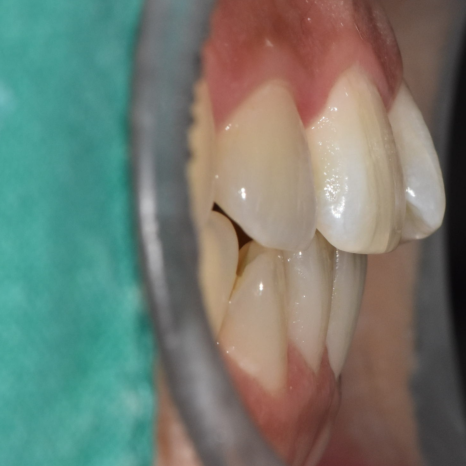
When photos were added,
followed by cephalometric images and measurements,
that percentage increased.
This means that even when looking at the same mouth,
the treatment direction can differ
depending on whether the relevant records are available.
This is why
each step must be carried out
thoroughly.
What X-rays do
A panoramic X-ray captures
the entire mouth in a single image.
What we look at here
is not the alignment of the teeth.
We examine teeth embedded in the gums,
the shape and direction of the roots,
the position of the wisdom teeth,
and the height of the jawbone, among other things.
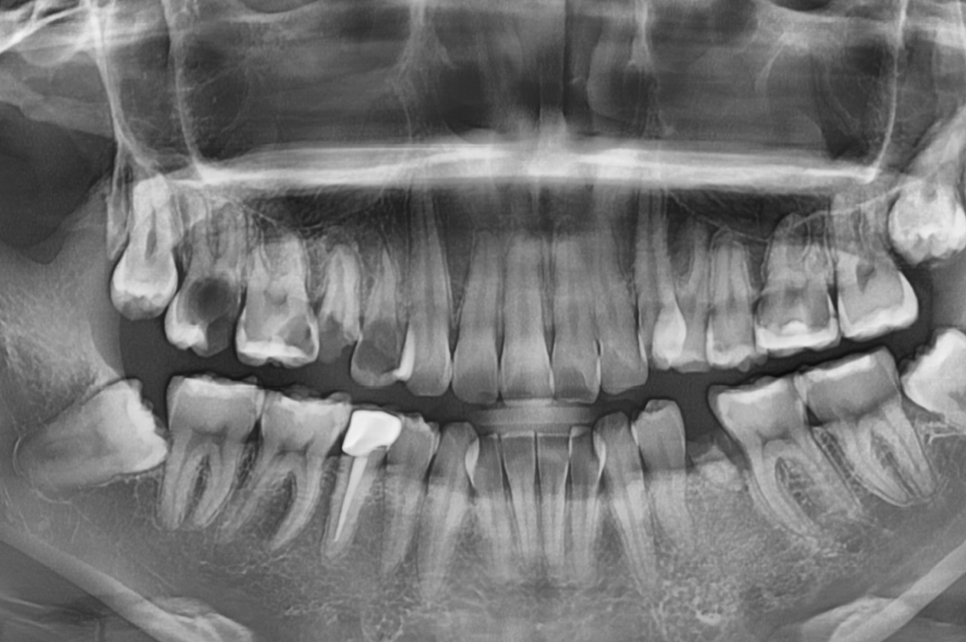
After analyzing 100 panoramic X-rays
taken before orthodontic treatment,
unexpected findings were identified
in 38% of cases.
There were 17 cases of dental abnormalities,
13 cases involving areas of hardened bone,
and 8 cases of inflammation at the root tips.
Most of the subjects were between 7 and 20 years old,
that is, within the age range when orthodontic treatment is commonly started.
(Incidental Pathologic Findings, 2023)
Because orthodontic treatment involves moving teeth,
it is important to understand the condition of the teeth.
<Do I really need orthodontic treatment?>
A detailed examination determines the direction of treatment.
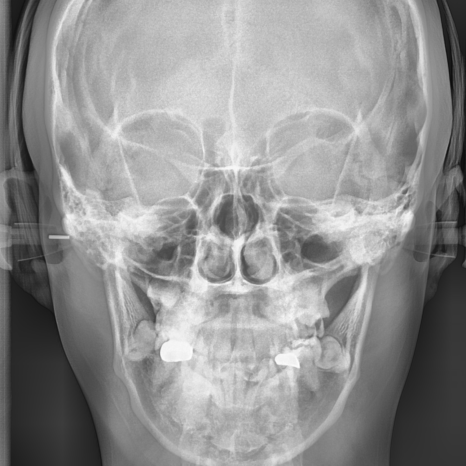
Cephalometric imaging
Orthodontic treatment takes
1–3 years once it begins.
The treatment period varies
depending on the condition of the teeth.
At the beginning, we determine
where and how far to move the teeth
over that extended period.
We determine during the detailed examination
whether teeth should be extracted,
whether jaw growth should be utilized,
and how the molar relationship should be adjusted.
If you realize six months after starting
that the treatment direction was incorrect,
it takes just as much additional time to reverse it ㅠㅠ
That is why the numbers mentioned earlier are important.
If one piece of information is missing,
only half of the decision can be made,
and the discovery of a single impacted tooth
can reverse the decision about extraction.
If spending an additional hour on diagnosis
shortens the treatment period,
that hour is not wasted.
In closing
Today, I discussed
the diagnostic records used for orthodontic treatment.
Panoramic imaging
Intraoral and extraoral photographs
Cephalometric imaging
Obtaining models and recording the occlusal relationship
A detailed examination is an important process
for determining the treatment direction.
Taking photos with your mouth open
and going through several procedures
may not be comfortable.
Still, these steps determine
the direction of the next 1–3 years.
If you are considering orthodontic treatment,
rather than asking first about the treatment method,
you may also want to ask
what information is used to make the decision.
Thank you for taking the time to read this long post today.
I look forward to seeing you in the clinic!

| This post was written directly by Seoul Bardi Dental Clinic for the purpose of providing medical information, in compliance with Article 56, Paragraph 1 of the Medical Service Act concerning medical advertising. We recommend using the information provided for reference only. For an assessment of your symptoms and accurate guidance on appropriate care, please visit a medical institution and consult with a medical professional. All procedures and surgeries performed at a dental clinic may involve risks, such as inflammation, bleeding, and swelling, depending on the individual. Please make your decision after having a sufficient consultation with a medical professional in advance. All images were created using AI to help with understanding. |