Hello!
I am the director of Seoul Bardi Dental Clinic.
| This post was written directly by Seoul Bardi Dental Clinic for the purpose of providing medical information, in compliance with Article 56, Paragraph 1 of the Medical Advertising Act. We recommend using the information provided for reference only, and receiving guidance on identifying symptoms and accurate care methods from medical professionals after visiting a medical institution. All procedures and surgeries performed at a dental clinic may involve individual risks, such as inflammation, bleeding, and swelling. Please make your decision after having a thorough consultation with a medical professional in advance. All images were created using AI to help with understanding. |
"I was told that I can't get an implant."
Some people come to us
saying this.
This may be because they were told
that they did not have enough bone,
or that implants were not possible
because they were taking medication.
To begin with,
cases in which implants cannot be placed
are rarer than you might think.
There are, however, certain conditions.
Today, I will explain
in which cases implants may be impossible,
along with the supporting evidence.
| Chapter 1. When the space has become narrow |
There is one issue
that people hear about most often:
insufficient bone.
The bone in the area where a tooth was removed
gradually decreases over time.
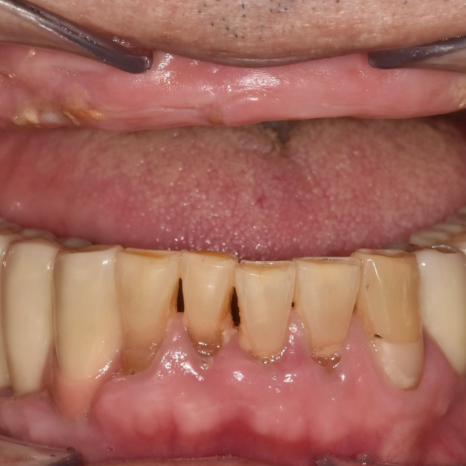
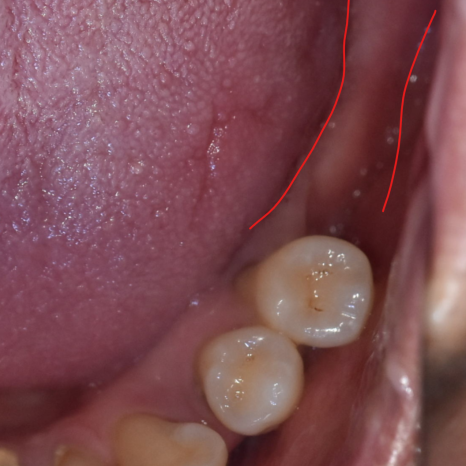
If you have used dentures for a long time
or have left the area without a tooth for several years,
both the height and width of the bone may have decreased.
A common explanation is:
"A molar needs an implant at least 8–10 mm long,
but it can't be done because there isn't enough bone."
This is different from the latest evidence.
A systematic review of randomized controlled trials
comparing short implants of 6 mm or less
with implants longer than 6 mm found
that the average survival rate of short implants was 95.1%,
while that of longer implants was 99.4%.
(Dentistry Journal, 2024)
Rather, this study concluded that short implants
are an alternative for avoiding
additional bone grafting.
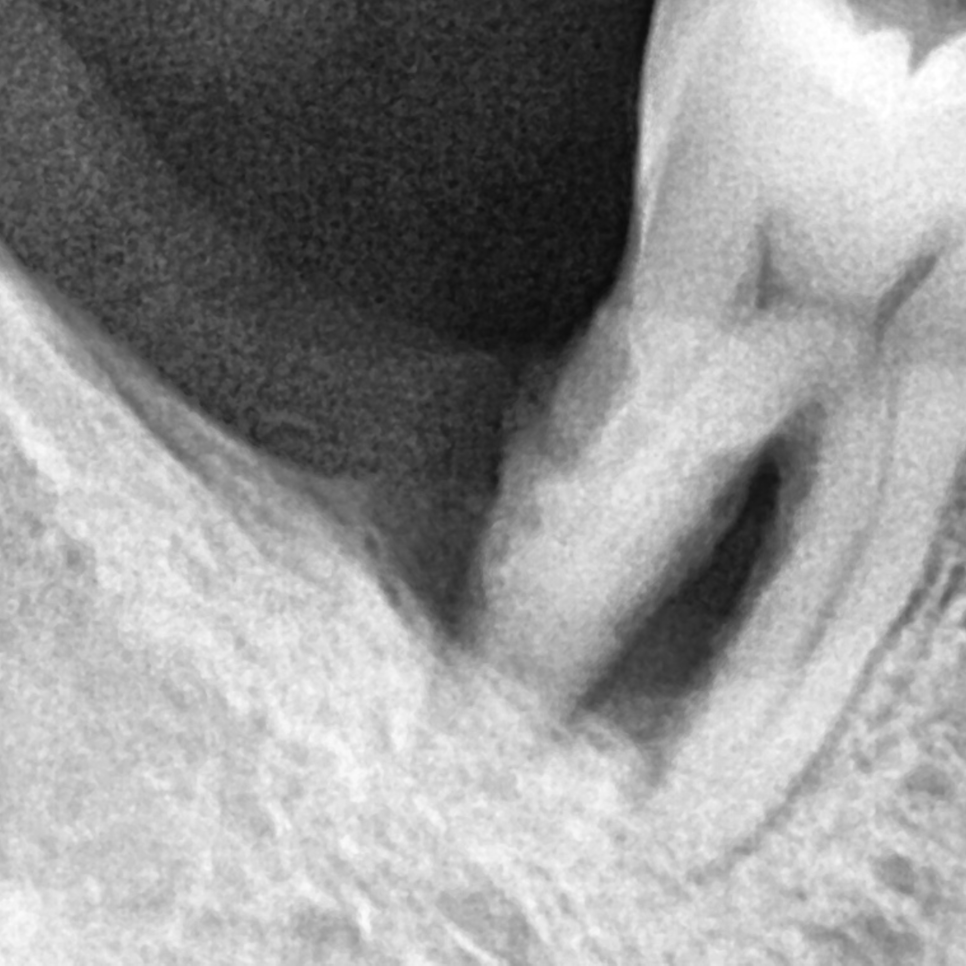
So the accurate way to put it is this:
When the bone decreases,
it does not become impossible;
the available options become fewer.
Bone grafting may become necessary,
treatment may take longer,
and the cost may increase.
Even with bone grafting,
there is a limit to how much bone
can be created.
In particular, vertical augmentation to increase height
is less predictable than widening the bone.
That is why it is advantageous
to make a decision while bone remains.
Not because it is impossible,
but because the conditions
are best at that time.
| Chapter 2. When the space has become narrow |
If the space left by a removed tooth
is left empty for a long time,
the teeth on either side tilt toward it,
while the opposing upper or lower teeth
move down or up into the empty space.
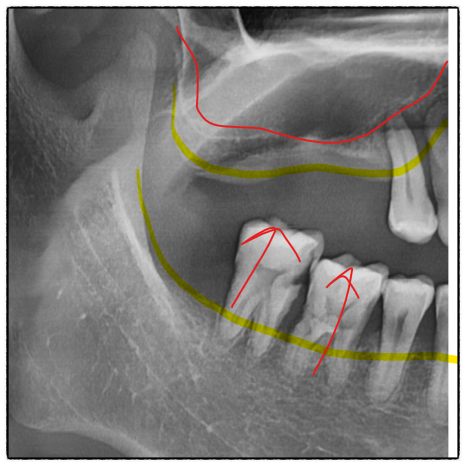
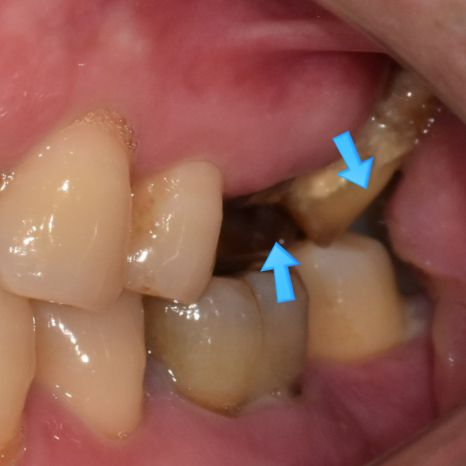
This means that the empty space becomes narrower.
There are guidelines for this.
To place a single 4 mm-diameter implant,
the front-to-back width should be at least 7 mm.
This is because a gap of 1.5 mm should be maintained
between the implant and each adjacent tooth.
If two implants are to be placed,
they should be at least 3 mm apart,
with at least 2 mm of the outer bone wall
ideally remaining.
(ADI implant space requirements)
If this width cannot be secured,
the prosthesis will be made smaller
even if an implant is placed.
If it is made smaller,
food is more likely to become trapped
between it and the adjacent tooth.
Therefore, in this situation,
we may consider slightly reshaping the teeth that have moved
to recreate the space,
or reviewing other options,
such as a bridge.
Bone can be supplemented to some extent through grafting,
but teeth that have moved
do not return to their original positions on their own.
| Chapter 3. Systemic diseases and medications currently being taken |
This is where the biggest misunderstanding arises.
Many people believe that
if they have diabetes,
or take osteoporosis medication,
they cannot receive implants.
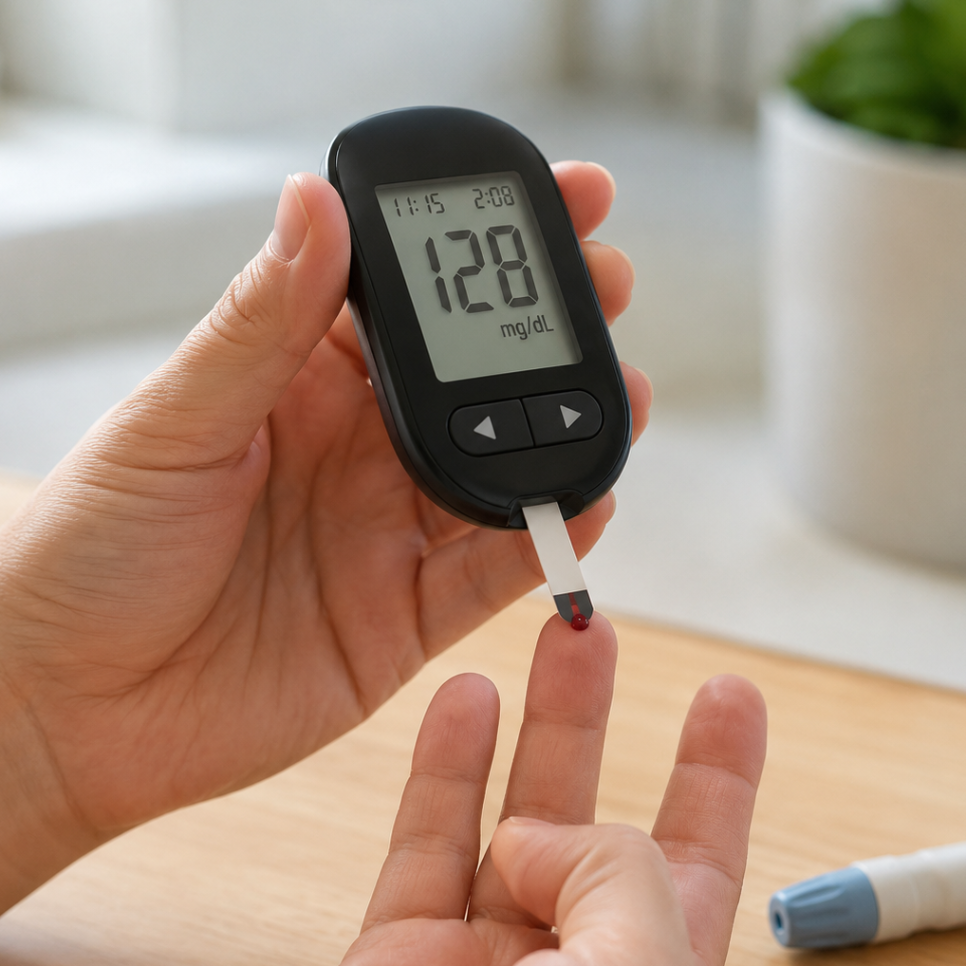
Let's look at the numbers.
In people with diabetes,
when blood glucose was controlled
(glycated hemoglobin below 8%),
the implant osseointegration failure rate was 4.5%.
The control group without diabetes had a rate of 4.4%,
which was essentially no different.
In the glycated hemoglobin range of 6.1–8%,
the survival rate was 100%,
while in the 8.1–10% range it was 95.4%.
(International Journal of Implant Dentistry, 2021)
The conclusion of the literature is as follows:
When the condition is controlled,
it is not a contraindication to implant surgery.
< Is age related to implants? ▼>
However, when diabetes is not controlled,
healing is slower
and peri-implantitis occurs more frequently.
What about osteoporosis medication?
Among people taking antiresorptive medication
at osteoporosis doses,
the most reliable estimate of the rate of jawbone necrosis
is approximately 0.10%.
For oral bisphosphonates alone,
the rate is around 0.001–0.01%.
The American Dental Association summarizes that
antiresorptive treatment does not appear
to be a contraindication to implant placement.
The ADA also considers that there is not enough evidence
to recommend temporarily stopping the medication,
which is sometimes referred to as a drug holiday.
(ADA, osteoporosis medication guidelines)
In other words, taking medication
does not automatically mean that implants are impossible.
What matters is
which medication you are taking and for how long,
and how your blood glucose is being managed.
This information is necessary
to adjust the timing and method of surgery.
That is why you should be sure
to tell us about all medications you are currently taking
during your consultation.
To summarize:
Even if there is insufficient bone,
implants are not necessarily impossible;
the available options become fewer.
If the space has become narrow,
implants are not necessarily impossible;
other methods should be considered together.
Even if you have a systemic disease,
implants are not necessarily impossible;
your level of control needs to be assessed.
Today, we looked at three situations
that can make implant treatment more difficult.
Even if you were told somewhere
that implants were not possible,
we can tell you whether that is truly the case
after examining you directly.
We recommend checking
which options are possible in your current condition.
Thank you for taking the time to read this long post today.