안녕하세요!
I am the director of Seoul Bardi Dental Clinic.
| This post was written directly by Seoul Bardi Dental Clinic for the purpose of providing medical information, in compliance with Article 56, Paragraph 1 of the Medical Service Act. We recommend using the information provided for reference only and receiving guidance on identifying symptoms and accurate management methods from a medical professional after visiting a medical institution. All procedures and surgeries performed at a dental clinic may involve individual risks, such as inflammation, bleeding, and swelling. Please make your decision after having a sufficient consultation with a medical professional in advance. To help with understanding, all images were created using AI. |
"I don't like having my picture taken because of my front teeth."
When your front teeth keep catching your eye every time you look in the mirror,
you start to worry about how they might look to other people.
Some of you may have been searching for months,
wondering whether you should get orthodontic treatment.
Posts recommending orthodontic treatment
always come with similar explanations.
They say that protruding or crowded teeth lead to more cavities,
worsening gum health,
and even temporomandibular joint problems.
However, some of these claims have weaker evidence than you might expect.
Today, I will talk about orthodontic treatment
and when you might consider having it.
| Chapter 1. Why Do Crowded Teeth Develop? |
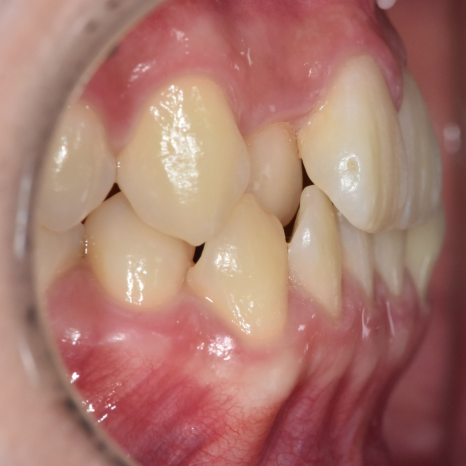
Crowded teeth are teeth that have grown in overlapping one another.
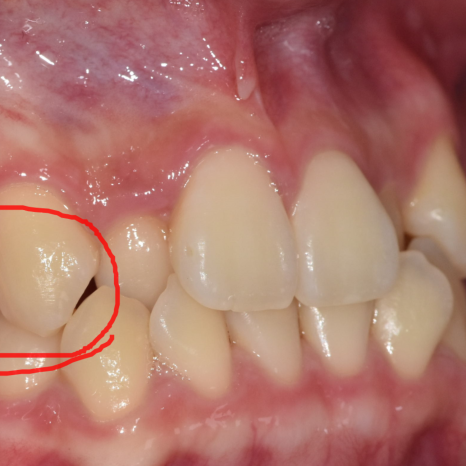
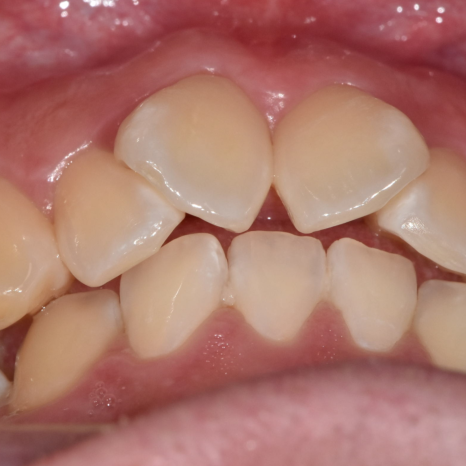
Dentists call this crowding.
The cause usually comes down to one thing:
there is not enough space.
If the teeth are large in relation to the size of the jawbone,
there is not enough room.
If a baby tooth falls out too early, the neighboring tooth
can move into that space,
reducing the room available for the permanent tooth to emerge.
Conversely, if a baby tooth does not fall out on time,
the permanent tooth may be pushed to the side.
Habits such as thumb-sucking or breathing through the mouth
can also affect tooth alignment.
Teeth that are positioned inward,
teeth that protrude outward,
and overlapping front teeth may look different,
but their causes are generally similar.
A Common Explanation with Weak Evidence
This is the point I most want to discuss today.
First, there is the claim that crowded teeth
make cavities more likely.
It may sound obvious because a toothbrush cannot reach them easily.
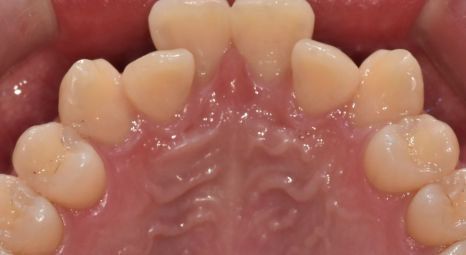
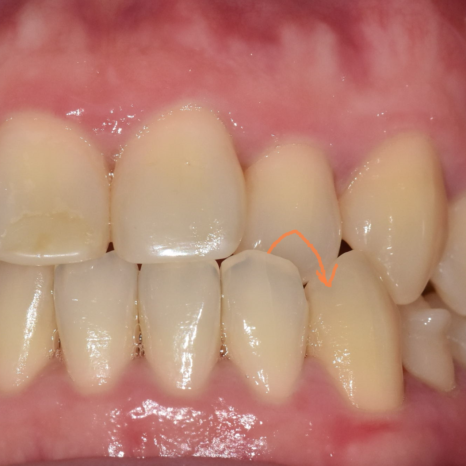
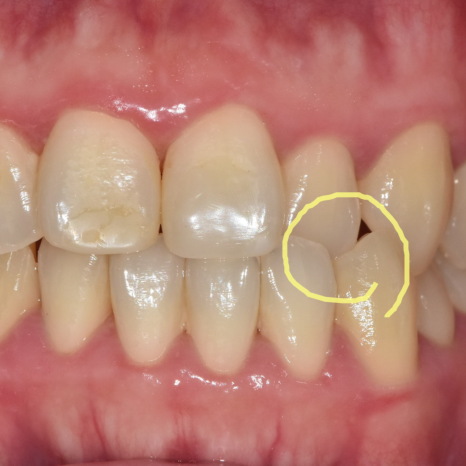
However, systematic reviews addressing this topic
have found mixed results.
Of the eight studies reviewed, four reported no association
between crowding and cavities.
The authors' conclusion was as follows:
There is currently no high-quality research
that can clarify this relationship.
Second, there are temporomandibular joint problems.
You will also often see explanations that crowded teeth cause jaw pain,
but recent literature examining the relationship between occlusion
and temporomandibular disorders
does not support a specific causal relationship between the two.
Of course, if there are areas that are difficult for a toothbrush to reach,
you should pay close attention to their care.
However, that is a matter of oral hygiene,
and does not mean that crowded teeth directly lead to cavities
or temporomandibular joint pain.
So what has more certain evidence?
Paradoxically,
it is quality of life.
There is a meta-analysis that included 3,672 adolescents
aged 11 to 14.
Those with malocclusion had a 1.15 times higher risk
of having poorer oral health-related quality of life.
(95% confidence interval: 1.12–1.18)
This value was calculated after adjusting for age, sex, the presence of cavities,
and socioeconomic conditions.
The authors concluded that there was moderate-level evidence
that malocclusion negatively affects quality of life.
(European Journal of Orthodontics, 2023)
A 1.15-fold increase may not seem very large
when expressed as a number.
However, this means that things such as covering your mouth when you smile,
keeping your lips closed in photographs,
and feeling self-conscious while talking
are actually measurable experiences.
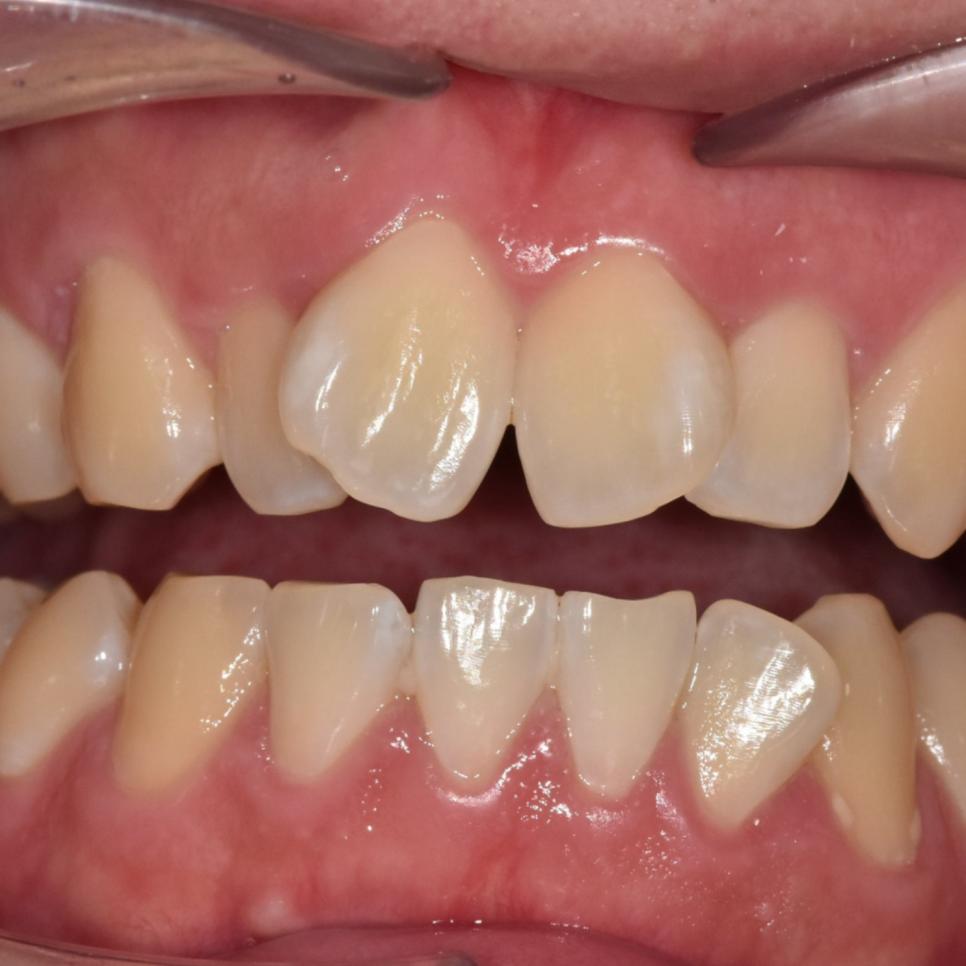
It is not simply in your imagination.
If you are considering orthodontic treatment because your teeth are "unattractive to you,"
that is a fully valid reason.
You do not need to create a separate health-related justification.
| Chapter 2. So When Should You Have Orthodontic Treatment? |
There are two main criteria to consider.
One is discomfort.
If you feel self-conscious when smiling, dislike having your picture taken,
repeatedly get food stuck in a particular area,
or have an area that is difficult to brush,
these can be reasons to consider treatment.
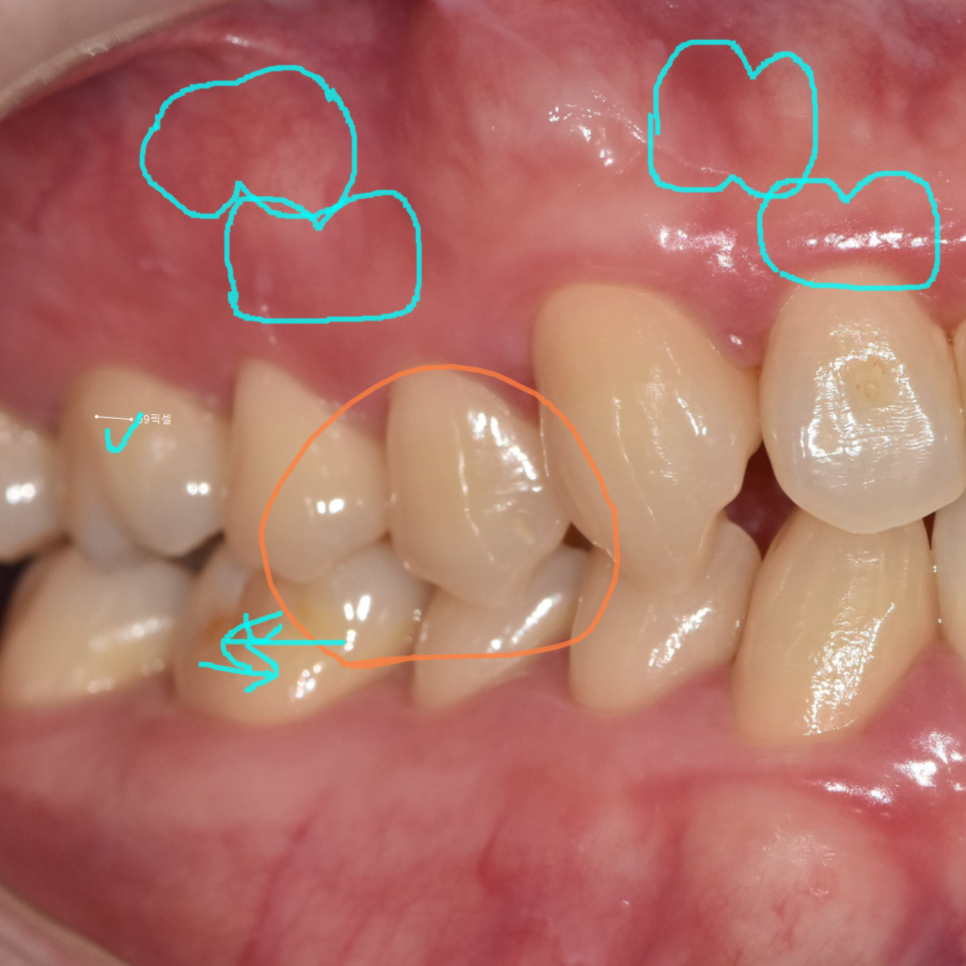
The other is function.
The treatment scope differs between having only a few overlapping front teeth
and having misalignment that also affects the way the molars bite together.
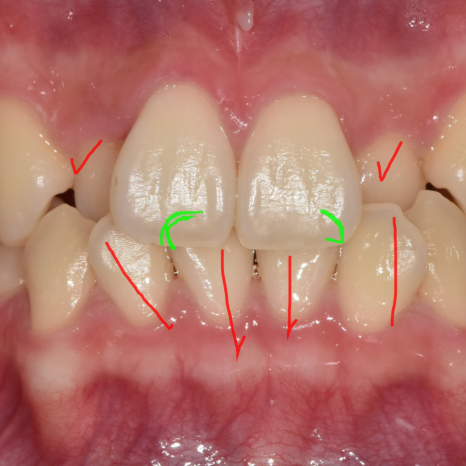
If only the front teeth are a concern,
partial orthodontic treatment may be sufficient.
If the bite itself is misaligned,
the entire set of teeth may need to be moved and rearranged.
This cannot be determined simply by looking at the teeth.
X-rays and models are needed
to determine which situation applies.
| Chapter 3. How Do the Treatment Options Differ? |
They can broadly be divided into three categories.
Partial or comprehensive orthodontic treatment,
extraction or non-extraction treatment,
and clear aligners or braces.
One of the questions I am asked most often
is about the difference between clear aligners and braces.
For cases of mild to moderate crowding
treated without extractions,
there was no significant difference in treatment duration between the two methods.
However, the level of evidence for this finding is relatively low,
and there is insufficient research on severe crowding
or cases requiring extraction.
Therefore, clear aligners may be an option for mild crowding,
but the situation is different when the overlap is severe
or extractions are needed.
< Clear aligner treatment process ↓↓>
Today, I discussed crowded front teeth.
The explanation that crowded teeth directly cause cavities
and temporomandibular joint pain has weaker evidence than expected.
If they are causing discomfort, you can choose to have treatment,
and if you are comfortable with them now, you do not have to.
However, it is a good idea to check whether the issue is limited to the front teeth
or also involves the bite.
The treatment duration,
method, and cost all vary depending on this.
Thank you for reading this long post today.

▼ Check the dental clinic location ▼