Hello!
I am the director of Seoul Bardi Dental Clinic.
| This post was written directly by Seoul Bardi Dental Clinic for the purpose of providing medical information, in compliance with Article 56, Paragraph 1 of the Medical Service Act regarding medical advertising. We recommend using the information provided for reference only. Please visit a medical institution and receive guidance from a medical professional regarding symptom assessment and accurate management methods. All procedures and surgeries performed at a dental clinic may involve individual risks, such as inflammation, bleeding, and swelling. Please make your decision after having a thorough consultation with a medical professional in advance. All images were created using AI to aid understanding. |
If something resembling a pimple appears on your gums
and repeatedly subsides,
you should have a tooth that underwent root canal treatment in the past
examined.
Some people visit us after being advised elsewhere to have the tooth extracted,
while still looking for a way to save it.
To give you the conclusion first,
an inflamed tooth that has undergone root canal treatment
does not necessarily need to be extracted immediately.
There is a way to treat it again
and continue using it.
Today, I will explain why inflammation develops
and what the likelihood of success with retreatment is,
along with the supporting evidence.
| Chapter 1. Why does inflammation develop again? |
"I had root canal treatment,
so why has inflammation developed again?"
This is a question I receive very often.
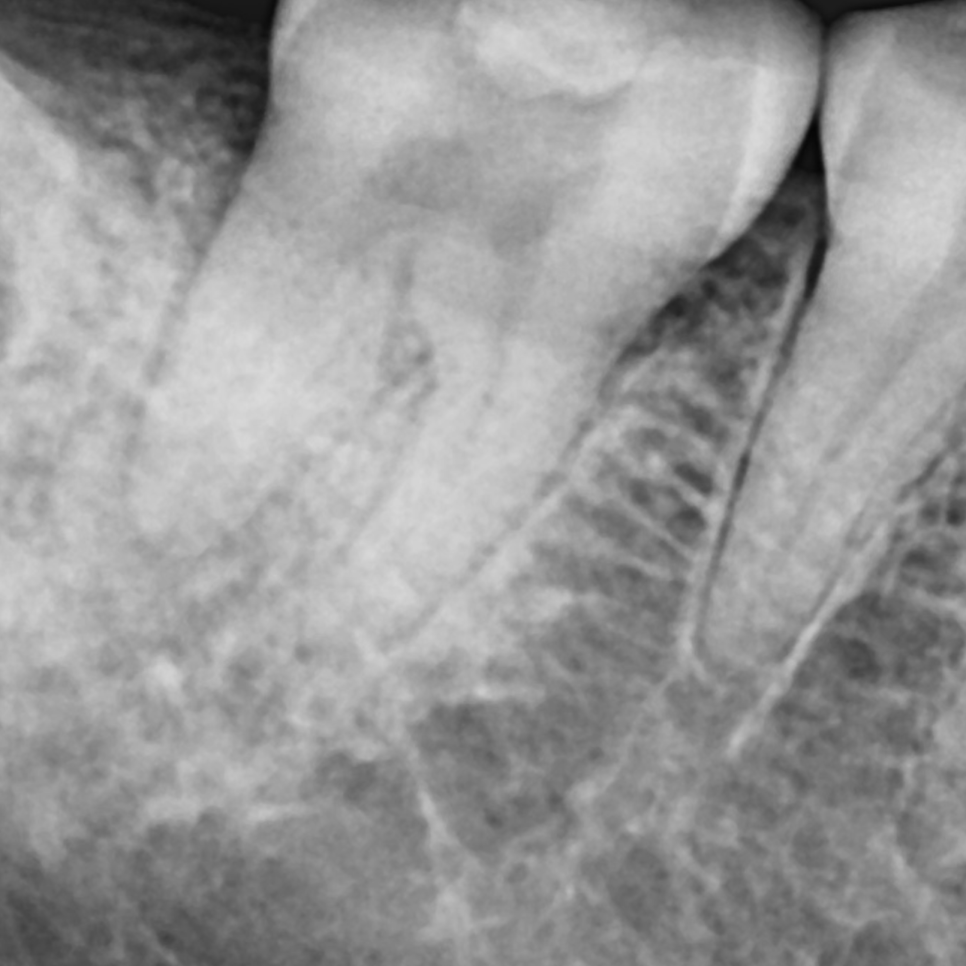
You may feel that the treatment was not done properly
and feel wronged as well.
Root canal treatment removes the infected nerve,
disinfects the inside thoroughly,
and then fills and seals the empty space.
There are two main points
where treatment can fail.
One is a missed canal.
The nerves inside a tooth are not a single strand.
They branch out like ginseng roots,
and their number and shape vary from person to person.
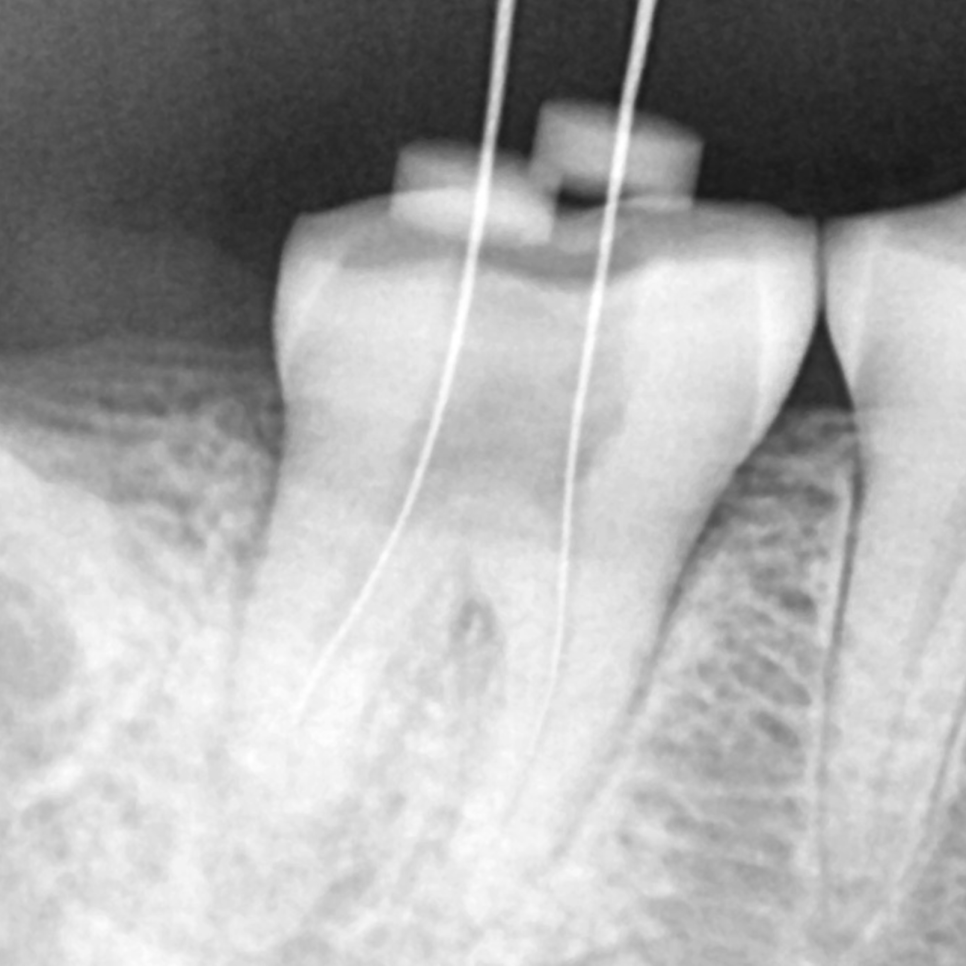
According to a study that used CBCT for examination,
untreated canals were found in 55.2% of first molars
and 50.8% of second molars in the upper jaw
that had already undergone root canal treatment.
The canal missed most frequently
is called the MB2 canal.
It accounted for 72.4% of cases in first molars
and 81.7% in second molars.
Teeth with a missed canal
were 2.57 times more likely to have inflammation
at the root tip.
This means that in more than half of the teeth,
there was a passage that had not been treated.
If bacteria remain inside,
inflammation can develop again over time.
The other factor is sealing.
Even if the inside is disinfected thoroughly,
bacteria can enter again if there is leakage from above.
It has been reported that the quality
of the restoration placed on top
may be more important to the outcome
than the quality of the material filling the root canal.
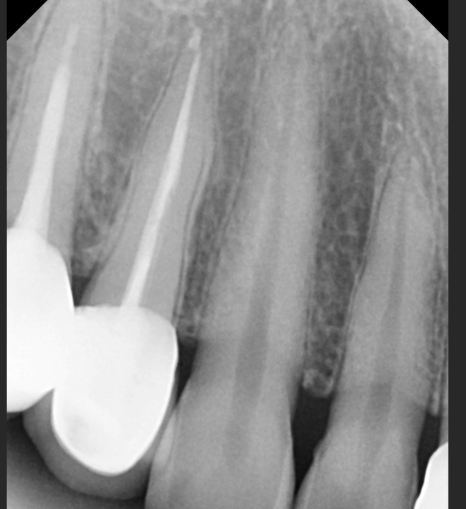
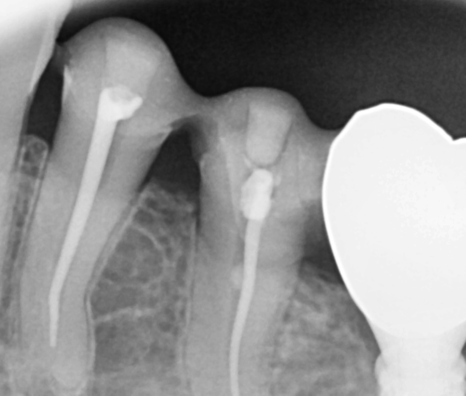
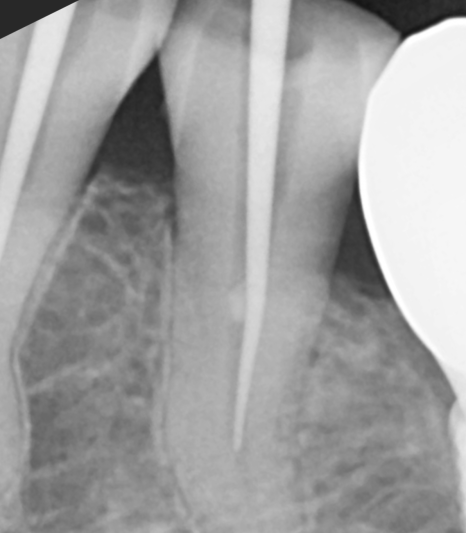
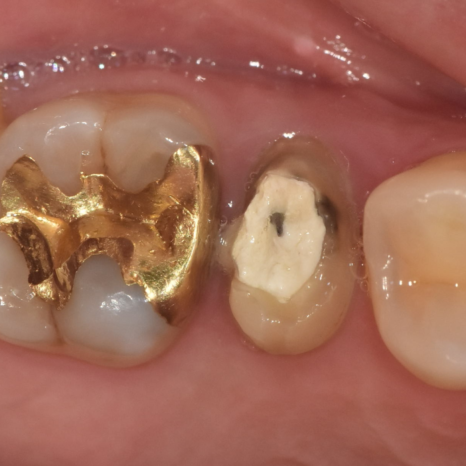
This is why you should not postpone
having a crown placed after root canal treatment.
To summarize:
The inside of a tooth
is much more complex
than we imagine.
| Chapter 2. What does a gum blister mean? |
If a pimple or blister develops on the gum
near a tooth that has undergone root canal treatment,
you should not simply ignore it.
It means that a passage has formed
for pus collected at the root tip to drain out.
Dentists call this a sinus tract.
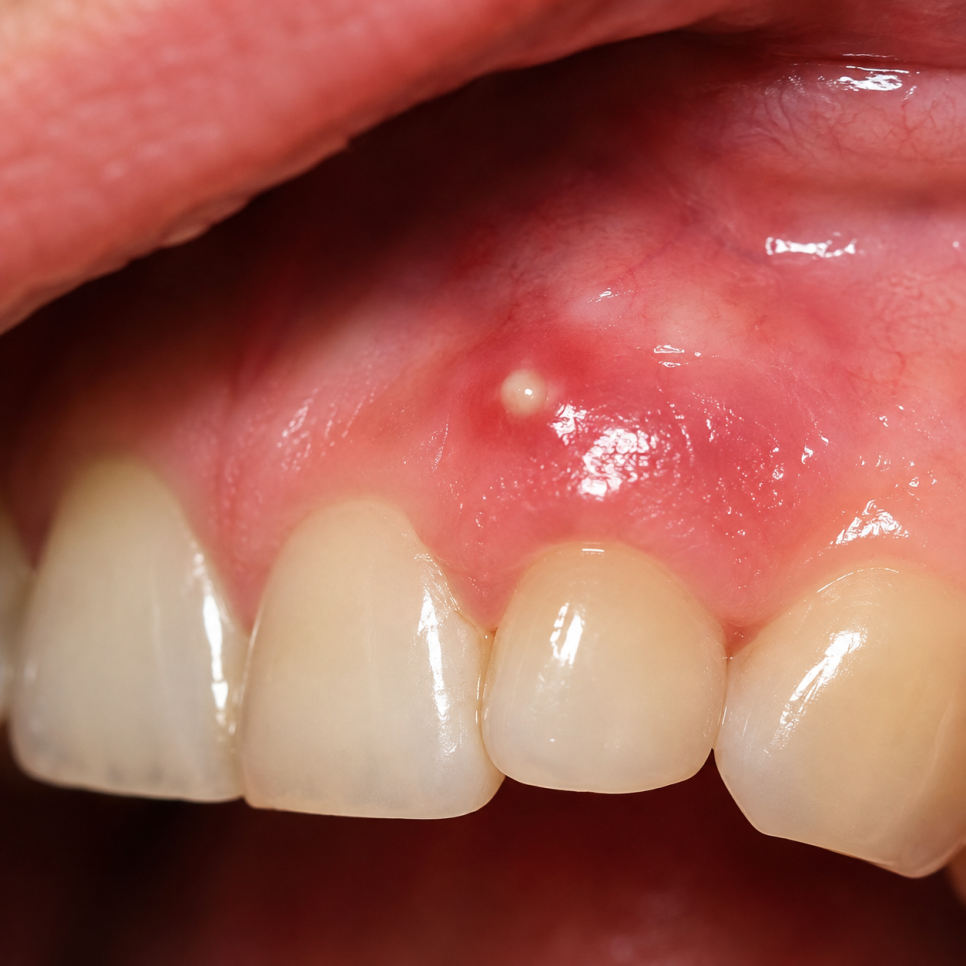
There is a point here that can be confusing.
When a path for the pus to drain develops,
pressure decreases,
so there may be no pain.
The blister may grow
and then subside on its own.
That is why some people think they have improved
and go on for months or years.
Meanwhile, the inflammation at the root tip
remains,
and the surrounding bone continues to deteriorate.
The absence of pain
does not mean that the condition has healed.
| Chapter 3. What is the likelihood of success with retreatment? |
The success rate of nonsurgical root canal retreatment
has been reported as 70.9% with 2–4 years of observation
and 83.0% with 4–6 years of observation.
▼ Check the dental clinic location ▼
A surgical method that removes the root tip
has a better initial success rate of 77.8%,
but this falls to 62.9% after more than six years.
(Torabinejad et al.)
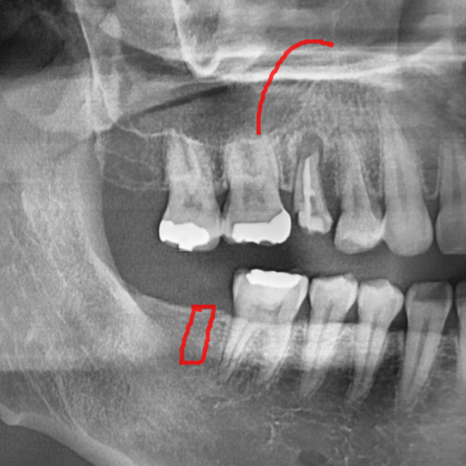
The conclusion is as follows.
Surgery has better initial results,
while retreatment of the root canal
has better long-term results.
Therefore, in most cases,
we first try removing the existing restoration
and disinfecting the tooth again.
This is commonly called endodontic retreatment.
And this process
does not end in a single visit.
The existing prosthesis is removed,
the material packed inside is taken out,
any missed canals are located,
and the tooth is disinfected repeatedly
until the inflammation subsides.
You should be aware in advance
that retreatment takes more time
than the initial treatment.
Today, I explained how to approach the situation
when inflammation develops again
in a tooth that has undergone root canal treatment.
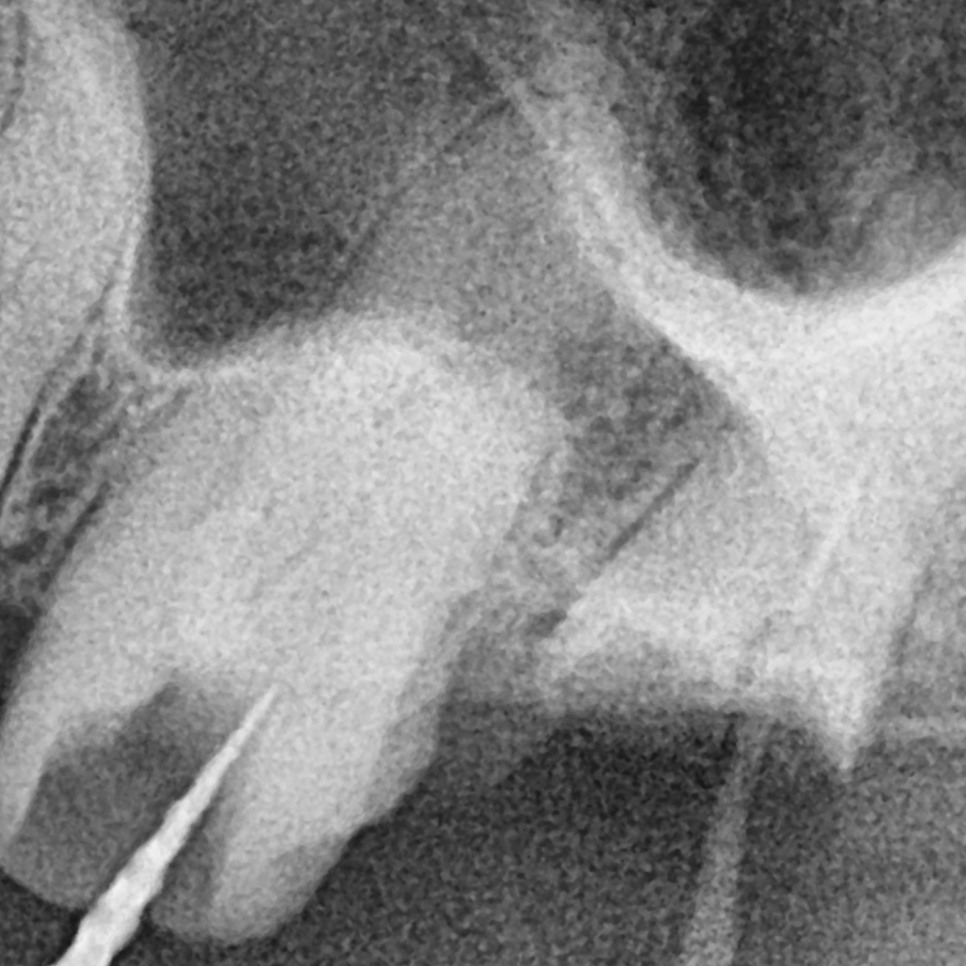
Inflammation can develop again
because the inside of the tooth is that complex.
More than half of the teeth
are found to have missed canals.
With retreatment,
approximately 83% remain maintained
after 4–6 years of observation.
A tooth that has been extracted
cannot be brought back.
Even if you have been advised to have it extracted,
I hope you will be sure to check
whether there are other options.
Before we make a decision,
I hope you will not give up
on the tooth first.
Thank you for reading this lengthy post today.