| This post was written directly by Seoul Vardi Dental Clinic for the purpose of providing medical information, in compliance with Article 56, Paragraph 1 of the Medical Advertising Act. We recommend using the information provided for reference only. Please visit a medical institution and receive guidance from a medical professional for symptom assessment and accurate care methods. All procedures and surgeries performed at dental clinics may involve individual risks, such as inflammation, bleeding, and swelling. Please make your decision after having a thorough consultation with a medical professional in advance. All images were created using AI to help with understanding. |
“Does orthodontic treatment shorten the roots?”
“Won’t my teeth fall out later?”
One of the topics many people are curious about
is the side effects of orthodontic treatment.
Hello!
This is Seoul Vardi Dental Clinic.
To give you the conclusion first,
a certain degree of shortening is common.
However, cases where this leads to tooth loss
are rare.
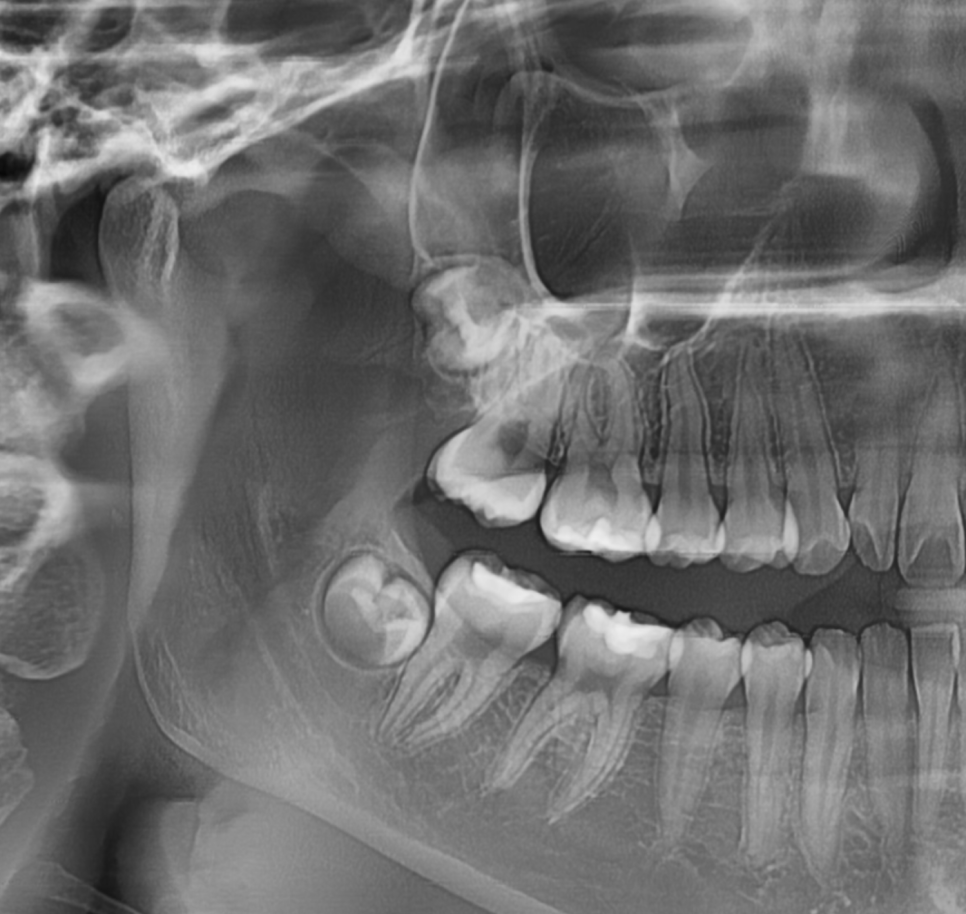
Today,
we will explain the shortening of tooth roots
along with the supporting evidence.
Why do the roots become shorter?
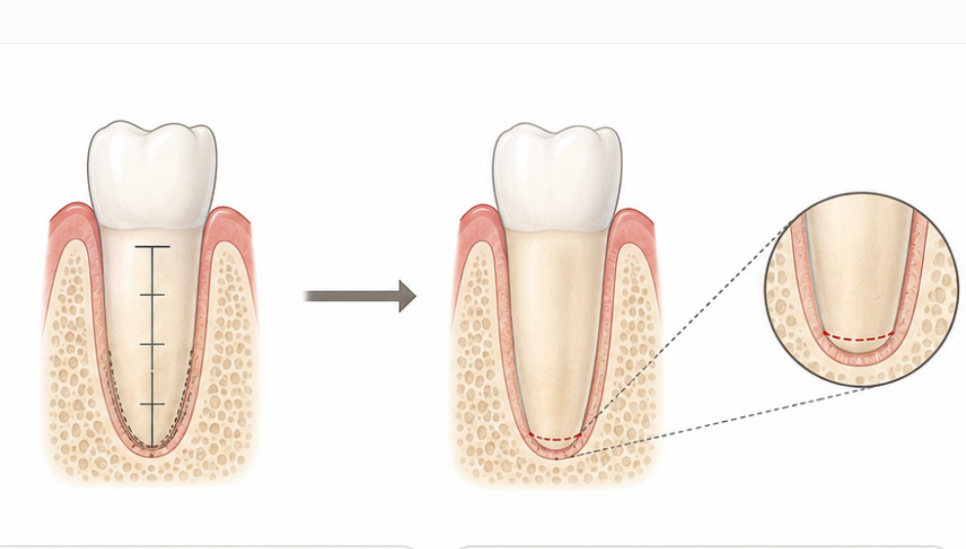
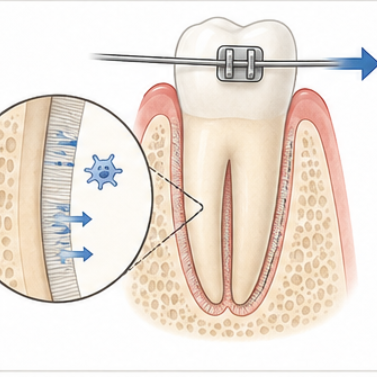
Orthodontic treatment is treatment that moves teeth.
For a root to move within the bone,
the bone on the side toward which it moves must be resorbed,
and new bone must form on the opposite side.
This process does not affect only the bone.
The tissue covering the tip of the root also responds,
and during this process,
the tip of the root may become shorter.
This is called root resorption.
Because it is a response that occurs as the body
remodels the area receiving force,
it is difficult to eliminate completely.
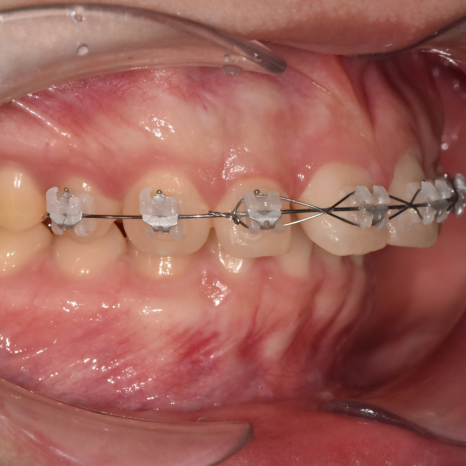
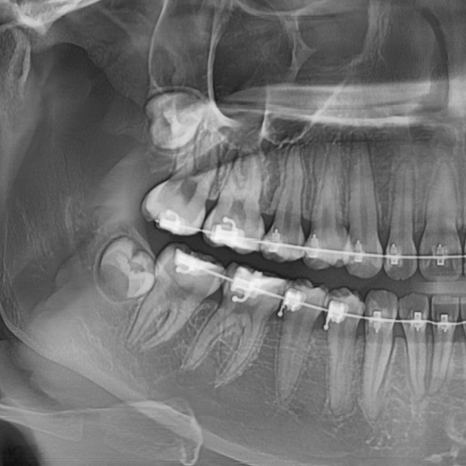
It also occurs inside the jawbone,
so it cannot be seen from the outside.
It can only be confirmed accurately
with an X-ray.
How common is it?
Let’s look at the numbers.
Reported rates in the literature range widely,
from 20% to 100%.
The reason for this large difference is that
studies differ in what they define as resorption
and how they measure it.
The rate is higher when even very minor changes are counted,
and lower when only noticeable changes are counted.
The next figure is what matters.
Severe resorption exceeding 5 mm
or one-quarter of the root length
occurs in 1% to 5% of cases.
(Review of the literature on root resorption)
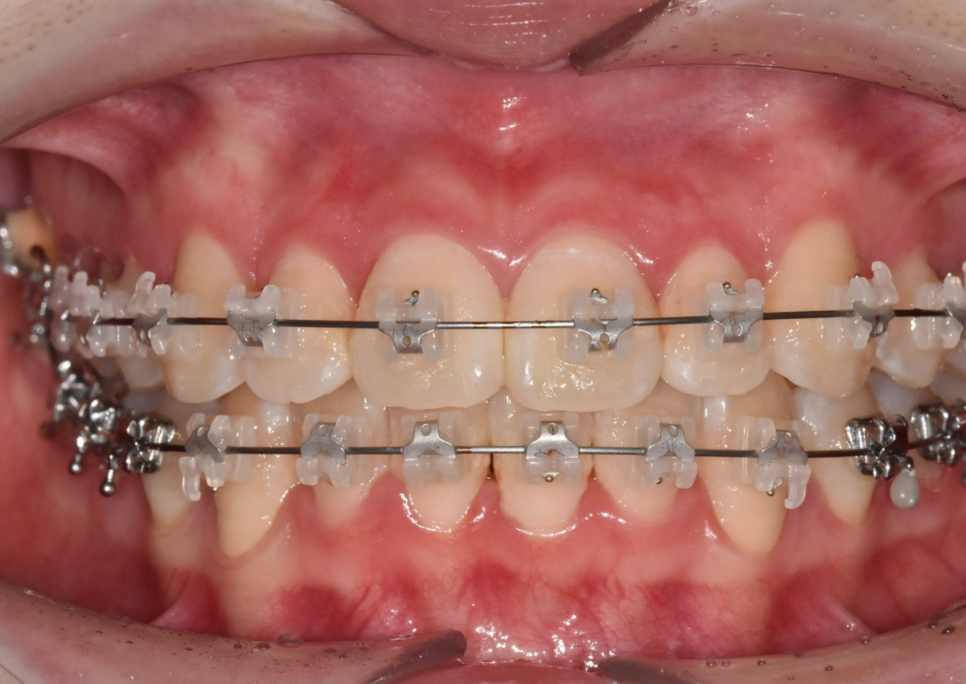
This means that most cases involve
only minor changes of around 1–2 mm.
That is why X-rays are taken periodically
during orthodontic treatment.
Nothing in the series of procedures performed at a dental clinic
is done without a reason.
If changes are observed in the teeth,
the force may be reduced or the rate of movement adjusted.
Does tooth-root shortening
make the teeth loose?
It is often explained that when the roots become shorter,
the support holding the teeth decreases,
which eventually makes the teeth loose.
The evidence shows that it is not that simple.
There is a report that followed cases of severe root resorption
during orthodontic treatment for 25 years after treatment ended.
In those cases, one-third of the roots of the upper front teeth had been lost,
but all of the teeth were still present 25 years later.
The resorption did not progress further,
and there were no problems with looseness.
(AJODO, 25-year follow-up report)
The key point is this:
Root resorption occurs while orthodontic force is being applied,
and when treatment ends and the force is removed,
it generally stops.
However, the authors add an important qualification:
there is still no consistent evidence regarding
the long-term stability of teeth with severe root resorption.
In other words, there is no need to conclude categorically that it is “fine,”
nor is there a need to be frightened that it is “dangerous.”
There is one distinction you should make here.
A common cause of loose teeth is not root length,
but the jawbone supporting the teeth.
If the bone recedes due to gum disease,
teeth can become loose even when their roots are long.
If the gums also deteriorate when the roots have become somewhat shorter,
it is true that there is less reserve support.
That is why we emphasize maintenance.
It is not because the roots have become shorter,
but to preserve the remaining supporting conditions.
Is there a way to reduce this?
It cannot be prevented completely,
but there are ways to reduce it.
First, do not apply excessive force.
A positive correlation has been confirmed
between the magnitude of orthodontic force and root resorption.
If teeth are moved excessively in an attempt to finish quickly,
tooth-root resorption increases.
Second, do not unnecessarily extend the treatment period.
The longer the treatment period,
the more resorption increases.
Wearing the appliance as instructed
and coming to appointments on time
directly affect this.
▼ Check the dental clinic location ▼
Cases requiring particular attention
There are cases that require closer examination before treatment begins.
These include teeth with naturally short roots
or roots with pointed tips.
The same applies to teeth that have previously been hit in the front.
Teeth that have experienced trauma
may already have changes at the tips of their roots.
Movement that pushes a tooth toward the gum
places more stress on the root tip
than other types of movement.
In such cases,
the force is set lower from the beginning
and the intervals between examinations are shortened.
One reason a panoramic X-ray is taken during diagnosis
is to identify these factors in advance.
Today, we discussed root resorption.
Root shortening to some extent during orthodontic treatment is common.
Although the reported rate ranges from 20% to 100%,
severe cases account for 1% to 5%.
And when treatment ends and the force is removed,
progress generally stops.
A more common cause of loose teeth
is the condition of the supporting jawbone,
rather than the length of the tooth roots.
Therefore, rather than worrying about orthodontic treatment,
it is more practical to attend your dental appointments on schedule
during orthodontic treatment and maintain your gum health.
Thank you for taking the time to read this long post.

| Directions |