| This post was written directly by Seoul Vardi Dental Clinic for the purpose of providing medical information in compliance with Article 56(1) of the Medical Service Act’s medical advertising regulations. We recommend using the information provided for reference only. For symptom assessment and accurate care instructions, please visit a medical institution and consult with a medical professional. All procedures and surgeries performed at a dental clinic may involve individual risks, such as inflammation, bleeding, and swelling. Please make your decision after having a thorough consultation with a medical professional in advance. To aid understanding, all images were created using AI. |
"Doctor, how do you know that?"
Hello!
This is Seoul Vardi Dental Clinic.
Today, we will explain
what orthodontic elastics do
and how to wear them properly.
If you are planning orthodontic treatment,
this should also help you
understand the treatment process in advance.
| Chapter 1. What Orthodontic Elastics Do |
Orthodontic appliances alone
cannot create certain types of force.
Brackets and wires
are effective for
aligning teeth.
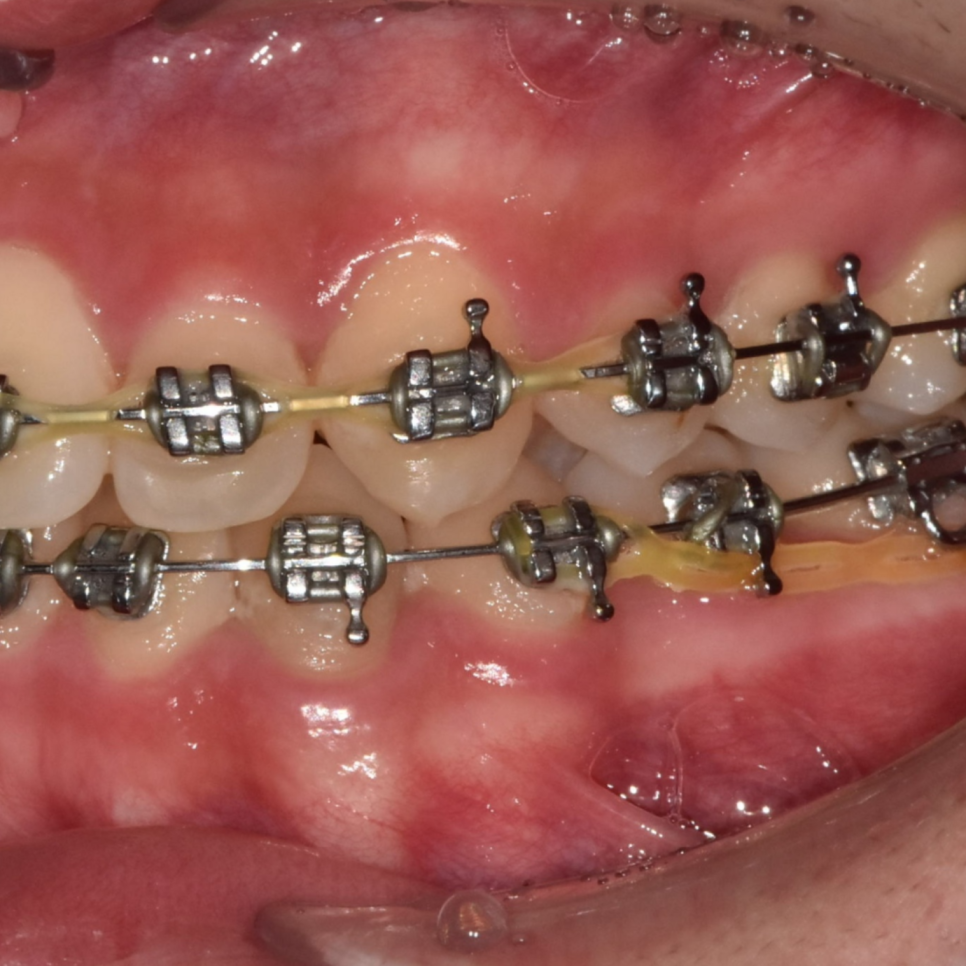
However, to change the relationship between the upper and lower jaws—in other words, the front-to-back position of the bite—force connecting the two jaws is needed.
Elastics
perform that role.
They connect a point somewhere on the upper jaw to one somewhere on the lower jaw, causing one side to pull while the other resists.
There are several uses for them.
They are used to adjust the upper and lower bite, correct a misaligned dental midline, or pull a particular tooth in the desired direction.
Not everyone needs to wear them.
They are used only when necessary,
depending on the condition of the teeth.
And during this stage, elastics
cannot be replaced by the appliances.
Your teeth move only for
as long as you wear them at home.
This is the point I most want to emphasize today.
Elastics are different from other appliances.
Once brackets are attached,
they remain attached even while you sleep,
so there is nothing for the patient to do.
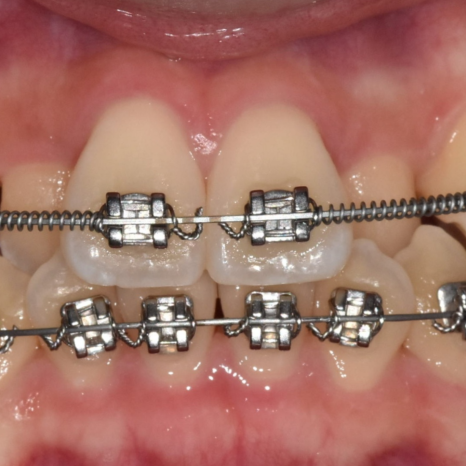
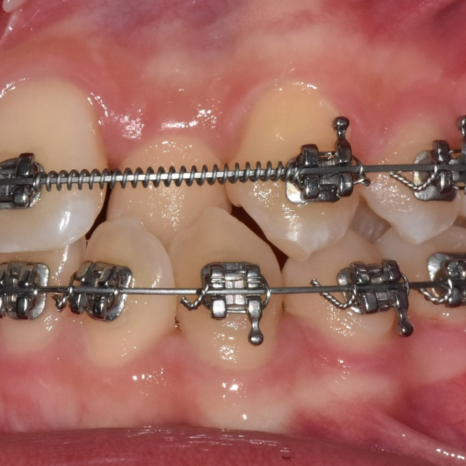
Because elastics are appliances that you remove and put back on, wearing time directly determines the total amount of force applied.
That is why, at your next visit,
we can roughly tell by checking
whether your teeth have moved as expected.
Whether you wore your elastics properly, haha.
Even if you lie, we can see it all!
| Chapter 2. Why Should You Discard Elastics After One Use? |
Some people keep reusing their elastics.
Elastics continue to exert force
while they are stretched.
However, that force
does not remain the same as it was initially.
There is a clinical study that measured latex and non-latex elastics inside the mouth over 12 and 24 hours.
At first, the force differed depending on the material, but after 24 hours, the difference between the two materials had statistically disappeared.
(European Journal of Orthodontics)
This means that the force decreases that much.
If they are left stretched for too long,
they will not apply the necessary force
even if you are wearing them.
That is why they should be replaced with new ones at the prescribed intervals.
There is no need to save them. We can give you more whenever you need them.
▼ Check the Dental Clinic Location ▼
| Chapter 3. Why You Must Not Confuse the Position |
Elastics are all about where you attach them.
Even with the same elastics,
the force can act in the completely opposite direction
depending on where they are attached.
Sometimes they are attached on only one side,
and sometimes symmetrically on both sides.
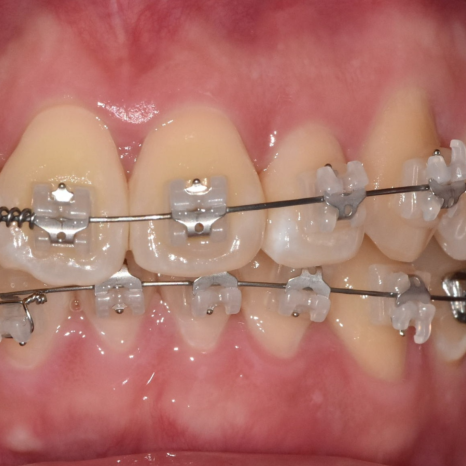
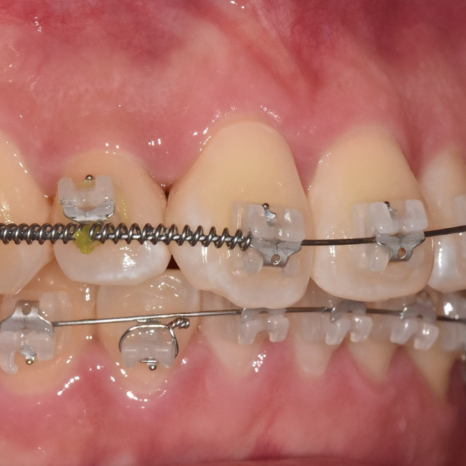
The position varies from person to person,
and may change over time even for the same person.
If you attach them in the wrong position,
it may be worse than not wearing them at all.
If you do not wear them, your teeth will not move,
but if you wear them incorrectly,
they may move in an unwanted direction.
That is why we explain the position again whenever it changes,
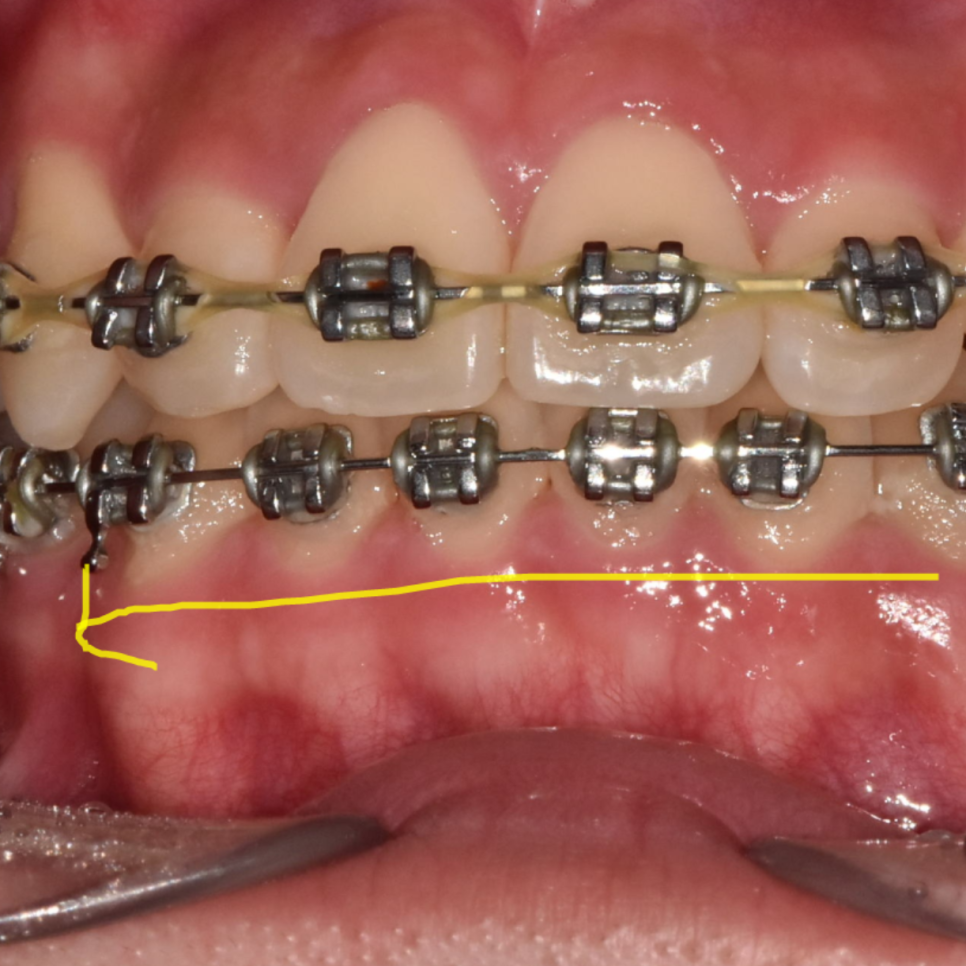
and tell you to take a picture if you are confused.
Taking a picture of the attachment points inside your mouth yourself will make it clear.
| Chapter 4. Practical Tips for Wearing Elastics (Precautions) |
Here are a few practical tips.
- Keep extras in multiple places.
If you keep them only at home,
the day is over as soon as you remove them while you are out.
Keeping small supplies in your bag, car, and desk at work can help you get back on track.
- Make meals and toothbrushing one routine.
Everyone remembers when to take them out,
but often misses the time to put them back in.
Make putting them back in immediately after brushing
part of the same routine so you are less likely to forget.
- Avoid strongly colored foods.
Elastics can become stained.
Foods such as curry and coffee
can turn them yellow.
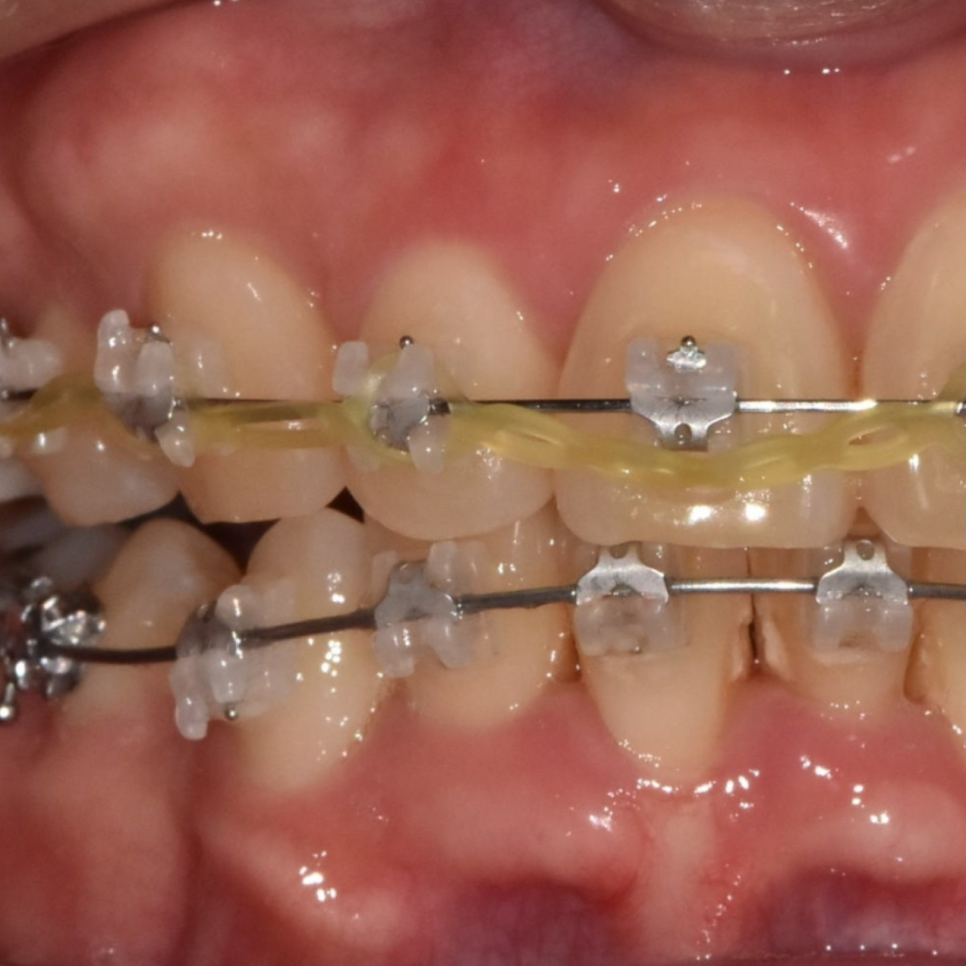
Stained elastics do not lose their force,
but the problem is that you may stop wearing them because they look unpleasant.
Remove them during meals
and replace them with new ones.
They may also feel tight or sore during the first few days.
This is a sign that force is being applied,
and they usually become easier to tolerate after a few days.
Today, we discussed orthodontic elastics.
Elastics connect the upper and lower jaws
and create force that appliances alone cannot produce.
That is why you must wear them at home for treatment to progress.
If your wearing time is insufficient,
it becomes apparent right away.
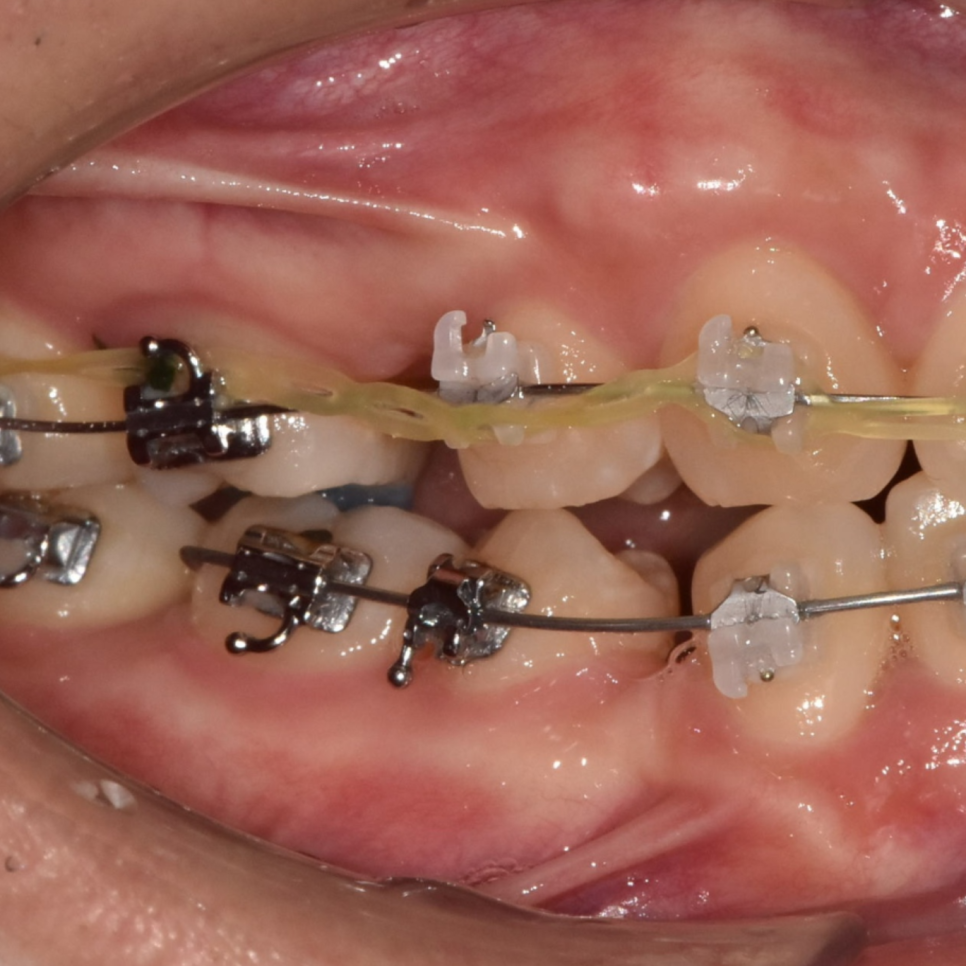
Studies also show that patients
remember wearing them for about five hours more per day
than they actually did.
Therefore, rather than relying on memory,
it is more reliable to keep extras in multiple places
and develop the habit of putting them back in immediately after brushing.
If you are unsure where to attach them,
take a picture at your next visit.
Thank you for reading this lengthy post.

| Directions |