[이유득 dermatologist]
Hello,
A place that creates a comfortable face
rather than excessive change.
This is Leejham Dermatology.
Have you ever looked in the mirror, found a brown spot on your face, and started worrying? In particular, many people get confused when they see brown spots on the cheeks, forehead, or the backs of the hands and wonder, “Is this melasma or seborrheic keratosis?” Although these two pigmentation conditions look similar, they are actually completely different in terms of cause, location within the skin, and management approach.
Many people confuse melasma and seborrheic keratosis, but once you understand the difference between melasma and seborrheic keratosis, you can clearly distinguish everything from the cause to the management method of each pigmentation condition.
If incorrect information leads you to apply seborrheic keratosis removal methods to melasma, or conversely to try melasma care methods for seborrheic keratosis, it may be difficult to get the change you expected, and sometimes the pigmentation may become darker. Today, let’s take a detailed look at the differences between melasma and seborrheic keratosis and introduce the management methods suited to each.
A beauty consultation that is truly beneficial
This is dermatologist Lee Yudeuk.
"Two pigmentation conditions that are different deep within the skin"
First, in the difference between melasma and seborrheic keratosis,
the biggest difference is the depth of the skin layer
where the pigment is located.
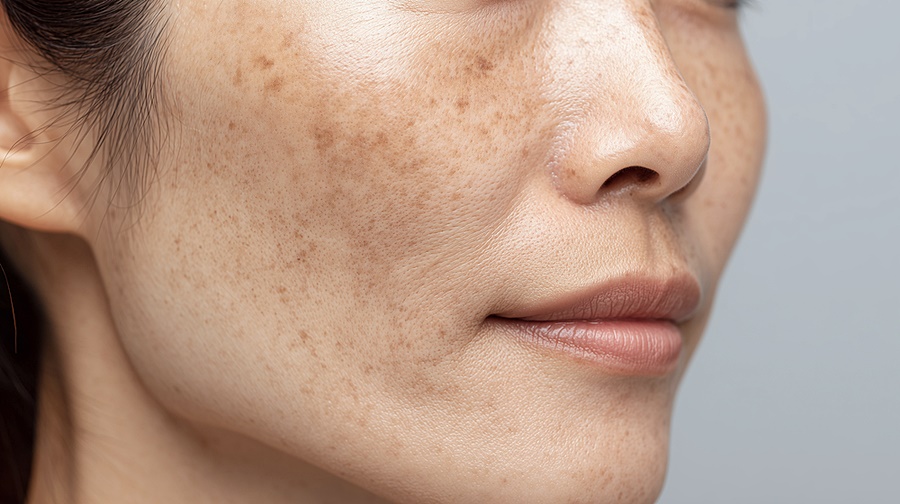
Melasma is a condition in which melanin pigment is deposited not only in the epidermis
but also in the dermis, and it is characterized by indistinct borders and appearance over a wide area.
It usually appears symmetrically on both cheeks, the forehead, the bridge of the nose,
and around the upper lip, and the color varies
from light brown to dark brown.
On the other hand, seborrheic keratosis is also
called age spots and is a benign tumor
limited to the epidermis, with clear borders
and a slightly raised shape.
It usually appears individually on sun-exposed areas
such as the face, backs of the hands, and arms
after middle age.
Clearly distinguished by hormones and aging, starting with the cause
The difference between melasma and seborrheic keratosis is also clearly distinguished in their causes.
The main causes of melasma are ultraviolet exposure and hormonal changes.
When the skin is exposed to strong sunlight, melanin pigment is overproduced to protect the skin, and when this is not properly eliminated and accumulates, melasma develops.
It also worsens during periods of major hormonal change such as pregnancy, taking oral contraceptives, and menopause.
In particular, during menopause, decreased estrogen reduces collagen production and thins the skin, making melasma appear even more prominent.
Seborrheic keratosis, on the other hand, is a benign tumor that mainly occurs due to aging and long-term cumulative exposure to ultraviolet rays.
As people age, keratinocytes in the skin overproliferate and appear in a raised form, which is why they occur more often after middle age.
Why can’t they be solved with the same laser?
The difference between melasma and seborrheic keratosis is also clearly seen in the management method.
Because melasma pigment is deposited down to the dermis, it is difficult to achieve complete change with a simple laser procedure alone.
Using laser toning or IPL to gradually break down the pigment while also combining whitening care is helpful.
Depending on the individual’s skin condition, multiple sessions may be needed, and even after management, ongoing caution to prevent recurrence is important.
Because melasma can recur due to hormones, ultraviolet rays, stress, and other factors, regular care and thorough sun protection are essential.
Seborrheic keratosis, on the other hand, is removed using a method different from pigment care.
It can be removed relatively simply through laser or cryotherapy, and the number of sessions may vary depending on the individual’s condition.
Since seborrheic keratosis is a benign tumor, the likelihood of it reappearing after removal is relatively low, but you should still pay attention to sun protection in daily life so that new seborrheic keratoses do not develop.

Sun protection is the best preventive measure
The best way to prevent and manage melasma and seborrheic keratosis is thorough sun protection.
It is recommended to use sunscreen with SPF 50 or higher every day and reapply it every 2 to 3 hours.
When going बाहर? no; let's keep English only: When going out, using a hat or parasol can also help.
Also, drinking enough water and consuming foods rich in antioxidants are helpful for skin health.
Excessive exfoliation or the use of irritating cosmetics can damage the skin barrier and worsen pigmentation, so caution is needed.


Customized pigment care at Leejham Dermatology Gangnam Branch
Leejham Dermatology Gangnam Branch has a variety of devices for managing pigmentation conditions.
With toning and fractional care using pico laser, positive changes can be expected for melasma and blemishes, and CO2 lasers for removing age spots are also available.
In addition, dual toning and IPL care using QuadroStar can address not only pigmentation but also vascular lesions in a combined manner.
Above all, Leejham Dermatology Gangnam Branch provides not a simple procedure, but an accurate diagnosis and customized solution suited to each person’s skin.
Because every skin type is different, we establish a systematic plan that considers not a standardized approach, but the individual’s skin condition, the depth of pigmentation, and lifestyle patterns.

You cannot start without an accurate diagnosis
The difference between melasma and seborrheic keratosis may be more than a simple cosmetic issue; it can be a signal of skin health.
Even if they are both brown spots, their causes, depth, and mechanisms of occurrence are completely different, so choosing the wrong method without an accurate diagnosis may instead make the pigmentation darker or cause other skin problems.
It is important to understand your skin condition through an accurate diagnosis and then begin the appropriate care.
Leejham Dermatology Gangnam Branch listens to the skin concerns of visitors, carefully examines the skin condition, and guides each person toward the most suitable direction.
Rather than temporary results, we think about long-term skin health, and we also provide sufficient explanations for any questions or concerns.