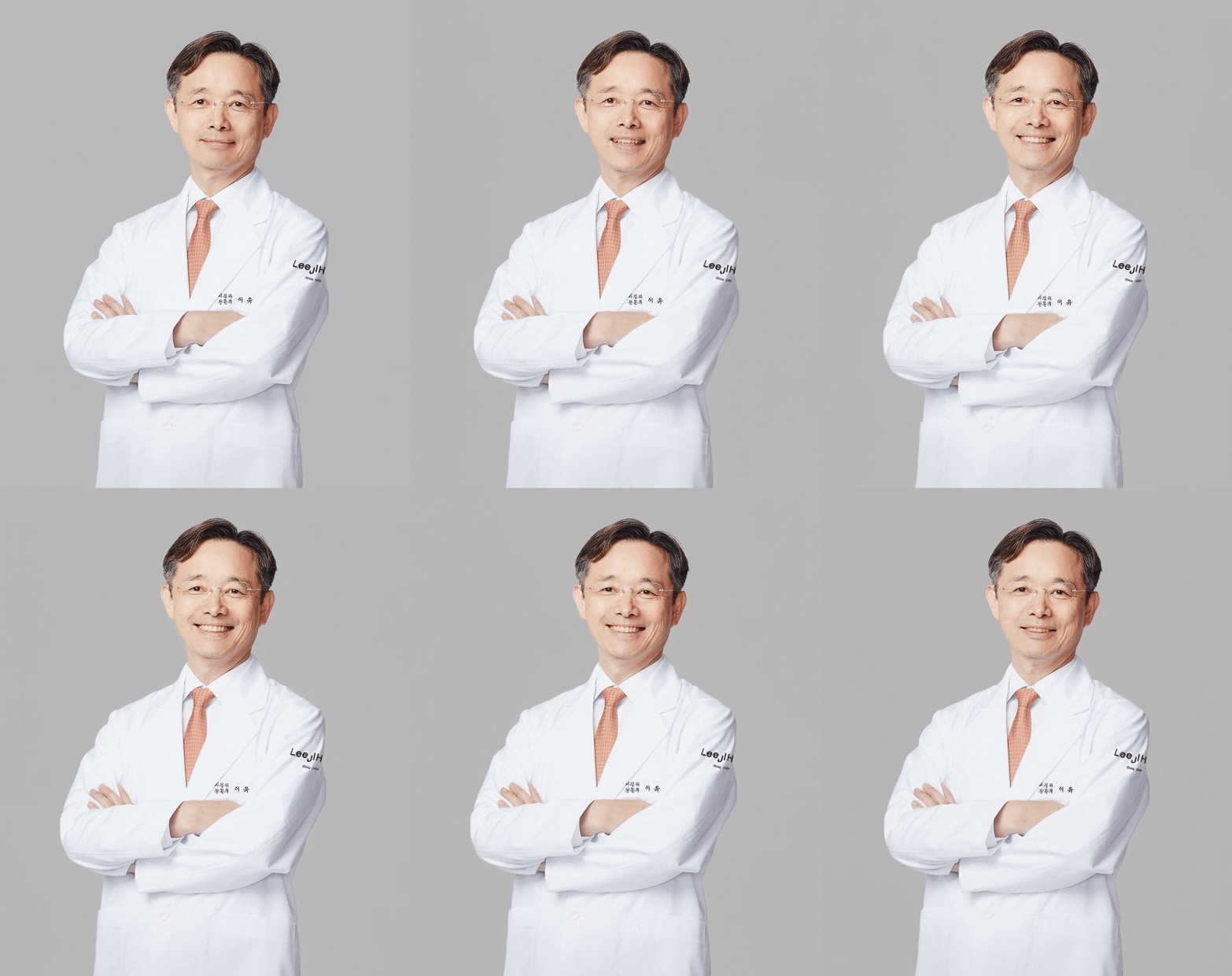
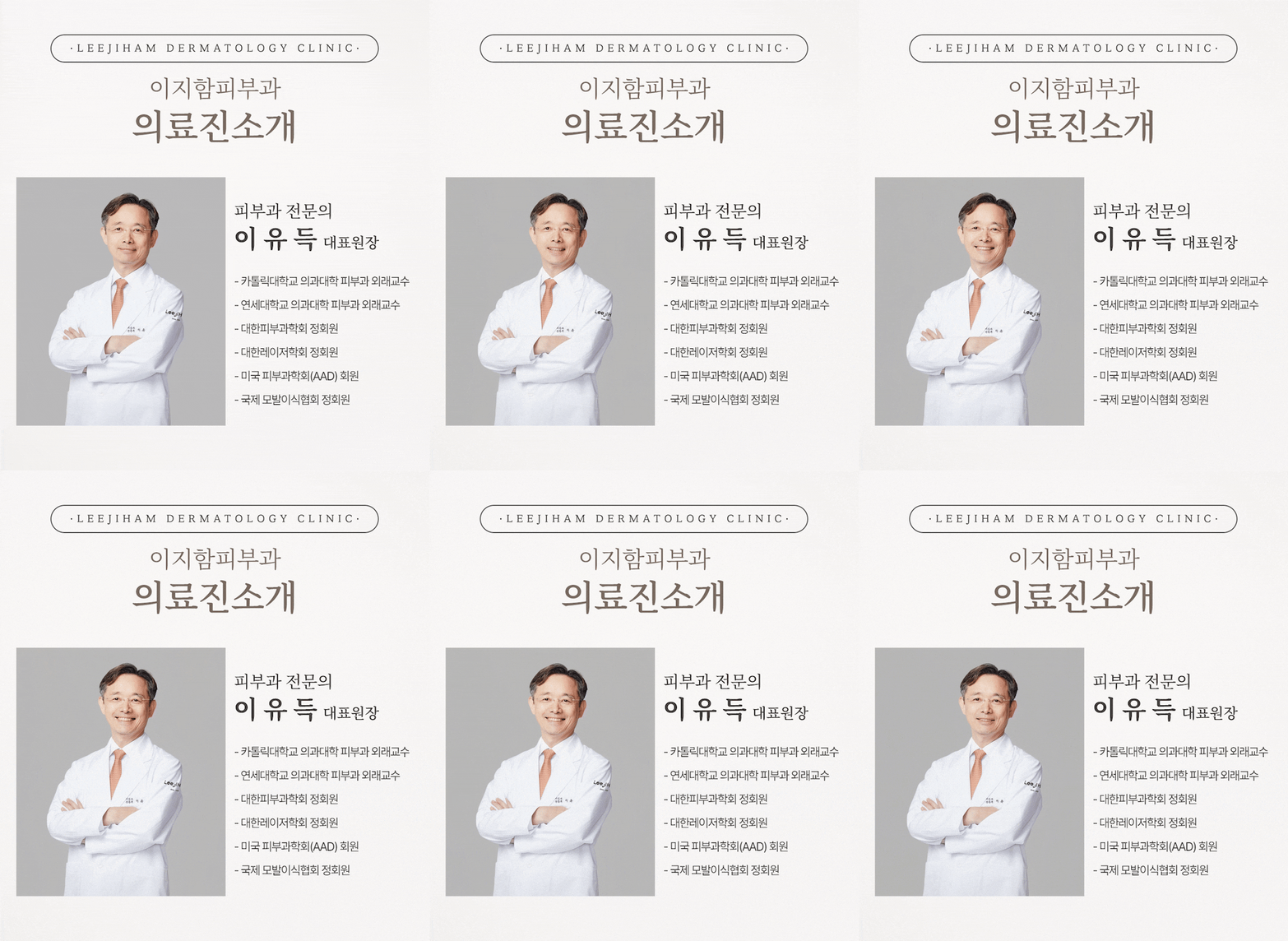
[Dermatologist Lee Euiduk]
Hello,
A place that creates a comfortable face,
rather than excessive change.
This is Easyham Dermatology.
Postpartum stretch marks are a common concern for many mothers.
They are evidence of a beautiful time spent carrying precious life, but the marks left on the skin can lower confidence and weigh on the heart. However, now various treatment methods can bring change. For those wondering about postpartum stretch mark removal, I will explain effective treatments and care methods in detail.
Let’s take a look together at how to restore skin confidence.
A beauty consultation that is truly beneficial
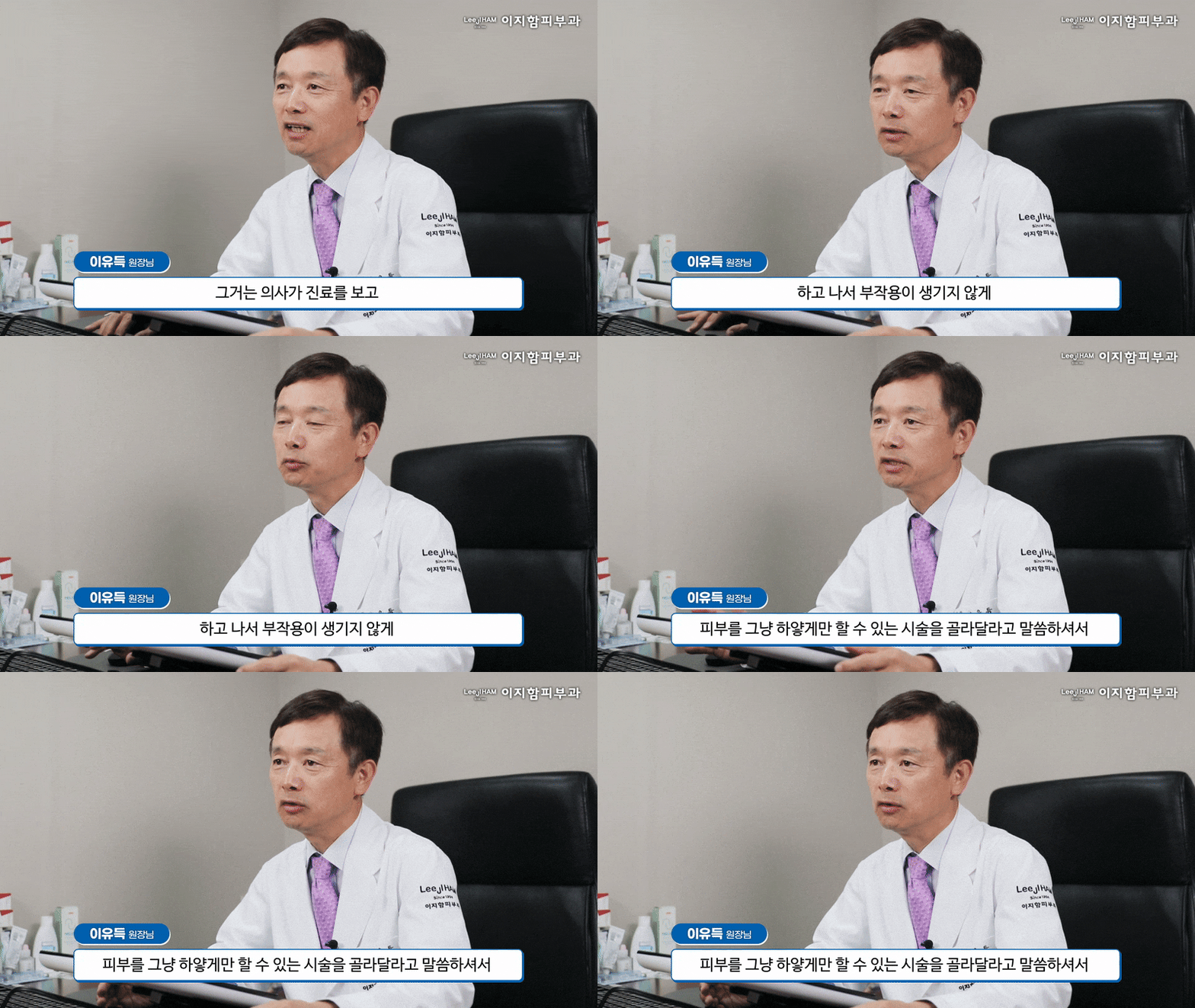
I am dermatologist Lee Euiduk.
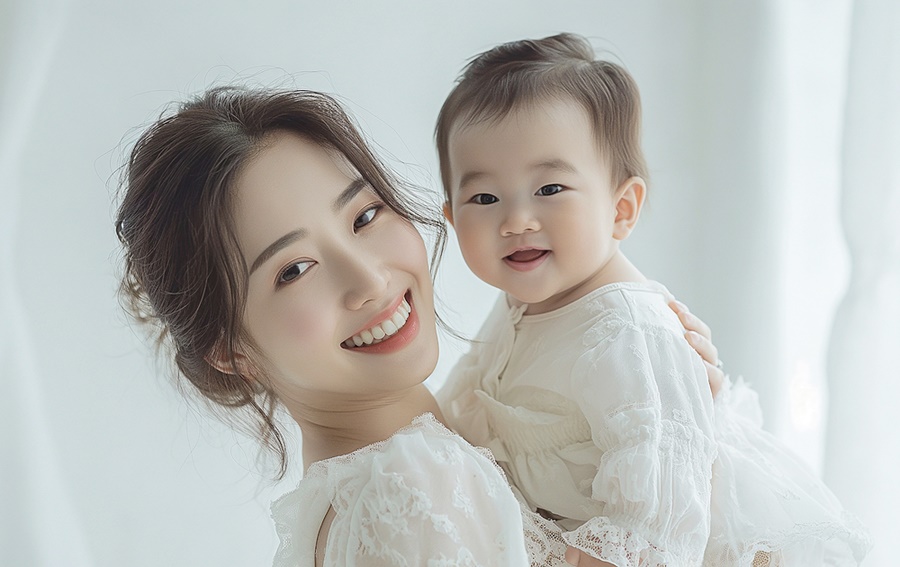
"I want to have time for myself now, too."
I recently met a patient
in the clinic.
It had been a year since she gave birth,
but because of the stretch marks
left on her abdomen and thighs,
she said she had only worn long clothes
even in summer.
She said she had no time to care for herself
while giving birth and raising her child,
but now that she has a little more breathing room,
she feels heavy-hearted every time she looks in the mirror.
Even when she wanted to go to the pool,
she hesitated, and even when she took out
the clothes she used to wear,
all she could do was sigh.
Listening to her story,
I thought that many people
must be carrying similar concerns.
Why do stretch marks appear?
Before considering postpartum stretch mark removal,
it is important to first understand
what stretch marks are.
Stretch marks are medically called
"striae."
They are a type of scar that forms when
the skin, which rapidly expanded during pregnancy,
loses elasticity and the dermis tears.
It is similar to a rubber band being
pulled too hard and stretching out,
an occurrence that happens when the skin
cannot keep up with rapid changes.
They often start out red or purplish,
then turn white over time,
which is a sign that the skin’s collagen
and elastin fibers have been damaged.
They most commonly appear on areas
that expanded greatly during pregnancy,
such as the abdomen, breasts,
thighs, and buttocks.
Changes deep within the skin
Stretch marks are not simply a problem
on the skin surface.
The skin is made up of the epidermis,
dermis, and subcutaneous fat layer,
and stretch marks are a condition in which
the dermis has been damaged.
In the dermis, protein fibers called collagen
and elastin, which help maintain skin elasticity,
are interwoven like a net.
When the skin rapidly stretches due to pregnancy,
these fibers break and scars form.
Also, when cortisol increases due to hormonal
changes during pregnancy, collagen production
may be suppressed, making stretch marks
more likely to appear.
The degree of stretch marks varies depending on
individual skin elasticity, genetic factors,
and the speed of weight gain,
but many mothers experience these changes.
What methods are available?
Fortunately, modern medicine offers
various treatment methods that can help
with postpartum stretch mark removal.
The representative method is laser treatment.
Fractional lasers create microscopic columns
of heat in the skin to remove damaged tissue
and stimulate new collagen production.
Like partially demolishing an old building
and rebuilding it,
this is the principle for restoring damaged
skin tissue.
PICO fractional laser more precisely
helps normalize pigmentation and scars,
while reducing damage to surrounding tissue.
CO2 laser can help with deep stretch marks
and strongly promotes skin recovery.
These laser treatments each have their own strengths,
so the appropriate treatment is selected
depending on the condition, color,
and depth of the stretch marks.
Usually, receiving treatment at intervals of
4 to 6 weeks for about 5 to 10 sessions
can lead to gradual positive changes.
Consistent care in daily life
After postpartum stretch mark removal treatment,
consistent daily care is also very important.
First, sufficient moisturizing is essential.
Apply a moisturizer containing ingredients such as
ceramides or hyaluronic acid carefully
at least twice a day.
Keeping the skin hydrated helps normalize
elasticity and can help prevent new stretch marks
from forming.
Products containing vitamin E oil
or centella extract can also help skin recovery.
It is also good to improve skin elasticity
through regular exercise,
and to support collagen production
by eating foods rich in protein and vitamin C.
Rapid weight changes can burden the skin,
so I recommend maintaining a healthy weight.
Ultraviolet rays can make stretch marks more noticeable,
so do not forget to use sunscreen.
Now I have hope that things can gradually improve
The patient I mentioned earlier
started fractional laser treatment.
After the first few sessions,
seeing the red stretch marks fade in color,
her expression gradually brightened.
Of course, they do not disappear completely overnight.
But through steady treatment and care,
as the stretch marks gradually faded and the skin texture
changed positively, she began to regain confidence.
Even if they do not disappear completely,
I still remember her saying that the time spent
making this effort itself felt like time spent
taking care of herself.
Treatment is not just about changes in the skin;
it is also time to look after and love yourself.
A heartfelt word of advice
Stretch marks are precious evidence
of having carried life, but there is no need
to lose confidence because of them.
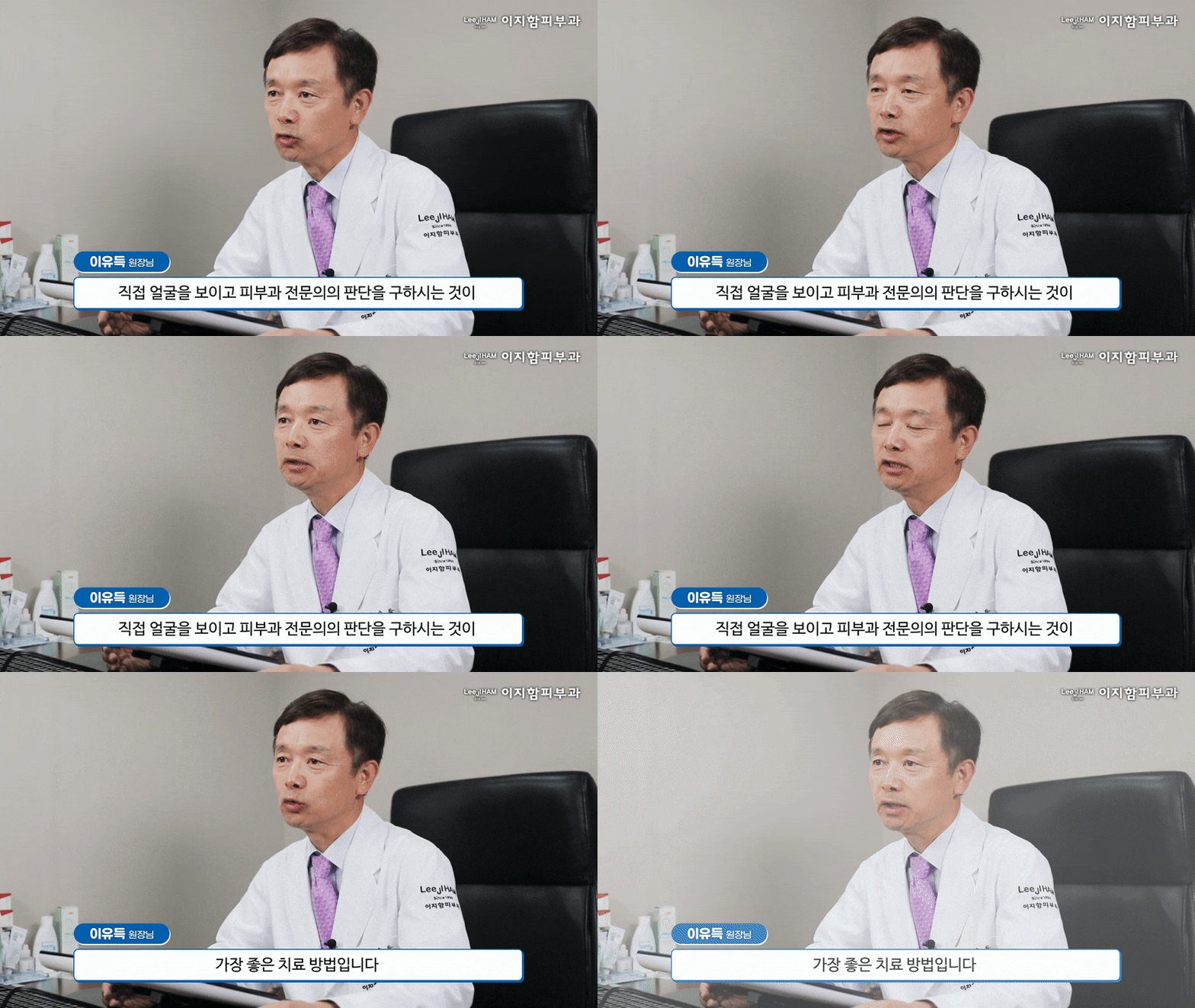
If you are struggling with postpartum stretch mark removal,
I recommend not enduring it alone
and instead speaking with dermatology medical staff.
Easyham Dermatology provides not just simple treatment,
but a careful approach and solutions
that are tailored to each person’s skin.
With honest care and proven methods,
we aim to be a place you can trust for the long term,
not just for one treatment.
To become the name that comes to mind first
when skin concerns arise,
we will continue to provide honest and warm care.
Easyham will be with you
on the journey of completing your beautiful self.









Previous image
Next image









Previous image
Next image