
Hello, this is E. Z. Ham Dermatology Clinic Gangnam branch.
Have you ever looked in the mirror recently and felt surprised by the changed contours of your face compared with before? As many people search for lifting treatments in response to reduced elasticity and a less defined face line, they come across the unfamiliar term “Onda.”
Today, based on actual consultation cases, we will explain everything about Onda lifting. Let’s look at how it works and who it may be effective for.

A few days ago, someone came to the consultation room. From the moment they opened the door, I could sense hesitation. “I almost turned back several times because I wasn’t sure if I should come here. I also wondered if I really needed a treatment like this at my age already, and a friend suggested Onda, but I didn’t really know what it was, so I was worried.”
After checking the condition of their skin, overall elasticity was still maintained, but mild sagging was observed in the face line and cheek area. It was not severe, but they were under considerable stress because the reflection they saw in the mirror every day had changed from what it used to be.
“After washing my face, it doesn’t feel like I’m puffy, but my face feels heavy, and in photos my jawline isn’t clear. I especially kept worrying about the double chin area.” Hearing these concerns, I was reminded once again that many people recognize signs of aging but feel unsure about how to respond.
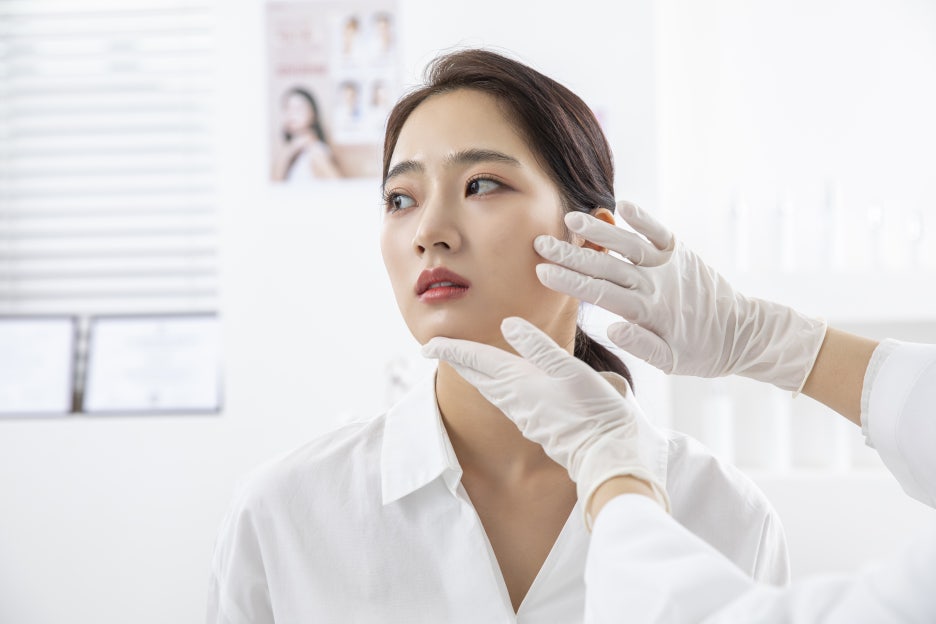
What is Onda lifting?
Onda lifting is a lifting method based on ultra-short microwave technology. To put it simply, just as microwaves transfer heat into food, this energy reaches deep into the skin and stimulates fat and the fascia layer at the same time. What differentiates it from existing lifting treatments is the way the energy is delivered. Because it is distributed broadly over an area rather than in point units, the procedure takes less time and tends to cause relatively less discomfort.
It shows notable responses especially in areas where fat accumulates, such as under the chin and the cheeks. When I explained the principle, the patient asked, “So you mean fat reduction and elasticity improvement happen at the same time?” That is correct. With ultra-short microwave energy, fat cells are broken down to reduce volume, while collagen synthesis is stimulated at the same time, allowing for a combined effect of improved elasticity.
There are various reasons Onda lifting has gained attention. First, the procedure time is short. To make it easy to receive even in a busy daily routine, it is completed in about 30 to 60 minutes for the full face. Another appealing point is that it causes less discomfort. Because ultra-short microwave energy is delivered evenly, sharp stimulation or intense heat that can occur with other methods is relatively reduced.
Of course, there are differences depending on each person’s pain sensitivity, but most patients respond with, “It was more tolerable than I expected.” However, as with any procedure, there are indications, and Onda lifting is not a universal solution. The optimal approach varies depending on individual conditions such as the degree of sagging, amount of fat, age group, and skin characteristics. That is why, during consultation, directly evaluating the skin and discussing the most effective method together is the most important step.

Who is Onda lifting suitable for?
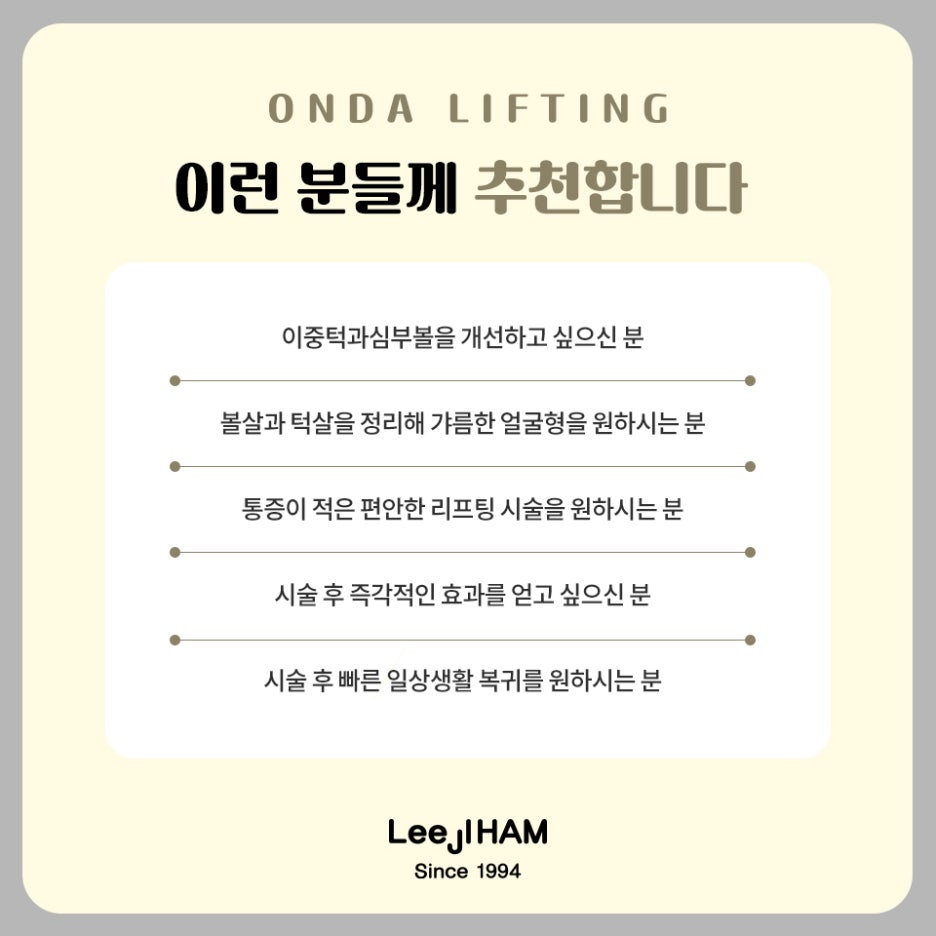
When the patient asked, “Would Onda lifting be appropriate in my case?” I examined the skin once more in detail. In this case, elasticity was relatively maintained, but fat accumulation was observed in the cheeks and under the chin, which made the face line unclear. “In your case, Onda lifting is likely to be effective.
I think you can expect both a reduction in fat volume and a lifting effect.” Onda lifting is recommended in the following cases: people whose face looks heavy due to fat under the chin or in the cheeks, people experiencing fat-related sagging, people who want a short procedure time and quick recovery, and people who are sensitive to pain. Ultra-short microwave energy passes through the epidermis and reaches the dermis, fat layer, and fascia layer. In this process, the fat cell membrane is damaged, reducing fat volume, and collagen fibers stimulated by heat contract, producing an immediate lifting effect.
After that, new collagen is formed over a period of 2 weeks to 3 months, gradually improving skin elasticity. When the patient asked, “Can I feel the change right after the procedure?” I explained that some improvement can be seen immediately after the procedure, but the main changes appear between 4 and 12 weeks. As collagen regenerates, improvements occur step by step, and the final effect can usually be felt after about 2 to 3 months.
The duration of Onda lifting varies by person, but it is generally about 6 months to 1 year. It changes depending on skin care habits, age, and lifestyle patterns, and many people receive repeat treatments every 6 months to 1 year to maintain the effect. After hearing this, the patient responded, “It lasts longer than I expected. If I manage it consistently, I can keep a good condition for a long time.” That is correct. Lifting is not a one-time procedure, but one that maintains the best condition through continuous care.
Onda lifting procedure and recovery
The patient also asked about the procedure process. “How exactly is the procedure carried out? How much pain is there?” The Onda lifting procedure is relatively straightforward. First, the treatment area is cleansed thoroughly, the skin condition is checked, and the treatment range is marked. Then, the handpiece that delivers the ultra-short microwave energy is placed in close contact with the skin and slowly moved while energy is applied. During this, a feeling of warmth may be sensed, and sometimes there may be mild stimulation, but it is usually tolerable. If necessary, discomfort can be reduced by applying numbing cream, so there is no need to worry.
The procedure time varies depending on the area and scope, but it is usually about 30 to 60 minutes. If the full face is treated, you can expect it to take about 1 hour. You can return to your daily routine immediately after the procedure. In most cases, there are no restrictions on daily life, and there may be slight swelling or redness right after the procedure, but it subsides within 1 to 3 days. Another major advantage is that cleansing and makeup are possible from the same day. The patient asked, “Is it okay if I go straight to work after the procedure?” Yes, it is. However, on the day of the procedure, light makeup is recommended rather than heavy makeup.
Doctor, I feel relieved now
At the end of the consultation, the patient said this: “Before coming here, I had only heard the name ‘Onda,’ and I didn’t know the details or whether it was right for me at all. But today’s consultation helped me understand why so many people choose Onda lifting, and I feel confident that it is a suitable procedure for me too.” Hearing that made me reflect once again on the meaning of my work. We see dermatology treatment not simply as a medical procedure, but as a journey to complete your beauty. What matters most is natural-looking results without overdoing it, and trust that lasts over time.
Every skin is unique. E. Z. Ham offers not just simple procedures, but personalized diagnosis and solutions tailored to each individual’s skin. With honest care, proven procedures, and the expertise of a specialist, we will remain a medical clinic that people can trust for a long time, not just for a one-time treatment. If you are considering Onda lifting, first make sure you accurately understand your skin condition. The best procedure differs depending on whether the issue is fat-related sagging, a problem with the fascia layer, or reduced elasticity as the main cause. And whichever procedure you receive, please remember that post-procedure care and improvements in lifestyle habits must go hand in hand for the effect to last longer.













 Previous image
Next image
Previous image
Next image









Previous image
Next image